seamus dubhghaill

Promoting Irish Culture and History from Little Rock, Arkansas, USA


Leave a comment

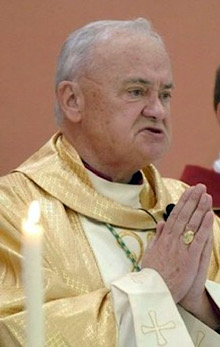
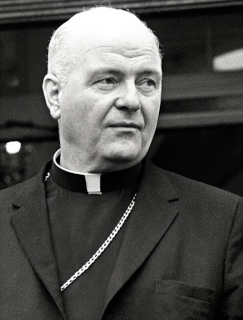
Birth of John Magee, Bishop Emeritus of Cloyne

John Magee SPS, a Roman Catholic bishop emeritus in Ireland, is born in Newry, County DownNorthern Ireland, in the Roman Catholic Diocese of Dromore, on September 24, 1936. He is Bishop of Cloyne from 1987 to 2010. Following scandal he resigns from that position on March 24, 2010, becoming a bishop emeritus. He is the only person to have been private secretary to three popes.

Magee’s father is a dairy farmer. He is educated at St. Colman’s College in Newry and enters the St Patrick’s Missionary Society at KilteganCounty Wicklow, in 1954. He also attends University College Cork (UCC) where he obtains a degree in philosophy before going to study theology in Rome, where he is ordained priest on March 17, 1962.

Magee serves as a missionary priest in Nigeria for almost six years before being appointed Procurator General of St. Patrick’s Society in Rome. In 1969, he is an official of the Congregation for the Evangelization of Peoples in Rome, when he is chosen by Pope Paul VI to be one of his private secretaries. On Pope Paul’s death he remains in service as a private secretary to his successor, Pope John Paul I and Pope John Paul II. He is the only man to hold the position of private secretary to three Popes in Vatican history. He also acts as chaplain to the Vatican’s Swiss Guard.

Magee is appointed papal Master of Pontifical Liturgical Celebrations in 1982, and is appointed Bishop of the Diocese of Cloyne on February 17, 1987. He is consecrated bishop on March 17, 1987, Saint Patrick’s Day, by Pope John Paul II at St. Peter’s Basilica in the Vatican.

On April 28, 1981, Magee travels, without the knowledge or approval of the Vatican’s Secretariat of State, to the Long Kesh Detention Centre outside Belfast to meet with Irish Republican Army (IRA) hunger striker Bobby Sands. He seeks, unsuccessfully, to convince Sands to end his hunger strike. Sands dies the following week.

Magee plays a role in the Irish Catholic Bishops’ Conference where he is featured in the modernisation of the liturgy in Ireland. His pastoral approach places heavy emphasis on the promotion of vocations to the priesthood but, after some initial success, the number of vocations in the diocese of Cloyne declines, a trend reflected across the island of Ireland. He appoints Ireland’s first female “faith developer” and entrusts her with the task of transforming an Irish rural diocese into a cosmopolitan pastoral model using techniques borrowed from several urban dioceses in the United States.

Magee involves himself in a dispute with the Friends of St. Colman’s Cathedral, a local conservationist group in Cobh which organises an effective and professional opposition to the Bishop’s plans to re-order the interior of the cathedral, plans similar to previous re-orderings in KillarneyCork and Limerick cathedrals. In an oral hearing conducted by An Bord Pleanála, the Irish Planning Board, it emerges that irregularities have occurred in the planning application that are traced to Cobh Town Council, which accommodates the Bishop’s plans to modify the Victorian interior designed by E. W. Pugin and George Ashlin. On June 2, 2006, when Bishop Magee was in Lourdes, An Bord Pleanála directs Cobh Town Council to refuse the Bishop’s application.

On July 25, 2006, Magee publishes a pastoral letter stating: “As a result of An Bord Pleanála’s decision, the situation concerning the temporary plywood altar still remains unresolved and needs to be addressed. The Diocese will initiate discussions with the planning authorities in an attempt to find a solution, which would be acceptable from both the liturgical and heritage points of view.”

A diocesan official explains that the bishop does not wish to institute a judicial review in the Irish High Court because of the financial implications of such an action and because of the bishop’s desire to avoid a Church-State clash.

Claims that the decision of An Bord Pleanála infringes the constitutional property rights of religious bodies are dismissed when it is revealed that the cathedral is the property of a secular trust established in Irish law. It is estimated that Bishop Magee spent over €200,000 in his bid to re-order the cathedral. The controversy is reported even outside Ireland.

A February 2006 article by Kieron Wood in The Sunday Business Post claims that Magee does not have the backing of the Vatican in his proposals for St. Colman’s. At the oral hearing of An Bord Pleanála he is requested to provide a copy of the letter from the Vatican in which he claims he has been given approval for the modernising of the cathedral. The letter that he produces is a congratulatory message dated December 9, 2003 to the team of architects who worked on the cathedral project from Cardinal Francis Arinze, Prefect of the Dicastery for Divine Worship and the Discipline of the Sacraments. The whole text of this letter is then reproduced in a publication called Conserving Cobh Cathedral: The Case Stated pp. 108–109.

At a meeting of his liturgical advisers and diocesan clergy in November 2006, Bishop Magee speaks of his conversation with the Pope in the course of that ad limina visit at the end of the previous month. He mentions that he has been closely questioned on several aspects of his proposals to re-order St. Colman’s Cathedral. It is obvious, he says, that the Pope has been kept well informed of the entire issue.

Bishop Magee’s contribution to the ad limina visit concerns not only his diocese of Cloyne but also ceremonial matters on behalf of the Conference. He also facilitates the broadcasting, in coincidence with the visit, of a life of Pope John Paul I prepared some months earlier by Italian state television (RAI). In an interview published on the Italian Catholic daily Avvenire on October 26, 2006, Cardinal Secretary of State Tarcisio Bertone criticises the image that the programme presents of Pope John Paul I.

After the ad limina visit, Bishop Magee represents the Irish bishops at a meeting in Rome of the International Commission for Eucharistic Congresses.

In 2007, for the third year in succession, Magee fails to complete his personal schedule of confirmations in Cloyne diocese. On May 12, 2007, he is admitted to the Bon Secours Hospital in Cork to undergo a knee replacement operation. All official engagements are cancelled for the next ten weeks to allow him to recuperate, after which he resumes work.

In December 2008, Magee is at the centre of a controversy concerning his handling of child sexual abuse cases by clergy in the diocese of Cloyne. Calls for his resignation follow. On March 7, 2009, he announces that, at his request, the Pope has placed the running of the diocese in the hands of Dermot Clifford, metropolitan archbishop of the Archdiocese of Cashel and Emly, to whose ecclesiastical province the diocese of Cloyne belongs. Magee remains Bishop of Cloyne, but withdraws from administration in order, he says, to dedicate his full-time to the matter of the inquiry. On March 24, 2010, the Holy See announces that Magee has formally resigned from his duties as Bishop of Cloyne. He is eventually succeeded by Canon William Crean whose appointment comes on November 25, 2012.

The subsequent report of the Irish government judicial inquiry, The Cloyne Report, published on July 13, 2011, finds that Bishop Magee’s second in command, Monsignor Denis O’Callaghan, then the parish priest of Mallow, had falsely told the Government and the HSE in a previous inquiry that the diocese was reporting all allegations of clerical child sexual abuse to the civil authorities.

The inquiry into Cloyne – the fourth examination of clerical abuse in the Church in Ireland – finds the greatest flaw in the diocese is repeated failure to report all complaints. It finds nine allegations out of 15 were not passed on to the Garda.

Speaking in August 2011, Magee says that he felt “horrified and ashamed” by abuse in his diocese. He says he accepts “full responsibility” for the findings. “I feel ashamed that this happened under my watch – it shouldn’t have and I truly apologise,” he says. “I did endeavour and I hoped that those guidelines that I issued in a booklet form to every person in the diocese were being implemented but I discovered they were not and that is my responsibility.”

Magee also offers to meet abuse victims and apologise “on bended knee.” He says he had been “truly horrified” when he read the full extent of the abuse in the report. However, a victim says apologies would “never go far enough.” “It’s too late for us now, the only thing it’s not too late for is that maybe there will be a future where people will be more enlightened, more aware and protect their children better,” she says. Asked about restitution for victims, Magee says it is a matter for the Cloyne Diocese.


Leave a comment

Death of William Conway, Cardinal of the Roman Catholic Church

William John Cardinal Conway, Irish cardinal of the Roman Catholic Church who serves as Archbishop of Armagh and Primate of All Ireland from 1963 until his death, dies in Armagh, County Armagh, Northern Ireland, on April 17, 1977, after a short illness.

Conway is born on January 22, 1913, in Belfast, the eldest of four sons and five daughters of Patrick Joseph Conway and Annie Conway (née Donnelly). His father, a self-employed housepainter, also has a paint shop in Kent Street off Royal Avenue. His mother, who survives her son, is born in Carlingford, County Louth. He attends Boundary Street Primary School, St. Mary’s CBS (now St. Mary’s CBGS Belfast). His academic successes are crowned by a scholarship to Queen’s University Belfast. He decides to study for the diocesan priesthood. In 1933 he is conferred with an honours BA in English literature and goes on to read a distinguished course in theology at St. Patrick’s College, Maynooth.

Conway is ordained on June 20, 1937, and awarded a DD (1938). On November 12, 1938, he enters the Pontifical Irish College in Rome, and in 1941 he receives the DCL degree at the Pontifical Gregorian University. When Italy enters World War II in June 1940, he returns to Belfast to take up duty in the Diocese of Down and Connor. He is appointed to teach English and Latin in St. Malachy’s College in Belfast, but after one year he is named professor of moral theology and canon law in Maynooth. He contributes regular ‘Canon law replies’ to the Irish Ecclesiastical Record, which are later collected as Problems in canon law (1950), the only book published by him.

In 1957 Conway becomes vice-president of Maynooth, and in 1958, he is named Ireland’s youngest bishop, Titular Bishop of Neve, and auxiliary bishop to Cardinal John D’Alton, Archbishop of Armagh and Primate of All Ireland. He is consecrated in St. Patrick’s Cathedral, Armagh on July 27, 1958. He serves as administrator of St. Patrick’s Church, Dundalk, for the next five years, gaining valuable pastoral experience, and also uses these years to familiarise himself with his new diocese, especially its geography. On the death of D’Alton, he is chosen to succeed him in September 1963, and is enthroned on September 25 in St. Patrick’s Cathedral, Armagh by the apostolic nuncio, Archbishop Sensi. At the end of 1964, Pope Paul VI chooses him as Ireland’s seventh residential cardinal, and he receives the red hat in the public consistory of February 22, 1965.

The thirteen-odd years of Conway’s ministry as primate are dominated firstly by the Second Vatican Council and secondly by the Troubles in Northern Ireland. His primary concern is the church, to steer it through testing times. He is a very active bishop in a diocese of 160,000 Catholics, with fifty-seven parishes and some 167 priests. He carries the burden alone until 1974 when he is given an auxiliary in the person of his secretary, Fr. Francis Lenny (1928–78). Two new parishes are created, five new churches are built, and many others are renovated to meet the requirements of liturgical reform. Twenty new schools are also provided. He attends all four sessions of the Vatican council (1962–65), as auxiliary bishop and as primate. On October 9, 1963, he addresses the assembly, making a plea that the council might not be so concerned with weightier matters as to neglect to speak about priests. He also makes contributions on the topics of mixed marriages, Catholic schools, and the laity. On the topic of education, he is convinced that integrated schools will not solve Northern Ireland’s problems.

Conway represents the Irish Catholic Bishops’ Conference at each assembly of the Synod of Bishops in Rome, at first with Bishop Michael Browne of the Diocese of Galway and Kilmacduagh, his former professor in Maynooth, and later with the Archbishop of Dublin, Dermot Ryan. With Cardinals Jean-Marie Villot and Pericle Felici, he is chairman of the first synod in 1969, a signal honour conferred on him by Pope Paul VI. He addresses the assembly, opposing the ordination of married men as a move that would release a flood of applications from around the world for dispensations from priestly celibacy. His experience of violence in Northern Ireland is reflected in contributions he makes to later synod assemblies, especially in 1971 and 1974.

Apart from the synod, Conway travels a few times each year to Rome for meetings of the three Roman congregations on which he is called to serve (those of bishops, catholic education, and the evangelisation of peoples) and the commission for the revision of the code of canon law. He also travels further afield in a representative capacity to the International Eucharistic Congress at Bogotá, also attended by Pope Paul VI, and to Madras (1972), where he acts as papal legate for the centenary celebrations in honour of St. Thomas. In 1966 he is invited by the bishops of Poland to join in celebrations for the millennium of Catholicism in that country but is refused an entry visa by the Polish government. In January 1973 he feels obliged to forgo participation in the Melbourne eucharistic congress because of the troubled situation at home. Within Ireland he accepts invitations to become a freeman of Cork and Galway (1965) and of Wexford (1966). In 1976 the National University of Ireland (NUI) confers on him an honorary LL.D.

Conway is acknowledged as an able and diligent chairman of the Irish Catholic Bishops’ Conference. The core problem in the early years is how to lead the Irish church into the difficult new era that follows the council. He shows exceptional leadership qualities in the manner in which he promotes firm but gentle progress, avoiding sudden trauma and divisions. A major event in his term as Archbishop of Armagh, and one that gives him much satisfaction, is the canonization of Oliver Plunkett, his martyred predecessor, in the holy year 1975. He follows with great interest the final stages of the cause from 1968 and is greatly disappointed when grounded by his doctors six weeks before the event. He does however take part, concelebrating with Pope Paul VI at the ceremony on October 12, 1975. He also presides the following evening at the first mass of thanksgiving in the Lateran Basilica, receiving a tumultuous applause from the thousands of Irish present.

More than anything else, the Troubles in Northern Ireland occupy Conway during the second half of his term as archbishop and primate. He is the leading spokesman of the Catholic cause but never fails to condemn atrocities wherever the responsibility lay. He brands as ‘monsters’ the terrorist bombers on both sides. In 1971 he denounces internment without trial, and the following year he is mainly responsible for highlighting the ill-treatment and even torture of prisoners in Northern Ireland. He repudiates the idea that the conflict is religious in nature, emphasising its social and political dimensions, and is openly critical of the British government over conditions in Long Kesh Detention Centre, and of ‘the cloak of almost total silence’ surrounding violence against the Catholic community.

In January 1977 Conway undergoes surgery in a Dublin hospital, and almost immediately comes to know that he is terminally ill. It is the best-kept secret in Ireland until close to the end. On March 29, he writes to his fellow bishops informing them that the prognosis regarding his health is ‘not good, in fact . . . very bad,’ and that he is perfectly reconciled to God’s will. He is still able to work at his desk until Good Friday, April 8, 1977.

Conway dies in Armagh on Low Sunday night, April 17, 1977. Seven countries are represented at his funeral by six cardinals and many bishops. The apostolic nuncio, the bishops of Ireland, the president and Taoiseach, six Irish government ministers, and the Secretary of State for Northern Ireland are also among the mourners. The cardinal is laid to rest in St. Patrick’s Cathedral Cemetery, Armagh. The red hat received from Pope Paul VI is suspended from the ceiling of the Lady chapel, joining those of his four immediate predecessors.

(From: “Conway, John William,” Dictionary of Irish Biography, http://www.dib.ie, contributed by J. J. Hanley)


Leave a comment

Birth of Desmond Connell, Future Cardinal in the Roman Catholic Church

Desmond Connell, cardinal in the Roman Catholic Church and former Archbishop of Dublin and Primate of Ireland, is born in Phibsborough, Dublin, on March 24, 1926.

Connell is educated at St. Peter’s National School, Phibsborough and the Jesuit Fathers’ second level school, Belvedere College, and studies for the priesthood at Holy Cross College. He later studies Arts at University College Dublin (UCD) and graduates with a BA in 1946 and is awarded an MA the following year. Between 1947 and 1951, he studies theology at St. Patrick’s College, Maynooth for a Bachelor of Divinity.

Connell is ordained priest by Archbishop John Charles McQuaid on May 19, 1951. He takes up a teaching post at the Department of Metaphysics at the University College Dublin. He is appointed Professor of General Metaphysics in 1972 and in 1983 becomes the Dean of the Faculty of Philosophy and Sociology. The College’s Department of Metaphysics is abolished after his departure.

Connell is appointed Archbishop of Dublin by the Holy See in early 1988. He is consecrated at St. Mary’s Pro-Cathedral, Dublin on March 6, 1988. He is created Cardinal-Priest by Pope John Paul II at the Consistory in Rome on February 21, 2001, with the Titulus S. Silvestri in Capite. Archbishops of Armagh, who hold the higher title of Primate of All Ireland, are more frequently appointed Cardinal than Archbishops of Dublin. The last Archbishop of Dublin to have been a cardinal is Cardinal Edward MacCabe, who was appointed in 1882. A large Irish contingent from Church and State, along with family and friends of the Cardinal, attend the installation which for the first time takes place at the front of the entrance to St. Peter’s Basilica.

On April 26, 2004, Connell retires as archbishop, handing the diocese to the coadjutor bishop, Diarmuid Martin. All bishops submit their resignation to the Pope on their 75th birthday. Connell’s is accepted shortly after his 78th birthday.

Connell is one of the cardinal electors who participates in the 2005 papal conclave that selects Pope Benedict XVI. Connell is considered quite close to Pope Benedict, both theologically and personally, both having served together on a number of congregations. He attends the 50th International Eucharistic Congress in Dublin in June 2012 and concelebrates at the Statio Orbis Mass in Croke Park.

It is Connell’s failure, when Archbishop of Dublin in 1988–2004, to address adequately the abuse scandals in Dublin that lead the Vatican to assign Archbishop Martin as his replacement in the country’s largest diocese. The Murphy Report finds that Connell had handled the affair “badly” as he was “slow to recognise the seriousness of the situation.” It does praise him for making the archdiocesan records available to the authorities in 2002 and for his 1995 actions in giving the authorities the names of 17 priests who had been accused of abuse, although it says the list is incomplete as complaints were made against at least 28 priests in the archdiocese.

From 1988 Connell also continues to insure his archdiocese against liability from complainants, while claiming to the Murphy Commission that the archdiocese is “on a learning curve” in regard to child abuse. He arranges for compensation payments to be made from a “Stewardship Trust” that is kept secret from the archdiocese’s parishioners until 2003. In 1996 he refuses to help a victim of Paul McGennis and does not pass on what he knows about McGennis to her, or to the police. He apologises for this in 2002.

Desmond Connell dies in Dublin at the age of 90 on February 21, 2017, exactly sixteen years after his creation as Cardinal.


Leave a comment

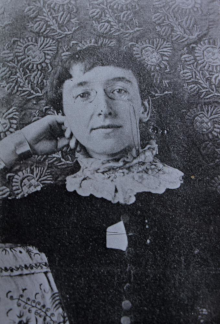
Birth of Evelyn Gleeson, Designer & Co-founder of Dun Emer Press

Evelyn Gleeson, English embroidery, carpet, and tapestry designer, is born on May 15, 1855, in Knutsford, Cheshire, England. Along with Elizabeth and Lily Yeats, she establishes the Dun Emer Press.

Gleeson is the daughter of Irish-born Edward Moloney Gleeson, a medical doctor, and Harriet (née Simpson), from Bolton, Lancashire. Her father has a practice in Knutsford but on a trip to Ireland he is struck by the poverty and unemployment and, with the advice of his brother-in-law, a textile manufacturer in Lancashire, he founds the Athlone Woollen Mills in 1859, investing all his money in the project. The family moves to Athlone in 1863, but Gleeson is educated in England, where she trains as a teacher. She later studies portraiture in London at the Atelier Ludovici from 1890–92. She goes on to study design with Alexander Millar, a follower of William Morris, who believes she has an exceptional aptitude for colour-blending. Many of her designs are bought by the exclusive Templeton Carpets of Glasgow.

Gleeson takes a keen interest in Irish affairs and, as a member of the Gaelic League and the Irish Literary Society, mixes with the Yeats family and the Irish artistic circle in London and is inspired by the Gaelic revival in art and literature. She is also involved in the suffrage movement and is chairwoman of the Pioneer Club, a women’s club in London. In 1900, an opportunity arises to make a practical contribution to the Irish renaissance and the emancipation of Irish women. She is suffering from ill-health, but her friend Augustine Henry, botanist and linguist, suggests she move away from the London smog to Ireland and open a craft centre with his financial assistance. She seizes the opportunity and discusses her plans with her friends the Yeats sisters, Elizabeth and Lily, who are talented craftswomen and have direct contact with William Morris and his followers. They have no money to contribute to the venture but are enthusiastic and can offer their skills and provide contacts. She seeks advice from W. B. and Jack Yeats, from Henry, who loans her £500, and from her cousin, T. P. Gill, secretary of the Department of Agriculture and Technical Instruction.

During the summer of 1902 Gleeson finds a suitable house in Dundrum, County Dublin, ten minutes from the railway station. The house, originally called Runnymede, is renamed Dun Emer, after the wife of Cú-Chulainn, renowned for her craft skills. The printing press arrives in November 1902, and soon three craft industries are in operation. Lily Yeats runs the embroidery section, since she had trained with Morris’s daughter May. Elizabeth Yeats operates the press, having learned printing at the Women’s Printing Society in London. Gleeson manages the weaving and tapestry and looks after the financial affairs of the industries. W. B. Yeats acts as literary adviser, an arrangement that often causes friction, and Gleeson’s sister, Constance McCormack, is also involved.

Local girls are employed and trained, and the industries seek to use the best of Irish materials to make beautiful, high-quality, lasting products of original design. Church patronage accounts for most of their orders and, in 1902–03, Loughrea cathedral commissions twenty-four embroidered banners portraying Irish saints. They also make vestments, traditional dresses, drapes, cushions and other items, all beautifully crafted and mostly employing Celtic design. The first book published is In the Seven Woods (1903), by W. B. Yeats, cased in full Irish linen.

Gleeson is in demand as an adjudicator in craft competitions around the country and at Feis na nGleann in 1904 she praises the workmanship of the entries but is critical of the lack of teaching in design. She gives lectures and tries to raise the status of craftwork from household occupation to competitive industry. There are tensions with the Yeats sisters, who complain that she is bad-tempered and arrogant. In truth she had taken on too much of a financial burden, even with the support of grants, and she is anxious to repay her debt to Augustine Henry, which he is prepared to forego. The sisters snub her and omit her name in an interview about Dun Emer in the magazine House Beautiful. Millar, her design teacher in London, likens the omission to Hamlet without the prince. In 1904, it is decided to split the industries on a cooperative basis: Dun Emer Guild Ltd. under Gleeson and Dun Emer Industries Ltd. under the Yeats sisters.

Work continues, and the guild and industries exhibit separately at the Royal Dublin Society (RDS) and other craft competitions. In 1907, the National Museum of Ireland commissions a copy of a Flemish tapestry. It takes far longer than anticipated to complete, but the result is beautiful and is exhibited at the Arts and Crafts Society of Ireland in 1910. The guild wins a silver medal at the Milan International exhibition in 1906. The guild and industries both show work at the New York exhibition of 1908. The guild alone shows work in Boston. By now cooperation has turned to rivalry, and there is a final split as the Yeats sisters leave, taking the printing press with them to their house in Churchtown, Dublin. Gleeson writes off a debt of £185 owed to her, on condition that they do not use the name Dun Emer.

The business thrives at Dundrum, with her niece Katherine (Kitty) MacCormack and Augustine Henry’s niece, May Kerley, assisting with design. Later they move the workshops to Hardwicke Street, Dublin. In 1909, Gleeson becomes one of the first members of the Guild of Irish Art Workers and is made master in 1917. The Irish Women Workers’ Union commissions a banner from her about 1919, and, among numerous other notable successes, a Dun Emer carpet is presented to Pope Pius XI in 1932, the year of the Eucharistic Congress of Dublin.

Gleeson dies at the age of 89 at Dun Emer on February 20, 1944, with Kitty carrying on the Guild after her death. The final home of Dun Emer is a shop on Harcourt Street, Dublin, which finally closes in 1964.

(From: “Gleeson, Evelyn” by Ruth Devine, Dictionary of Irish Biography, http://www.dib.ie, October 2009)
Leave a comment

The 31st International Eucharistic Congress Begins in Dublin

eucharistic-congress-closing-ceremony-1932

The 31st International Eucharistic Congress begins in Dublin on June 22, 1932, and runs through June 26. The congress is one of the largest eucharistic congresses of the 20th century and the largest public event to happen in the new Irish Free State. It reinforces the Free State’s image of being a devout Catholic nation. The high point is when over a million people gather for Mass in Phoenix Park.

Ireland is then home to 3,171,697 Catholics. It is selected to host the congress as 1932 is the 1500th anniversary of Saint Patrick‘s arrival. The chosen theme is “The Propagation of the Sainted Eucharist by Irish Missionaries.”

The city of Dublin is decorated with banners, bunting, garlands, and replica round towers. Seven ocean liners moor in the port basins and along Sir John Rogerson’s Quay. Five others anchor around Scotsmans Bay. The liners act as floating hotels and can accommodate from 130 to 1,500 people on each. The Blue Hussars, a ceremonial cavalry unit of the Irish Army formed to escort the President of Ireland on state occasions, first appears in public as an honor guard for the visiting Papal Legate representing Pope Pius XI.

John Charles McQuaid, President of Blackrock College, hosts a large garden party on the grounds of the college to welcome the papal legate, where the hundreds of bishops assembled for the Congress have the opportunity to mingle with a huge gathering of distinguished guests and others who have paid a modest subscription fee.

The final public mass of the congress is held at 1:00 PM on Sunday, June 26 in Phoenix Park at an altar designed by the eminent Irish architect John J. Robinson of Robinson & Keefe Architects, and is celebrated by Michael Joseph Curley, Archbishop of Baltimore. A radio station, known as Radio Athlone, is set up in Athlone to coincide with the Congress. In 1938 it becomes Radio Éireann. The ceremonies include a live radio broadcast by Pope Pius XI from the Vatican. John McCormack, the world-famous Irish tenor, sings César Franck‘s Panis Angelicus at the mass.

Approximately 25% of the population of Ireland attend the mass and afterwards four processions leave the Park to O’Connell Street where approximately 500,000 people gather on O’Connell Bridge for the concluding Benediction given by the Papal Legate, Cardinal Lorenzo Lauri.

The English Catholic writer G. K. Chesterton is also present, and observes, “I confess I was myself enough of an outsider to feel flash through my mind, as the illimitable multitude began to melt away towards the gates and roads and bridges, the instantaneous thought ‘This is Democracy; and everyone is saying there is no such thing.'”

On the other hand, such an overwhelming display of Catholicity only confirms to Protestants in the North the necessity of the border.

(Pictured: the closing ceremony of the Eucharistic Congress that was held in Dublin in June 1932)