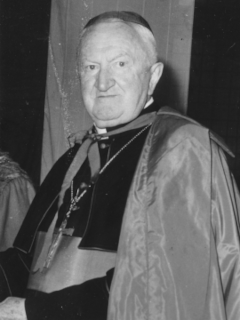
Browne is born in Westport, County Mayo, on December 20, 1895. He is an important and outspoken member of the Irish hierarchy. His time as Bishop has been described by the historian James S. Donnelly Jr. as “far-reaching and … controversial,” while the historian of Irish CatholicismJohn Henry Whyte claims that Browne’s “readiness to put forward his views bluntly is welcome at least to the historian.”
On August 6, 1937, at the relatively young age of 41, Browne is appointed Bishop of Galway and Kilmacduagh by Pope Pius XI, receiving his episcopal consecration from Archbishop Thomas Gilmartin on the following August 10. He supports TaoiseachÉamon de Valera‘s defence of arrests and police searches for cached Irish Republican Army (IRA) arms, declaring, “Any Irishman who assists any foreign power to attack the legitimate authority of his own land is guilty of the most terrible crime against God’s law, and there can be no excuse for that crime – not even the pretext of solving partition or of securing unity.”
In 1939, Browne is selected by Éamon de Valera to chair the Commission on Vocational Organisation.
Browne is attentive to the state of public morality in the diocese, and James S. Donnelly Jr. has noted his role in directing episcopal and clerical censorship of newsagents and county librarians. He is also concerned about public intoxication and other misconduct at the Galway Races, controversies over dancing and the commercial dance halls, as well as immodesty in dress and the closely related issue of so-called “mixed bathing” in Galway and Salthill.
In 1957, in response to a growing tension between Catholics and Protestants at Fethard-on-Sea, including the Fethard-on-Sea boycott, Browne says, “non-Catholics do not protest against the crime of conspiring to steal the children of a Catholic father, but they try to make political capital when a Catholic people make a peaceful and moderate protest.”
The most enduring monument or physical legacy of Browne’s time as Bishop is the Cathedral of Our Lady Assumed into Heaven and St Nicholas, commonly known as Galway Cathedral, which is dedicated in 1965 by CardinalRichard James Cushing of Boston, Massachusetts. The site of the old jail had come into the possession of the diocese in 1941 and Browne leads the campaign to construct a new Cathedral. This includes a 1957 audience with Pope Pius XII where the plans are approved.
Browne attends the Second Vatican Council from 1962 to 1965 and retires in 1976. He dies four years later in Galway, at the age of 84, on February 24, 1980.
Browne is parodied in Breandán Ó hÉithir`s novel Lig Sinn i gCathu, which fictionalises late 1940s Galway as “Baile an Chaisil” and Browne as “An tEaspag Ó Maoláin.”
The Irish cabinet minister Noël Browne (no known relation) in his 1986 memoir Against the Tide describes the physical attributes of his episcopal namesake:
“The bishop had a round soft baby face with shimmering clear cornflower-blue eyes, but his mouth was small and mean. Around his great neck was an elegant glinting gold episcopal chain with a simple pectoral gold cross. He wore a ruby ring on his plump finger and wore a slightly ridiculous tiny scullcap on his noble head. The well-filled semi-circular scarlet silk cummerbund and sash neatly divided the lordly prince into two.”
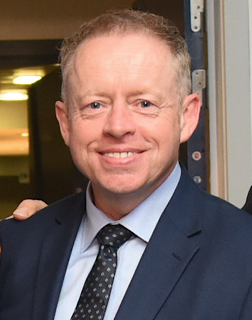
Before entering politics, Cannon is a planning official for Galway City Council and Dublin City Council, as well as CEO and secretary of the Irish Pilgrimage Trust. In 2002, he is honoured as one of the Galway People of the Year.
Cannon is elected as Leader of the Progressive Democrats in April 2008. He is the first leader of the party to sit as a Senator while serving as leader. At his first press conference as party leader, he states that he believes “there was passion, commitment, talent and knowledge within the PDs’ ranks to stage a big comeback.”
However, after speculation increases that Noel Grealish, one of the two Progressive Democrat TDs, intends to leave the party, Cannon announces in September 2008 that a party conference will be held on November 8, 2008, at which he will recommend that the party disband. The delegates present at the conference vote 201–161 to agree with this recommendation.
On March 24, 2009, Cannon announces his decision to resign the leadership of the Progressive Democrats and joins Fine Gael the same day. At the 2011 Irish general election, he is one of two Fine Gael TDs elected in Galway East.
In 2019, in recognition of his work in education, Cannon is appointed as a UNICEF global champion for education. He is one of seven Generation Unlimited Champions who advocates worldwide for the development of UNICEF’s Gen U programme.
At the 2020 Irish general election, Cannon is elected to the second seat in Galway East. He continues to serve as a minister of state until the formation of a new government on June 27, 2020.
On March 19, 2024, Cannon announces that he will not contest the next general election, blaming a “toxicity in politics.”
Cannon is a musician and songwriter, and recently collaborated with Irish folk singer Seán Keane and others on songwriting projects. One of his co-compositions, “Nature’s Little Symphony,” is performed in Dublin by the RTÉ Concert Orchestra as part of the national Cruinniú celebrations on Easter Monday 2017. Both “Nature’s Little Symphony” and another of his compositions, “Gratitude,” are featured on the album Gratitude recorded by Keane and the RTÉ Concert Orchestra in 2018. On the August 10, 2018, Cannon plays piano with Keane and the RTÉ Concert Orchestra as part of a sold-out performance at the National Concert Hall. In 2019, he composes “An Túr,” a short piano instrumental to celebrate the birthday of W. B. Yeats.
In 2021 Cannon is commissioned to compose the soundtrack to a poem by Emily Cullen as part of the national commemoration of the signing of the Anglo-Irish Treaty in 1921.
In March 2024, Cannon begins presenting The Grey Lake Cafe, a radio show on Loughrea Community Radio featuring his own musical choices, and interviews with public figures who have a passion for music.
Cannon is also an avid cyclist and cycling safety advocate. He specialises in endurance cycling challenges and on June 19, 2021, he cycles Ireland end to end, a distance of 575 km, in 23 hours and 23 minutes, to raise money for charity.
On July 2, 2021, Cannon is involved in a road traffic collision and suffers serious injuries. On July 2, 2022 he marks the first anniversary of the incident by cycling 500 km around the border of County Galway. Marking the same date in 2023, he cycles 935 km (581 mi) in 56 hours, covering all 32 counties of the island of Ireland while fundraising for Hand In Hand, a charity that supports families challenged by childhood cancer.
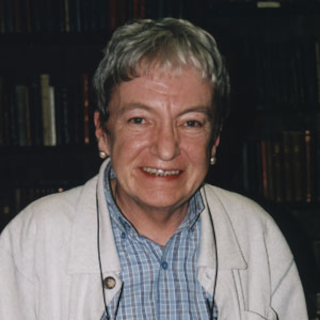
Colleran, and her twin Noreen, are born in Ballinrobe, County Mayo, on October 12, 1945, to John and Josie Colleran. One of a family of five children, her father is a school principal and her mother, also a primary school teacher, dies when she is just 11 years old. She completes her secondary education at St. Louis secondary school in Kiltimagh. She spends a lot of time outdoors as a child, particularly fishing, which sparks her interest in the environment.
On entering higher education, Colleran has a grant from the Department of Education, which requires that she do her studies through the Irish language. Her first choice, Medicine, is not available in Irish so she chooses Science. She graduates with a first-class primary degree in Science at University College Galway (now National University of Ireland, Galway) in 1967.
Colleran lectures in biology at Athlone Regional Technical College (now Athlone Institute of Technology) and Galway Regional Technical College (now Galway-Mayo Institute of Technology) before her appointment as a lecturer in microbiology at NUI Galway in 1976. She is appointed Associate Professor of Microbiology by the Senate of the National University of Ireland in 1990. She is a member of the university’s governing authority for a number of years, but steps down in May 2000 in connection with the selection procedure for the new university president. In October of that year, she is appointed professor of microbiology and chair of the department at NUI Galway.
Colleran is the first director of the Environment Change Institute at NUI Galway set up under the Higher Education Authority‘s Programme for Research in Third Level Institutions in 2000. In 2010, the Environmental Change Institute and the Martin Ryan Marine Research Institute are merged to form the current day Ryan Institute at NUI Galway.
In 1973, Colleran is elected to the committee of the Galway Association of An Taisce, part of a national voluntary organisation the aims of which are conservation in Ireland through education, publicity and positive action. She serves as membership secretary and then treasurer to the Galway branch before becoming chairman. In 1981, as chairman of the Galway branch, she hits back at claims from Galway County Council that An Taisce are “an anonymous group, wielding power unfairly.” She is involved in the compilation of a controversial planning report, published by An Taisce in 1983, which highlights abuse of planning laws by city and county councillors across Ireland, and in particular in counties Galway, Mayo, Donegal, Kerry and Louth.
Colleran serves as Environmental Officer for An Taisce before being elected National Chairman in 1987, the first time a chairman has come from one of the western county associations. She continues to use her position to campaign against misuse of planning laws, for a clamp down on pollution of rivers and lakes, and against a move to scrap An Foras Forbartha, a body that provides independent monitoring of pollution. During her three years as chairman, until May 1990, she is particularly involved in debates over local environmental and planning issues, in particular over gold mining in the west of Ireland, a proposed airport for Clifden, and the planned sewage treatment plant at Mutton Island, County Galway.
In 1991 plans are announced for a new visitor centre, to be located at Mullaghmore in The Burren. Colleran is among those who are part of an appeal, saying that while the plan for the national park is welcomed by An Taisce, they want the visitor centre to be located three or four miles from Mullaghmore.
President Mary Robinson appoints seven new members to her Council of State in February 1991, including Colleran. Other new members appointed at the time are Monica Barnes, Patricia O’Donovan, Quintan Oliver, Rosemarie Smith, Dónal Toolan and D. Kenneth Whitaker. The new Council of State represents a wide spectrum of Irish life and is widely welcomed, although Fine Gael is disappointed that its leader John Bruton is not included.
In 1991, Colleran is one of 15 people appointed to TaoiseachCharles Haughey‘s Green 2000 Advisory Group, to determine which problems will face the environment in the next century. The group is led by Dr. David Cabot, special advisor on environmental affairs.
In 2003, Colleran is elected as a member of the Royal Irish Academy.
Colleran is recognised at the annual NUI Galway Alumni Awards in 2004 when she receives the award for Natural Science, sponsored by Seavite Bodycare Ltd., which acknowledges a graduate who has made an outstanding contribution in the field of natural science.
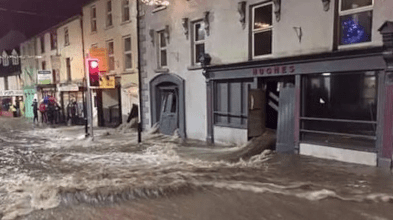
Clean-up operations are underway around Ireland on Wednesday, December 30, 2015, in the wake of Storm Frank, which causes widespread flooding following its landfall in western areas on Tuesday, December 29. Thousands of households and businesses are left without electricity in many areas of the country.
A Met Éireann status orange wind warning is lifted at 2:00 p.m. on Wednesday although the forecasts caution that severe winds of 65-80 km/h and gusts of up 130 km/h are still expected. While the heaviest rainfall from the storm falls overnight, many rivers and lakes have yet to peak meaning further flooding is possible.
According to an ESB Networks spokesman, 7,500 homes are without power in the afternoon, down from the overnight total of 13,000. He says repair crews are working to restore power to those cut off. The biggest single outage overnight is around Bandon and Fermoy in County Cork where 4,000 homes are without power, although it has been restored to almost all homes by the afternoon of December 30.
At 2:00 p.m. on Wednesday, the worst affected areas are County Wicklow with 1,200 houses without power, Macroom in County Cork where 600 are without power and Athlone where 500 homes are cut off. Around 500 homes in Naas, County Kildare, are without power as are 350 houses in Skerries in north County Dublin. It is hoped that power will be restored to all customers by the evening.
County Cork appears to be the worst affected by the storm where 60 mms (almost three inches) of rain falls since the morning of December 29. The threat of further flooding in Cork remains as the ESB increases the flow of water through the Inniscarra Dam to 250 cumecs (cubic metres per second) between 9:00 a.m. and midday which leads to increased flooding downstream. This is higher than the level of flow (180 cumecs) the previous and between December 6 and 12 along the River Lee following Storm Desmond.
Cork County manager Tim Lucey says there has been “extensive flooding” across a range of areas, but that Midleton and Bandon are worst hit with some 90 properties affected in each of the towns. He tells RTÉ Radio that one positive is the fact flood defences in Mallow and Fermoy have done their job. He notes that some five feet of water has built up behind a flood barrier in Mallow and this indicates the damage that could have been done to the town.
South Galway bears the brunt of flooding in the west, with river gauges expected to rise further over the coming days. Overnight rainfall is not as heavy as anticipated in the west, but several properties succumb to the waters. Up to 30 families in the south Galway area are forced to stay with relatives, with several being accommodated in hotels by Galway County Council, as floodwaters cut off access routes to their homes.
In Mayo, the area around the Neale remains underwater and a number of minor roads and thousands of acres of farmland are also affected. With rain continuing to fall across the west, conditions are expected to remain critical over the next few days.
The N11 between Rosslare and Dublin, the N25 from Cork to Waterford, the N71 between Cork and Killarney and the N4 between Dublin and Sligo all have diversions in place. The N25 is closed overnight between Killeagh and Castlemartyr in County Cork due to flooding. The N71 Cork/Bandon Road is also closed overnight at the viaduct due to flooding. There is severe flooding on the N40 South Ring Rd. at J6 Kinsale, particularly on the westbound off-ramp. The N11 Dublin/Wexford Road is impassable through Enniscorthy and also at Kyle’s Cross near Oylegate. The N4 is closed eastbound at Ballynafid in County Westmeath due to flooding. There are also several road closures in Kerry, Waterford and Tipperary.
Midleton is also hit by severe flooding as water levels in the Owenacurra River rise dramatically with up to 30 families having to be evacuated from their homes. Macroom in mid-Cork is also flooded for the first time during the year. Bandon is put on red alert by Cork County Council’s early warning system. Traders and residents are told to take all measures necessary to protect their property and stock. Locals stay up all night preparing the town for the latest round of flooding. Nevertheless, some 20 businesses in Bandon are flooded for the second time in a month after waters start to come up shores and gutters in the town as water levels in the River Bandon rise overnight.
The River Slaney burst its banks in Enniscorthy, County Wexford, causing widespread flooding in the town. Several cars have to be abandoned. High tide in Enniscorthy occurs around 10:30 a.m. on December 30.
The ESB says the flow of water through Parteen Weir, which regulates water flow through Ardnacrusha power plant, will remain at 440 (cubic metres per second) on December 30 and that the situation will be reviewed again the following day. “The levels in Lough Derg may reach 2009 levels in the coming days and, as a result, the flow through Parteen Weir may increase to 2009 levels (up to 500 cumecs) in the coming days,” it says.
Clare County Council says water levels on the lower River Shannon at Springfield, Clonlara, have increased by 5-10cm in the last 24 hours and are some 20cm below a peak level recorded on December 13th. It says the Mulkear River in County Limerick, which enters the River Shannon south of Annacotty, is currently in flood and is contributing to increased water levels at Springfield. Council staff are assisted by the Fire Service and Defence Forces at Springfield in their pumping operations and transporting residents of some 12 homes isolated by floodwaters.
Fianna Fáil urges TaoiseachEnda Kenny to call an emergency Cabinet meeting to address the fallout from the storm. The party’s environment spokesman, Barry Cowen, says many communities felt neglected as further significant damage was inflicted on homes and businesses by the rainfall and winds brought by Storm Frank. “The scenes that we are witnessing in communities impacted by the latest storm are truly heart-breaking,” he says. “People feel neglected by the Government. It’s astonishing that the Taoiseach has decided not to interrupt his Christmas holidays in light of the devastation caused by Storm Frank.”
The Government’s National Coordination Group on Severe Weather meets in Dublin on December 30. Sinn FéinMEPLiadh Ní Riada says the Government has displayed “ineptitude in preparing flood defences” and that “more hollow promises” from the Coalition are no substitute for action. “The risk of flooding is increasing and will continue to increase. People across this island need to know that our political leaders have a plan to prevent this happening in the future,” she says.
(From: “Storm Frank causes floods, closes roads and cuts power to thousands” by Ronan McGreevy, Th Irish Times, http://www.irishtimes.com, December 30, 2015 | Pictured: Water flows through buildings and down the street in Graignamanagh, Co Kilkenny on Tuesday night by Paul B via Twitter)
Browne is an important and outspoken member of the Irish hierarchy. His time as Bishop has been described by the historian James S. Donnelly Jr. as “far-reaching and … controversial,” while the historian of Irish CatholicismJohn Henry Whyte claims that Browne’s “readiness to put forward his views bluntly is welcome at least to the historian.”
On August 6, 1937, at the relatively young age of 41, Browne is appointed Bishop of Galway and Kilmacduagh by Pope Pius XI, receiving his episcopal consecration from Archbishop Thomas Gilmartin on the following August 10. He supports TaoiseachÉamon de Valera‘s defence of arrests and police searches for cached Irish Republican Army (IRA) arms, declaring, “Any Irishman who assists any foreign power to attack the legitimate authority of his own land is guilty of the most terrible crime against God’s law, and there can be no excuse for that crime – not even the pretext of solving partition or of securing unity.”
In 1939, Browne is selected by Éamon de Valera to chair the Commission on Vocational Organisation.
Browne is attentive to the state of public morality in the diocese, and James S. Donnelly Jr. has noted his role in directing episcopal and clerical censorship of newsagents and county librarians. He is also concerned about public intoxication and other misconduct at the Galway Races, controversies over dancing and the commercial dance halls, as well as immodesty in dress and the closely related issue of so-called “mixed bathing” in Galway and Salthill.
In 1957, in response to a growing tension between Catholics and Protestants at Fethard-on-Sea, including the Fethard-on-Sea boycott, Browne says, “non-Catholics do not protest against the crime of conspiring to steal the children of a Catholic father, but they try to make political capital when a Catholic people make a peaceful and moderate protest.”
The most enduring monument or physical legacy of Browne’s time as Bishop is the Cathedral of Our Lady Assumed into Heaven and St Nicholas, commonly known as Galway Cathedral, which is dedicated in 1965 by CardinalRichard James Cushing of Boston, Massachusetts. The site of the old jail had come into the possession of the diocese in 1941 and Browne leads the campaign to construct a new Cathedral. This includes a 1957 audience with Pope Pius XII where the plans are approved.
Browne attends the Second Vatican Council from 1962 to 1965 and retires in 1976. He dies four years later, at the age of 84, on February 24, 1980.
Browne is parodied in Breandán Ó hÉithir`s novel Lig Sinn i gCathu, which fictionalises late 1940s Galway as “Baile an Chaisil” and Browne as “An tEaspag Ó Maoláin.”
The Irish cabinet minister Noël Browne (no known relation) in his 1986 memoir Against the Tide describes the physical attributes of his episcopal namesake:
“The bishop had a round soft baby face with shimmering clear cornflower-blue eyes, but his mouth was small and mean. Around his great neck was an elegant glinting gold episcopal chain with a simple pectoral gold cross. He wore a ruby ring on his plump finger and wore a slightly ridiculous tiny scullcap on his noble head. The well-filled semi-circular scarlet silk cummerbund and sash neatly divided the lordly prince into two.”
Criostóir Mac Aonghusa, teacher, author, critic, and campaigner for the Irish language, is born on December 13, 1905, in Gort an Ghabhainn, Banagher, King’s County (now County Offaly), son of Francis McGuiness (surname thus on his birth certificate), farmer, and his wife, Rosanna (née Egan). He is educated at La Sainte Foi, Banagher, Reachra national school, Shannonbridge, and Naas CBS. He qualifies as a primary school teacher from De La Salle Training College, Waterford, in 1926 and has the distinction of being the first person to sit all exams through the medium of Irish. He graduates BA at University College Galway (UCG) in 1933 and his further education includes a diploma in Spanish literature from University of Barcelona and an MA on the Irish scholar Tomás Ó Máille.
Mac Aonghusa’s teaching career begins in 1926 when he becomes headmaster on Inis Treabhair, County Galway, spending fourteen months there. Afterwards he transfers to Gort Mór, Rosmuc, County Galway, where he continues teaching until 1962. He remains an active member of Cumann na Múinteoirí Náisiúnta throughout his life. Between 1962 and 1972 he is employed as an ad-hoc examiner at the civil service commission. An active member of Fianna Fáil, he helps to organise the party in County Galway in the 1920s and 1930s and is elected a member of Galway County Council in 1934.
Mac Aonghusa is a prominent advocate of the Irish language and together with his close friend Máirtín Ó Cadhain and another Connemara schoolteacher, Seosamh Mac Mathúna, founds Cumann na Gaeltachta to agitate for the civil rights of the Gaeltacht communities and of Irish speakers in general. He is one of the main campaigners for the establishment of the Rath Carn Gaeltacht in County Meath and forms part of the delegation that meets Éamon de Valera on November 11, 1932, and receives from him a promise to provide land in County Meath for that purpose. The Gaeltacht is established in 1935. Mac Aonghusa continues to support the project throughout his life and is involved in further campaigns relating to the area, including the recognition of Rath Carn’s Gaeltacht status. He is also an active member of Conradh na Gaeilge in the 1940s and is later involved in the campaign for the establishment of an Irish-language television broadcasting service.
Mac Aonghusa is a prolific writer and begins publishing short stories and articles from 1926 onward. His contributions appear in An tÉireannach, An Phoblacht, The Irish Tribune, An Stoc, and Ar Aghaidh. From 1948, he is a regular contributor to Feasta and his essays and reviews on Máirtín Ó Cadhain’s works appear in Comhar. He is a member of several literary organisations, including Cumann na Scríbhneoirí and the Galway Literary Society. His first book, An Cladóir agus scéalta eile, appears in 1952. Between 1963 and 1972 he is a contributor to The Irish Press and works also as a literary journalist. An essay on Pádraic Ó Conaire earns him a prize from Acadamh Liteartha na hÉireann.
Mac Aonghusa speaks a number of European languages including German, Spanish, French, Romanian, and Greek and travels widely throughout Europe. In the early 1970s he lives in Russia, and a collection of essays entitled Ó Rosmuc go Rostov is published in 1972. For health reasons he lives in Málaga, Spain, from the middle of the 1970s until 1987. While there, RTÉ produces a documentary on his life entitled Ó Ros Muc go Malaga.
Mac Aonghusa dies on April 9, 1991, in Portiuncula General Hospital, Ballinasloe, County Galway, and is interred in Clonmacnoise. In 1930 he marries Mairéad Ní Lupain, a nurse from Annaghvane in Connemara, and has four children, Proinsias (1933), Micheál (1937), Róisín (1939), and Máirín (1944). The couple separates in the 1940s. Proinsias follows in his father’s footsteps as a writer and journalist and becomes president of Conradh na Gaeilge and chairman of Bord na Gaeilge.
(From: “Mac Aonghusa, Criostóir” by Lesa Ní Mhunghaile, Dictionary of Irish Biography, http://www.dib.ie, October 2009)



 seamus dubhghaill