Duhan is one of nine children, one of whom dies before Johnny is born. His parents, John and Christina (née Murphy), raise their family on Wolfe Tone Street, Limerick. He attends the Christian Brothersnational school on Sexton Street but hates it.
Duhan is writing songs from an early age. He leaves school and starts his career as the 15-year-old frontman of the Irish beat group Granny’s Intentions. After success in Limerick and Dublin, where he shares a flat with Phil Lynott and Gary Moore, the band moves to London and is signed to the Deram Records record label. His girlfriend, Maureen, leaves her job as a teacher to travel to London with him. The band releases several singles and one album, Honest Injun, with Duhan composing eight of the band’s eleven songs. Granny’s Intentions melds a bluesy rock sound with a down-home earthiness. Moore joins the band at the age of 17, and Pete Cummins (later of The Fleadh Cowboys) is also a member. The band has their sights set on a further move to Los Angeles, California, but the deal falls through. The band disbands before Duhan is twenty-one. While in London he is offered a job as lead singer with St. James Gate, but that deal falls through as well.
From there, the couple set about a different kind of life, with Duhan growing his own vegetables and embarking on a path as a solo singer-songwriter in earnest. He has a cry in his voice that is plaintive and highly distinctive. An advance from Arista Records allows him and Maureen to put a deposit on their first home in Sandyvale Lawn on Headford Road in Galway. Later they move to Barna, where he enjoys a quiet but very orderly, some might say even regimental life: rising daily before dawn, attending daily Mass, reading vociferously and enjoying his daily swims on his beloved Silver Strand. He climbs Diamond Mountain most Sundays and Carrauntoohil annually.
Just Another Town, To the Light, Flame, and The Voyage are some of Duhan’s work. These align with the first four sections of his poetic autobiography, To The Light. His songs have been performed by Christy Moore, The Dubliners, Mary Black, and other Irish and international singers. Christy Moore states that his song “The Voyage” has been performed at over a million weddings worldwide.
His daughters, Ailbhe and Niamh, describe Duhan as a kind, gentle and selfless soul. He is a true family man. Headstrong in his beliefs, he never follows trends. He spends his life seeking meaning, delving deeply into philosophical and theological works. Mornings are devoted to reading and studying his favourite writers, making meticulous notes on whether he agrees or disagrees with their thoughts, and more importantly why. He teaches all his children to play music, and Niamh is now a music teacher.
Duhan drowns on November 12, 2024, while swimming off Silver Strand in Galway. His funeral Mass takes place at St. Killian’s New Inn Church in County Galway. He is laid to rest at Killaan Cemetery, Woodlawn.
Ó Direáin is born on November 26, 1910, in Inis Mór, Aran Islands, County Galway, the eldest of the three sons and one daughter of Seán Ó Direáin, a small farmer, and Mairéad Ní Dhireáin (widow of Labhrás Mac Confhaola), both of Inis Mór. His father dies in 1917, aged forty-three, leaving his mother to rear a family of four on less than 20 acres of land. Educated at the local national school, he leaves Aran to join the post office in Galway in January 1928.
Ó Direáin is involved with the Irish language movement during the late 1920s and 1930s, during which time he is secretary of the Galway branch of the Gaelic League and writes for and acts on the stage of the Taibhdhearc Theatre. In July 1937 he moves to Dublin to work as a clerical officer in the Department of Posts and Telegraphs and later in the Department of Education. Inspired by a lecture given by the poet and Gaelic scholar Tadhg Ó Donnchadha, he begins writing poetry in Irish in the winter of 1938. Unlike Ó Donnchadha, however, who advocates and practises a poetry based on traditional Gaelic metres, he favours a rhythmically measured form of free verse. He publishes his first collection, Coinnle geala, in 1942, quickly followed by Dánta aniar (1943), both at his own expense. In 1949, a volume of selected poems, Rogha dánta, is one of the first books published by the newly founded Irish language publisher Sáirséal agus Dill.
These books herald not just a new voice, but a new generation of modern poets in Irish, distinct in outlook and ambition from most of the revivalist poets who precede them. The leading figures of this generation, Ó Direáin, Seán Ó Ríordáin and Máire Mhac an tSaoi, all publish poems in various Irish language journals during the 1940s, though the latter two poets do not produce their first collections until the 1950s. Ó Direáin’s poetry is less thematically and linguistically adventurous than that of Ó Ríordáin (whom he nevertheless defends in print against the dogmatic criticism of Ó Ríordáin’s traditionalist detractors), and less consciously indebted to tradition than that of Mhac an tSaoi.
Ó Direáin’s early lyrics celebrate the traditional virtues of island life and mourn its passing because of increasing modernisation and population shifts toward the major cities. One of the best known of these poems, “Stoite“ (“Uprooted”), sets up a gloomy contrast between a traditional life in tune with nature’s rhythms, destined to endure in communal memory, and the fruitless urban existence of the contemporary office worker. This theme of uprootedness haunts his work throughout the 1950s and early 1960s. During this period he publishes his two most significant collections, Ó Mórna agus dánta eile (1957) and Ár ré dhearóil (1962), both of which take their titles from ambitious, and uncharacteristically long, poems. Ó Mórna, a poem of which there are two published versions, charts the colourful life of a proud, amoral tyrant, a figure based loosely on traditional accounts of a hard-living nineteenth-century landlord’s agent from Aran. Ó Mórna represents, in the poet’s view, the timeless Übermensch whose will to power is boundless and awesome. Ár ré dhearóil (“Our wretched era”) is an excoriation of the loveless hedonism of a middle-class Dublin populated by lonely bachelors, bitter spinsters, and immoral, though free-spirited and well-educated, women. The poem, which ends with an ominous if oblique warning against the threat of nuclear annihilation, bears some comparison with T. S. Eliot‘s “The waste land.” Eliot, Ezra Pound and W. B. Yeats are key influences alongside the canonical figures of seventeenth- and eighteenth-century Gaelic poetry. His strong social conscience is registered early on in poems such as “An Stailc“ (“The strike“). His life-long adherence to traditional nationalist values and his scornful attitude to what he perceives as the mercenary embrace of American-style capitalism in the changing economic climate of Ireland in the 1960s is most trenchantly voiced in poems such as “Éire ina bhfuil romhainn” (“Ireland in times ahead”) and “Mar chaitheamar an choinneal” (“As we spent the candle”).
Ó Direáin is an active member of the Irish language literary groups Cumann na Scríbhneoirí and Cumann na hÉigse, and publishes essays on a variety of topics throughout the 1940s and 1950s in magazines such as Ar Aghaidh, An Glór, Comhar and Feasta. A selection of mostly autobiographical essays, Feamainn Bhealtaine (1961), casts valuable light on the Aran of his youth and early adulthood. He is registrar for the National College of Art (1948–55), where he gets to know such prominent artists as Seán Keating, Maurice MacGonigal and Nano Reid, whose artwork adorns Rogha Dánta. From 1955 until his retirement from the civil service in 1975, he is a staff officer in the Department of Education. Cloch choirnéil appears in 1966, followed by Crainn is cairde (1970) and Ceacht an éin (1979).
The most comprehensive selection of Ó Direáin‘s poetry, Máirtín Ó Direáin: dánta 1939–1979 (1980), edited by Eoghan Ó hAnluain, covers all but two final volumes, Béasa an túir (1984) and Craobhóg dán (1986), neither of which add much of major significance to his oeuvre. A bilingual selection, Selected poems: Tacar dánta (1984), includes translations by Tomás Mac Síomóin and Douglas Sealy. In 1969, Ó Direáin delivers a series of lectures on his own work at University College Dublin (UCD), later edited by Eoghan Ó hAnluain as Ón ulán ramhar siar (2002), which provides useful background information on many individual poems. He receives the Irish American Cultural Institute (IACI) award in 1967 and is made a member of the Irish Academy of Letters in 1970. In 1977, he receives an honoraryDoctor of Letters degree from the National University of Ireland and the Ossian-Preis of the Freiherr von Stein Foundation in Hamburg. He is a full-time visiting lecturer in the department of Irish at University College Galway for the academic year 1978–79. He was also a member of Aosdána.
Ó Direáin marries Áine Colivet, a Dubliner of French extraction, in 1945. Their only child, Niamh, is born in 1947. He dies in Dublin on March 19, 1988.
A selection of Ó Direáin’s essays, An chuid eile díom féin, edited by Síobhra Aiken, and a bilingual volume of poems Máirtin Ó Direáin: Selected poems/ Rogha dánta, translated by Frank Sewell, are both published in 2018.
(From: “Ó Direáin, Máirtín” by Caoimhín Mac Giolla Léith, Dictionary of Irish Biography, www dib.ie, October 2009, last revised March 2021)
Boycott is the eldest surviving son of William Boycatt (1798–1877), rector of Wheatacrebury, Norfolk, and Elizabeth Georgiana Boycatt (née Beevor). The family name is changed to Boycott by his father in 1862. Educated at a boarding school in Blackheath, London, and the Royal Military Academy, Woolwich, he is commissioned ensign in the 39th (Dorsetshire) Regiment of Foot on February 15, 1850, and serves briefly in Ireland. He sells his commission on December 17, 1852, having attained the rank of captain, marries Annie Dunne of Queen’s County (County Laois) in 1852, and leases a farm in south County Tipperary.
In 1855, Boycott leaves for Achill Island, County Mayo, where he sub-leases 2,000 acres and acts as land agent for a friend, Murray McGregor Blacker, a local magistrate. He settles initially near Keem Strand but after some years builds a fine house near Dooagh overlooking Clew Bay. He clashes with local landowners and agents and is regularly involved in litigation. Twice summonsed unsuccessfully for assault (1856, 1859), he is involved (1859–60) in a bitter dispute with a land agent over salvage rights for shipwrecks, one of the few lucrative activities on the island. Achill’s remoteness and the difficulties of wresting a living from its harsh environment adds a roughness to the island’s social relations and probably aggravates Boycott’s tendency to high-handedness.
In 1873, Boycott inherits money and moves to mainland County Mayo, leasing Lough Mask House near Ballinrobe and its surrounding 300 acres. He also becomes agent for John Crichton, 3rd Earl Erne‘s neighbouring estate of 1,500 acres, home to thirty-eight tenant farmers paying rents of £500 a year, of which he receives 10 per cent as agent. He also serves as a magistrate and is unpopular because of his brusque and authoritarian manner, and for denying locals such traditional indulgences as collecting wood from the Lough Mask estate or taking short cuts across his farm. In April 1879, he purchases the 95-acre Kildarra estate between Claremorris and Ballinlough and an adjoining wood for £1,125, taking out a mortgage of £600 which stretches his finances.
Boycott is no brutal tyrant, but he is aloof, stubborn, and pugnacious, and believes that the Irish peasantry is prone to idleness and require firm handling. Such qualities and beliefs are unremarkable enough, but in the peculiar circumstances of the land war in County Mayo, they are enough to catapult this rather ordinary man to worldwide notoriety.
In autumn 1879, concerted land agitation begins in County Mayo, and on August 1, 1879, Boycott receives a notice threatening his life unless he reduces rents. He ignores it and evicts three tenants, which embitter relations on the estate. Lough Mask House is placed under Royal Irish Constabulary (RIC) surveillance beginning in November 1879. In August 1880, his farm labourers, encouraged by the Irish National Land League, strike successfully for a wage increase from 7s. –11s. to 9s. –15s. Since the harvest is poor, Lord Erne allows a 10 per cent rent abatement. But in September 1880, when Boycott demands the rent, most tenants seek a 25 per cent abatement. Lord Erne refuses, and on September 22, Boycott attempts to serve processes against eleven defaulters. Servers and police are attacked by an angry crowd of local women and forced to take refuge in Boycott’s house. Almost immediately he is subjected to the ostracism against land grabbers advocated by Charles Stewart Parnell in his September 19 speech at Ennis, County Clare. This weapon proves as devastating against an English land agent as an Irish land-grabber. His servants leave him, labourers refuse to work his land, his walls and fences are destroyed, and local traders refuse to do business with him. He is jeered on the roads, is hissed and hustled by hostile crowds in Ballinrobe, and requires police protection.
The campaign against Boycott is largely orchestrated by Fr. John O’Malley, a local parish priest and president of the Neale branch of the Irish National Land League. It is probably O’Malley who coins the term “boycott” as an alternative to the word “ostracise,” which he believes would mean little to the local peasantry. Propagated by O’Malley’s friend, the American journalist, James Redpath, it is adopted by advocates and opponents alike.
On October 22, 1880, before his story breaks on the world, Boycott gives evidence of his treatment to the Bessborough Commission in Galway. He publicises his plight in an October 18, 1880, letter to The Times, and in a long interview with The Daily News on October 24, which is reprinted in Irish unionist newspapers and arouses considerable sympathy for him. Although he rarely uses his former military rank, he becomes universally known as “Captain Boycott,” since it suits both sides to portray him as someone of social standing. Letters of support appear in unionist papers and the Belfast News Letter sets up a “Boycott Relief Fund” and proposes a relief expedition, portraying Boycott as a peaceable English gentleman unjustly subjected to intimidation.
The prospect of hundreds of armed loyalists descending on County Mayo alarms the government, who announce on November 8 that they will provide protection for a small group of labourers to harvest Boycott’s crops. On November 12, fifty-seven loyalists from counties Cavan and Monaghan, “the Boycott Relief Expedition,” arrive at Lough Mask with an escort of almost a thousand troops. After harvesting Boycott’s crops, they leave on November 26. The entire operation costs £10,000 – about thirty times the value of the crops. Although the expedition passes off largely without incident, it focuses international media attention on the affair and establishes the word “boycott” in English and several other languages as a standard term for communal ostracism.
On November 27, Boycott and his wife go to the Hammam Hotel, Dublin, where he receives death threats. On December 1, he travels to London and then to the United States (March–May 1881) to see Murray McGregor Blacker, the friend from his time on Achill Island who has since settled in Virginia. In an interview with the New York Herald, he criticises the liberal government’s weakness toward the Land League and claims that the Irish land question is an intractable problem that can only be solved in the long term by emigration and industrialisation.
Boycott returns to Lough Mask on September 19, 1881, and at an auction in Westport is mobbed and burned in effigy. This, however, is the last outburst of hostility against him, and as the land agitation wanes so does his unpopularity. Although unsuccessful in efforts to win compensation from the government, he receives a public subscription of £2,000. He remains in County Mayo as Lord Erne’s agent until February 1886, when he obtains the post of land agent for Sir Hugh Adair in Flixton, Suffolk, but he keeps the small Kildarra estate, where he continues to holiday. On December 12, 1888, he gives evidence of his treatment to the parliamentary commission on “Parnellism and crime.”
After suffering from ill-health for some years, Boycott dies at Flixton on June 19, 1897, and is buried in the churchyard of Burgh St. Peter. A British-made film, Captain Boycott (1947), stars Cecil Parker in the title role.
Noone grows up in Upper Newcastle, Galway. She trains for two years at the Performing Arts School in Galway, and is a proficient musician (piano to Grade 7 level) and dancer. Her previous acting roles before starting her acting career, are in school and amateur productions and pantomime.
Noone makes her professional film debut playing Bernadette in the Peter Mullan written and directed film The Magdalene Sisters (2002). The film wins the Best Film prize in the 2002 Venice Film Festival, and is nominated as Best British Picture at the British Academy Film Awards. For her performance as Bernadette, she is nominated for British Newcomer of the Year at the 2004 London Film Critics’ Circle Awards, alongside Mullan, who wins best director and best film of the year.
In 2005, Noone is nominated for Best Supporting Actress in a Feature Film for her role as Holly in The Descent (2005) at the 3rd Irish Film & Television Awards. She is nominated in 2010 for Best Actress in a Supporting Role Film at the 7th Irish Film & Television Awards for her role in the film Savage (2009).
In 2008, Noone co-stars in Doomsday, directed by Neil Marshall, Speed Dating and Ella Enchanted. Other work includes the short films News for the Church written and directed by Andrew McCarthy and The Listener, directed by Michael Chang. She also records Walking at Ringsend for BBC Radio 4. In 2008, she appears in Insatiable.
In 2020, Noone receives a nomination Best Actress in a Leading Role Film at the 17th Irish Film & Television Awards for her performance as Lauren in Wildfire. In 2022, she is involved in the relaunch of The Ipcress File, as Dr. Karen Newton.
In 2023, Noone returns to Ireland as Detective Sergeant Claire Wallace in the RTÉ crime series Hidden Assets.
In 2023, Noone moves back to live in Galway while filming Hidden Assets. She and her husband, fellow actor Chris Marquette, have a daughter in 2020. This is one reason that she decides to return to Ireland.
Browne is born in Westport, County Mayo, on December 20, 1895. He is an important and outspoken member of the Irish hierarchy. His time as Bishop has been described by the historian James S. Donnelly Jr. as “far-reaching and … controversial,” while the historian of Irish CatholicismJohn Henry Whyte claims that Browne’s “readiness to put forward his views bluntly is welcome at least to the historian.”
On August 6, 1937, at the relatively young age of 41, Browne is appointed Bishop of Galway and Kilmacduagh by Pope Pius XI, receiving his episcopal consecration from Archbishop Thomas Gilmartin on the following August 10. He supports TaoiseachÉamon de Valera‘s defence of arrests and police searches for cached Irish Republican Army (IRA) arms, declaring, “Any Irishman who assists any foreign power to attack the legitimate authority of his own land is guilty of the most terrible crime against God’s law, and there can be no excuse for that crime – not even the pretext of solving partition or of securing unity.”
In 1939, Browne is selected by Éamon de Valera to chair the Commission on Vocational Organisation.
Browne is attentive to the state of public morality in the diocese, and James S. Donnelly Jr. has noted his role in directing episcopal and clerical censorship of newsagents and county librarians. He is also concerned about public intoxication and other misconduct at the Galway Races, controversies over dancing and the commercial dance halls, as well as immodesty in dress and the closely related issue of so-called “mixed bathing” in Galway and Salthill.
In 1957, in response to a growing tension between Catholics and Protestants at Fethard-on-Sea, including the Fethard-on-Sea boycott, Browne says, “non-Catholics do not protest against the crime of conspiring to steal the children of a Catholic father, but they try to make political capital when a Catholic people make a peaceful and moderate protest.”
The most enduring monument or physical legacy of Browne’s time as Bishop is the Cathedral of Our Lady Assumed into Heaven and St Nicholas, commonly known as Galway Cathedral, which is dedicated in 1965 by CardinalRichard James Cushing of Boston, Massachusetts. The site of the old jail had come into the possession of the diocese in 1941 and Browne leads the campaign to construct a new Cathedral. This includes a 1957 audience with Pope Pius XII where the plans are approved.
Browne attends the Second Vatican Council from 1962 to 1965 and retires in 1976. He dies four years later in Galway, at the age of 84, on February 24, 1980.
Browne is parodied in Breandán Ó hÉithir`s novel Lig Sinn i gCathu, which fictionalises late 1940s Galway as “Baile an Chaisil” and Browne as “An tEaspag Ó Maoláin.”
The Irish cabinet minister Noël Browne (no known relation) in his 1986 memoir Against the Tide describes the physical attributes of his episcopal namesake:
“The bishop had a round soft baby face with shimmering clear cornflower-blue eyes, but his mouth was small and mean. Around his great neck was an elegant glinting gold episcopal chain with a simple pectoral gold cross. He wore a ruby ring on his plump finger and wore a slightly ridiculous tiny scullcap on his noble head. The well-filled semi-circular scarlet silk cummerbund and sash neatly divided the lordly prince into two.”
On the morning of February 5, 1923, at about 7:00 a.m., fifty well-armed anti-Treaty Irish Republican Army (IRA) fighters descend on Ballyconnell, County Cavan, from the hills in a military lorry and several cars. The guerrillas, armed with rifles and three machine guns, stop the train to nearby Ballinamore so that word will not get out to adjacent Irish Free Stategarrisons and then go in search of those they hold responsible for the death of anti-Treaty IRA volunteer Michael Cull during a raid on Ballyconnell on January 6.
At Oven’s grocery, the proprietor, William Ovens, is shot through the thigh and badly wounded. One of his employees, William Ryan, is dragged out and shot dead. According to the local press, the guerrillas shout “was it you who shot Cull?” at Ryan before they shoot him. His 80 year old father follows the fighters through the streets, shouting “murder, murder.”
Sean McGrath, an Irish language teacher, originally from Galway, is also dragged out of bed and shot dead, apparently for no other reason than that he is lodging at the home of Free State supporter, John Dunn.
The guerrillas proceed to bomb and burn out three shops, including the car dealership and the Post Office, and to smash the windows of the other premises with shots and rifle butts. The Ulster Bank branch is robbed of £200 and two Ford cars are seized. After a rampage of 35 minutes, the IRA column re-mounts their vehicles and heads back toward the Arigna hills, leaving the little town partially in flames, pockmarked with bullet holes and mourning the death of two of its citizens.
According to the pro-Treaty National Army, “Our troops in Belturbet got word of the raid, and immediately set out in all their transport. They were joined en route by two Fords of troops from Cavan, and all proceeded to Ballyconnell, where they arrived shortly after 9 o’clock. They followed the Irregulars past Ballinamore, but failed to get in touch with them.”
The ruthlessness of the reprisal at Ballyconnell – the premeditated assault on civilians – shocks pro-Treaty opinion. For the Free State government it exemplifies the irrationality and criminality of what they called the “Irregulars.” Such madness justifies the government’s repressive measures, particularly the executions of republican prisoners which had been going on since November of the previous year.
Kevin O’Higgins, Minister for Home Affairs and hard-line supporter of the executions policy, says, “I want to combat the view that it was a natural thing to expect that a body of Irishmen would descend upon this little town and proceed to murder their fellow-citizens. It was not a natural thing. It is perhaps the most unnatural thing that has happened since this unnatural strife began.”
Within a week, a National Army expedition is dispatched to the West Cavan/ Leitrim area in considerable strength to root out Ned Bofin’s anti-Treaty column, which had carried out the Ballyconnell raid. They report that “the people are delighted at our presence and their only fear is that we might leave” but are afraid to give information. “Our only concern,” they report, “is the remarkable agility of the Irregulars in retreating from an engagement with us.”
If one is to believe the National Army version, the Irregulars are simply cowardly bandits without any public support and the conflict in the border region would evaporate with the presence in strength of government troops. And if one is to take the Ballyconnell reprisal alone, this would appear to make sense. However, looked at a little more closely, it is clear that the Irish Civil War in this region is a complex web of national and local conflicts, that the Ballyconnell incident is only the culmination of the collapse of Free State authority in the area over several months.
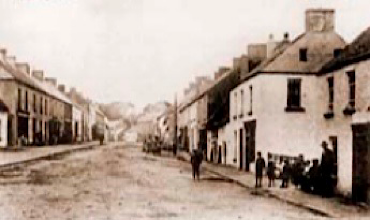
(From: “The Tragedies of Ballyconnell” by John Dorney, The Irish Story, http://www.theirishstory.com, June 2014 | Pictured: The main street in Ballyconnell in the early 20th century)
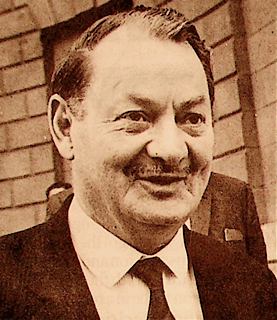
Ireland formally applies for European Economic Committee (EEC) membership in July 1961. Ó Móráin, as Minister for Lands and the Gaeltacht, delivers a widely reported address to the Castlebar Chamber of Commerce in 1962. In the speech, he argues that Ireland is “ready to subscribe to the political aims of the EEC” and that Ireland does not want to be seen as “committed” to its policy of neutrality. In the ensuing controversy, he and Lemass deny that there is any suggestion Ireland might or should abandon neutrality. Outside the country, foreign governments see this episode as a deliberately provoked debate to evaluate the government’s domestic room for manoeuvre on neutrality.
Ó Móráin is appointed Minister for Justice by Taoiseach Jack Lynch in 1968. It is in this role that he is most remembered. While he is still Minister, the Arms Crisis in Ireland erupts in 1970. This political scandal sees Government ministers Charles Haughey and Neil Blaney dismissed by the Taoiseach for alleged involvement in a conspiracy to smuggle arms to the Irish Republican Army (IRA) in Northern Ireland. Ó Móráin continually suffers from ill health, which is accentuated by his alcoholism. When the Arms Crisis erupts, Lynch comes to see him in a hospital in Galway and asks for his resignation. Ó Móráin is a witness at the subsequent Arms Trial. He testifies that he had passed on Garda intelligence reports about the involvement of ministers with the IRA to the Taoiseach before the arms were seized at Dublin Airport. Hus evidence at the trial has been described as “erratic.”
Ó Móráin loses his Dáil seat at the 1973 Irish general election and retires from politics. He dies at his home in Sutton, Dublin, in on May 6, 1983. With a Fianna Fáil guard of honour, he is buried in Castlebar. With his wife, Madge, he has one daughter, Sorcha, and two sons, John, and Michael, who dies in a road accident in 1972.
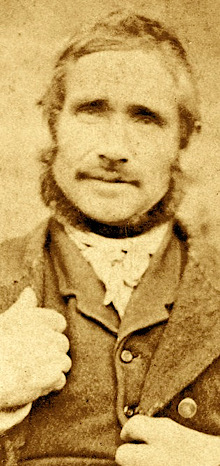
Maolra Seoighe (English: Myles Joyce), is an Irish man who is wrongfully convicted and hanged on December 15, 1882. He is found guilty of the Maumtrasna Murders and is sentenced to death. Though he can only speak Irish, the case is heard in English without any translation service. He is posthumously pardoned in 2018.
Seoighe is the most prominent figure in a controversial trial in 1882 that takes place while Ireland is part of the United Kingdom. Three Irish language speakers are condemned to death for the murder of a local family (John Joyce, his wife Brighid, his mother Mairéad, his daughter Peigí and son Mícheál) in Maumtrasna, on the border between County Mayo and County Galway. It is presumed by the authorities to be a local feud connected to sheep rustling and the Land War. Eight men are convicted on what turns out to be perjured evidence and three of them condemned to death: Maolra Seoighe (a father of five children), Pat Casey and Pat Joyce.
Covering the incident, The Spectator writes the following:
“The Tragedy at Maumtrasna, investigated this week in Dublin, almost unique as it is in the annals of the United Kingdom, brings out in strong relief two facts which Englishmen are too apt to forget. One is the existence in particular districts of Ireland of a class of peasants who are scarcely civilised beings, and approach far nearer to savages than any other white men; and the other is their extraordinary and exceptional gloominess of temper. In remote places of Ireland, especially in Connaught, on a few of the islands, and in one or two mountain districts, dwell cultivators who are in knowledge, in habits, and in the discipline of life no higher than Maories or other Polynesians.”
The court proceedings are carried out in a language the accused do not understand (English), with a solicitor from Trinity College Dublin (TCD), who does not speak Irish. The three are executed in Galway by William Marwood for the crime in 1882. The role of John Spencer, 5th Earl Spencer, who is then Lord Lieutenant of Ireland, is the most controversial aspect of the trial, leading most modern scholars to characterise it as a miscarriage of justice. Research carried out in The National Archives by Seán Ó Cuirreáin, has found that Spencer “compensated” three alleged eyewitnesses to the sum of £1,250, equivalent to €157,000 (by 2016 rates).
As of 2016, nobody has issued an apology or pardon for the executions, though the case has been periodically taken up by various political figures. The then MP for Westmeath, Timothy Harrington, takes up the case, claiming that the Crown Prosecutor for the case George Bolton, had deliberately withheld evidence from the trial. In 2011, two sitting members of the House of Lords, the Liberal Democrat life peers David Alton and Eric Lubbock, request a review of the case. Crispin Blunt, ToryParliamentary Under-Secretary of State for Prisons and Youth Justice, states that Seoighe was “probably an innocent man,” but he does not seek an official pardon.
Seoighe’s final words are: “Feicfidh mé Iosa Críost ar ball beag – crochadh eisean san éagóir chomh maith. … Ara, tá mé ag imeacht … Go bhfóire Dia ar mo bhean agus a cúigear dílleachtaí.” (I will be seeing Jesus Christ soon – he too was also unjustly hanged … I am leaving … the blessings of God on my wife and her five orphans.)
On April 4, 2018, Michael D. Higgins, the President of Ireland, issues a pardon on the advice of the government of Ireland saying “Maolra Seoighe was wrongly convicted of murder and was hanged for a crime that he did not commit”. It is the first presidential pardon relating to an event predating the foundation of the state in 1922 and the second time a pardon has been issued after an execution. Seoighe’s case is not an isolated one, and there are strong similarities with the case of Patrick Walsh who was hanged in the Galway jail on September 22, 1882, just three months before Seoighe for the murders of Martin and John Lydon. The same key players and political factors are active in both cases and his conviction is just as questionable as that of Seoighe.
In September 2009, the story is featured on RTÉ‘s CSI programme under an episode entitled CSI Maamtrasna Massacre. A dramatised Irish language film regarding the affair, entitled Murdair Mhám Trasna, produced by Ciarán Ó Cofaigh is released in 2017.
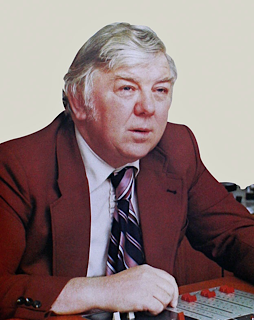
According to Sam Smyth in the Irish Independent, Mac Mathúna is “on a mission to collect songs and stories, music, poetry and dance before they were buried under the coming tsunami of pop music.”
Mac Mathúna presents the radio programme, Mo Cheol Thú, for 35 years. Upon his retirement in 2005, the managing director of RTÉ Radio, Adrian Moynes, describes him as “inseparable from RTÉ Radio.” Upon his death in 2009, the Irish Independent describes him as “a national treasure.”
After college Mac Mathúna works as a teacher and later at the Placenames Commission. In 1954, he joins Radio Éireann where his job is to record Irish traditional musicians playing in their own locales. This entails visiting such places as Sliabh Luachra, County Clare and County Sligo, and the resulting recordings feature in his radio programmes: Ceolta Tire, A Job of Journeywork and Humours of Donnybrook.
Mac Mathúna’s long-running Sunday morning radio series, Mo Cheol Thú (You are my music), begins in 1970 and continues until November 2005, when he retires from broadcasting. Each 45-minute programme offers a miscellany of archive music, poetry and folklore, mainly of Irish origin. It is one of radio’s longest running programmes. The last episode is broadcast on November 27, 2005, at 8:10 a.m.
Mac Mathúna wins two Jacob’s Awards, in 1969 and 1990, for his RTÉ Radio programmes promoting Irish traditional music. He receives the Freedom of Limerick city in June 2004. He is also awarded honorary doctorates by NUI Galway and the University of Limerick. In 2007, he receives the Musicians Award at the 10th annual TG4 Traditional Music Awards.
Joe Kennedy in the Sunday Independent in 2007 compares Mac Mathúna to “an amiable rock, rolling gently along, still picking up some moss and morsels of music that he may have missed.”
Mac Mathúna‘s wife, Dolly MacMahon (using the English version of her surname), is a singer of traditional songs. She comes from Galway and meets her husband in 1955. He has two sons named Padraic and Ciarán, one daughter named Déirdre, and four grandchildren at the time of his death: Eoin, Colm, Conor and Liam.
Musicians performing at the ceremony include Peadar Ó Riada, Cór Cúil Aodha and members of The Chieftains and Planxty. The corpse is then taken to Mount Jerome Crematorium. Journalist Kevin Myers says Mac Mathúna’s legacy will be the “rebirth of Irish music,” adding, “Well, if Ciarán Mac Mathúna can die, I suppose anyone can. Actually, I had always thought that he was immortal. He certainly appeared to have all the ingredients.”
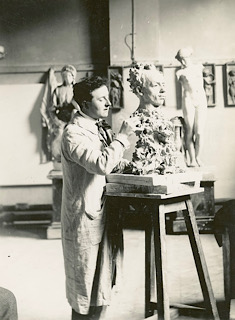
Power is born to Henry Power, a watchmaker, and Mary (née Atkins), an embroideress. He has one older brother, and one younger sister. He attends a Christian Brothersnational school in North Brunswick Street. As a child he plays in local clay brickyards and sculpts busts of his friends. After finishing his primary school education, he trains with a firm of sculptors run by Edward Smyth. In 1884, he enrolls as an evening pupil at the Dublin Metropolitan School of Art (DMSA), later attending as a full-time student from 1906 to 1911. During his time at the DMSA he is taught and strongly influenced by John Hughes, Oliver Sheppard and William Orpen. He wins a number of prizes during his time at the DMSA, including medals, three scholarships, book prizes, and the national gold medal for the best modeling of a nude figure, in Ireland, Scotland, and the Channel Islands in 1911.
Power marries Agnes Kelly in 1903. The couple has ten children, four daughters and six sons, including May and James who also become sculptors.
Power establishes his own stone-carving business in 1912 from his new home at 18 Geraldine Street, Phibsborough, Dublin. As the firm grows, it moves to premises nearby at 15 Berkeley Street from 1930. He executes a wide range of works, including monuments and architectural features in bronze, marble, and stone. Among his notable works are the figure of “Science” designed by Sheppard from the façade of the new Royal College of Science for Ireland (later Government Buildings) on Merrion Street, Dublin, carved motifs and sphinxes for the Gresham Hotel, O’Connell Street, and four statues on the dome of Christ the King church, Carndonagh, County Donegal.
Power is considered the leading Irish sculptor of the 1920s and 1930s. He is a nationalist and promotes the use of Irish materials such as limestone from Durrow and Connemara marble. He is noted for his academic realist style. He exhibits regularly with the Royal Hibernian Academy from 1906, becoming an associate member in 1911, and a full member in 1919. Among those he models sculptures for are James Stephens (1913), W. B. Yeats (1918), and Lord Dunsany (1920). Among his patrons are Oliver St. John Gogarty, and through Gogarty he is commissioned to model a number of prominent Irish nationalists. Gogarty asks him to carve a portrait of Terence MacSwiney in 1920, while MacSwiney is on hunger strike in HM Prison Brixton, London. Smuggled into the prison to do a thumbnail sketch, Power then carves a portrait in the form of a life mask.
On Gogarty’s recommendation, Power is commissioned by the Irish Free State government to create portraits of a number of leading politicians including Arthur Griffith (1922), Michael Collins (1936), and Austin Stack (1939). He is also privately commissioned to execute a portrait of Éamon de Valera in 1944. Among his monumental works are sculptures of Tom Kettle (1919) at St. Stephen’s Green, Dublin, Christ the King in Gort, County Galway, (1933), Pádraic Ó Conaire (1935) at Eyre Square, Galway, and W. B. Yeats (1939) at Sandymount Green, Dublin. He is one of the artists invited to submit designs for the new coinage of the Irish Free State in 1928.
Power dies in Dublin on July 10, 1945, following complications from a double hernia. His is buried in Glasnevin Cemetery, Dublin.


 seamus dubhghaill