The first recorded “Twelfth of July” sectarian riots erupt in Belfast on July 12, 1813 as clashes break out between Orange marchers and Irish nationalists. Several Orangemen open fire on a crowd in Hercules Street, killing two Protestants and wounding four other people.
On and around the Twelfth, large parades are held by the Orange Order and Ulster loyalist marching bands, streets are bedecked with British flags and bunting, and large towering bonfires are lit. Today the Twelfth is mainly celebrated in Ulster, especially in Northern Ireland where it is a public holiday, but smaller celebrations are held in other parts of the world where Orange lodges have been established. The Twelfth involves thousands of participants and spectators.
In Ulster, where about half the population is from a Protestant background and half from a Catholic background, the Twelfth has been accompanied by violence since its beginning. Orange marches through Irish Catholic and Irish nationalist neighbourhoods are usually met with opposition from residents, who see the Orange Order and its marches as sectarian, triumphalist and supremacist. This sometimes leads to violence.
The Order is also politically a unionist/loyalist organisation. Violence related to the Twelfth in Northern Ireland escalates during the 30-year ethno-political conflict known as the Troubles. The Drumcree conflict is the most well-known dispute involving Orange marches.
Attempts have recently been made to downplay the political aspects of the marches and present the Twelfth as a cultural, family-friendly event at which tourists are welcome. The majority of events pass off peacefully, however, there is a small contingency who occasionally stir up trouble.
When July 12 falls on a Sunday, as it does this year, the parades are held on the following day instead.
The Drumcree conflict or Drumcree standoff is a dispute over yearly Orange Order parades in the town of Portadown, County Armagh, Northern Ireland. The town is mainly Protestant and hosts numerous Protestant/loyalists marches each summer but has a significant Catholic minority. The Orange Order, a Protestant unionist organization, insists that it should be allowed to march its traditional route to and from Drumcree Church on the Sunday before The Twelfth. However, most of the route is through the mainly Catholic/Irish nationalist section of town. The residents, who see the march as sectarian, triumphalist and supremacist, seek to ban it from their area. The Orangemen see this as an attack on their traditions as they have marched the route since 1807, when the area was mostly farmland.
In 1995 and 1996, residents succeed in stopping the march. This leads to a standoff at Drumcree between the security forces and thousands of Orangemen/loyalists. Following a wave of loyalist violence, police allow the march through. In 1997, security forces lock down the Catholic area and let the march through, citing loyalist threats to kill Catholics if they are stopped. This sparks widespread protests and violence by Irish nationalists. From 1998 onward, the march is banned from Garvaghy Road and the army seals off the Catholic area with large steel, concrete and barbed wire barricades. Each year there is a major standoff at Drumcree and widespread loyalist violence. Since 2001 things have been relatively calm but moves to get the two sides into face-to-face talks have failed.
Early in 1998 the Public Processions (Northern Ireland) Act 1998 is passed, establishing the Parades Commission. The Commission is responsible for deciding what route contentious marches should take. On June 29, 1998, the Parades Commission decides to ban the march from Garvaghy Road.
On Friday, July 3, about 1,000 soldiers and 1,000 police are deployed in Portadown. The soldiers build large barricades made of steel, concrete and barbed wire across all roads leading into the nationalist area. In the fields between Drumcree Church and the nationalist area they dig a trench, fourteen feet wide, which is then lined with rows of barbed wire. Soldiers also occupy the Catholic Drumcree College, St. John the Baptist Primary School and some properties near the barricades.
On Sunday, July 5, the Orangemen march to Drumcree Church and state that they will remain there until they are allowed to proceed. About 10,000 Orangemen and loyalists arrive at Drumcree from across Northern Ireland. A loyalist group calling itself “Portadown Action Command” issues a statement which reads, “As from midnight on Friday 10 July 1998, any driver of any vehicle supplying any goods of any kind to the Gavaghy Road will be summarily executed.”
Over the next ten days, there are loyalist protests and violence across Northern Ireland in response to the ban. Loyalists block roads and attack the security forces as well as Catholic homes, businesses, schools and churches. On July 7, the mainly Catholic village of Dunloy is “besieged” by over 1,000 Orangemen. The County Antrim Grand Lodge says that its members have “taken up positions” and “held” the village. On July 8, eight blast bombs are thrown at Catholic homes in the Collingwood area of Lurgan. There are also sustained attacks on the security forces at Drumcree and attempts to break through the blockade. On July 9, the security forces at Drumcree are attacked with gunfire and blast bombs. They respond with plastic bullets. The police recorded 2,561 “public order incidents” throughout Northern Ireland.
On Sunday, July 12, brothers Jason (aged 8), Mark (aged 9) and Richard Quinn (aged 10) are burned to death when their home is petrol bombed by loyalists. The boys’ mother is a Catholic and their home is in a mainly-Protestant section of Ballymoney. Following the murders, William Bingham, County Grand Chaplain of Armagh and member of the Orange Order negotiating team, says that “walking down the Garvaghy Road would be a hollow victory, because it would be in the shadow of three coffins of little boys who wouldn’t even know what the Orange Order is about.” He says that the Order has lost control of the situation and that “no road is worth a life.” However, he later apologizes for implying that the Order is responsible for the deaths. The murders provoke widespread anger and calls for the Order to end its protest at Drumcree. Although the number of protesters at Drumcree drops considerably, the Portadown lodges vote unanimously to continue their standoff.
On Wednesday, July 15, the police begin a search operation in the fields at Drumcree. A number of loyalist weapons are found, including a homemade machine gun, spent and live ammunition, explosive devices, and two crossbows with more than a dozen homemade explosive arrows.
From June 7, 1921, until March 30, 1972, the devolved legislature for Northern Ireland is the Parliament of Northern Ireland, which always has an Ulster Unionist Party (UUP) majority and always elects a UUP government. The Parliament is suspended on March 30, 1972.
Shortly after this first parliament is abolished, attempts begin to restore devolution on a new basis that will see power shared between Irish nationalists and unionists. To this end a new parliament, the Northern Ireland Assembly, is established by the Government of the United Kingdom on May 3, 1973.
Following the June 28 elections, the Northern Ireland Constitution Act 1973, which receives the Royal Assent on July 18, 1973, abolishes the suspended Parliament of Northern Ireland and the post of Governor and makes provision for a devolved administration consisting of an Executive chosen by the Assembly.
One hundred eight members are elected by single transferable vote from Northern Ireland’s eighteen Westminster constituencies, with five to eight seats for each depending on its population. The Assembly meets for the first time on July 31, 1973.
After opposition from within the Ulster Unionist Party and the Ulster Workers’ Council strike over the proposal of an all-Ireland council, the Executive and Assembly collapses on May 28, 1974, when Brian Faulkner resigns as Chief Executive. The Northern Ireland Assembly is abolished by the Northern Ireland Act 1974.
In 1982 another Northern Ireland Assembly is established at Stormont, initially as a body to scrutinise the actions of the Secretary of State, the British minister with responsibility for Northern Ireland. It receives little support from Irish nationalists and is officially dissolved in 1986.
The Northern Ireland Act 1998 formally establishes the Assembly in law, in accordance with the Good Friday Agreement. The first election of Members of the Northern Ireland Assembly is on June 25, 1998, and it first meets on July 1, 1998. However, it only exists in “shadow” form until December 2, 1999, when full powers are devolved to the Assembly. Since then, the Assembly has operated intermittently and has been suspended on five occasions.
Pressure is coming from all sides on the Irish Republican Army to give peace a chance in Northern Ireland. Governments in London, Dublin, and Washington, D.C., as well as the vast majority of Northern Ireland’s citizens, are calling on the paramilitary group to call a new ceasefire. Even Gerry Adams, president of Sinn Féin, the IRA’s political wing, appeals to the IRA to reconsider its refusal to renew the ceasefire it broke in February with a bomb blast in London.
An opinion poll in the Dublin-based Sunday Tribune shows 97 percent of people, including 84 percent of Sinn Féin voters, want the IRA to renew its ceasefire.
Earlier in the year Senator Mitchell reported to the British government on the prospects for peace in Northern Ireland and drew up six principles which, if fulfilled by all the parties, would produce a lasting political settlement.
As internal and international pressure on the IRA mounts, politicians from the Ulster Unionist Party (UUP), a moderate party representing the province’s Protestants, shows signs of drifting apart on whether Sinn Féin should be allowed to participate. Even if the IRA announces “a ceasefire of convenience,” Sinn Féin should be barred from attending, says Peter Robinson, deputy leader of the radical Democratic Unionist Party (DUP).
Furthermore, the choice of Mitchell to head the talks makes some Protestants uneasy. Earlier, DUP leader Ian Paisley says Mitchell could not be trusted as chairman. “He is carrying too much American Irish baggage.”
Yet David Trimble, leader of the larger UUP, says a new IRA ceasefire might “get Sinn Féin to the door.” To be fully admitted to the all-party talks, however, its leadership will have to “commit itself to peace and democracy.” Trimble adds that he has doubts about Mitchell’s objectivity and had sought “certain assurances” before finally agreeing to lead a UUP delegation to the opening round. Mitchell, at an impromptu news conference in Belfast, says he plans to show “fairness and impartiality.”
The attitudes of the two unionist parties appear to reflect concern that the IRA would declare a ceasefire before the talks open, or during the early stages, technically clearing the way for Sinn Féin participation. David Wilshire, a senior Conservative member of Britain’s Parliament, who supports the unionist cause, says that a ceasefire by the IRA now would be a “cynical ploy.” He adds that “the government should not fall for it.”
Sinn Féin leaders, meanwhile, meet on Saturday, June 8, and announced that regardless of the IRA’s intentions, Adams and other Sinn Féin leaders will turn up at the opening session and demand to be admitted. They cite the party’s strong showing at special elections in May to the peace forum at which they obtain 15 percent of the vote and win a strong mandate from Catholic voters in West Belfast.
It is “the British government’s responsibility” to urge the IRA to renew its truce, says Martin McGuinness, Adams’s deputy. Yet Adams himself makes a direct approach to the IRA. This is confirmed by Albert Reynolds, the former Irish Taoiseach. He says that Adams has advised him that he is about to make a new ceasefire appeal to the IRA leadership. “I am now satisfied Gerry Adams and Sinn Féin will seek an early reinstatement of the ceasefire which, of course, has not broken down in Northern Ireland. I see a set of similar elements to those in 1994, which brought about the ceasefire, now coming together. Everyone must now compromise,” Reynolds says.
On June 8, the IRA tells the British Broadcasting Corporation that its military council has called a meeting to examine the agenda for the Northern Ireland talks.
(From:”Hopes for N. Ireland Talks Rely on Squeezing the IRA” by Alexander MacLeod, The Christian Science Monitor, June 10, 1996)
A man of intellectual power, O’Higgins is described by William Butler Yeats as “a great man in his pride confronting murderous men.” He is in fact murdered by maverick republicans while on his way to church.
Educated at University College Dublin, O’Higgins is apprenticed to his uncle, a lawyer. Following the Easter Rising in 1916, he joins the Sinn Féinnationalist movement and is imprisoned. In 1918, while still in jail, he is elected to Parliament from Queen’s County, and in the next year he becomes assistant to the minister of local government, William Thomas Cosgrave. He goes on to become a prominent member of Cumann na nGaedheal.
As Minister for Justice, O’Higgins establishes the Garda Síochána police force and takes summary measures to restore order following the civil war between the Free State forces and the Irish Republican Army (IRA). His role in the execution of 77 republicans in 1922–23 makes him many enemies, as does his sardonic wit, his inflammatory speeches during the civil war, and his curtailment of the liquor trade.
On Sunday, July 10, 1927, O’Higgins is assassinated at the age of 35 on the Booterstown Avenue side of Cross Avenue in Dublin, while on his way to Mass at the Church of the Assumption. The assassination is carried out by three anti-Treaty members of the IRA, Timothy Coughlan, Bill Gannon and Archie Doyle, in revenge for O’Higgins’ part in the executions of the 77 IRA prisoners during the Irish Civil War.
None of the three assassins is ever apprehended or charged, but Coughlan, a member of Fianna Fáil as well as the IRA, is killed in 1928 in Dublin by a police undercover agent whom he is attempting to murder. The other two benefit from the amnesty to IRA members issued by Éamon de Valera, upon his assumption of power in 1932. Gannon, who dies in 1965, joins the Communist Party of Ireland and plays a central role in organising Irish volunteers for the Spanish Civil War. Doyle remains a prominent IRA militant and takes part in various acts in the early 1940s. He lives to an old age, dying in 1980, and continues to take pride in having killed O’Higgins.
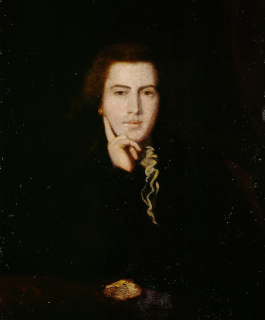
Fitzgerald is first elected to the Parliament of Ireland in 1783. His enthusiasm for the French Revolution leads to dismissal from the army in 1792. Four years later he joins the Society of United Irishmen, a nationalist organization that aspires to free Ireland from English control. This group appoints him to head the military committee formed to plan an uprising and obtain aid from the French revolutionary regime.
Although the French delay in supplying arms and troops, Fitzgerald’s committee proceeds with its plans for a general rebellion. The insurrection is set for May 23, 1798. In March his co-conspirators are seized by government agents, making him the most important United Irish leader still at liberty. On May 9 a reward of £1,000 is offered by Dublin Castle for his apprehension.
FitzGerald’s hiding place in a house in Thomas Street, Dublin is disclosed by a Catholic barrister and informant named Francis Magan. On May 18 Major Henry Sirr leads a military party to the house where FitzGerald is in bed suffering from a fever. Alerted by the commotion, he jumps out of bed and, ignoring the pleas of the arresting officers Captain William Bellingham Swan and Captain Daniel Frederick Ryan to surrender peacefully, FitzGerald stabs Swan and mortally wounds Ryan with a dagger in a desperate attempt to escape. He is secured only after Major Sirr shoots him in the shoulder.
FitzGerald is conveyed to New Prison, Dublin where he is denied proper medical treatment. After a brief detention in Dublin Castle he is taken to Newgate Prison, Dublin where his wound, which had now become infected, becomes mortally inflamed. His wife, whom the government probably has enough evidence to convict of treason, had fled the country, never to see her husband again, but his brother Henry and his aunt Lady Louisa Conolly are allowed to see him in his last moments.
FitzGerald dies at the age of 34 on June 4, 1798, as the rebellion rages outside. He is buried the next day in the cemetery of St. Werburgh’s Church, Dublin. An Act of Attainder confiscating his property is passed as 38 Geo. 3 c. 77 but is eventually repealed in 1819.
(Pictured: Portrait of Edward FitzGerald by Hugh Douglas Hamilton, 1796. National Portrait Gallery, London.)
At its peak the force has around 8,500 officers with a further 4,500 who are members of the RUC Reserve. During the Troubles (late 1960s-1998), 319 members of the RUC are killed and almost 9,000 injured in paramilitary assassinations or attacks, mostly by the Provisional Irish Republican Army, which by 1983 makes the RUC the most dangerous police force in the world in which to serve. During the same period, the RUC kills 55 people, 28 of whom are civilians.
The RUC is superseded by the Police Service of Northern Ireland (PSNI) in 2001. The former police force is renamed and reformed, as is provided for by the final version of the Police (Northern Ireland) Act 2000. The RUC has been accused by republicans and Irish nationalists of one-sided policing and discrimination, as well as collusion with loyalist paramilitaries. Conversely, it is praised as one of the most professional policing operations in the world by British security forces.
Allegations regarding collusion prompt several inquiries, the most recent of which is published by Police Ombudsman For Northern IrelandNuala O’Loan on January 22, 2007. The report identifies police, Criminal Investigation Department (CID) and Special Branch collusion with loyalist terrorists under 31 separate headings, in her report on the murder of Raymond McCord, Jr. and other matters, but no member of the RUC has been charged or convicted of any criminal acts as a result of these inquiries. Ombudsman O’Loan states in her conclusions that there is no reason to believe the findings of the investigation were isolated incidents.
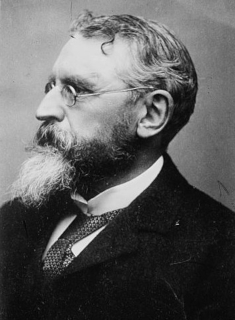
In the 1890s Stopford Green becomes interested in Irish history and the nationalist movement as a result of her friendship with John Francis Taylor. She is vocal in her opposition to English colonial policy in South Africa during the Boer Wars and supports Roger Casement‘s Congo Reform movement. Her 1908 book The Making of Ireland and its Undoing argues for the sophistication and richness of the native Irish civilisation. She is active in efforts to make the prospect of Home Rule more palatable to Ulster Unionists. She is closely involved in the Howth gunrunning.
Stopford Green moves to Dublin in 1918 where her house at 90 St. Stephen’s Green becomes an intellectual centre. She supports the pro-Treaty side in the Irish Civil War and is among the first nominees to the newly formed Seanad Éireann in 1922, where she serves as an independent member until her death in Dublin on May 28, 1929, two days shy of her 82nd birthday. She is one of four women elected or appointed to the first Seanad in 1922.
The Dublin and Monaghan bombings of May 17, 1974 are a series of co-ordinated bombings in Dublin and Monaghan, Ireland. Three car bombs explode in Dublin at Parnell Street, Talbot Street and South Leinster Street during the evening rush hour and a fourth car bomb explodes in Monaghan, just south of the border with Northern Ireland, almost ninety minutes later. The bombs kill 33 civilians and a full-term unborn child, and injure almost 300. The bombings are the deadliest attack of the conflict known as the Troubles, and the deadliest attack in the Republic of Ireland‘s history. Most of the victims are young women, although the ages of the dead range from pre-born up to 80 years.
The Ulster Volunteer Force (UVF), an Ulster loyalistparamilitary group from Northern Ireland, claims responsibility for the bombings in 1993. It has launched a number of attacks in the Republic since 1969. There are allegations taken seriously by inquiries that elements of the British state security forces help the UVF carry out the bombings, including members of the Glenanne gang. Some of these allegations have come from former members of the security forces. The Irish parliament‘s Joint Committee on Justices calls the attacks an act of international terrorism involving British state forces. The month before the bombings, the British government lifts the UVF’s status as a proscribed organisation.
The bombings happen during the Ulster Workers’ Council strike. This is a general strike called by hardline loyalists and unionists in Northern Ireland who oppose the Sunningdale Agreement. Specifically, they oppose the sharing of political power with Irish nationalists and the proposed role for the Republic in the governance of Northern Ireland. The Republic’s government had helped bring about the Agreement. The strike brings down the Agreement and the Northern Ireland Assembly on May 28.
No one has ever been charged with the bombings. A campaign by the victims’ families leads to an Irish government inquiry under Justice Henry Barron. His 2003 report criticises the Garda Síochána‘s investigation and says the investigators stopped their work prematurely. It also criticises the Fine Gael/Labour Partygovernment of the time for its inaction and lack of interest in the bombings. The report says it is likely that British security force personnel or MI5 intelligence is involved but has insufficient evidence of higher-level involvement. However, the inquiry is hindered by the British government’s refusal to release key documents. The victims’ families and others are continuing to campaign to this day for the British government to release these documents.
(Pictured: Some of the damage caused by the second car bomb on Talbot Street, Dublin)
The night before the bombing, snipers from the UVF West Belfast Brigade take up position along the second floor of an abandoned row of flats at the edge of the Ulster Protestant Springmartin estate. The flats overlooked the Catholic Ballymurphy estate. Rifles, mostly World War II stock, are ferried to the area from dumps in the Shankill Road.
The violence begins shortly after 5:00 PM on Saturday, May 13, 1972, when a car bomb, planted by Ulster loyalists, explodes without warning outside the crowded Kelly’s Bar, at the junction of the Springfield Road and Whiterock Road. The pub is in a mainly Irish Catholic and nationalist area of Ballymurphy and most of its customers are from the area. At the time of the blast, the pub is crowded with men watching an association football match between England and West Germany on colour television. Following the blast, the UVF snipers open fire on the survivors. This begins the worst fighting in Northern Ireland since the suspension of the Parliament of Northern Ireland and the imposition of direct rule from London.
Sixty-three people are injured, eight of them seriously. John Moran, age 19, who had been working at Kelly’s as a part-time barman, dies of his injuries on May 23.
For the rest of the night and throughout the next day, local IRA units fight gun battles with both the UVF and British Army. Most of the fighting takes place along the interface between the Catholic Ballymurphy and Ulster Protestant Springmartin housing estates, and the British Army base that sits between them. Five civilians (four Catholics, one Protestant), a British soldier and a member of the IRA Youth Section are killed in the violence. Four of the dead are teenagers.
At first, the British Army claims that the blast had been an “accident” caused by a Provisional IRA bomb. The Secretary of State for Northern Ireland, William Whitelaw, tells the House of Commons on May 18 that the blast is caused by a Provisional IRA bomb that exploded prematurely. However, locals suspect that the loyalist Ulster Defence Association (UDA) had planted the bomb. Republican sources say that IRA volunteers would not risk storing such a large number of explosives in such a crowded pub. It later emerges that the bomb had indeed been planted by loyalists.
A memorial plaque on the site of the former pub names three members of staff who lost their lives as a result of the bomb and the gun battles that followed. It reads:
This plaque marks the spot where Kelly’s Bar once stood and here on 13th May 1972 a no warning Loyalist car bomb exploded. As a result, 66 people were injured and three innocent members of staff of Kelly’s Bar lost their lives. They were: Tommy McIlroy (died 13th May 1972) John Moran (died from his injuries 23rd May 1972) Gerard Clarke (died from his injuries 6th September 1989) Ar dheis Dé go raibh a namacha”