seamus dubhghaill

Promoting Irish Culture and History from Little Rock, Arkansas, USA


Leave a comment

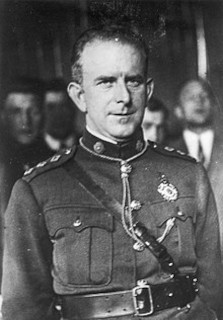
Birth of Kevin Christopher O’Higgins, Politician

iohiggs001p1

Kevin Christopher O’Higgins, Irish politician who serves as Minister for Economic Affairs from January 1922 to September 1922, Minister for External Affairs from June 1927 to July 1927, Minister for Justice from August 1922 to July 1927 and Vice-President of the Executive Council of the Irish Free State from 1922 to 1927, is born in Stradbally, Queen’s County (County Laois since 1922) on June 7, 1892. He serves as a Teachta Dála (TD) from 1921 to 1927 and is a Member of Parliament (MP) for Queen’s County from 1918 to 1921.

A man of intellectual power, O’Higgins is described by William Butler Yeats as “a great man in his pride confronting murderous men.” He is in fact murdered by maverick republicans while on his way to church.

Educated at University College Dublin, O’Higgins is apprenticed to his uncle, a lawyer. Following the Easter Rising in 1916, he joins the Sinn Féin nationalist movement and is imprisoned. In 1918, while still in jail, he is elected to Parliament from Queen’s County, and in the next year he becomes assistant to the minister of local government, William Thomas Cosgrave. He goes on to become a prominent member of Cumann na nGaedheal.

O’Higgins supports the Anglo-Irish Treaty with Great Britain that creates the Irish Free State. In 1922 he is appointed Minister for Economic Affairs and Vice-President of the Executive Council. He helps to draft the Irish Free State constitution and secures its passage through Dáil Éireann, lower house of the Oireachtas, the Irish parliament. Working for a united Ireland within the British Commonwealth, he plays an important part in the 1926 Imperial Conference. He also prominently represents the Free State in the League of Nations.

As Minister for Justice, O’Higgins establishes the Garda Síochána police force and takes summary measures to restore order following the civil war between the Free State forces and the Irish Republican Army (IRA). His role in the execution of 77 republicans in 1922–23 makes him many enemies, as does his sardonic wit, his inflammatory speeches during the civil war, and his curtailment of the liquor trade.

On Sunday, July 10, 1927, O’Higgins is assassinated at the age of 35 on the Booterstown Avenue side of Cross Avenue in Dublin, while on his way to Mass at the Church of the Assumption. The assassination is carried out by three anti-Treaty members of the IRA, Timothy Coughlan, Bill Gannon and Archie Doyle, in revenge for O’Higgins’ part in the executions of the 77 IRA prisoners during the Irish Civil War.

None of the three assassins is ever apprehended or charged, but Coughlan, a member of Fianna Fáil as well as the IRA, is killed in 1928 in Dublin by a police undercover agent whom he is attempting to murder. The other two benefit from the amnesty to IRA members issued by Éamon de Valera, upon his assumption of power in 1932. Gannon, who dies in 1965, joins the Communist Party of Ireland and plays a central role in organising Irish volunteers for the Spanish Civil War. Doyle remains a prominent IRA militant and takes part in various acts in the early 1940s. He lives to an old age, dying in 1980, and continues to take pride in having killed O’Higgins.


Leave a comment

Death of Lord Edward FitzGerald

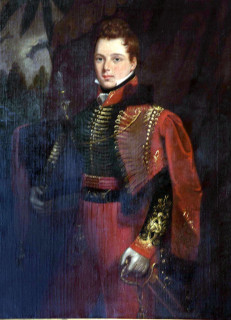
lord-edward-fitzgerald

Lord Edward FitzGerald, Irish aristocrat and revolutionary, dies on June 4, 1798, of wounds received while resisting arrest on a charge of treason.

FitzGerald, the fifth son of James FitzGerald, 1st Duke of Leinster, and the Lady Emily Lennox the daughter of Charles Lennox, 2nd Duke of Richmond, is born at Carton House, near Dublin on October 15, 1763. He spends most of his childhood in Frescati House at Blackrock in Dublin where he is tutored in a manner chiefly directed to the acquisition of knowledge that would fit him for a military career.

FitzGerald joins the British Army in 1779 and in 1781 is aide-de-camp on the staff of Francis Rawdon-Hastings, 1st Marquess of Hastings in the southern theatre of the American Revolutionary War. He is seriously wounded at the Battle of Eutaw Springs on September 8, 1781.

Fitzgerald is first elected to the Parliament of Ireland in 1783. His enthusiasm for the French Revolution leads to dismissal from the army in 1792. Four years later he joins the Society of United Irishmen, a nationalist organization that aspires to free Ireland from English control. This group appoints him to head the military committee formed to plan an uprising and obtain aid from the French revolutionary regime.

Although the French delay in supplying arms and troops, Fitzgerald’s committee proceeds with its plans for a general rebellion. The insurrection is set for May 23, 1798. In March his co-conspirators are seized by government agents, making him the most important United Irish leader still at liberty. On May 9 a reward of £1,000 is offered by Dublin Castle for his apprehension.

FitzGerald’s hiding place in a house in Thomas Street, Dublin is disclosed by a Catholic barrister and informant named Francis Magan. On May 18 Major Henry Sirr leads a military party to the house where FitzGerald is in bed suffering from a fever. Alerted by the commotion, he jumps out of bed and, ignoring the pleas of the arresting officers Captain William Bellingham Swan and Captain Daniel Frederick Ryan to surrender peacefully, FitzGerald stabs Swan and mortally wounds Ryan with a dagger in a desperate attempt to escape. He is secured only after Major Sirr shoots him in the shoulder.

FitzGerald is conveyed to New Prison, Dublin where he is denied proper medical treatment. After a brief detention in Dublin Castle he is taken to Newgate Prison, Dublin where his wound, which had now become infected, becomes mortally inflamed. His wife, whom the government probably has enough evidence to convict of treason, had fled the country, never to see her husband again, but his brother Henry and his aunt Lady Louisa Conolly are allowed to see him in his last moments.

FitzGerald dies at the age of 34 on June 4, 1798, as the rebellion rages outside. He is buried the next day in the cemetery of St. Werburgh’s Church, Dublin. An Act of Attainder confiscating his property is passed as 38 Geo. 3 c. 77 but is eventually repealed in 1819.

(Pictured: Portrait of Edward FitzGerald by Hugh Douglas Hamilton, 1796. National Portrait Gallery, London.)


Leave a comment

Founding of the Royal Ulster Constabulary

royal-ulster-constabulary-badgeThe Royal Ulster Constabulary (RUC), the police force in Northern Ireland from 1922 to 2001, is founded on June 1, 1922 as a successor to the Royal Irish Constabulary (RIC).

At its peak the force has around 8,500 officers with a further 4,500 who are members of the RUC Reserve. During the Troubles (late 1960s-1998), 319 members of the RUC are killed and almost 9,000 injured in paramilitary assassinations or attacks, mostly by the Provisional Irish Republican Army, which by 1983 makes the RUC the most dangerous police force in the world in which to serve. During the same period, the RUC kills 55 people, 28 of whom are civilians.

The RUC is superseded by the Police Service of Northern Ireland (PSNI) in 2001. The former police force is renamed and reformed, as is provided for by the final version of the Police (Northern Ireland) Act 2000. The RUC has been accused by republicans and Irish nationalists of one-sided policing and discrimination, as well as collusion with loyalist paramilitaries. Conversely, it is praised as one of the most professional policing operations in the world by British security forces.

Allegations regarding collusion prompt several inquiries, the most recent of which is published by Police Ombudsman For Northern Ireland Nuala O’Loan on January 22, 2007. The report identifies police, Criminal Investigation Department (CID) and Special Branch collusion with loyalist terrorists under 31 separate headings, in her report on the murder of Raymond McCord, Jr. and other matters, but no member of the RUC has been charged or convicted of any criminal acts as a result of these inquiries. Ombudsman O’Loan states in her conclusions that there is no reason to believe the findings of the investigation were isolated incidents.


Leave a comment

Birth of Alice Stopford Green, Historian & Nationalist

NPG x74642,Alice Stopford Green (nÈe Alice Sophia Amelia Stopford),by Henry Herschel Hay Cameron (later The Cameron Studio)

Alice Stopford Green, Irish historian and nationalist, is born in Kells, County Meath on May 30, 1847. She is noted for proving the Irish had a rich culture before English rule. A strong supporter of the Anglo-Irish Treaty of 1921, she is nominated to the first Seanad Éireann in December 1922.

Stopford Green is born Alice Sophia Amelia Stopford. Her father, Edward Adderley Stopford, is Rector of Kells and Archdeacon of Meath. Her paternal grandfather is Edward Stopford, the Church of Ireland Bishop of Meath, and she is a cousin of Stopford Brooke and Mother Mary Clare. From 1874 to 1877 she lives in London where she meets the historian John Richard Green. They are married in Chester on June 14, 1877; however, he dies in 1883. John Morley publishes her first historical work, Henry II, in 1888.

In the 1890s Stopford Green becomes interested in Irish history and the nationalist movement as a result of her friendship with John Francis Taylor. She is vocal in her opposition to English colonial policy in South Africa during the Boer Wars and supports Roger Casement‘s Congo Reform movement. Her 1908 book The Making of Ireland and its Undoing argues for the sophistication and richness of the native Irish civilisation. She is active in efforts to make the prospect of Home Rule more palatable to Ulster Unionists. She is closely involved in the Howth gunrunning.

Stopford Green moves to Dublin in 1918 where her house at 90 St. Stephen’s Green becomes an intellectual centre. She supports the pro-Treaty side in the Irish Civil War and is among the first nominees to the newly formed Seanad Éireann in 1922, where she serves as an independent member until her death in Dublin on May 28, 1929, two days shy of her 82nd birthday. She is one of four women elected or appointed to the first Seanad in 1922.


Leave a comment

The Dublin and Monaghan Bombings

dublin-and-monaghan-bombings

The Dublin and Monaghan bombings of May 17, 1974 are a series of co-ordinated bombings in Dublin and Monaghan, Ireland. Three car bombs explode in Dublin at Parnell Street, Talbot Street and South Leinster Street during the evening rush hour and a fourth car bomb explodes in Monaghan, just south of the border with Northern Ireland, almost ninety minutes later. The bombs kill 33 civilians and a full-term unborn child, and injure almost 300. The bombings are the deadliest attack of the conflict known as the Troubles, and the deadliest attack in the Republic of Ireland‘s history. Most of the victims are young women, although the ages of the dead range from pre-born up to 80 years.

The Ulster Volunteer Force (UVF), an Ulster loyalist paramilitary group from Northern Ireland, claims responsibility for the bombings in 1993. It has launched a number of attacks in the Republic since 1969. There are allegations taken seriously by inquiries that elements of the British state security forces help the UVF carry out the bombings, including members of the Glenanne gang. Some of these allegations have come from former members of the security forces. The Irish parliament‘s Joint Committee on Justices calls the attacks an act of international terrorism involving British state forces. The month before the bombings, the British government lifts the UVF’s status as a proscribed organisation.

The bombings happen during the Ulster Workers’ Council strike. This is a general strike called by hardline loyalists and unionists in Northern Ireland who oppose the Sunningdale Agreement. Specifically, they oppose the sharing of political power with Irish nationalists and the proposed role for the Republic in the governance of Northern Ireland. The Republic’s government had helped bring about the Agreement. The strike brings down the Agreement and the Northern Ireland Assembly on May 28.

No one has ever been charged with the bombings. A campaign by the victims’ families leads to an Irish government inquiry under Justice Henry Barron. His 2003 report criticises the Garda Síochána‘s investigation and says the investigators stopped their work prematurely. It also criticises the Fine Gael/Labour Party government of the time for its inaction and lack of interest in the bombings. The report says it is likely that British security force personnel or MI5 intelligence is involved but has insufficient evidence of higher-level involvement. However, the inquiry is hindered by the British government’s refusal to release key documents. The victims’ families and others are continuing to campaign to this day for the British government to release these documents.

(Pictured: Some of the damage caused by the second car bomb on Talbot Street, Dublin)


Leave a comment

The Battle at Springmartin

kelly-bar-bombing

The Battle at Springmartin, a series of gun battles in Belfast, Northern Ireland, begins on May 13, 1972, and continues into the following day. It involves the British Army, the Provisional Irish Republican Army (IRA), and the Ulster Volunteer Force (UVF).

The night before the bombing, snipers from the UVF West Belfast Brigade take up position along the second floor of an abandoned row of flats at the edge of the Ulster Protestant Springmartin estate. The flats overlooked the Catholic Ballymurphy estate. Rifles, mostly World War II stock, are ferried to the area from dumps in the Shankill Road.

The violence begins shortly after 5:00 PM on Saturday, May 13, 1972, when a car bomb, planted by Ulster loyalists, explodes without warning outside the crowded Kelly’s Bar, at the junction of the Springfield Road and Whiterock Road. The pub is in a mainly Irish Catholic and nationalist area of Ballymurphy and most of its customers are from the area. At the time of the blast, the pub is crowded with men watching an association football match between England and West Germany on colour television. Following the blast, the UVF snipers open fire on the survivors. This begins the worst fighting in Northern Ireland since the suspension of the Parliament of Northern Ireland and the imposition of direct rule from London.

Sixty-three people are injured, eight of them seriously. John Moran, age 19, who had been working at Kelly’s as a part-time barman, dies of his injuries on May 23.

For the rest of the night and throughout the next day, local IRA units fight gun battles with both the UVF and British Army. Most of the fighting takes place along the interface between the Catholic Ballymurphy and Ulster Protestant Springmartin housing estates, and the British Army base that sits between them. Five civilians (four Catholics, one Protestant), a British soldier and a member of the IRA Youth Section are killed in the violence. Four of the dead are teenagers.

At first, the British Army claims that the blast had been an “accident” caused by a Provisional IRA bomb. The Secretary of State for Northern Ireland, William Whitelaw, tells the House of Commons on May 18 that the blast is caused by a Provisional IRA bomb that exploded prematurely. However, locals suspect that the loyalist Ulster Defence Association (UDA) had planted the bomb. Republican sources say that IRA volunteers would not risk storing such a large number of explosives in such a crowded pub. It later emerges that the bomb had indeed been planted by loyalists.

A memorial plaque on the site of the former pub names three members of staff who lost their lives as a result of the bomb and the gun battles that followed. It reads:

This plaque marks the spot
where Kelly’s Bar once stood
and here on 13th May 1972
a no warning Loyalist car bomb exploded.
As a result, 66 people were injured
and three innocent members of staff
of Kelly’s Bar lost their lives.
They were:
Tommy McIlroy (died 13th May 1972)
John Moran (died from his injuries 23rd May 1972)
Gerard Clarke (died from his injuries 6th September 1989)
Ar dheis Dé go raibh a namacha”


Leave a comment

Publication of the First Issue of “Sinn Féin”

File source: http://en.wikipedia.org/wiki/File:Sinn_F%C3%A9in_Newspaper.jpgThe first issue of Sinn Féin, a weekly Irish nationalist newspaper edited by the Dublin typesetter, journalist and political thinker Arthur Griffith, is published on May 5, 1906. It is published by the Sinn Féin Printing & Publishing Company, Ltd. (SFPP) between 1906 and 1914, and replaces an earlier newspaper called The United Irishman which is liquidated after a libel suit. Initially, Sinn Féin is a large format (slightly larger than a modern broadsheet), 4-page newspaper with 7 columns per page.

Trained as he was in the graphic side of newspaper production, Arthur Griffith has both a professional interest in and a profound understanding of visual culture. He is also very much aware of how visual discourses can be used to defend the Irish nation against cultural Anglicisation. In his newspaper propaganda he continually promotes the use of such discourses to develop a strong brand awareness for the Irish nation.

The most important graphic element of the Sinn Féin newspaper is the Déanta i nÉirinn symbol. This distinctive logo is created by the Irish Industrial Development Association (IIDA). The text in Irish means “Made in Ireland.” From the autumn of 1909, Griffith’s newspapers displays it proudly and very prominently on their front page between the words ‘sinn’ and ‘féin’ in the title-piece. It can also frequently be seen in advertisements and cartoons throughout. Both a trade description and a statement of Sinn Féin‘s industrial politics, this mark plays a fundamental role in the newspaper propaganda published by the SFPP.

For the first few years of its existence the circulation of Sinn Féin is limited. From January 1909 onwards, however, Griffith attempts to attract new readers by publishing a daily newspaper, the Sinn Féin Daily, with sensational articles from overseas, a fashion column aimed at women readers, and a new graphic approach. The daily newspaper is abandoned by the SFPP when it plunges the company into enormous debt.

Thanks to the purchase of two brand new Linotype machines, the newspaper becomes more attractive from a typographical point of view and easier to read. The addition of images give Sinn Féin a far less austere look and at the same time significantly improve its commercial appeal, with sales reaching a peak of 64,000 in September 1909. Foremost among these images are the large political cartoons which regularly appear on the front page. This user-friendly graphic discourse translates the National question into a series of emotionally charged life and death struggles set against familiar mythical and literary backdrops. At the same time, it illustrates Griffith’s instructions to the individual Sinn Féiner, indicating the path to follow and the dangers to avoid.

The man responsible for these cartoons is the Dublin-born designer, illustrator, and stained glass artisan Austin V. Molloy. At the age of twenty-two Molloy is hired by the SFPP to provide cartoons at a rate of 1 shilling and 6 pence per week. His work appears in the newspaper between August 1909 and April 1911. As is the case for many of the contributors to Sinn Féin, Molloy uses the Irish version of his name, Maolmhuidhe, to sign his contributions. His cartoons provide a snapshot of the issues preoccupying Sinn Féin’s propagandists between 1909 and 1911, namely the status of the Irish language, the development of Irish industry and the prevention of emigration.

Through The United Irishman and Sinn Féin Griffith demonstrates the need to arrogate legislature from the hands of the British by transferring Irish Parliament back to Dublin. However, Irish Parliamentary parties quite clearly cannot agree to Griffith’s urgings, as such a move would undermine the foundation of their existence in Westminster. Sinn Féin thus serves as conduit for Griffith’s opposition to the Acts of Union 1800.

The Sinn Féin weekly and the SFPP both come to an end when they are suppressed by the British Government in 1914.


2 Comments

Death of Michael Joseph O’Rahilly

michael-joseph-o-rahilly

Michael Joseph O’Rahilly, Irish republican and nationalist known as The O’Rahilly, dies in Dublin on April 29, 1916, during the Easter Rising. He is a founding member of the Irish Volunteers in 1913 and serves as Director of Arms. Despite opposing the rising, he takes part and is killed in a charge on a British machine gun post covering the retreat from the General Post Office (GPO) during the fighting.

O’Rahilly is born in Ballylongford, County Kerry to Richard Rahilly, a grocer, and Ellen Rahilly (née Mangan). He has two siblings who live to adulthood, Mary Ellen “Nell” Humphreys (née Rahilly) and Anno O’Rahilly, both of whom are active in the Irish revolutionary period. He is educated in Clongowes Wood College (1890–1893). As an adult, he becomes a republican and a language enthusiast. He joins the Gaelic League and becomes a member of An Coiste Gnotha, its governing body. He is well traveled, spending at least a decade in the United States and in Europe before settling in Dublin.

In 1913 O’Rahilly is a founding member of the Irish Volunteers, who organize to work for Irish independence and resist the proposed Home Rule. He serves as the IV Director of Arms. He personally directs the first major arming of the Irish Volunteers, the landing of 900 Mausers at the Howth gun-running on July 26, 1914.

O’Rahilly is not party to the plans for the Easter Rising, nor is he a member of the Irish Republican Brotherhood (IRB), but he is one of the main people who trains the Irish Volunteers for the coming fight. The planners of the Rising go to great lengths to prevent those leaders of the Volunteers who are opposed to unprovoked, unilateral action from learning that a rising is imminent, including its Chief-of-Staff Eoin MacNeill, Bulmer Hobson, and O’Rahilly. When Hobson discovers that an insurrection is planned, he is kidnapped by the Military Council leadership.

Learning this, O’Rahilly goes to Patrick Pearse‘s school, Scoil Éanna, on Good Friday. He barges into Pearse’s study, brandishing his revolver as he announces, “Whoever kidnaps me will have to be a quicker shot!” Pearse calms him down, assuring him that Hobson is unharmed and will be released after the rising begins.

O’Rahilly takes instructions from MacNeill and spends the night driving throughout the country, informing Volunteer leaders in Cork, Kerry, Tipperary, and Limerick that they are not to mobilise their forces for planned manoeuvres on Sunday.

Arriving home, O’Rahilly learns that the Rising is about to begin in Dublin on the following day, Easter Monday, April 24, 1916. Despite his efforts to prevent such action, he sets out to Liberty Hall to join Pearse, James Connolly, Thomas MacDonagh, Tom Clarke, Joseph Plunkett, Countess Markievicz, Seán Mac Diarmada, Éamonn Ceannt and their Irish Volunteers and Irish Citizen Army troops. Arriving in his De Dion-Bouton motorcar, he gives one of the most quoted lines of the rising – “Well, I’ve helped to wind up the clock…I might as well hear it strike!” His car is used to fetch supplies during the siege and later as part of a barricade on Prince’s Street, where it is burned out.

O’Rahilly fights with the GPO garrison during Easter Week. One of the first British prisoners taken in the GPO is Second Lieutenant AD Chalmers, who is bound with telephone wire and lodged in a telephone box by the young Volunteer Captain and IRB activist, Michael Collins. Chalmers later recalls O’Rahilly’s kindness to him. In a statement to a newspaper reporter, he says that he was taken from the phone box after three hours and brought up to O’Rahilly, who ordered, “I want this officer to watch the safe to see that nothing is touched. You will see that no harm comes to him.”

On Friday, April 28, with the GPO on fire, O’Rahilly volunteers to lead a party of men along a route to Williams and Woods, a factory on Great Britain Street, now Parnell Street. A British machine gun at the intersection of Great Britain and Moore streets cuts him and several of the others down. He slumps into a doorway on Moore Street, wounded and bleeding badly but, hearing the English marking his position, makes a dash across the road to find shelter in Sackville Lane, now O’Rahilly Parade. He is wounded diagonally from shoulder to hip by sustained fire from the machine-gunner.

According to ambulance driver Albert Mitchell in a witness statement more than 30 years later, O’Rahilly still clung to life 19 hours after being severely wounded, long after the surrender had taken place on Saturday afternoon.

Desmond Ryan‘s The Rising: The Complete Story of Easter Week maintains that it “was 2:30 PM when Miss O’Farrell reached Moore Street, and as she passed Sackville Lane again, she saw O’Rahilly’s corpse lying a few yards up the laneway, his feet against a stone stairway in front of a house, his head towards the street.”


Leave a comment

Death of Captain William O’Shea

william-o-shea

Captain William Henry O’Shea, Irish soldier and Member of Parliament (MP), dies in Hove on the south coast of England on April 22, 1905. He is best known for being the ex-husband of Katharine O’Shea, the long-time mistress of the Irish nationalist leader Charles Stewart Parnell.

Born in Dublin in 1840, O’Shea is a captain in the 18th Royal Hussars of the British Army.

Around 1880, O’Shea’s wife, Katharine O’Shea, enters into a relationship with the Irish nationalist leader Charles Stewart Parnell, with whom she has three children. O’Shea, who is already separated from his wife, is aware of the relationship.

In 1882 when the Liberal Government is secretly negotiating with Parnell for the terms of his release from Kilmainham Gaol where he is being held on suspicion of “treasonable practices”, the President of the Board of Trade Joseph Chamberlain chooses O’Shea as its intermediary, unaware of Parnell’s affair with Mrs. O’Shea or of the fact that the newly born first child of their liaison is dying. O’Shea spends six hours negotiating with Parnell in the prison, extracting the surprising concession that Parnell would tacitly support the Government after his release. It has been suggested that O’Shea won this concession, which reflected well on him, by threatening Parnell with public exposure of his affair with Mrs O’Shea.

In 1886, following insinuations of the Parnell affair and O’Shea’s complicity in it appearing in The Pall Mall Gazette, O’Shea abstains from voting on the Irish Home Rule bill and resigns his parliamentary seat the following day. However, he only files for divorce in 1890 after his wife’s aunt, from whom he is expecting a large inheritance, dies in 1889 leaving her estate in trust for his wife, thus allegedly violating the terms of O’Shea’s marriage contract. However, that will is overturned upon appeal, and the aunt’s legacy is shared among Katharine O’Shea’s siblings.

After the divorce the two surviving children of Parnell and Katharine O’Shea are given into Captain O’Shea’s custody.

O’Shea is MP for Clare from 1880 to 1885 and Galway Borough for a short period in 1886. Although supported by Parnell, he is never a member of the Irish Parliamentary Party.


Leave a comment

Birth of Robert Wilson Lynd, Writer & Irish Nationalist

robert-wilson-lynd

Robert Wilson Lynd, Irish writer, editor of poetry, urbane literary essayist and strong Irish nationalist, is born in Belfast on April 20, 1879.

Lynd is born to Robert John Lynd, a Presbyterian minister, and Sarah Rentoul Lynd, the second of seven children. His paternal great-grandfather emigrated from Scotland to Ireland. He is educated at Royal Belfast Academical Institution and Queen’s University Belfast. His father serves a term as Presbyterian Church Moderator, but he is just one of a long line of Presbyterian clergy in the family.

Lynd begins as a journalist with the Northern Whig in Belfast. He moves to London in 1901, via Manchester, sharing accommodation with his friend the artist Paul Henry. Initially he writes drama criticism for Today, edited by Jerome K. Jerome. He also writes for The Daily News (later the News Chronicle), being its literary editor from 1912 until 1947.

Lynd marries the writer Sylvia Dryhurst on April 21, 1909. They meet at Gaelic League meetings in London. Their daughters Máire and Sigle become close friends of Isaiah Berlin. Sigle’s son, born in 1941, is artist Tim Wheeler. In March 1924, they move to what is to be their long-term married home, the elegant Regency house of 5 Keats Grove in the leafy suburb of Hampstead in northwest London. The house had been lived in by various members of Sylvia’s family.

The Lynds are literary hosts, in the group including J. B. Priestley. They are on good terms also with Hugh Walpole. Priestley, Walpole and Sylvia Lynd are founding committee members of the Book Society. Irish guests include James Joyce and James Stephens. On one occasion reported by Victor Gollancz in Reminiscences of Affection, Joyce intones Anna Livia Plurabelle to his own piano accompaniment. Joyce and his wife Nora Barnacle hold their wedding lunch at the Lynds’ house after getting married at Hampstead Town Hall on July 4, 1931.

Lynd uses the pseudonym Y.Y. in writing for the New Statesman. According to C. H. Rolph‘s Kingsley, Lynd’s weekly essay, which runs from 1913 to 1945, is “irreplaceable.” In 1941, editor Kingsley Martin decides to alternate it with pieces by James Bridie on Ireland, but the experiment is not at all a success.

Lynd’s political views are at a certain point radicalised by his experience of how Ulster and Home Rule develop in the 1912–1914 period. He is appalled at the threat of the use of violence to deliver Ulster from Home Rule and the later decision to postpone the implementation of the Third Home Rule Bill. He later writes, “Then came August 1914 and England began a war for the freedom of small nations by postponing the freedom of the only small nation in Europe which it was within her power to liberate with the stroke of a pen.”

Lynd becomes fluent in the Irish language and is a Gaelic League member. As a Sinn Féin activist, he uses the name Robiard Ó Flionn/Roibeard Ua Flionn. He dies in Hampstead, London on October 6, 1949. He is buried in Belfast City Cemetery.