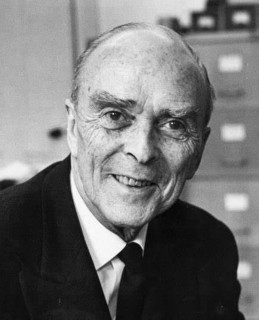
Rising from a domestic Irish political career, MacBride founds or participates in many international organisations of the 20th century, including the United Nations, the Council of Europe and Amnesty International. In addition to the Nobel Peace Prize, he receives the Lenin Peace Prize for 1975–76 and the UNESCO Silver Medal for Service in 1980.
MacBride, nevertheless, has had a violent past. His father is executed following the Easter Rising of 1916, the Irish struggle for liberation from Great Britain. He is only 13 when he joins the Irish Republican Army (IRA). He takes part in the concluding battles of the Irish War of Independence against the British before the Irish Republic is founded in 1921, and in the Irish Civil War that follows. He backs Éamon de Valera in the latter’s refusal to accept Northern Ireland‘s continuing union with England. In the 1930s, he breaks with the IRA and qualifies in law. He defends IRA prisoners in Irish prisons who had been condemned to death.
After World War II he is for a few years Minister for External Affairs for Ireland. He plays a leading part in the establishment of the Council of Europe, and in the preparation of the European Convention on Human Rights of 1950.
MacBride dies in Dublin on January 15, 1988, eleven days before his 84th birthday. He is buried in Glasnevin Cemetery in a grave with his mother and wife, who died in 1976.
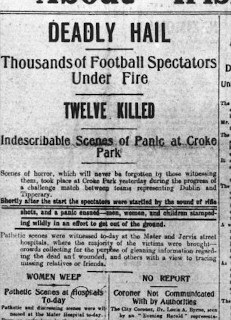
More than 30 people are killed or fatally wounded in a day of violence in Dublin on November 21, 1920, during the Irish War of Independence. It goes down in Irish history as the first “Bloody Sunday,” though unfortunately not the last.
Through the centuries the British have crushed Irish revolutionary movements through the use of spies and informers. Michael Collins, Minister for Finance of the Irish Republic, head of the secretive Irish Republican Brotherhood and Irish Republican Army (IRA) Chief of Intelligence, is in the process of beating the British at their own game. The day begins in the early morning hours with an IRA operation, organised by Collins, to assassinate members of the “Cairo Gang” – a team of undercover British intelligence agents working and living in Dublin. IRA members go to a number of addresses and kill or fatally wounded 16 men, mostly British Army intelligence officers. Five other men are wounded.
When word of the success of the operation gets back to Collins, knowing the caliber of the men in England‘s infamous “Black and Tan” force, he sends a message to the Gaelic Athletic Association, telling them to cancel that day’s Gaelic football match between Dublin and Tipperary. However, it is too late, and the match goes on.
Later that afternoon, lashing out blindly, the Black and Tans surround Croke Park during the match and move in. Their supposed purpose is to attempt to capture members of Sinn Féin who might be in the crowd, but they soon open fire indiscriminately on the players and spectators. They kill or fatally wound fourteen civilians and wound at least sixty others before members of the Auxiliary Division, another brutal force created to crush the Irish insurrection, finally manages to get them to cease-fire.
That evening, two Irish republicans and members of Collins’ squad, Dick McKee and Peadar Clancy, who had helped plan the earlier assassinations, along with a third man, a civilian named Conor Clune, who happened to be caught with the others, are beaten and shot dead in Dublin Castle by their captors, who claim they were killed during an escape attempt.
Overall, Bloody Sunday is considered a victory for the IRA, as Collins’s operation severely damages British intelligence, while the later reprisals do no real harm to the guerrillas but increase support for the IRA at home and abroad.
(Pictured: The headline of the Dublin Evening Herald reads ‘Latest Stories about Irish Tragedies’, 22nd November 1920. The newspaper reports on the massacre at a Croke Park football match, shootings in Dublin, and the discovery of a priest’s corpse in a Galway bog. Photo by Hulton Archive/Getty Images)
Brugha is born Charles William St. John Burgess of mixed Roman Catholic and Protestant parentage in Dublin on July 18, 1874. He attends Colmkille Schools until 1888 when he is admitted to Belvedere College. He intends to study medicine, but this does not come to fruition after his father’s business fails in 1890. He is seen as an austere figure, not very different from Éamon de Valera, and is known not to smoke cigarettes, swear or drink alcohol.
In 1899, Brugha joins the Gaelic League, and he subsequently changes his name from Charles Burgess to Cathal Brugha. He meets his future wife, Caitlín Kingston, at an Irish class in Birr, County Offaly, and they marry in 1912. The marriage produces six children. He becomes actively involved in the Irish Republican Brotherhood (IRB) and in 1913 he becomes a lieutenant in the Irish Volunteers. He leads a group of twenty Volunteers to receive the arms smuggled into Ireland in the Howth gun-running of 1914.
Brugha is second-in-command at the South Dublin Union under Commandant Éamonn Ceannt in the Easter Rising of 1916. On the Thursday of Easter Week, being badly wounded, he is unable to leave when the retreat is ordered. Brugha, weak from loss of blood, continues to fire upon the enemy and is found by Eamonn Ceannt singing “God Save Ireland” with his pistol still in his hands. He recovers over the next year but is left with a permanent limp.
Brugha proposes a Republican constitution at the 1917 Sinn Féin convention, which is unanimously accepted. In October 1917, he becomes Chief of Staff of the Irish Republican Army and holds that post until March 1919.
Brugha is elected Ceann Comhairle of Dáil Éireann at its first meeting on January 21, 1919, and he reads out the Declaration of Independence in Irish, which ratifies “the establishment of the Irish Republic.” On the following day he is appointed president of the ministry pro tempore. He retains this position until April 1, 1919, when Éamon de Valera takes his place.
Brugha has differences with Michael Collins, who, although nominally only the Irish Republican Army‘s (IRA) Director of Intelligence, has far more influence in the organisation as a result of his position as a high-ranking member of the IRB, an organisation that Brugha sees as undermining the power of the Dáil and especially the Ministry for Defence. He opposes the oath of allegiance required for membership of the IRB. In 1919, his proposition that all Volunteers should swear allegiance to the Irish Republic and the Dáil is adopted.
At a top-level IRA meeting in August 1920, Brugha argues against ambushes of Crown forces unless there is first a call to surrender, but it is dismissed as unrealistic by the brigade commanders present. He also has the idea of moving the front line of the war to England but is opposed by Collins.
On January 7, 1922, Brugha votes against the Anglo-Irish Treaty. During the Treaty debates, he points out that Collins has only a middling rank in the Department for Defence, which supervises the IRA, even though Griffith hails him as “the man who had won the war.” It is argued that, by turning the issue into a vote on Collins’ popularity, Brugha swings the majority against his own side. Frank O’Connor, in his biography of Collins, states that two delegates who had intended to vote against the Treaty changed sides in sympathy with Collins. Brugha leaves the Dáil and is replaced as Minister for Defence by Richard Mulcahy.
In the months between the Treaty debates and the outbreak of Irish Civil War, Brugha attempts to dissuade his fellow anti-treaty army leaders, including Rory O’Connor, Liam Mellows and Joe McKelvey, from taking up arms against the Free State. When the IRA occupies the Four Courts, he and Oscar Traynor call on them to abandon their position. When they refuse, Traynor orders the occupation of the area around O’Connell Street in the hope of easing the pressure on the Four Courts and of forcing the Free State to negotiate.
On June 28, 1922, Brugha is appointed commandant of the forces in O’Connell Street. The outbreak of the Irish Civil War ensues in the first week of July when Free State forces commence shelling of the anti-treaty positions.
Most of the anti-Treaty fighters under Traynor escape from O’Connell Street when the buildings they are holding catch fire, leaving Brugha in command of a small rearguard. On July 5, he orders his men to surrender, but refuses to do so himself. He then approaches the Free State troops, brandishing a revolver. He sustains a bullet wound to the leg which “severed a major artery causing him to bleed to death.” He dies on July 7, 1922, eleven days before his 48th birthday. He had been re-elected as an anti-Treaty TD at the 1922 Irish general election but dies before the Dáil assembles. He is buried in Glasnevin Cemetery in Dublin.
Under Article 12 of the Constitution of Ireland, a candidate for president may be nominated by:
at least twenty of the then 207 serving members of the Houses of the Oireachtas, or
at least four of 31 councils of the administrative counties, including county boroughs, or
themselves, in the case of a former or retiring president.
Outgoing president Seán T. O’Kelly had served two terms, and is ineligible to serve again. On April 27, the Minister for Local Government, Neal Blaney, signs the ministerial order opening nominations, with noon on May 19 as the deadline for nominations, and June 17 set as the date for a contest. All Irish citizens on the Dáil electoral register are eligible to vote.
Patrick McCartan, who had also been a candidate in the 1945 election and had served as a senator for Clann na Poblachta from 1948 to 1951, is nominated by two county councils only, short of the four required for nomination. Eoin O’Mahony also seeks and fails to secure a nomination by county councils.
De Valera wins the popular vote with 538,003 votes (56.3%) to Mac Eoin’s 417,536 votes (43.7%).
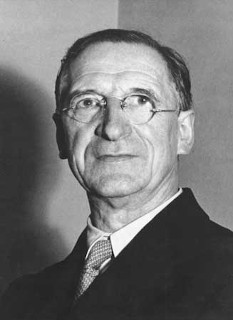
Éamon de Valera is inaugurated as the third President of Ireland on June 25, 1959.
The United Kingdom declares martial law in Ireland for one month on April 25, 1916, the day after the commencement of the Easter Rising. A curfew is imposed from 8:30 PM until 5:00 AM. Anyone spotted on the streets during the hours of darkness are to be shot on sight. The trams stop running at 7:00 PM and the theatres and cinemas close by 8:00 PM. Those rushing for trams leaving the city centre have to pass through a stop-and-search military cordon.
With vastly superior numbers and artillery, the British army quickly suppresses the Rising and Pearse agrees to an unconditional surrender on Saturday, April 29, 1916. Most of the leaders are executed following courts-martial, but the Rising succeeds in bringing physical force republicanism back to the forefront of Irish politics. Support for republicanism continues to rise in Ireland in the context of the ongoing war in Europe and the Middle East and revolutions in other countries, and especially as a result of the Conscription Crisis of 1918 and the failure of the British-sponsored Irish Convention.
Under the Irish Republic‘s Dáil Constitution adopted in 1919, Dáil Éireann continues to exist after it has ratified the Anglo-Irish Treaty. In protest at the ratification, Éamon de Valera resigns the presidency of the Dáil then seeks re-election from among its members in order to clarify his mandate, but Arthur Griffith defeats him in the vote and assumes the presidency.
The Provisional Government takes office two days later on January 16, 1922, when British administration hands over Dublin Castle to Collins in person. At this time, Westminster has not formally appointed the new Irish ministers or conferred their government with any powers.
The handover of Dublin Castle to the Provisional Government is one of the earliest and most remarkable events in the short life of the Provisional Government. For centuries Dublin Castle is the symbol, as well as the citadel, of British rule in Ireland. The transfer of its Castle administration to the representatives of the Irish people is greatly welcomed in Dublin. It is regarded as a significant outward and visible sign that British rule is ending.
By mid-1922, Collins in effect lays down his responsibilities as Chairman of the Provisional Government to become Commander-in-Chief of the Irish Army, a formal structured uniformed army that forms around the pro-Treaty Irish Republican Army (IRA). As part of those duties, he travels to his native County Cork. En route home on August 22, 1922, at Béal na Bláth, he is killed in an ambush. Arthur Griffith dies of a cerebral haemorrhage ten days prior to Collins’ assassination. After Collins’ and Griffith’s deaths in August 1922, W. T. Cosgrave becomes both Chairman of the Provisional Government and President of Dáil Éireann, and the distinction between the two posts becomes irrelevant.
(Pictured: The Provisional Government of Ireland with President Arthur Griffith (front row center) and his cabinet and party includng Michael Collins (to Griffith’s right) likely taken at the Mansion House in February 1922)
The Irish general election is that part of the 1918 United Kingdom general election which takes place in Ireland. The election is now seen as a key moment in modern Irish history because it sees the overwhelming defeat of the moderate nationalistIrish Parliamentary Party (IPP), which had dominated the Irish political landscape since the 1880s, and a landslide victory for the radical Sinn Féin party. The party had never stood in a general election but had won six seats in by-elections in 1917–1918. Sinn Féin vows in its manifesto to establish an independent Irish Republic. In Ulster, however, the Unionist Party is the most successful party.
The election is held in the aftermath of World War I, the Easter Rising and the Conscription Crisis. It is the first general election to be held after the Representation of the People Act 1918. It is thus the first election in which women over the age of 30, and all men over the age of 21, can vote. Previously, all women and most working-class men had been excluded from voting.
In the aftermath of the elections, Sinn Féin’s elected members refuse to attend the British Parliament in Westminster. Instead, they form a parliament in Dublin, the First Dáil Éireann, which declares Irish independence as a republic. The Irish War of Independence is conducted under this revolutionary government which seeks international recognition and sets about the process of state-building.
The Anglo-Irish Treaty, commonly known as The Treaty and officially the Articles of Agreement for a Treaty Between Great Britain and Ireland, is signed in the early morning hours of December 6, 1921 by representatives of the Irish government appointed by PresidentÉamon de Valera and those negotiating for the government of the United Kingdom of Great Britain and Ireland, ending the Irish War of Independence against Great Britain. It is then, and remains, one of the most debated moments in Irish history.
The Treaty provides for the establishment of the Irish Free State within a year as a self-governing dominion within the “community of nations known as the British Empire“, a status “the same as that of the Dominion of Canada.” It also provides Northern Ireland, which had been created by the Government of Ireland Act 1920, an option to opt out of the Irish Free State, which it exercises.
The agreement is signed in London by representatives of the British government, which includes Winston Churchill and Prime MinisterDavid Lloyd George, who are old masters at the game of politics, and by representatives of the Irish Republic including Michael Collins and Arthur Griffith, who have nowhere near the political acumen of the British delegation. De Valera, a shrewd, experienced politician, may have been the only man in all of Ireland who might have matched them, but he refuses to join the negotiations.
The Irish representatives have plenipotentiary status acting on behalf of the Irish Republic, though the British government declines to recognise that status. As required by its terms, the Treaty is approved by “a meeting” of the members elected to sit in the House of Commons of Southern Ireland and separately by the British Parliament. In reality, Dáil Éireann, the legislative assembly for the de facto Irish Republic, first debates then approves the treaty. Members then proceed with the “meeting.” Though the Treaty is narrowly approved, the split leads to the Irish Civil War, which is won by the pro-treaty side.
The Irish Free State as contemplated by the Treaty comes into existence when its constitution becomes law on December 6, 1922 by a royal proclamation.
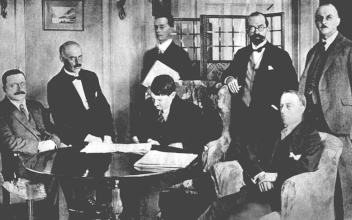
(Pictured: Michael Collins signs the Anglo-Irish Treaty on December 6, 1921)
Mac Cába resigns his Dáil seat in March 1925 along with several other TDs, and at the resulting by-election on March 11, 1925, Cumann na nGaedheal candidate Martin Roddy wins his seat. He does not stand for public office again and returns to his post as a schoolteacher.
In the 1930s Mac Cába is involved with the short-lived but widely followed Irish Christian Front, serving as the organisation’s secretary and announcing its creation to the public on August 22, 1936. He is also member of the Blueshirts during this period and later the Irish Friends of Germany during World War II, a would-be Nazi Collaborator group in the event Germany invades Ireland. He chairs their meetings, denies the group is a fifth column and expresses the belief that a German victory would lead to a United Ireland. He is interned in 1940–1941 because of his pro-German sympathies, which he claims results from the desire to “see the very lifeblood squeezed out of England.”
Mac Cába dies in Dublin on May 31, 1972, leaving his wife, son, and three daughters. There is a bronze bust of him in the headquarters of the Educational Building Society, Westmoreland Street, Dublin.
The Real IRA broke off from the main Irish Republican Army and its political wing Sinn Féin in 1998 to oppose the decision by Sinn Féin to support the Northern Ireland peace process and work to end 30 years of fighting in Northern Ireland.
As a result of the FTO designation many activities, including fund-raising, of the Real IRA or its two so-called “front groups” or “political pressure groups” — the “32 County Sovereignty Movement” and the “Irish Republican Prisoner Welfare Association” — are now illegal.
A senior State Department official notes that this is the first time a group with “heavy ties” to the United States, with sympathizers and supporters coming from the United States, has been designated as a terrorist organization. But, in the words of this official, the “British and Irish government publicly asked us to look into this.” The “rigorous” review, begun in the fall of 2000, included volumes of evidence and was an inner-agency process that required the signature of the Secretary of the Treasury, the Attorney General and the Secretary of State.
According to the State Department Patterns of Global Terrorism report in 2000, the Real IRA was formed in February-March 1998, has between 150-200 hard-line members and is dedicated to removing British forces from Northern Ireland and unifying Ireland.
State Department officials say they absolutely anticipate the Real IRA to challenge the FTO designation in court. The designation comes as the Irish Republic prepares to prosecute Michael McKevitt, the Real IRA’s alleged leader.


 The
The 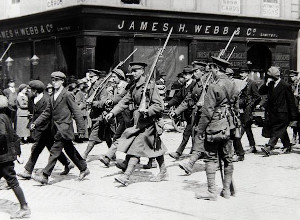


 The
The 


