The disappearance is the most notorious incident to occur in Clonmany during the Irish War of Independence. Both men are stationed at the RIC Barracks in Clonmany. They go on patrol in the evening but are kidnapped near Straid in County Antrim. Both men are shot and their bodies are dumped in the sea near Binion.
Clarke’s body washes up on the seashore near Binion the following day. Constable Murdock reportedly survives the initial attack despite being thrown into the sea. He swims to the shore and seeks refuge among the residents of Binion. However, he is betrayed to the IRA who murder him. His body has never been found. Local tradition suggests that he is buried in a bog near Binion hill.
In June 1921, a military court is held in Clonmany to conduct a postmortem for Clarke. The court finds that Clarke had died from gunshot wounds to the heart, jaw and neck and that his firearm and ammunition were missing. At the time of his death, Clarke is 23 years old and unmarried.
A few weeks later, on July 10, 1921 Crown Forces raid a number of houses in Clonmany looking for Sinn Féinactivists. Three unnamed young men from the village are arrested but are released shortly afterwards and allowed to return home.
Compton-Smith was born in 1889 in South Kensington, London. After finishing school, he decides not to follow the family tradition of studying law. He actually wants to become an artist, but his father insists that he join the army. He studies at the Royal Military College at Sandhurst and during World War I his regiment is sent to France. In 1917 he is wounded at the Battle of Arras, but he continues to fight on. He is awarded the Distinguished Service Order (DSO). In 1919 he is sent to serve in Ireland during the Irish War of Independence.
In 1919 Compton-Smith is commander of the British Army base at Ballyvonane, near Buttevant, but he is also an intelligence officer. As an officer he also sometimes presides over courts martial. In January 1921, for instance, three IRA volunteers are tried by him for involvement in the ambush at Shinanagh, near Charleville, and he sentences them each to six months.
February 1921 is a bad time for the IRA in County Cork. They suffer major losses at the ambushes at Clonmult and Mourne Abbey, and several volunteers are taken prisoner, four of whom are sentenced to death. The IRA believes that these death sentences might be commuted if a British officer is held as a hostage. This leads to the capture of Compton-Smith. On April 16, 1921, he travels to Blarney, supposedly on a sketching trip but actually to meet a nurse in Victoria Barracks with whom he is having an affair. The IRA has spies in Victoria Barracks who likely tip off the IRA that Compton-Smith is coming to Blarney. A squad led by Frank Busteed easily capture him after he gets off the train.
Busteed then meets with Jackie O’Leary, the IRA battalion commander. It is decided that Donoughmore is the perfect place to keep a hostage, because parts of the parish are remote and the IRA is strong there.
On April 18, under the cover of darkness, Compton-Smith is transferred by car to Knockane House, an abandoned big house in Donoughmore. The following night he is moved again, this time by pony and trap, to Barrahaurin, a remote townland in the Boggeragh Mountains. He is kept there for the last eleven days of his life, on the small farm of Jack and Mary Moynihan. He is held prisoner in a shed, always under guard. Every evening he is brought into the house, where he eats and stays at the fireside. He and his guards have conversations about history and politics.
The four IRA prisoners are executed on April 28, 1921. On April 30, O’Leary informs Compton-Smith that he is going to be executed. He then writes a final letter to his wife. He tells her that he will die with her name on his lips and her face before his eyes and that he will “die like an Englishman and a soldier.” He also writes a letter to his regiment and one to Lt. General Strickland.
After finishing his letters, Compton-Smith is led up into Barrahaurin bog behind the Moynihan house, to a place where his grave had already been dug and is given a final cigarette. In his witness statement Maurice Brew writes, “When removed to the place of execution he placed his cigarette case in his breast pocket of his tunic … He then lighted a cigarette and said that when he dropped the cigarette it could be taken as a signal by the execution squad to open fire.”
It is not until late May, following the discovery of the cache of letters in a Dublin raid, that the Compton-Smith family is informed of his death. His father, William, then starts a campaign to find his son’s body. He wrote letters to MPs and to the British Army, seeking information and help. He also writes to Erskine Childers but gets no reply. He offers a reward of £500 for information, but only The Irish Times agrees to print his advertisement.
In November 1921 a cousin of Compton-Smith’s wife, Gladys, meets Michael Collins in London and asks him for help in finding the body. Correspondence between Collins and the Compton-Smith family suggests that Collins is trying to help in 1922, but he fails to get any results before he is assassinated at Béal na Bláth later that same year.
On March 3, 1926, Compton-Smith’s grave is discovered by the Gardaí. The newspapers report that the remains, because of the conditions of the bog, “were not so badly decomposed as to render identification impossible.” The body is brought to Collins Barracks in Cork. On March 5 the Gardaí send a telegram to the Compton-Smiths, informing them that the body has been located.
The reburial of Compton-Smith is carried out with great dignity on March 19, 1926. The Irish Army escorts the coffin from Collins Barracks to Penrose Quay, where British forces from Spike Island take the coffin on board a boat. While the boat travels down the River Lee, the Irish Army’s guard of honour presents arms and sounds the “Last Post.” The British then bring the coffin to Carlisle Fort, near Whitegate, where it was buried in the in the British Military Cemetery with full military honours.
The United Kingdom declares martial law in Ireland for one month on April 25, 1916, the day after the commencement of the Easter Rising. A curfew is imposed from 8:30 PM until 5:00 AM. Anyone spotted on the streets during the hours of darkness are to be shot on sight. The trams stop running at 7:00 PM and the theatres and cinemas close by 8:00 PM. Those rushing for trams leaving the city centre have to pass through a stop-and-search military cordon.
With vastly superior numbers and artillery, the British army quickly suppresses the Rising and Pearse agrees to an unconditional surrender on Saturday, April 29, 1916. Most of the leaders are executed following courts-martial, but the Rising succeeds in bringing physical force republicanism back to the forefront of Irish politics. Support for republicanism continues to rise in Ireland in the context of the ongoing war in Europe and the Middle East and revolutions in other countries, and especially as a result of the Conscription Crisis of 1918 and the failure of the British-sponsored Irish Convention.
Kathleen Daly is born into a prominent Fenian family, the third daughter of Edward and Catherine Daly. Her paternal uncle, John Daly, is at the time imprisoned for his political activities in Chatham and Portland Prisons in England. He is released in 1896 and returns home to Limerick. When Tom Clarke, who had been imprisoned with her uncle, is released in 1898 he travels to Limerick to receive the Freedom of the City and stays with the Daly family.
In 1901 Daly decides to emigrate to the United States to join Tom, who had been there since 1900, having secured work through his Fenian contacts. They marry on July 16, 1901, in New York City. Through his contacts in the Clan na Gael and the Irish Republican Brotherhood (IRB), Tom Clarke continues to be involved in nationalist activity. Kathleen joins the Gaelic League while in the United States and they return to Ireland in November 1907.
In 1914 Clarke becomes a founder member of Cumann na mBan. Her husband forbids her permission to take an active part in the 1916 Easter Rising as she has orders regardless of how the events pan out. As Tom Clarke is the first signatory of the Proclamation of the Irish Republic, he is chosen to be executed for his part in the Easter Rising. Her younger brother, Ned Daly, is also executed for taking part in the rising. She visits both of them before they are executed. After the Rising, Michael Collins establishes contact with her while in prison in his attempts to re-build the IRB network. She also sets up the Irish National Aid Fund to aid those who had family members killed or imprisoned as a result of the Easter Rising, closely aided by Sorcha MacMahon.
Clarke becomes a member of Sinn Féin and in 1917 is elected a member of the party’s Executive. During the German Plot she is arrested and imprisoned in Holloway Prison for eleven months. During the Irish War of Independence, she serves as a District Judge on the Republican Courts in Dublin. In 1919 she is elected as an Alderman for the Wood Quay and Mountjoy Wards of Dublin Corporation and serves until the Corporation is abolished in 1925.
Clarke is elected unopposed as a Sinn Féin TD to the Second Dáil at the 1921 elections for the Dublin Mid constituency. She is not re-elected at the 1922 general election, however, and supports the Anti-Treaty forces during the Irish Civil War. In 1926 she becomes a founder member of Fianna Fáil and has to resign from Cumann na mBan. She is re-elected to the short-lived 5th Dáil at the June 1927 election as a Fianna Fáil member for the Dublin Mid constituency but loses her seat at the September 1927 election and does not regain it. She is elected as one of six Fianna Fáil Senators to the Free State Seanad for nine years at the 1928 Seanad election under the leadership of Joseph Connolly. She remains a member of the Seanad until it is abolished in 1936.
In 1930 Clarke is elected to the re-constituted Dublin Corporation for Fianna Fáil along with Robert Briscoe, Seán T. O’Kelly, Thomas Kelly and Oscar Traynor. She serves as the first Fianna Fáil Lord Mayor of Dublin as well as the first female Lord Mayor, from 1939 to 1941. She opposes the Constitution of Ireland as she feels that several of its sections would place women in a lower position that they had been afforded in the Proclamation of the Irish Republic. She is criticised by many in the Fianna Fáil organisation as a result and, while she resigns from the Thomas Clarke Cumann, she remains a member of the Fianna Fáil Ard Chomhairle.
While Clarke does not support the Irish Republican Army (IRA) bombing in England during World War II, she appeals for those sentenced to death by the Irish Government to be given clemency. Ultimately this leads to her breaking with the party completely after her term as Lord Mayor finishes in 1941. She declines to stand as a Fianna Fáil candidate at the 1943 general election.
Fassbender’s mother, Adele, is from Larne, County Antrim, while his father, Josef Fassbender, is German. According to Fassbender family lore, his mother is the great-grand-niece of Michael Collins, the Irish leader during the Irish War of Independence. When he is two years old, his parents move to Killarney, County Kerry, where they run the West End House, a restaurant where his father works as a chef. His parents move to Kerry as they want their children to grow up in the countryside rather than the industrial backdrop of their previous residence in Germany. He is raised Catholic and serves as an altar boy at the church his family attends. He has an older sister, Catherine, who is a neuropsychologist.
Fassbender attends Fossa National School and St. Brendan’s College, both in Killarney. He decides that he wants to be an actor at age 17 when he is cast in a play by Donal Courtney. At 19, he moves to London to study at the Drama Centre London, a constituent school of Central Saint Martins. In 1999, he drops out of the Drama Centre and tours with the Oxford Stage Company to perform the play Three Sisters. Before he finds work as an actor, he works as a bartender and postman. Other jobs include labour work, market research for the Royal Mail and working for Dell computers.
Chaim Herzog, Israeli politician, general, lawyer, and author, is elected the sixth President of Israel on March 22, 1983. He serves from 1983 to 1993.
Herzog joins the British Army during World War II, operating primarily in Germany as a tank commander in the Armoured Corps. There, he is given his lifelong nickname of “Vivian” because the British could not pronounce the name, “Chaim.” A Jewish soldier had volunteered that “Vivian” is the English equivalent of “Chaim.”
After leaving the army, Herzog opens a private law practice. He returns to public life when the Six-Day War breaks out in 1967, serving as a military commentator for Kol Israel radio news. Following the capture of the West Bank, he is appointed Military Governor of East Jerusalem, and Judea and Samaria.
Herzog enters politics in the 1981 elections, winning a Knesset seat as a member of the Alignment. Two years later, in March 1983, he is elected to the largely ceremonial role of President. He serves two five-year terms before retiring in 1993. He dies on April 17, 1997, and is buried on Mount Herzl, Jerusalem. His son, Isaac Herzog, led the Israeli Labour Party and the parliamentary Opposition in the Knesset from 2013 until 2018.
The gates of Mountjoy Gaol are opened at 8:25 AM and news of the executions is read out to the distraught relatives of the dead. As many as 40,000 people gather outside the prison and many mournfully say the Rosary for the executed men.
By evening, the streets clear rapidly as the British-imposed curfew comes into effect at 9:00 PM each night. During this period, the city is a fearful place, patrolled by regular British troops and the much-feared paramilitary police, the Auxiliary Division, as people scurry home and await IRA retaliation for the hangings, which is not long in coming.
That very evening, IRA captain Peadar O’Meara sends as many as thirty-four IRA men out to attack police or military targets. They are armed with the standard urban guerrilla arms of easily hidden handguns and grenades. One young Volunteer, Sean Dolan, throws a grenade at a police station on nearby Merrion Square, which bounces back before it explodes, blowing off his own leg.
At around 8:00 PM, with the curfew fast approaching, a company of Auxiliaries based in Dublin Castle is sent to the area to investigate the explosion. It consists of one Rolls Royce armoured car and two trucks holding about sixteen men. Apparently, the Auxiliaries have some inside information as they head straight for the local IRA headquarters at 144 Great Brunswick Street, now Pearse Street. One later testifies in court that “I had been notified there were a certain number of gunmen there.”
The IRA is expecting the Auxiliaries. As soon as the Auxiliaries approach the building, fire is opened on them from three sides. What is described in newspapers as a “hail of fire” tears into the Auxiliaries’ vehicles. Five of the eight Auxiliaries in the first truck are hit in the opening fusillade, two of them fatally injured. The IRA fighters, however, are seriously outgunned. The Rolls Royce armoured car is impervious to small arms fire (except its tires, which are shot out) but mounts a Vickers heavy machine gun which sprays the surrounding houses with bullets. The uninjured Auxiliaries also clamber out of their trucks and return fire at the gun flashes from street corners and rooftops.
Civilian passersby fling themselves to the ground to avoid the bullets but four are hit, by which side it is impossible to tell. The British military court of inquiry into the incident finds that the civilians had been killed by persons unknown, if by the IRA then they were “murdered,” if hit by Auxiliaries the shootings were “accidental.”
The gunfire lasts only five minutes but in that time seven people, including the two Auxiliaries, are killed or fatally wounded and at least six more wounded. Three civilians lay dead on the street – Thomas Asquith is a 68-year-old caretaker, David Kelly is a prominent Sinn Féin member and head of the Sinn Féin bank, and Stephen Clarke, aged 22, is an ex-soldier and may have been the individual who tipped off the Auxiliaries about the whereabouts of the IRA meeting house. An internal IRA report notes that he is “under observation, as he was a tout for the enemy.” The wounded are spirited away by sympathetic fire brigade members and members of Cumann na mBan and treated at nearby Mercer’s Hospital.
Two IRA men are captured as they flee the scene. Thomas Traynor, a 40-year-old veteran of the Easter Rising, is carrying an automatic pistol, but claims to have had no part in the ambush itself. He had, he maintains, simply been asked to bring in the weapon to 144 Great Brunswick Street. The other is Joseph Donnelly a youth of just 17 years of age.
As most of the IRA fighters get away through houses, over walls and into backstreets, the Auxiliaries ransack St. Andrew’s Catholic Hall at 144 Great Brunswick Street but find little of value. Regular British Army troops quickly arrive from nearby Beggars Bush Barracks and cordon off the area, but no further arrests are made. Desultory sniping carries on in the city for several hours into the night.
(From: “The Pearse Street Ambush, Dublin, March 14, 1921” by John Dorney, The Irish Story (theirishstory.com), January 26, 2015)
Clancy graduates in 1904 and finds a position teaching the Irish language at Clongowes Wood College and is active in the Gaelic Athletic Association. Due to ill health he has to return to his home at Grange. In 1908 he comes to Limerick to teach Irish. In 1913 he joins the Irish Volunteers. In 1915 he marries Máire Killeen, a teacher. After the 1916 Easter Rising, he is arrested and imprisoned in Cork, but is released before he comes to trial following a hunger strike.
Clancy helps in Éamon de Valera‘s election campaign in East Clare. He nearly dies of Spanish flu during the 1918 epidemic but recovers and, in January 1921, he is elected Sinn Féin Mayor of Limerick.
On the night of March 6, 1921, three Auxiliaries come to Clancy’s house and one of them shoots him, injuring him fatally. His wife is also injured in the attack. The previous Mayor, Michael O’Callaghan, is also murdered on the same night by the same group.
Suspicion immediately falls upon members of the Black and Tans, but a British inquiry into the murder, like most such inquiries through the years, absolve Crown forces of any blame. One of Clancy’s killers is later said to be George Nathan who dies in the Spanish Civil War in July 1937.
Farrell is born into a middle-class family with no link to militant Irish republicanism other than a grandfather who had been interned during the Irish War for Independence. She is educated at Rathmore Grammar School, Belfast. At the age of 14 she is recruited into the Provisional IRA by Bobby Storey. After leaving school at the age of 18, she is hired as a clerical worker for an insurance broker’s office.
On March 1, 1976, the British government revokes Special Category Status for prisoners convicted from this date under anti-terrorism legislation. In response, the IRA instigates a wave of bombings and shootings across Northern Ireland and younger members such as Farrell are asked to participate. On April 5, 1976, along with Kieran Doherty and Sean McDermott, she attempts to plant a bomb at the Conway Hotel in Dunmurry, as that hotel had often been used by British soldiers on temporary duty in Northern Ireland. She is arrested by Royal Ulster Constabulary (RUC) officers within an hour of planting the bomb. McDermott, her boyfriend, is shot dead by a RUC reservist at a nearby housing estate.
At her trial, Farrell refuses to recognise the court as it is an institution of the British state. She is sentenced to fourteen years in prison for explosives offences, firearms offences, and belonging to an illegal organisation.
When Farrell arrives at Armagh Prison, she refuses to wear a prison uniform in protest at the designation of republican prisoners as criminals and becomes the official Officer Commanding of the female IRA prisoners. After 13 months, she, along with Mary Doyle and Mairead Nugent, begin a hunger strike to coincide with the one already taking place in Long Kesh Prison. It ends on December 19, a day after the men’s strike. In March 1981 the prisoners’ rights campaign is focused on the hunger strike being undertaken by Bobby Sands, leader of IRA prisoners in the H-Blocks. She was one of the H-Block/Armagh prisoners to stand for election in the Republic of Ireland in the 1981 Irish general election, standing in Cork North-Central and polling 2,751 votes (6.05%).[17]
Upon her release from prison in October 1986, Farrell enrolls at Queen’s University, Belfast for a course in Political Science and Economics. However, she drops out to re-engage in IRA activity. The IRA sends her with Seán Savage and Daniel McCann to the British overseas territory of Gibraltar to plant a car bomb in a heavily populated town area. The target is the band and guard of the 1st Battalion of the Royal Anglian Regiment during a weekly ceremonial changing of the guard in front of Governors’ residence, on March 8, 1988. According to interrogated IRA members, Gibraltar is selected as a target because it is a British possession that is in dispute, and that it is an area with lighter security measures than had become endemic at British military installations elsewhere due to the IRA’s campaign.
The British Government’s domestic intelligence service MI5 becomes aware of their plan and a detachment from the British Army is specifically deployed to Gibraltar to intercept the IRA team and prevent the attack. Farrell, Savage and McCann are confronted by plainclothes soldiers from the Special Air Service regiment while they are engaged in a reconnaissance in Gibraltar pending the delivery of the car bomb. Farrell is shot three times in the back and once in the face. Her two accomplices are also killed in an operation code-named Operation Flavius by the British Government. Some witnesses to the shooting state that Farrell and McCann were shot while attempting to surrender, and while lying wounded on the ground. The three IRA members are all found afterwards to be unarmed.
Keys to a hire car found in Farrell’s handbag lead the Spanish Police to the discovery across the border in Spain of five packages totaling 84 kg of Semtex explosive in a car which the IRA team intended to subsequently drive into Gibraltar for the attack. These packages have four separate detonators attached. Around this is packed 200 rounds of ammunition as shrapnel. There are two timers but they were not primed or connected.
Born in Boherbee, County Kerry on January 15, 1926, McEllistrim is the son of the Fianna Fáil politician and Irish War of Independence veteran, Tom McEllistrim. He succeeds his father when he is elected to Dáil Éireann as a Fianna Fáil Teachta Dála (TD) for the Kerry North constituency at the 1969 general election. At the 1977 general election he is elected along with his running mate Kit Ahern. This is the first time that Fianna Fáil wins two seats in the three seat Kerry North constituency. McEllistrim, who is given much credit for this feat, is disappointed not to receive a promotion to a Minister of State.
McEllistrim becomes disillusioned with the Taoiseach and party leader Jack Lynch from then and begins to believe that Charles Haughey is the right candidate for the party leadership. He believes that Lynch is about to retire and is particularly uncomfortable at the thought of George Colley succeeding Lynch. Like his father before him he believes Colley is not right for the role of leader of the party. He is particularly vocal with regard to party policy towards Northern Ireland and, as he sees it, Lynch’s apparent lack of sympathy towards the northern nationalist community.
McEllistrim is a member of the so-called “gang of five” along with Seán Doherty, Mark Killilea Jnr, Jackie Fahey and Albert Reynolds who start a lobbying campaign in favour of Haughey on the backbenches of the party. After Lynch loses two by-elections in his native County Cork he resigns as party leader in December 1979. The leadership contest is called two days later and is a two-way race between Haughey and Colley. Haughey wins the leadership contest by a decisive margin and McEllistrim is rewarded by being appointed Minister of State at the Department of Finance with special responsibility for the Office of Public Works. He serves as a Minister of State again in 1982, this time at the Department of Fisheries and Forestry.

 Alexander Clarke and Charles Murdock, both constables with the Royal Irish Constabulary (RIC), the police force in Ireland from 1822 until 1922, are kidnapped and murdered by the Irish Republican Army (IRA) near Clonmany, County Donegal on May 10, 1921.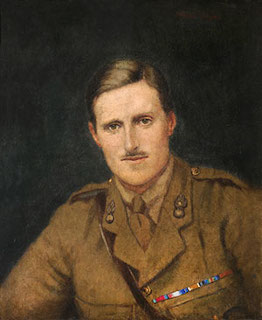



 seamus dubhghaill