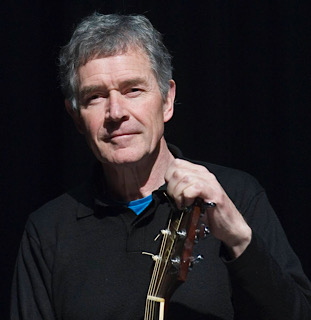
Duhan is one of nine children, one of whom dies before Johnny is born. His parents, John and Christina (née Murphy), raise their family on Wolfe Tone Street, Limerick. He attends the Christian Brothersnational school on Sexton Street but hates it.
Duhan is writing songs from an early age. He leaves school and starts his career as the 15-year-old frontman of the Irish beat group Granny’s Intentions. After success in Limerick and Dublin, where he shares a flat with Phil Lynott and Gary Moore, the band moves to London and is signed to the Deram Records record label. His girlfriend, Maureen, leaves her job as a teacher to travel to London with him. The band releases several singles and one album, Honest Injun, with Duhan composing eight of the band’s eleven songs. Granny’s Intentions melds a bluesy rock sound with a down-home earthiness. Moore joins the band at the age of 17, and Pete Cummins (later of The Fleadh Cowboys) is also a member. The band has their sights set on a further move to Los Angeles, California, but the deal falls through. The band disbands before Duhan is twenty-one. While in London he is offered a job as lead singer with St. James Gate, but that deal falls through as well.
From there, the couple set about a different kind of life, with Duhan growing his own vegetables and embarking on a path as a solo singer-songwriter in earnest. He has a cry in his voice that is plaintive and highly distinctive. An advance from Arista Records allows him and Maureen to put a deposit on their first home in Sandyvale Lawn on Headford Road in Galway. Later they move to Barna, where he enjoys a quiet but very orderly, some might say even regimental life: rising daily before dawn, attending daily Mass, reading vociferously and enjoying his daily swims on his beloved Silver Strand. He climbs Diamond Mountain most Sundays and Carrauntoohil annually.
Just Another Town, To the Light, Flame, and The Voyage are some of Duhan’s work. These align with the first four sections of his poetic autobiography, To The Light. His songs have been performed by Christy Moore, The Dubliners, Mary Black, and other Irish and international singers. Christy Moore states that his song “The Voyage” has been performed at over a million weddings worldwide.
His daughters, Ailbhe and Niamh, describe Duhan as a kind, gentle and selfless soul. He is a true family man. Headstrong in his beliefs, he never follows trends. He spends his life seeking meaning, delving deeply into philosophical and theological works. Mornings are devoted to reading and studying his favourite writers, making meticulous notes on whether he agrees or disagrees with their thoughts, and more importantly why. He teaches all his children to play music, and Niamh is now a music teacher.
Duhan drowns on November 12, 2024, while swimming off Silver Strand in Galway. His funeral Mass takes place at St. Killian’s New Inn Church in County Galway. He is laid to rest at Killaan Cemetery, Woodlawn.
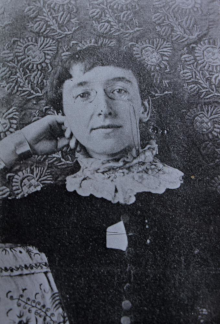
Gleeson is born on May 15, 1855, in Knutsford, Cheshire, England, the daughter of Irish-born Edward Moloney Gleeson, a medical doctor, and Harriet (née Simpson), from Bolton, Lancashire. Her father has a practice in Knutsford but on a trip to Ireland he is struck by the poverty and unemployment and, with the advice of his brother-in-law, a textile manufacturer in Lancashire, he founds the Athlone Woollen Mills in 1859, investing all his money in the project. The family moves to Athlone in 1863, but Gleeson is educated in England, where she trains as a teacher. She later studies portraiture in London at the Atelier Ludovici from 1890–92. She goes on to study design with Alexander Millar, a follower of William Morris, who believes she has an exceptional aptitude for colour-blending. Many of her designs are bought by the exclusive Templeton Carpets of Glasgow.
Gleeson takes a keen interest in Irish affairs and, as a member of the Gaelic League and the Irish Literary Society, mixes with the Yeats family and the Irish artistic circle in London and is inspired by the Gaelic revival in art and literature. She is also involved in the suffrage movement and is chairwoman of the Pioneer Club, a women’s club in London. In 1900, an opportunity arises to make a practical contribution to the Irish renaissance and the emancipation of Irish women. She is suffering from ill-health, but her friend Augustine Henry, botanist and linguist, suggests she move away from the London smog to Ireland and open a craft centre with his financial assistance. She seizes the opportunity and discusses her plans with her friends the Yeats sisters, Elizabeth and Lily, who are talented craftswomen and have direct contact with William Morris and his followers. They have no money to contribute to the venture but are enthusiastic and can offer their skills and provide contacts. She seeks advice from W. B. and Jack Yeats, from Henry, who loans her £500, and from her cousin, T. P. Gill, secretary of the Department of Agriculture and Technical Instruction.
During the summer of 1902 Gleeson finds a suitable house in Dundrum, County Dublin, ten minutes from the railway station. The house, originally called Runnymede, is renamed Dun Emer, after the wife of Cú-Chulainn, renowned for her craft skills. The printing press arrives in November 1902, and soon three craft industries are in operation. Lily Yeats runs the embroidery section, since she had trained with Morris’s daughter May. Elizabeth Yeats operates the press, having learned printing at the Women’s Printing Society in London. Gleeson manages the weaving and tapestry and looks after the financial affairs of the industries. W. B. Yeats acts as literary adviser, an arrangement that often causes friction, and Gleeson’s sister, Constance McCormack, is also involved.
Local girls are employed and trained, and the industries seek to use the best of Irish materials to make beautiful, high-quality, lasting products of original design. Church patronage accounts for most of their orders and, in 1902–03, Loughrea cathedral commissions twenty-four embroidered banners portraying Irish saints. They also make vestments, traditional dresses, drapes, cushions and other items, all beautifully crafted and mostly employing Celtic design. The first book published is In the Seven Woods (1903), by W. B. Yeats, cased in full Irish linen.
Gleeson is in demand as an adjudicator in craft competitions around the country and at Feis na nGleann in 1904 she praises the workmanship of the entries but is critical of the lack of teaching in design. She gives lectures and tries to raise the status of craftwork from household occupation to competitive industry. There are tensions with the Yeats sisters, who complain that she is bad-tempered and arrogant. In truth she had taken on too much of a financial burden, even with the support of grants, and she is anxious to repay her debt to Augustine Henry, which he is prepared to forego. The sisters snub her and omit her name in an interview about Dun Emer in the magazine House Beautiful. Millar, her design teacher in London, likens the omission to Hamlet without the prince. In 1904, it is decided to split the industries on a cooperative basis: Dun Emer Guild Ltd. under Gleeson and Dun Emer Industries Ltd. under the Yeats sisters.
Work continues, and the guild and industries exhibit separately at the Royal Dublin Society (RDS) and other craft competitions. In 1907, the National Museum of Ireland commissions a copy of a Flemish tapestry. It takes far longer than anticipated to complete, but the result is beautiful and is exhibited at the Arts and Crafts Society of Ireland in 1910. The guild wins a silver medal at the Milan International exhibition in 1906. The guild and industries both show work at the New York exhibition of 1908. The guild alone shows work in Boston. By now cooperation has turned to rivalry, and there is a final split as the Yeats sisters leave, taking the printing press with them to their house in Churchtown, Dublin. Gleeson writes off a debt of £185 owed to her, on condition that they do not use the name Dun Emer.
The business thrives at Dundrum, with her niece Katherine (Kitty) MacCormack and Augustine Henry’s niece, May Kerley, assisting with design. Later they move the workshops to Hardwicke Street, Dublin. In 1909, Gleeson becomes one of the first members of the Guild of Irish Art Workers and is made master in 1917. The Irish Women Workers’ Union commissions a banner from her about 1919, and, among numerous other notable successes, a Dun Emer carpet is presented to Pope Pius XI in 1932, the year of the Eucharistic Congress of Dublin.
Gleeson dies at the age of 89 at Dun Emer, Dundrum, Dublin, on February 20, 1944, with Kitty carrying on the Guild after her death. The final home of Dun Emer is a shop on Harcourt Street, Dublin, which finally closes in 1964.
(From: “Gleeson, Evelyn” by Ruth Devine, Dictionary of Irish Biography, http://www.dib.ie, October 2009)
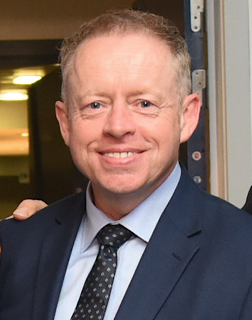
Before entering politics, Cannon is a planning official for Galway City Council and Dublin City Council, as well as CEO and secretary of the Irish Pilgrimage Trust. In 2002, he is honoured as one of the Galway People of the Year.
Cannon is elected as Leader of the Progressive Democrats in April 2008. He is the first leader of the party to sit as a Senator while serving as leader. At his first press conference as party leader, he states that he believes “there was passion, commitment, talent and knowledge within the PDs’ ranks to stage a big comeback.”
However, after speculation increases that Noel Grealish, one of the two Progressive Democrat TDs, intends to leave the party, Cannon announces in September 2008 that a party conference will be held on November 8, 2008, at which he will recommend that the party disband. The delegates present at the conference vote 201–161 to agree with this recommendation.
On March 24, 2009, Cannon announces his decision to resign the leadership of the Progressive Democrats and joins Fine Gael the same day. At the 2011 Irish general election, he is one of two Fine Gael TDs elected in Galway East.
In 2019, in recognition of his work in education, Cannon is appointed as a UNICEF global champion for education. He is one of seven Generation Unlimited Champions who advocates worldwide for the development of UNICEF’s Gen U programme.
At the 2020 Irish general election, Cannon is elected to the second seat in Galway East. He continues to serve as a minister of state until the formation of a new government on June 27, 2020.
On March 19, 2024, Cannon announces that he will not contest the next general election, blaming a “toxicity in politics.”
Cannon is a musician and songwriter, and recently collaborated with Irish folk singer Seán Keane and others on songwriting projects. One of his co-compositions, “Nature’s Little Symphony,” is performed in Dublin by the RTÉ Concert Orchestra as part of the national Cruinniú celebrations on Easter Monday 2017. Both “Nature’s Little Symphony” and another of his compositions, “Gratitude,” are featured on the album Gratitude recorded by Keane and the RTÉ Concert Orchestra in 2018. On the August 10, 2018, Cannon plays piano with Keane and the RTÉ Concert Orchestra as part of a sold-out performance at the National Concert Hall. In 2019, he composes “An Túr,” a short piano instrumental to celebrate the birthday of W. B. Yeats.
In 2021 Cannon is commissioned to compose the soundtrack to a poem by Emily Cullen as part of the national commemoration of the signing of the Anglo-Irish Treaty in 1921.
In March 2024, Cannon begins presenting The Grey Lake Cafe, a radio show on Loughrea Community Radio featuring his own musical choices, and interviews with public figures who have a passion for music.
Cannon is also an avid cyclist and cycling safety advocate. He specialises in endurance cycling challenges and on June 19, 2021, he cycles Ireland end to end, a distance of 575 km, in 23 hours and 23 minutes, to raise money for charity.
On July 2, 2021, Cannon is involved in a road traffic collision and suffers serious injuries. On July 2, 2022 he marks the first anniversary of the incident by cycling 500 km around the border of County Galway. Marking the same date in 2023, he cycles 935 km (581 mi) in 56 hours, covering all 32 counties of the island of Ireland while fundraising for Hand In Hand, a charity that supports families challenged by childhood cancer.
O’Brien is one of five children of Pierce O’Brien, a gentleman landowner, and Sophia Angel St John O’Brien. Her first cousin is woodcarver Sophia St John Whitty. She attends the Mercy Convent in Ennis, going on to win a scholarship to the Dublin Metropolitan School of Art. While there she studies under William Orpen and Alfred E. Child who teach her the art of stained glass.
Among O’Brien’s first commissions is the St. Ita window for St. Brendan’s cathedral in Loughrea, County Galway, in 1904, which is designed by Sarah Purser. She joins An Túr Gloine in 1906, beginning her career there by designing Angel of the Annunciation window in the Enniskillen convent chapel. For a window in the Wilson private chapel at Coolcarrigan House, Naas, County Kildare, in 1912, she incorporates Celtic design, some drawing on the Book of Durrow. In 1914, she tours the cathedrals of Paris, Rouen, and Chartres with Purser and Wilhelmina Geddes. She designs three windows depicting St. John, St. Flannan, and St. Munchin, for the Honan Chapel at University College Cork in 1916. Her 1923 design of the centenary memorial window in St. Andrew’s church, Lucan, represents the parable of the Good Shepherd. When in 1925 An Túr Gloine becomes a cooperative society, she becomes a shareholder along with Ethel Rhind, Evie Hone, and Michael Healy.
O’Brien’s 1926 lunetteThe Spirit of Night represents night, twilight, and dawn, and is for the private home of Keng Chee in Singapore, which is later demolished. The window of St. Catherine of Siena for the Sacred Heart convent chapel in Newton, Massachusetts dates from 1927. Her 1931 St. Patrick window, for the De La Salle school, East Coast Rd., Singapore, commissioned by architect Denis Santry, is the only extant stained-glass work by an Irish artist in that country. Much like Rhind, O’Brien also employs opus sectile, such as in her 1936 Mass in Penal Days in the Franciscan friary, Athlone, County Westmeath. She contributes two windows, Pelican and Lamb and Host and Chalice: Wheat and Grapes, to the ten windows An Túr Gloine produces for Brophy College Chapel, Phoenix, Arizona in 1937. From 1937 until 1947, she works on 22 opus sectile panels for the Protestant Church in Ennis.
Purser retires from An Túr Gloine in 1940, and O’Brien succeeds her as director, going on to purchase it and the contents in 1944. She rents a section of the premises to fellow stained-glass artist Patrick Pollen from 1954 onwards. She exhibits at the 1953 Irish Exhibition of Living Art, and the 1958 exhibition of the Arts and Crafts Society of Ireland. When the An Túr Gloine studios are damaged by fire in 1958, she rebuilds them and reopens by 1959. She is an active member of the Soroptimists and the Guild of Irish Art Workers. The last work she completes is a three-light window for the Church of St. Multose, Kinsale, County Cork, in 1962. A commission for two windows for the private chapel of Áras an Uachtaráin for PresidentÉamon de Valera is left unfinished at her death.
O’Brien dies in Dublin on July 18, 1963, and is buried in Whitechurch Parish Graveyard, County Dublin. She is commemorated in a window designed by Pollen in St. Laurence O’Toole chapel, Christ Church Cathedral, Dublin, where for forty years she made floral arrangements. Over 150 of her An Túr Gloine drawings from notebooks are now in the National Gallery of Ireland.
(Pictured: Stained glass window in the south wall of Ferns Cathedral, Ferns, County Wexford)
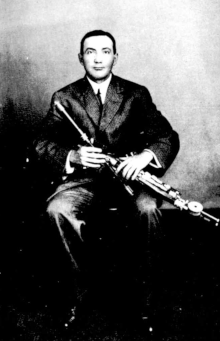
Patrick “Patsy” J. Touhey, a celebrated player of the uilleann pipes, is born on February 26, 1865, in Cahertinny, Bullaun, Loughrea, County Galway. His innovative technique and phrasing, his travels back and forth across the United States to play on the variety and vaudeville stage, and his recordings make his style influential among Irish American pipers. He can be seen as the greatest contributor to a distinctive American piping style.
According to Chief Francis O’Neill of the Chicago Police Department, in his seminal work O’Neill’s Irish Minstrels and Musicians, Touhey is the third generation of accomplished pipers stemming from his grandfather, Michael Twohill (the original spelling, b. ca. 1800), his father James and his uncle Martin, who are considered accomplished players. The family arrives in Boston around 1868, and his father arranges for his instruction from Bartley Murphy of County Mayo. However, at the age of ten Patsy loses his father and later lays the pipes aside.
In his late teens Touhey strays into a Bowerymusic hall where John Eagan, the “White Piper” of Galway, is engaged. Enthralled by Eagan’s virtuosity, he takes up the pipes again, and under the instruction of Eagan and Billy Taylor of Philadelphia soon becomes a master.
Touhey and Eagan tour the northeastern United States with “Harrigan’s Double Hibernian Co., Irish and American Tourists” in 1885 and 1886. This is his apparent introduction to theatrical life. Harrigan’s company stars Jeremiah “Jere” Cohan, the father of George M. Cohan, later a famous songwriter and showman. Despite a persistent legend, there is no evidence that Touhey plays publicly for the step-dancing of George M. Cohan, who is seven or eight years old at the time. Between 1886 and 1895 he appears in several theatre productions including “Inshavogue” and “The Ivy Leaf.” At the 1893 World’s Columbian Exposition in Chicago, he plays at the Irish Village, one of two rival Irish pavilions, and is later engaged for the 1904 World’s Fair in St. Louis (Louisiana Purchase Exposition). From about 1896 until 1921 he plays in vaudeville skits, trading jokes with his wife, Mary, and their on and off partner Charles Henry Burke. The shows include slapstick, low-brow gags, Irish nostalgia, and a piping finale to which Mary Touhey dances.
Chicago Police Chief Francis O’Neill, a prominent compiler of Irish dance tunes, calls Touhey “the genial wizard of the Irish pipers . . . A stranger to jealousy, his comments are never sarcastic or unkind, neither does he display any tendency to monopolize attention in company when other musicians are present.”
Touhey lives on Bristow Street in the Bronx, New York City, from at least 1900 until 1908. He and Mary live in rural East Haddam, Connecticut from 1908 to 1919, then in Freeport, New York from 1919 to 1922. In 1922 he moves back to the Bronx. He dies suddenly in his home at 1175 Concourse, New York, on January 10, 1923. He is buried in Saint Raymond’s Cemetery in the Bronx.
A statue of Patsy Touhey is unveiled in 2008 in Loughrea, near the place where he was born. It is a bronze sculpture by James MacCarthy that shows Touhey sitting on a limestone block and playing his pipes. Behind him, on the wall, there are three plaques with portraits of Peter and Vincent Broderick, two other local musicians, and Touhey himself. The statue is a tribute to the musical heritage of Loughrea and Galway, and a reminder of the connection between Ireland and its diaspora.
Gleeson is the daughter of Irish-born Edward Moloney Gleeson, a medical doctor, and Harriet (née Simpson), from Bolton, Lancashire. Her father has a practice in Knutsford but on a trip to Ireland he is struck by the poverty and unemployment and, with the advice of his brother-in-law, a textile manufacturer in Lancashire, he founds the Athlone Woollen Mills in 1859, investing all his money in the project. The family moves to Athlone in 1863, but Gleeson is educated in England, where she trains as a teacher. She later studies portraiture in London at the Atelier Ludovici from 1890–92. She goes on to study design with Alexander Millar, a follower of William Morris, who believes she has an exceptional aptitude for colour-blending. Many of her designs are bought by the exclusive Templeton Carpets of Glasgow.
Gleeson takes a keen interest in Irish affairs and, as a member of the Gaelic League and the Irish Literary Society, mixes with the Yeats family and the Irish artistic circle in London and is inspired by the Gaelic revival in art and literature. She is also involved in the suffrage movement and is chairwoman of the Pioneer Club, a women’s club in London. In 1900, an opportunity arises to make a practical contribution to the Irish renaissance and the emancipation of Irish women. She is suffering from ill-health, but her friend Augustine Henry, botanist and linguist, suggests she move away from the London smog to Ireland and open a craft centre with his financial assistance. She seizes the opportunity and discusses her plans with her friends the Yeats sisters, Elizabeth and Lily, who are talented craftswomen and have direct contact with William Morris and his followers. They have no money to contribute to the venture but are enthusiastic and can offer their skills and provide contacts. She seeks advice from W. B. and Jack Yeats, from Henry, who loans her £500, and from her cousin, T. P. Gill, secretary of the Department of Agriculture and Technical Instruction.
During the summer of 1902 Gleeson finds a suitable house in Dundrum, County Dublin, ten minutes from the railway station. The house, originally called Runnymede, is renamed Dun Emer, after the wife of Cú-Chulainn, renowned for her craft skills. The printing press arrives in November 1902, and soon three craft industries are in operation. Lily Yeats runs the embroidery section, since she had trained with Morris’s daughter May. Elizabeth Yeats operates the press, having learned printing at the Women’s Printing Society in London. Gleeson manages the weaving and tapestry and looks after the financial affairs of the industries. W. B. Yeats acts as literary adviser, an arrangement that often causes friction, and Gleeson’s sister, Constance McCormack, is also involved.
Local girls are employed and trained, and the industries seek to use the best of Irish materials to make beautiful, high-quality, lasting products of original design. Church patronage accounts for most of their orders and, in 1902–03, Loughrea cathedral commissions twenty-four embroidered banners portraying Irish saints. They also make vestments, traditional dresses, drapes, cushions and other items, all beautifully crafted and mostly employing Celtic design. The first book published is In the Seven Woods (1903), by W. B. Yeats, cased in full Irish linen.
Gleeson is in demand as an adjudicator in craft competitions around the country and at Feis na nGleann in 1904 she praises the workmanship of the entries but is critical of the lack of teaching in design. She gives lectures and tries to raise the status of craftwork from household occupation to competitive industry. There are tensions with the Yeats sisters, who complain that she is bad-tempered and arrogant. In truth she had taken on too much of a financial burden, even with the support of grants, and she is anxious to repay her debt to Augustine Henry, which he is prepared to forego. The sisters snub her and omit her name in an interview about Dun Emer in the magazine House Beautiful. Millar, her design teacher in London, likens the omission to Hamlet without the prince. In 1904, it is decided to split the industries on a cooperative basis: Dun Emer Guild Ltd. under Gleeson and Dun Emer Industries Ltd. under the Yeats sisters.
Work continues, and the guild and industries exhibit separately at the Royal Dublin Society (RDS) and other craft competitions. In 1907, the National Museum of Ireland commissions a copy of a Flemish tapestry. It takes far longer than anticipated to complete, but the result is beautiful and is exhibited at the Arts and Crafts Society of Ireland in 1910. The guild wins a silver medal at the Milan International exhibition in 1906. The guild and industries both show work at the New York exhibition of 1908. The guild alone shows work in Boston. By now cooperation has turned to rivalry, and there is a final split as the Yeats sisters leave, taking the printing press with them to their house in Churchtown, Dublin. Gleeson writes off a debt of £185 owed to her, on condition that they do not use the name Dun Emer.
The business thrives at Dundrum, with her niece Katherine (Kitty) MacCormack and Augustine Henry’s niece, May Kerley, assisting with design. Later they move the workshops to Hardwicke Street, Dublin. In 1909, Gleeson becomes one of the first members of the Guild of Irish Art Workers and is made master in 1917. The Irish Women Workers’ Union commissions a banner from her about 1919, and, among numerous other notable successes, a Dun Emer carpet is presented to Pope Pius XI in 1932, the year of the Eucharistic Congress of Dublin.
Gleeson dies at the age of 89 at Dun Emer on February 20, 1944, with Kitty carrying on the Guild after her death. The final home of Dun Emer is a shop on Harcourt Street, Dublin, which finally closes in 1964.
(From: “Gleeson, Evelyn” by Ruth Devine, Dictionary of Irish Biography, http://www.dib.ie, October 2009)
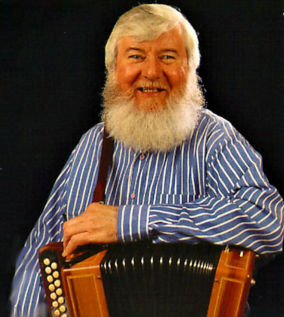
Burke starts playing traditional at age four and purchases his first accordion in the 1950s. He wins the All-Ireland Senior Accordion Championship in Thurles in 1959 and again in Boyle the following year. Together with fiddler Aggie Whyte, he wins the All-Ireland duet championship in 1962 in Gorey, County Wexford.
Burke co-founds the Leitrim Ceili Band with Padden Downey in 1956. Other members of the east Galway-based band, which wins All-Ireland Championships in 1959 and 1962, includes Irish flute players Paddy Carty, Ambrose Moloney and Tony Molloy, button accordionists Mick Darcy and Sean McGlynn, fiddlers Michael Joe Dooley, Paddy Doorhy, Aggie Whyte and Séamus Connolly, drummer Sean Curley and pianist Anne-Marie Courtney. The band tours in England and releases an LP on the New York-based Dublin label.
Burke first tours in the United States in 1961, and lives mainly in New York from 1962 to 1965, during which period he forms a musical partnership with fiddler Andy McGann. With McGann and pianist Felix Dolan, he records an LP, A Tribute to Michael Coleman, first released in 1966 on his own Shaskeen label. He records again with this trio, issuing The Funny Reel LP on the Shanachie Records label in 1979. Other musical collaborators over the years include Belfast fiddle great Sean McGuire, piper Michael Cooney, harpist Máire Ní Chathasaigh, fiddler Kevin Burke, pianist Charlie Lennon and his wife Anne Conroy Burke, whom he marries in 1990, on guitar and button accordion.
Burke’s first solo LP, Galway’s Own, is released in 1971. He also tours extensively for the next two decades, including with groups sponsored by Comhaltas Ceoltóirí Éireann. From 1988 to 1991, he lives in St. Louis, Missouri, where he has a musical residency at John D. McGurk’s Pub and hosts radio programmes at two stations, one of them the “Ireland in America” programme on KDHX. He represents Ireland in 1989 and 1992 at the International Accordion Festivals, in Montmagny, Quebec, along with accordion greats who include Cajun accordion player Marc Savoy and jazz accordionist Art Van Damme.
After residing in the United States from 1988 until 1991, Burke returns to Kilnadeema in 1992. There, he carries on teaching and performing music. He dies at the age of 81 on February 20, 2021, at Galway Hospice.
Burke is named RTÉ‘s Traditional Musician of the Year in 1970. He goes on to win both the AIB Traditional Musician of the Year and the Lifetime Achievement Award from The Irish World in 1997. A Joe Burke Tribute Concert is held in April 1997 at the Town Hall Theatre in Galway, on his reception of the AIB award. Three years later, he receives an award in Musical Mastery from Boston College. He is later conferred Gradam an Chomhaltais in 2003.
O’Kelly is born James Kelly in Mobhill, Loughrea, County Galway, youngest of seven (or possibly eight) children of Michael Kelly, corn merchant, and his wife, Catherine Fitzgerald. His date of birth is uncertain. Some commentators believe he is the James Kelly whose birth was registered on November 16, 1875, but relatives claim this was a sibling and namesake who died prematurely. His death certificate implies he was born in 1878, and family members maintained he was born in 1880.
Loughrea is at the centre of the bitterly fought plan of campaign agitation on the Clanricarde estate from the late 1880s. Many tenants in the town and surrounding rural districts are evicted for non-payment of rent, and Lord Clanricarde resists reinstatement until the estate is purchased by special legislation shortly before World War I. According to one source, the O’Kellys are themselves evicted during the Plan of Campaign, though they seem to retain a degree of financial stability. A widespread perception that nationalist politicians had exploited the evicted tenants contributes to the relative strength of Parnellism in the area, and the early appearance of Sinn Féin. This background inspires such works as O’Kelly’s 1917 play, The Parnellite.
While growing up in Loughrea, O’Kelly is profoundly influenced by contact with older relatives and country folk from whom he learns some Irish and the folklore/storytelling tradition that shapes many of his stories. The example of his mother and friendship with the local Carmelite fathers, whom he serves as an altar boy, gives him a strong commitment to Catholicism. This coexists in his work with an Ibsenite-Parnellite insistence on individual defiance of conformity, and a gentle exaltation of the sensitive dreamer isolated from the life around him. The mixture is sometimes uneasy. His observations on domestic violence, the sexual exploitation of servant girls by hypocritically pious employers, and prejudice against children born outside marriage or raised in the workhouse are unobtrusive but biting. His play, The Bribe (1913), gives a devastating depiction of the social and economic pressures which induce a small-town shopkeeper and poor law guardian to accept a bribe to appoint an underqualified dispensary doctor, with disastrous results. The corrupt and snobbish doctor is called Power O’Connor, an unsubtle hit at the nationalist MP, T. P. O’Connor. This element of social observation distinguishes him from the more symbolist city-born Daniel Corkery, to whom he is often compared. Much of his writing is recognisably set in Loughrea.
O’Kelly begins working as a journalist on local papers, including the Midland Tribune, the Tuam News, and the Connacht Leader. He becomes editor of The Southern Star, based in Skibbereen, County Cork, in 1903, and is said to be the youngest newspaper editor in Ireland at the time. He moves to Naas, County Kildare, in 1906, as editor of the Leinster Leader. Here he lives in a house by the canal, which provides the inspiration for his linked series of short stories, The Golden Barque, along with his father, a nephew, and his brother Michael. Already a contributor to The United Irishman published by Arthur Griffith, and later its successor, Sinn Féin, he is active in the Naas Sinn Féin club and makes regular weekend visits to Dublin, where Griffith introduces him to Dublin literary circles. Here his closest friends are James Stephens, whose influence is visible in the more whimsical and fantastic elements of O’Kelly’s work, and Seumas O’Sullivan, who recalls O’Kelly as a man of remarkable gentleness and integrity.
O’Kelly’s journalistic career is accompanied by his development as a writer, publishing stories in a variety of outlets, including the Irish Rosary and the Irish Packet. From 1908 he has several plays produced by the Theatre of Ireland, a nationalist-oriented rival to the Abbey Theatre. Lustre (1913), written jointly with Casimir Markievicz, later becomes the basis for a Soviet film.
Around 1911, O’Kelly suffers a severe attack of rheumatic fever, which leaves him with a chronic heart condition and a strong sense of mortality. He continues to write extensively and with increasing skill. He becomes editor of Dublin’s The Saturday Evening Post in 1912 and moves to Dublin, where he lives in Drumcondra. At this time he is an occasional contributor to The Manchester Guardian, turning down a permanent job on that paper. He leaves the Post in 1915 because of continuing ill-health and is offered the editorship of The Sunday Freeman but has to retire after two weeks. He then returns to Naas. At this time his play Driftwood, commissioned by Annie Horniman, is produced in Manchester and London.
When O’Kelly’s brother is interned after the Easter Rising, he resumes the editorship of the Leinster Leader until his brother’s release at Christmas 1916. He also contributes topical articles to the Sunday Independent. His literary reputation continues to increase with a short story collection, Waysiders (1917), and his best-regarded full-length novel, The Lady of Deerpark (1917), a melancholy story about the last heiress of a declining Catholic gentry family. Another novel, Wet Clay (1922), is published posthumously and is the story of the tense relationship between a “returned Yank” and his small-farmer cousins, which shows deeply unresolved ambivalence about the nature and prospects of Irish rural society after the Land War.
When Griffith and many other Sinn Féin activists are arrested and imprisoned in May 1918, O’Kelly returns to Dublin to edit the Sinn Féin paper Nationality. During the days after the Armistice of November 11, 1918, a crowd of soldiers and women whose husbands are serving in the British Army attack the paper’s premises, which are also the headquarters of Sinn Féin. As a result of these attacks O’Kelly suffers a cerebral haemorrhage which leads to his death on November 14, 1918.
O’Kelly’s funeral turns into a major political demonstration and his status as a nationalist martyr leads to the posthumous publication of many of his works. These include the novella, The Weaver’s Grave (1920), generally regarded as his masterpiece. It has been reprinted regularly and translated into several languages. A 1961 Radio Éireann adaptation by Micheal Ó hAodha wins the Prix Italia. The twenty-fifth and fiftieth anniversaries of his death see various commemorations in his honour and a short-lived Seumas O’Kelly Society is founded in 1968. O’Kelly never marries but is said to have cherished a hopeless passion for the actress and nationalist activist, Máire Níc Shiubhlaigh, for whom he writes the play The Shuiler’s Child (1909).
(From: “O’Kelly, Seumas” by Patrick Maume, Dictionary of Irish Biography, http://www.dib.ie, October 2009)
Maturin’s first three works are Gothic novels published under the pseudonym Dennis Jasper Murphy and are critical and commercial failures. They do, however, catch the attention of Sir Walter Scott, who recommends Maturin’s work to Lord Byron. With their help, his play Bertram is staged in 1816 at the Theatre Royal, Drury Lane for 22 nights, with Edmund Kean starring in the lead role as Bertram. Financial success, however, eludes Maturin, as the play’s run coincides with his father’s unemployment and another relative’s bankruptcy, both of them assisted by the fledgling writer. To make matters worse, Samuel Taylor Coleridge publicly denounces the play as dull and loathsome, and “melancholy proof of the depravation of the public mind,” going nearly so far as to decry it as atheistic.
The Church of Ireland takes note of these and earlier criticisms and, having discovered the identity of Bertram‘s author after Maturin had shed his nom de plume to collect the profits from the play, subsequently bar his further clerical advancement. Forced to support his wife and four children by writing on his curate salary of £80-90 per annum, compared to the £1000 he made for Bertram, he switches back from playwright to novelist after a string of his plays meet with failure. He produces several novels in addition to Melmoth the Wanderer, including some on Irish subjects and The Albigenses, a historical novel which features werewolves. Various poems have also been ascribed to Maturin on dubious grounds and appear to be the work of others. The prize-winning “Lines on the Battle of Waterloo” is published in 1816 under the name of the university graduate John Shee. “The Universe” appears with Maturin’s name on the title page in 1821 but is now thought to be almost completely the work of James Wills.
The exaggerated effectiveness of Maturin’s preaching can be gauged from the two series of sermons that he publishes. On the occasion of the death of Princess Charlotte, he declares, “Life is full of death; the steps of the living cannot press the earth without disturbing the ashes of the dead – we walk upon our ancestors – the globe itself is one vast churchyard.” A contemporary account records that there had seldom been seen such crowds at St Peter’s. “Despite the severe weather, people of all persuasions flocked to the church and listened spellbound to this prince of preachers. In his obituary it is said that ‘did he leave no other monument whereon to rest his fame, these sermons alone would be sufficient.'”
Maturin dies in Dublin on October 30, 1824. A writer in the University Magazine later sums up his character as “eccentric almost to insanity and compounded of opposites – an insatiable reader of novels; an elegant preacher; an incessant dancer; a coxcomb in dress and manners.”
A sister of Maturin’s wife marries Charles Elgee, whose daughter, Jane Francesca, becomes the mother of Oscar Wilde. Thus, Charles Maturin is Oscar Wilde’s great-uncle by marriage. Wilde discards his own name and adopts the name of Maturin’s novel, Melmoth, during his exile in France.
Maturin’s eldest son, William Basil Kingsbury Maturin, follows him into the ministry, as do several of his grandsons. One of these, Basil W. Maturin, dies in the sinking of RMS Lusitania on May 7, 1915. The second son is Edward Maturin, who emigrates to the United States and becomes a novelist and poet there.
O’Neill is born Mary Devenport, the daughter of Royal Irish Constabulary (RIC) sub-constable, John Devenport, and his wife Bridget (née Burke). She attends the Dominican convent, Eccles Street, Dublin before enrolling in the Metropolitan School of Art from 1898 to 1903. In 1900 she wins the year’s prize in the School of Art. She apparently considers teaching as a career, as she is listed on the college register as a teacher in training from 1901 to 1903. It is while an art student that she starts to correspond with the writer she admires, Joseph O’Neill. Their relationship develops, and the couple marries on June 19, 1908, settling in Kenilworth Square, Dublin.
Many of O’Neill’s husband’s friends disapprove of her modern and unconventional ideas, but she is popular with “the Rathgar Group” who attends George Russell’s Sunday salons. After a few years, she establishes her own salon referred to as “Thursdays at home,” attended by Russell, Padraic Colum, W. B. Yeats, Richard Irvine Best, Frank O’Connor, Francis Stuart and Iseult Gonne. She becomes particularly close to Yeats, who she confides in. Yeats records their weekly consultations in his diary while working on A Vision (1925). In his Oxford anthology of English verse from 1936, he includes one of O’Neill’s poems. In 1917, she contributes lyrics to her husband’s play The Kingdom Maker. She publishes her only book in 1929, Prometheus and other poems. After this she occasionally contributes primarily modernist plays and poetry to The Dublin Magazine, The Irish Times and The Bell. She collaborates with Austin Clarke from the Lyric Theatre Company on her plays Bluebeard (1933) and Cain (1945).
O’Neill suffers with poor health, which sees her and her husband spending extended periods in the south of France and Switzerland. They sell their home in Dublin in August 1950 and move to Nice, with the intention of settling there. However, due to rapidly depleting finances they are forced to return to Ireland in April 1951. They rent a cottage in Wicklow from their friend Con Curran. When her husband dies in 1953, she goes to live with relatives in Dublin. She dies there in 1967.





 seamus dubhghaill