Orr is the eldest son of Fletcher Blakely Orr of Ballystockart, a unitarian farmer and millowner, and Elizabeth Orr, daughter of David Lowry, farmer, of Ballymacashin, County Down. He attends a local national school, spends two years at an intermediate school in Newtownards, and then attends Methodist College Belfast (MCB). He wins a Royal University of Ireland (RIU) scholarship in mathematics in 1883 and graduates in 1885 from Queen’s College Belfast, a constituent college of the RUI. He then matriculates at St. John’s College, Cambridge, where he is Senior Wrangler in 1888 and comes in first in part two of the Mathematical Tripos in 1889. Two years later he is elected to a fellowship at St. John’s, and the same year is appointed professor of applied mathematics at the Royal College of Science for Ireland in Dublin. When the Royal College is merged with University College Dublin (UCD) in October 1926, he becomes professor of pure and applied mathematics, a position he holds until his retirement in 1933.
Orr’s 1909 publication Notes on Thermodynamics for Students is seen as epitomising his style of teaching, with its emphasis on logical rigour and clear statement of underlying assumptions. Known for his generosity to staff and students who encounter difficulties, he is nonetheless a strict disciplinarian who abhors idleness and valued stoicism. He is elected Fellow of the Royal Society (FRS) in 1909 and is awarded an honorary degree of D.Sc. from Queen’s University Belfast (QUB) in 1919.
In 1892, Orr marries Elizabeth Campbell of Melbourne, Australia, whose father, Samuel Campbell, is from County Down. They live at 19 Pembroke Road, Dublin, and have three daughters. He dies at Douglas, Isle of Man on August 14, 1934, and is interred in Mount Jerome Cemetery, Dublin. He is survived by his two daughters.
(From: “Orr, William McFadden” contributed by Paul Rouse, Dictionary of Irish Biography, http://www.dib.ie)
Russell is the second son of Thomas Russell and Mary Armstrong. His father, the son of a small farmer, becomes an employee of Thomas Bell and Co., a prosperous firm of linen drapers. The family relocates to Dublin, where his father has a new offer of employment, when he is eleven years old.
Following his time at the Metropolitan School of Art, Russell becomes an accounts clerk in a drapery store but leaves in 1897 to organize agricultural cooperatives. Eventually he becomes editor of the periodicals Irish Homestead (1905–23) and The Irish Statesman (1923–30). In 1894 he publishes the first of many books of verse, Homeward: Songs by the Way, which establishes him in what is known as the Irish Literary Revival. His first volume of Collected Poems appears in 1913 and a second in 1926. He maintains a lifelong interest in theosophy, the origins of religion, and mystical experience. Candle of Vision: Autobiography of a Mystic (1918) is the best guide to his religious beliefs.
At the turn of the 20th century, Russell is considered by many to be the equal of Yeats, but he does not continue to grow and develop as Yeats does. He is prolific and versatile, but many critics find his poetry facile, vague, and monotonous, with “rather too much of the Celtic Twilight” in it.
Russell, who had become increasingly unhappy in the Irish Free State which, according to Yeats, he called “a country given over to the Devil,” moves to England soon after his wife’s death in 1932. Despite his failing health he goes on a final lecture tour in the United States but returns home utterly exhausted. He dies of cancer in Bournemouth, England, on July 17, 1935. His body is brought back to Ireland, and he is interred in Mount Jerome Cemetery, Dublin.
Jellett marries his cousin on his mother’s side, Dorothea Charlotte Morris Morgan, daughter of James Morgan, on July 7, 1855. The marriage produces seven children. His son, William Morgan Jellett, is a member of the Parliament of the United Kingdom and is the father of the celebrated artist Mainie Jellett, and of Dorothea Jellett, director of the orchestra of the Gaiety Theatre, Dublin. Another son Henry Holmes Jellett is a civil engineer in British India. His daughter Harriette Mary Jellett is the wife of the noted Irish physicistGeorge Francis FitzGerald. Another daughter Eva Jellett is the first woman to graduate with a degree in medicine from Trinity and goes on to practice as a doctor in India.
Jellett graduates B.A. in mathematics in 1837, M.A. 1843, B.D. 1866, and D.D. 1881. He is ordained a priest in 1846. In 1848 he is elected to the chair of natural philosophy at TCD, and in 1868 he receives the appointment of commissioner of Irish national education.
In 1851 Jellett is awarded the Cunningham Medal of the Royal Irish Academy for his work on the “Calculus of Variations.” The society later elects him their president, a position he holds from 1869 to 1874.
In 1870, on the death of Dr. Thomas Luby, Jellett is co-opted a Senior Fellow, and thus a member of the Board of TCD. William Ewart Gladstone‘s government in February 1881 appoints him provost of Trinity. In the same year he is awarded a Royal Medal by the Royal Society.
After the disestablishment of the Church of Ireland by the Irish Church Act 1869, Jellett takes an active part in the deliberations of the general synod and in every work calculated to advance its interests. He is an able mathematician and writes A Treatise of the Calculus of Variations (1850), and A Treatise on the Theory of Friction (1872), as well as several papers on pure and applied mathematics, articles in the Transactions of the Royal Irish Academy. He also writes some theological essays, sermons, and religious treatises, of which the principals are An Examination of some of the Moral Difficulties of the Old Testament (1867), and The Efficacy of Prayer (1878).
Jellett dies of blood poisoning at the provost’s house, TCD, on February 19, 1888, and is buried in Mount Jerome Cemetery on February 23. The funeral procession is the largest that ever left Trinity.
(Pictured: “John Hewitt Jellett,” oil on canvas by Sarah Purser)
Hamilton is born in Dublin on August 4, 1805, the fourth of nine children born to Sarah Hutton (1780–1817) and Archibald Hamilton (1778–1819). He is part of a small but well-regarded school of mathematicians associated with Trinity College, Dublin, which he enters at age eighteen. He is said to have shown immense talent at a very early age. Astronomer Bishop Dr. John Brinkley remarks of the 18-year-old Hamilton, “This young man, I do not say will be, but is, the first mathematician of his age.”
Trinity College awards him two Optimes, or off-the-chart grades. He studies both classics and mathematics and is appointed Professor of Astronomy just prior to his graduation. He then takes up residence at Dunsink Observatory where he spends the rest of his life.
Although Hamilton regards himself as a pure mathematician rather than a physicist, his work is of major importance to physics, particularly his reformulation of Newtonian mechanics, now called Hamiltonian mechanics. This work has proven central to the modern study of classical field theories such as electromagnetism, and to the development of quantum mechanics. In pure mathematics, he is best known as the inventor of quaternions.
Hamilton’s scientific career includes the study of geometrical optics, classical mechanics, adaptation of dynamic methods in optical systems, applying quaternion and vector methods to problems in mechanics and in geometry, development of theories of conjugate algebraic couple functions, solvability of polynomial equations and general quintic polynomial solvable by radicals, the analysis on Fluctuating Functions, linear operators on quaternions and proving a result for linear operators on the space of quaternions, which is a special case of the general theorem which today is known as the Cayley–Hamilton theorem. He also invents Icosian calculus, which he uses to investigate closed edge paths on a dodecahedron that visit each vertex exactly once.
Hamilton retains his faculties unimpaired to the very last, and steadily continues the task of finishing the Elements of Quaternions which occupies the last six years of his life. He dies in Dublin on September 2, 1865, following a severe attack of gout precipitated by excessive drinking and overeating. He is buried in Mount Jerome Cemetery in Dublin.
Professor of Moral Philosophy at Trinity College Dublin and vicar of St. Anne’s, Dawson Street, at the time of his son’s birth, William FitzGerald is consecrated Bishop of Cork, Cloyne and Ross in 1857 and translates to Killaloe and Clonfert in 1862. George returns to Dublin and enters TCD as a student at the age of sixteen, winning a scholarship in 1870 and graduating in 1871 in Mathematics and Experimental Science. He becomes a Fellow of Trinity in 1877 and spends the rest of his career there, serving as Erasmus Smith’s Professor of Natural and Experimental Philosophy from 1881 to 1901.
In 1883, following from Maxwell’s equations, FitzGerald is the first to suggest a device for producing rapidly oscillating electric currents to generate electromagnetic waves, a phenomenon which is first shown to exist experimentally by the German physicist Heinrich Hertz in 1888.
FitzGerald is better known for his conjecture in his short letter to the editor of Science. “The Ether and the Earth’s Atmosphere” explains that if all moving objects were foreshortened in the direction of their motion, it would account for the curious null-results of the Michelson–Morley experiment. He bases this idea in part on the way electromagnetic forces are known to be affected by motion. In particular, he uses some equations that had been derived a short time before by his friend the electrical engineer Oliver Heaviside. The Dutch physicist Hendrik Lorentz hits on a very similar idea in 1892 and develops it more fully into Lorentz transformations, in connection with his theory of electrons.
The Lorentz–FitzGerald contraction hypothesis becomes an essential part of the Special Theory of Relativity, as Albert Einstein publishes it in 1905. He demonstrates the kinematic nature of this effect, by deriving it from the principle of relativity and the constancy of the speed of light.
FitzGerald suffers from many digestive problems for much of his shortened life. He becomes very ill with stomach problems. He dies on February 22, 1901, at his home, 7 Ely Place in Dublin, the day after an operation on a perforated ulcer. He is buried in Mount Jerome Cemetery.
A crater on the far side of the Moon is named after FitzGerald, as is a building at Trinity College Dublin.
Joss Lynam, Irish civil engineer who is well known as a mountaineer, hillwalker, orienteer, writer and sports administrator, is born James Perry O’Flaherty Lynam in London on June 29, 1924. He is one of Ireland’s most influential figures in outdoor activities.
Lynam is born to Irish parents Edward and Martha (née Perry), both Galway natives. He and his older sister, Biddy, are both raised in London where his father works as curator of maps in the British Museum. This is where he is first introduced to orienteering and cartography. The family frequently returns to the west coast of Ireland to holiday. Here he finds his love for mountaineering and climbs his first mountain, Knocknarea in County Sligo, with his aunt.
Lynam is a civil engineer by profession but devotes most of his life developing the sport of mountaineering in Ireland. He climbs extensively in Ireland, Great Britain, the Alps and in India. He is leader, or deputy leader, of expeditions to Greenland, the Andes, Kashmir, Tian Shan, Garhwal, Tibet and India, including the 1987 expedition to Changtse, that is the forerunner to the successful first Irish ascent of Mount Everest in 1993.
With his involvement in developing adventure sport in Ireland Lynam is active in promoting access and developing waymarked trails. He is involved in the creation and administration of the Federation of Mountaineering Clubs in Ireland (now Mountaineering Ireland), the Association for Adventure Sports, Bord Oiliúint Sléibhte (Irish Mountain Training Board), Tiglin (National Outdoor Training Centre), Outdoor Education Ireland, and Cospóir (now Sport Ireland) and the National Waymarked Ways Advisory Committee (part of Sport Ireland).
Lynam is a founder member of the Irish Mountaineering Club (IMC) serving as president from 1982-1984. He is also a founder member of both the Irish Orienteers and Three Rock Orienteering club. He is president of the Union Internationale des Associations d’Alpinisme‘s expeditions commission in the 1990s.
Lynam writes and edits many guide books on walking and climbing in Ireland and helps create and is editor of The Mountain Log (the journal of Mountaineering Ireland).
In 2001, Lynam is awarded an honorary degree from Trinity College Dublin in acknowledgment of his volunteer work and remarkable achievements. He celebrates his 80th birthday by climbing the Paradise Lost Route and then goes on to abseil down Winder’s Slab for his 82nd birthday, both routes in Dalkey Quarry. Both climbs are to raise funds for cancer research, as he had been undergoing chemotherapy for Hodgkin’s Disease.
After Lynam’s death, his two daughters, Clodagh and Ruth, donate his papers to his alma mater, Trinity College Dublin. These papers cover a vast range of topics such as his life and career, family, childhood, experience of war, his involvement with different mountaineering clubs, and his many writings. The collection also contains photos and slides that he captures himself of landscapes and mountaineering, and consists of maps that are collected by him and his father. There is so much material in the collection that it takes a year for the collection to be catalogued by an archivist.
Lynam’s ashes are scattered by his daughters over the Knocknarea Mountain on the February 12, 2011, being the first mountain he climbed. The Lynam Lecture is introduced in 2011 by Mountaineering Ireland in his memory and his achievements in climbing, hillwalking and mountaineering in Ireland and around the world. Every December the Lynam Lecture is held by leading national and international mountaineers and discusses the development and future of mountaineering in Ireland. Past speakers include Ines Papert, Frank Nugent and Paddy O’Leary.
Irish painter Sir Frederic William BurtonRHA is born in County Wicklow on April 8, 1816. The third son of Samuel Frederick Burton and his wife Hanna Mallett, he is taken by his parents to live in County Clare on the west coast of Ireland at the age of six. The old Burton seat is Clifden House, Corofin, County Clare, which is built around the middle of the eighteenth century. The artist’s grandparents were Major Edward William Burton, Clifden, who was High Sheriff of Clare in 1799, and his wife, Jane Blood of nearby Roxton, County Clare. In his youth he has strong sympathy with the Young Ireland movement.
Educated in Dublin, Burton is elected an associate of the Royal Hibernian Academy at the age of twenty-one and an academician two years later. In 1842 he begins to exhibit at the Royal Academy. A visit to Germany and Bavaria in 1842 is the first of a long series of trips to various parts of Europe, which give him a profound knowledge of the works of the Old Masters. From 1851 he spends seven years working as a painter in the service of Maximilian II of Bavaria.
Burton works with George Petrie on archaeological sketches and is on the council of the Royal Irish Academy and the Archaeological Society of Ireland. He is elected an associate of the Royal Society of Painters in Watercolours in 1855, and a full member in the following year. He resigns in 1870 and is reelected as an honorary member in 1886.
During the twenty years that Burton holds this post he is responsible for many important purchases, among them Leonardo da Vinci‘s Virgin of the Rocks, Raphael‘s Ansidei Madonna, Anthony van Dyck‘s Equestrian portrait of Charles I, Hans Holbein the Younger‘s Ambassadors, and the Admiral Pulido Pareja, by Diego Velázquez (this subsequently attributed to Velázquez’s assistant Juan Bautista Martínez del Mazo). He also adds to the noted series of Early Italian pictures in the gallery. The number of acquisitions made to the collection during his period of office exceeds 500.
Burton’s best-known watercolours, The Aran Fisherman’s Drowned Child (1841) and The Meeting on Turret Stairs (1864) are in the National Gallery of Ireland. The Meeting on Turret Stairs is voted by the Irish public as Ireland’s favourite painting in 2012 from among ten works shortlisted by critics. A knighthood is conferred on him in 1884, and the degree of LL.D. of Dublin in 1889.
Isaac Weld, Irish topographical writer, explorer, and artist, is born on Fleet Street, Dublin on March 15, 1774. He is a member of the Royal Dublin Society.
Weld’s name stems from his great-grandfather Nathanael Weld’s close friendship with Sir Isaac Newton, and as such both his grandfather and father are also named Isaac. His father is a close friend of Charles James Fox. His sister marries George Ensor, and their half-brother is Charles Richard Weld, traveler and author of A Vacation Tour in the United States and Canada (London, 1855), which is dedicated to his brother, Isaac. He is sent to the school of Samuel Whyte at Grafton Street and from there to another private school Barbauld at Palgrave near the town of Diss in Norfolk. From Diss he proceeds to Norwich as a private pupil of Dr. William Enfield. He leaves Norwich in 1793.
In 1795 he sails to Philadelphia from Dublin and spends two years traveling in the United States and Canada, partly as an adventure and partly as research into suitable countries to which the Irish can emigrate. He visits Monticello and Mount Vernon and meets George Washington and Thomas Jefferson. He travels on horseback, by coach and by canoe in Canada with local native guides. He returns in 1797 “without entertaining the slightest wish to revisit it.” He finds the Americans to be obsessed with material things and prefers Canada. His published Travels (1799) quickly goes into three editions and is translated into French, German, Italian, and Dutch.
Weld writes on slavery that “there will be an end to slavery in the United States…[as] negroes will not remain deaf to the inviting call of liberty forever.” With regard to Americans in general, he states, “Civility cannot be purchased from them on any terms; they seem to think that it is incompatible with freedom.” On Washington, D.C., he writes “If the affairs of the United States go on as rapidly as they have done, it will become the grand emporium of the West, and rival in magnitude and splendour the cities of the whole world.”
Weld visits Killarney, navigates the lakes in a boat he made from compressed brown paper, and publishes Scenery of Killarney (1807), illustrated with his own drawings. He is also well known for his drawings of American life and, in particular, the Niagara Falls.
In May 1815 Weld sails from Dún Laoghaire to London in the 14 horsepower (10 kW) steamboat Thames, the first such vessel to make the passage. He compiles the Statistical Survey of the County of Roscommon (1838) for the Royal Dublin Society, of which he is Honorary Secretary and Vice-President. In later life, he spends much time in Italy and particularly Rome, where he develops a friendship with Antonio Canova.
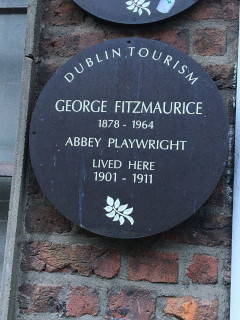
Fitzmaurice attends Duagh National School and later St. Michael’s College, Listowel. He is brought up in the Protestant faith as his father is a Protestant clergyman and is the vicar of St. John’s Church, Listowel. His father dies when he is fourteen years old and the family fortune declines. He takes a job in Dublin as a clerk in the Congested Districts Board for Ireland. In 1916 he enlists in the British Army and returns to Dublin after the war and is diagnosed with neurasthenia, rendering him fearful of crowds. On his return to Dublin, he takes up a position working for the Irish Land Commission.
Fitzmaurice and his eleven siblings are the children of a mixed marriage. He and his brothers are brought up as Protestants and his sisters are brought up as Roman Catholics. His family home at Bedford, together with its extensive lands has to be given up as collateral in respect of a £60 debt owed to the local butcher. Neither Fitzmaurice nor any of his eleven siblings are to marry or have any offspring. He is the last Fitzmaurice of Duagh. There are no photographs of him other than a sketch of him in later life.
Fitzmaurice’s first success was in 1907, with an Abbey Theatre production of his comedy The Country Dressmaker which features one of his most famous characters, Luke Quilter, “The man from the mountain.” This character proves to be a favourite with the audience, to the surprise of William Butler Yeats. The play’s commercial success brings necessary income to the Abbey Theatre in 1907. The play is ultimately broadcast by the Radio Éireann Players.
Fitzmaurice’s second play is a dramatic fantasy called The Pie Dish. It is heavily rejected and slated by critics and considered blasphemous. This leads to the rejection of another of his plays called The Dandy Dolls which is now understood as another of his best plays. It is produced in the Abbey Theatre in 1969, six years after his death.
During Fitzmaurice’s lifetime, some of his dramatic works are produced by poet Austin Clarke in Lyric Theatre, Dublin. In 1923 his play Twixt by Giltinans and the Carmodys is also performed on Abbey and eight more of his plays are printed in the literary journey The Dublin Magazine from 1924 to 1925.
The effects of having fought in World War I lead to Fitzmaurice becoming increasingly reclusive over time. With a fear of travelling and people or crowds, he spends his later years following “monotonous routines in Dublin.” On May 12, 1963, he dies in poverty at his home at 3 Harcourt Street and is buried in Mount Jerome Cemetery. In his room there are no pictures of himself, few personal mementos, but he does have a copy of almost every play he had published, as well as some unpublished drafts. Besides his personal clothing, there is little else. He dies without leaving a will.
In 1965, RTÉ reports that “the works of George Fitzmaurice are now undergoing something of a revival.” A fellow Kerry playwright, John B. Keane, states at the time that Fitzmaurice is increasingly being recognised as the great dramatist he truly was. He also describes his work as having “practical clarity of speech coupled with a great conciseness, and a tightness in his writing and in his construction.” Michael Connor, the man who owns the Fitzmaurice property in Daugh, recounts that he often saw Fitzmaurice in the town after his retirement from the civil service but by that time the dramatist had completely lost interest in seeing his own plays on the stage.
In his native Daugh, The George Fitzmaurice Library is founded, and on October 14, 1995, a headstone that is sculpted by a local and commissioned by the Duagh Historical Society, is placed over Fitzmaurice’s grave.
Salmon, the son of Michael Salmon and Helen Weekes, spends his boyhood in Cork, where his father is a linen merchant. There he attends Hamblin and Porter’s Grammar School before attending Trinity College in 1833, graduating with First Class Honours in mathematics in 1839. In 1841 he attains a paid fellowship and teaching position in mathematics at Trinity. In 1845 Salmon is additionally appointed to a position in theology at the university, after having been ordained a deacon in 1844 and a priest in the Church of Ireland in 1845.
In the late 1840s and the 1850s Salmon is in regular and frequent communication with Arthur Cayley and J. J. Sylvester. The three of them together with a small number of other mathematicians develop a system for dealing with n-dimensional algebra and geometry. During this period, he publishes about 36 papers in journals.
In 1844 Salmon marries Frances Anne Salvador, daughter of Rev. J. L. Salvador of Staunton-upon-Wye in Herefordshire, with whom he has six children, of which only two survive him.
In 1848 Salmon publishes an undergraduate textbook entitled A Treatise on Conic Sections. This text remains in print for over fifty years, going through five updated editions in English, and is translated into German, French and Italian. From 1858 to 1867 he is the Donegall Lecturer in Mathematics at Trinity.
In 1859 Salmon publishes the book Lessons Introductory to the Modern Higher Algebra. This is for a while simultaneously the state-of-the-art and the standard presentation of the subject, and goes through updated and expanded editions in 1866, 1876 and 1885, and is translated into German and French. He also publishes two other mathematics texts, A Treatise on Higher Plane Curves (1852) and A Treatise on the Analytic Geometry of Three Dimensions (1862).
In 1858 Salmon is presented with the Cunningham Medal of the Royal Irish Academy. In June 1863 he is elected a Fellow of the Royal Society followed in 1868 by the award of their Royal Medal. In 1889 he receives the Copley Medal of the society, the highest honorary award in British science, but by then he has long since lost his interest in mathematics and science.
From the early 1860s onward Salmon is primarily occupied with theology. In 1866 he is appointed Regius Professor of Divinity at Trinity College, at which point he resigns from his position in the mathematics department. In 1871 he accepts an additional post of chancellor of St. Patrick’s Cathedral, Dublin.
Salmon is Provost of Trinty College from 1888 until his death in 1904. The highlight of his career is likely when in 1892 he presides over the great celebrations marking the tercentenary of the College, which had been founded by Queen Elizabeth I. His deep conservatism leads him to strongly oppose women receiving degrees from the University.
Salmon dies at the Provost’s House on January 22, 1904, and is buried in Mount Jerome Cemetery, Dublin. An avid reader throughout his life, his obituary refers to him as “specially devoted to the novels of Jane Austen.”
Salmon’s theorem [ru] is named in honor of George Salmon.





 seamus dubhghaill