seamus dubhghaill

Promoting Irish Culture and History from Little Rock, Arkansas, USA


Leave a comment

Death of Artist Jack Butler Yeats

jack-butler-yeats

John “Jack” Butler Yeats, artist, Olympic medalist and brother of William Butler Yeats, dies in Dublin on March 28, 1957.

Butler’s early style is that of an illustrator. He only begins to work regularly in oils in 1906. His early pictures are simple lyrical depictions of landscapes and figures, predominantly from the west of Ireland, especially of his boyhood home of Sligo. His work contains elements of Romanticism.

Yeats is born in London on August 29, 1871. He is the youngest son of Irish portraitist John Butler Yeats. He grows up in Sligo with his maternal grandparents, before returning to his parents’ home in London in 1887. Early in his career he works as an illustrator for magazines like The Boy’s Own Paper and Judy, draws comic strips, including the Sherlock Holmes parody “Chubb-Lock Homes” for Comic Cuts, and writes articles for Punch under the pseudonym “W. Bird.” In 1894 he marries Mary Cottenham, also a native of England and two years his senior and resides in Wicklow according to the Census of Ireland, 1911.

From around 1920, Yeats develops into an intensely Expressionist artist, moving from illustration to Symbolism. He is sympathetic to the Irish Republican cause, but not politically active. However, he believes that “a painter must be part of the land and of the life he paints,” and his own artistic development, as a Modernist and Expressionist, helps articulate a modern Dublin of the 20th century, partly by depicting specifically Irish subjects, but also by doing so in the light of universal themes such as the loneliness of the individual, and the universality of the plight of man. Samuel Beckett writes that “Yeats is with the great of our time… because he brings light, as only the great dare to bring light, to the issueless predicament of existence.” The Marxist art critic and author John Berger also pays tribute to Yeats from a very different perspective, praising the artist as a “great painter” with a “sense of the future, an awareness of the possibility of a world other than the one we know.”

Yeats’s favourite subjects include the Irish landscape, horses, circus and travelling players. His early paintings and drawings are distinguished by an energetic simplicity of line and colour, his later paintings by an extremely vigorous and experimental treatment of often thickly applied paint. He frequently abandons the brush altogether, applying paint in a variety of different ways, and is deeply interested in the expressive power of colour. Despite his position as the most important Irish artist of the 20th century, he takes no pupils and allows no one to watch him work, so he remains a unique figure. The artist closest to him in style is his friend, the Austrian painter, Oskar Kokoschka.

Besides painting, Yeats has a significant interest in theatre and in literature. He is a close friend of Samuel Beckett. He designs sets for the Abbey Theatre, and three of his own plays are also produced there. He writes novels in a stream of consciousness style that James Joyce acknowledges, and also many essays. His literary works include The Careless Flower, The Amaranthers, Ah Well, A Romance in Perpetuity, And To You Also, and The Charmed Life. His paintings usually bear poetic and evocative titles. He is elected a member of the Royal Hibernian Academy (RHA) in 1916.

Yeats holds the distinction of being Ireland’s first medalist at the Olympic Games in the wake of creation of the Irish Free State. At the 1924 Summer Olympics in Paris, his painting The Liffey Swim wins a silver medal in the arts and culture segment of the Games. In the competition records the painting is simply entitled Swimming.

Yeats dies in Dublin on March 28, 1957, and is buried in Mount Jerome Cemetery.


Leave a comment

Death of Dramatist John Millington Synge

John Millington Synge, a leading figure in the Irish Literary Revival, dies in Dublin, on March 24, 1909. He is a poetic dramatist of great power who portrays the harsh rural conditions of the Aran Islands and the western Irish seaboard with sophisticated craftsmanship.

Synge is born in Newtown Villas, RathfarnhamCounty Dublin, on April 16, 1871. He is the youngest son in a family of eight children. His parents are members of the Protestant upper middle class. His father, John Hatch Synge, who is a barrister, comes from a family of landed gentry in Glanmore Castle, County Wicklow.

Synge is born in Newtown Villas, RathfarnhamCounty Dublin, on April 16, 1871. He is the youngest son in a family of eight children. His parents are members of the Protestant upper middle class. His father, John Hatch Synge, who is a barrister, comes from a family of landed gentry in Glanmore Castle, County Wicklow.

After studying at Trinity College and at the Royal Irish Academy of Music in Dublin, Synge pursues further studies from 1893 to 1897 in GermanyItaly, and France. In 1894 he abandons his plan to become a musician and instead concentrates on languages and literature. He meets William Butler Yeats while studying at the Sorbonne in Paris in 1896. Yeats inspires him with enthusiasm for the Irish renaissance and advises him to stop writing critical essays and instead to go to the Aran Islands and draw material from life. Already struggling against the progression of Hodgkin’s lymphoma which is untreatable at the time and eventually leads to his death, Synge lives in the islands during part of each year between 1898 and 1902, observing the people and learning their language, recording his impressions in The Aran Islands (1907) and basing his one-act plays In the Shadow of the Glen and Riders to the Sea (1904) on islanders’ stories. In 1905 his first three-act play, The Well of the Saints, is produced.

Synge’s travels on the Irish west coast inspire his most famous play, The Playboy of the Western World (1907). This morbid comedy deals with the moment of glory of a peasant boy who becomes a hero in a strange village when he boasts of having just killed his father but who loses the villagers’ respect when his father turns up alive. In protest against the play’s unsentimental treatment of the Irishmen’s love for boasting and their tendency to glamorize ruffians, the audience riots at its opening at Dublin’s Abbey Theatre. Riots of Irish Americans accompany its opening in New York City in 1911, and there are further riots in Boston and Philadelphia. Synge remains associated with the Abbey Theatre, where his plays gradually win acceptance, until his death. His unfinished Deirdre of the Sorrows, a vigorous poetic dramatization of one of the great love stories of Celtic mythology, is performed there in 1910.

John Millington Synge dies at the Elpis Nursing Home in Dublin on March 24, 1909, at the age of 37, and is buried in Mount Jerome Cemetery and CrematoriumHarold’s Cross, Dublin.

In the seven plays he writes during his comparatively short career as a dramatist, Synge records the colourful and outrageous sayings, flights of fancy, eloquent invective, bawdy witticisms, and earthy phrases of the peasantry from County Kerry to County Donegal. In the process he creates a new, musical dramatic idiom, spoken in English but vitalized by Irish syntax, ways of thought, and imagery.


Leave a comment

Birth of William Carleton, Writer & Novelist

william-carleton

William Carleton, Irish writer and novelist, is born in Clogher, County Tyrone on February 20, 1794. He is best known for his Traits and Stories of the Irish Peasantry, a collection of ethnic sketches of the stereotypical Irishman.

Carleton receives a basic education at various hedge schools. Most of his learning is gained from a curate, Father Keenan, who teaches at a classical school at Donagh, County Monaghan which he attends from 1814 to 1816. He studies for the priesthood at St. Patrick’s Pontifical University, Maynooth, but leaves after two years. Around the age of 19 he undertakes one of the religious pilgrimages then common in Ireland. His experiences as a pilgrim make him give up the thought of entering the church.

Carleton’s vacillating ideas as to a mode of life are determined by reading the picaresque novel Gil Blas by Alain-René Lesage. He decides to try what fortune has in store for him, and he goes to Killanny, County Louth. For six months he serves as tutor to the family of a farmer named Piers Murphy. After some other experiments he sets out for Dublin, arriving with two shillings and sixpence in his pocket.

Carleton first seeks occupation as a bird-stuffer, but a proposal to use potatoes and meal as stuffing fails to recommend him. He then tries to become a soldier, but the colonel of the regiment dissuades him. After staying in a number of cheap lodgings, he eventually finds a place in a house on Francis Street which contains a circulating library. The landlady allows him to read from 12 to 16 hours a day. He obtains some teaching and a clerkship in a Sunday School office, begins to contribute to journals. “The Pilgrimage to Lough Derg,” which is published in the Christian Examiner, attracts great attention.

In 1830 Carleton publishes his first full-length book, Traits and Stories of the Irish Peasantry (2 volumes), which is considered his best achievement. A second series (3 volumes) appears in 1833, and Tales of Ireland in 1834. From that time until a few years prior to his death he writes constantly. “Fardorougha the Miser, or the Convicts of Lisnamona” appears in 1837–1838 in the Dublin University Magazine.

Carleton remained active publishing in Dublin magazines through the 1830s and 1840s writing many ethnic stories often drawn from the south Tyrone locality. He also writes a lot of fiction. During the last months of his life, he begins an autobiography which he brings down to the beginning of his literary career. This forms the first part of The Life of William Carleton by David James O’Donoghue, which contains full information about his life, and a list of his scattered writings.

Carleton’s later years are characterised by drunkenness and poverty. In spite of his considerable literary production, he remains poor but receives a pension in 1848 of £200 a year granted by Lord John Russell in response to a memorial on Carleton’s behalf signed by numbers of distinguished persons in Ireland.

William Carleton dies at his home at Woodville, Sandford Road, in Ranelagh, Dublin on January 30, 1869, and is interred at Mount Jerome Cemetery, Harold’s Cross, Dublin. The house, now demolished, is close to the entrance to the Jesuit residence at Milltown Park. Despite his conversion to Protestantism, Carleton remains on friendly terms with one of the priests there, Reverend Robert Carbery, who offers to give him the Last Rites of the Catholic Church. In the final weeks before his death, Carleton politely declines the offer, stating he had not been a Roman Catholic “for half a century and more.”

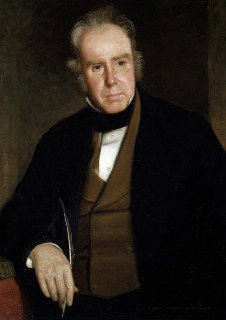
(Pictured: Portrait of Irish author William Carleton (1794-1869) by John Slattery (fl. 1850s))


Leave a comment

Birth of Benjamin Lee Guinness

benjamin-lee-guinness

Sir Benjamin Lee Guinness, 1st Baronet, Irish brewer and philanthropist, is born in Dublin on November 1, 1798.

Guinness is the third son of Arthur Guinness II (1768–1855), and his wife Anne Lee, and a grandson of the first Arthur (1725–1803), who had bought the St. James’s Gate Brewery in 1759. He joins his father in the business in his late teens, without attending university, and from 1839 he takes sole control within the family. From 1855, when his father dies, he has become the richest man in Ireland, having built up a huge export trade and by continually enlarging his brewery.

In 1851 Guinness is elected the first Lord Mayor of Dublin under the reformed corporation. In 1863 he is made an honorary LL.D. (Doctor of Laws) by Trinity College Dublin, and on April 15, 1867, is created a baronet by patent, in addition to which, on May 18, 1867, by royal licence, he has a grant of supporters to his family arms.

Guinness is elected to the House of Commons of the United Kingdom in 1865 as a Conservative Party representative for Dublin City, serving until his death. His party’s leader is Edward Smith-Stanley, 14th Earl of Derby. Previously he had supported the Liberal Party‘s Henry John Temple, 3rd Viscount Palmerston, but in the 1860s the Liberals propose higher taxation on drinks such as beer. Before 1865 the Irish Conservative Party does not entirely support British conservative policy but does so after the Irish Church Act 1869. The government’s most notable reform is the Reform Act 1867 that expands the franchise.

From 1860 to 1865, Guinness undertakes at his own expense, and without hiring an architect, the restoration of the city’s St. Patrick’s Cathedral, an enterprise that costs him over £150,000. In 1865 the building is restored to the dean and chapter and reopens for services on February 24. The citizens of Dublin and the dean and chapter of St. Patrick’s present him with addresses on December 31, 1865, expressive of their gratitude for what he has done for the city. The addresses are in two volumes, which are afterwards exhibited at the Paris Exhibition.

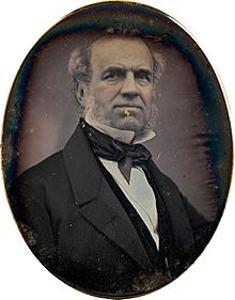
In recognition of his generosity, Guinness is made a baronet in 1867. He is one of the ecclesiastical commissioners for Ireland, a governor of Simpson’s Hospital, and vice-chairman of the Dublin Exhibition Palace. He dies the following year, on May 19, 1868, at his Park Lane home in London. At the time of his death, he is engaged in the restoration of Marsh’s Library, a building which adjoins St. Patrick’s Cathedral. The restoration is completed by his son Arthur.

Guinness is buried in Mount Jerome Cemetery, Dublin, in the family vault, on May 27, 1868. His personalty is sworn under £1,100,000 on August 8, 1868. A bronze statue of him by John Henry Foley is erected by the Cathedral Chapter in St. Patrick’s churchyard, on the south side of the cathedral, in September 1875, which is restored in 2006.


Leave a comment

Birth of Mathematician William Rowan Hamilton

william-rowan-hamilton

Sir William Rowan Hamilton, Irish mathematician who makes important contributions to classical mechanics, optics, and algebra, is born in Dublin on August 4, 1805.

Hamilton is the fourth of nine children born to Sarah Hutton (1780–1817) and Archibald Hamilton (1778–1819). He is part of a small but well-regarded school of mathematicians associated with Trinity College, Dublin, which he enters at age eighteen. He is said to have shown immense talent at a very early age. Astronomer Bishop Dr. John Brinkley remarks of the 18-year-old Hamilton, “This young man, I do not say will be, but is, the first mathematician of his age.”

Trinity College awards him two Optimes, or off-the-chart grades. He studies both classics and mathematics, and is appointed Professor of Astronomy just prior to his graduation. He then takes up residence at Dunsink Observatory where he spends the rest of his life.

Although Hamilton regards himself as a pure mathematician rather than a physicist, his work is of major importance to physics, particularly his reformulation of Newtonian mechanics, now called Hamiltonian mechanics. This work has proven central to the modern study of classical field theories such as electromagnetism, and to the development of quantum mechanics. In pure mathematics, he is best known as the inventor of quaternions.

Hamilton’s scientific career includes the study of geometrical optics, classical mechanics, adaptation of dynamic methods in optical systems, applying quaternion and vector methods to problems in mechanics and in geometry, development of theories of conjugate algebraic couple functions, solvability of polynomial equations and general quintic polynomial solvable by radicals, the analysis on Fluctuating Functions, linear operators on quaternions and proving a result for linear operators on the space of quaternions, which is a special case of the general theorem which today is known as the Cayley–Hamilton theorem. He also invents Icosian calculus, which he uses to investigate closed edge paths on a dodecahedron that visit each vertex exactly once.

Hamilton retains his faculties unimpaired to the very last, and steadily continues the task of finishing the Elements of Quaternions which occupies the last six years of his life. He dies on September 2, 1865, following a severe attack of gout precipitated by excessive drinking and overeating. He is buried in Mount Jerome Cemetery in Dublin.


Leave a comment

Death of James Plunkett, Novelist & Playwright

james-plunkett

James Plunkett Kelly, known by the pen name James Plunkett, Irish novelist, playwright, and short-story writer, dies in Dublin on May 28, 2003. His works, which deal with Ireland’s political and labour problems, contain vivid portraits of working-class and middle-class Dubliners.

Plunkett is born in Sandymount, Dublin on May 21, 1920, and grows up among the Dublin working class and they, along with the petite bourgeoisie and lower intelligentsia, make up the bulk of the dramatis personæ of his oeuvre. He is educated at Synge Street CBS, a Christian Brothers school located on Synge Street in Dublin. He leaves school at the age of seventeen. He later studies violin and viola at the Dublin College of Music and plays professionally in Dublin. He serves for a time as an official in the Workers’ Union of Ireland.

Plunkett’s best-known works are the novel Strumpet City, set in Dublin in the years leading up to the Dublin lock-out of 1913 and during the course of the strike, and the short stories in the collection The Trusting and the Maimed. His other works include a radio play on James Larkin, who figures prominently in his work.

During the 1960s, Plunkett works as a producer at Telefís Éireann. He wins two Jacob’s Awards, in 1965 and 1969, for his TV productions. In 1971 he writes and presents “Inis Fail – Isle of Destiny,” his very personal appreciation of Ireland. It is the final episode of the BBC series Bird’s Eye View, shot entirely from a helicopter, and the first co-production between the BBC and RTÉ. Plunkett is a member of Aosdána.

James Plunkett dies in a Dublin nursing home on May 28, 2003, just a week after his 83rd birthday. He is cremated at Mount Jerome Cemetery and Crematorium in Dublin.

A second-year class, “2 Plunkett” at Synge Street CBS, is named in honour of James Plunkett.


Leave a comment

Death of Activist James Haughton

james-haughton

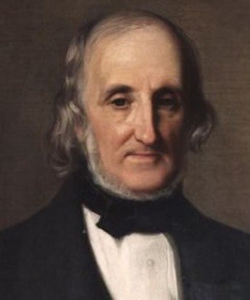
James Haughton, Irish social reformer and temperance activist, dies in Dublin on February 20, 1873.

Haughton, son of Samuel Pearson Haughton (1748–1828), by Mary, daughter of James Pim of Rushin, Queen’s County (now County Laois), is born in Carlow, County Carlow, and educated at Ballitor, County Kildare, from 1807 to 1810, under James White, a quaker. After filling several situations to learn his business, in 1817 he settles in Dublin, where he becomes a corn and flour factor, in partnership with his brother William. He retires in 1850. Although educated as a Friend, he joins the Unitarians in 1834 and remains throughout his life a strong believer in their tenets.

Haughton supports the anti-slavery movement at an early period and takes an active part in it until 1838, going in that year to London as a delegate to a convention. Shortly after the Temperance campaigner Father Theobald Mathew takes the pledge, on April 10, 1838, Haughton becomes one of his most devoted disciples. For many years he gives most of his time and energies to promoting total abstinence and to advocating legislative restrictions on the sale of intoxicating drinks.

In December 1844 Haughton is the chief promoter of a fund which is raised to pay some of the debts of Father Mathew and release him from prison. About 1835 he commences a series of letters in the public press which make his name widely known. He writes on temperance, slavery, British India, peace, capital punishment, sanitary reform, and education. His first letters are signed “The Son of a Water Drinker,” but he soon commences using his own name and continues to write until 1872.

Haughton takes a leading part in a series of weekly meetings which are held in Dublin in 1840, when so numerous are the social questions discussed that a newspaper editor calls the speakers the “Anti-everythingarians.” In association with Daniel O’Connell, of whose character he has a very high opinion, he advocates various plans for the amelioration of the condition of Ireland and the Repeal of the Union but is always opposed to physical force.

Haughton becomes a vegetarian in 1846, both on moral and sanitary grounds. For two or three years before his death he is president of the Vegetarian Society of the United Kingdom. He is one of the first members of the Statistical Society of Dublin (1847), a founder of the Dublin Mechanics’ Institute (1849), in the same year is on the committee of the Dublin Peace Society, aids in abolishing Donnybrook Fair in 1855, and takes a chief part in 1861 in opening the National Botanic Gardens at Glasnevin on Sundays.

James Haughton dies at 35 Eccles Street, Dublin, on February 20, 1873, and is buried in Mount Jerome Cemetery on February 24 in the presence of an immense crowd of people.

Haughton’s son, Samuel Haughton, publishes a memoir of his father’s life including extracts from his public correspondence in 1877.


Leave a comment

Death of George Petrie, Painter & Musician

george-petrie

George Petrie, Irish painter, musician, antiquary and archaeologist of the Victorian era dies on January 17, 1866.

Petrie is born and grows up in Dublin, living at 21 Great Charles Street, just off Mountjoy Square. He is the son of the portrait and miniature painter James Petrie, a native of Aberdeen, Scotland, who had settled in Dublin. He is interested in art from an early age. He is sent to the Royal Dublin Society‘s schools, being educated as an artist, where he wins the silver medal in 1805 at the age of fourteen.

After an abortive trip to England in the company of Francis Danby and James Arthur O’Connor, both of whom are close friends of his, he returns to Ireland where he works mostly producing sketches for engravings for travel books including among others, George Newenham Wright‘s guides to Killarney, Wicklow and Dublin, Thomas Cromwell‘s Excursions through Ireland, and James Norris Brewer‘s Beauties of Ireland.

In the late 1820s and 1830s, Petrie significantly revitalises the Royal Irish Academy‘s antiquities committee. He is responsible for their acquisition of many important Irish manuscripts, including an autograph copy of the Annals of the Four Masters, as well as examples of insular metalwork, including the Cross of Cong. His writings on early Irish archaeology and architecture are of great significance, especially his essay on the Round Towers of Ireland, which appear in his 1845 book titled The Ecclesiastical Architecture of Ireland. He is often called “the father of Irish archaeology.” His survey of the tombs at Carrowmore still informs study of the site today.

From 1833 to 1843 Petrie is employed by Thomas Frederick Colby and Thomas Larcom as head of the Topographical Department of the Irish Ordnance Survey. Amongst his staff are John O’Donovan, one of Ireland’s greatest ever scholars, and Eugene O’Curry. A prizewinning essay submitted to the Royal Irish Academy in 1834 on Irish military architecture is never published, but his seminal essay On the History and Antiquities of Tara Hill is published by the Academy in 1839. During this period Petrie is himself the editor of two popular antiquarian magazines, the Dublin Penny Journal and, later, the Irish Penny Journal.

Another major contribution of Petrie’s to Irish culture is the collection of Irish traditional airs and melodies which he records. William Stokes’s contemporary biography includes detailed accounts of Petrie’s working methods in his collecting of traditional music: “The song having been given, O’Curry wrote the Irish words, when Petrie’s work began. The singer recommenced, stopping at a signal from him at every two or three bars of the melody to permit the writing of the notes, and often repeating the passage until it was correctly taken down …”

As an artist, Petrie’s favourite medium is watercolour which, due to the prejudices of the age, is considered inferior to oil painting. Nonetheless, he can be considered as one of the finest Irish Romantic painters of his era. Some of his best work is in the collections of the National Gallery of Ireland, such as his watercolour painting Gougane Barra Lake with the Hermitage of St. Finbarr, County Cork (1831).

Petrie is awarded the Royal Irish Academy’s prestigious Cunningham Medal three times: firstly in 1831 for his essay on the round towers, secondly in 1834 for the now lost essay on Irish military architecture, and thirdly in 1839 for his essay on the antiquities of Tara Hill.

The closing years of Petrie’s life are devoted to the publication of a portion of his collection of Irish music. He dies at the age of 77 at Rathmines, Dublin, on January 17, 1866. He is buried in Mount Jerome Cemetery.


Leave a comment

Death of Actor Peter Caffrey

peter-caffrey

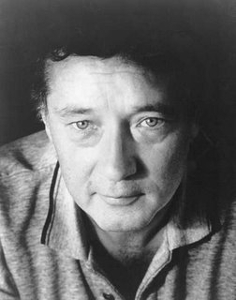
Peter Caffrey, Irish actor best known for playing Padraig O’Kelly on Series 1-4 of Ballykissangel, dies in Shrewsbury, England, on January 1, 2008.

Caffrey is also well regarded for his role as a transvestite in the film Night Train, and for his role as an unlikely protagonist in I Went Down. He is also known for playing the role of the judge in the Irish comedy Father Ted on the episode A Song For Europe and for voicing a popular Christmas radio advertisement for Barry’s Tea in 1994.

Caffrey is born in Dublin on April 18, 1949. He studies at a seminary for two years before switching to an English degree. He works for a year as a primary school teacher, before becoming involved with Dublin’s Project Theatre. He appears in nearly thirty television and film roles, and also has a solid theatre career in both Dublin and London. After moving to London in 1983 he becomes a familiar face on UK television, with minor roles in Casualty, The Bill and Peak Practice. His success in Ballykissangel comes after overcoming oral cancer for which he is diagnosed in 1990, and, despite suffering a stroke in 2000 which leaves him paralysed on the right side, he manages to play a similarly afflicted character in the unreleased film Sweet Dancer in 2005.

Caffrey never fully recovers from the stroke and dies at the age of 58 on January 1, 2008, in Shrewsbury. His body is returned to Ireland for cremation in Mount Jerome Cemetery and Crematorium, Dublin, on January 8, 2008. Caffrey is survived by three sisters, Linda, Carol, and Sheila. His brother David pre-deceases him in July 2007.

Caffrey marries Brenda Banks in 1980 but the marriage ends in divorce in 1990.


Leave a comment

Birth of Edward Pakenham, 6th Earl of Longford

Francis Pakenham, 7th Earl of Longford

Edward Arthur Henry Pakenham, 6th Earl of Longford and an Irish peer, politician, and littérateur, is born on December 29, 1902. Also known as Eamon de Longphort, he is a member of the fifth Seanad Éireann, the upper house of the Oireachtas, in the 1940s.

Pakenham is the elder son of Thomas Pakenham, 5th Earl of Longford and Mary, Countess of Longford, née Child-Villiers. He is the only one of the Pakenham children on whom his mother dotes, apparently because he is to succeed to the earldom on his father’s death and because he is always in delicate health.

As a pupil at Eton College, where he twice received the Wilder Divinity Prize, Pakenham succeeds to the earldom when his father is killed in action at the Battle of Gallipoli on August 21, 1915. He is an Irish Nationalist since his days at Eton, taking inspiration from the Easter Rising in 1916 and the Russian Revolution of 1917. He learned Irish and adopted the name Eamon de Longphort.

Pakenham becomes an undergraduate at Christ Church, Oxford and meets his future wife, Christine Patti Trew, an Oxford “undergraduette.” They are married on July 18, 1925. His political views make him unpopular at both Eton and Christ Church, where he is famously put in “Mercury,” the pond containing a statue of Mercury in Tom Quad.

Pakenham becomes Chairman of the Gate Theatre in Dublin in 1930 and continues to work for the theatre until 1936, when he founds the Longford Players. His plays include Ascendancy, The Melians, The Vineyard, and Yahoo. An excellent linguist and Classical scholar, he translates Le Bourgeois gentilhomme, Le Malade Imaginaire, L’école des femmes, Tartuffe, Le Barbier de Séville, Agamemnon and Oedipus Rex and adapts the novella Carmilla for the stage.

Pakenham also has several volumes of poetry published, some at the expense of his mother when he is still at Eton, but he is not considered to have been a very good poet.

Pakenham is an Anglo-Catholic who never leaves the Church of Ireland. On November 13, 1946, he is nominated by the Taoiseach, Éamon de Valera, as a member of 5th Seanad Éireann, filling a vacancy caused by the death of Professor William Magennis. He is not re-appointed to the 6th Seanad.

Pakenham often collaborates with his wife with whom he is also responsible for redecorating Pakenham Hall, now Tullynally Castle, in Chinese style. Pakenham Hall is often the scene of gatherings of Oxford-educated intellectuals such as John Betjeman, Evelyn Waugh, and Maurice Bowra.

Edward Pakenham dies without issue on February 4, 1961, and is succeeded by his younger brother Frank. He is buried at Mount Jerome Cemetery in Dublin.