Hone is born in Dublin on April 24, 1718, the son of a Dublin-based Dutch merchant. He moves to England as a young man and, after marrying Molly Earle, daughter of the John Campbell, 4th Duke of Argyll, in 1742, eventually settles in London, by which time he has acquired a reputation as a portrait painter. While his paintings are popular, his reputation is particularly enhanced by his skill at producing miniatures and enamels. He interrupts his time in London by spending two years (1750–52) studying in Italy.
As a portrait painter, several of Hone’s works are now held at the National Portrait Gallery in London. His sitters include magistrate Sir John Fielding and Methodist preacher John Wesley, and General Richard Wilford and Sir Levett Hanson in a double portrait. He often uses his son John Camillus Hone (1745-1836) in some of his works, including his unique portrait of “The Spartan Boy,” painted in 1774.
Hone courts controversy in 1775 when his satirical picture The Conjurer (National Gallery of Ireland, Dublin) is seen to attack the fashion for Italian Renaissance art and to ridicule Sir Joshua Reynolds, leading the Royal Academy to reject the painting. It also originally includes a nude caricature of fellow Academician Angelica Kauffman in the top left corner, which is painted out by Hone after Kauffman complains to the academy. The combination of a little girl and an old man has also been seen as symbolic of Kauffman and Reynolds’s closeness, age difference, and rumoured affair. To show that his reputation is undamaged, Hone organises a one-man retrospective in London, the first such solo exhibition of an artist’s work.
The Hone family is related to the old Dutch landed family the van Vianens, who hold the hereditary title of Vrijheer. His great-grand-nephew shares the same name and is also a notable Irish painter, known as Nathaniel Hone the Younger (1831–1917). He is also a relation to painter Evie Hone.
Nathaniel Hone the Elder dies in London at the age of 66 on August 14, 1784.
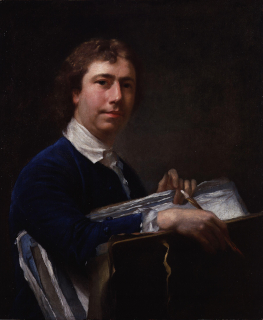
(Pictured: Oil on canvas self-portrait by Nathaniel Hone, circa 1760)
Pro-choice activists sail into Dublin docks aboard the controversial pro-abortion Dutch ship Aurora on June 14, 2001. Although the trawler is equipped to carry out abortions, the purpose of its visit to Ireland is to fuel debate on the need for Irish legislation to provide women with choice.
Abortion is perhaps the last taboo in Irish society. The question of abortion still has the power to unleash emotive arguments among both pro-life and pro-choice camps. The arrival of the Aurora thrusts the issue back into the frontline of public debate.
The 1990s are a time of spectacular change in the Republic of Ireland, where the will of the Roman Catholic church traditionally has had a direct influence on family life. Contraception became widely available and a referendum overturned the constitutional bar on divorce. But abortion on Irish soil remains outlawed in all but the most extreme circumstances. As it stands, a woman is only entitled to have her pregnancy terminated if otherwise she is likely to commit suicide. Pro-choice campaigners call the law hypocritical and point to the fact that every year an estimated 6,300 women travel across the Irish Sea to Great Britain, where they pay up to £1,000 to have the procedure done privately.
The 35-metre ship, a cannibalised Dutch deep-sea fishing boat, is chartered by the feminist action group Women on Waves, with the aim of carrying out abortions on board. A shipping container which has been converted into an abortion clinic, complete with gynaecological chair, has been welded to the deck of the Aurora. The mobile clinic is capable of carrying out 20 operations a day.
Originally, the ship had planned to sail 12 miles out into international waters, where it would carry out the terminations. Once there, doctors on board would also be able to distribute the RU486 abortion pill. But a question mark hangs over the mission after it is revealed that Dutch authorities did not issue the floating clinic with the appropriate paperwork that would allow it to carry out abortions.
While the Aurora‘s voyage makes news beyond Irish shores, reaction among pro-life campaigners in Ireland is mostly muted. Many feel that by keeping quiet they will starve the mission of publicity. But some organisations, such as Human Life International Ireland (HLII), do speak out. HLII has plans to launch what it calls a “Life” boat to shadow the Aurora. Spokesman for the group, David Walshe, says the aim is not to protest but to act as “a non-confrontational witness to the sanctity of human life.”
Until 1983, abortion is outlawed in Ireland under a 19th Century act instituted during British rule. In 1983 a constitutional amendment is enacted that outlaws abortion in all circumstances. But in 1992 the Supreme Court of Ireland pronounces that if a woman were suicidal she would be entitled to a termination. The law has remained largely unchanged since then and the Irish government shows no appetite for tackling the issue head-on.
(From: “Abortion ship in stormy waters,” BBC News Online, June 14, 2001)
Ryan emigrates to the United States in 1947 to work for Time, where he reports on the postwar tests of atomic weapons carried out by the United States in the Pacific. He then reports for Time on the Arab-Israeli war in 1948. This is followed by work for other magazines, including Collier’s Weekly and Reader’s Digest.
Ryan marries Kathryn Morgan, a novelist, and becomes a naturalized citizen of the United States in 1951.
On a trip to Normandy in 1949 Ryan becomes interested in telling a more complete story of Operation Overlord than has been produced to date. He begins compiling information and conducting over 1,000 interviews as he gathers stories from both the Allies and the Germans, as well as the French civilians.
In 1956 Ryan begins to write down his World War II notes for The Longest Day: 6 June 1944 D-Day, which tells the story of the D-Day Invasion of Normandy, published three years later in 1959. It is an instant success, and he assists in the writing of the screenplay for the 1962 film of the same name. Darryl F. Zanuck pays the author U.S.$175,000 for the screen rights to the book.
Ryan’s 1957 book One Minute to Ditch! is about the successful ocean ditching of a Pan AmericanBoeing 377 Stratocruiser. He had written an article about the ditching for Collier’s in their December 21, 1956, issue and then expanded it into the book.
Ryan’s next work is The Last Battle (1966), about the Battle of Berlin. The book contains detailed accounts from all perspectives: civilian, American, British, Russian and German. It deals with the fraught military and political situation in the spring of 1945, when the forces of the western allies and the Soviet Union contend for the chance to liberate Berlin and to carve up the remains of Germany.
This work was followed by A Bridge Too Far (1974), which tells the story of Operation Market Garden, the ill-fated assault by allied airborne forces on the Netherlands culminating in the Battle of Arnhem. It is made into a major 1977 film of the same name.
Ryan is awarded the French Legion of Honour and an honorary Doctor of Literature degree from Ohio University, where the Cornelius Ryan Collection is housed in the Alden Library. He is diagnosed with prostate cancer in 1970 and struggles to finish A Bridge Too Far during his illness. He dies in Manhattan on November 23, 1974, while on tour promoting the book, only two months after publication. He is buried in the Ridgebury Cemetery in northern Ridgefield, Connecticut.
Four years after his death, Ryan’s struggle with prostate cancer is detailed in A Private Battle, written by his widow, from notes he had secretly left behind for that purpose.
O’Reilly’s father, grandfather and several other ancestors are chiefs of the O’Reilly clan and Lords of Breifne O’Reilly. His mother is Catherine MacMahon. He resides at Bellanacargy Castle in the barony of Tullygarvey, near to present day village of Drung. Bellanacargy castle, anciently referred to as Ballynacarraig because it was built on a carraig (rock island) situated in the middle of the River Annalee, is destroyed in May 1689 by Williamite forces led by Thomas Lloyd.
During the Parliamentary session of 1640 O’Reilly is enlisted by Rory O’Moore in the plot to start a rebellion against English rule in Ireland. O’Moore is a distant relation as his sister Cecilia O’Moore is married to O’Reilly’s first cousin, Tirlagh O’Neill. On the outbreak of the Irish Rebellion in October 1641 he is elected chief of the O’Reillys. As a result, the Irish Parliament expels him on November 16, 1641. On November 6, 1641 he orders a general gathering of his clansmen from 16 to 60 years of age, to be held at Virginia, and on December 11, 1641 he has possession of the whole county, except the Killeshandra castles of Keelagh and Croghan which are defended by Sir Francis Hamilton and Sir James Craig. He raises a brigade of twelve hundred men, composed chiefly of his name and family, and serves with distinction as lieutenant-general in the service of the Confederate Catholics of Ireland. The Assembly of Kilkenny appoints him Lord President of Ulster. His second cousin Myles O’Reilly is High Sheriff of Cavan in 1641 at the outbreak of the Rebellion.
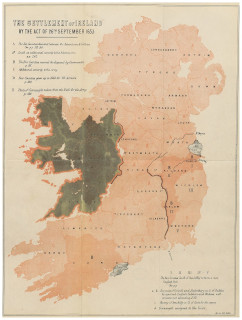
O’Reilly is detained for treason by the English government in 1642. In his diary for June 3, 1644, the historian Sir James Ware II states, “Intelligence came to Dublin that Roger Moore and Philip O’Reilly, two of the first incendiaries were committed to prison at Kilkenny.” O’Reilly is further denounced by the Act for the Settlement of Ireland 1652 at the end of the rebellion. Following the collapse of the Irish confederacy, he formally surrenders to Oliver Cromwell at Cloughoughter Castle on April 27, 1653, being the last Irish garrison to do so. He secures favourable terms and is obliged to leave Ireland. He retires with his brigade into Spain and thence to the Netherlands, where he serves in the Spanish army for about two years and dies in 1655. He is buried in the Irish monastery of St. Dominick in Leuven, Belgium.
Hely-Hutchinson enters the Army as a cornet in the 18th Royal Hussars in 1774, rising to a lieutenant the following year. In 1776 he is promoted to become a captain in the 67th (South Hampshire) Regiment of Foot, and a major there in 1781. He moves regiments again in 1783, becoming a lieutenant-colonel in, and colonel-commandant of, the 77th Regiment of Foot, which is, however, disbanded shortly afterwards following an earlier mutiny. He spends the next 11 years on half-pay, studying military tactics in France before serving as a volunteer in the Flanders campaigns of 1793 as aide-de-camp to Sir Ralph Abercromby.
Hely-Hutchinson is second-in-command of the 1801 expedition to Egypt, under Abercromby. Following Abercromby’s death in March after being wounded at the Battle of Alexandria, he takes command of the force. From then he is able to besiege the French firstly at Cairo which capitulates in June and then besieges and takes Alexandria, culminating in the capitulation of over 22,000 French soldiers. In reward for his successes there, the Ottoman SultanSelim III makes him a Knight, 1st Class, of the Order of the Crescent.
On December 18, 1801, Hely-Hutchinson is created Baron Hutchinson in the Peerage of the United Kingdom, gaining a seat in the House of Lords. In recognition of his “eminent services” during the “late glorious and successful campaign in Egypt,” at the request of the King, the Parliament of the United Kingdom settles on Lord Hutchinson and the next two succeeding male heirs of his body an annuity of £2000 per annum, paid out of the Consolidated Fund.
Hely-Hutchinson is promoted lieutenant-general in September 1803 and made a full general in June 1813. In 1806, he becomes colonel of the 57th (West Middlesex) Regiment of Foot, transferring in 1811 to be colonel of the 18th Regiment of Foot, a position he holds until his death. He also holds the position of Governor of Stirling Castle from 1806 until his death.
Hely-Hutchinson sits as Member of Parliament (MP) for Lanesborough from 1776 to 1783 and for Taghmon from 1789 to 1790. Subsequently, he represents Cork City in the Irish House of Commons until the Act of Union 1800 and is then member for Cork City in the after-Union Parliament of the United Kingdom until 1802.
Hely-Hutchinson dies on June 29, 1832, never having married.
In 1939, Fallon leaves Dublin to serve as a Customs official in County Wexford, living in Prospect House, near Wexford with his wife, Dorothea (née Maher) and his six sons. During this time, he becomes a close friend of the painter Tony O’Malley.
Fallon’s early poetry, short stories and literary criticism are published in The Dublin Magazine and The Bell. He is a regular contributor to Raidió Éireann in the 1940s and 1950s, serving variously as a journalist, scriptwriter and literary critic. A number of his short stories and early dramatic pieces are broadcast by the station during the 1940s. The first of his verse plays for radio, Diarmuid and Gráinne, is broadcast by Raidió Éireann in November 1950. This is followed by The Vision of Mac Conglinne (1953), Two Men with a Face (1953), The Poplar (1953), Steeple Jerkin (1954), The Wooing of Étain (1954), A Man in the Window (1955), Outpost (1955), Deirdre’s King (1956), The Five Stations (1957), The Hags of Clough (1957), The Third Bachelor (1958), At the Bridge Inn (1960) and Lighting up Time (1961).
Three plays adapted from Irish mythology, Diarmuid and Gráinne, The Vision of Mac Conglinne and Deirdre’s King, receive particular contemporary critical acclaim. The landscape, mythology and history of Ireland, interwoven with classical themes and religious symbolism, are frequent themes in his poetry and dramatic works. A number of Fallon’s radio plays are later broadcast on BBC Third Programme and, in translation, in Germany, the Netherlands, and Hungary. The play The Seventh Step is staged at The Globe Theatre in Dublin in 1954. A second one, Sweet Love ’till Morn, is staged at the Abbey Theatre in 1971. He also writes dramatic pieces for television such as A Sword of Steel (1966) and The Fenians (1967), the latter produced by James Plunkett. In a number of his plays and radio dramas he cooperates with contemporary composers providing incidental music, an example being The Wooing of Étain (1954) with music by Brian Boydell.
Fallon retires from the Civil Service in 1963, returning to Dublin before moving to Cornwall in 1967 to live with his son, the sculptor Conor Fallon and his daughter-in-law, the artist Nancy Wynne-Jones. He and his wife return to Ireland in 1971. He spends his last years in Kinsale. He is visiting his son Ivan Fallon in Kent at the time of his death.
While Fallon’s poetry had previously appeared in The Dublin Magazine, The Bell, The Irish Times and a number of anthologies, his first volume of collected poetry, Poems, incorporating a number of previously unpublished poems, is not produced until 1974, months before his death. Three volumes of his poetry, edited by his son, the journalist and critic Brian Fallon, are published after his death: Poems and Versions in 1983, Collected Poems in 1990, and A Look in the Mirror and Other Poems in 2003. In 2005, three of his verse plays, The Vision of Mac Conglinne, The Poplar, and The Hags of Clough, are published in a single volume. A selection of his prose writings and criticism edited by Brian Fallon, A Poet’s Journal, is published in the same year.
On the morning of October 3, Herrema is driving from his home in Castletroy, County Limerick, to an early-morning meeting at the Ferenka steel plant when he is abducted by two republicans, Marion Coyle and Eddie Gallagher.
Herrema, invariably referred to thereafter as “the Dutch industrialist,” had been dispatched by the parent company in his native Netherlands to troubleshoot the strike-ridden factory, which employs 1,200 at a time when the Irish economy is reeling from the oil crisis and six years of Northern Irelandtroubles.
The kidnappers, banking that TaoiseachLiam Cosgrave’s government will quietly cave in, so as not to scare off other foreign investors, threatens to execute Herrema in 48 hours unless it releases republican prisoners Rose Dugdale, Kevin Mallon (a friend of Coyle’s) and James Hyland. It is the start of a 36-day ordeal for Herrema and his family, sparking the biggest manhunt in the State’s history.
Two weeks later a tape of Herrema’s voice is released, accompanied by demands for a £2 million ransom and a flight to the Middle East. After 18 days the kidnappers are traced to a terraced house in Monasterevin, County Kildare.
When Gardaí smashes the front door down the kidnappers retreat to the house’s box room, where they hole up with the hostage in a stand-off that lasts 18 days, with the world’s media camped outside.
After several days without food or water the kidnappers begin to accept supplies, as well as underpants and a chamber pot, hoisted up in a shopping basket. On day 18, Gallagher claims to be getting severe headaches and neck cramps, which Herrema takes as a sign that he is seeking a way out. Soon afterwards the kidnappers throw their guns out of a window and surrender. Herrema leaves Ireland soon thereafter.
Coyle was sentenced to 15 years, of which she serves nine. Gallagher serves 14 years of his 20-year sentence. In 1978 Gallagher and Dugdale become the first convicted prisoners in the State’s history to be married behind bars.
Herrema eventually returns to Ireland to present an episode of Saturday Live. He and his wife Elizabeth are made honorary Irish citizens in 1975, and he is made a Freeman of the city of Limerick. In 2005, he donates his personal papers to the University of Limerick.
Gallagher is born in Ballyshannon, County Donegal, on March 2, 1948. Both he and his brother Dónal are musically inclined and encouraged by their parents. At age nine, Gallagher receives his first guitar from them. After winning a talent contest when he is twelve, he begins performing with both his acoustic guitar and an electric guitar that he purchases with his prize money. It is, however, his purchase three years later of a 1961 Fender Stratocaster for £100 that becomes his primary instrument and most associated with him for the span of his lifetime.
Gallagher is initially attracted to skiffle after hearing Lonnie Donegan on the radio. While still in school, playing songs by Buddy Holly and Eddie Cochran, he discovers his greatest influence in Muddy Waters. He begins experimenting with folk, blues, and rock music.
While still a young teenager, Gallagher begins playing after school with Irish showbands. In 1963, he joins one named Fontana, a sextet playing the popular hit songs of the day. The band tours Ireland and the United Kingdom, earning enough money for Gallagher to make the payments on his Stratocaster guitar. Gallagher begins to influence the band’s repertoire and successfully moulds Fontana into The Impact, changing the line-up into a rhythm and blues group. The band plays gigs in Ireland and Spain until it disbands in London, with Gallagher and the bassist and drummer continuing to perform as a trio in Hamburg, Germany.
In 1966, Gallagher returns to Ireland and forms Taste, a blues rock and R&B power trio. Initially, the band is composed of Gallagher and Cork musicians Norman Damery and Eric Kitteringham. However, by 1968, Damery and Kitteringham are replaced by Belfast musicians John Wilson on drums and Richard McCracken on bass. Performing extensively in the UK, the group supports both Cream at their Royal Albert Hall farewell concert and the blues supergroup Blind Faith on a tour of North America.
After the break-up of Taste in 1970, Gallagher tours under his own name. He hires former Deep Joy bass player Gerry McAvoy to play on his self-titled debut album, Rory Gallagher. This is the beginning of a twenty-year musical relationship between Gallagher and McAvoy. The 1970s are Gallagher’s most prolific period, producing ten albums in the decade. In 1971 he is voted Melody Maker‘s International Top Guitarist of the Year, ahead of Eric Clapton. However, despite a number of his albums reaching the UK Albums Chart, Gallagher does not attain major star status. Though he sells over thirty million albums worldwide, it is his marathon live performances that win him the greatest acclaim.
In the 1980s Gallagher continues recording and embarks on a tour of the United States. In addition, he plays with Box of Frogs, a band formed in 1983 by former members of The Yardbirds.
In the later years of his life, Gallagher develops a phobia of flying. To overcome this he receives a prescription for a powerful sedative. This medication, combined with his alcohol use, results in severe liver damage. Despite his condition he continues touring. By his final performance on January 10, 1995 in the Netherlands, he is visibly ill and the remainder of the tour is cancelled. He is admitted to King’s College Hospital in London in March 1995. His liver is failing and the doctors determine that a liver transplant is the only possible course of action. After 13 weeks in intensive care, his health suddenly worsens when he contracts a Staphylococcal infection. Gallagher dies on June 14, 1995, and is buried in St. Oliver’s Cemetery just outside Ballincollig near Cork.
The Restoration of the monarchy begins in 1660. The Commonwealth of England, Scotland and Ireland (1649–60) result from the Wars of the Three Kingdoms but collapse in 1659. Politicians such as General George Monck try to ensure a peaceful transition of government from the “Commonwealth” republic back to monarchy. From May 1, 1660 the English, Scottish and Irish monarchies are all restored under King Charles II. The term Restoration may apply both to the actual event by which the monarchy was restored, and to the period immediately before and after the event.
With the collapse of The Protectorate in England during May 1659 the republic which had been forced upon Ireland by Oliver Cromwell quickly begins to unravel.
Royalists plan an uprising in Ireland and seek to turn Henry Cromwell and Lord Broghill, who is in contact with the King’s court in the summer of 1659, towards the cause but the plan comes to aught. Henry Cromwell leaves Ireland in June 1659. Broghill shows reluctance to declare for the King, but nevertheless republicans are suspicious of him following George Booth‘s revolt in England in 1659.
Sir Theophilus Jones, a former soldier under Charles I of Ireland and governor of Dublin during the republic, seizes Dublin Castle with a group of officers and declares for Parliament. Acting in Charles II’s interest, Sir Charles Coote seizes Galway while Lord Broghill holds firm in Munster. On January 9, 1660 a council of officers declare Edmund Ludlow a traitor and he flees to England. The regicideHardress Waller re-takes Dublin Castle in February 1660 but with little support he surrenders to Sir Charles Coote. Waller along with fellow regicide John Cook is arrested and sent to England. The officers in Dublin support General Monck.
The army is purged of radicals and a Convention Parliament is called. Coote seeks to move the Convention Parliament towards restoration, but his rival Broghill does not openly declare for the King until May 1660.
In February 1660 Coote sends a representative to King Charles II in the Netherlands and invites him to make an attempt on Ireland, but the King regards it as inexpedient to try to reclaim Ireland before England. At the same time Broghill sends his brother to invite the King to land at Cork. In March 1660 a document is published asking for the King’s return, “begged for his forgiveness, but stipulated for a general indemnity and the payment of army arrears.”
Following events in England, Charles is proclaimed King of Ireland in Dublin on May 14 without any dissent. The Irish Royal Army is reestablished.
After 1660, the commonwealth parliamentary union is treated as null and void. As in England the republic is deemed constitutionally never to have occurred. The Convention Parliament is dissolved by Charles II in January 1661, and he summons his first parliament in Ireland in May 1661.
(Pictured: Charles II in Garter robes by John Michael Wright or studio, c. 1660–1665)
The son of a Dublin-based Dutch merchant, Hone moves to England as a young man and, after marrying Molly Earle, daughter of the John Campbell, 4th Duke of Argyll, in 1742, eventually settles in London, by which time he has acquired a reputation as a portrait-painter. While his paintings are popular, his reputation is particularly enhanced by his skill at producing miniatures and enamels. He interrupts his time in London by spending two years (1750–52) studying in Italy.
As a portrait painter, several of Hone’s works are now held at the National Portrait Gallery in London. His sitters include magistrate Sir John Fielding and Methodist preacher John Wesley, and General Richard Wilford and Sir Levett Hanson in a double portrait. He often uses his son John Camillus Hone (1745-1836) in some of his works, including his unique portrait of “The Spartan Boy,” painted in 1774.
Hone courts controversy in 1775 when his satirical picture The Conjurer (National Gallery of Ireland, Dublin) is seen to attack the fashion for Italian Renaissance art and to ridicule Sir Joshua Reynolds, leading the Royal Academy to reject the painting. It also originally includes a nude caricature of fellow Academician Angelica Kauffman in the top left corner, which is painted out by Hone after Kauffman complains to the academy. The combination of a little girl and an old man has also been seen as symbolic of Kauffman and Reynolds’s closeness, age difference, and rumoured affair. To show that his reputation is undamaged, Hone organises a one-man retrospective in London, the first such solo exhibition of an artist’s work.
The Hone family is related to the old Dutch landed family the van Vianens, who hold the hereditary title of Vrijheer. His great-grand-nephew shares the same name and is also a notable Irish painter, known as Nathaniel Hone the Younger (1831–1917). He is also a relation to painter Evie Hone.
Nathaniel Hone the Elder dies on August 14, 1784.
(Pictured: Self-portrait by Nathaniel Hone, circa 1760)