seamus dubhghaill

Promoting Irish Culture and History from Little Rock, Arkansas, USA


Leave a comment

Birth of Sir Alfred Chester Beatty, First Honorary Citizen of Ireland

Sir Alfred Chester Beatty, mining engineer, philanthropist, art collector, and the first honorary citizen of Ireland (1957), is born in New York, New York, United States on February 7, 1875, on the site of what is now Rockefeller Center. He plays an important role in the development of copper deposits in Central Africa.

Beatty is the youngest of three sons born to Hetty and John Beatty, a banker and stockbroker. After studying engineering at the Columbia School of Mines and Princeton University, he helps to develop porphyry copper ores in the United States, first as a consulting engineer and later as a director on the boards of several copper-mining firms. In 1913 he relinquishes his mining interests in the United States and settles in Great Britain, becoming a naturalized British subject in 1933. In 1921 he forms a prospecting company that initiates the development of the Copperbelt region of Northern Rhodesia (now Zambia). For this, he becomes known as the “King of Copper.”

An early family anecdote recalls that, as a young boy, Beatty catches the collection bug, bidding at auction for mining samples. In 1931 an announcement in London‘s The Times casts him as a great collector. Between 1939 and 1949 he acquires over 140 nineteenth-century paintings to display in the Picture Gallery of his London home. These are now part of the collection of the National Gallery of Ireland.

Beatty supports the war effort, contributing a large number of raw materials to the Allies. He receives a belated knighthood by Queen Elizabeth II in the 1954 Birthday Honours list for his contribution to the wartime effort. By the late 1940s, however, he has become disillusioned with Britain. Political deviations from his free-market values, coupled with increased foreign exchange restrictions impacted both his personal and collecting interests in Britain.

In 1950, at the age of 75, Beattys over the reins of Selection Trust to his son Chester Jr. and relocates to Dublin. He purchases a large townhouse for himself on Ailesbury Road, in the Ballsbridge area of Dublin and a site on Shrewsbury Road for the construction of the Chester Beatty Library, which houses the collection, opening on August 8, 1953. The library is moved to its current location at Dublin Castle in 2000.

Beatty spends the remainder of his life between Dublin and the south of France. He is made a Freeman of the City of Dublin in 1954 and is the first person granted honorary citizenship of Ireland in 1957. He continues to collect in the 1950s and 1960s, acquiring important Ethiopian manuscripts and Japanese printed material during that period.

Beatty dies in Monte Carlo in Monaco on January 19, 1968. His Irish estate is valued at £7 million. He is accorded a state funeral by the Irish government, the first private citizen in Irish history to receive such an honour. He is buried in Glasnevin Cemetery in Dublin.


Leave a comment

Death of Arthur Edward Guinness, 1st Baron Ardilaun

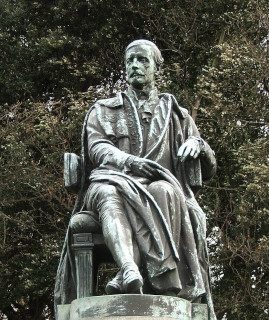
Arthur Edward Guinness, 1st Baron Ardilaun, Irish businessman, politician, and philanthropist, best known for giving St. Stephen’s Green back to the people of Dublin, dies on January 20, 1915.

Guinness is born on November 1, 1840 at St. Anne’s, Raheny, near Dublin, the eldest son of Sir Benjamin Guinness, 1st Baronet, and elder brother of Edward Guinness, 1st Earl of Iveagh. He is the great-grandson of Arthur Guinness. He is educated at Eton College and Trinity College Dublin and, in 1868, succeeds his father as second Baronet.

In the 1868 United Kingdom general election Guinness is elected Conservative Member of Parliament for Dublin City, a seat he holds for only a year. His election is voided because of his election agent’s unlawful efforts, which the court finds were unknown to him. He is re-elected the following year in the 1874 United Kingdom general election.

A supporter of Benjamin Disraeli‘s one-nation conservatism, Guinness’s politics are typical of “constructive unionism,” the belief that the union between Ireland and Britain should be more beneficial to the people of Ireland after centuries of difficulties. In 1872 he is a sponsor of the “Irish Exhibition” at Earlsfort Terrace in Dublin, which is arranged to promote Irish trade. Correcting a mistake about the exhibition in the Freeman’s Journal leads to a death threat from a religious extremist, which he does not report to the police. In the 1890s he supports the Irish Unionist Alliance.

After withdrawing from the Guinness company in 1876, when he sells his half-share to his brother Edward for £600,000, Guinness is in 1880 raised to the peerage as Baron Ardilaun, of Ashford in County Galway. His home there is at Ashford Castle on Lough Corrib, and his title derives from the Gaelic Ard Oileáin, a ‘high island’ on the lake.

Between 1852 and 1859, Guinness’s father acquires several large Connacht estates that are up for sale. With these purchases, he becomes landlord to 670 tenants. With his father’s death in 1868, Guinness continues in his father’s footsteps, purchasing vast swaths of Galway. When his acquisitions are combined with those of his father, total acreage for the Ashford estate is 33,298 acres, with Guinness owning most of County Galway between Maam (Maum) Bridge and Lough Mask.

Like many in the Guinness family, Guinness is a generous philanthropist, devoting himself to a number of public causes, including the restoration of Marsh’s Library in Dublin and the extension of the city’s Coombe Lying-in Hospital. In buying and keeping intact the estate around Muckross House in 1899, he assists the movement to preserve the lake and mountain landscape around Killarney, now a major tourist destination.

In his best-known achievement, Guinness purchases, landscapes, and donates to the capital, the central public park of St. Stephen’s Green, where his statue commissioned by the city can be seen opposite the Royal College of Surgeons in Ireland. To do so he sponsors a private bill that is passed as the Saint Stephen’s Green (Dublin) Act 1877, and after the landscaping it is formally opened to the public on July 27, 1880. It has been maintained since then by the Commissioners of Public Works in Ireland, now the Office of Public Works.

Guinness dies on January 20, 1915 at his home at St. Anne’s, Raheny, and is buried at All Saints Church, Raheny, whose construction he had sponsored. Those present at the funeral include representatives of the Royal Dublin Society, of which he is president for many years, the Royal Horticultural Society of Ireland, the Irish Unionist Alliance, and the Primrose League. His barony becomes extinct at his death, but the baronetcy devolves upon his nephew Algernon.


Leave a comment

Death of Philanthropist Thomas John Barnardo

Thomas John Barnardo, philanthropist and founder and director of homes for poor children, dies in London on September 19, 1905. From the foundation of the first Barnardo’s home in 1867 to the date of his death, nearly 60,000 children are taken in.

Barnardo is born in Dublin on July 4, 1845. He is the fourth of five children of John Michaelis Barnardo, a furrier who is of Sephardic Jewish descent, and his second wife, Abigail, an Englishwoman and member of the Plymouth Brethren. In the early 1840s, John emigrates from Hamburg to Dublin, where he establishes a business. Barnardo moves to London in 1866. At that time he is interested in becoming a missionary.

Barnardo establishes “Hope Place” ragged school in the East End of London in 1868, his first attempt at aiding the estimated 30,000 ‘destitute’ children in Victorian London. Many of these children are not only impoverished, but orphaned, as the result of a recent cholera outbreak. For those unable to afford private education, the school offers education which, although Christian-based in nature, is not exclusively religion-focused, and works to provide tutelage on various common trades of that time.

In 1870, Barnardo is prompted to form a boys’ orphanage at 18 Stepney Causeway after inspecting the conditions within which London’s orphaned population sleep. This is the first of 122 such establishments, caring for over 8,500 children, founded before his death in 1905. Significant provisions are available to occupants. Infants and younger children are sent to rural districts in attempt to protect them from industrial pollution. Teenagers are trained in skills such as carpentry and metalworking, to provide them a form of basic financial stability.

In June 1873, Barnardo marries Sara Louise Elmslie, known as Syrie, the daughter of an underwriter for Lloyd’s of London. She shares her husband’s interests in evangelism and social work. The couple settles at Mossford Lodge, Essex, where they have seven children, three of whom die in early childhood.

Barnardo’s homes do not just accommodate boys. In 1876 the “Girls’ Village Home” is established and by 1905 accommodates 1,300 girls, who are trained for “domestic occupation.” Another establishment, the “rescue home for girls in serious danger,” aims to protect girls from the growing tide of child prostitution.

Barnardo’s work is carried on by his many supporters under the name Dr. Barnardo’s Homes. Following societal changes in the mid-20th century, the charity changes its focus from the direct care of children to fostering and adoption, renaming itself Dr. Barnardo’s. Following the closure of its last traditional orphanage in 1989, it takes the still simpler name of Barnardo’s.

Barnardo dies of angina pectoris in London on September 19, 1905, and is buried in front of Cairn’s House, Barkingside, Essex. The house is now the head office of the children’s charity he founded, Barnardo’s. A memorial stands outside Cairn’s House.

After Barnardo’s death, a national memorial is instituted to form a fund of £250,000 to relieve the various institutions of all financial liability and to place the entire work on a permanent basis. At the time of his death, his charity is caring for over 8,500 children in 96 homes.

At the time of the Whitechapel murders, due to the supposed medical expertise of the Ripper, various doctors in the area are suspected. Barnardo is named a possible suspect long after his death. Ripperologist Gary Rowlands theorises that due to Barnardo’s lonely childhood he had anger which may have led him to murder prostitutes. However, there is no evidence whatsoever that he committed the murders. Critics have also pointed out that his age and appearance do not match any of the descriptions of the Ripper.


Leave a comment

Birth of Samuel McCaughey, Politician & Philanthropist

samuel-mccaughey

Sir Samuel McCaughey, Irish-born pastoralist, politician and philanthropist in Australia, is born on July 1, 1835, at Tullynewey, near Ballymena, County Antrim, the son of Francis McCaughey, farmer and merchant, and his wife Eliza, née Wilson.

McCaughey comes to Australia with an uncle, Charles Wilson, a brother of Sir Samuel Wilson, and lands at Melbourne in April 1856. He immediately goes to the country and begins working as a jackaroo. Within three months he is appointed an overseer and two years later becomes manager of Kewell station while his uncle is on a visit to England.

In 1860, after his uncle’s return, McCaughey acquires an interest in Coonong station near Urana with two partners. His brother John who comes out later becomes a partner in other stations.

During the early days of Coonong station McCaughey suffers greatly from drought conditions but overcomes these by sinking wells for artesian water and constructing large tanks, making him a pioneer of water conservation in Australia.

In 1871 McCaughey is away from Australia for two years on holiday, and on his return does much experimenting in sheep farming. At first, he seeks the strains that can produce the best wool in the Riverina district. Afterwards, when the mutton trade develops, he considers the question from that angle.

In 1880 Sir Samuel Wilson goes to England and McCaughey purchases two of his stations, Toorale and Dunlop Stations, during his absence. He then owns about 3,000,000 acres. In 1886 he again visits the old world and imports a considerable number of Vermont sheep from the United States and also introduces fresh strains from Tasmania. He ultimately owns several million sheep, earning the nickname of “The Sheep King.”

In 1900 McCaughey purchases North Yanco and, at great cost, constructs about 200 miles of channels and irrigates 40,000 acres. The success of this scheme is believed to have encouraged the New South Wales government to proceed with the dam at Burrinjuck.

McCaughey becomes a member of the New South Wales Legislative Council in 1899, and in 1905 he is made a Knight Bachelor. He suffers from nephritis and dies from heart failure at Yanco on July 25, 1919, and is buried in the grounds of St. John’s Presbyterian Church in Narrandera. He never marries.


Leave a comment

Death of Nellie Cashman, Philanthropist & Gold Prospector

nellie-cashman

Nellie Cashman, nurse, restaurateur, businesswoman, Roman Catholic philanthropist in Arizona, and gold prospector in Alaska, dies on January 4, 1925, in Sisters of St. Anne hospital, Victoria, British Columbia, Canada.

Cashman is born in Midleton, County Cork, one of two daughters of Patrick and Frances “Fanny” (Cronin) Cashman. Along with her sister, she is brought to the United States around 1850 by her mother, first settling in Boston. As an adolescent, she works as a bellhop in a Boston hotel. In 1865 she and her family migrate to San Francisco, California.

Of the thousands lured by the gold rush fever of the 19th century, few had the staying power or generous spirit of Cashman. She follows gold miners into British Columbia, where, during the early 1870s, she operates a boarding house while learning elementary mining techniques and geology. For the next 50 years, the precious metal leads her to Arizona, Nevada, Mexico, the Canadian Yukon, and north of the Arctic Circle in Alaska. In addition to successfully prospecting and running mines, one time owning 11 mines in the Koyukuk District of Alaska, she operates boarding houses, restaurants, and supply depots.

The quality that truly establishes Cashman’s place in mining lore is her charity, which earns her the titles “Angel of Tombstone” and “Saint of the Sourdoughs” while sometimes obscuring her career as a successful miner. As early as 1874, while visiting Victoria, she leads a dangerous rescue effort to free a group of miners trapped by a severe winter storm. Later, during the glory days of Tombstone, Arizona, she helps establish the town’s first hospital and Sacred Heart Church, its first Roman Catholic church. Although she is known to be tough and aggressive in defending her claims, she is also big-hearted. Upon the deaths of her sister and brother-in-law, she takes in her nieces and nephews and raises them as her own.

Around 1889, Cashman is active in the gold camp at Harqua Hala, Arizona, and comes close to marrying Mike Sullivan, one of the original discoverers of gold in that area. Along with mining, she contributes a number of excellent articles to Tucson‘s Arizona Daily Star, in which she discusses history, techniques, types of claims, and personalities in the field.

Cashman spends the last 20 years of her life on Nolan Creek, in the Koyukuk River Basin of Alaska, then the farthest north of any mining camp in the world. She is among about eight women who join a group of approximately 200 miners to brave the harsh environment and isolation in hopes of striking the “big bonanza.” Once a year, she leaves for supplies and equipment, traveling hundreds of miles to Fairbanks, by sled, boat, or wagon. Her spirit of adventure apparently never dies. In 1921, during one of her trips to the outside, she is interviewed for Sunset, a California publication. Then 76, Cashman tells the writer that, although she loves Alaska, she is not so tied to it that she would not pull up stakes if something turned up elsewhere.

Nellie Cashman dies on January 4, 1925, in Sisters of St. Anne hospital in Victoria, one of the hospitals she had helped fund some 40 years earlier. The United States Postal Service honors her with a stamp on October 18, 1994, as part of its “Legends of the West” series.


Leave a comment

Birth of Writer & Philanthropist Samuel Madden

samuel-madden

Samuel Madden, writer, economist, and philanthropist commonly called “Premium” Madden, is born in Dublin on December 23, 1686. His father is John Madden, and his mother is Mary Molyneux.

In 1729, Madden writes a tragedy entitled Themistocles, the Lover of His Country. In 1733, he writes Memoirs of the Twentieth Century, one of the first science fiction novels. However, it is suppressed by Sir Robert Walpole, and is now very rare. A reprint of the original sheets appears with publishing company Garland Science in 1972 (ISBN 0824005708). The work is originally designed to have six volumes yet is discontinued after the first volume.

In 1738, Madden writes his most famous work, Reflections and Resolutions Proper for the Gentlemen of Ireland, in which he describes the poor living conditions in Ireland at the time.

Dr. Samuel Johnson writes of Madden, “His was a name which Ireland ought to honour.” He suggests that the Royal Dublin Society initiate a scheme to fund improvements in agriculture and arts in Ireland via the use of premiums – the source of his nickname Premium.

Samuel Madden dies at the age of 79 on December 31, 1765, at Manor Waterhouse in County Fermanagh.

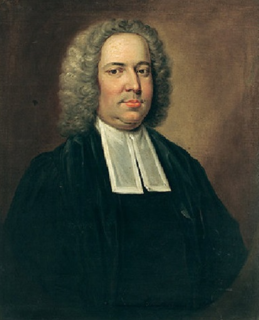
(Pictured: Portrait of Samuel Madden wearing clerical robes, Oil on Canvas, Philip Hussey (Irish, 1713–1783))


Leave a comment

Death of Margaret Brown, “The Unsinkable Molly Brown”

margaret-brown

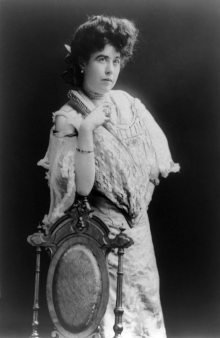
Margaret Brown (née Tobin), an American socialite and philanthropist posthumously known as “The Unsinkable Molly Brown”, dies in New York City on October 26, 1932. She is best remembered for unsuccessfully encouraging the crew in Lifeboat No. 6 to return to the debris field of the 1912 sinking of RMS Titanic to look for survivors. During her lifetime, her friends called her “Maggie”, but even by her death, obituaries refer to her as the “Unsinkable Mrs. Brown.” The reference is further reinforced by a 1960 Broadway musical based on her life and its 1964 film adaptation which are both entitled The Unsinkable Molly Brown.

Tobin is born in a hospital near the Mississippi River in Hannibal, Missouri, on what is now known as Denkler’s alley. Her parents are Irish Catholic immigrants. At age 18, she relocates to Leadville, Colorado, with her siblings Daniel Tobin, Mary Ann Collins Landrigan and Mary Ann’s husband John Landrigan. Margaret and her brother Daniel share a two-room log cabin and she finds a job in a department store.

In Leadville, she meets and marries James Joseph “J.J.” Brown (1854–1922), an enterprising, self-educated man, in Leadville’s Annunciation Church on September 1, 1886. They have two children.

The Brown family acquires great wealth when in 1893 J.J.’s mining engineering efforts prove instrumental in the production of a substantial ore seam at the Little Jonny Mine of his employers, Ibex Mining Company, and he is awarded 12,500 shares of stock and a seat on the board. In Leadville, Margaret helps by working in soup kitchens to assist miners’ families.

In 1894, the Browns purchase a $30,000 Victorian mansion in Denver and in 1897 they build a summer house, Avoca Lodge in Southwest Denver near Bear Creek, which gives the family more social opportunities. Margaret becomes a charter member of the Denver Woman’s Club, whose mission is the improvement of women’s lives by continuing education and philanthropy. After 23 years of marriage, Margaret and J.J. privately sign a separation agreement in 1909. Although they never reconcile, they continue to communicate and care for each other throughout their lives.

Brown spends the first months of 1912 traveling in Egypt as part of the John Jacob Astor IV party, until she receives word from Denver that her eldest grandchild, Lawrence Palmer Brown Jr., is seriously ill. She immediately books passage on the first available liner leaving for New York, the RMS Titanic. Originally her daughter Helen is supposed to accompany her, but she decides to stay on in Paris, where she is studying at the Sorbonne.

The RMS Titanic sinks in the early morning hours of April 15, 1912, after striking an iceberg. Brown helps others board the lifeboats but is finally persuaded to leave the ship in Lifeboat No. 6. Brown is later called “The Unsinkable Molly Brown” by authors because she helps in the ship’s evacuation, taking an oar herself in her lifeboat and urging that the lifeboat go back and save more people. After several attempts to urge Quartermaster Robert Hichens to turn back, she threatens to throw him overboard. Sources vary as to whether the boat goes back and if they find anyone alive. Brown’s efforts seal her place in history, regardless.

Upon being rescued by the RMS Carpathia, Brown proceeds to organize a survivors’ committee with other first-class survivors. The committee works to secure basic necessities for the second- and third-class survivors and even provides informal counseling.

Brown runs for the United States Senate in 1914 but ends her campaign to return to France to work with the American Committee for Devastated France during World War I.

During the last years of her life, Brown is an actress. She dies in her sleep on October 26, 1932, at the Barbizon Hotel in New York City, New York. Subsequent autopsy reveals a brain tumor. She is buried on October 31 alongside her husband in the Cemetery of the Holy Rood in Westbury, New York, following a small ceremony attended only by family members. There is no eulogy.


Leave a comment

Birth of James Gildea, Officer in the British Army Militia

Generated by IIPImage

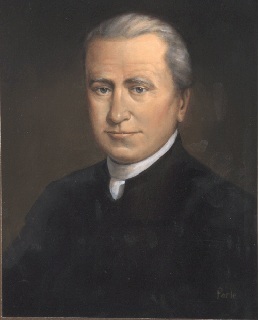
Colonel Sir James Gildea GBE KCVO CB, British Army Militia officer and philanthropist who founds the Soldiers, Sailors, Airmen and Families Association (SSAFA), is born on June 23, 1838, in Kilmaine, County Mayo.

Gildea’s father is the Provost of Tuam. He is educated at St. Columba’s College, Dublin, and Pembroke College, Cambridge. During the Franco-Prussian War he works for the National Society for Aid to the Sick and Wounded in War, and he later raises money for the families of those killed in the Anglo-Zulu War of 1879 and the Second Anglo-Afghan War of 1880.

In 1885, Gildea founds the Soldiers and Sailors Families Association, which becomes the Soldiers, Sailors, Airmen and Families Association in 1919. He serves as its chairman and treasurer until his death.

From 1890 to 1895 Gildea is organising secretary of Queen Victoria’s Jubilee Institute for Nurses. He founds the Royal Homes for Officers’ Widows and Daughters at Wimbledon, London in 1899 and is also at one time treasurer of the St. John Ambulance Association.

From 1890 to 1898, Gildea commands the 6th (Militia) Battalion, Royal Warwickshire Regiment.

Gildea is appointed Companion of the Order of the Bath (CB) in the 1898 New Year Honours and Commander of the Royal Victorian Order (CVO) in 1901. Knighted in 1902, he is later appointed Knight Commander of the Royal Victorian Order (KCVO), and in the 1920 civilian war honours is appointed Knight Grand Cross of the Order of the British Empire (GBE).

James Gildea dies on November 6, 1920, at Earl’s Court, London.


Leave a comment

Death of William R. Grace, Irish American Politician

File source: http://commons.wikimedia.org/wiki/File:William_Russell_Grace.jpg

William Russell Grace, Irish American politician, the first Roman Catholic mayor of New York City, and the founder of W. R. Grace and Company, dies in New York City on March 21, 1904.

Grace is born on May 10, 1832, in Ireland in Riverstown near the Cove of Cork to James Grace and Eleanor May Russell (née Ellen) while the family is away from home. He is raised on Grace property at Ballylinan in Queens County, now County Laois, near the town of Athy. He is a member of a prominent and well-to-do family. In 1846, he sails for New York against the wishes of his father and works as a printer’s devil and a shoemaker’s helper before returning to Ireland in 1848.

His nephew, Cecil Grace, attempts a crossing of the English Channel in December 1910 in an airplane, flying from Dover to Calais. However, in coming back he becomes disoriented and over Dover flies northeast over the Goodwin Sands toward the North Sea and is lost.

Grace and his father travel to Callao, Peru, in 1851, seeking to establish an Irish agricultural community. While his father returns home, William remains and begins work with the firm of John Bryce and Co., as a ship chandler. In 1854, the company is renamed Bryce, Grace & Company, in 1865, to Grace Brothers & Co., and ultimately to W. R. Grace and Company.

On September 11, 1859, Grace is married to Lillius Gilchrist, the daughter of George W. Gilchrist, a prominent ship builder of Thomaston, Maine, and Mary Jane (née Smalley) Gilchrest. Together, they have eleven children.

Opposing the famous Tammany Hall, Grace is elected as the first Irish American Catholic mayor of New York City in 1880. He conducts a reform administration attacking police scandals, patronage and organized vice, reduces the tax rate, and breaks up the Louisiana State Lottery Company. Defeated in the following election, he is re-elected in 1884 on an Independent ticket but loses again at the following election. During his second term, he receives the Statue of Liberty as a gift from France.

Grace is a renowned philanthropist and humanitarian, at one point contributing a quarter of the aid delivered to Ireland aboard the steamship Constellation during the Irish Famine of 1879. In 1897, he and his brother, Michael, found the Grace Institute for the education of women, especially immigrants.

William R. Grace dies on March 21, 1904, at his residence, 31 East 79th Street, in New York City. His funeral is held at St. Francis Xavier Church on West 16th Street, and he is buried at the Holy Cross Cemetery in Brooklyn. At the time of his death his estate is valued at $25,000,000.


Leave a comment

Birth of Daniel O’Donnell, Singer & Presenter

daniel-o-donnell

Daniel Francis Noel O’Donnell, singer, television presenter and philanthropist affectionately known as “Wee Daniel,” is born in Kincasslagh, County Donegal on December 12, 1961. After rising to public attention in 1983 he has since become a household name in Ireland and Britain. He has also had considerable success in the United States and Australia. In 2012, he becomes the first artist to have a different album in the British charts every year for 25 consecutive years.

Known for his close relationship with his fanbase, and his charismatic and engaging stage presence, O’Donnell’s music has been described as a mix of country and Irish folk. He has had twenty UK Top 40 albums as well as fifteen Top 40 singles and has sold 10 million records to date. He is widely considered a “cultural icon” in Ireland, and is often parodied in the media.

During his school years, O’Donnell considers pursuing a career in banking. Despite this, a career in music is also always a possibility. As a youngster, O’Donnell performs in the local religious choir. In 1980, he goes to Galway to pursue business studies, however, he never settles down and by Christmas he is in his sister Margo‘s band.

Not getting enough opportunities to perform solos with the band, in 1983 O’Donnell decides to record his own record. On February 9, 1983, he records his first single, Johnny McCauley‘s My Donegal Shore, with £1,200 of his own money, selling all the copies himself. Later that year, he forms his own musical group, Country Fever. After the group disbands, he forms The Grassroots. In 1985, the manager of the Ritz label, Mick Clerkin, sees him perform and introduces him to Sean Reilly, who remains as his manager to this day.

Under Reilly’s management, O’Donnell starts to sell concerts out in England on a regular basis. By January 1992, he has hit rock bottom with exhaustion. After a three-month recovery break, he returns to the stage, this time at the Point Theatre, Dublin.

By the mid-1990s, O’Donnell has become a household name across Ireland and Great Britain. He appears on popular television shows in both countries and wins various awards. Among the accolades, he is named Donegal Person of the Year in 1989, which he still rates as the best award. He is given the Irish Entertainer of the Year award in 1989, 1992 and 1996. His first chart hit single in the UK is in 1992 with I Just Want to Dance With You (later covered by George Strait). This also leads to his first-ever appearance on Top of the Pops.

During his lengthy career, O’Donnell has made friends with his childhood idols, including Cliff Richard and Loretta Lynn. He has also forged a close professional relationship with the Irish songstress Mary Duff, who regularly tours with O’Donnell.

On November 4, 2002, O’Donnell marries Majella McLennan from Thurles, whom he had met on holiday in Tenerife three years previously. The couple lives in Meenbanad, County Donegal, and spend time at their second home in Tenerife.