seamus dubhghaill

Promoting Irish Culture and History from Little Rock, Arkansas, USA


Leave a comment

Founding of the Society of United Irishmen

society-of-united-irishmen

The Society of United Irishmen, a liberal political organisation that initially seeks Parliamentary reform, is founded in Belfast on October 14, 1791. It evolves into a revolutionary republican organisation, inspired by the American Revolution and allied with Revolutionary France. It launches the Irish Rebellion of 1798 with the objective of ending British monarchical rule over Ireland and founding a sovereign, independent Irish republic.

The enthusiasm for the French Revolution sees great Irish interest in Thomas Paine‘s The Rights of Man released in May 1791. A couple of months later the Belfast Volunteer company gathers to celebrate the second anniversary of the fall of the Bastille. It is intended that a new radical society is to be announced during the celebrations which William Drennan, who is to give a declaration, asks to add in resolutions. Drennan refuses due to the short notice of the request and suggests that Theobald Wolfe Tone be asked.

Tone’s reformist radicalism has advanced beyond that of the Whigs, and he proposes three resolutions for the new society, which he names the Society of United Irishmen. The first resolution is for the denouncing of the continuing interference of the British establishment in Irish affairs. The second is for the full reform of the Irish parliament and its representation. The last resolution calls for a union of religious faiths in Ireland to “abolish the differences that had long divided Irishmen” and seeks to give Catholics political rights. This last proposal, however, is quietly dropped by the Belfast Volunteers to ensure unanimity for the proposals amongst the people.

This seems to delay the launch of the new society and by August 1791 Tone, in response to the rebuff of his third resolution, publishes the popular and robust An Argument on Behalf of the Catholics of Ireland, which argues why they should be included in attempts at reform. That October, Tone is invited to a debate on the creation of a new society by a group of people including Samuel Neilson. Here he finds that his resolutions are now found a few months later to be “too tame.” A new set of resolutions is drafted and agreed upon on October 14, which the Belfast branch of the Society of United Irishmen adopts on October 18, and the Dublin branch on November 9. The main problem they identify for Ireland is the issue of national sovereignty.

All attendees at the first meeting of the Belfast branch are Protestant. Two, Theobald Wolfe Tone and Thomas Russell, are Anglicans and the remainder are Presbyterian, most of whom are involved in the linen trade in Belfast. Along with Tone and Russell, the men involved are William Sinclair, Henry Joy McCracken, Samuel Neilson, Henry Haslett, Gilbert McIlveen, William Simms, Robert Simms, Thomas McCabe, and Thomas Pearce. After forming, the Society names chandler Samuel McTier as its first President.


Leave a comment

Birth of Playwright & Poet Lennox Robinson

lennox-robinson

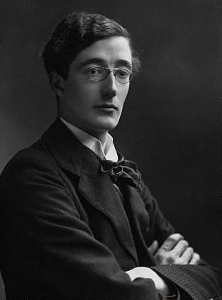
Esmé Stuart Lennox Robinson, playwright, poet, theatre producer, and director who is involved with the Abbey Theatre, is born in Westgrove, Douglas, County Cork, on October 4, 1886.

Robinson is raised in a Protestant and Unionist family in which he is the youngest of seven children. His father, Andrew Robinson, is a middle-class stockbroker who in 1892 decides to become a clergyman in the Church of Ireland in the small Ballymoney parish, near Ballineen in West Cork. A sickly child, Robinson is educated by private tutor and at Bandon Grammar School. In August 1907, his interest in the theatre begins after he goes to see an Abbey production of plays by W.B. Yeats and Lady Gregory at the Cork Opera House. He publishes his first poem that same year. His first play, The Cross Roads, is performed in the Abbey in 1909 and he becomes manager of the theatre towards the end of that year. He resigns in 1914 as a result of a disastrous tour of the United States but returns in 1919. He is appointed to the board of the theatre in 1923 and continues to serve in that capacity until his death. His Abbey career and production involvement can be found in the Abbey archives.

As a playwright, Robinson shows himself as a nationalist with plays like Patriots (1912) and Dreamers (1915). On the other hand, he belongs to a part of Irish society which is not seen as fully Irish. This division between the majority native Irish (Roman Catholics) on one side and the Anglo-Irish (Protestants) on the other can be seen in a play such as The Big House (1926), which depicts the burning of a Protestant manor home by the Irish Republican Army (IRA). Robinson’s most popular play is The Whiteheaded Boy (1916).

Other plays include Crabbed Youth and Age (1924), The Far Off Hills (1928), Drama at Inish (1933), and Church Street (1935). Drama at Inish, which is presented in London and on Broadway as Is Life Worth Living?, is revived as part of the 2011 season at the Shaw Festival at Niagara-on-the-Lake, Ontario, Canada, with Mary Haney in the role of Lizzie Twohig. Robinson’s fiction includes Eight Short Stories (1919). In 1931 he publishes a biography of Bryan Cooper, who had recently died. In 1951, he publishes Ireland’s Abbey Theatre, the first full-length history of the company.

He publishes an edited edition of Lady Gregory’s diaries in 1947. In 1958 he co-edits with Donagh MacDonagh The Oxford Book of Irish Verse. He is also a director and producer, in 1930 producing a play by Irish playwright Teresa Deevy called The Reapers. In 1931 he is co-director of A Disciple along with W.B. Yeats and Walter Starkie.

Melancholic and alcoholic in later years, Lennox Robinson dies in Monkstown, County Dublin, on October 15, 1958. He is buried St. Patrick’s Cathedral.


Leave a comment

Birth of Arthur Guinness, Founder of the Guinness Brewery

arthur-guinness

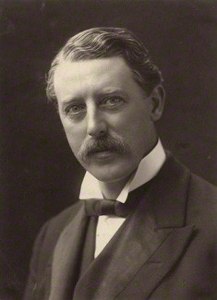
Arthur Guinness, Irish brewer and the founder of the Guinness brewery, is born in Celbridge, County Kildare, on September 28, 1725. He is also an entrepreneur and philanthropist.

Arthur Guinness is born into the Protestant Guinness family, part of the Anglo-Irish aristrocracy. They claim to descend from the Gaelic Magennis clan of County Down. However, recent DNA evidence suggests descent from the McCartans, another County Down clan, whose spiritual home lay in the townland of “Guiness” near Ballynahinch, County Down.

Guinness’s place and date of birth are the subject of speculation. His gravestone in Oughter Ard, County Kildare, reads that he dies on January 23, 1803, at the age of 78, and that he is born some time in 1724 or very early in 1725. This contradicts the date of September 28, 1725, chosen by the Guinness company in 1991, apparently to end speculation about his birthdate. The place of birth is perhaps his mother’s home at Read homestead at Ardclough, County Kildare.

In 2009 it is claimed that Guinness is born in nearby Celbridge where his parents live in 1725 and where his father later becomes land steward for the Archbishop of Cashel, Dr. Arthur Price. In his will, Dr. Price leaves £100 each to “his servant” Arthur and his father in 1752.

Guinness leases a brewery in Leixlip in 1755, brewing ale. Guinness also purchases a long lease of an adjacent site from George Bryan of Philadelphia in 1756 that is developed as investment property. He leaves his younger brother in charge of the Leixlip enterprise in 1759 and moves on to another at St. James’ Gate, Dublin. He signs a 9,000-year lease for the brewery, effective from December 31, 1759. The lease is presently displayed in the floor at St. James’ Gate. By 1767 he is the master of the Dublin Corporation of Brewers. His first actual sales of porter are listed on tax data from 1778. From the 1780s his second son, Arthur, works at his side and becomes the senior partner in the brewery in 1803.

Guinness’ major achievement is the expansion of his brewery in 1797–1799. Thereafter he brews only porter and employs members of the Purser family who have brewed porter in London from the 1770s. The Pursers become partners in the brewery for most of the 19th century. By the time of his death in 1803, the annual brewery output is over 20,000 barrels. Subsequently Arthur and/or his beer is nicknamed “Uncle Arthur” in Dublin. Guinness’ florid signature is still copied on every label of bottled Guinness.

From 1764, Guinness and his wife Olivia, whom he marries in 1761, live at Beaumont House, which Guinness has built on a 51-acre farm which is now a part of Beaumont Convalescent Home, behind the main part of Beaumont Hospital, between Santry and Raheny in north County Dublin. His landlord is Charles Gardiner. Beaumont, meaning beautiful hill, is named by Arthur and the later Beaumont parish copies the name. From March 1798 he lives at Mountjoy Square in Dublin, which is then in the process of being built in the style of elegant Georgian architecture. Three of his sons are also brewers, and his other descendants eventually include missionaries, politicians, and authors.

Sir Arthur Guinness dies in Mountjoy Square, Dublin, on January 23, 1803, and is buried in his mother’s family plot at Oughter Ard, County Kildare.


Leave a comment

Birth of Henry Grattan Guinness, Evangelist & Author

henry-grattan-guinness

Henry Grattan Guinness, Irish Protestant Christian preacher, evangelist, and author, is born in Kingstown in Taney Parish, Dublin, on August 11, 1835. He is the great evangelist of the Evangelical awakening and preaches during the Ulster Revival of 1859 which draws thousands to hear him. He is responsible for training and sending hundreds of “faith missionaries” all over the world.

Guinness begins preaching in 1855. He offers to join the China Inland Mission founded by James Hudson Taylor in 1865 but takes Taylor’s advice to continue his work in London.

In September 1866, while in Keighley, Yorkshire, Guinness sees a notice advertising a series of lectures by the freethinker and communist Harriet Law. For a week he holds a series of meetings at the same time to try to counteract her influence. He is appalled at the “scoffing unbelief” of such speakers. With the help of Professor John Couch Adams, some astronomical tables, and examination of the scriptures, Guinness works out the prophetic chronology of the bible in terms of a series of “solilunar cycles.” This proves to him that he is living at the end of the sixth unsabbatic day of creation, 6,000 years from Adam, and that the “redemption Sabbath” will soon arrive. This revelation becomes the subject of many of his books and sermons.

In March 1873, Henry and his wife Fanny start the famous East London Missionary Training Institute, also known as Harley College, at Harley House in Bromley-by-Bow, East End of London with just six students. The renowned Dr. Thomas John Barnardo is co-director with Dr. Guinness and is greatly influenced by him. The school trains 1,330 missionaries for 30 societies of 30 denominations.

Harley College becomes so successful that it needs a larger home. In 1883, Elizabeth Hulme offers Guinness Cliff House near Calver, Derbyshire. Harley College is renamed Hulme Cliff College. Now known as Cliff College it continues to this day training and equipping Christians for mission and evangelism.

In 1873, Guinness founds the East London Institute for Home and Foreign Missions, the root of the Regions Beyond Missionary Union. In 1877, he founds the Livingstone Inland Mission. His son, Dr. Henry Grattan Guinness, founds the Congo-Balolo Mission in 1888 and co-founds the Congo Reform Association in 1904.

Guinness dies in Bath, Somerset, England, on June 21, 1910, at 75 years of age.


Leave a comment

Cathal Brugha Fatally Wounded by Sniper

cathal-brugha

Cathal Brugha, a leading figure in the Anti-Treaty Irish Republican Army (IRA), is shot by a sniper on July 5, 1922, as he appears in the doorway of the Hammam Hotel during the Irish Civil War. He dies two days later.

Brugha is born in Dublin of mixed Roman Catholic and Protestant parentage. He is the tenth of fourteen children and is educated at the Jesuit Belvedere College but is forced to leave at the age of sixteen because of the failure of his father’s business.

In 1899, Brugha joins the Gaelic League, and subsequently changes his name from Charles Burgess to Cathal Brugha. He becomes actively involved in the Irish Republican Brotherhood (IRB) and in 1913 he becomes a lieutenant in the Irish Volunteers. He leads a group of twenty Volunteers to receive the arms smuggled into Ireland in the Howth gun-running of 1914.

Brugha is second-in-command at the South Dublin Union under Commandant Éamonn Ceannt in the Easter Rising of 1916. On the Thursday of Easter Week, being badly wounded, he is unable to leave when the retreat is ordered. Brugha, weak from loss of blood, continues to fire upon the enemy and is found by Éamonn Ceannt singing God Save Ireland with his pistol still in his hands. Initially not considered likely to survive, he recovers over the next year but is left with a permanent limp.

During the War of Independence, Brugha organises an amalgamation of the Irish Volunteers and the Irish Citizen Army into the Irish Republican Army (IRA). He proposes a Republican constitution at the 1917 Sinn Féin convention which is unanimously accepted. In October 1917, he becomes Chief of Staff of the Irish Republican Army and holds that post until March 1919.

Brugha is elected speaker of Dáil Éireann at its first meeting on January 21, 1919, and he reads out the Declaration of Independence in Irish. On the following day, he is appointed president of the ministry pro tempore and retains this position until April 1, 1919, when Éamon de Valera takes his place.

In the months between the Anglo-Irish Treaty debates and the outbreak of Civil War, Brugha attempts to dissuade his fellow anti-treaty army leaders, including Rory O’Connor, Liam Mellows, and Joe McKelvey, from taking up arms against the Free State. When the IRA occupies the Four Courts, he and Oscar Traynor call on them to abandon their position. When they refuse, Traynor orders the occupation of the area around O’Connell Street in the hope of easing the pressure on the Four Courts and of forcing the Free State to negotiate.

On 28 June 1922, Brugha is appointed commandant of the forces in O’Connell Street. The outbreak of the Irish Civil War ensues in the first week of July when Free State forces commence shelling of the anti-treaty positions.

Most of the anti-Treaty fighters under Oscar Traynor escape from O’Connell Street when the buildings they were holding catch fire, leaving Brugha in command of a small rearguard. On 5 July, he orders his men to surrender but refuses to do so himself. He then approaches the Free State troops, brandishing a revolver. He sustains a bullet wound to the leg which severs a major artery, ultimately causing him to bleed to death on July 7, 1922, eleven days before his 48th birthday. He is buried in Glasnevin Cemetery.


Leave a comment

Birth of Charles Stewart Parnell

charles-stewart-parnell

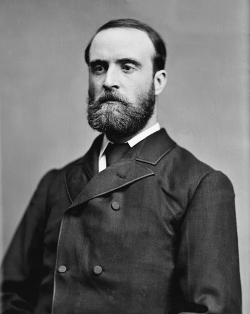
Charles Stewart Parnell, Irish nationalist politician and one of the most powerful figures in the British House of Commons in the 1880s, is born on June 27, 1846, in County Wicklow.

Born into a wealthy and powerful Anglo-Irish Protestant landowning family, Parnell enters the House of Commons in 1875. He is a land reform agitator and becomes leader of the Home Rule League in 1880, insisting on operating independently of the Liberals, and winning great influence by his balancing of constitutional, radical, and economic issues, and by his skillful use of parliamentary procedure. He is imprisoned in Kilmainham Gaol in 1882 but, being a very capable negotiator, is released when he renounces violent extra-Parliamentary action in an informal agreement, the Kilmainham Treaty, with British Prime Minister William Ewart Gladstone. That same year he reforms the Home Rule League as the Irish Parliamentary Party, which he controls minutely as Britain’s first disciplined democratic party.

The hung Parliament of 1885 sees him hold the balance of power between Gladstone’s Liberals and Lord Salisbury‘s Conservatives. His power is one factor in Gladstone’s adoption of Home Rule as the central tenet of the Liberal Party. His reputation peaks in 1889-1890 when letters published in The Times linking him to the Phoenix Park murders of 1882 are shown to have been forged by Richard Pigott. However, the Irish Parliamentary Party splits in 1890 after the revelation of Parnell’s long adulterous love affair, causing many English Liberals, many of them nonconformists, to refuse to work with him, and strong opposition from Catholic bishops. He heads a small minority faction until his death in 1891.

parnell-marker

In describing Parnell, Gladstone says, “I do not say the ablest man; I say the most remarkable and the most interesting. He was an intellectual phenomenon.” Liberal leader H. H. Asquith calls him as one of the three or four greatest men of the 19th century, while Lord Haldane describes him as the strongest man the House of Commons has seen in 150 years. Historian A.J.P. Taylor says, “More than any other man he gave Ireland the sense of being an independent nation.”

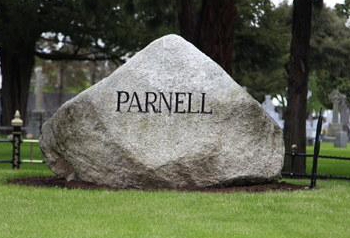
Charles Stewart Parnell dies of pneumonia at age 45 in his home at 10 Walsingham Terrace, Hove, England on October 6, 1891, in the arms of his wife Katharine. Though an Anglican, his funeral on October 11 is at the Irish National nondenominational Glasnevin Cemetery in Dublin and is attended by more than 200,000 people. His notability is such that his gravestone of unhewn Wicklow granite, erected in 1940, reads only “Parnell.”


Leave a comment

State Visit of U.S. President John F. Kennedy

jfk-state-visit

John F. Kennedy, an Irish American and the first Catholic to become president of the United States, arrives in Ireland on a state visit on June 26, 1963. After Air Force One touches down at Dublin airport, Kennedy’s motorcade weaves through the streets of Dublin city, the thrilled crowd, lacking ticker tape, improvises by throwing rolls of bus tickets.

Kennedy is proud of his Irish roots and makes a special visit to his ancestral home in Dunganstown, County Wexford, while in the country. There, he is greeted by a crowd waving both American and Irish flags and is serenaded by a boys’ choir that sings The Boys of Wexford. Kennedy breaks away from his bodyguards and joins the choir for the second chorus, prompting misty-eyed reactions from both observers and the press.

Kennedy meets with 15 members of his extended Irish family at the Kennedy homestead in Dunganstown. There he enjoys a cup of tea and some cake and makes a toast to “all those Kennedys who went and all those Kennedys who stayed.” His great-grandfather, Thomas Fitzgerald, had left Ireland for the United States in the middle of the Great Famine of 1848 and settled in Boston, becoming a cooper. Generations of his descendants go on to make their mark on American politics.

At the time of JFK’s visit to Ireland, the predominantly Catholic Irish Republic has been an independent nation for 41 years. The northern counties of the island, however, remain part of the largely Protestant British Empire and still suffer from long-standing sectarian violence. On the day after his arrival in Dublin, Kennedy speaks before the Irish parliament, where he openly condemns Britain’s history of persecuting Irish Catholics. Two days later, he travels to England, America’s oldest ally, to meet with British Prime Minister Harold Macmillan and his cabinet to discuss setting up a pro-democratic regime in British Guiana.

Kennedy later tells his aides that his favourite part of the trip was the wreath laying and silent funeral drill done by the Irish Army cadets at Arbour Hill military cemetery in Dublin.

Five months later, his widow, Jacqueline Kennedy, makes a special request to the Irish government. She asks that those same Irish army cadets, who so impressed the President on his visit, perform the drill again at his state funeral. Within days, those awe-stuck, trembling young men stand just inches away from foreign dignitaries from over 90 countries and perform their silent funeral drill in memory of a president that had inspired their country just a few short months earlier.


Leave a comment

Birth of Theobald Wolfe Tone

theobald-wolfe-tone

Theobald Wolfe Tone, posthumously known as Wolfe Tone, a leading Irish revolutionary figure and one of the founding members of the United Irishmen, is born on June 20, 1763, in Dublin. He is regarded as the father of Irish republicanism and leader of the Irish Rebellion of 1798.

The son of a coach maker, Tone studies law and is called to the Irish bar in 1789 but soon gives up his practice. In October 1791 he helps found the Society of United Irishmen, initially a predominantly Protestant organization that works for parliamentary reforms, such as universal suffrage and Roman Catholic emancipation. In Dublin in 1792 he organizes a Roman Catholic convention of elected delegates that force Parliament to pass the Catholic Relief Act of 1793. Tone himself, however, is anticlerical and hopes for a general revolt against religious creeds in Ireland as a sequel to the attainment of Irish political freedom.

By 1794, he and his United Irishmen friends begin to seek armed aid from Revolutionary France to help overthrow English rule. After an initial effort fails, Tone goes to the United States and obtains letters of introduction from the French minister at Philadelphia to the Committee of Public Safety in Paris. In February 1796 Tone arrives in the French capital, presents his plan for a French invasion of Ireland, and is favourably received. The Directory then appoints one of the most brilliant young French generals, Lazare Hoche, to command the expedition and makes Tone an adjutant in the French army.

On December 16, 1796, Tone sails from Brest with 43 ships and nearly 14,000 men. The ships are badly handled and, after reaching the coast of west Cork and Kerry, are dispersed by a storm. Tone again brings an Irish invasion plan to Paris in October 1797, but the principal French military leader, Napoleon Bonaparte, takes little interest. When insurrection breaks out in Ireland in May 1798, Tone can only obtain enough French forces to make small raids on different parts of the Irish coast. In September he enters Lough Swilly, County Donegal, with 3,000 men and is captured there.

At his trial in Dublin on November 10, 1798, he defiantly proclaims his undying hostility to England and his desire “in fair and open war to produce the separation of the two countries.” He is found guilty and is sentenced to be hanged on November 12. Early in the morning of the day he is to be hanged, Tone cuts his throat with a penknife.

Theobald Wolfe Tone dies of his self-inflicted wound on November 19, 1798, at the age of 35 in Provost’s Prison, Dublin, not far from where he was born. He is buried in Bodenstown, County Kildare, near his birthplace at Sallins, and his grave is in the care of the National Graves Association.


Leave a comment

Formation of the Independent Orange Order

independent-orange-orderThe Independent Orange Order, a Protestant fraternal organisation, is formed in Belfast on June 11, 1903 by Thomas Sloan and others associated with the Belfast Protestant Association, who have been expelled from the Orange Order because they voice opposition to it being used for party political ends by Ulster Unionists. Originally it is associated with the labour movement, but it soon realigns itself with traditional unionist politics.

It takes its name in memory of King William of Orange of the house of Orange who fights at the Battle of the Boyne, brings about the Glorious Revolution and the Bill of Rights giving the Westminster parliament ultimate power of the country rather than the Monarch. The Independent Order is small compared to the main organisation with 1,500 to 2,000 members. It is largely based around north County Antrim in Northern Ireland but has lodges around the world, including England, Scotland, and Australia. Its annual main Twelfth of July demonstration is held in a north Antrim town or village.

The first notable effect after the formation of the Independent Order is a more liberal interpretation of the rules of the “Old Order.” In the early years of the Institution, many suffer the full wrath of the “powers that be,” who are opposed to any splitting of the Orange Order. Jobs are lost, homes are burned, and their headquarters in Belfast is bombed.

Independent Orangeism today maintains that it is essential for the Orange Institution to be kept free from politics and to guard the principles of Reformation Protestantism. They often express alarm when they believe these principles are endangered by conciliatory politicians. They are opposed to ecumenism and, while being opposed to Orangeism being linked to the Ulster Unionist Party, they are not apolitical and tend to work alongside unionist politicians and parties.

The Institution also promotes Ulster Protestant history and proclaims the principle of “Liberty of Conscience.” They declare their right to think and act independently without direction from political or clerical masters, they seek to strengthen the position of Orangeism, and they often warn of the danger of the development of a social and cultural Orangeism devoid of Protestant principle.


Leave a comment

First Public Unveiling of the Irish Tricolour

irish-flag

At a meeting in his native Waterford on March 7, 1848, the Young Ireland leader Thomas Francis Meagher first publicly unveils the flag from a second-floor window of the Wolfe Tone Club.

Following the Irish Rebellion of 1798, which pits the “green” United Irishmen against the Orange Order who are traditionally loyal to the British Crown, the ideal of making peace between both traditions in a self-governed Ireland is first mooted.

The oldest known reference to the use of green, white, and orange as a nationalist emblem date from September 1830 when the colours are used for rosettes and badges. Since that historical period the use of the tricolour becomes the preferred mark of a republic in national flags. However, widespread recognition is not accorded to the flag until 1848.

Presented to Meagher as a gift in 1848 by a small group of French women symathetic to the Irish cause, the flag flies proudly as Meagher addresses the Waterford crowd gathered on the street below who are celebrating news of the French Revolution. Speeches made at that time by Meagher suggest that it is regarded as an innovation and not as the revival of an older flag.

From March 1848 Irish tricolours appear side-by-side with French “tricolores” at meetings held all over the country. John Mitchel, referring to the provisional Irish banner which Meagher had presented at a meeting in Dublin on April 15, 1848, says, “I hope to see that flag one day waving as our national banner.”

Although the tricolour is not forgotten as a symbol of a free Ireland, it is rarely used between 1848 and 1916. Even up to the eve of the 1916 Easter Rising, the green flag featuring a harp holds undisputed sway. Neither the colours nor the arrangement of the early tricolours are standardised. All of the 1848 tricolours show green, white, and orange, but orange is sometimes put next to the staff, and, in at least one flag, the order is orange, green and white.

In 1850, a flag of green for the Roman Catholics, orange for the Protestants of the Established Church, and blue for the Presbyterians is proposed.

In 1883, a Parnellite tricolour of yellow, white, and green, arranged horizontally, is proposed. Down to modern times, yellow has occasionally been used instead of orange but such substitution tarnish’s the tricolour’s fundamental symbolism.

The flag is adopted by the rebels in the 1916 Easter Rising rebels and raised above the General Post Office in Dublin. This marks the first time that the tricolour is regarded as the national flag. It is subsequently adopted by the Irish Republic during the Irish War of Independence (1919–1921). Its use is continued by the Irish Free State (1922–1937) and is later given constitutional status under the 1937 Constitution of Ireland. The tricolour is used by nationalists on both sides of the border as the national flag of the whole island of Ireland since 1916.