Kelly is one of five sons and four daughters born to William Kelly, retail and wholesale fruitier, and his wife Margaret (née Maginness). Living off Carlisle Circus in a flashpoint area of north Belfast and close to Crumlin Road Gaol, the Kellys are a strongly republican family, regularly supplying republican inmates with fruit and assisting them on their release.
Kelly joins the IRA in the early 1950s when he is eighteen and takes part in the Border Campaign of 1956–62 but is arrested in December 1956 and imprisoned until 1963. He is a member of the Northern Ireland Civil Rights Association (NICRA) in 1967–69 which leads on to sectarian riots in Belfast. A leader of the newly formed Provisional IRA in 1969, he is involved in the formation of “citizens’ defence groups” to protect nationalist areas of Belfast from loyalist rioters who are largely unhampered by the police.
Kelly is jailed on three occasions for IRA related activity spending a total of fifteen years in prison in Northern Ireland and the Republic of Ireland. His first term is for his activity in the 1956 IRA border campaign. He also serves a six-month term in 1973 in the Republic of Ireland for being a member of the IRA.
Commenting later on the Troubles, Kelly says, “Yes, it was a terrible period. But you can’t turn the clock back. The Irish government did not create the Provisional IRA. What happened was as inevitable as the changing seasons.”
The citizens’ defence groups seek help from the government in Dublin in 1969, then led by Jack Lynch. Several ministers respond and arrange a fund of £100,000 but the planned arms shipment fails. Kelly later says, “These discussions were all about guns. The whole thing was government-sponsored, government-backed and government-related.” The planning includes travel to Britain, Europe, and on to the United States where he meets the founders of NORAID. He is one of the co-defendants in the subsequent Dublin “Arms Trial” with ministers Charles Haughey and Neil Blaney, accused of conspiring to import arms illegally into the Republic of Ireland. The trial eventually collapses from a lack of evidence, as the relevant government files are kept secret, but the Irish government sacks several ministers as a result.
Kelly goes into electoral politics, serving on Magherafelt District Council from 1997. At the 1998 Northern Ireland Assembly election he is elected to the Northern Ireland Assembly as a Sinn Féin member for Mid Ulster. He is deselected before the 2003 election, and criticises the decision by the Sinn Féin leadership to support policing reforms. In January 2006 he co-writes a letter with Brendan Hughes which casts doubt on the claims that dissident republicans have threatened Sinn Féin leaders and claims that the real threats are being made by the Sinn Féin leadership against those who seek a debate on policing. He leaves Sinn Féin which he considers too controlled from the centre, opposing the leadership “deceit and the philosophy of creative ambiguity,” and he retires from politics.
Kelly dies in Maghera following a long battle with cancer on September 5, 2007. Many tributes are paid to him including a minute’s silence before the Derry Senior Football Championship quarter final between St. Patrick’s GAC, Loup, and Dungiven GAC on September 8, 2007, at the home of his local club, Watty Graham GAC, Glen. A Na Piarsaigh Belfast GAC jersey is draped over his coffin before he is interred at Maghera Catholic Graveyard.
The 1973 Northern Ireland border poll is a referendum held in Northern Ireland on March 8, 1973, on whether Northern Ireland should remain part of the United Kingdom or join with the Republic of Ireland to form a united Ireland. It is the first time that a major referendum has been held in any region of the United Kingdom. The referendum is boycotted by nationalists and results in a conclusive victory for remaining in the UK. On a voter turnout of 58.7 percent, 98.9 percent vote to remain in the United Kingdom, meaning the outcome among registered voters is not affected by the boycott.
The Unionist parties support the “UK” option, as do the Northern Ireland Labour Party (NILP) and the Alliance Party of Northern Ireland (APNI). However, the Alliance Party is also critical of the poll. While it supports the holding of periodic plebiscites on the constitutional link with Great Britain, the party feels that to avoid the border poll becoming a “sectarian head count,” it should ask other relevant questions such as whether the people support the UK’s white paper on Northern Ireland. Nevertheless, on February 5, 1973, the party’s chairman, Jim Hendron, states that “Support for the position of Northern Ireland as an integral part of the United Kingdom is a fundamental principle of the Alliance Party, not only for economic reasons but also because we firmly believe that a peaceful solution to our present tragic problems is only possible within a United Kingdom context. Either a Sinn Féin all-Ireland republic or a Vanguard-style Ulster republic would lead to disaster for all our people.”
The Social Democratic and Labour Party (SDLP), however, calls for a boycott of the referendum, urging its members on January 23, 1973 “to ignore completely the referendum and reject this extremely irresponsible decision by the British Government.” Gerry Fitt, leader of the SDLP, says he has organised a boycott to stop an escalation in violence.
The civil authorities are prepared for violence on polling day. They put in place mobile polling stations which can be rushed into use if there is bomb damage to scheduled poll buildings. Two days before the referendum a British soldier, Guardsman Anton Brown of the 2nd Battalion, Coldstream Guards, is shot dead in Belfast as the army searches for weapons and explosives which can be used to disrupt the upcoming referendum.
As a political response to the referendum, the Provisional Irish Republican Army also plants four car bombs in London that day, two of which detonate, causing one death and injuring over two hundred.
The vote results in an overwhelming majority of those who voted stating they wish to remain in the UK. The nationalist boycott contributes to a turnout of only 58.7% of the electorate. In addition to taking a majority of votes cast, the UK option receives the support of 57.5% of the total electorate. According to the BBC, less than 1% of the Catholic population turn out to vote.
The referendum electorate consists of 1,030,084 adults registered to vote out of a total population of approximately 1,529,993.
The Government of the United Kingdom takes no action on receipt of the referendum result, as the result is in favour of the status quo (Northern Ireland remaining part of the UK). It is followed by an Assembly election on June 28, 1973.
Brian Faulkner, who had been the sixth and last Prime Minister of Northern Ireland, claims the result leaves “no doubt in any one’s mind what the wishes of Ulster’s people are. Despite an attempted boycott by some, almost 600,000 electors voted for the maintenance of the union with Great Britain.” He also claims that the poll showed that a “quarter of the [N.I.] Catholic population who voted … voted for the maintenance of the union” and that the result is a “blow … against IRA mythology.”
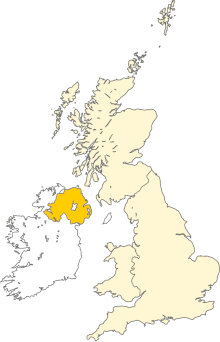
(Pictured: Map of Northern Ireland (yellow) within the United Kingdom.)
Although nobody is ever charged in connection with the killings, it is widely believed by nationalists and much of the press that the attack had been planned and led by Billy Wright, the leader of the Mid-Ulster Brigade’s Portadown unit. Wright himself takes credit for this and boasts to The Guardian newspaper, “I would look back and say Cappagh was probably our best,” though some sources are sceptical about his claim.
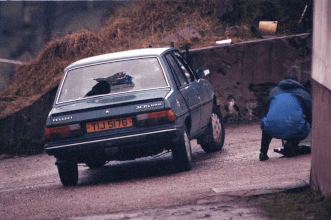
On the evening of Sunday, March 3, 1991, a unit of the UVF’s Mid-Ulster Brigade drive into the heartland of the East Tyrone IRA, intent on wiping out an entire IRA unit that is based in the County Tyrone village of Cappagh. One team of the UVF men wait outside Boyle’s Bar, while a second team waits on the outskirts of the town. At 10:30 p.m. a car pulls into the car park outside the bar and the UVF gunmen open fire with vz. 58assault rifles, killing Provisional IRA volunteers John Quinn (23), Dwayne O’Donnell (17) and Malcolm Nugent (20). The victims and car are riddled with bullets. According to author Thomas G. Mitchell, Quinn, O’Donnell and Nugent are part of an IRA active service unit (ASU). The gunmen then attempt to enter the pub but are unable to after the civilians inside realise what is happening and barricade the door. Unable to get into the bar, a UVF gunman shoots through a high open toilet window killing local civilian, Thomas Armstrong (50) and badly wounding a 21-year-old man. Their intended target, IRA commander Brian Arthurs, escapes with his life by crouching behind the bar during the shooting. According to the Conflict Archive on the Internet (CAIN), the three IRA volunteers chose to go to the pub “on the spur of the moment,” thus are unlikely to be the UVF’s original target.
After the attack, the UVF issues a statement: “This was not a sectarian attack on the Catholic community, but was an operation directed at the very roots of the Provisional IRA command structure in the Armagh–Tyrone area.” The statement concludes with the promise that “if the Provisional IRA were to cease its campaign of terror, the Ulster Volunteer Force would no longer deem it necessary to continue with their military operations.” Privately the UVF are hugely pleased with the attack in a republican heartland and Billy Wright, leader of the Portadown unit of the UVF’s Mid-Ulster Brigade, who is alleged to be centrally involved, tells Jim Cusack and Henry McDonald the killings were “one of things we did militarily in thirty years. We proved we could take the war to the Provos in one of their strongest areas.” Cusack and McDonald assert that a wealthy UVF supporter with a business in South Belfast helped the UVF purchase the cars used in the attack at auctions in the city.
The Provisional IRA initially does not acknowledge that three of the victims are within its ranks, apparently with the aim of garnering sympathy from the wider world, particularly in the Republic of Ireland, toward nationalists in Northern Ireland.
The first reprisal takes place on April 9, 1991, when alleged UVF member Derek Ferguson, a cousin of local MP Reverend William McCrea, is shot and killed in Coagh by members of the East Tyrone Brigade. His family denies any paramilitary links. In the months following the 1991 shootings, two former UDR soldiers are killed by the IRA near Cappagh. One of them is shot dead while driving along Altmore Road on August 5, 1991. The other former soldier is blown up by an IRA bomb planted inside his car at Kildress on April 25, 1993. It is claimed that he has loyalist paramilitary connections. The 1993 bombing leads to allegations that the IRA is killing Protestant landowners in Tyrone and Fermanagh in an orchestrated campaign to drive Protestants out of the region. There are at least five botched IRA attempts against the life of Billy Wright before the Irish National Liberation Army (INLA) succeeds in killing him in 1997 inside the Maze Prison.
This is not the first time the UVF carries out an attack on Boyle’s Bar in Cappagh. On January 17, 1974, at around 7:40 p.m. two masked UVF gunmen enter the pub and open fire indiscriminately on the customers with a Sterling submachine gun and a Smith & Wessonrevolver, firing at least 35 shots. A Catholic civilian and retired farmer Daniel Hughes (73) is shot eleven times and killed in the attack and three other people are injured. A group calling itself the “Donaghmore-Pomeroy Battalion of the UVF” claim responsibility for the shooting. The attack is linked to the notorious Glenanne gang.
(Pictured: The scene of the UVF attack outside Boyle’s Bar in Cappagh in March 1991. Photo: Pacemaker Archive Belfast 153-91-BW)
A series of riots in Dublin on February 25, 2006, is precipitated by a proposed march down O’Connell Street of a unionist demonstration. The disturbances begin when members of the Garda Síochána attempt to disperse a group of counterdemonstrators blocking the route of the proposed march. The situation escalates as local youths join forces with the counterdemonstrators.
The march of this group in Dublin is viewed as provocative by some Irish nationalists and many Irish republicans, particularly in the context of an Orange Order march. The Orange Order is accused of being a sectarian organisation known for its anti-Catholicism. The right to march is supported by the main Irish political parties and the march is authorised by the Garda Síochána. Love Ulster had organised a similar rally in Belfast in October 2005.
At previous FAIR rallies, a picture of an Ulster Volunteer Force (UVF) member who was allegedly involved in the murder of 26 people in Dublin in the 1974 Dublin and Monaghan bombings, and who was himself killed by the Provisional Irish Republican Army in 1976, had been displayed. An organiser of the Love Ulster demonstration tells a republican newspaper that he cannot guarantee that images of the murder suspect will not be displayed during the demonstration.
Sinn Féin, an Irish republican political party, does not organise a protest and says that the march should be allowed to go ahead, calling for republicans to ignore the march. Republican Sinn Féin, a splinter political party no longer affiliated with Sinn Féin, has an organised presence.
Their protest blocks the northeastern junction of O’Connell Street and Parnell Street. The small Republican Sinn Féin group (and some activists from the Irish Republican Socialist Party) are joined by several hundred local youths. Before the violence breaks out, they chant republican chants. Several thousand bystanders are also on the scene but take no part in the subsequent rioting. When the marchers form up at the top of Parnell Square and their bands begin to play in anticipation of the start of the march, gardaí attempt to disperse the protest at around 12:45 p.m. At this point, scuffles break out between protesters and Gardaí.
After the failure of the initial garda effort to disperse the protesters, the violence escalates. The Garda Public Order Unit is deployed, and stones and metal railings are thrown at gardaí by protesters, as are fireworks, bricks, crude petrol bombs, and other missiles. As the rioting continues, the ranks of the rioters are swelled by many local teenagers who had not taken part in the initial protest. Several barricades are constructed from building materials on the street to impede the march and the Gardaí. The march is due to start at 12:30 p.m., but as the violence goes on the gardaí decide against trying to escort the marchers through O’Connell Street. At about 1:30 p.m. the assembled marchers return to the coaches that had brought them to Dublin from Northern Ireland. The three coaches are then driven to Leinster House, where a small parade is carried out, and a letter is handed to Irish Minister for Justice, Michael McDowell. They are then escorted out of the city. One of the coaches is attacked by stone throwers on the way home.
Violence continues sporadically on O’Connell Street for another hour or so. The Gardaí, advancing from the northern end of the street gradually push the rioters back southward. The most sustained violence takes place around the General Post Office building, where the rioters initially sit down in protest and then, after several of them have been batoned, regroup behind burning barricades and throw rocks, paving slabs and one or possibly two petrol bombs at Gardaí. Several Gardaí, protesters and a number of journalists from RTÉ and TV3 are injured.
While the standoff on O’Connell Street is still going on, several hundred rioters follow the Unionist coaches to the Nassau Street area where they set a number of cars on fire and damage several businesses. Further skirmishes break out around the River Liffey at O’Connell Bridge, Aston Quay, Fleet Street and Temple Bar, as the Gardaí retake O’Connell street, before the rioters disperse.
Having dispersed the rioters, the gardaí then closes O’Connell Street to facilitate a cleanup of the scene by building workers. Media reports estimate the cost of the cleanup job at €50,000, and Dublin Chamber of Commerce places loss of earnings for businesses in the city due to the riots at €10,000,000.
Estimates for the number of unionist marchers before the event are predicted to be over 1,000. However, only eight coach loads turn up in Dublin, indicating a far smaller number, possibly 300 to 400. Estimates for the number of counterdemonstrators vary between 300 and 7,000. The number is made much more difficult to determine by the presence of the several thousand bystanders at the scene who do not take part. Most of the rioters appear to be local youths, though some who brandished leaflets and other political literature are clearly political activists.
A total of 14 people, including six gardaí and a small number of journalists and photographers, are hospitalised as a result of the rioting. A further 41 people are arrested, according to RTÉ news. As of February 27, 2006, thirteen have been charged. Twenty-six people are convicted in January 2009 for their part in the disturbances and given sentences of up to five years. Two are described as “alcoholics.” One of them and a teenage boy are “homeless.” Three are not Irish – a Georgian, a Romanian and a Moldovan are convicted of looting shops on O’Connell Street. Two have travelled from County Offaly, one from County Galway and one from County Donegal for the riot. All the rest come from Dublin.
(Pictured: The Public Order Unit on O’Connell Street during the 2006 Dublin Riots)
The agreement on January 28, 1610, between the Crown and the Irish Society of London to carry out the plantation of Derry, Coleraine, and part of Tyrone refers to a significant historical event known as the Plantation of Ulster. This event takes place in the early 17th century and is part of the broader policy of the English and later British colonization of Ireland.
The Plantation of Ulster is a process initiated by the English Crown, primarily under King James I, to colonize the province of Ulster in the north of Ireland with English and ScottishProtestant settlers to defend against a future attack from within or without. This follows the Flight of the Earls in 1607, when several Gaelic Irish lords leave Ireland, leading to the confiscation of their lands by the Crown.
In his survey, James I finds that the town of Derry (renamed Londonderry) can become either a great asset as a control over the River Foyle and Lough Swilly, or it can become an inviting back door if the people of the area are against him. He pressures the guilds of the City of London to fund the resettlement of the area, including the building of a new walled city.
The Irish Society is formed by the City of London in response to James I’s royal request to participate in the plantation. The Society is a consortium of Londonlivery companies, which are trade associations and guilds.
The Crown grants the Irish Society lands in Ulster, particularly in modern-day County Londonderry (then including what is now County Tyrone), to establish new settlements. The key areas are the city of Derry and the town of Coleraine.
The primary objective is to settle Ulster with loyal Protestant subjects, thus consolidating English influence in Ireland. The plantation aims to bring about economic development and to establish control over what is considered a rebellious and unruly region.
The livery companies of London undertake the establishment of new towns, fortifications, and the settlement of the land with tenants. However, the implementation faces various challenges, including resistance from the native Irish population, logistical difficulties, and issues of mismanagement.
The Plantation of Ulster has profound and lasting demographic, social, and political impacts. It leads to significant changes in land ownership and contributes to the religious and cultural diversification of the region. The plantation is also a root cause of the sectarian divide in Northern Ireland, contributing to centuries of conflict between the Protestant and Catholic communities.
The agreement between the Crown and the Irish Society of London to carry out the Plantation of Ulster is a pivotal event in Irish history. It plays a crucial role in shaping the historical trajectory of Ireland, particularly Northern Ireland, and its effects are still felt in the region’s complex socio-political landscape.
The Plantation of Ulster remains a subject of historical analysis and debate, reflecting the complex interplay of colonization, cultural identity, and conflict in Irish history.
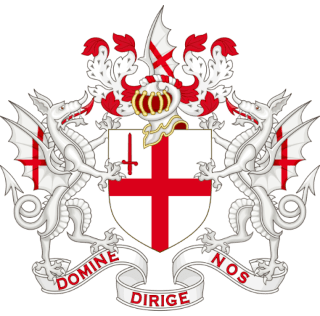
(From: “The Crown and the Irish Society of London, Agree to Carry Out the Plantation of Derry, Coleraine and Part of Tyrone,” McManus Family History, http://www.mcmanusfamilyhistory.com | Pictured: The crest of the Irish Society of London)
Jameson is born in Portadown to a ProtestantChurch of Ireland family in about 1953, one of five sons. He has a twin brother, Stuart. A former reservist in the Royal Ulster Constabulary (RUC) (1973-81), he works as a manager in the Jameson Group, a building firm which is a family-owned business. The building firm is regularly awarded government contracts to carry out work for the security forces and it is for this reason that his brother David loses a leg in a 1991 Provisional Irish Republican Army bombing attack. He is a member of the Orange Order‘s Drumherriff Star of Erin LOL 8 Portadown district.
It is not known exactly when Jameson becomes a member of the Ulster Volunteer Force (UVF) nor the leader of its Mid-Ulster Brigade. The Portadown unit of the Mid-Ulster Brigade had been officially stood down by the Brigade Staff in Belfast in August 1996 when it carried out an unauthorised sectarian killing while the UVF were on ceasefire. The Mid-Ulster Brigade’s commander at the time, Billy Wright, was expelled from the UVF. Wright brazenly defies a Combined Loyalist Military Command (CLMC) order to leave Northern Ireland or face execution by establishing the breakaway Loyalist Volunteer Force (LVF), taking most of the Portadown Mid-Ulster UVF with him. The units of the Mid-Ulster Brigade that remain loyal to the Brigade Staff continue to operate and Jameson becomes commander. He is said by The Guardian to be a “staunch supporter of the Good Friday Agreement.”
In the weeks prior to his killing, Jameson is in a violent street altercation with LVF member Muriel Gibson, whom he accuses of involvement in drugs and slaps forcefully in the face. This is followed by a fracas at the Portadown F.C. Social Club on December 27, 1999, where LVF members are commemorating the death of their comrade Billy Wright, shot and killed inside the Maze Prison by the Irish National Liberation Army (INLA) exactly two years previously. When he enters the club, several LVF men begin to push and jostle him and challenge him to a fight, telling him to hit them instead of women. Deeply offended, he leaves and soon returns with a UVF gang armed with pickaxe handles and baseball bats. In the violent brawl that ensues, twelve people, including three LVF prisoners out on Christmas parole, receive severe injuries. The LVF leaders subsequently make the decision that Jameson is to pay for the attack with his life.
One of the LVF members, who lives near Dungannon, gets in touch with a family of north Belfast loyalists who had been members of the UVF but who had left after Wright’s expulsion. From these former UVF members the LVF obtains the gun with which to shoot Jameson. On the evening of January 10, 2000, Jameson returns from work and drives his Isuzu Trooper jeep into the driveway outside his home on the Derrylettiff Road near Portadown. Waiting in ambush, a single gunman suddenly approaches from the passenger side of the parked jeep. Before Jameson can emerge from the vehicle and with the engine still running, the gunman opens fire through the window with a 9mm semi-automatic pistol, shooting Jameson five times in the head and chest. His assassin escapes to a nearby getaway car. He is rushed to Craigavon Area Hospital but dies of his wounds minutes after his arrival. The RUC immediately begins a murder inquiry. Within hours of the killing, the UVF Brigade Staff convene an emergency meeting at “the Eagle,” their headquarters on the Shankill Road, where they compile a list of all those they believe to be involved in Jameson’s death and plan their retaliation against the LVF.
Among those who condemn the killing is Northern Ireland’s First MinisterDavid Trimble who releases the following statement: “This is exactly the sort of thing we thought we had finally put behind us. I’m shocked by the news.”
Jameson’s funeral is held on January 13 at the Tartaraghan Parish Church and attended by several thousand mourners including Progressive Unionist Party (PUP) leaders David Ervine and Billy Hutchinson. Drumcree Orangeman Harold Gracey and Gary McMichael, the son of slain Ulster Defence Association (UDA) brigadier John McMichael, also attend as does local politicians representing the Ulster Unionist Party (UUP) and Democratic Unionist Party (DUP). The service is officiated by Reverend David Hilliard who speaks out against vengeance and describes Jameson as a “man admired and loved by many” and who “had been so cruelly murdered.” He is buried in the adjacent churchyard.
Despite Reverend Hilliard’s pleas and LVF leader Mark “Swinger” Fulton‘s claim that his organisation had nothing to do with Jameson’s shooting, the UVF/LVF feud intensifies. In the immediate aftermath members of Jameson’s family are filmed angrily defacing LVF murals in Portadown. A month after his killing, two Protestant teenagers, Andrew Robb (19) and David McIlwaine (18), are savagely beaten and repeatedly stabbed to death in a country lane outside Tandragee, County Armagh by a local UVF gang. The young men, believed to have been LVF members, are targeted by their UVF killers after they leave a nightclub together in search of a party. However, neither teenager is part of any paramilitary organisation and only Robb had tenuous links to the LVF. It is reported in the Belfast Telegraph that according to court hearings Robb had made disparaging remarks about Jameson’s death. Two of the UVF men, Stephen Leslie Brown and Noel Dillon, are infuriated by the comments and afterward Brown drives the victims to Druminure Road where he, Dillon and another man carry out the double killing. One of Jameson’s brothers, Bobby, is among the mourners at David McIlwaine’s funeral. The West Belfast Brigade of the Ulster Defence Association, whose brigadier Johnny Adair is close to the LVF, briefly becomes involved in the feud after Adair attends Andrew Robb’s funeral and joins LVF members at the Drumcree conflict. After the UVF track down Jameson’s killer to the Oldpark area of Belfast and attempt to shoot him, he is taken away under the protection of the West Belfast Brigade. The tit-for-tat killings continue intermittently until 2005 when the UVF makes a final assault against the LVF, leaving four members dead and the LVF leadership with no alternative but to order its military units to permanently disband.
Jameson’s family has persistently denied that he was a UVF member. They maintain that he was a vigilante who was murdered in retaliation for the firm stand he had taken against drug dealing in the Portadown area. The late PUP leader David Ervine expressed the same opinion the day after the killing by stating, “Mr. Jameson had been murdered by drug dealers masquerading as loyalists because he had been a bulwark in his community against dealers.” Ervine also described him as having been a “fine and honourable man, widely respected in the community.” Northern Ireland security sources, however, have repeatedly named Jameson as the Mid-Ulster UVF commander. He is listed as a UVF member in the CAIN: Sutton Index of Deaths, an online University of Ulster-sponsored project which chronicles the Northern Ireland conflict. It also emerges that for several days prior to his killing, he had been working at the BallykinlerBritish Army base. Immediately after his murder by the LVF, his family begins an anti-drug campaign in Portadown by putting up posters and handing out leaflets to passing motorists.
In February 1975, the Provisional Irish Republican Army and the British Government enter into a truce and restart negotiations. For the duration of the truce, the IRA agrees to halt its attacks on the British security forces, and the security forces mostly end their raids and searches. However, there are dissenters on both sides. There is a rise in sectarian killings during the truce, which “officially” lasts until February 1976.
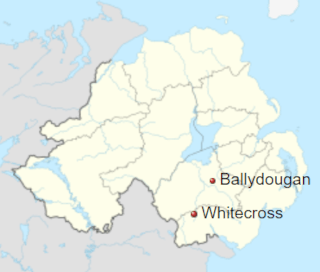
At about 6:10 p.m., at least three masked men enter the home of the Reaveys, a Catholic family, in Whitecross, through a door that had been left unlocked. Brothers John (24), Brian (22) and Anthony Reavey (17) are alone in the house and are watching television in the sitting room. The gunmen open fire on them with two 9mm Sterling submachine guns, a 9mm Luger pistol and a .455 Webley revolver. John and Brian are killed outright. Anthony manages to run to the bedroom and take cover under a bed. He is shot several times and is left for dead. After searching the house and finding no one else, the gunmen leave. Badly wounded, Anthony crawls about 200 yards to a neighbour’s house to seek help. He dies of a brain haemorrhage on January 30. Although the pathologist says the shooting played no part in his death, Anthony is listed officially as a victim of the Troubles. A brother, Eugene Reavey, says “Our entire family could have been wiped out. Normally on a Sunday, the twelve of us would have been home, but that night my mother took everybody [else] out to visit my aunt.” Neighbours claim there had been two Royal Ulster Constabulary (RUC) checkpoints set up — one at either end of the road — around the time of the attack. These checkpoints are to stop passers-by from seeing what is happening. The RUC denies having patrols in the area at the time but says there could have been checkpoints manned by the British Army‘s Ulster Defence Regiment (UDR).
At about 6:20 p.m., three masked men burst into the home of the O’Dowds, another Catholic family, in Ballydougan, about fifteen miles away. Sixteen people are in the house for a family reunion. The male family members are in the sitting room with some of the children, playing the piano. The gunmen spray the room with bullets, killing Joseph O’Dowd (61) and his nephews Barry (24) and Declan O’Dowd (19). All three are members of the Social Democratic and Labour Party (SDLP) and the family believes this is the reason they are targeted. Barney O’Dowd, Barry and Declan’s father, is also wounded by gunfire. The RUC concludes that the weapon used is a 9mm Sterling submachine gun, although Barney believes a Luger pistol with a suppressor was also used. The gunmen had crossed a field to get to the house, and there is evidence that UDR soldiers had been in the field the day before.
The following day, gunmen stop a minibus carrying ten Protestant workmen near Whitecross and shoot them dead by the roadside. This becomes known as the Kingsmill massacre. The South Armagh Republican Action Force (SARAF) claims responsibility, saying it is retaliation for the Reavey and O’Dowd killings. Following the massacre, the British Government declares County Armagh to be a “Special Emergency Area” and announces that the Special Air Service (SAS) is being sent into South Armagh.
Some of the Reavey family come upon the scene of the Kingsmill massacre while driving to the hospital to collect the bodies of John and Brian. Some members of the security forces immediately begin a campaign of harassment against the Reavey family and accuse Eugene Reavey of orchestrating the Kingsmill massacre. On their way home from the morgue, the Reavey family are stopped at a checkpoint. Eugene claims the soldiers assaulted and humiliated his mother, put a gun to his back, and danced on his dead brothers’ clothes. The harassment would later involve the 3rd Battalion, Parachute Regiment. In 2007, the Police Service of Northern Ireland (PSNI) apologises for the “appalling harassment suffered by the family in the aftermath at the hands of the security forces.”
After the killings of the Reavey brothers, their father makes his five surviving sons swear not to retaliate or to join any republican paramilitary group.
In 1999, Democratic Unionist Party (DUP) leader Ian Paisley states in the House of Commons that Eugene Reavey “set up the Kingsmill massacre.” In 2010, a report by the police Historical Enquiries Team clears Eugene of any involvement. The Reavey family seeks an apology, but Paisley refuses to retract the allegation and dies in 2014.
Hammond is born on December 5, 1928, in Miss Kells’s nursing home on the Castlereagh Road in Belfast, the son of Leslie Hammond, a tram driver, and his wife Annie (née Lamont). His parents are not city people; his mother grew up near Ballybogy in the Ballymoney area of County Antrim, and his father, though from a family with roots in south County Londonderry, had lived in Ballymoney as a boy, and had been apprenticed to a blacksmith there. Both have a strong sense of their rural identity and maintain the Ulster Scots dialect of their childhood. They are never quite at home in the Belfast suburb of Cregagh, and in particular do not share the sectarian attitudes that are much more present in 1930s Belfast than they had been in north Antrim, one of the last strongholds of Presbyterian radicalism. Even as a boy, Hammond is interested in the old songs that his mother sang and realises that the traditions in which his parents had been nurtured are disappearing quickly in an increasingly urbanising and modernising world. When he encounters the work of Emyr Estyn Evans in the early 1940s, he is encouraged to document both rural tradition and the street life of the city, and he and a couple of friends, though still just teenagers, ride off on their bicycles to look for folklore in the hinterland of Belfast.
After primary school, Hammond wins a scholarship in 1941 to Methodist College Belfast, where he does well in examinations, and then goes to Stranmillis University College to train as a teacher. In his first job, in Harding Memorial primary school in east Belfast, he proves to be a popular, idealistic teacher, and is remembered by his pupils fifty years later as a fine singer and a teller of ghost stories, who had taken the class on memorable youth-hosteling trips to the Mourne Mountains. Youth hosteling and folklore collecting increases his awareness and understanding of the rich traditions of the whole community in the north of Ireland, and he is never constrained by political or religious barriers. His early career mirrors closely that of James Hawthorne, and their paths are to cross in later life.
Hammond is friendly with many others active in the cultural life of Northern Ireland and makes a name for himself as a song collector and eventually as an expert on all aspects of traditional singing. In 1956, he is awarded a scholarship to travel in the United States to meet the important pioneers of folk-music collecting and performance there. He records his first LP record of Ulster songs, I Am The Wee Falorie Man (1958), in the United States, and becomes friends with Pete Seeger, the Appalachian singer Jean Ritchie, with old blues singers, and notably with Liam Clancy, one of the three Clancy brothers who as a quartet with Tommy Makem are to popularise Irish folk music in the United States and elsewhere.
On returning to Belfast, Hammond takes a job in 1958 in Orangefield secondary school in the east of the city, where the highly regarded headmaster John Malone encourages new approaches to education. Among his pupils at Orangefield is George Ivan “Van” Morrison, who credits him with inspiring his interest in Irish traditional music. Hammond enjoys teaching but is increasingly drawn to folk-song performance and recording. He appears regularly on radio programmes of the BBC and Radio Éireann, and in 1964 joins the school’s department in BBC Northern Ireland. There, with colleagues like Sam Hanna Bell, James Hawthorne and others, he works on programmes such as Today and Yesterday in Northern Ireland, which for the first time introduces pupils (and many adults) to local history and to aspects of tradition. In 1968, with two friends, the poets Seamus Heaney and Michael Longley, he puts on poetry and traditional music events in schools all over the province. The Arts Council funds the Room to Rhyme project, which is immensely influential and inspiring, and is still talked about many years later by those who attended as children.
Hammond is creatively involved with hundreds of hours of broadcasting, in television as well as radio, and eventually for adults as well as children. He writes scripts, produces documentary series such as Ulster in Focus and Explorations, and brings an artistic sensibility to filming, as well as working sympathetically with traditional singers and craftspeople. Dusty Bluebells, a sensitively made film of Belfast children’s street games, wins the prestigious Golden Harp award in 1972. After he leaves the BBC to work as a freelance, and founds Flying Fox Films in 1986, he continues making documentaries on many aspects of Ulster life and heritage. His film called Steel Chest, Nail in the Boot and the Barking Dog (1986), about working in the Belfast shipyards, also wins a Golden Harp award. A companion book of the same name is published. Another book is Belfast, City of Song (1989), with Maurice Leyden. In 1979, he edits a volume of the songs of Thomas Moore. His documentary programmes include films about singers from Boho, County Fermanagh, and about the big houses of the gentry in Ireland. The Magic Fiddle (1991/2) examines the role of the instrument in the folk music of Ireland, Scandinavia, Canada, and the American south, while Another Kind of Freedom (1993) is about the experiences of a former Orangefield pupil, the Beirut hostage Brian Keenan. He also produces and directs the films Something to Write Home About (1998), Where Are You Now? (1999), and Bogland (1999), all of which explore Seamus Heaney’s home region and experiences.
The first poem in Heaney’s collection Wintering Out (1972) is entitled “For David Hammond and Michael Longley.” Their lifelong friendship leads to several other creative collaborations. In particular, after a distressing evening in 1972 when Hammond, affected by the despair and terror unleashed by Irish Republican Army (IRA) bombing of his city, is for once unable to sing, Heaney meditates on the experience in an essay and in an important poem, “The singer’s house” (subsequently included in his 1979 Field Work collection). The poem urges the singer to keep singing, to defend the values of art and friendship in a hostile time. Hammond collaborates with Dónal Lunny and other traditional musicians to bring out an LP also called The Singer’s House (1978), which includes Heaney’s poem on the album sleeve, and features some of the songs that he had made famous, such as “My Aunt Jane” and “Bonny Woodgreen,” from his vast repertoire of songs from Ulster. The album is reissued in 1980.
In 1995, Hammond is one of Heaney’s personal guests at the award of his Nobel prize in Stockholm, characteristically wearing his usual, mustard-yellow, cattle-dealer boots with evening dress. On another formal occasion, when he is awarded an honorary doctorate by Dublin City University in November 2003, he surprises the audience by standing up in his academic robes to sing “My Lagan love,” instead of giving an address. His unique, light mellow voice is an ideal vehicle for the traditional ballads which he knows so well. He records a number of records in the 1960s, including Belfast Street Songs, and publishes the book Songs of Belfast (1978). He also encourages traditional musicians like Arty McGlynn, and collaborates with them on various recording projects. He is well known for live and often impromptu performances at festivals and venues in Ireland and the United States. He also performs at the John F. Kennedy Center for the Performing Arts in Washington, D.C.
Hammond is also a notable collaborator with poets and dramatists, especially in the important Field Day Theatre Company project, of which he is a director, along with Seamus Heaney, Tom Paulin, Seamus Deane, Thomas Kilroy, and the project’s founders, Brian Friel and Stephen Rea. He supports the Field Day search for a “fifth province,” where history and community and culture can intersect, believing that to speak unthinkingly of “two traditions” is to perpetuate superficial political divisions. As he says in an interview in The Irish Times on July 4, 1998, songs can “take you out of yourself” and become bridges to unite people.
Hammond receives many honours. In 1994, he receives the Estyn Evans award for his contribution to mutual understanding, and his work is featured in several major events in his honour: in the University of North Florida (1999), in the Celtic Film Festival in Belfast (2003), and in Belfast’s Linen Hall Library (2005). A Time to Dream, a film about his life and work, is broadcast on BBC Northern Ireland in December 2008.
Hammond dies in hospital in Belfast, after a long illness, on August 25, 2008, survived by his wife Eileen (née Hambleton), whom he marries on July 19, 1954, and by their son and three daughters. His funeral in St Finnian’s church is a major cultural event, where friends sing, play and speak in his honour.
In Seamus Heaney’s last collection of poetry, Human Chain (2010), he includes a poignant farewell to Hammond. The poet imagines (or perhaps dreams) of another visit to the singer’s house, but this time “The door was open, and the house was dark.”
(From: “Hammond, David Andrew (‘Davy’)” by Linde Lunney, Dictionary of Irish Biography, http://www.dib.ie, December 2014)
When appointed Lord Chancellor of Ireland in 1789, FitzGibbon is granted his first peerage as Baron FitzGibbon, of Lower Connello in the County of Limerick, in the Peerage of Ireland that year. This does not entitle him to a seat in the British House of Lords, only in the Irish House of Lords. His later promotions come mostly in the Peerage of Ireland, being advanced to a Viscountcy in 1793 and the Earldom of Clare in 1795. He finally achieves a seat in the British House of Lords in 1799 when created Baron FitzGibbon, of Sidbury in the County of Devon, in the Peerage of Great Britain.
As Lord Chancellor for Ireland, FitzGibbon is a renowned champion of the Protestant Ascendancy and an opponent of Catholic emancipation. He despises the Parliament of Ireland‘s popular independent Constitution of 1782. He is also personally and politically opposed to the Irish politician Henry Grattan who urges a moderate course in the Irish Parliament and is responsible for defeating Grattan’s efforts to reform the Irish land tithe system under which Irish Catholic farmers (and all non-Anglican farmers) are forced to financially support the minority Anglican Church of Ireland. These are not fully repealed until 1869 when the Church of Ireland is finally disestablished, although Irish tithes are commuted after the Tithe War (1831–1836).
FitzGibbon opposes the Irish Roman Catholic Relief Act 1793 personally but apparently recommends its acceptance in the House of Lords, being forced out of necessity when that Act had been recommended to the Irish Executive by the British Cabinet led by William Pitt the Younger. Pitt expects Ireland to follow the British Roman Catholic Relief Act 1791 and allow Catholics to vote again and hold public offices. At the same time, FitzGibbon apparently denounces the policy this Act embodies, so it is probably safe to say that FitzGibbon’s own beliefs and principles conflict with his obligations as a member of the Irish executive of the time.
FitzGibbon’s role in the recall, soon after his arrival, of the popular pro-Emancipation Lord Lieutenant of Ireland, William Fitzwilliam, 4th Earl of Fitzwilliam, is debatable. Although he is probably politically opposed to the Lord Lieutenant of Ireland, Fitzwilliam is apparently recalled, because of his own independent actions. Fitzwilliam is known to be friendly to the Ponsonby family and is generally a Foxite liberal Whig. His close association with and patronage of Irish Whigs led by Grattan and Ponsonby during his short tenure, along with his alleged support of an immediate effort to secure Catholic emancipation in a manner not authorized by the British cabinet is likely what leads to his recall. Thus, if anyone is to blame in the short-lived “Fitzwilliam episode” it is Henry Grattan and the Ponsonby brothers – presumably William Ponsonby, later Lord Imokilly, and his brother George Ponsonby — not to mention Lord Fitzwilliam himself. Irish Catholics at the time and later naturally see things very differently and blame hardline Protestants such as FitzGibbon.
Irish Catholics and FitzGibbon apparently agree on one point – Irish political and economic union with Great Britain, which eventually takes place in 1801. Pitt wants Union with Ireland concomitantly with Catholic emancipation, commutation of tithes, and the endowment of the Irish Catholic priesthood. Union is opposed by most hardline Irish Protestants, as well as liberals such as Grattan. FitzGibbon is a strong supporter of the Union since 1793 but refuses to have Catholic emancipation with the Union.
In the end, FitzGibbon’s views wins out, leading to the Union of Ireland with Great Britain to form the United Kingdom of Great Britain and Ireland without any concessions for Ireland’s Catholic majority, or for that matter, Catholics in the rest of the new United Kingdom. He later claims that he has been duped by the way in which the Act is passed and is bitterly opposed to any concessions during the short remainder of his life.
FitzGibbon’s role as Lord Chancellor of Ireland during the period of the 1798 rebellion is questionable. According to some, he supports a hardline policy which uses torture, murder and massacre to crush the rebellion, or that as Lord Chancellor, he has considerable influence on military affairs, and that martial law cannot be imposed without his consent. Others allege that as Lord Chancellor, he has no say in military affairs. His former side is displayed by sparing the lives of the captured United Irish leaders in return for their confession of complicity and provision of information relating to the planning of the rebellion. However, this willingness of the prisoners to partake of the agreement is spurred by the execution of the Sheares brothers on July 14, 1798.
In contrast to the leniency shown to the largely upper-class leadership, the full weight of military repression is inflicted upon the common people throughout the years 1797–98 with untold thousands suffering imprisonment, torture, transportation and death. Fitzgibbon ss inclined to show no mercy to unrepentant rebels and in October 1798 he expressed his disgust upon the capture of Wolfe Tone that he had been granted a trial and his belief that Tone should have been hanged as soon as he set foot on land.
FitzGibbon is quick to recognise that sectarianism is a useful ally to divide the rebels and prevent the United Irishmen from achieving their goal of uniting Protestant, Catholic and Dissenter, writing in June 1798, “In the North nothing will keep the rebels quiet but the conviction that where treason has broken out the rebellion is merely popish.”
FitzGibbon is noted by some as a good, improving landlord to both his Protestant and Catholic tenants. Some claim that the tenants of his Mountshannon estate call him “Black Jack” FitzGibbon. However, there is no evidence to support this claim, although there is little to no evidence on his dealings as a landlord. Irish nationalists and others point out that while he might have been interested in the welfare of his own tenants on his own estate, he treats other Irish Catholics very differently. Without further evidence, his role as a Protestant landowner in mainly Catholic Ireland is of little importance against his known dealings as Lord Chancellor.
FitzGibbon dies at his home, 6 Ely Place near St. Stephen’s Green, Dublin, on January 28, 1802, and is buried in the churchyard at St. Peter’s Church, Aungier Street, Dublin. A hero to Protestant hardliners, but despised by the majority Catholic population, his funeral cortege is the cause of a riot and there is a widespread story that a number of dead cats are thrown at his coffin as it departs Ely Place.
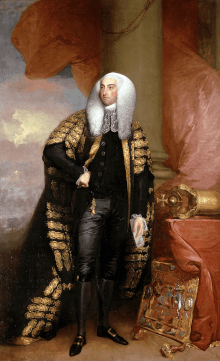
(Pictured: “Portrait of John FitzGibbon, 1st Earl of Clare,” painting by Gilbert Stuart, 1789)
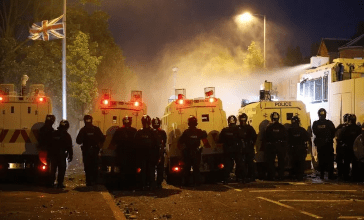
Major rioting and civil disorder break out in Ardoyne, north Belfast, Northern Ireland, on July 12, 2001. In some of the worst rioting in years, 113 police officers are injured in clashes which follow a July 12 parade. Police are attacked when trying clear the path for about 100 Orangemen returning from the parade to go along a main road passing the Catholic Ardoyne area.
In the seven-hour riot which involves about 250 nationalist youth, two blast bombs and 263 petrol bombs are exploded, while a dozen vehicles are hijacked, and 48 plastic bullets are shot by the police. Riot police also use water cannons. There are also incidents in east Belfast, Derry and Ballycastle, but the clashes in Ardoyne are by far the most serious.
The Royal Ulster Constabulary (RUC) says the riots are orchestrated by the Provisional Irish Republican Army, a claim denied by Sinn Féin, who believe the RUC’s heavy response escalates tensions. The incident also intensifies a row over the use of plastic bullets. Forty-eight of them are fired by the RUC in Ardoyne, and Sinn Féin claims fifty of them hit civilians, ten of which are badly injured. Chief ConstableRonnie Flanagan strongly rejects calls from the Northern Ireland Human Rights Commission (NIHRC) to halt its use in riots. Nationalist politicians see the ban on plastic bullets as a vital reform to make Catholics trust the police force more. Gerry Kelly from Sinn Féin says that the RUC “started the riot in Ardoyne. They are a sectarian force, using a very lethal weapon predominantly against nationalists and they should not be allowed to do so.”
A few days later another riot breaks out involving petrol bombs and acid being thrown by loyalists at police in north and west Belfast. Loyalists claim shots are fired at them from the Catholic Short Strand. A buffer zone is created by riot police in North Queen Street. Well-known Ulster Defence Association (UDA) members are spotted. From September 2001 the area sees fresh violence during the Holy Cross dispute and on the 23rd, with rioting also occurring in October and November.





 seamus dubhghaill