seamus dubhghaill

Promoting Irish Culture and History from Little Rock, Arkansas, USA


Leave a comment

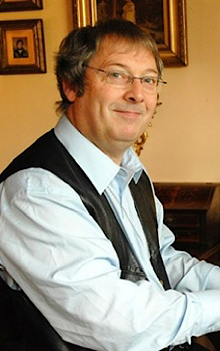
Birth of Seóirse Bodley, Composer & Associate Professor of Music at UCD

Seóirse Bodley, Irish composer and former associate professor of music at University College Dublin (UCD), is born George Pascal Bodley in Dublin on April 4, 1933. In 2008, he is the first composer to become a Saoi of Aosdána. He is widely regarded as one of the most important composers of twentieth-century art music in Ireland, having been “integral to Irish musical life since the second half of the twentieth century, not just as a composer, but also as a teacher, arranger, accompanist, adjudicator, broadcaster, and conductor.”

Bodley’s father is George James Bodley (1879–1956), an employee in the Dublin office of the London Midland & Scottish Railway Company, and later of the Ports and Docks Board. His mother, Mary (née Gough, 1891–1977), works for the Guinness Brewery. He attends schools in the Dublin suburbs of Phibsborough and Glasnevin before he moves at the age of nine to an Irish-speaking Christian Brothers school at Parnell Square. He later studies at the School of Commerce in Rathmines, where he obtains his Leaving Certificate.

Music is encouraged in his parents’ home, and Bodley receives initial lessons on the mandolin from his father and on the piano from his mother. He studies the piano, harmony and counterpoint at the Royal Irish Academy of Music and obtains a Licentiate in piano from Trinity College London (TCL). From the age of 13, he also enrolls for a time at the Brendan Smith Academy of Acting. While he is still at school, he receives his first lessons in composition privately from the Dublin-based German choral conductor Hans Waldemar Rosen (1904–94), which continues, on and off, until 1956. From his student days he performs as an accompanist to singers and takes part in chamber music performances. An important element in his musical education is the twice-weekly free concerts given by the Radio Éireann Symphony Orchestra in the Phoenix Hall, Dame Court, where he has the opportunity to hear leading Irish and international performers and conductors presenting both classics and modern repertory.

From 1952 Bodley studies for a Bachelor of Music degree from University College Dublin, mainly with Anthony Hughes. He obtains the degree in 1955. From 1957 to 1959 he studies composition (with Johann Nepomuk David) and conducting at the Württembergische Hochschule für Musik in Stuttgart, Germany, and a year later he obtains a Doctorate in Music from UCD. He also takes classes in conducting with Hans Müller-Kray and Karl Maria Zwißler, and in piano with Alfred Kreutz. He returns to Germany several times in the early 1960s to participate in courses at the Darmstädter Ferienkurse, which significantly expands his knowledge of avant-garde techniques.

From 1959 until his retirement in 1998, Bodley lectures at the university’s music department, becoming associate professor in 1984. During the 1960s, he is conductor of the Culwick Choral Society.

Bodley’s development as a composer sees several distinct phases. In the 1970s he merges avant-garde styles with elements from Irish traditional music and becomes a figure of national importance. He receives several prestigious commissions for large-scale works, such as Symphony No. 3 (1981), written for the opening of the National Concert Hall.

In 1982 Bodley becomes a founder-member of Aosdána and President Mary McAleese confers the distinction of Saoi on him in November 2008. McAleese says that Bodley “has helped us to recast what it means to be an artist in Ireland.”


Leave a comment

Birth of John Buckley, Composer & Pedagogue

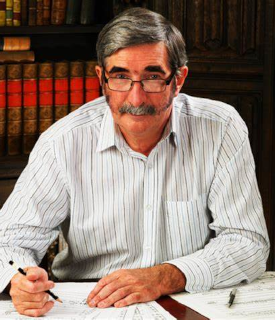
John Buckley, Irish composer and pedagogue, is born in Templeglantine, County Limerick, on December 19, 1951. He is a co-founder of the Ennis Summer School and a member of Aosdána, Ireland’s state-sponsored academy of creative artists.

Buckley grows up in a rural environment and is introduced to traditional music learning the button accordion from the local player Liam Moloney when he is 9 years of age. In 1969 he moves to Dublin to study for the Teacher’s Diploma at St. Patrick’s College, Drumcondra. Here he has his first opportunity to hear live classical and modern music including contemporary and avantgarde works by Irish composers including Aloys Fleischmann, Brian Boydell, John Kinsella, and Seóirse Bodley, as well as works by international composers such as Krzysztof Penderecki. He becomes a student at the Royal Irish Academy of Music, Dublin (1969–74), studying the flute with Doris Keogh and composition with A. J. Potter and James Wilson. He continues his musical studies with Alun Hoddinott in Cardiff, Wales (1978–82), Aloys Fleischmann in Cork (M.A. in composition, 1980), and briefly with John Cage during a summer school for composers and choreographers at Guildford, Surrey, in 1981. Initially working as secondary school teacher, from 1982 he is able to work independently as a composer.

In 1983, Buckley is the co-founder, with James Wilson, of the annual Ennis Summer School for composition, which becomes an influential training ground for aspiring young Irish composers; pupils include Michael Alcorn, Rhona Clarke, and Gráinne Mulvey. He becomes a member of Aosdána in 1984. Since 2001 he has been a lecturer in music at St. Patrick’s College, Drumcondra. From the National University of Ireland at Maynooth (now Maynooth University) he receives a PhD in 2002 and a DMus in 2007.

Apart from membership in Aosdána, Buckley is honoured with the Varming Prize (1976), the Macaulay Fellowship (1978), the Arts Council‘s Composers’ Bursary (1982) and the Marten Toonder Award (1991).

Buckley’s output includes many commissions for solo instruments, chamber ensembles, choirs, bands and orchestra. His music has been widely performed and broadcast in Ireland and in more than fifty countries worldwide. He has represented Ireland at the UNESCO International Rostrum of Composers on five occasions and at the 1990 Prix Italia. His music has also been performed at five International Society for Contemporary Music (ISCM) festivals.

Buckley’s music does not adhere to any particular compositional school. He acknowledges the influence of Luciano Berio, Witold Lutoslawski, György Ligeti, and Olivier Messiaen. His harmonic approach is freely atonal. Structurally, there is frequently a gradual build-up from initially very limited pitch material to large formal constructions. Many compositions work towards a climax in the fourth quarter of a piece and then return to initial pitch sequences. In a number of early works he explores the Celtic myths of his native Ireland in orchestral scores such as Taller than Roman Spears (1977) and Fornocht do chonac thú (1980) and in small-scale works such as Oileáin (1979) for piano, Boireann (1983) for flute and piano, or I am Wind on Sea (1987) for mezzo-soprano and percussion. Later this aspect becomes less important for him. Works since the late 1980s display “a textural subtlety in marked contrast to the more robust sonorities explored in Buckley’s earlier keyboard works,” a “French refinement of sound, and an elevation of timbre as central characteristics” and “a concern with achieving a greater degree of formal unity” and “an exploration of analogies between sound and light.” O’Leary (2013) describes his style as “characterised by a broad harmonic idiom, contrasting consonance and dissonance in a non-tonal but strongly coloured soundworld.”

In 2010, Buckley arranges a number of Irish traditional songs for flute, some with harp, viola, percussion and string quartet. These are skilled and tasteful settings in a tonal harmonic language, quite unlike his original compositions.


Leave a comment

Birth of Jerome de Bromhead, Composer & Classical Guitarist

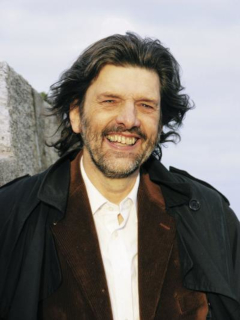
Jerome de Bromhead, Irish composer, classical guitarist, and member of Aosdána, is born in Waterford, County Waterford, on December 2, 1945.

De Bromhead studies with A. J. Potter and James Wilson at the Royal Irish Academy of Music in Dublin, with further studies with Seóirse Bodley in 1975 and Franco Donatoni in 1978. He holds an M.A. in music, art history and English from Trinity College Dublin. As a guitarist, he studies with Elspeth Henry (1967–68) and at the Guitar Centre, London (1969).

De Bromhead’s compositions include works for solo guitar as well as orchestral, choral and chamber music. His Symphony No. 1 (1986) represents Ireland at the International Rostrum of Composers at UNESCO‘s headquarters in Paris. He describes his style as “neither a Postmodernist nor a deaf-as-a-postmodernist. Above all I am suspicious of anything that seems like dogma.”

De Bromhead’s harpsichord piece Flux (1981) is performed at the ISCM World Music Days in Germany in 1987 and is now published by Tonos Verlag of Darmstadt.

According to guitarist John Feeley, de Bromhead’s solo guitar composition Gemini (1970) is “a sophisticated work, both technically and compositionally. It has the dynamism of youth, with a sense of freshness and it projects an attractive, driving energy […] It is an effective concert work, which speaks well on the instrument and is particularly gratifying for the performer.”

De Bromhead works at RTÉ as a television news director and announcer, as well as a senior music producer for radio, until a serious accident forces him to retire in 1996. He currently lives in Dublin.

The Contemporary Music Centre (www.cmc.ie) provides scores and sample recordings of a selection of de Bromhead’s works, available here.


Leave a comment

Birth of Classical Guitarist John Feeley

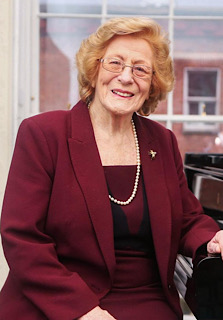
John Feeley, classical guitarist, and a teacher and editor of guitar music, is born Ballinasloe, County Galway, on May 24, 1955.

Feeley starts playing guitar in popular music, and at age seventeen is recognised as one of Europe‘s best electric guitarists. After graduating from Trinity College Dublin, with a first-class degree in music, he moves to the United States to study with Oscar Ghiglia, Angel Romero, and David Russell, completing a master’s degree at Queens College, City University of New York. In the following years he teaches at Memphis State University in Memphis, Tennessee. He now teaches at the Dublin Institute of Technology (DIT) Conservatory of Music and Drama, Dublin. His past students include all current members of the Dublin Guitar Quartet, along with Redmond O’Toole, Michael O’Toole and Alec O’Leary, director of the Guitar Festival of Ireland. Composers Benjamin Dwyer, Ciarán Farrell, David Fennessy and David Flynn, all of whom have written music for Feeley, are also guitar students of his.

In 2006 Feeley completes a doctorate (Doctor of Philosophy in Music [Performance]) at Maynooth University, which involves a major thesis in three volumes with the title Classical Guitar Music by Irish Composers: Performing Editions and Critical Commentary.

Feeley has appeared at such festivals as the Guitar Festival of Ireland, Bath International Music Festival, the Dundee International Guitar Festival, and the Wirral International Guitar Festival. He has won numerous awards including the Special Award for interpretation in the 1984 Mauro Giuliani competition, Italy. He has appeared as a soloist with the American Symphony Orchestra at Carnegie Hall, the RTÉ National Symphony Orchestra, the Ulster Orchestra, the Irish Chamber Orchestra and the Contempo Quartet. He performs regularly in duet with the flautist William Dowdall.

Feeley is an enthusiastic champion of contemporary Irish music and in this capacity has commissioned works from many of Ireland’s leading composers including Seóirse Bodley, John Buckley, Jerome de Bromhead, Jane O’Leary, Brent Parker and Eric Sweeney. He also has a great interest in traditional Irish and Scottish music and has recorded with The Chieftains and published his own arrangements of traditional melodies.

Feeley has been described by The Washington Post as “Ireland’s leading classical guitarist” and by Michael Dervan in The Irish Times as “a trailblazer … when it comes to the guitar and guitar-playing in Ireland.”


Leave a comment

The Inaugural Meeting of Aosdána

The inaugural meeting of Aosdána, an Irish association of artists, takes place in the Old Parliament House in Dublin on April 14, 1983. It is created in 1981 on the initiative of a group of writers with support from the Arts Council of Ireland. Membership, which is by invitation from current members, is limited to 250 individuals, up from 200 prior to 2005. Its governing body is called the Toscaireacht.

At the suggestion of writer Anthony Cronin, who becomes a founding member, Aosdána is originally established in 1981 by Taoiseach Charles Haughey, well known for his support for the Arts, although columnist Fintan O’Toole has argued that this also serves to deflect criticism of Haughey’s political actions. Haughey’s successor, Garret FitzGerald, formally addresses the inaugural assembly of Aosdána in Dublin.

The process of induction into Aosdána relies entirely on members proposing new members. Applications by artists themselves are not allowed. Some members receive a stipend, called the Cnuas, from the Arts Council of Ireland. This stipend is intended to allow recipients to work full-time at their art. The value of the Cnuas in 2015 is €17,180.

The title of Saoi is the highest honour that members of Aosdána can bestow upon a fellow member. No more than seven living members can be so honoured at one time. The honour is conferred by the President of Ireland in a ceremony during which a gold torc is placed around the neck of the recipient by the President. The current living Saoithe are Seóirse Bodley (composer), Camille Souter (painter), Imogen Stuart (sculptor), George Morrison (film-maker), Edna O’Brien (writer), and Roger Doyle (composer). Among the deceased holders of the title of Saoi are the Nobel Laureates Samuel Beckett and Seamus Heaney, dramatists Brian Friel and Tom Murphy, and the artists Patrick Scott and Louis le Brocquy.

The poet Pearse Hutchinson, a member of Aosdána, describes the organisation as “a miracle and a godsend” that allows him to continue writing at a time when he might have had to give up. Composer Roger Doyle has also spoken about the difference it makes, “I was elected to Aosdána in 1986. This gave me a small stipend from the Government each year, which enabled me to devote all my time to composing. This changed my life for the better and I have composed non-stop since then.”

The Toscaireacht is a committee of ten members, called Toscairí, of the Aosdána. It meets several times a year to deal with the administration and external relations of Aosdána, reports to every General Assembly, which meets once a year, and sets its Agenda. When new members of Aosdána are proposed, the Toscairí have the task of verifying that the nomination process has been complied with, and also that the candidate is willing to accept membership, before the next stage of election is begun.

Toscairí are elected to the Toscaireacht by the members of Aosdána for two year terms. All members of Aosdána are eligible for election, and nominations must be made in writing by three members. The electoral process is in two stages. First, within each of Aosdána’s three disciplines (Music, Literature, and Visual Arts), the two nominees with the highest number of votes are elected. This guarantees a minimum of two Toscairí from each of the disciplines. Next, the remaining four places are filled by the remaining nominees from any discipline who have the highest number of votes.

The current Toscairí are Anne Haverty (literature), Deirdre Kinahan (literature); Eamon Colman (visual art), Enda Wyley (literature), Geraldine O’Reilly (visual art), Gerard Smyth (literature), Gráinne Mulvey (music), Mary O’Donnell (literature), Michael Holohan (music), and Theo Dorgan (literature).

The procedure at meetings is laid down in the Toscaireacht’s Standing Orders. Minutes of its meetings appear on Aosdána’s web site (aosdana.artscouncil.ie).


Leave a comment

Birth of Poet & Linguist Michael O’Siadhail

michael-o-siadhail

Micheal O’Siadhail, poet and linguist, is born in Dublin on January 12, 1947. Among his awards are The Marten Toonder Prize and The Irish American Culture Institute Prize for Literature.

O’Siadhail is born into a middle-class Dublin family. His father, a chartered accountant, is born in County Monaghan and works most of his life in Dublin, and his mother is a Dubliner with roots in County Tipperary. Both of them are portrayed in his work in several poems such as “Kinsmen” and “Promise”. From the age of twelve, he is educated at the Jesuit boarding school Clongowes Wood College, an experience he is later to describe in a sequence of poems “Departure” (The Chosen Garden).

At Clongowes O’Siadhail is influenced by his English teacher, the writer Tom MacIntyre, who introduces him to contemporary poetry. At thirteen he first visits the Aran Islands. This pre-industrial society with its large-scale emigration has a profound impact on him. His earlier work reflects this tension between his love of his native Dublin and his emotional involvement with those outlying communities and which features in the sequence “Fists of Stone” (The Chosen Garden).

O’Siadhail studies at Trinity College Dublin (1964–68) where his teachers include David H. Greene and Máirtín Ó Cadhain. He is elected a Scholar of the College and takes a First-Class Honours Degree. His circle at Trinity includes David McConnell (later professor of genetics), Mary Robinson and David F. Ford (later Regius Professor of Divinity at the University of Cambridge). He subsequently embarks on a government exchange scholarship studying folklore and the Icelandic language at the University of Oslo. He retains lifelong contacts with Norwegian friends and sees Scandinavian literature as a major influence.

In 1970 O’Siadhail marries Bríd Ní Chearbhaill, who is born in Gweedore, County Donegal. She is for most of her life a teacher and later head mistress in an inner-city Dublin primary school until her retirement in 1995 due to Parkinson’s disease. She is a central figure in his oeuvre celebrated in the sequence “Rerooting” in The Chosen Garden and in Love Life, which is a meditation on their lifelong relationship. One Crimson Thread travels with the progression of her Parkinson’s Disease. She dies on June 17, 2013.

For seventeen years, O’Siadhail earns his living as an academic; firstly, as a lecturer at Trinity College (1969–73) where he is awarded a Master of Letters degree in 1971 and then as a research professor at the Dublin Institute for Advanced Studies. During these years he gives named lectures in Dublin and at Harvard University and Yale University and is a visiting professor at the University of Iceland in 1982. In 1987 he resigns his professorship to devote himself to writing poetry which he describes as “a quantum leap.”

During his years as an academic, O’Siadhail, writing under the Irish spelling of his name, published works on the linguistics of Irish and a textbook for learners of Irish.

O’Siadhail serves as a member of the Arts Council of the Republic of Ireland (1987–93), of the Advisory Committee on Cultural Relations (1989–97) and is editor of Poetry Ireland Review. He is the founding chairman of ILE (Ireland Literature Exchange). As a founder member of Aosdána (Academy of Distinguished Irish Artists) he is part of a circle of artists and works with his friend the composer Seóirse Bodley, the painters Cecil King and Mick O’Dea and in 2008 gives a reading as part of Brian Friel‘s eightieth birthday celebration.

O’Siadhail represents Ireland at the Poetry Society‘s European Poetry Festival in London in 1981 and at the Frankfurt Book Fair in 1997. He is writer-in-residence at the Yeats Summer School in 1991 and writer in residence at the University of British Columbia in 2002.

O’Siadhail is now married to Christina Weltz, who is a native of New York, and Assistant Professor of surgical oncology at Mount Sinai Hospital. They reside in New York.