seamus dubhghaill

Promoting Irish Culture and History from Little Rock, Arkansas, USA


Leave a comment

Birth of Gaetano Alibrandi, Papal Nuncio to Ireland

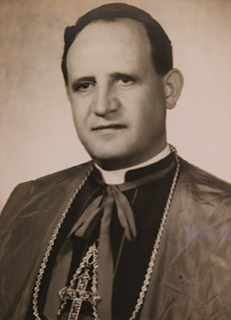
Gaetano Alibrandi, a senior papal diplomat of the Catholic Church and former Personal Secretary to Giovanni Battista Cardinal Montini (later Pope Paul VI), is born on January 14, 1914, at Castiglione di Sicilia in the province of CataniaSicily.

Alibrandi is ordained priest on November 1, 1936, and obtains a Doctor of Divinity from the Pontifical Lateran University and a Doctorate on Civil and Canon Law. He enters the Diplomatic Corps of the Holy See in 1941, serving for five years in the Vatican Secretariat of State and is then a staff member in the apostolic nunciatures in Italy and Turkey before coming to Ireland as a counsellor at the Apostolic Nunciature for two years from 1954 to 1956. He later describes his first Irish posting as “a spiritual bath.”

In 1961, Alibrandi receives episcopal consecration as titular Archbishop of Binda by Cardinal Fernando Cento upon his appointment as Nuncio of Chile, followed quickly by similar appointments in Lebanon (1963). As Apostolic Nuncio to Chile, he leads the Chilean delegation to the Second Vatican Council.

Alibrandi is appointed Papal Nuncio to Ireland on April 19, 1969, shortly after the outbreak of the Troubles

This is a challenging time for the Catholic Church in Ireland, then led by Cardinal William Conway, as it adjusts to both the internal changes generated by the Second Vatican Council and the wider social changes. He is ill-suited to coping with these changes and in particular the violence in Northern Ireland. It is widely assumed that he sees to it that the more overtly nationalist Tomás Ó Fiaich is appointed to Armagh in 1977 after the death of Cardinal Conway. The journalist and author Ed Moloney in his book on the Irish Republican Army (IRA) asserts that Alibrandi’s “sympathy for the IRA was a constant source of friction with the government in London.”

Alibrani plays a major role in the 1971 decision by the Vatican to accept the resignation of John Charles McQuaid as Archbishop of Dublin. This comes as a shock to McQuaid, who expected that he would be allowed to remain for some time after the normal retirement age of 75.

In many of the episcopal appointments made while Alibrandi is nuncio, he favours doctrinally “sound,” right-of-centre priests and in the case of the Archdiocese of Dublin picks two priests, Kevin McNamara and Desmond Connell, who are notably ill-suited. In a profile of the Archbishop at the time of his retirement, T. P. O’Mahony observes in The Tablet, “although he rarely gave interviews, and never overtly intervened in policy-making or in public controversies, it is beyond dispute that Archbishop Alibrandi wielded considerable influence behind the scenes.”

The respected academic and church historian Dermot Keogh assessing this period argues that “there was a general view that the best candidates had not been appointed…that a number were not up to the job, that most of the appointees shared a defensive attitude to matters of church and state.”

Alibrandi has “a very testy relationship with three Taoisigh – Jack LynchLiam Cosgrave and Garret FitzGerald.” After reaching the retirement age of 75, he returns to his home town in Sicily where he dies on July 3, 2003. His funeral Mass was celebrated on Saturday in Castiglione di Sicilia by Archbishop Paolo Romeo, Apostolic Nuncio to Italy. A memorial Mass for Archbishop Alibrandi will be celebrated by Archbishop Giuseppe Lazzarotto, Apostolic Nuncio to Ireland, on Friday, 11 July at 19.30 in the Church of Our Lady Help of Christians, Navan Road, Dublin.

It is reported in September 2012 during the second Dr. Garret FitzGerald Memorial Lecture at University College Cork (UCC) by Seán Donlon, former secretary general at the Department of Foreign Affairs, that “It came to our [Department of Foreign Affairs] attention that a substantial amount in three bank accounts in Dublin [held by the archbishop] were way in excess of what was needed to run the nunciature. The source [of the money] appeared to be South America.” Donlon goes on to say, “Because of its size, we thought it appropriate to ask if the funds belonged to the Holy See.” When contacted for an answer, Alibrandi “quickly answered ‘no’ and that they belonged to ‘family’. When it was pointed out to him that the money was then liable under Irish taxation law to DIRT, he said he would retire shortly and the accounts would be closed.”


Leave a comment

Birth of Standish Hayes O’Grady, Celticist & Antiquarian

Standish Hayes O’Grady (Irish: Anéislis Aodh Ó Grádaigh), Celticist and antiquarian, is born on May 19, 1832, in Erinagh House, Castleconnell, County Limerick.

O’Grady is the son of Admiral Hayes O’Grady and his wife, Susan Finucane. His father is one of the chiefs of the Cinél Donnghaile, the collective name of the O’Gradys. He is a nephew of Standish O’Grady, 1st Viscount Guillamore, and a cousin of the novelist Standish James O’Grady, with whom he is sometimes confused. As a child he is fostered in Coonagh, County Limerick, an Irish-speaking area. There he learns Irish and comes into contact with the Gaelic manuscript tradition, listening to stories read aloud from manuscripts in farmers’ houses during wakes or while carding wool. He maintains this interest in the literary tradition throughout his life.

O’Grady receives his secondary education in Rugby School in Rugby, Warwickshire, England, his name appearing in the school register for August 1846. Subsequently he attends Trinity College Dublin (TCD) from 1850 to 1854 but does not graduate. He is critical of an education system that makes no mention of Irish history and legend. During his student days he becomes a friend of the leading scholars and antiquarians, John O’DonovanGeorge Petrie and Eugene O’Curry, as well as the bookseller and publisher, John O’Daly. At this time he begins copying Gaelic manuscripts under their direction. He purchases from O’Daly in 1853 a collection in Irish of “tales and other pieces, in prose and verse” which he presents to the British Museum in 1892. He is a founding member of the Ossianic Society in 1853 and becomes its president in 1856. O’Curry attacks him publicly in a review in The Tablet, questioning his ability as a scholar. The publication of the society’s third volume prompts the review.

In 1857 O’Grady moves to the United States where he remains for thirty years. In 1901 he contributes an essay on Anglo-Irish Aristocracy to a collection entitled Ideals in Ireland edited by Augusta, Lady Gregory.

O’Grady is competent in a number of languages including Arabic and Scots Gaelic, and the University of Cambridge awards him a Doctor of Letters degree in 1893.

O’Grady is a bachelor all his life and dies on October 16, 1915, in his home in Ballinruan, Hale, Cheshire, England. He is buried in Altrincham cemetery.


Leave a comment

Death of Richard Pigott, Journalist, Newspaper Owner & Forger

Richard Pigott, Irish journalist, newspaper owner, and forger, best known for his forging of evidence that Charles Stewart Parnell of the Irish National Land League had been sympathetic to the perpetrators of the Phoenix Park Murders, dies of an apparent self-inflicted gunshot wound on March 1, 1889, in Madrid, Spain.

Pigott is born in Ratoath, County Meath, in 1835, the son of George Pigott of Ratoath, and his wife, a woman from Roscommon. As a young man he supports Irish nationalism and works on the publications The Nation and The Tablet before acting as manager of The Irishman, a newspaper founded by Denis Holland. James O’Connor later claims Pigott embezzled funds from The Irishman and covered his tracks by not keeping written records. He also works for the Irish National Land League, departing in 1883 after accusing its treasurer, Mr. Fagan, of being unable to account for £100,000 (equivalent to £10,700,000 in 2021) of its funds and for keeping inadequate records. Nothing is done about his accusation, and he turns against the League, which is allied to the Irish Parliamentary Party (IPP) led by the League’s president, Charles Stewart Parnell.

In 1879 Pigott is proprietor of three newspapers, which he soon sells to the League. Hitherto a zealous nationalist, from 1884 onwards he vilifies his former associates and sells information to their political opponents. In an effort to destroy Parnell’s career, he forges several letters which purport that Parnell had supported the perpetrators of the Phoenix Park murders of 1882.

The Times purchases Pigott’s forgeries for £1,780 (equivalent to £211,000 in 2021) and publishes the most damning letter on April 18, 1887. Parnell immediately denounces it as “a villainous and barefaced forgery.” In February 1889, the Parnell Commission vindicates him by proving that the letters are fake. They included misspellings (specifically ‘hesitency [sic]’) which Pigott had written elsewhere. A libel action instituted by Parnell also vindicates him, and his parliamentary career survives the Pigott accusations.

The Commission eventually produces thirty-seven volumes of evidence, covering not just the forgeries but also the surrounding violence that follows from the Plan of Campaign.

After admitting his forgeries to Henry Labouchère, Pigott flees to Spain and apparently shoots himself on March 1, 1889, in a hotel room in Madrid, a city in which O’Shea has a network of connections, and Pigott himself apparently has none. Parnell then sues The Times for libel, and the newspaper pays him £5,000 (equivalent to £588,000 in 2021) in an out-of-court settlement, as well as considerably more in legal fees. When Parnell next enters the House of Commons, he receives a hero’s reception from his fellow Members of Parliament.

(Pictured: Pigott as caricatured by Spy (Leslie Ward) in Vanity Fair, March 1889)


Leave a comment

Birth of Jeremiah Newman, Bishop of Limerick

Jeremiah Newman, Bishop of Limerick from 1974 to 1995 after having served as Professor and President of St. Patrick’s College, Maynooth, is born in Dromcolliher, County Limerick, on March 31, 1926.

Following a local primary education, Newman attends St. Munchin’s College, Limerick. He studies for the priesthood at St. Patrick’s College, Maynooth, and is ordained there on June 18, 1950.

Newman begins postgraduate studies in Philosophy at the Catholic University of Leuven and is awarded a Doctorate in Philosophy there in 1951. After that he takes up studies in Sociology at the University of Oxford for four years before taking up a teaching post at Queen’s University, Belfast.

In 1953 Newman is appointed Professor of Sociology at St. Patrick’s College, Maynooth, succeeding Peter McKevitt. It is an institution he remains within, and eventually leads with distinction, until he is appointed Bishop of Limerick in May 1974. He publishes two books about the college: Maynooth and Georgian Ireland (1979) followed by Maynooth and Victorian Ireland (1983).

Newman arrives in Limerick with a strong reputation for reform having served a number of years as President of Maynooth where he adapted and shaped the college to the new challenges of the 1970s. His academic background in sociology gives him an informed understanding of the changing dynamic in Irish life, especially rural life which he has been writing about since the early 1960s, especially the dangers of depopulation.

Newman often makes comment on national matters particularly about church-state relations which has been his special area of study for over 20 years. He takes what might be called a broadly ‘conservative’ approach which, as time goes on, jars with wider public opinion especially as Ireland faces a number of constitutional referenda in the 1980s. At least one modern author has quoted the epithet alleged to have been conferred on Newman by Conor Cruise O’Brien, The Mullah of Limerick, for articulating a neo-conservative position more commonly associated with the United States.

Newman’s later years are dogged by periodic bouts of ill-health, and he dies in office on April 3, 1995, of hepatoma. He is buried in St. John’s Cathedral, Limerick. He is the subject of many obituaries not least because of his extensive public statements in his years as Bishop of Limerick. The Tablet suggests he was most “well known for his conservatism and taste for controversial remarks” before quoting the homily by Cardinal Cahal Daly that “he seemed to have a strange sense of inadequacy; and, for one who was so lovable, he seemed to have difficulties in believing that others respected and admired and indeed loved him.” The Irish Times obituary says he was a man “who kept fighting the battles of long ago.”

Newman is succeeded as Bishop of Limerick by Bishop Donal Murray.

Limerick City Library holds an extensive set of newspaper articles about Bishop Jeremiah Newman which have been made available online.


Leave a comment

Richard Pigott Exposed as Forger of Phoenix Park Letters

richard-pigott

Richard Pigott, an Irish journalist, is exposed as the forger of The Times Phoenix Park letters on February 10, 1889.

Pigott is born in 1835 in Ratoath, County Meath. As a young man he supports Irish nationalism and works for The Nation and The Tablet before acting as manager of The Irishman, a newspaper founded by Denis Holland. James O’Connor later claims Pigott embezzled funds from the paper and covered his tracks by not keeping written records. Pigott also works for the Irish National Land League, departing in 1883 after accusing its treasurer, Mr. Fagan, of being unable to account for £100,000 of its funds, and for keeping inadequate records. Nothing is done about his accusation, which is publicised in the newspapers, and he turns against the League, which is allied to several Irish nationalist groups including the Irish Parliamentary Party led by Charles Stewart Parnell.

In 1879 Pigott is proprietor of three newspapers, which he soon sells to the Irish Land League, of which Charles Stewart Parnell is president. Hitherto a violent Nationalist, from 1884 Pigott begins to vilify his former associates and to sell information to their political opponents. In an effort to destroy Parnell’s career, Pigott produces fake letters, which purports that Parnell had supported one of the Phoenix Park murders.

The Times purchases Pigott’s forgeries for £1,780 and publishes the most damning letter on April 18, 1887. Parnell immediately denounces it as “a villainous and barefaced forgery.” In February 1889, the Parnell Commission vindicates him by proving that the letters are forgeries. They include misspellings which Pigott has written elsewhere. A libel action instituted by Parnell also vindicates him and his parliamentary career survives the Pigott accusations.

The Commission eventually produces 37 volumes in evidence, covering not just the forgeries but also the surrounding violence that follows from the Plan of Campaign.

After admitting his forgeries to Henry Labouchère, Pigott flees to Spain, and shoots himself in a Madrid hotel room. Parnell then sues The Times for libel, and the newspaper pays him £5,000 in an out-of-court settlement, as well as considerably more in legal fees. When Parnell next enters the House of Commons, he receives a hero’s reception from his fellow Members of Parliament.

(Pictured: Pigott as caricatured by Spy (Leslie Ward) in Vanity Fair, March 1889)


Leave a comment

Birth of Irish Author Mary Anne Sadlier

mary-anne-sadlier

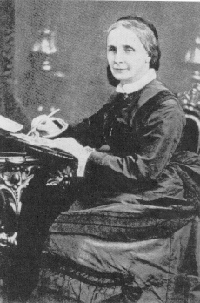
Mary Anne Sadlier, Irish author, is born Mary Anne Madden in Cootehill, County Cavan, on December 30, 1820.

Sadlier publishes roughly sixty novels and numerous stories in her lifetime. She writes for Irish immigrants in both the United States and Canada, encouraging them to attend mass and retain the Catholic faith. In so doing, Sadlier also addresses the related themes of anti-Catholicism, the Great Famine, emigration, and domestic work. Her writings are often found under the name Mrs. J. Sadlier.

Upon the death of her father, Francis, a merchant, Mary Madden emigrates to Sainte-Marthe, Quebec in 1844, where she marries publisher James Sadlier, also from Ireland, on November 24, 1846. Sadlier publishes much of her work in the family’s Catholic magazine, The Tablet. Sadlier experiences her most productive literary period after her marriage and is most creative after the time all of her children are born. While living in Canada, Sadlier publishes eighteen books — five novels, one collection of short stories, a religious catechism, and nine translations from the French — in addition to assorted magazine articles she contributes to the Pilot and American Celt free of charge. In New Lights (1853), Sadlier deals with the Great Famine for the first time. The book proves one of her most popular, going through at least eight editions in fifty years. In this novel, Sadlier focuses a polemical attack on the Protestant practice of converting Irish peasants by promising them soup but condemns peasant retaliation and violence.

In the early 1860s, the couple moves to New York City. The Sadlier’s New York home becomes the hub of literary activity in the Catholic community, and Sadlier also enjoys the company of the brightest Irish writers in the United States and Canada, including New York Archbishop John Hughes, editor Orestes Brownson, and Thomas D’Arcy McGee. She holds weekly salons in her Manhattan home, as well as her summer home on Far Rockaway on Long Island. Her closest friend is D’Arcy McGee, a poet, Irish nationalist exile and Canadian statesman known as one of the founding “Fathers of Confederation” who helps bring about Canada’s independence. McGee and Sadlier share an interest in a “national poetry” that does not only capture the spirit of a people but inspires them to political and national independence. While McGee, as a man, can take part in political rallies and organize Irish American support for Home Rule, Sadlier, as a woman, directs her support for Irish independence into literature. McGee’s biographer notes that Sadlier’s success inspires him to write emigrant novels and is planning a novel on this subject at the time of his assassination by an Irish American radical in 1868. His death is a crushing blow to Sadlier and her husband. Sadlier edits a collection of McGee’s poetry in 1869 in tribute to his memory.

Sadlier remains in New York for nine years before returning to Canada, where she dies in Montreal on April 5, 1903. In later years she loses the copyright to all her earlier works, many of which remain in print. One of Mary Anne’s daughters, Anna Theresa Sadlier, also becomes a writer.