In 1928, McCrea studies Albrecht Unsöld‘s hypothesis and discovers that three quarters of the sun is made of hydrogen and about one quarter is helium with 1% being other elements. Previous to this many people thought the sun consisted mostly of iron. After this, people realise most stars consist of hydrogen.
In 1932 McCrea moves to Imperial College London as a Reader and marries Marian Core the following year. In 1936 he becomes Professor of Mathematics and head of the mathematics department at the Queen’s University Belfast.
During World War II McCrea is co-opted onto the Admiralty Operational Research Group. After the war, he joins the mathematics department at Royal Holloway College in 1944. He is elected a Fellow of the Royal Society of London in 1952.
In 1964 McCrea proposes mass transfer mechanism as an explanation of blue straggler stars. In 1965, he creates the astronomy centre of the physics department at the University of Sussex.
Childers is educated at Gresham’s School, Holt, and the University of Cambridge, hence his striking British upper-class accent. On November 24, 1922, when he is sixteen, his father, Robert Erskine Childers, is executed by the new Irish Free State on politically inspired charges of gun-possession. The pistol he had been found with had been given to him by Michael Collins. Before his execution, in a spirit of reconciliation, the elder Childers obtains a promise from his son to seek out and shake the hand of every man who had signed his death warrant.
Following his father’s funeral, he returns to Gresham’s, then two years later he goes on to Trinity College, Cambridge. He returns to Ireland in 1932 and becomes advertising manager of The Irish Press, the newly founded newspaper owned by the family of Éamon de Valera.
Childers is nominated as the presidential candidate of Fianna Fáil at the behest of de Valera, who pressures Jack Lynch in the selection of the presidential candidate. He is a controversial nominee, owing not only to his British birth and upbringing but to his Protestantism. However, on the campaign trail his personal popularity proved enormous, and in a political upset at the 1973 Irish presidential election, he is elected the fourth President of Ireland on May 30, 1973, defeating Tom O’Higgins by 635,867 (52%) votes to 578,771 (48%). He becomes the second Protestant to hold the office, the first being Douglas Hyde (1938–1945).
Prevented from transforming the presidency as he desires, Childers instead throws his energy into a busy schedule of official visits and speeches, which is physically taxing.
Walton is the son of a Methodist minister, Rev John Walton (1874–1936), and Anna Sinton (1874–1906). In those days a general clergyman’s family moves once every three years, and this practice carries him and his family, while he is a small child, to Rathkeale, County Limerick, where his mother dies, and to County Monaghan. He attends day schools in counties Down and Tyrone, and at Wesley College in Dublin before becoming a boarder at Methodist College Belfast in 1915, where he excels in science and mathematics. He obtains degrees in mathematics and experimental science from Trinity College Dublin in 1926.
Walton goes to Trinity College, Cambridge in 1927 where he works with Cockcroft in the Cavendish Laboratory under Ernest Rutherford until 1934. In 1928 he attempts two methods of high-energy particle acceleration. Both fail, mainly because the available power sources could not generate the necessary energies, but his methods are later developed and used in the betatron and the linear particle accelerator. In 1929 Cockcroft and Walton devise an accelerator that generates large numbers of particles at lower energies. With this device in 1932 they disintegrate lithium nuclei with protons, the first artificial nuclear reaction not utilizing radioactive substances and so becomes the first person in history to split the atom.
Although he retires from Trinity College Dublin in 1974, he retains his association with the Physics Department at Trinity up to his final illness. His is a familiar face in the tea-room. Shortly before his death he marks his lifelong devotion to Trinity by presenting his Nobel medal and citation to the college. Ernest Walton dies at the age of 91 in Belfast on June 25, 1995. He is buried in Deans Grange Cemetery in Dublin.
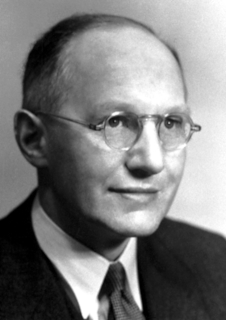
(Pictured: Ernest T.S. Walton, 1951, by Nobel foundation)
Stanford is born into a well-off and highly musical family, the only son of John James Stanford, a prominent Dublin lawyer, Examiner to the Court of Chancery in Ireland and Clerk of the Crown for County Meath, and his second wife, Mary, née Henn. He is educated at the University of Cambridge before studying music in Leipzig and Berlin. He is instrumental in raising the status of the Cambridge University Musical Society, attracting international stars to perform with it.
While still an undergraduate, Stanford is appointed organist of Trinity College, Cambridge. In 1882, at the age of 29, he is one of the founding professors at the Royal College of Music, where he teaches composition for the rest of his life. From 1887 he is also Professor of Music at Cambridge. As a teacher, he is skeptical about modernism and bases his instruction chiefly on classical principles as exemplified in the music of Johannes Brahms. Among his pupils are rising composers whose fame go on to surpass his own, such as Gustav Holst and Ralph Vaughan Williams. As a conductor, he holds posts with the Bach Choir and the Leeds Triennial Music Festival.
Stanford composes a substantial number of concert works, including seven symphonies, but his best-remembered pieces are his choral works for church performance, chiefly composed in the Anglican tradition. He is a dedicated composer of opera, but none of his nine completed operas has endured in the general repertory. Some critics regard him, together with Hubert Parry and Alexander Mackenzie, as responsible for a renaissance in music from the British Isles. However, after his conspicuous success as a composer in the last two decades of the 19th century, his music is eclipsed in the 20th century by that of Edward Elgar as well as former pupils.
In September 1922, Stanford completes the sixth Irish Rhapsody, his final work. Two weeks later he celebrates his 70th birthday and thereafter his health declines. On March 17, 1924, he suffers a stroke and dies on March 29 at his home in London, survived by his wife and children. He is cremated at Golders Green Crematorium on April 2 and his ashes are buried in Westminster Abbey the following day.
Stanford’s last opera, The Travelling Companion, composed during World War I, is premiered by amateur performers at the David Lewis Theatre, Liverpool in 1925 with a reduced orchestra. The work is given complete at Bristol in 1928 and at Sadler’s Wells Theatre, London, in 1935.
Although a Protestant country-gentleman, O’Brien supports Catholic emancipation while remaining a supporter of British-Irish union. In 1843, in protest against the imprisonment of Daniel O’Connell, he joins O’Connell’s anti-union Repeal Association.
Three years later, O’Brien withdraws the Young Irelanders from the association. In January 1847, with Thomas Francis Meagher, he founds the Irish Confederation, although he continues to preach reconciliation until O’Connell’s death in May 1847. He is active in seeking relief from the hardships of the famine. In March 1848, he speaks out in favour of a National Guard and tries to incite a national rebellion. He is tried for sedition on May 15, 1848, but is not convicted.
On July 29, 1848, O’Brien and other Young Irelanders lead landlords and tenants in a rising in three counties, with an almost bloodless battle against police at Ballingarry, County Tipperary. In O’Brien’s subsequent trial, the jury finds him guilty of high treason. He is sentenced to be hanged, drawn, and quartered. Petitions for clemency are signed by 70,000 people in Ireland and 10,000 people in England. In Dublin on June 5, 1849, the sentences of O’Brien and other members of the Irish Confederation are commuted to transportation for life to Van Diemen’s Land (Tasmania in present-day Australia).
O’Brien attempts to escape from Maria Island off Tasmania but is betrayed by the captain of the schooner hired for the escape. He is sent to Port Arthur where he meets up with John Mitchel.
O’Brien is a founding member of the Ossianic Society, which is founded in Dublin on St. Patrick’s Day 1853, whose aim is to further the interests of the Irish language and to publish and translate literature relating to the Fianna. He writes to his son Edward from Van Diemen’s Land, urging him to learn the Irish language. He himself studies the language and uses an Irish-language Bible and presents to the Royal Irish Academy Irish-language manuscripts he has collected.
In 1854, after five years in Tasmania, O’Brien is released on the condition he never returns to Ireland. He settles in Brussels. In May 1856, he is granted an unconditional pardon and returns to Ireland that July. He contributes to the Nation newspaper but plays no further part in politics.
In 1864 he visits England and Wales, with the view of rallying his failing health, but no improvement takes place, and he dies at Bangor, in Wales on June 16, 1864.
A statue of William Smith O’Brien stands in O’Connell Street, Dublin. Sculpted in Portland limestone, it is designed by Thomas Farrell and erected in D’Olier Street, Dublin, in 1870. It is moved to its present position in 1929.
After finishing his education, Childers works for a period in a tourism board in Paris. In 1931, Éamon de Valera invites him to work for his recently founded newspaper, The Irish Press, where Childers becomes advertising manager. He becomes a naturalised Irish citizen in 1938. That same year, he is first elected as a Fianna Fáil Teachta Dála (TD) for Athlone–Longford. He remains in the Dáil Éireann until 1973, when he resigns to become President.
Childers joins the cabinet in 1951 as Minister for Posts and Telegraphs in the de Valera government. He then serves as Minister for Lands in de Valera’s 1957–59 cabinet, as Minister for Transport and Power under Seán Lemass, and, successively, as Transport Minister, Posts and Telegraphs Minister, and Health Minister under Jack Lynch. He becomes Tánaiste in 1969.
Fine Gael TD Tom O’Higgins, who had almost won the 1966 presidential election, is widely expected to win the 1973 election when he is again the Fine Gael nominee. Childers is nominated by Fianna Fáil at the behest of de Valera, who pressures Jack Lynch in the selection of the presidential candidate. He is a controversial nominee, owing not only to his British birth and upbringing but to his Protestantism. However, on the campaign trail his personal popularity proves enormous, and in a political upset, Childers is elected the fourth President of Ireland on May 30, 1973, defeating O’Higgins by 635,867 votes to 578,771.
Childers quickly gains a reputation as a vibrant, extremely hard-working president, and becomes highly popular and respected. However, he has a strained relationship with the incumbent government, led by TaoiseachLiam Cosgrave of Fine Gael. Childers had campaigned on a platform of making the presidency more open and hands-on, which Cosgrave views as a threat to his own agenda as head of government. Childers considers resigning from the presidency but is convinced to remain by Cosgrave’s Minister for Foreign Affairs and Trade, Garret FitzGerald.
Childers is raised at the home of family members at Glendalough, County Wicklow. At the recommendation of his grandfather, Canon Charles Childers, he is sent to Haileybury College. There he wins an exhibition to Trinity College, Cambridge, where he studies the classical tripos and then law. He distinguishes himself as the editor of Cambridge Review, the university magazine.
Childers’s first published work is some light detective stories he contributes to the Cambridge Review while he is editor. His first book is In the Ranks of the C. I. V., an account of his experiences in the Boer War, but he writes it without any thought of publication.
Though he serves as the principal secretary to Michael Collins and Arthur Griffith at the Anglo-Irish Treaty negotiations, Childers opposes the treaty, supporting the anti-treaty forces during the Irish Civil War. Childers is captured with a pistol by Free Staters in November 1922 shortly after the Free State has passed legislation making such possession a capital offence. Ironically, the revolver Childers possesses is a gift from former comrade Michael Collins, who led the Free State until his death in an ambush three months earlier.
Childers is put on trial by a military court on the charge of possessing a small Spanish-made Gaztanaga Destroyer .32 calibre semi-automatic pistol on his person in violation of the Emergency Powers Resolution. Childers is convicted by the military court and sentenced to death on November 20, 1922.
While his appeal against the sentence is still pending, Childers is executed on November 24, 1922, by firing squad at the Beggar’s Bush Barracks in Dublin. Before his execution he shakes hands with each member of the firing squad. He also obtains a promise from his then 16-year-old son, the future President Erskine Hamilton Childers, to seek out and shake the hand of every man who has signed his death sentence. His final words, spoken to the firing squad, are, “Take a step or two forward, lads, it will be easier that way.”
Robert Erskine Childers is buried at Beggar’s Bush Barracks until 1923, when his body is exhumed and reburied in the republican plot at Glasnevin Cemetery, Dublin.
In 1922, Walton wins scholarships to Trinity College, Dublin for the study of mathematics and science. He is awarded bachelor’s and master’s degrees from Trinity in 1926 and 1927, respectively. Walton receives seven prizes for excellence in physics and mathematics, including the Foundation Scholarship in 1924. Following graduation he is awarded an 1851 Research Fellowship from the Royal Commission for the Exhibition of 1851 and is accepted as a research student at Trinity College, Cambridge, under the supervision of Sir Ernest Rutherford, Director of Cambridge University’s Cavendish Laboratory. At the time there are four Nobel Prize laureates on the staff at the Cavendish lab and a further five are to emerge, including Walton and John Cockcroft. Walton is awarded his PhD in 1931 and remains at Cambridge as a researcher until 1934.
During the early 1930s, Walton and John Cockcroft collaborate to build an apparatus that splits the nuclei of lithiumatoms by bombarding them with a stream of protons accelerated inside a high-voltage tube. The splitting of the lithium nuclei produces helium nuclei. This is experimental verification of theories about atomic structure that have been proposed earlier by Rutherford, George Gamow, and others. The successful apparatus, a type of particle accelerator now called the Cockcroft-Walton generator, helps to usher in an era of particle-accelerator-based experimental nuclear physics. It is this research at Cambridge in the early 1930s that wins Walton and Cockcroft the Nobel Prize in physics in 1951.
Walton is associated with the Dublin Institute for Advanced Studies for over 40 years, serving long periods on the board of the School of Cosmic Physics and on the Council of the Institute. Following the 1952 death of John J. Nolan, the inaugural chairman of the School of Cosmic Physics, Walton assumes the role, and serves in that position until 1960, when he is succeeded by John H. Poole.
Although he retires from Trinity College Dublin in 1974, he retains his association with the Physics Department at Trinity up to his final illness. His is a familiar face in the tea-room. Shortly before his death he marks his lifelong devotion to Trinity by presenting his Nobel medal and citation to the college. Ernest Walton dies in Belfast on June 25, 1995, aged 91. He is buried in Dean’s Grange Cemetery, Dún Laoghaire–Rathdown.





 seamus dubhghaill