seamus dubhghaill

Promoting Irish Culture and History from Little Rock, Arkansas, USA


Leave a comment

Death of Philosopher George Berkeley

george-berkeley

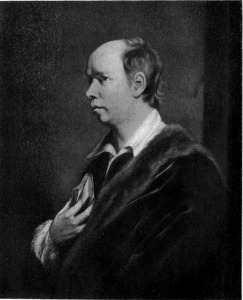
George Berkeley, Irish philosopher whose primary achievement is the advancement of a theory he calls “immaterialism” (later referred to as “subjective idealism” by others), dies in Oxford, England, on January 14, 1753. His theory of immaterialism denies the existence of material substance and instead contends that familiar objects like tables and chairs are only ideas in the minds of perceivers and, as a result, cannot exist without being perceived. Berkeley is also known for his critique of abstraction, an important premise in his argument for immaterialism.

Berkeley is born at his family home, Dysart Castle, near Thomastown, County Kilkenny, the eldest son of William Berkeley, a cadet of the noble family of Berkeley. He is educated at Kilkenny College and attends Trinity College, Dublin, earning a bachelor’s degree in 1704 and completing a master’s degree in 1707. He remains at Trinity College after completion of his degree as a tutor and Greek lecturer.

In 1709, Berkeley publishes his first major work, An Essay towards a New Theory of Vision, in which he discusses the limitations of human vision and advances the theory that the proper objects of sight are not material objects, but light and colour. This foreshadows his chief philosophical work, A Treatise Concerning the Principles of Human Knowledge, in 1710, which, after its poor reception, he rewrites in dialogue form and publishes under the title Three Dialogues between Hylas and Philonous in 1713.

In this book, Berkeley’s views are represented by Philonous, while Hylas embodies the Irish thinker’s opponents, in particular John Locke. Berkeley argues against Sir Isaac Newton‘s doctrine of absolute space, time, and motion in De Motu (On Motion), published in 1721. His arguments are a precursor to the views of Ernst Mach and Albert Einstein. In 1732, he publishes Alciphron, a Christian apologetic against the free-thinkers, and in 1734, he publishes The Analyst, a critique of the foundations of calculus, which is influential in the development of mathematics.

His last major philosophical work, Siris (1744), begins by advocating the medicinal use of tar water and then continues to discuss a wide range of topics, including science, philosophy, and theology. Interest in Berkeley’s work increases after World War II because he tackles many of the issues of paramount interest to philosophy in the 20th century, such as the problems of perception, the difference between primary and secondary qualities, and the importance of language. It sold more copies than any of his other books during his lifetime.

In 1734, Berkeley is appointed Bishop of Cloyne in Ireland, a position he holds until his death. He remains at Cloyne until 1752, when he retires and goes to Oxford to live with his son and supervise his education. He dies soon afterward and is buried in Christ Church Cathedral, Oxford.

The Berkeley portion of the Yale University campus is named after George Berkeley.


Leave a comment

Birth of Edmund Burke, Political Writer & Orator

edmund-burke

Edmund Burke, one of the greatest political writers and orators in history, is born in Arran Quay, Dublin, on January 12, 1729. British statesman, parliamentary orator, and political thinker, he plays a prominent part in all major political issues for about thirty years after 1765 and remains an important figure in the history of political theory.

Burke is the son of a mixed marriage – his father, a solicitor, is Protestant, his mother is Roman Catholic. He enters Trinity College, Dublin in 1744, and studies law at Middle Temple in London in 1750. He fails to secure a call to the bar and instead begins a literary career. He writes several books and is editor of the The Annual Register before entering politics. Burke’s A Vindication of Natural Society is published in 1756 and in 1757 A Philosophical Inquiry into the Origin of Our Ideas of the Sublime and Beautiful appears. Also on March 12, 1757, Burke marries Jane Nugent, the daughter of Christopher Nugent, an Irish Catholic doctor.

His political career begins in 1765 when he becomes the private secretary of one of the Whig leaders in the Parliament of Great Britain, Charles Watson-Wentworth, 2nd Marquess of Rockingham. Burke soon proves to be one of the main characters in the constitutional controversy in Britain under George III, who at the time is trying to establish more actual power for the crown. Although the crown has lost some influence under the first two Georges, one of the major political problems in 18th century Britain is the fact that both the king and Parliament have considerable control over the executive. Burke responds to these affairs in his pamphlet Thoughts on the Cause of the Present Discontents (1770), in which he argues that although George’s actions are legal in the sense that they are not against the letter of the constitution, they are all the more against it in spirit. In the pamphlet Burke elaborates on his famous and new justification of a party, defined as “a body of men united on public principle, which could act as a constitutional link between king and parliament, providing consistency and strength in administration, or principled criticism in opposition.”

Concerning the imperial controversy at the time, Burke argues that the British government has acted in a both unwise and inconsistent manner. Again, Burke claims that Britain’s way of dealing with the colony question is strictly legal and he urges that also “claims of circumstance, utility, and moral principle should be considered, as well as precedent.” In other words, if the British, persistently clinging to their narrow legalism, are not to clash with the ideas and opinions of the colonists on these matters, they will have to offer more respect and regard for the colonies’ cause. Burke calls for “legislative reason” in two of his parliamentary speeches on the subject, On American Taxation (1774) and On Moving His Resolutions for Conciliation with America (1775). However, British imperial policy in the controversy continues to ignore these questions.

Burke’s view of the revolution in France is a much different story. He publishes Reflections on the Revolution in France in 1790, attacking the revolution’s motives and principles. Many writers oppose his views, the most famous being Thomas Paine in his Rights of Man. Burke is a consistent advocate of Catholic emancipation, which politically damages him, but he is never an advocate of self-rule for the Irish.

Edmund Burke dies in London on July 9, 1797. Many quotes from his writings and orations have come down through the years, perhaps one is most applicable to the situation in Ireland today: “All government, indeed every human benefit and enjoyment, every virtue, and every prudent act, is founded on compromise and barter.”


1 Comment

Birth of Joseph Stock, Bishop of Waterford & Lismore

joseph-stock

Joseph Stock, Irish Protestant churchman and writer, Bishop of Killala and Achonry, and afterwards Bishop of Waterford and Lismore, is born at 1 Dame Street, Dublin, on December 22, 1740.

Stock is the son of Luke and Ann Stock. He is educated at Mr. Gast’s school in his native city and at Trinity College, Dublin. He obtains a scholarship in 1759, graduates B.A. in 1761, and gains a fellowship in 1763. Having taken orders, Stock retires on the college living of Conwall in the diocese of Raphoe.

Stock is a classical scholar, a linguist, and a man of general culture. In 1776 he publishes anonymously a life of George Berkeley, subsequently republished in the Biographia Britannica, the only memoir on Berkeley based on contemporary information.

In 1793 Stock is collated prebendary of Lismore, but resigns this preferment in 1795, on his appointment to the head-mastership of Portora Royal School. In January 1798 he succeeds John Porter as Bishop of Killala and Achonry. Shortly after his consecration, and while holding his first visitation at the castle of Killala, the bishop becomes a prisoner of the French army under General Jean Joseph Amable Humbert, when French forces land in support of the Irish Rebellion of 1798. Of his experiences as a prisoner of the French he leaves a partial record in his private diary — August 23 to September 15, 1798 — which is printed in William Hamilton Maxwell‘s History of the Rebellion of 1798, and in two letters to his brother Stephen, published in the Auckland Correspondence.

In 1799 Stock publishes a more complete account of the French invasion of County Mayo in his Narrative of what passed at Killala in the Summer of 1798. By an Eyewitness. The impartiality of this work is said to have been a bar to the bishop’s advancement. He also writes The Book of the Prophet Isaiah in Hebrew and English, with Notes (Bath, 1803) and The Book of Job metrically arranged and newly translated into English, with Notes (Bath, 1805).

Stock also publishes school editions of Tacitus and Demosthenes, and is an active contributor to the controversial theology of his day. He leaves two manuscript volumes of correspondence which are preserved in the library of Trinity College, Dublin. They consist chiefly of letters written from Killala and Waterford between 1806 and 1813 to his son Henry in Dublin.

In 1810 Stock is translated to the diocese of Waterford and Lismore, and dies at Waterford on August 13, 1813.


1 Comment

Execution of “Half-Hanged MacNaghten”

half-hanged-macnaghten

John MacNaghten, Anglo-Irish land owner, gambler, and convicted murderer also known as “Half-Hanged MacNaghten,” is hanged at Strabane jail on December 15, 1761, for his involvement in the killing of Mary Anne Knox, daughter of Andrew Knox MP.

MacNaghten is born into a landed Anglo-Irish family and attends Raphoe Royal school in County Donegal. In 1740, he inherits his family estate worth £500 a year and that same year enters Trinity College, Dublin. MacNaghten marries the sister-in-law of the first earl of Massereene. However, he is quickly enamoured of the extravagant lifestyle of Ascendancy Dublin where he becomes a popular and colourful character. He develops an addiction to gambling and squanders away a large part of his inheritance, running up substantial gaming debts and by 1750 is threatened with arrest.

Following the death of his wife in childbirth, he is appointed to the lucrative post of tax collector for Coleraine but gambles away £800 of the King’s money. His estate is sequestered and by 1760 he is penniless.

He gains support trying to help overcome his addiction from a childhood friend, Andrew Knox. Knox is a wealthy land-owner and Member of Parliament (MP) for Donegal who lives on an estate at Prehen about two miles outside the city of Derry. Mary Ann, Knox’s 15-year-old daughter, is already a substantial heiress, having received some £6,000, and would collect a further legacy if her brother dies without issue. MacNaghten and Mary Ann develop a relationship as the former visits Prehen regularly. Nonetheless by 1761 their relationship has run into difficulties.

The practice of abduction and marriage is prevalent in 18th century Ireland among young men of social standing but with little property and, within their society, it is tolerated. So, on November 10, 1761, MacNaghten and his followers attempt to abduct Mary Ann from a carriage on a family journey to Dublin Parliament with the intention of eloping with her. The attempt fails miserably as MacNaghten shoots and mortally wounds her by mistake. He is taken to Lifford Courthouse in County Donegal, where a court finds MacNaghten guilty of murder and he is sentenced to execution by hanging.

At Strabane jail on December 15, 1761, MacNaghten hurls himself from the gallows with such force that the rope breaks. He has the sympathy of the crowd who believe this is divine intervention for a man distraught with grief over the death of his love. Despite the belief that MacNaghten could not be hanged a second time, he fails to use the cover of a sympathetic crowd to make good his escape. Rather he defies the public mood of the people with the never-to-be-forgotten words, “I vow that no one will ever speak of me as Half-Hanged MacNaghten.” He returns himself to the jurisdiction of the hangman and, with a new rope, is dispatched into the arms of eternity.

John McNaghton is buried at Patrick Street graveyard, Strabane, County Tyrone.


1 Comment

Death of Grace Evelyn Gifford Plunkett

grace-gifford-plunkett

Grace Evelyn Gifford Plunkett, Irish artist and cartoonist who is active in the Republican movement, dies suddenly in her apartment in South Richmond Street, Portobello, Dublin, on December 13, 1955.

Gifford is the second youngest of twelve children born to Frederick Gifford, a solicitor and Roman Catholic, and Isabella Julia Burton Gifford, a Protestant. She grows up in the fashionable suburb of Rathmines in Dublin. The boys are baptised as Catholics and the girls as Protestant, but effectively the children are all raised as Protestants. The girls attend Alexandra College in Earlsfort Terrace, and the boys attend the The High School in Harcourt St.

At the age of 16, Gifford enters the Dublin Metropolitan School of Art, where she studies under the Irish artist William Orpen. Orpen regards Gifford as one of his most talented pupils. He often sketches her and eventually paints her as one of his subjects for a series on “Young Ireland.” Around this time, Gifford’s talent for caricature is discovered and developed. In 1907 she attends a course in Fine Art at the Slade School of Fine Art, London.

Gifford returns to Dublin in 1908 and, with great difficulty, attempts to earn a living as a caricaturist, publishing her cartoons in The Shanachie, Irish Life, Meadowstreet, and The Irish Review, which is edited from 1913 by Joseph Plunkett. She considers emigrating but gives up the idea. Later that year, she meets Plunkett for the first time at the opening of St. Edna’s School, a new bilingual school in Ranelagh, Dublin. Plunkett is a friend of her brother-in-law, another of the future leaders of the 1916 Easter Rising, Thomas MacDonagh, who is married to Gifford’s sister Muriel.

Her growing interest in the Roman Catholic religion leads to the deepening of Gifford and Plunkett’s relationship. Plunkett proposes to her in 1915. She accepts and takes formal instruction in Catholic doctrine. She is received into the Catholic Church in April 1916. The couple plan to marry on Easter Sunday that year, in a double wedding with his sister and her fiancé.

After the Rising, her brother-in-law Thomas MacDonagh is executed by firing squad along with Patrick Pearse and Thomas Clarke on May 3. That same day, Gifford learns that Plunkett is to be shot at dawn. She purchases a ring in a jeweler’s shop in Dublin city centre and, with the help of a priest, persuades the military authorities to allow them to marry. She and Plunkett are married on the night of May 3, 1916, in the chapel of Kilmainham Gaol, a few short hours before he is executed.

Grace Plunkett decides to devote herself through her art to the promotion of Sinn Féin policies and resumes her commercial work to earn a living. She is elected to the Sinn Féin executive in 1917.

During the Irish Civil War, Plunkett is arrested with many others in February 1923 and interned at Kilmainham Gaol for three months. She is released in May 1923.

When the Civil War ends, Plunkett has no home of her own and little money. Like many Anti-Treaty Republicans, she is the target of social ostracism and has difficulty finding work. She moves from one rented apartment to another and eats in the city-centre restaurants. She befriends many people and has many admirers but has no wish to remarry. Her material circumstances improve in 1932 when she receives a Civil List pension from Éamon de Valera‘s Fianna Fáil government. She lives for many years in a flat in Nassau St. with a balcony overlooking the sports ground of Trinity College.

Plunkett’s in-laws refuse to honour her husband’s will, which leaves everything to his widow. Legally, the will is invalid because there is only one of the required two witnesses and also the marriage takes place after the will is made, automatically revoking it. She begins legal proceedings against her in-laws in 1934. The Count and Countess Plunkett settle out of court and Plunkett is paid £700, plus costs.

From the late 1940s onwards, Plunkett’s health declines. In 1950 she is brought to St. Vincent’s Hospital, then in the city centre. She convalesces in a nursing home, which she does not like because it restricts her freedom.

After her sudden death on December 13, 1955, Grace Gifford Plunkett’s body is removed to St. Kevin’s Church, Harrington Street, and among the attendees at her funeral is President Seán T. O’Kelly. She is buried with full military honours near the republican plot in Glasnevin Cemetery.

Grace Gifford Plunkett is the subject of “Grace,” a song written in 1985 by Frank and Seán O’Meara, which becomes popular in Ireland and elsewhere and has been recorded by many musicians.


Leave a comment

Birth of John Stearne, Founder of Irish College of Physicians

john-stearne

John Stearne, Irish academic and founder of the Irish College of Physicians, is born at Ardbraccan, County Meath, on November 26, 1624.

At the time of Stearne’s birth, his grand-uncle, James Ussher, is Bishop of Meath. His father, John Stearne of Cambridge, who settled in County Down and married Mabel Bermingham, a niece of Ussher, is remote relation of Archbishop Richard Sterne.

Stearne enters Trinity College, Dublin at the age of fifteen in 1639, and obtains a scholarship in 1641. On the outbreak of the Irish Rebellion of 1641, Stearne leaves for England, and in 1643 goes to Cambridge, where he studies medicine at Sidney Sussex College, and collects material for his first work, Animi Medela. He remains at Cambridge about seven years, and then spends some time at Oxford, where he is welcomed by Seth Ward, then fellow of Wadham College. He is elected a fellow of Trinity College, Dublin in 1643, a position from which he is ejected by order of the Rump Parliament. Upon his return to Ireland in 1651 he is restored to his fellowship by Henry Cromwell, with whom he is on good terms, and to whom he dedicates one of his books.

In 1656 Stearne is appointed the first Hebrew lecturer in Trinity College, Dublin, receiving the degree of M.D. in 1658, and that of LL.D. in 1660. In 1659 he resigns his fellowship but is appointed to a senior fellowship in 1660, after the Restoration, receiving a dispensation from the statutes of the university respecting celibacy. He becomes in the same year professor of law. During his tenure of these various offices, Stearne practises as a physician in Dublin, obtaining special permission to reside outside the walls of the college.

Stearne is best known as the founder of the Irish College of Physicians. In 1660 he proposes to the university that Trinity Hall, situated in Back Lane, Dublin, then affiliated to the university, of which he has been constituted president in 1654, should be a college of physicians. The arrangement is sanctioned, and Stearne, on the nomination of the provost and senior fellows of Trinity College, in whom the appointment is vested, becomes its first president. No students are to be admitted who do not belong to Trinity College.

In 1662 Stearne is appointed for life professor of medicine in the university. In 1667 a charter is granted to the College of Physicians, under which a governing body of fourteen fellows is constituted, of whom Sir William Petty is one, with Stearne at their head as president for life.

Stearne dies in Dublin on November 18, 1669, and is buried, by his own request, in the chapel of Trinity College, where his epitaph, by his friend Henry Dodwell the elder, describes him as Philosophus, Medicus, summusque Theologus idem.


Leave a comment

Ernest Walton Awarded Nobel Prize for Physics

ernest-walton

Ernest Thomas Sinton Walton, Irish physicist, is awarded the Nobel Prize in Physics on November 15, 1951, for his work with John Cockcroft with “atom-smashing” experiments done at Cambridge University in the early 1930s, and so becomes the first person in history to artificially split the atom.

Walton is born on October 6, 1903, in Abbeyside, Dungarvan, County Waterford to a Methodist minister father, Rev John Walton and Anna Sinton. In those days a general clergyman’s family moves once every three years, and this practice carries Ernest and his family to Rathkeale, County Limerick, and to County Monaghan. He attends day schools in counties Down and Tyrone, and at Wesley College Dublin before becoming a boarder at Methodist College Belfast in 1915, where he excels in science and mathematics.

In 1922, Walton wins scholarships to Trinity College, Dublin for the study of mathematics and science. He is awarded bachelor’s and master’s degrees from Trinity in 1926 and 1927, respectively. Walton receives seven prizes for excellence in physics and mathematics, including the Foundation Scholarship in 1924. Following graduation he is awarded an 1851 Research Fellowship from the Royal Commission for the Exhibition of 1851 and is accepted as a research student at Trinity College, Cambridge, under the supervision of Sir Ernest Rutherford, Director of Cambridge University’s Cavendish Laboratory. At the time there are four Nobel Prize laureates on the staff at the Cavendish lab and a further five are to emerge, including Walton and John Cockcroft. Walton is awarded his PhD in 1931 and remains at Cambridge as a researcher until 1934.

During the early 1930s, Walton and John Cockcroft collaborate to build an apparatus that splits the nuclei of lithium atoms by bombarding them with a stream of protons accelerated inside a high-voltage tube. The splitting of the lithium nuclei produces helium nuclei. This is experimental verification of theories about atomic structure that have been proposed earlier by Rutherford, George Gamow, and others. The successful apparatus, a type of particle accelerator now called the Cockcroft-Walton generator, helps to usher in an era of particle-accelerator-based experimental nuclear physics. It is this research at Cambridge in the early 1930s that wins Walton and Cockcroft the Nobel Prize in physics in 1951.

Walton is associated with the Dublin Institute for Advanced Studies for over 40 years, serving long periods on the board of the School of Cosmic Physics and on the Council of the Institute. Following the 1952 death of John J. Nolan, the inaugural chairman of the School of Cosmic Physics, Walton assumes the role, and serves in that position until 1960, when he is succeeded by John H. Poole.

Although he retires from Trinity College Dublin in 1974, he retains his association with the Physics Department at Trinity up to his final illness. His is a familiar face in the tea-room. Shortly before his death he marks his lifelong devotion to Trinity by presenting his Nobel medal and citation to the college. Ernest Walton dies in Belfast on June 25, 1995, aged 91. He is buried in Dean’s Grange Cemetery, Dún Laoghaire–Rathdown.


Leave a comment

Mary Robinson Elected First Woman President of the Republic

mary-robinson-1

Mary Robinson becomes the first woman to be elected President of the Republic of Ireland on November 7, 1990. She becomes the first Labour Party candidate, the first woman, and the first non-Fianna Fáil candidate in the history of contested presidential elections to win the presidency.

Brian Lenihan, the Tánaiste and Minister for Defence is chosen by Fianna Fáil as their candidate, though he faces a late challenge for the party nomination from another senior minister, John P. Wilson, TD. Lenihan is popular and widely seen as humorous and intelligent. He has delivered liberal policy reform (relaxed censorship in the 1960s) and is seen as a near certainty to win the presidency.

Fine Gael, after trying and failing to get former Taoiseach Garret FitzGerald and former Tánaiste Peter Barry to run, ultimately nominate the former civil rights campaigner and Social Democratic and Labour Party (SDLP) member Austin Currie. Currie is elected to Dáil Éireann in the 1989 general election and has been a minister in Brian Faulkner‘s power-sharing executive in Northern Ireland from 1973–1974. However, Currie has little experience in the politics of the Republic and is widely seen as the party’s last choice, nominated only when no one else is available.

The Labour Party lets it be known that it would for the first time run a candidate. Along with the Workers’ Party, Labour nominates the independent candidate Mary Robinson, SC, a former Labour Party member and senator, and liberal campaigner. Robinson is a former Reid Professor of Law in the Trinity College, Dublin. She is previously involved in the Campaign for Homosexual Law Reform and the campaign to save Wood Quay.

Lenihan enters the race as odds-on favourite. No Fianna Fáil candidate has ever lost a presidential election. However, Lenihan is derailed when he confirms in an on-the-record interview with freelance journalist and academic researcher Jim Duffy that he has been involved in controversial attempts to pressurise the President, Patrick Hillery, over a controversial parliamentary dissolution in 1982. As a result of the contrast between his public denials during the campaign and his confirmation during an earlier interview recorded in May, he is dismissed from the Irish government.

At this point a cabinet colleague, Pádraig Flynn, launches a controversial personal attack on Mary Robinson “as a wife and mother,” an attack that is itself attacked in response as “disgraceful” on live radio by Michael McDowell, a senior member of the Progressive Democrats, then in coalition with Fianna Fáil and up to that point supporting Lenihan’s campaign. Flynn’s attack is a fatal blow to Lenihan’s campaign, causing many female supporters of Lenihan to vote for Robinson in a gesture of support.

Lenihan nonetheless receives a plurality of first-choice votes. Mary Robinson beats Austin Currie, forcing Fine Gael’s candidate into third place. Under Ireland’s system of single transferable vote, Robinson receives over 75% of the transfers when Austin Currie is eliminated, beating Lenihan into second place and becoming the seventh President of Ireland.

While the role of the presidency in day-to-day politics is a very limited one, the Robinson presidency is regarded by many observers as a watershed in Irish society, symbolising the shift away from the conservative ultra-Catholic male-dominated Ireland which existed up until the end of the 1980s to the more liberal society symbolised by Robinson.

Robinson is generally credited with raising the profile of the office of president, which has been considered little more than an honorary figurehead position under her predecessors. Prior to Mary Robinson’s presidency it was not unusual to hear commentators advocating the abolition of the office of president, a viewpoint that is almost never advanced nowadays.


Leave a comment

Death of Robert Mallet, the Father of Seismology

robert-mallet

Robert Mallet, geophysicist, civil engineer, and inventor who distinguishes himself in research on earthquakes and is sometimes called the Father of Seismology, dies on November 5, 1881.

Mallet is born in Dublin on June 3, 1810, the son of factory owner John Mallet. He is educated at Trinity College, Dublin, entering it at the age of 16 and graduating in science and mathematics in 1830 at the age of 20.

Following his graduation, he joins his father’s iron foundry business and helps build the firm into one of the most important engineering works in Ireland, supplying ironwork for railway companies, the Fastnet Rock lighthouse, and a swing bridge over the River Shannon at Athlone. He also helps manufacture the characteristic iron railings that surround Trinity College, and which bear his family name at the base.

Mallet is elected to the Royal Irish Academy in 1832 at the early age of 22. He also enrolls in the British Association for the Advancement of Science in 1835 which helps finance much of his research in seismology.

In 1838 he becomes a life member of the Royal Geological Society of Ireland and serves as its President from 1846–1848. From 1848–1849 he constructs the Fastnet Rock lighthouse, southwest of Cape Clear.

On February 9, 1846, he presents to the Royal Irish Academy his paper On the Dynamics of Earthquakes, which is considered to be one of the foundations of modern seismology. He is also credited with coining the word “seismology” and other related words which he uses in his research. He also coins the term epicentre.

From 1852 to 1858, he is engaged in the preparation of his work, The Earthquake Catalogue of the British Association (1858) and carries out blasting experiments to determine the speed of seismic propagation in sand and solid rock.

On December 16, 1857, the area around Padula, Italy is devastated by the Great Neapolitan earthquake which causes 11,000 deaths. At the time it is the third largest known earthquake in the world and has been estimated to have been of magnitude 6.9 on the Richter Scale. Mallet, with letters of support from Charles Lyell and Charles Darwin, petitions the Royal Society of London and receives a grant of £150 to go to Padula and record at first hand the devastation. The resulting report is presented to the Royal Society as the Report on the Great Neapolitan Earthquake of 1857. It is a major scientific work and makes great use of the then new research tool of photography to record the devastation caused by the earthquake. In 1862, he publishes the Great Neapolitan Earthquake of 1857: The First Principles of Observational Seismology in two volumes. He brings forward evidence to show that the depth below the Earth’s surface, from where the impulse of the Neapolitan earthquake originated, is about 8–9 geographical miles.

One of Mallet’s papers is Volcanic Energy: An Attempt to develop its True Origin and Cosmical Relations, in which he seeks to show that volcanic heat may be attributed to the effects of crushing, contortion, and other disturbances in the crust of the earth. The disturbances leading to the formation of lines of fracture, more or less vertical, down which water would find its way, and if the temperature generated be sufficient volcanic eruptions of steam or lava would follow.

Mallet is elected Fellow of the Royal Society in 1854, and in 1861 moves to London, where he becomes a consulting engineer and edits The Practical Mechanic’s Journal. He is awarded the Telford Medal by the Institution of Civil Engineers in 1859, followed by the Cunningham Medal of the Royal Irish Academy for his research into the theory of earthquakes in 1862, and the Wollaston Medal of the Geological Society of London in 1877, the Geological Society’s highest award.

Blind for the last seven years of his life, Robert Mallet dies at Stockwell, London, on November 5, 1881, and is buried at West Norwood Cemetery.


Leave a comment

Birth of Pianist Charles Lynch

charles-lynch

Charles Edgeworth Cagney Lynch, Irish pianist who premiers works by several important 20th-century composers, is born in Parkgariff, County Cork, on October 22, 1906.

Lynch’s father is a British army colonel and his mother comes from a well-known Cork business dynasty, the Suttons. While still a young boy, the family moves to Greenock in western Scotland and it is there, at the Tontine Hotel, that the young pianist gives his first public recital at the age of nine. When he is fifteen, he wins a scholarship to the Royal Academy of Music in London, where he studies under York Bowen and, later, Egon Petri.

Lynch becomes a popular recitalist in London during the 1920s and 1930s. He gives the first performance in England of Sergei Rachmaninoff‘s Piano Sonata No. 2 in B flat minor, having been coached beforehand by the composer. Sir Arnold Bax‘s Fourth Piano Sonata (1932) is dedicated to the 26-year-old Lynch, whom Bax later describes as “Ireland’s most imaginative pianist.” In addition to concert recitals he broadcasts regularly with the BBC and, in 1937, acts as assistant to Sir Thomas Beecham at Covent Garden. Lynch is the Ballet Rambert‘s pianist for many years, having helped Marie Rambert form the company.

A pacifist, Lynch returns to Ireland following the outbreak of World War II, where he becomes the country’s premier concert pianist. During this phase of his career he premiers a number of works by leading Irish composers, including Brian Boydell‘s Sonata for Cello and Piano (1945) and Sean Ó Riada‘s Nomos No. 4 (1959). Lynch also performs in the world première of English composer Ernest John Moeran‘s Cello Sonata in A minor, given in Dublin in May 1947. He is joined by the composer’s wife, cellist Peers Coetmore.

In February 1971 at Trinity College, Dublin, he plays the entire set of Franz Liszt‘s transcriptions of Beethoven’s symphonies over four successive Saturday evenings.

Lynch continues to give public recitals throughout Ireland until shortly before his death at the age of 77. He also lectures in music at University College Cork and gives masterclasses at the Cork School of Music. In 1982, Lynch receives a doctorate in music from the National University of Ireland.

Lynch’s technique is remarkable for the stillness with which he sits, making the most difficult of music seem almost technically unremarkable. His recorded legacy is small, but includes music by Samuel Barber, Ernest John Moeran‘s Violin Sonata (with Geraldine O’Grady, violin) as well as music by Irish composers such as Aloys Fleischmann.

Toward the end of his life he lives in very reduced circumstances. He dies in Cork on September 15, 1984 at St. Finbarr’s Hospital and is buried near Sir Arnold Bax in St. Finbarrs Cemetery, Glasheen Road, Cork.