seamus dubhghaill

Promoting Irish Culture and History from Little Rock, Arkansas, USA


Leave a comment

Birth of Thomas Fitzsimons, U.S. Merchant & Statesman

Thomas Fitzsimons, Irish-born American Founding Father, merchant, banker, and politician, is born in Ireland on October 11, 1741. His birthplace is variously given as Nobber, County Wicklow; Limerick, County Limerick; the north of Ireland; and Edenderry, County Offaly. He represents Pennsylvania in the Continental Congress, the Constitutional Convention and the United States House of Representatives.

In the mid-1750s, Fitzsimons’s family immigrates to Philadelphia, Pennsylvania, where his father dies soon thereafter. He has enough education that he begins work as a clerk in a mercantile house. He marries Catherine Meade on November 23, 1761, and forms a business partnership with her brother George. Their firm, which specializes in the West Indies trade, operates successfully for over 41 years.

The firm is soon hit by the new revenue measures created to help support the finances of the British Empire, including the much reviled Stamp Act of 1765. Concerned with these ideas, Fitzsimons becomes active in the Irish merchant community in Philadelphia. He is a founding member of the Friendly Sons of St. Patrick in 1771 and later, in 1774, a steering committee organized to protest the Coercive Acts.

When Pennsylvania begins mobilizing and organizing a militia to fight the British, Fitzsimons is soon involved. He serves as captain of a company of home guards under the command of Colonel John Caldwalader. Initially his company serves as part of the soldiers who man posts along the New Jersey coast. His unit later serves as part of the reserve at the Battle of Trenton in 1776. Later in the war, he serves on the Pennsylvania Council of Safety and heads a board to oversee the newly formed Pennsylvania Navy.

Fitzsimons enters active politics as a delegate to the Continental Congress in 1782 and 1783. He is a member of the Pennsylvania House of Representatives from 1786 until 1795. He is also a delegate to the U.S. Constitutional Convention in 1787. Although not a leading member of that convention, he supports a strong national government, the end of slavery, the United States Congress‘s powers to impose a tariff on imports and exports, the granting the House of Representatives, and power in equal to the United States Senate in making treaties. He is one of only two Catholic signers of the Constitution of the United States, the other being Daniel Carroll of Maryland.

After the Constitution is established, Fitzsimons serves in the first three sessions of the House of Representatives as a Federalist, where he favors protective tariffs and a strong navy, co-drafting the Naval Act of 1794 authorizing the original six frigates of the United States Navy. He fails to win re-election in 1794. This is partially attributed to public opinion turning against the Federalist Party over the forceful suppression of the Whiskey Rebellion. Although he never holds elective office again, he serves in 1798 as head of the committee of merchants overseeing the subscription-loan to build a warship at private expense for use in the Quasi-War.

In 1796, Fitzsimons, along with James Innes of Virginia, is appointed by President John Adams to serve as one of two American members on the five-man debt commission charged under Article VI of the Jay Treaty with examining the claims of British subjects unable to collect debts incurred by Americans prior to the American Revolution. Fitzsimons, Innes and Samuel Sitgreaves, who replaces Innes upon the latter’s death, become annoyed with the arguments used by their British counterparts to inflate the claims total. Fitzsimons and Sitgreaves angrily and permanently secede from the board in July 1799. The claims are eventually disposed of by a lump-sum payment, agreed upon by United States Minister to Britain Rufus King with British Foreign Secretary Robert Banks Jenkinson and approved by President Thomas Jefferson and the Senate in 1802.

While withdrawing from politics, Fitzsimons remains active in civic and business affairs. He serves as president of Philadelphia’s Chamber of Commerce, as a trustee of the University of Pennsylvania, Director of the Delaware Insurance Company and a director of the Bank of North America from 1781–1803. He is a founder of the bank and supports efforts to found Georgetown College. He also helps found the Insurance Company of North America.

Fitzsimons dies on August 26, 1811, in Philadelphia, where he is buried in the cemetery of St. Mary’s Roman Catholic Church, which is in present-day Independence National Historical Park.


Leave a comment

The Battle of Roanoke Island

The Battle of Roanoke Island, an amphibious operation of the American Civil War, is fought on February 7-8, 1862, with Irishmen present on both sides of the battle.

The opening phase of what comes to be called the Burnside Expedition, the Battle of Roanoke Island is fought in the North Carolina Sounds, a short distance south of the Virginia border. The attacking force consists of a flotilla of gunboats of the Union Navy drawn from the North Atlantic Blockading Squadron, commanded by Flag Officer Louis M. Goldsborough, a separate group of gunboats under Union Army control, and an army division led by Major General Ambrose Burnside. The defenders are a group of gunboats from the Confederate States Navy, termed the Mosquito Fleet, under Captain William F. Lynch, and about 2,000 Confederate soldiers commanded locally by Brigadier General Henry A. Wise. The defense is augmented by four forts facing on the water approaches to Roanoke Island, and two outlying batteries. At the time of the battle, Wise is hospitalized, so leadership falls to his second in command, Colonel Henry M. Shaw.

During the first day of the battle, the Federal gunboats and the forts on shore engage in a gun battle, with occasional contributions from the Mosquito Fleet. Late in the day, Burnside’s soldiers go ashore unopposed. They are accompanied by six howitzers manned by sailors. As it is too late to fight, the invaders go into camp for the night.

On the second day, February 8, the Union soldiers advance but are stopped by an artillery battery and accompanying infantry in the center of the island. Although the Confederates believe that their line is safely anchored in impenetrable swamps, they are flanked on both sides and their soldiers are driven back to refuge in the forts. The forts are taken in reverse. With no way for his men to escape, Col. Shaw surrenders to avoid pointless bloodshed.

Aside from the men who are taken into captivity, casualties are rather light by American Civil War standards. The Federal forces lose 37 killed, 214 wounded, and 13 missing. The Confederates lose 23 killed, 58 wounded, and 62 missing.

Roanoke Island remains in Union control for the rest of the war. Immediately after the battle, the Federal gunboats pass the now-silent Confederate forts into Albemarle Sound and destroy what is left of the Mosquito Fleet at the Battle of Elizabeth City. Burnside uses the island as staging ground for later assaults on New Bern and Fort Macon, resulting in their capture. Several minor expeditions take other towns on the sounds. The Burnside Expedition ends in July, when its leader is called to Virginia to take part in the Richmond campaign.

After Burnside leaves, North Carolina ceases to be an active center of the war. With only one or two exceptions, no notable military actions take place until the last days of the conflict, when the Second Battle of Fort Fisher closes Wilmington, the last open port in the Confederacy.


Leave a comment

Birth of “Buckey” O’Neill, Sheriff, Editor & Member of the Rough Riders

William Owen “Buckey” O’Neill, a sheriff, newspaper editor, miner, politician, Georgist, gambler and lawyer, mainly in Arizona, is born the first of four children to John Owen, an Irish immigrant, and Mary O’Neill (nee McMenimin) in St. Louis, Missouri, on February 2, 1860.

O’Neill’s father most likely arrived in the United States during the 1850s. By Spring 1862, the family has moved to Philadelphia, Pennsylvania. When the American Civil War begins, his father joins the 116th Pennsylvania Volunteers. On December 13, 1862, during the Battle of Fredericksburg, he is wounded and serves the rest of the war as a member of the Invalid Corps. The younger O’Neill is educated at Gonzaga College High School and Georgetown Law School.

During the first part of 1879, O’Neill responds to an item in The Washington Star calling for men to migrate to the Arizona Territory. He arrives in Phoenix, riding a burro, in September of the same year. Upon his arrival in town, he is hired as a printer by the Phoenix Herald. By late 1880, he has become bored with the position and seeks to experience the “Real West” in the boomtown of Tombstone, Arizona.

In Tombstone, O’Neill takes the opportunity to experience the local saloons before taking a job with The Tombstone Epitaph. By mid-1881 he again feels a wanderlust and leaves town. Where he goes next is unknown, one story having him journey to Hawaii, unlikely due to the travel time, and then traveling through California. He is known to visit Santa Fe before going to Albuquerque, New Mexico and works briefly as a court reporter. In early 1882, he is back in Phoenix working as a deputy to Marshal Henry Garfias. Several weeks later he moves to Prescott, his home for the next fifteen years.

In Prescott O’Neill rapidly progresses in his journalistic career. Starting as a court reporter, he soon founds his own newspaper, Hoof and Horn, a paper for the livestock industry. He becomes the editor of the Arizona Miner weekly newspaper in 1884 to February 1885.

In 1886, O’Neill becomes captain of the Prescott Grays, the local unit of the Arizona Militia. On February 5, 1886, Dennis Dilda, a convicted murderer, is hanged. O’Neill and the Prescott Grays stand honor guard for the event. When the trap drops, O’Neill faints, which causes him severe embarrassment. He later writes a story called “The Horse of the Hash-Knife Brand.” In it, a member of a posse admits to nearly fainting at the hanging of a horse thief.

On April 27, 1886, O’Neill marries Pauline Schindler. They have a son, but he dies shortly after being born premature.

In 1888, while serving as Yavapai County, Arizona judge, O’Neill is elected county sheriff, running on the Republican ticket.

On March 20, 1889, four masked men, William Sterin, John Halford, Daniel Harvick, and J. J. Smith, rob the Atlantic and Pacific Railroad passenger train in Canyon Diablo. A four-man posse, made up of O’Neill, Jim Black, Carl Holton, and Ed St. Clair, is soon formed and they take off after the robbers. On April 1, the posse catches up with the robbers. After exchanging rifle shots, the posse captures the four men. During the fight, no men are injured, but one of the robber’s horses is killed. All four are sent to the Yuma Territorial Prison but are pardoned eight years later. There is unfounded speculation that, in 1898, Sterin enlists under a false name in the Rough Riders and is killed in action in the Battle of San Juan Hill.

After his term is up, O’Neill is unanimously elected mayor of Prescott. In 1894 and 1896 he runs for Delegate to the United States House of Representatives from Arizona Territory, running on the People’s Party ticket.

In 1897, after years of speculating on mines, O’Neill sells a group of claims near the Grand Canyon to Chicago backers, who also propose building a railroad from Williams to the mines and the South Rim. He becomes a director of the development companies, and soon begins railroad surveys, mine developments, and building a smelter. He also uses profits to begin building rental buildings, leading him to financial independence.

O’Neill also helps introduce a bill allowing women to vote in municipal elections in 1897. Although he convinces his Populist friends to sign the bill into law, the high court dismisses the bill in 1899.

In 1898, war breaks out between the United States and Spain. O’Neill joins Theodore Roosevelt‘s Rough Riders and becomes Captain of Troop A. First Lieutenant Frank Frantz serves as O’Neil’s Deputy Commander. Along with Alexander Brodie and James McClintock, he tries to make an entire regiment made up of Arizona cowboys. Eventually though, only three troops are authorized.

The Rough Riders land at Daiquirí on June 22, 1898. Two Buffalo Soldiers of the 10th Cavalry Regiment fall overboard. Upon seeing this, O’Neill jumps into the water in full uniform and sabre. He searches for the men for two minutes before having to come up for breath.

On June 25, 1898, the Rough Riders see their first action. O’Neill leads his men at the front of the line in the Battle of Las Guasimas, capturing the Spanish flank. During the action he sees several men, who he believes to be Spaniards, across the road from him, and shouts “Hostiles on our right, fire at will!” He learns after the firing ceases that the men he exchanged shots with were Cuban rebels.

On July 1, 1898, at about 10:00 a.m., the Rough Riders and the 10th Cavalry are stationed below Kettle Hill. The Spaniards, who are on top of the hill, pour Mauser rifle fire down on the Americans. O’Neill is killed in action.

Before the fighting is over, O’Neill’s men bury him on the slope of San Juan Hill. After the war, his family and friends enlist help from the United States Department of War to find and recover his body. After six men fail to find the site, the War Department sends Henry Alfred Brown, the Rough Riders’ Chaplain, to find him. Despite it being eight months since O’Neill’s death, Chaplain Brown locates the site within two hours after arriving in Santiago de Cuba. The well-preserved body is exhumed, placed in a coffin, and returned to the United States on the Army transport Crook. He is buried at Arlington National Cemetery, in Arlington County, Virginia. The epitaph on his gravestone reads, “Who would not die for a new star on the flag?”

On July 3, 1907, a monument by sculptor Solon Borglum is dedicated to O’Neill and the other Rough Riders in their memory in Prescott, Arizona. Seven thousand people gather to witness the unveiling.

O’Neill Spring, in the Pumphouse Wash wetlands south of Flagstaff, Arizona, is named after O’Neill, as is O’Neill Butte in the Grand Canyon and Bucky O’Neill Hill in Bisbee, Arizona. Bucky (sic) O’Neill is a main character in the TNT movie Rough Riders, portrayed by Sam Elliott.


2 Comments

Birth of Patrick Guiney, American Civil War Soldier

Patrick Robert Guiney, American Civil War soldier, is born in Parkstown, County Tipperary, on January 15, 1835.

Guiney is the second and eldest surviving son of James Roger Guiney, who is descended from Jacobites, and Judith Macrae. His father, impoverished after a failed runaway marriage, brings with him on his second voyage to New Brunswick his favourite child Patrick, not yet six years old. After some years, his mother and younger brother, William, rejoin her husband, recently crippled by a fall from his horse. They settle in Portland, Maine. The young Guiney works as a wheel boy in a rope factory, and at the age of fourteen apprenticed to a machinist in Lawrence, Massachusetts, but stays only a year and a half before returning to Portland.

Guiney hopes to better himself through education and attends the public grammar school. He matriculates at the College of the Holy Cross in Worcester, Massachusetts. His depleting finances cause him to leave after about a year, despite the fact that the college president offers to make some arrangement for him to stay, which his honor would not allow him to accept. His book-loving father having meanwhile died, he goes to study for the Bar under Judge Walton, and is admitted in Lewiston, Maine, in 1856, taking up the practice of criminal law.

In politics he is a Republican. For the Massachusetts Society for the Prevention of Cruelty to Animals, he wins its first suit. In 1859 he marries in the Cathedral of the Holy Cross, Boston, Janet Margaret Doyle, related to James Warren Doyle, Bishop of Kildare and Leighlin. They have one son, who dies in infancy, and one daughter, the poet and essayist Louise Imogen Guiney. Home life in Roxbury and professional success are cut short by the outbreak of the American Civil War.

Familiar with the manual of arms, Guiney enlists for example’s sake as a private, refusing a commission from Governor John A. Andrew until he has worked hard to help recruit the 9th Massachusetts Infantry Regiment. By June 1861, he is a captain. In July 1862, the first colonel having died from a wound received in action, Lieutenant Colonel Guiney succeeds him to the command. He wins high official praise, notably for courage and presence of mind at the Battle of Gaines’ Mill in Hanover County, Virginia. Here, after three successive color-bearers had been shot down, he himself reportedly seizes the flag, throws aside coat and sword-belt, rises white-shirted and conspicuous in the stirrups, inspires a final rally, and turns the fortune of the day.

Guiney fights in over thirty engagements, including the Battle of Antietam, the Battle of Fredericksburg, and the Battle of Chancellorsville.

The 9th Massachusetts is present at Gettysburg, Pennsylvania, in second brigade first division V Corps on July 1, 1863. Col Jacob B. Sweitzer the brigade commander, detaches Guiney’s regiment for picket duty. Consequently, the regiment misses the second day’s fighting at the Battle of Gettysburg.

In 1864, through the Battle of the Wilderness, Guiney frequently has been in command of his brigade, the second brigade, first division, V Corps. After many escapes from dangerous combats without serious injury, he is shot in the face by a sharpshooter at the Battle of the Wilderness on May 5, 1864. The Minié ball destroys his left eye, and inflicts, it is believed, a fatal wound. During an interval of consciousness, however, he insists on an operation which saves his life. He is honorably discharged and mustered out of the U.S. Volunteers on June 21, 1864, just before the mustering out of his old regiment.

On February 21, 1866, President Andrew Johnson nominates Guiney for the award of the honorary grade of brevet brigadier general, to rank from March 13, 1865, for gallant and meritorious services during the war. The U.S. Senate confirms the award on April 10, 1866.

Kept alive for years by nursing, Guiney runs unsuccessfully for the United States Congress on a sort of “Christian Socialist” platform, is elected assistant district attorney (1866–70), and acts as consulting lawyer (no longer being able to plead) on many locally celebrated cases.

Guiney’s last exertions are devoted to the defeat of the corruption and misuse of the Probate Court of Suffolk County, Massachusetts, of which he had become registrar (1869–77). He dies suddenly on March 21, 1877, in Boston and is found kneeling against an elm in the little park near his home. General Guiney is Commandant of the Loyal Legion, Major-General Commandant of the Veteran Military League, member of the Charitable Irish Society of Boston, and one of the founders and first members of the Catholic Union of Boston. He also publishes some literary criticism, a few graphic prose sketches and some verse.


Leave a comment

Death of James Joseph Quinlan, Irish-Born Union Army Officer

James Joseph Quinlan, Union Army officer during the American Civil War and Medal of Honor winner, dies in Queens, New York, on August 29, 1906.

Quinlan is born in Clonmel, County Tipperary on September 13, 1833.

Quinlan is appointed as Major of the 88th New York Infantry in December 1861. He becomes the regiment’s Lieutenant Colonel in October 1862 and is discharged in February 1863.

Quinlan receives America’s highest military decoration, the Medal of Honor, on February 18, 1891, for his actions at the Battle of Savage’s Station in Henrico County, Virginia, the fourth of the Seven Days Battles (Peninsula Campaign). His citation states he “led his regiment on the enemy’s battery, silenced the guns, held the position against overwhelming numbers, and covered the retreat of the Second Army Corps.”

James Joseph Quinlan dies on August 29, 1906, in Queens, New York and is buried at Calvary Cemetery, Woodside, Queens County, New York City.


Leave a comment

Death of Charles Cunningham Boycott, Land Agent

Charles Cunningham Boycott, land agent and the man who gave the English language the word “boycott,” dies in Flixton, Suffolk, England, on June 19, 1897.

Boycott is born on March 12, 1832, at Burgh St. Peter, Norfolk, England, eldest surviving son of William Boycatt (1798–1877), rector of Wheatacrebury, Norfolk, and Elizabeth Georgiana Boycatt (née Beevor). The family name is changed to Boycott by his father in 1862. Educated at a boarding school in Blackheath, London, and the Royal Military Academy, Woolwich, he is commissioned ensign in the 39th (Dorsetshire) Regiment of Foot on February 15, 1850, and serves briefly in Ireland. He sells his commission on December 17, 1852, having attained the rank of captain, marries Annie Dunne of Queen’s County (County Laois) in 1852, and leases a farm in south County Tipperary.

In 1855, Boycott leaves for Achill Island, County Mayo, where he sub-leases 2,000 acres and acts as land agent for a friend, Murray McGregor Blacker, a local magistrate. He settles initially near Keem Strand but after some years builds a fine house near Dooagh overlooking Clew Bay. He clashes with local landowners and agents and is regularly involved in litigation. Twice summonsed unsuccessfully for assault (1856, 1859), he is involved (1859–60) in a bitter dispute with a land agent over salvage rights for shipwrecks, one of the few lucrative activities on the island. Achill’s remoteness and the difficulties of wresting a living from its harsh environment adds a roughness to the island’s social relations and probably aggravates Boycott’s tendency to high-handedness.

In 1873, Boycott inherits money and moves to mainland County Mayo, leasing Lough Mask House near Ballinrobe and its surrounding 300 acres. He also becomes agent for John Crichton, 3rd Earl Erne‘s neighbouring estate of 1,500 acres, home to thirty-eight tenant farmers paying rents of £500 a year, of which he receives 10 per cent as agent. He also serves as a magistrate and is unpopular because of his brusque and authoritarian manner, and for denying locals such traditional indulgences as collecting wood from the Lough Mask estate or taking short cuts across his farm. In April 1879, he purchases the 95-acre Kildarra estate between Claremorris and Ballinlough and an adjoining wood for £1,125, taking out a mortgage of £600 which stretches his finances.

Boycott is no brutal tyrant, but he is aloof, stubborn, and pugnacious, and believes that the Irish peasantry is prone to idleness and require firm handling. Such qualities and beliefs are unremarkable enough, but in the peculiar circumstances of the land war in County Mayo, they are enough to catapult this rather ordinary man to worldwide notoriety.

In autumn 1879, concerted land agitation begins in County Mayo, and on August 1, 1879, Boycott receives a notice threatening his life unless he reduces rents. He ignores it and evicts three tenants, which embitter relations on the estate. Lough Mask House is placed under Royal Irish Constabulary (RIC) surveillance beginning in November 1879. In August 1880, his farm labourers, encouraged by the Irish National Land League, strike successfully for a wage increase from 7s. –11s. to 9s. –15s. Since the harvest is poor, Lord Erne allows a 10 per cent rent abatement. But in September 1880, when Boycott demands the rent, most tenants seek a 25 per cent abatement. Lord Erne refuses, and on September 22, Boycott attempts to serve processes against eleven defaulters. Servers and police are attacked by an angry crowd of local women and forced to take refuge in Boycott’s house. Almost immediately he is subjected to the ostracism against land grabbers advocated by Charles Stewart Parnell in his September 19 speech at Ennis, County Clare. This weapon proves as devastating against an English land agent as an Irish land-grabber. His servants leave him, labourers refuse to work his land, his walls and fences are destroyed, and local traders refuse to do business with him. He is jeered on the roads, is hissed and hustled by hostile crowds in Ballinrobe, and requires police protection.

The campaign against Boycott is largely orchestrated by Fr. John O’Malley, a local parish priest and president of the Neale branch of the Irish National Land League. It is probably O’Malley who coins the term “boycott” as an alternative to the word “ostracise,” which he believes would mean little to the local peasantry. Propagated by O’Malley’s friend, the American journalist, James Redpath, it is adopted by advocates and opponents alike.

On October 22, 1880, before his story breaks on the world, Boycott gives evidence of his treatment to the Bessborough Commission in Galway. He publicises his plight in an October 18, 1880, letter to The Times, and in a long interview with The Daily News on October 24, which is reprinted in Irish unionist newspapers and arouses considerable sympathy for him. Although he rarely uses his former military rank, he becomes universally known as “Captain Boycott,” since it suits both sides to portray him as someone of social standing. Letters of support appear in unionist papers and the Belfast News Letter sets up a “Boycott Relief Fund” and proposes a relief expedition, portraying Boycott as a peaceable English gentleman unjustly subjected to intimidation.

The prospect of hundreds of armed loyalists descending on County Mayo alarms the government, who announced on November 8 that they will provide protection for a small group of labourers to harvest Boycott’s crops. On November 12, fifty-seven loyalists from counties Cavan and Monaghan, “the Boycott Relief Expedition,” arrive at Lough Mask with an escort of almost a thousand troops. After harvesting Boycott’s crops, they leave on November 26. The entire operation costs £10,000 – about thirty times the value of the crops. Although the expedition passes off largely without incident, it focuses international media attention on the affair and establishes the word “boycott” in English and several other languages as a standard term for communal ostracism.

On November 27, Boycott and his wife go to the Hammam hotel, Dublin, where he receives death threats. On December 1, he travels to London and then to the United States (March–May 1881) to see Murray McGregor Blacker, the friend from his time on Achill Island who has since settled in Virginia. In an interview with the New York Herald, he criticises the liberal government’s weakness toward the Land League and claims that the Irish land question is an intractable problem that can only be solved in the long term by emigration and industrialisation.

Boycott returns to Lough Mask on September 19, 1881, and at an auction in Westport is mobbed and burned in effigy. This, however, is the last outburst of hostility against him, and as the land agitation wanes so does his unpopularity. Although unsuccessful in efforts to win compensation from the government, he receives a public subscription of £2,000. He remains in County Mayo as Lord Erne’s agent until February 1886, when he obtains the post of land agent for Sir Hugh Adair in Flixton, Suffolk, but he keeps the small Kildarra estate, where he continues to holiday. On December 12, 1888, he gives evidence of his treatment to the parliamentary commission on “Parnellism and crime.”

After suffering from ill-health for some years, Boycott dies at Flixton on June 19, 1897, and is buried in the churchyard of Burgh St. Peter. A British-made film, Captain Boycott (1947), stars Cecil Parker in the title role.

(From: “Boycott, Charles Cunningham” by James Quinn, Dictionary of Irish Biography, http://www.dib.ie, October 2009 | Photo credit: Granger NYC/© Granger NYC/Rue des Archives)


1 Comment

6th Louisiana Infantry Regiment Organized into Confederate Service

A lesser-known Irish Brigade of the American Civil War, the 6th Louisiana Infantry Regiment, is mustered into Confederate service at Camp Moore on June 4, 1861. It is part of the Louisiana Tigers. At a time when an estimated 20,000 Irish live in New Orleans, it is not surprising that the 6th Louisiana comprises a high percentage of Irish soldiers. It begins its service with 916 men and ends with 52 after surrendering after the Battle of Appomattox Court House in April 1865.

The regiment’s 916 men are organized into 10 companies designated with the letters A–I and K. Most of the companies are organized in Orleans Parish, although Company D is from Tensas Parish, Company C from St. Landry Parish, and Company A from Union Parish and Sabine Parish. The unit’s first colonel is Isaac Seymour, its first lieutenant colonel is Louis Lay, and its first major is Samuel L. James. Over half of the unit’s men with known places of birth are born outside of the United States, primarily from Ireland. In its early days, the unit has a reputation for being disorderly and hard to control. Seymour has to publicly rebuke several officers in late 1861 for drunkenness.

Sent to the fighting in Virginia and stationed at Centreville, the regiment guards supplies and is not involved in the First Battle of Bull Run on July 21, 1861. In August, it is added to a brigade commanded by William H. T. Walker consisting of the 7th Louisiana Infantry Regiment, the 8th Louisiana Infantry Regiment, the 9th Louisiana Infantry Regiment, and the 1st Louisiana Special Battalion. The brigade spends the next winter in the vicinity of Centreville, and Orange Court House before being transferred to the Shenandoah Valley in early 1862, where it fights under Stonewall Jackson. James resigns on December 1, 1861, and is replaced by George W. Christy, who is dropped from the regiment’s rolls on May 9, 1862, and replaced with Arthur MacArthur. Lay resigns on February 13 and is replaced by Henry B. Strong.

On May 23, 1862, the regiment sees action in the Battle of Front Royal and captures two Union battle flags in a skirmish at Middletown the next day. May 25 sees the regiment engage in the First Battle of Winchester, where MacArthur is killed, and on June 9 it fights in the Battle of Port Republic, in which 66 of its men are killed or wounded. MacArthur’s role as major is then filled by Nathaniel G. Offutt. After Port Republic, Jackson’s men are transferred to the Virginia Peninsula to take part in the Seven Days Battles, and the 6th Louisiana skirmishes at Hundley’s Corner on June 26 before fighting in the Battle of Gaines’ Mill the next day. Seymour leads the brigade at Gaines’ Mill, since Richard Taylor is ill. The Louisianans, known as the Louisiana Tigers, become bogged down in Boatswain’s Swamp, are repulsed with loss, and withdraw from the battle. Seymour is killed during the charge and is replaced by Strong. Offutt takes over Strong’s position as lieutenant colonel, and William Monaghan becomes colonel.

Moving north with Jackson in August, the regiment fights in the Manassas Station Operations at Bristoe Station, Virginia on August 26 and Kettle Run, Virginia the following day. At Kettle Run, the regiment holds off a Union advance while the 8th Louisiana burns a bridge, and then the two regiments, joined by the 60th Georgia Infantry Regiment and the 5th Louisiana Infantry Regiment, fight against the Union Army‘s Excelsior Brigade and the brigade of Colonel Joseph Bradford Carr. It then fights in the Second Battle of Bull Run on August 29-30, 1862. At Second Bull Run, it is part of the brigade of Colonel Henry Forno. On the first day of the battle, Forno’s brigade helps repulse James Nagle‘s Union brigade. On the morning on 30 August 30, it is sent to the rear for supplies and does not rejoin the fighting that day.

After Second Bull Run, the 6th Louisiana fights in the Battle of Chantilly on September 1, 1862, where the Louisiana brigade is routed with the 5th, 6th, 8th, and 14th Louisiana regiments suffering the heaviest casualties in the Confederate army, and on September 17 sees action in the Battle of Antietam. At Antietam, the regiment is part of Harry T. Hays‘s brigade. During the fighting, Hays’s brigade charges toward the Miller’s Cornfield and is cut to pieces, with the brigade suffering 61 percent casualties. The 6th Louisiana loses 52 men killed or wounded, including Colonel Strong, who is killed and replaced with Offutt. All 12 officers of the 6th Louisiana that see action at Antietam are killed or wounded. Monaghan becomes lieutenant colonel and is replaced as major by Joseph Hanlon. Offutt in turn resigns on November 7 and is replaced by Monaghan. Hanlon becomes lieutenant colonel, and Manning is promoted to major. The regiment is held in reserve at the Battle of Fredericksburg on December 13, 1862, and is not directly engaged, although it does come under Union artillery fire.

An inspection in January 1863 rates the 6th Louisiana as having “poor” discipline and moderately good at performance in drills. Along with the 5th Louisiana Infantry, the regiment contests a Union crossing of the Rappahannock River on April 29, 1863. Union troops are able to force a crossing, and the 6th Louisiana has 7 men killed, 12 wounded, and 78 captured. It then fights in the Second Battle of Fredericksburg on May 3, 1863, where 27 of the unit’s men are captured. While part of the regiment is captured, most of the unit is able to withdraw from the field in better condition than the other Confederate units positioned near it. It then fights at the Battle of Salem Church the next day. Altogether, the 6th Louisiana Infantry sustains losses of 14 killed, 68 wounded, and 99 captured at the Battle of Chancellorsville. It next sees combat on June 14, 1863, in the Second Battle of Winchester, where it joins its brigade of other Louisiana units in capturing a Union fort.,

At the Battle of Gettysburg on July 1-3, 1863, the 6th Louisiana is still in Hays’ brigade. On July 1, the brigade is part of a Confederate charge that sweeps the Union XI Corps from the field, although it is less heavily engaged than some of the other participating Confederate brigades. Entering the town of Gettysburg, the brigade captures large numbers of disorganized Union troops. On the evening of the following day, the brigade is part of a failed attack against the Union position on Cemetery Hill. It then spends July 3, the final day of the battle, skirmishing. The Confederates, who are defeated at Gettysburg, withdraw from the field on July 4. The regiment takes 232 men into the fighting at Gettysburg and suffers 61 casualties.

Back in Virginia, the 6th Louisiana fights in the Bristoe campaign in October 1863 and is overrun in the Second Battle of Rappahannock Station on November 7, losing 89 men captured. In the spring of 1864, it fights in Ulysses S. Grant‘s Overland Campaign. On May 5, 1864, in the Battle of the Wilderness, the regiment helps repulse a Union attack, after Hays’ brigade had been repulsed and badly bloodied earlier in the battle. It then fights in the Battle of Spotsylvania Court House on May 9-19, 1864. On May 12, the regiment is part of its brigade’s fighting at the Mule Shoe. The brigade is badly wrecked at the Mule Shoe, and only 60 men are present at the 6th Louisiana’s roll call the next morning. From June through October, it is detached as part of Jubal Early‘s command to fight in the Valley campaigns of 1864. Monaghan is killed in battle in late August and is not replaced as colonel. At the Battle of Cedar Creek in October 1864, one company of the 6th Louisiana sees both men present shot. After the battle, the 5th, 6th, and 7th are consolidated into a single company when the brigade is reorganized due to severe losses. Taking part in the Siege of Petersburg, the 6th Louisiana’s survivors fight at the Battle of Hatcher’s Run on February 6, 1865, and at the Battle of Fort Stedman on March 25.

The 6th Louisiana’s remnants end their military service when Robert E. Lee‘s Confederate army surrenders on April 9, after the Battle of Appomattox Court House. At the time of the surrender, the 6th Louisiana has been reduced to 52 officers and men. Over the course of its existence, 1,146 men serve in the unit. Of that total, 219 are combat deaths, 104 die of disease, one man drowns, five die accidentally, one man is executed, and at least 232 desert. Desertions are particularly heavy in three companies that primary consist of men born outside of the United States.

(Pictured: National colors of the “Orleans Rifles” or Company H, Sixth Louisiana Infantry Regiment during the American Civil War)


Leave a comment

Birth of Sir John Greer Dill, Irish-born British Army Officer

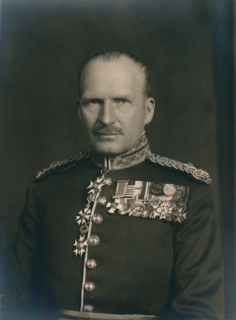
Sir John Greer Dill, senior British Army officer with service in both World War I and World War II, is born on December 25, 1881, at Lurgan, County Armagh. From May 1940 to December 1941, he is the Chief of the Imperial General Staff (CIGS), the professional head of the British Army, and subsequently serves in Washington, D.C., as Chief of the British Joint Staff Mission and then Senior British Representative on the Combined Chiefs of Staff (CCS).

Dill is the only son of John Dill, bank manager, and Jane Dill (née Greer). He is educated at Cheltenham College in England before entering the Royal Military College (RMC), Sandhurst. Commissioned as a second lieutenant, he joins the Prince of Wales’s Leinster Regiment (Royal Canadians) in May 1901 and serves in South Africa for the remainder of the Second Boer War. Promoted to captain in 1911, he is a student at the Staff College, Camberley, at the outbreak of World War I. He holds several important staff appointments during the war, including brigade major of 25th Brigade (8th Division) and General Staff Officer (Grade 2) to the Canadian Corps. Present at the battles of Neuve Chapelle, Aubers Ridge, Arras, and Third Ypres, at the end of the war he is serving as chief of operations branch at GHQ with the temporary rank of brigadier general. He is awarded the Distinguished Service Order (DSO) (1915), the Order of St. Michael and St. George (CMG) (1918), the French Legion of Honour and the Belgian Order of the Crown.

Remaining active during the interwar years, Dill serves as chief assistant to the commandant of the Staff College (1919–22) before commanding the Welsh Border Brigade, TA (1922–23), and 2nd Infantry Brigade at Aldershot (1923–26). In late 1926, he is appointed army instructor at the newly established Imperial Defence College. A period in India follows as general staff officer of the Western Command (1929–31), based at Quetta. On return to England, he is promoted to major general and made commandant of the Staff College. Appointments as commander of the British forces in Palestine and Transjordan (1936–37) and the Aldershot Command (1937–39) follow. During this period, he shows a remarkable ability to both train and inspire those under his command. Most of his colleagues expect him to become the new chief of the Imperial General Staff and are surprised when Major General Lord Gort, junior to Dill in both rank and seniority, is appointed to the post.

At the outbreak of World War II Dill commands I Corps British Expeditionary Force (BEF) in France and is made a full general. In April 1940, he is made vice-CIGS and in May takes over as CIGS. His initial period in office is not a happy one, and he has to inform the public of setbacks in both Norway and France. His workload is enormous, and after the evacuation at Dunkirk in late May he devotes himself to preparing the defences of Britain against invasion. He clashes with Winston Churchill throughout 1941, advocating a more cautious and realistic approach to the situations in North Africa, Greece, and Crete.

The workload begins to affect his health adversely, and in November 1941 it is announced that he will resign as CIGS on reaching the age of 60 and serve as governor-designate of Bombay with the rank of field marshal. He seeks to be more actively involved in the war effort, however, and in December 1941 he visits the United States with Churchill, remaining there as head of the British joint staff mission in Washington, D.C. He plays a significant role in promoting Anglo–American military cooperation and attends the Casablanca, Quebec, and Tehran conferences.

In late 1944 his health again breaks down and he dies from aplastic anemia on November 4, 1944, at the Walter Reed General Hospital, Washington, D.C. After a memorial service at Washington National Cathedral, he is buried with full military honours at Arlington National Cemetery in Arlington County, Virginia. President Franklin D. Roosevelt later pays tribute to him as a great soldier and friend, “the most important figure in the remarkable accord which has been developed in the combined operations of our two countries.”

Dill first marries (1907) Ada Maud Le Mottée, daughter of Col. William Le Mottée of the 18th Regiment. Their son, Major John de Guerin Dill, serves as an artillery officer throughout World War II. In October 1941, Dill marries Nancy Isabelle Charrington, widow of Brigadier Denis Walter Furlong. Dill’s honours include a GCB (1942), an honorary degree from Princeton University (1944), the Howland Memorial Prize of Yale University (1944), and a posthumous Distinguished Service Medal (DSM) from the United States government. There are portraits of him in Cheltenham College and the Imperial War Museum, and a statue in Washington, D.C.

(From: “Dill, Sir John Greer” by David Murphy, Dictionary of Irish Biography, http://www.dib.ie, October 2009 | Pictured: Sir John Greer Dill, bromide print, 1932, by Walter Stoneman, National Portrait Gallery, London)


Leave a comment

Irish 69th New York Infantry Regiment Fights at the First Battle of Bull Run

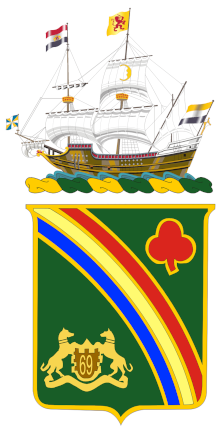
On July 21, 1861, at the First Battle of Bull Run, the first major engagement of the American Civil War, the Irish 69th New York Infantry Regiment fights under the green flag of Erin and the Stars and Stripes for the first time. The unit is in a brigade commanded by Col. William Tecumseh Sherman, whose name is now one of the most well-known of the war. He is not, however, well loved by the 69th New York.

The battle, called the Battle of First Manassas by the Confederate State Army, is fought in Prince William County, Virginia, just north of the city of Manassas and about thirty miles west-southwest of Washington, D.C. The Union Army is slow in positioning themselves, allowing Confederate reinforcements time to arrive by rail. Each side has about 18,000 poorly trained and poorly led troops. The Union army suffers an ignominious defeat that day, but the 69th is among a handful of Union regiments that perform well during the battle. Held in reserve at first, the 69th soon advances and routs the 4th Alabama. But when the brigade meets stiffer opposition, Sherman attacks with one regiment at a time, wasting his numbers. The battle is followed by a disorganized post-battle retreat of the Union forces.

Just months after the start of the war at Fort Sumter, the northern public clamors for a march against the Confederate capital of Richmond, Virginia, which is expected to bring an early end to the Confederacy. Yielding to political pressure, Brigadier General Irvin McDowell leads his unseasoned Union Army across Bull Run against the equally inexperienced Confederate Army of Brigadier General P. G. T. Beauregard, whose forces are camped near Manassas Junction. McDowell’s ambitious plan for a surprise flank attack on the Confederate left is poorly executed; nevertheless, the Confederates, who had been planning to attack the Union left flank, find themselves at an initial disadvantage.

Confederate reinforcements under Brigadier General Joseph E. Johnston arrive from the Shenandoah Valley by railroad, and the course of the battle quickly changes. A brigade of Virginians under a relatively unknown brigadier general from the Virginia Military Institute, Thomas J. Jackson, stands its ground, which results in Jackson receiving his famous nickname, “Stonewall.” The Confederates launch a strong counterattack, and as the Union troops begin withdrawing under fire, many panic and the retreat turns into a rout. McDowell’s men frantically run without order in the direction of Washington, D.C.

One of the last regiments off the field, the 69th loses 38 men that day, the first being Capt. James Haggerty from Donegal, and 59 wounded. Ninety-five are sent to Confederate prison camps, including its Sligo-born colonel, Michael Corcoran. One of the last men off the field is Waterford‘s Thomas Francis Meagher, captain of Company K, who eventually swims the last yards to safety across Bull Run creek. It is a rough beginning, but the regiment has begun a storied history that soon earns them the sobriquet “Fighting 69th.”

Both armies are sobered by the fierce fighting and the many casualties and realize that the war is going to be much longer and bloodier than anticipated. The First Battle of Bull Run highlights many of the problems and deficiencies that are typical of the first year of the war. Units are committed piecemeal, attacks are frontal, infantry fails to protect exposed artillery, tactical intelligence is minimal, and neither commander is able to employ his whole force effectively. McDowell, with 35,000 men, can commit only about 18,000, and the combined Confederate forces, with about 32,000 men, also commit 18,000.


Leave a comment

Death of Michael Corcoran, General in the Union Army

Michael Corcoran, Irish American general in the Union Army during the American Civil War and a close confidant of President Abraham Lincoln, dies on December 22, 1863, of a fractured skull after being thrown from a runaway horse.

Corcoran is born in Carrowkeel, near Ballymote, County Sligo, on September 21, 1827. As its colonel, he leads the 69th Infantry Regiment (New York) to Washington, D.C. and is one of the first to serve in the defense of Washington by building Fort Corcoran. He then leads the 69th into action at the First Battle of Bull Run. After promotion to brigadier general, he leaves the 69th and forms the Corcoran Legion, consisting of at least five other New York regiments.

Corcoran is the only child of Thomas Corcoran, an officer in the British Army, and Mary McDonagh. Through his mother, he claims descent from Patrick Sarsfield, hero of the Williamite War in Ireland and leader of the Wild Geese. In 1846 he takes an appointment to the Revenue Police, enforcing the laws and searching for illicit stills and distilling activities in Creeslough, County Donegal. He also joins a guerrilla group called the Ribbonmen.

On August 30, 1849, Corcoran emigrates from Sligo to the United States and settles in New York City where he finds work as a clerk in the tavern owned by John Heaney, whose niece, Elizabeth, he marries in 1854.

Corcoran enlists as a Private in the 69th New York Militia. By 1859 he is appointed colonel of the regiment. The regiment is a state militia unit at the time composed of citizens, not soldiers, and is involved in the maintenance of public order. On October 11, 1860, he refuses to march the regiment on parade for the 19-year-old Prince of Wales, who is visiting New York City at the time, protesting the British imposition of the Irish Famine. He is removed from command and a court martial is pending over that matter when the Civil War begins.

Corcoran also becomes involved in Democratic politics at Tammany Hall. He becomes district leader, a member of the judicial nominations committee, an elected school inspector for his ward, and a member of the Fourteenth Ward General Committee. He is one of the founders of the Fenian Brotherhood in America.

With the outbreak of war, the court martial is dropped and Corcoran is restored to his command because he had been instrumental in bringing other Irish immigrants to the Union cause. He leads the 69th to Washington, D.C. and serves for a while in the Washington defenses building, Fort Corcoran. In July 1861 he leads the regiment into action at the First Battle of Bull Run and is taken prisoner.

While Corcoran is imprisoned, the United States makes threats to execute captured Confederate privateers. Corcoran and several other Union prisoners are selected by lot for execution if the United States carries out its threats against the privateers. This event is known as the Enchantress Affair, but no executions are ever carried out by either side. Corcoran is then offered a parole under the conditions that he does not take up arms against the Confederacy. Intending to resume his place in the Union army upon his release he refuses the offer of parole. He is appointed Brigadier General of volunteers in July and exchanged in August 1862. His role in the Enchantress Affair and his refusal for parole gains him some attention and upon his release he is invited to dinner with President Abraham Lincoln.

In April 1863 Corcoran is involved in an incident that ends with Corcoran shooting and killing Edgar A. Kimball, commander of the 9th New York Volunteer Infantry Regiment. Corcoran attempts to pass through the 9th New York’s area without giving the required password after receiving the challenge from a sentry. When Kimball intervenes on the side of the sentry, Corcoran shoots him. Corcoran is not charged with a crime or reprimanded and continues to serve.

Corcoran returns to the army and sets about recruiting more Irish volunteers. He raises and takes command of what becomes known as the Corcoran Legion. Placed in command of the 1st Division, VII Corps he is engaged in the Battle of Deserted House and takes part in the Battle of Suffolk. In late 1863 he is placed in command of a division in the XXII Corps and returns to serve in the Washington defenses. While riding alone in Fairfax, Virginia he is thrown from a runaway horse and suffers a fractured skull. He dies at the age of 36 at the William Gunnell House on December 22, 1863.

New York City Mayor Michael Bloomberg unveils Ireland’s national monument to the Fighting 69th in Ballymote on August 22, 2006. The monument is sculpted by Philip Flanagan. The inscription around the top of the monument reads “Michael Corcoran 1827–1863” Around the base is inscribed “New York Ballymote Creeslough Bull Run.” Underneath the monument is a piece of steel from the World Trade Center, donated by the family of Michael Lynch, who died in the tower on September 11, 2001. Lynch’s family are also from County Sligo.