seamus dubhghaill

Promoting Irish Culture and History from Little Rock, Arkansas, USA


Leave a comment

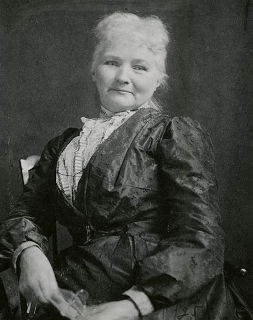
Death of Mary Harris “Mother” Jones, Union Organizer & Activist

Mary G. Harris Jones, known as Mother Jones, an Irish-born American schoolteacher and dressmaker who becomes a prominent union organiser, community organiser, and activist, dies in Silver Spring, Maryland, on November 30, 1930. She is once deemed “the most dangerous woman in America” because of her union activities.

Jones is the daughter of Richard Harris, a Roman Catholic tenant farmer and railway labourer, and Ellen (née Cotter) Harris. She is baptised on August 1, 1837, in Cork, County Cork. Her exact date of birth is uncertain. She and her family are victims of the Great Famine, as are many other Irish families of the time. The famine forces more than a million families, including the Harrises, to immigrate to North America when she is ten years old. She lives in the United States and Canada, where she attends and later teaches in a Roman Catholic normal school in Toronto. In the United States she teaches in a convent school in Monroe, Michigan and works as a seamstress. In 1861 she marries George Jones, an iron-moulder and labour union member in Memphis, Tennessee. After the death of her husband and their four children in a yellow fever epidemic in 1867, she relocates to Chicago, Illinois, where she becomes involved with an early industrial union, the Knights of Labor. Her seamstress shop is destroyed in the Great Chicago Fire of 1871.

In the 1890s Jones becomes known as ‘Mother’ Jones and begins a long association with socialist causes and the United Mine Workers of America. She attends the founding convention of Social Democracy of America, later known as the Cooperative Brotherhood, in 1897 and in the same year organises support and publicity for striking bituminous coal miners in West Virginia, including a children’s march and parades of farmers delivering food to the miners’ camp. These types of defiant mass action become her trademark. Notable activities include organising women in support of an 1899 anthracite coal strike in eastern Pennsylvania, directing strikes of young women working in textile mills, a 1903 ‘children’s crusade’ against child labour which includes a ninety-mile march from Philadelphia to New York City, participating in 1905 in the founding convention of the Industrial Workers of the World, a radical labour union committed to the organisation of unskilled workers, campaigning for the release of Mexican revolutionaries imprisoned in American jails, and testifying in 1915 in congressional hearings against the abuse of corporate power by Rockefeller interests.

Jones reportedly meets with James Connolly, Irish socialist and labour organiser, in New York City in 1910. She is arrested for the first time for violating a federal injunction during a miners’ strike in West Virginia in 1902. In 1904, during a Colorado miners’ campaign, she has to avoid the authorities to escape possible deportation. During a 1914 strike in Ludlow, Colorado, she is imprisoned without trial for nine weeks. In 1919 she is arrested in Pennsylvania during a steelworkers’ strike for defending freedom of speech and the right of workers to organise unions. She remains active in the labour movement and radical causes into her nineties.

During her later years, Jones lives with her friends Walter and Lillie May Burgess on their farm in what is now Adelphi, Maryland. She celebrates her self-proclaimed 100th birthday there on May 1, 1930, and is filmed making a statement for a newsreel.

Jones dies on November 30, 1930, at the Burgess farm then in Silver Spring, Maryland, though now part of Adelphi. There is a funeral Mass at St. Gabriel’s Catholic Church in Washington, D.C. She is buried in the Union Miners Cemetery in Mount Olive, Illinois, alongside miners who died in the 1898 Battle of Virden.

In 1932, about 15,000 Illinois mine workers gather in Mount Olive to protest against the United Mine Workers, which soon becomes the Progressive Mine Workers of America. Convinced that they have acted in the spirit of Mother Jones, the miners decide to place a proper headstone on her grave. By 1936, the miners have saved up more than $16,000 and are able to purchase “eighty tons of Minnesota pink granite, with bronze statues of two miners flanking a twenty-foot shaft featuring a bas-relief of Mother Jones at its center.” On October 11, 1936, also known as Miners’ Day, an estimated 50,000 people arrive at Mother Jones’s grave to see the new gravestone and memorial. Since then, October 11 is not only known as Miners’ Day but is also referred to and celebrated in Mount Olive as “Mother Jones’s Day.”

The farm where she died begins to advertise itself as the “Mother Jones Rest Home” in 1932, before being sold to a Baptist church in 1956. The site is now marked with a Maryland Historical Trust marker, and a nearby elementary school is named in her honor.

Leave a comment

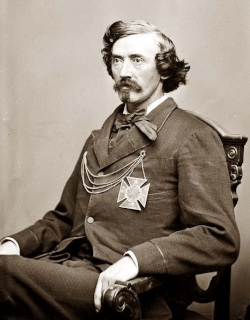
Birth of Alexander Campbell, Ulster Scots Minister

Alexander Campbell, an Ulster Scots immigrant who becomes an ordained minister in the United States, is born on September 12, 1788, near Ballymena, in the parish of Broughshane, County Antrim.

Campbell is the eldest son of Thomas Campbell and Jane Campbell (née Corneigle), who marry in 1787 and later have four daughters and two younger sons. His father, the son of soldier Archibald Campbell and his wife Alice McNally, is born on February 1, 1763, at Sheepbridge, near Newry, County Down. The Presbyterian minister William Campbell may have been a relation.

Archibald Campbell is born Catholic but joins the Church of Ireland, while his son joins the seceding branch of the Presbyterian church and studies at the University of Glasgow, graduating with a Master of Arts degree in 1786, although he does not appear in the published records of the university. He becomes a teacher but is determined to become a minister, and studies in the Anti-Burgher Divinity Hall in Whitburn, West Lothian (or the Seceder Theological Seminary in Whithorn, Wigtownshire, according to another source) for two months each year for five years. He is ordained a minister in the seceding congregation of Ahorey, County Armagh, probably in 1798. Although at first a member of the Anti-Burgher party in his church, Thomas Campbell begins to believe that divisions between and within denominations are prejudicial to true Christianity. He writes a report in 1804 suggesting that Burgher and Anti-Burgher Presbyterians in Ireland should unite. When this is vetoed in 1805 by the General Associate Synod of Scotland, Thomas Campbell, then moderator of the Irish Seceding Synod, initiates an unsuccessful move to seek independence from Scottish control. His experiences with church authorities undoubtedly increase his belief in the need to rediscover the scriptural basis of religion, freed from man-made creeds.

In 1804, Thomas Campbell sets up an academy at Richhill, County Armagh. In 1798, he is one of the founders of the Evangelical Society of Ulster in which clergymen from differing sects cooperate but resigns when this enterprise is frowned on by seceding authorities.

In poor health in 1806, Thomas Campbell resigns from Ahorey, and goes to the United States in 1807, where he preaches in small congregations around Washington, Pennsylvania. He is soon accused of doctrinal unsoundness, of disciplinary laxity and of administering the sacraments to non-Presbyterians. His appeal to the Associate Synod of North America is unsuccessful, and in 1809 he ceases to be a minister of the seceder church. His liberal views on Christian unity and on the paramount importance of the Bible attract supporters, and in 1809 they found the Christian Association of Washington. He publishes a declaration and address in which he sets out the principles of this body. His followers claim it represents a “second reformation” or a “restoration.” It forms the basis of the doctrine of what becomes America’s most important indigenous religious development, and is regarded as significant in the history of the wider ecumenical movement. He publishes a great many other tracts and articles. Thomas Campbell dies in Bethany, West Virginia, on January 4, 1854.

Thomas had married Jane Corneigle in 1787 and their eldest son Alexander is born on September 12, 1788, in Broughshane, County Antrim, where his father is teaching. His parents intend him for the ministry, and he receives a good education, partly from his father, and religious training from both parents. He is greatly influenced by his strongminded and pious mother. In October 1808 his family sets sail for America to join his father. The ship is wrecked on the island of Islay, off Scotland. All on board are saved, partly thanks to Alexander’s strength and leadership. Rather than continuing the voyage by other means, Alexander spends eight months in the University of Glasgow to prepare himself for the ministry.

In the summer of 1809, the family finally arrives in Pennsylvania, among many emigrants from Ulster. On January 1, 1812, Campbell is ordained as a minister by his father’s Brush Run Church, and quickly takes over the leadership of the fledgling church. By 1812, most of their followers, thenceforth often called Campbellites, have undergone baptism by immersion; a union with the Baptist denomination results, but does not survive after 1830, by which date Campbell’s work on a translation of the Greek New Testament has convinced him that baptism is unscriptural. Controversy between the two groups continues for many years.

A very able preacher and debater, whose public discussions attract much attention, Campbell attacks the creeds and governance of established churches. In 1823, he founds the journal the Christian Baptist. Subsequently in 1830, after the break with the Baptists, he starts the Millennial Harbinger. Both periodicals are largely written by Campbell and his father, Thomas, and are widely influential. He is convinced that church unity will usher in a millennial age of peace and harmony. Primitive Christianity is thus to bring about a utopian future. His book Christianity Restored (1835) is widely read, in Britain as well as in the United States. In 1826, a translation of the Greek New Testament is printed by Campbell’s press in Bethany, West Virginia. Largely based on recent translations by others, it nonetheless contains variant readings by Campbell and furthers his aim of providing followers with authoritative texts on which to base their beliefs. In 1841, he founds Bethany College, West Virginia, and is its president until his death in Bethany on March 4, 1866, when he leaves it $10,000 and a large library.

In 1832, several fledgling churches join the Campbellites, and form a new body called the Christian Church, or Disciples of Christ, which today has over 3,000 congregations in the United States. The two guiding principles of the lifelong beliefs of the Campbells are in the end irreconcilable. An emphasis on the literal interpretation of scripture allows believers to form beliefs at variance from those of co-religionists, and neither Alexander Campbell’s great authority in the denomination nor Thomas Campbell’s emphasis on the need for church unity are enough to prevent the fissions inevitable in a church that so strongly opposes man-made creeds. There are now at least six major divisions of the Church of Christ, one of several alternative names.

On March 2, 1811, Campbell marries Margaret Brown, and thenceforth derives his income from the large farm that had belonged to her family. They have eight children, who all die in their father’s lifetime. Margaret Brown Campbell dies on October 22, 1827. On July 31, 1828, in fulfilment of his wife’s dying request, the widower marries the English-born Selina Huntington Bakewell, and has six children with her. Four of those children survive him. Selina Campbell writes a memoir of her husband, published in 1882, and lives until 1897.

(From: “Campbell, Alexander” by Linde Lunney, Dictionary of Irish Biography, http://www.dib.ie, last revised May 2021)


Leave a comment

Baptism of Mary Harris “Mother” Jones, Union Organizer & Activist

Mary G. Harris Jones, known as Mother Jones, an Irish-born American schoolteacher and dressmaker who becomes a prominent union organiser, community organiser, and activist, is baptised on August 1, 1837, in Cork, County Cork. Her exact date of birth is uncertain. She is once deemed “the most dangerous woman in America” because of her union activities.

Jones is the daughter of Richard Harris, a Roman Catholic tenant farmer and railway labourer, and Ellen (née Cotter) Harris. She and her family are victims of the Great Famine, as are many other Irish families of the time. The famine forces more than a million families, including the Harrises, to immigrate to North America when she is ten years old. She lives in the United States and Canada, where she attends and later teaches in a Roman Catholic normal school in Toronto. In the United States she teaches in a convent school in Monroe, Michigan and works as a seamstress. In 1861 she marries George Jones, an iron-moulder and labour union member in Memphis, Tennessee. After the death of her husband and their four children in a yellow fever epidemic in 1867, she relocates to Chicago, Illinois, where she becomes involved with an early industrial union, the Knights of Labor. Her seamstress shop is destroyed in the Great Chicago Fire of 1871.

In the 1890s Jones becomes known as ‘Mother’ Jones and begins a long association with socialist causes and the United Mine Workers of America. She attends the founding convention of Social Democracy of America, later known as the Cooperative Brotherhood, in 1897 and in the same year organises support and publicity for striking bituminous coal miners in West Virginia, including a children’s march and parades of farmers delivering food to the miners’ camp. These types of defiant mass action become her trademark. Notable activities include organising women in support of an 1899 anthracite coal strike in eastern Pennsylvania, directing strikes of young women working in textile mills, a 1903 ‘children’s crusade’ against child labour which includes a ninety-mile march from Philadelphia to New York City, participating in 1905 in the founding convention of the Industrial Workers of the World, a radical labour union committed to the organisation of unskilled workers, campaigning for the release of Mexican revolutionaries imprisoned in American jails, and testifying in 1915 in congressional hearings against the abuse of corporate power by Rockefeller interests.

Jones reportedly meets with James Connolly, Irish socialist and labour organiser, in New York City in 1910. She is arrested for the first time for violating a federal injunction during a miners’ strike in West Virginia in 1902. In 1904, during a Colorado miners’ campaign, she has to avoid the authorities to escape possible deportation. During a 1914 strike in Ludlow, Colorado, she is imprisoned without trial for nine weeks. In 1919 she is arrested in Pennsylvania during a steelworkers’ strike for defending freedom of speech and the right of workers to organise unions. She remains active in the labour movement and radical causes into her nineties.

During her later years, Jones lives with her friends Walter and Lillie May Burgess on their farm in what is now Adelphi, Maryland. She celebrates her self-proclaimed 100th birthday there on May 1, 1930, and is filmed making a statement for a newsreel.

Jones dies on November 30, 1930, at the Burgess farm then in Silver Spring, Maryland, though now part of Adelphi. There is a funeral Mass at St. Gabriel’s in Washington, D.C. She is buried in the Union Miners Cemetery in Mount Olive, Illinois, alongside miners who died in the 1898 Battle of Virden.

In 1932, about 15,000 Illinois mine workers gather in Mount Olive to protest against the United Mine Workers, which soon becomes the Progressive Mine Workers of America. Convinced that they have acted in the spirit of Mother Jones, the miners decide to place a proper headstone on her grave. By 1936, the miners have saved up more than $16,000 and are able to purchase “eighty tons of Minnesota pink granite, with bronze statues of two miners flanking a twenty-foot shaft featuring a bas-relief of Mother Jones at its center.” On October 11, 1936, also known as Miners’ Day, an estimated 50,000 people arrive at Mother Jones’s grave to see the new gravestone and memorial. Since then, October 11 is not only known as Miners’ Day but is also referred to and celebrated in Mount Olive as “Mother Jones’s Day.”

The farm where she died begins to advertise itself as the “Mother Jones Rest Home” in 1932, before being sold to a Baptist church in 1956. The site is now marked with a Maryland Historical Trust marker, and a nearby elementary school is named in her honor.

Leave a comment

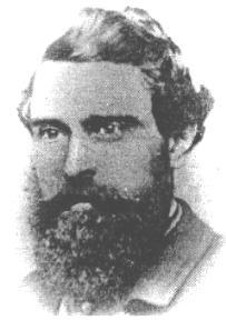
Death of James A. Mulligan, Union Army Colonel

James Adelbert Mulligan, a colonel of the 23rd Illinois Infantry Regiment in the Union Army during the American Civil War, dies on July 26, 1864, of wounds sustains at the Second Battle of Kernstown three days earlier.

Mulligan is born on June 30, 1830, in Utica, New York. His parents had immigrated from Ireland and his father died when he was a child. His mother remarries a Michael Lantry of Chicago, Illinois, and moves there with her son, who later attends the St. Mary’s on the Lake College of North Chicago. From 1852–54 he reads law in the offices of Isaac N. Arnold, U.S. Representative from the city. He is admitted to the bar in 1856 and commissioned a second lieutenant in the “Chicago Shield Guards.”

At the onset of the American Civil War, Mulligan raises the 23rd Illinois Infantry Regiment in 1861, which is locally known as the “Irish Brigade” (not to be confused with a New York unit by the same name). This unit includes the Chicago Shield Guards. In September 1861, he leads his troops toward Lexington, Missouri, as word had been received that this vital river town will be attacked by the pro-Confederate Missouri State Guard under Major General Sterling Price.

The First Battle of Lexington, often referred to as the Battle of the Hemp Bales, commences on September 13, 1861, when 12,500 soldiers of the Missouri State Guard begin a siege of Mulligan’s diminutive command, entrenched around the town’s old Masonic College. On September 18, Price’s army mounts an all-out assault on Mulligan’s works, which fails. Cannon fire continues through September 19. On the 20th, units of Price’s army use hemp bales soaked in the Missouri River as a moving breastwork to work their way up the river bluffs toward Mulligan’s headquarters. By 2:00 PM, Mulligan has surrendered. Combined casualties are 64 dead, and 192 wounded. Price is reportedly so impressed by Mulligan’s demeanor and conduct during and after the battle that he offers him his own horse and buggy and orders him safely escorted to Union lines.

Mulligan is commander of Camp Douglas, a prisoner of war camp in Chicago, from February 25, 1862, to June 14, 1862. The camp had been constructed as a short-term training camp for Union soldiers but is converted to a prisoner of war camp for captured Confederate soldiers after the fall of Fort Donelson.

Mulligan and his regiment are assigned to the Railroad Division of the Middle Department between December 17, 1862, and March 27, 1863. Then they are assigned to 5th Brigade, 1st Division, VIII Corps in the Middle Department between March 27, 1863, and June 26, 1863.

Between August and December 1863, Mulligan oversees the construction of Fort Mulligan, an earthworks fortification located in Grant County, West Virginia. This fort remains one of the best-preserved Civil War fortifications in West Virginia and has become a local tourist attraction.

On July 3, 1864, only three weeks before his death, Mulligan distinguishes himself in the Battle of Leetown, fought in and around Leetown, Virginia. Federal troops are retreating in the face of Major General Jubal Early‘s relentless Confederate advance down the Shenandoah Valley during the Second Valley Campaign. Hoping to buy time to concentrate Union forces and supplies, Major General Franz Sigel orders him to hold Leetown for as long as possible and then conduct a fighting retreat as slowly as possible to cover the other withdrawing Union units. He manages to hold Leetown for the entire day before being compelled to retreat, albeit very slowly. He continues to battle Early’s troops all the way from Leetown to Martinsburg, West Virginia, buying valuable time for Union commanders to concentrate their forces in the Valley.

On July 24, 1864, Mulligan leads his troops into the Second Battle of Kernstown, near Winchester, Virginia. Late in the afternoon, Major General John B. Gordon’s Confederate force attacks Mulligan’s 1,800 soldiers from ground beyond Opequon Church. Mulligan briefly holds off Gordon’s units, but Confederate Major General John C. Breckinridge leads a devastating flank attack against the Irishmen from the east side of the Valley Pike. Sharpshooters then attack his right flank from the west. Now encompassed on three sides, the Union battle line falls apart.

With Confederates closing from all around, Mulligan orders his troops to withdraw. As he stands up in his saddle to spur his men on, Confederate sharpshooters concealed in a nearby stream bed manage to hit the Union commander. His soldiers endeavor to carry him to safety, but the unyielding Confederate fire make this an impossible task. He is well aware of his situation, and the danger his men are in, and so he famously orders, “Lay me down and save the flag.” His men reluctantly comply. Confederate soldiers capture him and carry the mortally wounded colonel into a nearby home, where he dies two days later on July 26, 1864. He is buried in Calvary Cemetery, Evanston, Illinois.

On February 20, 1865, the United States Senate confirms the posthumous appointment of Mulligan to the rank of brevet brigadier general of U.S. Volunteers to rank from July 23, 1864, the day before he is mortally wounded at the Second Battle of Kernstown.


Leave a comment

Death of Frank Harte, Traditional Irish Singer

Frank Harte, traditional Irish singer, music collector, architect and lecturer, dies of a heart attack on June 27, 2005.

Harte is born in Chapelizod, County Dublin on May 14, 1933. He emigrates to the United States for a short period, but later returns to Ireland where he works as an architect, lecturer at Dublin Institute of Technology in Rathmines, Dublin and in later life fully engages in songs in many ways.

Harte’s introduction to Irish traditional singing comes from a chance listening to an itinerant who is selling ballad sheets at a fair in Boyle, County Roscommon. He begins collecting early in life and by the end of his life has assembled a database of over 15,500 recordings.

Harte becomes a great exponent of the Dublin street ballad, which he prefers to sing unaccompanied. He is widely known for his distinctive singing, his Dublin accent having a rich nasal quality complementing his often high register. His voice mellows considerably by the time of his later recordings, allowing for an expressive interpretation of many love songs such as “Bonny Light Horseman” on the album My Name is Napoleon Bonaparte. This is contrasted sublimely by his cogent interpretation of the popular “Molly Malone.” He also becomes more accustomed to singing with accompaniment which is not strictly part of the Irish singing tradition and does not come naturally to him.

Though Irish Republican in his politics, Harte believes that the Irish song tradition need not be a sectarian or nationalist preserve. He believes that songs are a key to understanding the past often saying, “those in power write the history, while those who suffer write the songs, and, given our history, we have an awful lot of songs.” Though considered a stalwart of traditional Irish singing and well aware of it, he does not consider himself to be a sean-nós singer.

Harte wins the All-Ireland Fleadh Cheoil singing competition on a number of occasions and in 2003 receives the Traditional Singer of the Year award from the Irish-language television channel TG4.

Harte records several albums and makes numerous television and radio appearances, most notably the Singing Voices series he writes and presents for RTÉ Radio, which is produced by Peter Browne in 1987. He is a regular at the Sunday morning sessions at The Brazen Head pub, along with Liam Weldon who runs the session. He is also an enthusiastic supporter of An Góilín Traditional Singer’s Club.

Harte appears at many American festivals including The Blarney Star in New York City, Gaelic Roots in Boston College, The Catskills Irish Arts Week, The Greater Washington Ceili Club Festival in Maryland and the Milwaukee Irish Fest and for seventeen years he is a veritable staple at the Irish Week every July in the Augusta Heritage Festival in Elkins, West Virginia where he often performs with Mick Moloney.

Frank Harte dies of a heart attack, aged 72, on June 27, 2005. His influence is still evident in singers such as Karan Casey and he continues to be remembered fondly in sessions and folk clubs on both sides of the Irish Sea.


Leave a comment

Death of U.S. Union Army Colonel Patrick Kelly

colonel-patrick-kelly

Colonel Patrick Kelly of the Union Army‘s Irish Brigade (The Fighting Irish) dies on June 16, 1864, at the Siege of Petersburg during the American Civil War while leading the Irish Brigade forward against a Confederate position.

Kelly is born in Castlehacket, Tuam, County Galway and emigrates to the United States, landing in New York City. His wife Elizabeth is also from Tuam.

At the outset of the American Civil War, Kelly enlists in the Union Army and sees action as captain of Company E of the 69th New York Infantry at the First Battle of Bull Run. He briefly is a captain in the 16th U.S. Infantry. On September 14, 1861, he is named lieutenant colonel of the 88th New York Volunteer Infantry Regiment and fights in the Irish Brigade’s major battles in 1862. He commands the regiment at the Battle of Antietam. While stationed at Harpers Ferry, West Virginia following the Maryland campaign, he is promoted to colonel on October 20, 1862. He leads the regiment in the ill-fated attacks in front of Marye’s Heights in the Battle of Fredericksburg. He is acting commander of the Irish Brigade at the end of 1862.

After the 1863 Battle of Chancellorsville, Kelly is promoted to command the Irish Brigade following the resignation of Brigadier General Thomas Francis Meagher. He leads the heavily depleted brigade of fewer than 600 men in an attack at the Wheatfield during the Battle of Gettysburg. The brigade loses 198 of 532 troops engaged, approximately 37%.

Kelly resumes his role as colonel of his regiment as more senior officers return to the brigade. However, with the death of Colonel Richard Byrnes at the Battle of Cold Harbor in 1864, he again commands the brigade. At the age of 42, he dies during the Siege of Petersburg on June 16, 1864, when he is shot through the head while leading the Irish Brigade forward against Confederate earthworks. His body is recovered and sent back to New York for his funeral. He is buried in Calvary Cemetery in Woodside, Queens, New York.


Leave a comment

Birth of Elizabeth Gurley Flynn, Activist & Feminist

elizabeth-gurley-flynn

Elizabeth Gurley Flynn, labor leader, activist, and feminist who played a leading role in the Industrial Workers of the World (IWW), is born in Concord, New Hampshire on August 7, 1890. She is a founding member of the American Civil Liberties Union and a visible proponent of women’s rights, birth control, and women’s suffrage.

Flynn’s family moves to New York in 1900, where she is educated in the local public schools. She grows up being regaled by tales of Irish revolutionaries. According to their oral tradition all four of her great-grandfathers, Flynn, Gurley, Conneran, and Ryan, are members of the Society of United Irishmen, with grandfather Flynn being one of the leaders in County Mayo when the French fleet lands there during the Irish Rebellion of 1798. Her parents introduce her to socialism. When she is only fifteen, she gives her first public speech, “What Socialism Will Do for Women,” at the Harlem Socialist Club.

In 1907, Flynn becomes a full-time organizer for the Industrial Workers of the World. Over the next few years, she organizes campaigns among garment workers in Pennsylvania, silk weavers in New Jersey, restaurant workers in New York, miners in Minnesota, Missoula, Montana, and Spokane, Washington and textile workers in Massachusetts. She is arrested ten times during this period but is never convicted of any criminal activity. It is a plea bargain, on the other hand, that results in her expulsion from the IWW in 1916, along with fellow organizer Joe Ettor.

A founding member of the American Civil Liberties Union (ACLU) in 1920, Flynn plays a leading role in the campaign against the conviction of Nicola Sacco and Bartolomeo Vanzetti. She is particularly concerned with women’s rights, supporting birth control and women’s suffrage. She also criticizes the leadership of trade unions for being male-dominated and not reflecting the needs of women.

Between 1926 and 1936, Flynn lives in southwest Portland, Oregon with birth control activist, suffragette, and Wobbly Marie Equi where she is an active and vocal supporter of the 1934 West Coast Longshoremen’s Strike. In 1936, she joins the Communist Party and writes a feminist column for its journal, the Daily Worker. Two years later, she is elected to the national committee. Her membership in the Party leads to her ouster from the board of the ACLU in 1940.

During World War II, Flynn plays an important role in the campaign for equal economic opportunity and pay for women and the establishment of day care centers for working mothers. In 1942, she runs for the United States Congress at-large in New York and receives 50,000 votes. In July 1948, a dozen leaders of the Communist Party are arrested and accused of violating the Smith Act by advocating the overthrow of the U.S. government by force and violence. After they are convicted in the Foley Square trial they appeal to the Supreme Court, which upholds their conviction in Dennis v. United States.

Flynn launches a campaign for their release but, in June 1951, is herself arrested in the second wave of arrests and prosecuted under the Smith Act. After a nine-month trial, she is found guilty and serves two years in Federal Prison Camp, Alderson near Alderson, West Virginia. She later writes a prison memoir, The Alderson Story: My Life as a Political Prisoner.

After her release from prison, Flynn resumes her activities for leftist and Communist causes. She runs for the New York City Council as a Communist in 1957, garnering a total of 710 votes. She becomes national chairwoman of the Communist Party of the United States in 1961 and makes several visits to the Soviet Union.

Elizabeth Gurley Flynn dies on September 5, 1964, while on one of her visits to the Soviet Union. The Soviet government gives her a state funeral in Red Square with over 25,000 people attending. In accordance with her wishes, her remains are flown to the United States for burial in Chicago‘s German Waldheim Cemetery, near the graves of Eugene Dennis, Bill Haywood, Emma Goldman, and the Haymarket Riot Martyrs.

In 1978, the ACLU posthumously reinstates her membership.


Leave a comment

Birth of Frank Harte, Traditional Irish Singer

frank-harte

Frank Harte, traditional Irish singer, music collector, architect and lecturer, is born in Chapelizod, County Dublin on May 14, 1933. He emigrates to the United States for a short period, but later returns to Ireland where he works as an architect, lecturer at Dublin Institute of Technology in Rathmines, Dublin and in later life fully engages in songs in many ways.

Harte’s introduction to Irish traditional singing comes from a chance listening to an itinerant who is selling ballad sheets at a fair in Boyle, County Roscommon. He begins collecting early in life and by the end of his life has assembled a database of over 15,500 recordings.

Harte becomes a great exponent of the Dublin street ballad, which he prefers to sing unaccompanied. He is widely known for his distinctive singing, his Dublin accent having a rich nasal quality complementing his often high register. His voice mellows considerably by the time of his later recordings, allowing for an expressive interpretation of many love songs such as “My Bonny Light Horseman” on the album My Name is Napoleon Bonaparte. This is contrasted sublimely by his cogent interpretation of the popular “Molly Malone.” He also becomes more accustomed to singing with accompaniment which is not strictly part of the Irish singing tradition and does not come naturally to him.

Though Irish Republican in his politics, Harte believes that the Irish song tradition need not be a sectarian or nationalist preserve. He believes that songs are a key to understanding the past often saying, “those in power write the history, while those who suffer write the songs, and, given our history, we have an awful lot of songs.” Though considered a stalwart of traditional Irish singing and well aware of it, he does not consider himself to be a sean-nós singer.

Harte wins the All-Ireland Fleadh Cheoil singing competition on a number of occasions and in 2003 receives the Traditional Singer of the Year award from the Irish-language television channel TG4.

Harte records several albums and makes numerous television and radio appearances, most notably the Singing Voices series he writes and presents for RTÉ Radio, which is produced by Peter Browne in 1987. He is a regular at the Sunday morning sessions at The Brazen Head pub, along with Liam Weldon who runs the session. He is also an enthusiastic supporter of An Góilín Traditional Singer’s Club.

Harte appears at many American festivals including The Blarney Star in New York City, Gaelic Roots in Boston College, The Catskills Irish Arts Week, The Greater Washington Ceili Club Festival in Maryland and the Milwaukee Irish Fest and for seventeen years he is a veritable staple at the Irish Week every July in the Augusta Heritage Festival in Elkins, West Virginia where he often performs with Mick Moloney.

Frank Harte dies of a heart attack, aged 72, on June 27, 2005. His influence is still evident in singers such as Karan Casey and he continues to be remembered fondly in sessions and folk clubs on both sides of the Irish Sea.