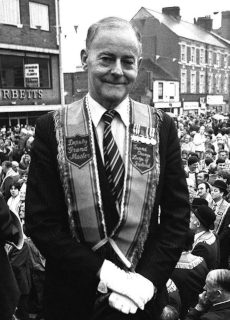
Molyneaux is educated at nearby Aldergrove School. Although he is raised an Anglican, as a child he briefly attends a local Catholic primary school. He leaves school at age 15 and works on his father’s poultry farm. When a Catholic church near his home is burned down by Ulster loyalist arsonists in the late 1990s, he helps to raise funds for its rebuilding.
After demobilization Molyneaux establishes a printing business with his uncle, and in 1946 he joins the UUP. He is first elected to local government in 1964 and enters Parliament six years later. He staunchly opposes all power-sharing deals, notably the Anglo-Irish Agreement (1985) between British Prime MinisterMargaret Thatcher and Irish TaoiseachGarret FitzGerald, which gives Dublin an official consultative role in the affairs of Northern Ireland and paves the way for devolution.
Molyneaux lacks the firebrand public image of his longtime rival Ian Paisley, who in 1971 breaks with the UUP to form the Democratic Unionist Party (DUP). He never acquiesces to the Good Friday Agreement, which calls for the devolution of Northern Ireland’s government from London to Belfast, however, unlike Paisley and David Trimble, who in 1997 succeeds Molyneaux as the UUP leader and in April 1998 signs the devolution accord.
On retiring as UUP leader, Molyneaux is knighted as a Knight Commander of the Order of the British Empire (KBE) in 1996. The following year, after standing down as an MP at the 1997 general election, he is created a life peer on June 10, 1997, as Baron Molyneaux of Killead, of Killead in the County of Antrim.
German aircraft bomb a creamery at Campile, County Wexford, a small village located fourteen kilometres outside the town of New Ross, on August 26, 1940 killing three women.
Ireland remains officially neutral during World War II. However, on August 26, 1940, the GermanLuftwaffe bombs Campile in daylight. Three women are killed – Mary Ellen Kent (30), her sister Catherine Kent (26), both from Terrerath, and Kathleen Hurley (27) from Garryduff. Four German bombs are dropped on the creamery and restaurant sections of Shelburne Co-op on that day. The railway is also targeted by the bombers. The 20-minute ordeal terrorises the peaceful village and leaves behind a trail of devastation. The attack has never been fully explained, although there are numerous theories as to why the bombing occurred.
One theory is that the German pilots were lost and had mistaken the southeast coast of Wexford for Wales. It is also suggested that butter boxes emblazoned with the Shelburne Co-op name were discovered by the Nazis a few months earlier following the evacuation of Dunkirk and that the bombing was in retaliation for supplying foodstuffs to the Allied armies.
However, Campile historian John Flynn, who wrote a book to mark the 70th anniversary of the disaster, argues that the bombing was a message from Adolf Hitler to TaoiseachÉamon de Valera warning him to keep his promise on Ireland’s neutrality.
On the occasion of the 50th anniversary of the bombing, a plaque is erected on the co-op walls in memory of the three women.
The local Harts bar and lounge contains many artifacts relating to the bombing. The description and history related to each artifact can be found in an old leather-bound book kept underneath the counter in the adjoining sweet shop.
Goulet’s involvement in Breton nationalism leads to accusations that he had orchestrated the destruction of the Monument to the Breton-Angevin Federation at Pontivy on December 18, 1938, by Gwenn ha du, the nationalist terrorist group. He is detained, but then released.
In 1939, he is sent to Strasbourg to study the art of sabotage. He participates in the beginning of World War II fighting for France, and is captured by the Germans on June 11, 1940, while blowing up a bridge on the Aisne with friends from a French corps.
Later in the war, Goulet joins the assault section of Bagadou Stourm, Breton nationalist stormtroopers allied to the Germans. He also collaborates with the pro-Nazi nationalist newspaper L’Heure Bretonne. In 1941 in Paris, he becomes head of Bagadou Stourm and the “Youth Organizations” of the Breton National Party. The promotion of Bagadou Stourm officers is named “Patrick Pearse” to commemorate the 25th anniversary of the 1916 Easter Rising against British rule in Ireland.
After the liberation of France, Goulet travels with his wife and children to Ireland, and is sentenced to death as a Collaborationist by a French court in his absence. He acquires Irish citizenship in 1952 and becomes an art professor.
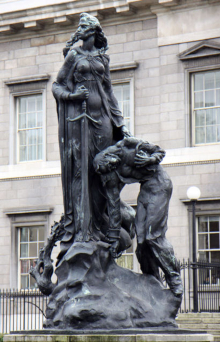
Goulet is commissioned to create public works commemorating the Irish Republican Army (IRA) and other republicans, including the Custom House Memorial (Dublin), the East Mayo Brigade IRA Memorial, the Republican Memorial (Crossmaglen), and the Ballyseedy Memorial (Kerry). He exhibits regularly at the Royal Hibernian Academy (RHA), eventually becoming the RHA Professor of Sculpture. He is also made a member of Aosdána in 1982.
Towards the end of the 1960s, Goulet claims to have taken the reins of the Breton Liberation Front (Front de Libération de la Bretagne, or FLB) and to have been behind all their attacks.
In 1969 Goulet becomes secretary general and chair of the Comité National de la Bretagne Libre and publishes the communiques of the FLB. In 1968, the head of police in Bray congratulate him on organising the previous day’s attack on the CRS barracks in Saint-Brieuc.
Goulet died at Bray, County Wicklow, on August 22, 1999, two days after his 85th birthday.
(Pictured: Custom House Memorial in Dublin by Yann Renard-Goulet, 1957)
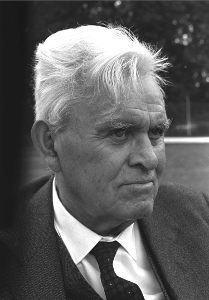
Breen’s father dies when he is six, leaving the family very poor. He is educated locally before becoming a plasterer and later a linesman on the Great Southern Railways.
Breen is sworn into the Irish Republican Brotherhood in 1912 and the Irish Volunteers in 1914. On January 21, 1919, the day the First Dáil meets in Dublin, Breen takes part in the Soloheadbeg Ambush. The ambush party of eight men, led by Seán Treacy, attacks two Royal Irish Constabulary (RIC) men who are escorting explosives to a quarry. The two policemen, James McDonnell and Patrick O’Connell, are fatally shot during the incident. The ambush is considered to be the first incident of the Irish War of Independence.
During the conflict, the British put a £1,000 price on Breen’s head, which is later increased to £10,000. He quickly establishes himself as a leader within the Irish Republican Army. He is known for his courage. On May 13, 1919 he helps rescue his comrade Seán Hogan at gunpoint from a heavily guarded train at Knocklong station in County Limerick. Breen, who is wounded, remembers how the battalion is “vehemently denounced as a cold-blooded assassins” and roundly condemned by the Catholic Church. After the fight, Treacy, Séumas Robinson, and Breen meet Michael Collins in Dublin, where they are told to make themselves scarce although they do not necessarily agree.
Breen and Sean Treacy shoot their way out through a British military cordon in the northern suburb of Drumcondra (Fernside). They escape, only for Treacy to be killed the next day. Breen is shot at least four times, twice in the lung.
The British reaction is to make Tipperary a “Special Military Area,” with curfews and travel permits. Volunteer GHQ authorises entrerprising attacks on barracks. The British policy forces Breen and Treacy to retreat to Dublin. They join Michael Collins’ Squad of assassins, later known as the Dublin Guard, and Dublin becomes the centre of the war.
Breen is present in December 1919 at the ambush in Ashtown beside Phoenix Park in Dublin where Martin Savage is killed while trying to assassinate the Lord Lieutenant of Ireland, Viscount John French. The IRA hides behind hedges and a dungheap as the convoy of vehicles drives past. They have been instructed to ignore the first car but this contains their target, Lord French. Their roadblock fails as a policeman removes the horse and cart intended to stop the car.
Breen utterly rejects the Anglo-Irish Treaty, which makes him, like many others, angry and embittered. In the June 1922 elections Breen is nominated as a candidate by both the pro- and anti-Treaty sides, but is not elected.
Breen is elected to Dáil Éireann at the 1923 general election as a Republican anti-Treaty Teachta Dála (TD) for the Tipperary constituency. Following the Anglo-Irish Treaty, Breen joins the Anti-Treaty IRA in the civil war, fighting against those of his former comrades in arms who support the Treaty. He is arrested by the National Army of the Irish Free State and interned at Limerick Prison. He spends two months there before going on hunger strike for six days followed by a thirst strike of six days, prompting his release.
Breen writes a best-selling account of his guerrilla days, My Fight for Irish Freedom, in 1924. He represents Tipperary from the fourth Dáil in 1923 as a Republican with Éamon de Valera and Frank Aiken. He is defeated in the June 1927 Irish general election and travels to the United States where he opens a prohibitionspeakeasy. In 1932 he returns to Ireland and regains his seat as a member of Fianna Fáil in the Dáil at that year’s general election. During World War II he is said to hold largely pro-Axis views. He represents his Tipperary constituency without a break until his retirement at the 1965 election.
Breen dies in Dublin on December 27, 1969 and is buried in Donohill, near his birthplace. His funeral is the largest seen in west Tipperary since that of his close friend and comrade-in-arms Seán Treacy at Kilfeacle in October 1920. An estimated attendance of 10,000 mourners assemble in the tiny hamlet, giving ample testimony to the esteem in which he was held.
Breen is the subject of a 2007 biography Dan Breen and the IRA by Joe Ambrose.
In January 1941 Picture Post publishes their “Plan for Britain.” This includes minimum wages throughout industry, full employment, child allowances, a national health service, the planned use of land and a complete overhaul of education. This document leads to discussions about post-war Britain and is a populist forerunner of William Beveridge‘s November 1942 Social Insurance and Allied Services (known as the Beveridge Report).
Sales of Picture Post increase further during World War II and by December 1943 the magazine is selling 1,950,000 copies a week. By the end of 1949 circulation declines to 1,422,000.
Founding editor Stefan Lorant, who has some Jewish ancestry, had been imprisoned by Adolf Hitler in the early 1930s, and wrote a best-selling book thereafter, I Was Hitler’s Prisoner. By 1940, he fears he will be captured in a Nazi invasion of Britain and flees to Massachusetts in the United States, where he writes important illustrated U.S. histories and biographies. He is succeeded by Sir Tom Hopkinson following his departure in 1940.
During World War II, the art editor of the magazine, Edgar Ainsworth, serves as a war correspondent and accompanies the United States 7th Army on their advance across Europe in 1945. He visits the Bergen-Belsen concentration camp three times after the British army liberates the complex in April 1945. Several of his sketches and drawings from the camp are published in a September 1945 article, Victim and Prisoner. Ainsworth also commissions the artist Mervyn Peake to visit France and Germany at the end of the war, and he too reports from Bergen-Belsen.
On June 17, 1950, Leader Magazine is incorporated in Picture Post. Hopkinson is often in conflict with Sir Edward George Warris Hulton, the owner of Picture Post. Hulton mainly supports the Conservative Party and objects to Hopkinson’s socialist views. This conflict leads to Hopkinson’s dismissal in 1950 following the publication of James Cameron‘s article about South Korea‘s treatment of political prisoners in the Korean War.
By June 1952, circulation has fallen to 935,000. Sales continue to decline in the face of competition from television and a revolving door of new editors. By the time the magazine closes in July 1957, circulation is less than 600,000 copies a week.
Picture Post has been digitised as The Picture Post Historical Archive, 1938-1957 and consists of the complete, fully searchable facsimile archive of Picture Post. It is made available in 2011 to libraries and institutions.
(Pictured: Cover of the Picture Post Vol. 8, No. 12, dated September 21, 1940)
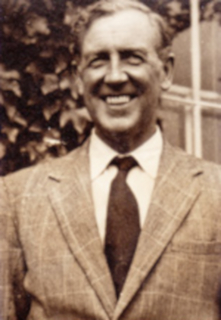
Kennedy’s father, Joseph Hamilton Kennedy, is a policeman in the Royal Irish Constabulary (RIC). While growing up in the village of Coagh, Kennedy writes several songs and poems. He is inspired by local surroundings — the view of the Ballinderry River, the local Springhill House and the plentiful chestnut trees on his family’s property, as evidenced in his poem Chestnut Trees. He later moves to Portstewart, a seaside resort in County Londonderry.
While awaiting a Colonial Service posting to the colony of Nigeria, Kennedy embarks on a career in songwriting. His first success comes in 1930 with “The Barmaid’s Song”, sung by Gracie Fields. Fellow lyricist Harry Castling introduces him to Bert Feldman, a music publisher based in London‘s “Tin Pan Alley“, for whom he starts to work. In the early 1930s he writes a number of successful songs, including “Oh, Donna Clara” (1930), “My Song Goes Round the World” (1931), and “The Teddy Bears’ Picnic” (1933), in which he provides new lyrics to John Walter Bratton‘s tune from 1907.
In 1934, Feldman turns down Kennedy’s song “Isle of Capri“, but it becomes a major hit for a new publisher, Peter Maurice. He writes several more successful songs for Maurice, including “Red Sails in the Sunset” (1935), inspired by beautiful summer evenings in Portstewart, Northern Ireland, “Harbour Lights” (1937) and “South of the Border” (1939), inspired by a holiday picture postcard he receives from Tijuana, Mexico and written with composer Michael Carr. He and Carr also collaborate on several West End shows in the 1930s, including London Rhapsody (1937). “My Prayer,” with original music by Georges Boulanger, has English lyrics penned by Kennedy in 1939. It is originally written by Boulanger with the title “Avant de Mourir” in 1926.
During the early stages of World War II, while serving in the British Army‘s Royal Artillery, where he rises to the rank of Captain, Kennedy writes the wartime hit, “We’re Going to Hang out the Washing on the Siegfried Line.” His hits also include “Cokey Cokey” (1945), and the English lyrics to “Lili Marlene.” After the end of the war, his songs include “Apple Blossom Wedding” (1947), “Istanbul (Not Constantinople)” (1953), and “Love Is Like a Violin” (1960). In the 1960s he writes the song “The Banks of the Erne'”, for recording by his friend from the war years, Theo Hyde, also known as Ray Warren.
Kennedy is a patron of the Castlebar Song Contest from 1973 until his death in 1984 and his association with the event adds great prestige to the contest.
Mac Cába resigns his Dáil seat in March 1925 along with several other TDs, and at the resulting by-election on March 11, 1925, Cumann na nGaedheal candidate Martin Roddy wins his seat. He does not stand for public office again and returns to his post as a schoolteacher.
In the 1930s Mac Cába is involved with the short-lived but widely followed Irish Christian Front, serving as the organisation’s secretary and announcing its creation to the public on August 22, 1936. He is also member of the Blueshirts during this period and later the Irish Friends of Germany during World War II, a would-be Nazi Collaborator group in the event Germany invades Ireland. He chairs their meetings, denies the group is a fifth column and expresses the belief that a German victory would lead to a United Ireland. He is interned in 1940–1941 because of his pro-German sympathies, which he claims results from the desire to “see the very lifeblood squeezed out of England.”
Mac Cába dies in Dublin on May 31, 1972, leaving his wife, son, and three daughters. There is a bronze bust of him in the headquarters of the Educational Building Society, Westmoreland Street, Dublin.
Born in Birmingham to a working class family on February 15, 1883, Ward initially pursues a career as a civil servant before concentrating on writing full-time. He works as a poet, songwriter and comedy sketch writer for music hall performers before creating the Sax Rohmer persona and pursuing a career writing fiction.
Like his contemporaries Algernon Blackwood and Arthur Machen, Ward claims membership to one of the factions of the qabbalisticHermetic Order of the Golden Dawn. He also claims ties to the Rosicrucians, but the validity of his claims has been questioned. His doctor and family friend Dr R. Watson Councell may have been his only legitimate connection to such organisations.
Ward’s first published work comes in 1903, when the short story “The Mysterious Mummy” is sold to Pearson’s Weekly. His main literary influences are Edgar Allan Poe, Arthur Conan Doyle and M. P. Shiel.
Ward gradually transitions from writing for music hall performers to concentrating on short stories and serials for magazine publication. In 1909 he marries Rose Elizabeth Knox. He publishes his first book Pause! anonymously in 1910.
After penning Little Tich in 1911 as ghostwriter for the famous music hall entertainer of the same name, Ward issues the first Fu Manchu novel, The Mystery of Dr. Fu-Manchu, serialised from October 1912 to June 1913. It is an immediate success. The Fu Manchu stories, together with his more conventional detective series characters — Paul Harley, Gaston Max, Red Kerry, Morris Klaw and the Crime Magnet — make him one of the most successful and well-paid authors of the 1920s and 1930s. In the 28 years from 1931 to 1959, he adds no fewer than 10 new books to the Fu Manchu series.
Other works by Ward include The Orchard of Tears (1918), The Quest of the Sacred Slipper (1919), Tales of Chinatown (1922) and Brood of the Witch-Queen as well as numerous short stories.
Ward’s work is banned in Nazi Germany, causing him to complain that he could not understand such censorship, stating “my stories are not inimical to Nazi ideals.”
After World War II, Ward and his wife move to New York, only returning to London shortly before his death. He dies on June 1, 1959 at the age of 76, due to an outbreak of Influenza A virus subtype H2N2.
The Baltic Exchange bombing, an attack by the Provisional Irish Republican Army (PIRA) on London‘s financial centre, takes place on April 10, 1992, the day after the General Election which re-elects John Major from the Conservative Party as Prime Minister. The one-ton bomb, concealed in a large white truck and consisting of a fertilizer device wrapped with a detonation cord made from 100 lbs. of Semtex, is the biggest detonated on mainland Britain since World War II. The bombing kills three people, injures 91 others, and causes massive damage, destroying the Baltic Exchange building and severely damaging surroundings.
Since the PIRA’s campaign in the early 1970s, many commercial targets are attacked on the mainland which cause economic damage and severe disruption. Since 1988, Gerry Adams of Sinn Féin and John Hume of the Social Democratic and Labour Party are engaged in private dialogue to create a broad Irish nationalist coalition. British Prime Minister John Major refuses to openly enter into talks with Sinn Féin until the IRA declares a ceasefire. The risk of an IRA attack on London increases due to the lack of progress with political talks, resulting in a warning being circulated to all police forces in Britain highlighting intelligence reports of a possible attack, as it is believed that the IRA has enough personnel, equipment and funds to launch a sustained campaign in England.
On April 10, 1992, at 9:20 PM, a huge bomb is detonated in front of the Baltic Exchange building at 24-28 St. Mary Axe. The façade of the offices is partially destroyed, and the rest of the building is extensively damaged. The bomb also causes heavy damage to surrounding buildings. It causes £800 million worth of damage, £200 million more than the total damage caused by the 10,000 explosions that had occurred during the Troubles in Northern Ireland up to that point.
The IRA gives a telephone warning twenty minutes before the explosion, saying there is a bomb inside a van outside the London Stock Exchange. This is a half mile away from the actual location by the Baltic Exchange.
The homemade explosive is inside a white Ford Transit van parked in St. Mary Axe. The components are developed in South Armagh, shipped from Ireland, and assembled in England. The attack is planned for months and marks a dangerous advance to the British of the IRA’s explosives manufacturing capabilities. The bomb is described as the most powerful to hit London since the Luftwaffe raids of World War II.
A few hours later another similarly large bomb goes off in Staples Corner in north London, also causing major damage.
The next day, the IRA claims responsibility in a statement from Dublin. It is believed the IRA are trying to send a message to the Conservative Party who won the election, which also sees Sinn Féin leader Gerry Adams lose his unused seat in the Westminster Parliament.
Many of the damaged buildings are once again badly damaged by the Bishopsgate bombing the following year. Both incidents contribute to the formation of the “Ring of Steel” in the city to protect it from further terrorism.
The Exchange sells its badly damaged historic building to be redeveloped under the auspices of English Heritage as a Grade II* site. However, the City and English Heritage later allow it to be demolished, seeking instead a new landmark building. The site, together with that of the UK Chamber of Shipping at 30–32 St. Mary Axe, is now home to the skyscraper commissioned by Swiss Re commonly referred to as The Gherkin.
Born in Magherafelt, County Londonderry on June 5, 1913, Doherty begins his career with Glentoran F.C. in the Irish League. After helping Glentoran to the 1933 Irish Cup, early in the 1933–1934 season he joins English club Blackpool F.C., at the age of 19. He then joins Manchester City on February 19, 1936 for a then-club record of £10,000. Blackpool needs the money urgently, and Doherty is summoned from his lunch to report to Bloomfield Road. He tries hard to persuade Blackpool directors that he does not wish to leave the club, for he is due to marry a local girl and has just bought a new house in the town. The fee is an exceptionally high transfer fee for the period, coming within £1,000 of the British record. Doherty’s Manchester City debut, against Preston North End F.C., is not a successful one. Tightly man-marked by Bill Shankly throughout, he fails to make an impact. He later describes the remainder of his first Manchester City season as “uneventful,” however his second is anything but.
Manchester City starts the 1936–1937 season poorly and are in the bottom half of the table until December. Occasional big wins, including a 6–2 defeat of West Bromwich Albion F.C. and a 4–1 defeat of Everton F.C., are mixed with extended barren runs. At one point the club gains just one win in twelve matches. However, Doherty scores goals regularly. A goal in a 5–3 Christmas day loss to Grimsby Town F.C. is his twelfth of the season. Christmas proves to be a turning point for the club, as a win against Middlesbrough F.C. the following day is the start of a long unbeaten run. By April, Manchester City is second in the table and faces a fixture against Arsenal F.C., league leaders and the dominant club of the period. Doherty scores the first goal in a 2–0 win, and City reaches the top of the table. The unbeaten run continues until the end of the season, and City secures their first league championship with a 4–1 win over Sheffield Wednesday F.C.. Doherty, with 30 league goals, is the club’s leading scorer, helped by a run of eleven goals in seven games as the season draws to a close.
Doherty scores 79 goals in 130 appearances during his time at Maine Road. During the World War II years of 1939–1945, Doherty serves in the Royal Air Force. He remains registered as a Manchester City player, scoring 60 goals in 89 wartime matches, though wartime games are not generally included in official records. He also guests for numerous clubs across the country. During a guest appearance for Port Vale F.C. in 1945, he famously goes to take a penalty but instead of shooting he lays it off to a teammate who scores.
After the conclusion of the war, Doherty transfers to Derby County F.C., with whom he wins the FA Cup, scoring a goal in the final itself. He also goes on to play for Huddersfield Town A.F.C., scoring 33 goals in 83 league appearances.
Doherty’s coaching techniques are revolutionary at the time. He emphasises ball practice and instead of endless laps of the pitch, suggests volleyball “to promote jumping, timing and judgement,” basketball “to encourage split-second decision-making and finding space,” and walking football “to build up calf muscles.”