seamus dubhghaill

Promoting Irish Culture and History from Little Rock, Arkansas, USA


Leave a comment

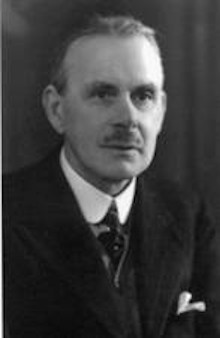
The Assassination of Christopher Ewart-Biggs

christopher-ewart-biggs-assassination

Christopher Thomas Ewart Ewart-Biggs, British Ambassador to the Republic of Ireland, author and senior Foreign Office liaison officer with MI6, is killed in Sandyford, Dublin on July 21, 1976, by a Provisional Irish Republican Army (IRA) land mine.

Ewart-Biggs is born in the Thanet district of Kent, South East England to Captain Henry Ewart-Biggs of the Royal Engineers and his wife Mollie Brice. He is educated at Wellington College and University College, Oxford and serves in the Queen’s Own Royal West Kent Regiment of the British Army during World War II. At the Second Battle of El Alamein in 1942 he loses his right eye and as a result he wears a smoked-glass monocle over an artificial eye.

Ewart-Biggs joins the Foreign Service in 1949, serving in Lebanon, Qatar and Algiers, as well as Manila, Brussels and Paris.

Ewart-Biggs is 55 when he is killed by a land mine planted by the IRA on July 21, 1976. He had been taking precautions to avoid such an incident since coming to Dublin only two weeks earlier. Among the measures he employs is to vary his route many times a week however, at a vulnerable spot on the road connecting his residence to the main road, there is only a choice between left or right. He chooses right and approximately 150 yards from the residence he hits a land mine that is later judged to contain hundreds of pounds of explosives. Ewart-Biggs and fellow passenger and civil servant Judith Cooke (aged 26) are killed. Driver Brian O’Driscoll and third passenger Brian Cubbon (aged 57) are injured. Cubbon is the highest-ranking civil servant in Northern Ireland at the time.

The Irish government launches a manhunt involving 4,000 Gardaí and 2,000 soldiers. Taoiseach Liam Cosgrave declares that “this atrocity fills all decent Irish people with a sense of shame.” In London, Prime Minister James Callaghan condemns the assassins as a “common enemy whom we must destroy or be destroyed by.” Thirteen suspected members of the IRA are arrested during raids as the British and Irish governments attempt to apprehend the criminals, but no one is ever convicted of the killings. In 2006, released Foreign and Commonwealth Office files reveal that the Gardaí had matched a partial fingerprint at the scene to Martin Taylor, an IRA member suspected of gun running from the United States.

Ewart-Biggs’s widow, Jane Ewart-Biggs, becomes a Life Peer in the House of Lords, campaigns to improve Anglo-Irish relations and establishes the Christopher Ewart-Biggs Memorial Prize for literature.

(Pictured: The twisted remains of the car lie upended beside a huge crater after the explosion that killed Christopher Ewart-Biggs and civil servant Judith Cooke)

Leave a comment

Death of Hugh O’Neill, Earl of Tyrone

hugh-o-neill

Hugh O’Neill (Irish: Aodh Mór Ó Néill), the 3rd Baron Dungannon and 2nd Earl of Tyrone, dies in Rome on July 20, 1616. His career is played out against the background of the Tudor conquest of Ireland, and he is best known for leading the resistance during the Nine Years’ War, the strongest threat to Tudor authority in Ireland since the revolt of Silken Thomas. The defeat of O’Neill and the conquest of his province of Ulster is the final step in the subjugation of Ireland by the English.

Although born into the powerful O’Neill dynasty of Ulster, O’Neill is fostered as a ward of the Crown in County Dublin after the assassination of his father, Matthew, in 1558. His wardship ends in 1567 and, after a visit to the court in London, he returns to Ireland in 1568 and assumes his grandfather’s title of Earl of Tyrone. By initially cooperating with the government of Queen Elizabeth I, he establishes his base of power, and in 1593 he replaces Turlough Lynagh O’Neill as chieftain of the O’Neills. But his dominance in Ulster leads to a deterioration in his relations with the Crown, and skirmishes between his forces and the English in 1595 are followed by three years of fruitless negotiations between the two sides.

In 1598 O’Neill reopens hostilities. His victory over the English on August 14 in the Battle of the Yellow Ford on the River Blackwater, Ulster, the most serious defeat sustained by the English in the Irish wars, sparks a general revolt throughout the country. Pope Clement VIII lends moral support to his cause, and, in September 1601, four thousand Spanish troops arrive at Kinsale, Munster, to assist the insurrection. But those reinforcements are quickly surrounded at Kinsale, and O’Neill suffers a staggering defeat in December 1601 while attempting to break the siege. He continues to resist until forced to surrender on March 30, 1603, six days after the death of Queen Elizabeth.

Elizabeth’s successor, King James I, allows O’Neill to keep most of his lands, but the chieftain soon finds that he cannot bear the loss of his former independence and prestige. In September 1607 he, with Rory O’Donnell, 1st Earl of Tyrconnell, and their followers, secretly embark on a ship bound for Spain. The vessel is blown off course and lands in Normandy. From there the refugees make their way via the Spanish Netherlands to Rome, where they are acclaimed by Pope Paul V. This “Flight of the Earls” signals the end of Gaelic Ulster and thereafter the province is rapidly Anglicized. Outlawed by the English, O’Neill lives in Rome the rest of his life. He dies there at the age of 66 on July 20, 1616. He is interred in the Spanish church of San Pietro in Montorio.


Leave a comment

Birth of Garret Wesley, 1st Earl of Mornington

garret-wesley

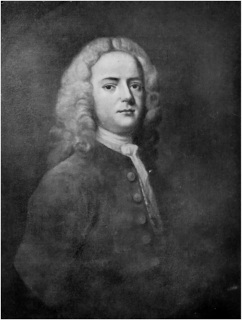
Garret Colley Wesley, 1st Earl of Mornington, Anglo-Irish politician and composer best known today for fathering several distinguished military commanders and politicians of the United Kingdom of Great Britain and Ireland, is born on July 19, 1735, at the family estate of Dangan Castle, near Summerhill, County Meath.

Wesley is the son of Richard Wesley, 1st Baron Mornington, and Elizabeth Sale. He is educated at Trinity College Dublin and is elected its first Professor of Music in 1764. From early childhood he shows extraordinary talent on the violin and soon begins composing his own works. As a composer he is remembered chiefly for glees such as “Here in cool grot” and for a double Anglican chant. His son, Arthur Wellesley, 1st Duke of Wellington, is the only one of his children to inherit something of his musical talent.

Wesley represents Trim in the Irish House of Commons from 1757 until 1758, when he succeeds his father as 2nd Baron Mornington.

Wesley marries Anne Hill-Trevor, eldest daughter of banker Arthur Hill-Trevor, 1st Viscount Dungannon, and his wife Anne Stafford, on February 6, 1759. His godmother, the famous diarist Mary Delany, says the marriage is happy, despite his lack of financial sense and her “want of judgment.” They have nine children, most of whom are historically significant.

In 1759 Wesley is appointed Custos Rotulorum of Meath and in 1760, in recognition of his musical and philanthropic achievements, he is created Viscount Wellesley, of Dangan Castle in the County of Meath, and Earl of Mornington. He is elected Grandmaster of the Grand Lodge of Ireland in 1776, a post he holds until the following year.

Wesley dies at the age of 45 on May 22, 1781. Like his father, he is careless with money, and his early death leaves the family exposed to financial embarrassment, leading ultimately to the decision to sell all their Irish estates.

Four streets in Camden Town, which form part of the estate of Wesley’s son-in-law Henry FitzRoy, are named Mornington Crescent, Place, Street and Terrace after him. Of these, the first has since become famous as the name of a London Underground station.

Four of Wesley’s five sons are created peers in the Peerages of Great Britain and the United Kingdom. The Barony of Wellesley and the Barony of Maryborough are now extinct, while the Dukedom of Wellington and Barony of Cowley are extant. The Earldom of Mornington is held by the Dukes of Wellington, and the Barons Cowley has since been elevated to be Earls Cowley.


Leave a comment

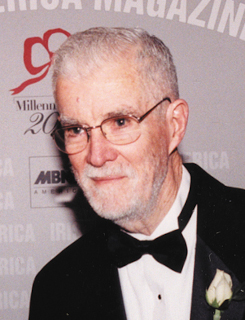
Death of Eoin McKiernan, Scholar of Irish Studies

eoin-mckiernan

Eoin McKiernan, early scholar in the interdisciplinary field of Irish Studies in the United States and the founder of the Irish American Cultural Institute (IACI), dies in Saint Paul, Minnesota on July 18, 2004. He is credited with leading efforts to revive and preserve Irish culture and language in the United States.

Born John Thomas McKiernan in New York City on May 10, 1915, McKiernan adopts the old Irish form of his name, Eoin, early in his life. While in college, he wins a scholarship to study Irish language in the Connemara Gaeltacht in the west of Ireland. In 1938, he marries Jeannette O’Callaghan, whom he met while studying Irish at the Gaelic Society in New York City. They raise nine children.

McKiernan attends seminary at Cathedral College of the Immaculate Conception and St. Joseph’s College in New York, leaving before ordination. He earns degrees in English and Classical Languages (AB, St. Joseph College, NY, 1948), Education and Psychology (EdM, UNH, 1951), and American Literature and Psychology (PhD, Penn State, 1957). Later in life, he is awarded honorary doctorates from the National University of Ireland, Dublin (1969), the College of Saint Rose, Albany (1984), Marist College, Poughkeepsie (1987) and the University of St. Thomas, Saint Paul (1996).

Passion for Irish culture is the dominant undercurrent of a distinguished teaching career in secondary (Pittsfield, NH, 1947–49) and university levels (State University of New York at Geneseo, 1949–59, and University of St. Thomas in Saint Paul, MN, 1959–72). McKiernan serves as an officer of the National Council of College Teachers of English, is appointed by the Governor of New York to a State Advisory Committee to improve teacher certification standards and serves as a Consultant to the U.S. Department of Education in the early 1960s.

McKiernan suggests to the Irish government in 1938 that a cultural presence in the United States would promote a deeper understanding between the two countries, but he eventually realises that if this is to happen, he will have to lead the way. His opportunity comes in 1962, when he is asked to present a series on public television. Entitled “Ireland Rediscovered,” the series is so popular that another, longer series, “Irish Diary,” is commissioned. Both series air nationwide. The enthusiastic response provides the impetus to establish the Irish American Cultural Institute (IACI) in 1962. In 1972 he resigns from teaching to devote his energy entirely to the IACI.

Under McKiernan’s direction, the IACI publishes the scholarly journal Eire-Ireland, with subscribers in 25 countries, and the informational bi-monthly publication Ducas. The IACI still sponsors the Irish Way (an immersion program for U.S. teenagers), several speaker series, a reforestation program in Ireland (Trees for Ireland), theatre events in both countries and educational tours in Ireland. He continues these educational Ireland tours well into his retirement. At his suggestion, the Institute finances the world premiere of A. J. Potter‘s Symphony No. 2 in Springfield, Massachusetts.

Troubled by the biased reporting of events in Northern Ireland in the 1970s, McKiernan establishes an Irish News Service, giving Irish media and public figures direct access to American outlets. In the 1990s, he is invited by the Ditchley Foundation to be part of discussions aimed at bringing peace to that troubled area and is a participant in a three-day 1992 conference in London dealing with civil rights in Northern Ireland. Organized by Liberty, a London civil rights group, the conference is also attended by United Nations, European Economic Community, and Helsinki representatives.

McKiernan also founds Irish Books and Media, which is for forty years the largest distributor of Irish printed materials in the United States. In his eighth decade, he establishes Irish Educational Services, which funds children’s TV programs in Irish and provided monies for Irish language schools in Northern Ireland. Irish America magazine twice names him one of the Irish Americans of the year. In 1999, they choose him as one of the greatest Irish Americans of the 20th century.

McKiernan dies on July 18, 2004, in Saint Paul, Minnesota. On his death, The Irish Times refers to him as the “U.S. Champion of Irish culture and history . . . a patriarch of Irish Studies in the U.S. who laid the ground for the explosion of interest in Irish arts in recent years.”


Leave a comment

Birth of John Miller Andrews, 2nd Prime Minister of Northern Ireland

john-miller-andrews

John Miller Andrews, the second Prime Minister of Northern Ireland, is born in Comber, County Down on July 17, 1871. He is the eldest child in the family of four sons and one daughter of Thomas Andrews, flax spinner, and his wife Eliza Pirrie, a sister of William Pirrie, 1st Viscount Pirrie, chairman of Harland & Wolff. He is named after his maternal great-uncle, John Miller of Comber (1795–1883).

Andrews is educated at the Royal Belfast Academical Institution. In business, Andrews is a landowner, a director of his family linen-bleaching company and of the Belfast Ropeworks. His younger brother, Thomas Andrews, who dies in the 1912 sinking of the RMS Titanic, served as managing director of the Harland and Wolff shipyard in Belfast. Another brother, Sir James Andrews, 1st Baronet, was Lord Chief Justice of Northern Ireland.

In 1902 Andrews marries Jessie, eldest daughter of Bolton stockbroker Joseph Ormrod at Rivington Unitarian Chapel, Rivington, near Chorley, Lancashire, England. They have one son and two daughters. His younger brother, Sir James, marries Jessie’s sister.

Andrews is elected as a member of parliament in the House of Commons of Northern Ireland, sitting from 1921 until 1953 (for Down from 1921–29 and for Mid Down from 1929–1953). He is a founder member of the Ulster Unionist Labour Association, which he chairs, and is Minister of Labour from 1921 to 1937. He is Minister of Finance from 1937 to 1940, succeeding to the position on the death of Hugh MacDowell Pollock. Upon the death of James Craig, 1st Viscount Craigavon in 1940, he becomes leader of the Ulster Unionist Party (UUP) and the second Prime Minister of Northern Ireland.

In April 1943 backbench dissent forces Andrews from office. He is replaced as Prime Minister by Basil Brooke, 1st Viscount Brookeborough. He remains, however, the recognised leader of the UUP for a further three years. Five years later he becomes the Grand Master of the Orange Order. From 1949, he is the last parliamentary survivor of the original 1921 Northern Ireland Parliament, and as such is recognised as the Father of the House. He is the only Prime Minister of Northern Ireland not to have been granted a peerage. His predecessor and successor receive hereditary viscountcies, and later prime ministers are granted life peerages.

Throughout his life Andrews is deeply involved in the Orange Order. He holds the positions of Grand Master of County Down from 1941 and Grand Master of Ireland (1948–1954). In 1949 he is appointed Imperial Grand Master of the Grand Orange Council of the World.

Andrews is a committed and active member of the Non-subscribing Presbyterian Church of Ireland. He regularly attends Sunday worship, in the church built on land donated by his great-grandfather, James Andrews, in his hometown Comber. He serves on the Comber Congregational Committee from 1896 until his death on August 5, 1956, holding the position of Chairman from 1935 onwards. He is buried in the small graveyard adjoining the church.


Leave a comment

Birth of Samuel Haliday, Irish Presbyterian Minister

burning-bush

Samuel Haliday, Irish Presbyterian non-subscribing minister to the “first congregation” of Belfast, is born on July 16, 1685, in Omagh, County Tyrone, in what is now Northern Ireland. His refusal to sign the Westminster Confession of Faith leads to a split between Subscribing and Non-Subscribing adherents.

Haliday is the son of the Rev. Samuel Haliday (1637–1724), who is ordained presbyterian minister of Convoy, County Donegal, in 1664. He then moves to Omagh in 1677, leaving for Scotland in 1689, where he is successively minister of Dunscore, Drysdale, and New North Church, Edinburgh. He returns to Ireland in 1692, becoming minister of Ardstraw, where he continues until his death.

Haliday enters Glasgow College, enrolled among the students of the first class under John Loudon, professor of logic and rhetoric. He graduates M.A. and goes to Leiden University to study theology in November 1705.

In 1706 Haliday is licensed at Rotterdam and in 1708 receives ordination at Geneva, choosing to be ordained there because of its tolerance. He becomes chaplain to the 26th (Cameronian) Regiment of Foot, serving under John Churchill, 1st Duke of Marlborough in Flanders. He is received by the Synod of Ulster in 1712 as an ordained minister without charge and declared capable of being settled in any of its congregations. For some time, however, he lives in London, where he associates with the Whig faction, in and out of the government, and uses his influence to promote the interests of his fellow-churchmen. He opposes the extension of the Schism Act 1714 to Ireland. In 1718 he takes a leading part in obtaining an increase in the regium donum and the synod of Ulster thanks him. He introduces two historians, Laurence Echard and Edmund Calamy, in a London social meeting with Sir Richard Ellys, 3rd Baronet.

In 1719 Haliday is present at the Salters’ Hall debates, and in the same year receives a call from the first congregation of Belfast, vacant by the death of the Rev. John McBride. He is at this time chaplain to Colonel Anstruther’s regiment of foot. It being rumoured that he holds Arian views, the synod in June 1720 considers the matter, and clears him. His accuser, the Rev. Samuel Dunlop of Athlone, is rebuked.

On July 28, 1720, the day appointed for his installation in Belfast, Haliday refuses to subscribe the Westminster Confession of Faith, making instead a declaration to the presbytery. The presbytery proceeds with the installation, in violation of the law of the church, and in the face of a protest and appeal from four members. The case comes before the synod in 1721, but though Haliday still refuses to sign the Confession, the matter is allowed to drop. A resolution is, however, carried after long debate that all members of synod who are willing to subscribe the confession might do so, with which the majority comply. Hence arises the terms “subscribers” and “non-subscribers.” He continues to be identified with the latter until his death. A number of members of his congregation are so dissatisfied with the issue of the case that they refuse to remain under his ministry. After much opposition they are erected by the synod into a new charge.

The subscription controversy rages for years. Haliday continues to take a major part in it, both in the synod and through the press. To end the conflict, the synod in 1725 adopts the expedient of placing all the non-subscribing ministers in one presbytery, that of Antrim, which in the following year is excluded from the body.

Haliday is a lifelong friend to the philosopher Francis Hutcheson. In 1736 Thomas Drennan is installed as his colleague in Belfast. Haliday dies at the age of 54 on March 5, 1739.

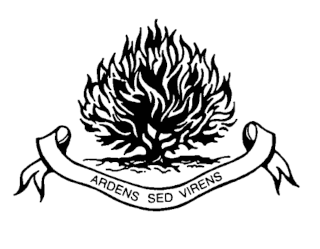
(Pictured: The burning bush is a common symbol used by Presbyterian churches; here as used by the Presbyterian Church in Ireland. The Latin inscription underneath translates as “burning but flourishing”. In Presbyterianism, alternative versions of the motto are also used such as “burning, yet not consumed”.)


Leave a comment

Birth of Gerald O’Donovan, Priest & Writer

CREATOR: gd-jpeg v1.0 (using IJG JPEG v62), default quality

Gerald O’Donovan, Irish priest and writer born Jeremiah Donovan, is born in Kilkeel, County Down on July 15, 1871.

O’Donovan is the son of a pier builder. He attends Ardnaree College in Killala and St. Patrick’s College, Maynooth. He leaves Maynooth after ordination for the Diocese of Clonfert in 1895 and is appointed as a Roman Catholic priest to Loughrea, County Galway between 1896 and 1904. He is an enthusiastic advocate of the Gaelic League and the Irish Cooperative Association and promotes his views in articles and lectures. His literary friends include Lady Gregory, W. B. Yeats and George Moore. He is in charge of decorating St. Brendan’s Cathedral, Loughrea in 1901, the financing provided by O’Donovan’s close friend Edward Martyn. He quit Loughrea in 1904 after the arrival of a new bishop, Thomas O’Dea.

O’Donovan moves to London but failing to find work as a priest, he leaves the Catholic priesthood in May 1908. He becomes a subwarden at Toynbee Hall in the East End in March 1910. In October that year, he marries Florence Emily Beryl Verschoyle (1886–1968), the daughter of an Irish Protestant colonel fifteen years his junior. They have three children, two daughters and a son.

In 1913, O’Donovan publishes his first and best-known novel, Father Ralph, which draws in large part on his own life. Around this time, he changes his first name from Jeremiah to Gerald. Another novel titled Waiting is published in 1914. He joins the war effort in 1915 and rises to become head of the Italian section at the Ministry of Information in 1918. There he meets his secretary and future lover, English novelist Rose Macaulay.

O’Donovan publishes a few more novels after the war: How They Did It (1920), Conquest (1920), Vocations (1921), and The Holy Tree (1922). The clandestine affair with Macaulay continues for nearly two decades. In 1939, the pair are on holiday in the Lake District when they meet with a motoring accident, which damages O’Donovan’s health. He dies of cancer in Albury, Surrey three years later, on July 26, 1942. His letters to Macaulay had been destroyed the previous year when her flat in Central London was bombed during the Blitz.

In her novel The Towers of Trebizond, Macaulay features a woman character (Laurie) torn between her attraction to Christianity and her adulterous love for a married man. This is considered to reflect the author’s relationship with O’Donovan.


Leave a comment

Trimble Rejects Power Sharing Compromise

blair-ahern-stormont-castle-1999On July 14, 1999, Ulster Unionists under David Trimble reject a compromise for the creation of a power sharing government placing the Northern Ireland peace process in grave trouble. The proposals would have seen inclusive self-government introduced in Northern Ireland on Sunday, July 18, 1999.

Early in the day the government rushes legislation through the House of Commons providing for the suspension of the Executive if the Irish Republican Army (IRA) fails to decommission all its arms by May 2000 in line with a timetable, yet to be drawn up. It refuses to accept any Ulster Unionist amendments. But within 12 hours, British Prime Minister Tony Blair signals that three new amendments will be included to tighten the so-called failsafe mechanism when the bill is debated in the House of Lords in the evening.

The first amendment makes clear that decommissioning must proceed in line with a timetable to be drawn up by General John de Chastelain. The second provides for the automatic suspension of the Executive, while the third provides for the party in default to be clearly identified.

They fail to sway Trimble, who criticises The Way Forward as a hastily concocted scheme. However, he does leave the door open for further negotiations to save the agreement. “If there was a clear watertight scheme, in which there was at the outset an unequivocal commitment to change and a process that genuinely guaranteed to deliver that change, we would have to consider whether a scruple over a period of days could be justified.”

Sinn Féin is furious with party president Gerry Adams saying, “Those who may genuinely want to deal with the issue of guns are going about it in absolutely the worst and wrong way.” The party wants the assembly to be wound up immediately, and all members’ wages to be stopped. It wants the British and Irish governments to continue to implement all aspects of the agreement which are within their control. Adams is enraged by Blair’s move to amend the failsafe legislation. His party says it will consider applying for judicial review of the amended bill, believing it to compromise the International Commission on Decommissioning and unlawfully conflict with the agreement.

Blair and Taoiseach Bertie Ahern announce on the following day that the 15-month-old and ailing Good Friday Agreement will go into a review procedure involving all the political parties and be effectively parked over the summer.

Trimble, leader of the Ulster Unionists, resists intense government pressure as he refuses to back the British and Irish governments’ blueprint providing for a power-sharing executive the following week and IRA decommissioning in the summer. He repeats his party’s view that Sinn Féin can only join his cabinet once the IRA has started to hand over its weapons.

The outcome is a bitter personal setback for Blair. In a last-minute televised appeal to the Unionists not to “close the door’ on an agreement, he appears to acknowledge that they will have to try to find another way forward. “I believe in the end we will get an agreement on this. Whether we manage it by tomorrow morning, that is more difficult,” he says.

Trimble complains he had too little time to secure backing within his split party for The Way Forward, which the governments issued twelve days earlier after a week of intense negotiations at Stormont Castle. Blair’s handling of the affair is questioned.

Trimble’s problem with the legislative failsafe is that it punishes all parties for an IRA transgression of a decommissioning timetable, yet to be drawn up. It provides for the executive to be suspended, rather than carry on with Sinn Féin’s two ministerial posts allocated to other parties. The nationalist Social Democratic and Labour Party (SDLP), which could have given Trimble cover on the issue of expulsion, declines to say whether it will vote for Sinn Féin’s expulsion, which infuriates Ulster Unionists.

Negotiations to save the Good Friday Agreement have gone through four deadlines during the year. There are fears that the latest delay might lead to Sinn Féin withdrawing its declaration on IRA arms.

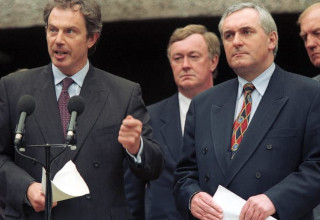
(Pictured: British Prime Minister Tony Blair and Taoiseach Bertie Ahern present a joint British-Irish blueprint for implementation of the Good Friday Agreement at Stormont Castle in Belfast, June 2, 1999 | Sean Gallup | Getty Images)


Leave a comment

The Ballygawley Land Mine Attack

ballygawley-land-mine-attack

The Ballygawley land mine attack is a bomb attack carried out by the Provisional Irish Republican Army (IRA) on July 13, 1983. The IRA explodes a land mine under an Ulster Defence Regiment‘s (UDR) mobile patrol at Ballygawley Road, near Dungannon, County Tyrone, Northern Ireland. Four UDR soldiers are killed in the incident.

After the 1981 Irish hunger strike, floods of recruits sign up to join the IRA. Republicans in County Tyrone are especially angry over the death of Martin Hurson who was from the small Tyrone village of Cappagh and was one of Cappagh’s most famous sons. Cappagh becomes a Republican stronghold in the 1980s. Many young men flock to join the East Tyrone Brigade to avenge Hurson’s death. Some of those who join after being radicalized by the Hunger Strike go onto become famous IRA Volunteers like Declan Arthurs and Martin McCaughey who were both small children when the conflict broke out in 1969.

Sinn Féin member Francie Molloy said the following on Hurson’s funeral and the effect his death had on the young people of Cappagh:

“There was people everywhere. The village was black with them. It was the first sign in Tyrone of thousands and thousands of people assembling to honor the remains of a native son coming home. Martin was young when he went to jail and young when died on hunger strike. His death just made young people more determined that they were going to replace him. They saw ten men dead as the British government taking people out of the struggle. I think the young people of Cappagh and surrounding areas decided there and then that they were going to replace every one of them and replace them tenfold. And that is what they did. The number of young people who joined up in response was massive.”

On July 13, 1983, four British Army (Ulster Defence Regiment) soldiers (Ronald Alexander, Thomas Harron, John Roxborough, and Oswald Neely), all Protestant members of the 6th Battalion UDR, are travelling in their mobile patrol along a road in Tyrone close to the small town of Ballygawley. IRA Volunteers from the East Tyrone Brigade plant a 500 lb. land mine along the road the UDR patrol is traveling. The IRA unit notices the UDR takes a similar route every so often and has spotted weakness in the patrol. The IRA Volunteers are watching the UDR patrol while being well hidden. Once the UDR patrol is close to the land mine the IRA Volunteers detonate the land mine by remote control killing the four UDR soldiers almost immediately. This is the highest casualty rate suffered by the UDR in a single incident during The Troubles and worst attack suffered by the security forces since 1981. The attack is carried out by an Active Service Unit (ASU) of the IRA’s East Tyrone Brigade which is one of the most active and successful Brigade areas in the IRA during the 1980s.

Within five years the IRA’s East Tyrone Brigade launches two more high-profile attacks in Ballygawley. In 1985, during the Attack on Ballygawley barracks, an IRA unit led by Patrick Joseph Kelly and Jim Lynagh attacks the Ballygawley RUC barracks, shooting dead two RUC officers who are at the front of the station. A 200 lb. bomb destroys the entire barracks and injures three more RUC officers. In 1988, the IRA kills eight British soldiers and injures twenty-eight others during the Ballygawley bus bombing. Many Republicans see this as revenge for the Loughgall ambush the year before when the Special Air Service (SAS) shot dead eight IRA Volunteers.


Leave a comment

First “Twelfth of July” Sectarian Riots in Belfast

orange-order-paradeThe first recorded “Twelfth of Julysectarian riots erupt in Belfast on July 12, 1813 as clashes break out between Orange marchers and Irish nationalists. Several Orangemen open fire on a crowd in Hercules Street, killing two Protestants and wounding four other people.

The Twelfth, also called the Glorious Twelfth or Orangemen’s Day, is an Ulster Protestant celebration held on July 12. It is first held in the late 18th century in Ulster. It celebrates the Glorious Revolution (1688) and victory of Protestant King William of Orange over Catholic King James II at the Battle of the Boyne in 1690, which begins the Protestant Ascendancy in Ireland.

On and around the Twelfth, large parades are held by the Orange Order and Ulster loyalist marching bands, streets are bedecked with British flags and bunting, and large towering bonfires are lit. Today the Twelfth is mainly celebrated in Ulster, especially in Northern Ireland where it is a public holiday, but smaller celebrations are held in other parts of the world where Orange lodges have been established. The Twelfth involves thousands of participants and spectators.

In Ulster, where about half the population is from a Protestant background and half from a Catholic background, the Twelfth has been accompanied by violence since its beginning. Orange marches through Irish Catholic and Irish nationalist neighbourhoods are usually met with opposition from residents, who see the Orange Order and its marches as sectarian, triumphalist and supremacist. This sometimes leads to violence.

The Order is also politically a unionist/loyalist organisation. Violence related to the Twelfth in Northern Ireland escalates during the 30-year ethno-political conflict known as the Troubles. The Drumcree conflict is the most well-known dispute involving Orange marches.

Attempts have recently been made to downplay the political aspects of the marches and present the Twelfth as a cultural, family-friendly event at which tourists are welcome. The majority of events pass off peacefully, however, there is a small contingency who occasionally stir up trouble.

When July 12 falls on a Sunday, as it does this year, the parades are held on the following day instead.