seamus dubhghaill

Promoting Irish Culture and History from Little Rock, Arkansas, USA


Leave a comment

Stephen Moylan Appointed Colonel in the Continental Army

Stephen Moylan, Irish American patriot leader during the American Revolutionary War, is appointed colonel in the Continental Army on January 5, 1777. He has several positions in the Continental Army including Muster-Master General, Secretary and Aide to General George Washington, 2nd Quartermaster General, Commander of The Fourth Continental Light Dragoons and Commander of the Cavalry of the Continental Army.

Moylan is born to a Catholic family in Cork, County Cork, in 1737. His father, John Moylan, is a well-to-do merchant in Shandon, County Cork. His older brother Francis becomes Bishop of Cork. His family sends him to be educated in Paris. He then works in Lisbon for three years in the family shipping firm. He settles in Philadelphia in 1768 to organize his own firm. He is one of the organizers of the Friendly Sons of St. Patrick, an Irish American fraternal organization, and serves as its first president.

Moylan joins the American Continental Army in 1775 and upon the recommendation of John Dickinson, is appointed Muster-Master General on August 11, 1775. His brother John acts as United States Clothier General during the war. His experience in the shipping industry affords the United States a well-qualified ship outfitter, who helps fit out the first ships of the Continental Navy. On March 5, 1776, he becomes secretary to General George Washington with the rank of lieutenant colonel. He is appointed Quartermaster General in the American Continental Army on June 5, 1776, succeeding Thomas Mifflin. He resigns from this office on September 28, 1776. However, he continues to serve as a volunteer of General Washington’s staff through December 1776.

In January 1776, Moylan writes a letter using the term “United States of America,” the earliest known use of that phrase.

Moylan then raises a troop of light dragoons, the 4th Continental Light Dragoons, also known as Moylan’s Horse, on January 3, 1777, at Philadelphia. The regiment is be noted for taking the field in captured British red coats. However, they see action in green coats at the Battle of Brandywine on September 11, 1777, and the Battle of Germantown on October 4, 1777, and end the year by protecting the Cantonment at Valley Forge. He succeeds General Casimir Pulaski as Commander of the Cavalry in March 1778. Moylan’s Horse sees action at the Battle of Monmouth on June 28, 1778.

In the campaign of 1779 Moylan and the 4th Dragoons are stationed at Pound Ridge, New York, and see action when the British raid Norwalk, Connecticut, on July 11, 1779. He and the 4th Dragoons take part in the Battle of Springfield in New Jersey, on June 23, 1780, and General Anthony Wayne‘s expedition at Bull’s Ferry, New Jersey, on July 20, 1780. He commands his Dragoons at the Siege of Yorktown in October 1781, after which he is to take the cavalry to the Southern Campaign. However, his failing health causes him to leave the field and return to Philadelphia, where he constantly appeals to the Continental Congress to man, equip and maintain the Continental Dragoon Regiments.

Moylan is rewarded for his service by being breveted to brigadier general on November 3, 1783.

Moylan is married to Mary Ricketts Van Horne on September 12, 1778, and has two daughters, Elizabeth Catherine, and Maria. His two sons die as children. He dies in Philadelphia on April 11, 1811, and is buried there in the churchyard at St. Mary’s Roman Catholic Church.


Leave a comment

Birth of Jim Norton, Film & Television Character Actor

Jim Norton, Irish stage, film and television character actor, is born in Dublin on January 4, 1938. He is known for his work in the theatre, most notably in Conor McPherson‘s The Seafarer, and on television as Bishop Brennan in the sitcom Father Ted.

Norton is educated at Synge Street CBS. From an early age he wants to be an actor, and regularly attends performances at the Abbey Theatre. His mother, Frances, plays the violin and his father, Eugene, is a baritone singer and works as a bakery manager. He has one sibling, the late acting teacher Betty Ann Norton.

Norton has been acting for over forty years in theatre, television, and film, and frequently plays clergymen, most notably Bishop Brennan in the sitcom Father Ted, as well as roles in The Sweeney (1975), Peak Practice (1993), Sunset Heights (1997), A Love Divided (1999), Rebus: Black and Blue (2000), Mad About Mambo (2000), Boxed (2003) and Jimmy’s Hall (2014). He stars as Finian McLonergan in the critically acclaimed New York City Center‘s 2009 production of Finian’s Rainbow, and in October 2009 reprises the role in the Broadway revival at the St. James Theatre. His co-stars are Cheyenne Jackson (Woody) and Kate Baldwin (Sharon).

As well as Bishop Brennan in Father Ted, Norton also plays Albert Einstein in two episodes of Star Trek: The Next Generation (namely “The Nth Degree” and “Descent“); the librarian Lieutenant James Porteous in the highly acclaimed 1970s British television drama series Colditz; Phil Harrister, a criminal involved in an intricate bank robbery, in The Sweeney episode “Contact Breaker”; O’Brady in the Minder episode “National Pelmet“; and Rory, a roguish but genteel Irishman who is diagnosed with cirrhosis of the liver, in The Royal episode “Beggars and Choosers.”

Norton has appeared in two episodes of Van der Valk. On Babylon 5 he appears in a number of roles, including that of Ombuds Wellington in the 1994 episodes “Grail” and “The Quality of Mercy“; a Narn in “Dust to Dust” (1996); and Dr. Lazarenn, a Markab doctor, in “Confessions and Lamentations” (1995). In Fall of Eagles he plays Alexander Kerensky.

Other television work includes: 1990, Agatha Christie’s Poirot, Waking the Dead, Cheers, Frasier, Midsomer Murders, Maigret and Rumpole of the Bailey as Fig Newton, Stan Laurel in the BBC drama Stan (2006), Larry Joyce in the 2013 television drama Deception, and as the timid Gardener in the first series of the long-running CITV children’s series T-Bag: “Wonders in Letterland” (1985).

Norton makee his film debut with a small role in the 1965 thriller The Face of Fu Manchu starring Christopher Lee, and later appears in the 1969 epic film Alfred the Great as Thanet. He plays the part of Pongo in the screen version of Spike Milligan‘s war-time memoir Adolf Hitler: My Part in his Downfall. In 1971 he plays Chris Cawsey (aka “The Rat Man”), one of several villains in the controversial Sam Peckinpah film Straw Dogs starring Dustin Hoffman. His character has a deviously infectious, deliberately irritating laugh that helps build tension throughout the film.

Norton appears in the movie Memoirs of an Invisible Man alongside Chevy Chase in 1992. In the same year he also appears in the Irish-made film Into the West. He appears in the comedy On the Nose as Patrick Cassidy, along with Dan Aykroyd and Robbie Coltrane, in 2001. He appears in a cameo in Harry Potter and the Chamber of Secrets in 2002 as Mr. Mason. He plays an Irish immigrant in the 2005 Australian/UK co-production, The Oyster Farmer. He plays Herr Liszt in the 2008 holocaust film The Boy in the Striped Pyjamas.

In 2011 Norton appears as the character Old Mr. Black in the film Extremely Loud & Incredibly Close directed by Stephen Daldry. He appears in the 2011 film Water for Elephants, in which he portrays a circus worker called “Camel” who befriends a character played by Robert Pattinson. In 2012 he appears as the character Tommy in the short film Homemade written by Matthew Roche and directed by Luke McManus. He is in the Ken Loach film Jimmy’s Hall which is released in 2014. He plays the role of Mr. Heelshire in the 2016 film The Boy. In 2018 he plays the role of Mr. Binnacle in Mary Poppins Returns.

Norton has a longtime partnership with playwright Conor McPherson, having originated roles in six of his plays in Dublin, London and New York, and for which he has won both the Tony and Olivier Award. Norton plays Jack in The Weir (1997), Joe in Port Authority (2001), Matthew in Come On Over (2001), Richard in The Seafarer (2006–7), Reverend Berkeley in The Veil (2011), and Maurice in The Night Alive (2013).


Leave a comment

Carrigtwohill RIC Barracks Attack

On the night of Saturday, January 3, 1920, a contingent of 30 to 40 Irish Republican Army (IRA) volunteers of the 1st Cork Brigade from Cobh and Midleton, capture and destroy the Carrigtwohill Royal Irish Constabulary (RIC) barracks. They are supported by the volunteers from Knockraha.

The barracks, long since demolished, consists of a sergeant and five constables, located at the corner of Well Lane and Main Street at what is now O’Donovan’s truck yard.

The village is completely isolated, having been secured at eastern and western ends, and from Belvelly on the northern end of the Great Island of Cork Harbour, with all telephone communication cut by the IRA men to ensure no RIC reinforcements can come to the rescue of the Carrigtwohill barracks.

The battle commences at approximately 11:00 p.m. that night, and continues through the early hours, finally coming to its conclusion when the barracks eventual fall following an explosion that blasts a hole through the barrack’s wall on the eastern gable adjoining a small stable, owned by local businessman named O’Grady, through which the assailants enter. The RIC officers are captured and handcuffed.

The IRA volunteers and the RIC officers do not suffer any casualties during the attack, which is the first successful assault on RIC barracks in Ireland during the Irish War of Independence, signaling the commencement of the all-out war on the RIC, in rural Ireland. However, a number of these IRA men later take part in the Clonmult ambush, during which several do not survive.

The barracks is never repaired, or rebuild, but is allowed to fall to ruin, eventually being completely demolished.

(From: The Carrigtwohill & District Historical Society, http://www.carrigtwohillhistoricalsociety.com | Photo: Illustrated London News, 10 January 1920)


Leave a comment

Recruitment Begins for the Black and Tans

Recruitment begins for the Black and Tans (Irish: Dúchrónaigh), Britain’s unofficial auxiliary army, on January 2, 1920. They are constables recruited into the Royal Irish Constabulary (RIC) as reinforcements during the Irish War of Independence. Recruitment begins in Great Britain and about 10,000 men enlist during the conflict. The vast majority are unemployed former British soldiers who had fought in World War I. Some sources count a small number of Irishmen as Black and Tans.

The British administration in Ireland promotes the idea of bolstering the RIC with British recruits. They are to help the overstretched RIC maintain control and suppress the Irish Republican Army (IRA), although they are less well trained in ordinary policing. The nickname “Black and Tans” arises from the colours of the improvised uniforms they initially wear, a mixture of dark green RIC (which appears black) and khaki British Army. They serve in all parts of Ireland, but most are sent to southern and western regions where fighting is heaviest. By 1921, Black and Tans make up almost half of the RIC in County Tipperary, for example.

The Black and Tans gain a reputation for brutality and become notorious for reprisal attacks on civilians and civilian property, including extrajudicial killings, arson and looting. Their actions further sway Irish public opinion against British rule and draw condemnation in Britain.

The Black and Tans are sometimes confused with the Auxiliary Division, a counterinsurgency unit of the RIC, also recruited during the conflict and made up of former British officers. However, sometimes the term “Black and Tans” covers both groups. The Ulster Special Constabulary (USC) is founded to reinforce the RIC in Northern Ireland.

More than a third leave the service before they are disbanded along with the rest of the RIC in 1922, an extremely high wastage rate, and well over half receive government pensions. Over 500 members of the RIC die in the conflict and more than 600 are wounded. Some sources state that 525 police, including 152 Black and Tans and 44 Auxiliaries, are killed in the conflict.

Many Black and Tans are left unemployed after the RIC is disbanded and about 3,000 are in need of financial assistance after their employment in Ireland is terminated. About 250 Black and Tans and Auxiliaries, among over 1,300 former RIC personnel, join the Royal Ulster Constabulary. Another 700 join the Palestine Police Force which is led by former British Chief of Police in Ireland, Henry Hugh Tudor. Others are resettled in Canada or elsewhere by the RIC Resettlement branch. Those who return to civilian life sometimes have problems re-integrating. At least two former Black and Tans are hanged for murder in Britain, and another wanted for murder commits suicide before the police can arrest him.

Due to the Tans’ behaviour in Ireland, feelings continue to run high regarding their actions. The term can still stir bad reactions because of their remembered brutality. One of the best-known Irish Republican songs is Dominic Behan‘s “Come Out, Ye Black and Tans.” The Irish War of Independence is sometimes referred to as the “Tan War” or “Black-and-Tan War.” This term is preferred by those who fought on the anti-Treaty side in the Irish Civil War and is still used by Republicans today. The “Cogadh na Saoirse” (“War of Independence”) medal, awarded since 1941 by the Irish government to IRA veterans of the War of Independence, bears a ribbon with two vertical stripes in black and tan.

Some sources say the Black and Tans were officially named the “RIC Special Reserve”, but this is denied by other sources, which say they were not a separate force but “recruits to the regular RIC” and “enlisted as regular constabulary.” Canadian historian D. M. Leeson has not found any historical documents that refer to the Black and Tans as the “Royal Irish Constabulary Special Reserve.”

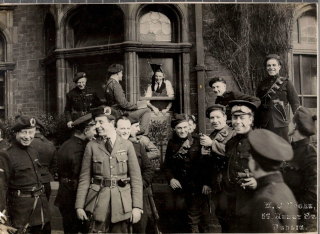
(Pictured: A group of Black and Tans and Auxiliaries outside the London and North Western Hotel in Dublin following an attack by the IRA, April 1921)


Leave a comment

Death of IRA Volunteer Fergal O’Hanlon

Fergal O’Hanlon (Irish: Feargal Ó hAnnluain), a volunteer in the Pearse Column of the Irish Republican Army (IRA), is killed on January 1, 1957, while taking part in an attack on Royal Ulster Constabulary (RUC) barracks.

Born into a staunchly republican family on February 2, 1936, in Ballybay, County Monaghan, O’Hanlon is a draughtsman employed by Monaghan County Council. He is a Gaelic footballer and a keen Irish language activist. A devout Catholic, he considers becoming a priest and spends one year at the seminary in St. Macartan’s. He joins the IRA in 1956.

At the age of 20, O’Hanlon is killed on January 1, 1957, along with Seán South while taking part in an attack on the Royal Ulster Constabulary barracks in Brookeborough, County Fermanagh, during the border campaign. Several other IRA members are wounded in the botched attack. The IRA flees the scene in a dumper truck. They abandon it near the border. They leave South and O’Hanlon, both then unconscious, in a cow byre, and crossed into the Republic of Ireland on foot for help for their comrades. The wounded IRA men are treated as “car crash victims” by sympathetic staff in the Mater Misericordiae Hospital in Dublin.

The events and personalities are sympathetically recalled in Dominic Behan‘s ballad “The Patriot Game.” O’Hanlon is mentioned in the song “Seán South of Garryowen” (“Brave Hanlon by his side”).

O’Hanlon’s mother remains firmly committed to the IRA and is hurt by the suggestion that there was an alternative to IRA activity or that her son was anything other than an Irish hero.

A marble monument now stands at the spot where South and O’Hanlon lost their lives. An annual lecture has been held in memory of O’Hanlon since 1982, and approximately 500 people attended a 50th commemoration of the men’s deaths in January 2007 in Limerick.

In 1971, a monument is unveiled to O’Hanlon in his hometown on a hill overlooking the Clones Road on which he had made his last journey home. A Gaelic football team is founded in Monaghan in 2003 and called the Fergal O’Hanlons.

O’Hanlon’s brother, Eighneachán Ó hAnnluain, is elected a Sinn Féin abstentionist TD in the 1957 Irish general election to Dáil Éireann. His sister, Pádraigín Uí Mhurchadha, is a Sinn Féin Councillor on Monaghan Urban Council.


Leave a comment

General Patrick Cleburne Commands Division in the Battle of Stones River

Irish-born Confederate States Army General Patrick Cleburne commands a division in the Battle of Stones River, also known as the Second Battle of Murfreesboro, one of the fiercest battles of the Western theater of the American Civil War. The battle takes place in Middle Tennessee from December 31, 1862, to January 2, 1863.

In early December 1862, the transfer of Confederate General Simon Bolivar Buckner creates a vacancy for a division command in General Braxton Bragg‘s Army of Tennessee. There is no man in that Army who can breathe a word against the promotion of Patrick Ronayne Cleburne to that post, nor the promotion to major general that goes with it. Usually, the months of December and January are quiet times, with soldiers in winter camps, but Union Major General William S. Rosecrans intends to drive Bragg’s army from Tennessee, winter or not.

Rosecrans’s Army of the Cumberland marches from Nashville, Tennessee, on December 26, 1862, to challenge Bragg’s Army of Tennessee at Murfreesboro. Bragg awaits his advance along Stones River, just west of Murfreesboro.

On December 31, each army commander plans to attack his opponent’s right flank, but Bragg has a shorter distance to go and thus strikes first. Cleburne’s division is on the Confederate left. A massive assault by the corps of Major General William J. Hardee, followed by that of Leonidas Polk, overruns the wing commanded by Major General Alexander M. McCook and drives the corps from the field. Union General Thomas Crittenden, observing from a distance, says it is the first time the Army of the Cumberland has ever seen such panic.

A stout defense by the division of Brigadier General Philip Sheridan in the right center of the line prevents a total collapse, and the Union assumes a tight defensive position backing up to the Nashville Turnpike. Repeated Confederate attacks are repulsed from this concentrated line, most notably in the cedar “Round Forest” salient against the brigade of Colonel William B. Hazen. Bragg attempts to continue the assault with the division of Major General John C. Breckinridge, but the troops are slow in arriving and their multiple piecemeal attacks fail.

Later, Confederate Corps commander William Hardee expresses his belief that had a fresh division followed up Cleburne’s, Rosecrans entire army would have been routed. Night falls, however, and the two armies bring in the New Year sleeping on their arms. Rosecran’s army is badly whipped, but it stays put on January 1st.

Bragg is cautious and only probes to discover if the Union army is still there. The Union army has fortified their position to the west of the river, in front of Cleburne. Bragg decides to attack them east of the river. Fighting resumes on January 2, 1863, when Bragg orders Breckinridge to assault a lightly defended Union position on a hill to the east of the Stones River. Chasing the retreating Union forces, this attack is successful at first, but they are led into a deadly trap. Faced with overwhelming artillery, the Confederates are repulsed with heavy losses. Bragg chooses to withdraw his army on January 3 to Tullahoma, Tennessee. Though his army has abandoned the field, Cleburne’s performance in his first battle as a major general has been outstanding. His eventual rise to corps command seems certain, but factors away from the battlefield prevent that.

The battle ends in a victory for the Union army following the Confederate army’s withdrawal on January 3, largely due to a series of tactical miscalculations by Confederate General Braxton Bragg, but the victory is costly for the Union army. Nevertheless, it is an important victory for the Union because it provides a much-needed boost in morale after the Union’s recent defeat at the Battle of Fredericksburg and also reinforces President Abraham Lincoln‘s foundation for issuing the Emancipation Proclamation, which ultimately discourages European powers from intervening on the Confederacy’s behalf.


4 Comments

Death of Tom Aherne, Irish Footballer & Hurler

Thomas Aherne, Irish footballer and hurler also referred to as Bud Aherne, dies on December 30, 1999. He plays football for Belfast Celtic F.C. and Luton Town F.C. and is a dual internationalist, playing for both Ireland teams – the IFA XI and the FAI XI. In 1949 he is a member of the FAI XI that defeats England 2–0 at Goodison Park, becoming the first non-UK team to beat England at home. As a hurler he also plays one game for Limerick.

Aherne is born in Limerick, County Limerick, on January 26, 1919. As a youth, he initially emerges as a prominent hurler with Treaty Sarsfields and also plays one game for Limerick. However, he subsequently decides to concentrate on football and begins his senior career with Limerick United where his teammates include Davy Walsh. During World War II, he serves in the Irish Army and is stationed at Crosshaven. His impressive performances in the League of Ireland attract attention and in 1946 he is signed by Belfast Celtic.

While at Belfast Celtic, Aherne plays alongside Jackie Vernon, Billy McMillan, Robin Lawler and Johnny Campbell and helps them win the Irish Cup in 1947 and an Irish League title in 1948. He is also at Celtic during the infamous Boxing Day riot which breaks out during a game against local rivals Linfield F.C. In March 1949, he leaves Celtic and signs for Luton Town. However, in May 1949, he temporarily rejoins Celtic for their final tour before the club disbands. Together with McMillan, Campbell, Lawlor, guest player Mick O’Flanagan and manager Elisha Scott, he goes on the Celtic tour of North America. The highlight of the 10-game tour comes on May 29 when Celtic beats the reigning British champions, Scotland, 2–0.

Aherne signed for Luton Town for a fee of £6,000 and makes his English Football League debut on March 19 in a 2–1 away defeat to Tottenham Hotspur. Despite the fact he is over 30 when he joins Luton, he quickly establishes himself as a regular. He plays competitive football into his late thirties and is ever-present during the 1954–55 season when Luton wins promotion to Division One. After playing 288 games for Luton, including 267 in the league, he retires after a hairline fracture of the ankle ends his career. Even then he continues to play for a local league team, Luton Celtic, into his forties.

When Aherne begins his international career in 1946 there are in effect, two Ireland teams, chosen by two rival associations. Both associations, the Belfast-based Irish Football Association and the Dublin-based Football Association of Ireland, claim jurisdiction over the whole of Ireland and select players from the whole island. As a result, several notable Irish players from this era, including Aherne play for both teams.

Between 1946 and 1953 Aherne makes 16 appearances for the FAI XI. He makes his FAI debut in June 1946 during an Iberian tour, playing in both the 3–1 defeat to Portugal on June 16 and then helping the FAI XI gain a surprise 1–0 victory against Spain on June 23. He remains a regular in the FAI XI throughout the late 1940s and early 1950s and is featured prominently in the qualifying rounds for the 1950 FIFA World Cup. He is also a member of the FAI XI team that defeats England 2–0 at Goodison Park, becoming the first non-UK team to beat England at home.

On November 16, 1953, during a 1–1 draw with France, Aherne briefly becomes involved in controversy. Although only a friendly, the game quickly becomes heated and at one point, with Aherne chasing Raymond Kopa down the tunnel after play had been stopped for a foul. Kopa allegedly runs for his life after upsetting Aherne once too often. The FAI selectors are not impressed, and Aherne is told a repeat will end his international career. As it turns out, he makes only one more appearance for the FAI XI. That comes on October 4, 1953, in 5–3 defeat against France during a qualifier for the 1954 FIFA World Cup.

Between 1946 and 1950, Aherne also makes six appearances for the IFA XI. These include two Victory Internationals played in early 1946. On February 2 at Windsor Park, he makes his debut for the IFA XI in a 3–2 defeat to Scotland. Then on May 4 he helps the IFA XI defeat Wales 1–0 at Ninian Park. On September 28, 1946, he also plays for the IFA XI in a heavy defeat to England. The highlight of his career with the IFA XI comes on October 4, 1947, when he helps them gain a 2–0 win against Scotland.

Ahern makes his last appearance for the IFA XI in a 0–0 draw with Wales on March 8, 1950. As well as being part of the 1950 British Home Championship, the game also doubles up as a qualifier for the 1950 FIFA World Cup. Aherne, together with Con Martin, Reg Ryan and Davy Walsh, is one of four players from the Republic, included in the IFA XI that day and as a result he plays for two different associations in the same FIFA World Cup tournament. This situation eventually leads to intervention by FIFA and as a result Aherne becomes one of the last four Republic-born players to play for the IFA XI.

After retiring as a player Aherne settles in Luton where he coaches the Luton Town youth team, works in the local car industry and runs a very successful licensed premises. He also continues to visit Limerick regularly and remains healthy and active until he is diagnosed with Alzheimer’s disease in the mid-1990s. He dies on December 30, 1999, at the age of 80 and is survived by his wife, Eileen, two sons, Pat and Brian, and three daughters, Maura, Trisha and Catherine.


Leave a comment

Birth of Peter Robinson, Northern Irish Politician

Peter David Robinson, retired Northern Irish politician, is born on December 29, 1948, in Belfast, Northern Ireland. He serves as First Minister of Northern Ireland from 2008 until 2016 and Leader of the Democratic Unionist Party (DUP) from 2008 until 2015. Until his retirement in 2016, he is involved in Northern Irish politics for over 40 years, being a founding member of the DUP along with Ian Paisley.

Robinson is the son of Sheila and David McCrea Robinson. He is educated at Annadale Grammar School and Castlereagh College, now part of the Belfast Metropolitan College. In 1966 he first hears Ian Paisley speak at a rally at Ulster Hall and shortly afterwards leaves school to devote himself to the Protestant fundamentalist cause. He considers joining the Royal Ulster Constabulary (RUC) but instead joins the Lagan Valley unit of the Ulster Protestant Volunteers (UPV), a paramilitary organisation tied to Ian Paisley’s Free Presbyterian Church of Ulster. He also joins the Ulster Constitution Defence Committee. As a young man he embraces a populist anti-Catholic fundamentalism. A former classmate alleges Robinson and a friend harassed a pair of Catholics nuns in the street in Portrush, County Antrim, yelling “Popehead, Popehead.” He initially gains employment as an estate agent for R.J. McConnell & Co. and later with Alex, Murdoch & Deane in Belfast.

Robinson serves in the role of General Secretary of the DUP from 1975, a position he holds until 1979 and which affords him the opportunity to exert unprecedented influence within the fledgeling party. In 1977, he is elected as a councillor for the Castlereagh Borough Council in Dundonald, County Down, and in 1979, he becomes one of the youngest Members of Parliament (MP) when he is narrowly elected for Belfast East. He holds this seat until his defeat by Naomi Long in 2010, making him the longest-serving Belfast MP since the Acts of Union 1800.

In 1980, Robinson is elected as the deputy leader of the DUP. Following the re-establishment of devolved government in Northern Ireland as a result of the Good Friday Agreement, he is elected in 1998 as the Member of the Legislative Assembly (MLA) for Belfast East. He subsequently serves as Minister for Regional Development and Minister of Finance and Personnel in the Northern Ireland Executive. He is elected unopposed to succeed Ian Paisley as leader of the DUP on April 15, 2008, and is subsequently confirmed as First Minister of Northern Ireland on June 5, 2008.

In January 2010, following a scandal involving his wife Iris (née Collins), Robinson temporarily hands over his duties as First Minister to Arlene Foster under the terms of the Northern Ireland Act 2006. Following a police investigation, which recommends that he should not be prosecuted following allegations made by the BBC in relation to the scandal, he resumes his duties as First Minister. The Official Assembly Commissioner’s Investigation and Report clears Robinson of any wrongdoing.

In September 2015, Robinson again stands aside to allow Arlene Foster to become acting First Minister after his bid to adjourn the assembly is rejected. His action is a response to a murder for which a member of Sinn Féin, a party in the Northern Ireland Executive, had been questioned. He resumes his duties on October 20, 2015. On November 19, 2015, he announces that he will be stepping down as First Minister and as leader of the DUP. He subsequently steps down as First Minister on January 11, 2016 and is now fully retired from frontline politics.

Robinson is the author of a number of books and pamphlets on local politics and history including: Capital Punishment for Capital Crime (1974), Savagery and Suffering (1975), Ulster the Facts (1981), Self-Inflicted (1981), A War to be Won (1983), It’s Londonderry (1984), Carson – Man of Action (1984), Ulster in Peril (1984), Their Cry was no Surrender (1986), Hands Off the UDR (1990), Sinn Féin – A Case for Proscription (1993), The Union Under Fire (1995), Give Me Liberty (no date), Ulster—the Prey (no date).


Leave a comment

Lord Gosford Denounces Protestant Extremists in Armagh

The Governor of County Armagh, Arthur Acheson, 1st Earl of Gosford, gives his opinion of the violence in Armagh which results from the “battle” at a meeting of magistrates on December 28, 1795.

Acheson is born around 1744-45. He is the eldest son of Archibald Acheson, 1st Viscount Gosford, and his wife, the former Mary Richardson. His paternal grandfather is Sir Arthur Acheson, 5th Baronet, and his maternal grandfather is John Richardson of Rich Hill. His father succeeds to the baronetcy in 1748 upon the death of his father and is subsequently created Baron Gosford in 1776 and Viscount Gosford in 1785.

In 1774, Acheson marries Millicent Pole, daughter of Lieutenant-General Edward Pole, who is descended from the Poles of Radbourne Hall in Derbyshire, and Olivia (née Walsh) Pole, a daughter and heiress of John Walsh of Ballykilcavan. The have seven children, two of whom die at a young age.

Acheson is a Member of Parliament (MP) for Old Leighlin from 1783 until 1791. He serves as governor of County Armagh at the time of the Armagh disturbances of 1795 and on December 28 denounces the Protestant extremists:

“It is no secret that a persecution is now raging in this country… the only crime is… profession of the Roman Catholic faith. Lawless banditti (Orange Order) have constituted themselves judges… and the sentence they have denounced… is nothing less than a confiscation of all property, and an immediate banishment.”

Upon the death of his father in 1790, Acheson succeeds to the viscountcy. He is subsequently created Earl of Gosford in February 1806.

Acheson dies on January 14, 1807, at Bath, Somerset, England. His widow, Lady Gosford, dies on November 1, 1825.

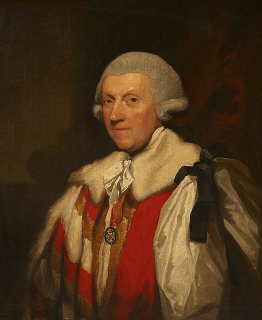
(Pictured: “Arthur Acheson (c.1742–1807), 2nd Viscount, 1st Earl of Gosford,” oil on canvas by Gilbert Stuart)


Leave a comment

Death of James Fintan Lalor, Revolutionary & Journalist

James Fintan Lalor, Irish revolutionary, journalist, and one of the most powerful writers of his day, dies at the age of 43 on December 27, 1849. A leading member of the Irish Confederation (Young Ireland), he plays an active part in both the Rebellion in July 1848 and the attempted Rising in September of that same year. His writings exert a seminal influence on later Irish leaders such as Michael Davitt, James Connolly, Pádraig Pearse, and Arthur Griffith.

Lalor is born on March 10, 1807, in Tinnakill House, Raheen, County Laois, the first son of twelve children of Patrick “Patt” Lalor and Anne Dillon, the daughter of Patrick Dillon of Sheane near Maryborough. His father is an extensive farmer and is the first Catholic MP for Laois (1832–1835). The household is a very political one where active discussion on national issues is encouraged.

Because of an accident when he is young, Lalor is semi-crippled all his life. He is not a very healthy young man and consequently is educated at home. In February 1825 he goes to St. Patrick’s, Carlow College. He studies chemistry under a Mr. Holt and the classics under Father Andrew Fitzgerald. While in college he becomes a member of the Apollo Society, where literature and music are studied, his favourite author at the time being Henry St. John, 1st Viscount Bolingbroke. He suffers greatly through ill health during his time in college, and in February 1826, being ill and very weak he has to return home.

Lalor’s father is passionately opposed to the payment of tithes and urges Catholics not to pay. He supports this stand, but it is the land question and the power of the landlords to evict tenants that exercises him in particular. His father is also a great supporter of Daniel O’Connell and the Repeal movement. However, Lalor does not support the Repeal movement as he considers it to be flawed. As a result, a rift occurs between him and his father on this question. Such is the rift that he leaves home and spends time in Belfast and Dublin. He finally returns home due to ill health and heals his differences with his father.

It is while writing from home that Lalor achieves national prominence. He contributes articles to The Nation and The Felon. He advocates rent strikes and active resistance to any wrongdoings. His central theme is the rights of the tenant farmer to his own land. In his opinion, land reform is the biggest issue of the time. He writes articles such as “What must be done,” “The Faith of a felon,” “Resistance,” and “Clearing Decks.” It is he who says it is time for revolution and active resistance. This is especially evident during the famine years when tenants are being evicted for nonpayment of rent. As a result, he is arrested and imprisoned. Upon his release he continues to write. He is now a nationally acclaimed writer, revolutionary, and reformer.

Ill health once again curtails his efforts. An attack of bronchitis eventually brings about his early death on December 27, 1849, at his lodgings in Great Britain Street (now Parnell Street) at the age of 43. He is buried in Glasnevin Cemetery in Dublin.

The James Fintan Lawlor Commemorative Committee, chaired by David Lawlor is formed in August 2005 to erect a memorial to mark the 200th anniversary of the birth of James Fintan Lalor. Laois County Council provides the site; Irish Life and Permanent sponsors the project; the Department of the Environment provides half the cost. The bronze statue of Lalor holding a pamphlet aloft is sculpted by Mayo-based artist Rory Breslin. The inscription on the limestone plinth reads: “Ireland her own, and all therein, from the sod to the sky. The soil of Ireland for the people of Ireland.”

Michael Davitt considered Lalor “the only real Irish revolutionary mind in the ’48 period.” His ideas were the ideological underpinning of the Irish National League during the Land War.