seamus dubhghaill

Promoting Irish Culture and History from Little Rock, Arkansas, USA


Leave a comment

Birth of Sophie Bryant, Mathematician, Educator & Feminist

sophie-bryant

Sophie Willock Bryant, Anglo-Irish mathematician, educator, feminist and activist, is born Sophie Willock in Dublin on February 15, 1850.

Bryant’s father is Rev. Dr. William Willock DD, Fellow and Tutor of Trinity College, Dublin. She is educated at home, largely by her father. As a teenager she moves to London when her father is appointed Professor of Geometry at the University of London in 1863, and she attends Bedford College. At the age of nineteen she marries Dr. William Hicks Bryant, a surgeon ten years her senior, who dies of cirrhosis within a year.

In 1875 Bryant becomes a teacher and is invited by Frances Mary Buss to join the staff of North London Collegiate School. In 1895 she succeeds Buss as headmistress of North London Collegiate, serving until 1918.

When the University of London opens its degree courses to women in 1878, Bryant becomes one of the first women to obtain First Class Honours, in Mental and Moral Sciences, together with a degree in mathematics in 1881, and three years later is awarded the degree of Doctor of Science. In 1882 she is the third woman to be elected to the London Mathematical Society and is the first active female member, publishing her first paper with the Society in 1884. Together with Charles Smith, Bryant edits three volumes of Euclid‘s Elements, for the use of schools (Euclid’s Elements of Geometry, books I and II (1897); Euclid’s Elements of Geometry, books III and IV (1899); Euclid’s Elements of Geometry, books VI and IX (1901)).

Bryant is a pioneer in education for women. She is the first woman to receive a Doctor of Science in England, one of the first three women to be appointed to a Royal Commission, the Bryce commission on Secondary Education in 1894–1895, and one of the first three women to be appointed to the Senate of the University of London. When Trinity College Dublin opens its degrees to women, she is one of the first to be awarded an honorary doctorate. She is also instrumental in setting up the Cambridge Training College for Women, now Hughes Hall, Cambridge. She is also said to be one of the first women to own a bicycle.

Bryant is interested in Irish politics, writes books on Irish history and ancient Irish law (Celtic Ireland (1889), The Genius of the Gael (1913)), and is an ardent Protestant Irish nationalist. She is president of the Irish National Literary Society in 1914. She supports women’s suffrage but advocates postponement until women were better educated.

Bryant loves physical activity and the outdoors. She rows, cycles, swims, and twice climbs the Matterhorn. She dies at the age of 72 in a hiking accident in the Alps near Chamonix, France on August 14, 1922.

Leave a comment

Birth of Frank Harris, Journalist & Novelist

frank-harris

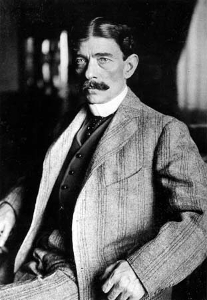
Frank Harris, Irish American editor, novelist, short story writer, journalist and publisher, is born James Thomas Harris to Welsh parents in Galway, County Galway on February 14, 1855. He is friendly with many well-known figures of his day.

Harris’s father, Thomas Vernon Harris, is a naval officer from Fishguard, Pembrokeshire, Wales. While living with his older brother he is, for a year or more, a pupil at The Royal School, Armagh. At the age of twelve he is sent to Wales to continue his education as a boarder at the Ruabon Grammar School in Denbighshire, a time he is to remember later in My Life and Loves. He is unhappy at the school and runs away within a year.

Harris runs away to the United States in late 1869, arriving in New York City virtually penniless. The 13-year-old takes a series of odd jobs to support himself, working first as a shoeshiner, a porter, a general laborer, and a construction worker on the erection of the Brooklyn Bridge. He later turns these early occupational experiences into art, incorporating tales from them into his book The Bomb (1908).

From New York Harris moves to Chicago, where he takes a job as a hotel clerk and eventually a manager. Owing to Chicago’s central place in the meat packing industry, he makes the acquaintance of various cattlemen, who inspire him to leave the big city to take up work as a cowboy. He eventually grows tired of life in the cattle industry and enrolls at the University of Kansas, where he studies law and earns a degree, gaining admission to the Kansas Bar Association.

Harris is not cut out to be a lawyer and soon decides to turn his attention to literature. He returns to England in 1882, later traveling to various cities in Germany, Austria, France, and Greece on his literary quest. He works briefly as an American newspaper correspondent before settling down in England to seriously pursue the vocation of journalism.

Harris first comes to general notice as the editor of a series of London papers including The Evening News, The Fortnightly Review and the Saturday Review, the latter being the high point of his journalistic career, with H. G. Wells and George Bernard Shaw as regular contributors.

From 1908 to 1914 Harris concentrates on working as a novelist, authoring a series of popular books such as The Bomb, The Man Shakespeare, and The Yellow Ticket and Other Stories. With the advent of World War I in the summer of 1914, he decides to return to the United States.

From 1916 to 1922 Harris edits the U.S. edition of Pearson’s Magazine, a popular monthly which combines short story fiction with socialist-tinted features on contemporary news topics. One issue of the publication is banned from the mails by United States Postmaster General Albert S. Burleson during the period of American participation in World War I. Despite this Harris manages to navigate the delicate situation which faces the left-wing press and keeps Pearson’s Magazine functioning and solvent during the war years.

Harris becomes an American citizen in April 1921. In 1922 he travels to Berlin to publish his best-known work, his four-volume autobiography My Life and Loves (1922–1927). It is notorious for its graphic descriptions of his purported sexual encounters and for its exaggeration of the scope of his adventures and his role in history. A fifth volume, supposedly taken from his notes but of doubtful provenance, is published in 1954, long after his death.

Harris also writes short stories and novels, two books on William Shakespeare, a series of biographical sketches in five volumes under the title Contemporary Portraits and biographies of his friends Oscar Wilde and George Bernard Shaw. His attempts as a playwright are less successful. Only Mr. and Mrs. Daventry (1900), which is based on an idea by Oscar Wilde, is produced on the stage.

Married three times, Harris dies of a heart attack in Nice, France on August 26, 1931. He is buried at Cimetière Sainte-Marguerite, adjacent to the Cimetière Caucade, in Nice. Just after his death a biography written by Hugh Kingsmill (pseudonym of Hugh Kingsmill Lunn) is published.


Leave a comment

Death of Actor T. P. McKenna

thomas-patrick-mckenna

Character actor Thomas Patrick McKenna, known professionally as T. P. McKenna and for his stage, film, and television work, dies at Royal Free Hospital, Hampstead, London on February 13, 2011, following a long illness.

McKenna is born in Mullagh, County Cavan on September 7, 1929. A prolific theater actor throughout his career, he makes his stage debut in Summer and Smoke by Tennessee Williams at the Pike Theatre in Dublin in 1954.

McKenna makes his film debut in the IRANazi drama The Night Fighters (1960) and from this uncredited beginning he moves up to tenth billing in The Siege of Sidney Street (1960). His next major movie is Girl with Green Eyes (1964), by which time he has also started a successful television career, making his TV debut in Espionage (1963) and over the next few years appears in several more TV shows. His versatility enables him to play three characters in The Avengers (1961). He is also featured in such well-regarded shows as Adam Adamant Lives! (1966), Dixon of Dock Green (1955) and The Saint (1962).

Meanwhile, McKenna’s film career develops along literary lines, and he is featured in Brendan Behan‘s The Quare Fellow (1962), the Sean O’Casey biopic Young Cassidy (1965) and James Joyce‘s Ulysses (1967). He takes smaller parts in such epics as The Charge of the Light Brigade (1968) and Anne of the Thousand Days (1969).

British films such as Perfect Friday (1970) and Villain (1971) allowed McKenna to showcase his suave, urbane persona before trying something different in the controversial Straw Dogs (1971). He appears alongside a young Anthony Hopkins in All Creatures Great and Small (1975) before starring with John Gielgud for the second time, this time in A Portrait of the Artist as a Young Man (1977). Over the next few years his co-stars are as diverse as Leonard Rossiter (Britannia Hospital (1982)), Timothy Dalton (The Doctor and the Devils (1985)), Ben Kingsley (Pascali’s Island (1988)) and Dolph Lundgren (Red Scorpion (1988)). Not all of these films are successes, but he always gives good value for the money and develops themes of his, such as an interest in Irish issues, in The Outsider (1980). His last released film is Valmont (1989), which is unfortunately completely overshadowed by Dangerous Liaisons (1988), which is based on the same novel.

Over the years McKenna makes numerous guest appearances in TV series such as Minder (1979), Casualty (1986), Lovejoy (1986), Inspector Morse (1987), Heartbeat (1992) and Ballykissangel (1996). He is also prominent in TV movies and series, featuring in Charles DickensMasterpiece Theatre: Bleak House (1985), Stendhal‘s Scarlet and Black (1993) and an adaptation of Henry JamesThe American (1998).

McKenna dies on February 13, 2011, at the Royal Free Hospital in Hampstead, London, at the age of 81 following a long period of illness. He is buried alongside his wife at Teampall Cheallaigh Cemetery in his native County Cavan.

Following his death, tributes are paid by President of Ireland Mary McAleese, Prince Charles, and Ireland’s Minister for Tourism, Culture and Sport Mary Hanafin, who says that McKenna was “one of a great generation whose talents on the screen and stage both at home and abroad gave us all great pride in his accomplishments.” In County Cavan, he is commemorated by the T. P. McKenna Drama Scholarships (VEC) and the T. P. McKenna Perpetual Trophy presented as part of the Millrace Annual Drama Festival.


Leave a comment

Publication of the First Issue of “The United Irishman”

john-mitchel

John Mitchel, Irish nationalist activist, author, and political journalist, publishes the first issue of The United Irishman on February 12, 1848.

Mitchel is one of the great propagandists of his day, although the causes he espouses often place him on the wrong side, he is loved and loathed in equal measure. He is one of the few Irishmen to have incurred the wrath of the British government and of the Federal administration of the United States.

Mitchel is born near Dungiven, County Derry in what is now Northern Ireland on November 3, 1815. The son of a Presbyterian clergyman, he creates his own pulpit in a series of journalistic enterprises in Dublin, Tennessee, Virginia and New York.

Mostly raised in Newry, County Down, Mitchel’s first political association is with the Young Ireland movement of the 1840s and the famous The Nation newspaper, founded by Charles Gavan Duffy, Thomas Davis and John Blake Dillon in 1842. But long before the abortive Young Ireland Rebellion of 1848 he has moved on, finding the editorial policies of The Nation rather too bland for his tastes.

Inflamed by the suffering he witnesses on a trip to Galway, it is Mitchel, more than any other writer or politician, who shapes the nationalist perception of an Gorta Mór (Great Famine):

“I could see, in front of the cottages, little children leaning against a fence when the sun shone out for they could not stand, their limbs fleshless, their bodies half-naked, their faces bloated yet wrinkled, and of a pale, greenish hue… I saw Trevelyan’s claw in the vitals of those children: his red tape would draw them to death: in his government laboratory he had prepared for them the typhus poison.”

Responding to such writing, Ireland simmers, angry and ready for rebellion. Fearful of Mitchel’s power, London’s Punch magazine emphasises his international standing by portraying him as an Irish monkey challenging the Great British Lion. The Times thunders against him. When Mitchel produces his own republican newspaper, The United Irishman, which, in its inaugural edition, claims that “the world was weary of Old Ireland and also of Young Ireland” thus attacking both Daniel O’Connell and his younger antagonists with the same broadsword. He aims to be an equal opportunities offender and succeeds admirably.

The United Irishman sells out and is shut down by the British authorities after a mere sixteen issues. In order to silence Mitchel, to rob him of his heroic status and his possible martyrdom, the British government passes the Treason Felony Act 1848, which seeks to treat treason as a common crime. He is later tried before an elegantly and efficiently packed jury, found guilty of treason-felony, and deported to Van Diemen’s Land (Tasmania). The result is one of the greatest works of Irish political history, The Jail Journal, in which Mitchel writes about his own experience of deportation and advocates a far more militaristic approach to Ireland’s “English problem” than would have been popular heretofore.

Mitchel is acclaimed by Patrick Pearse, who declares The Jail Journal to be “the last of the four gospels of the New Testament of Irish nationality, the last and the fieriest and the most sublime.” Éamon de Valera reveres Mitchel, and when in 1943 he imagines Ireland as “the home of a people who valued material wealth only as a basis for right living, of a people who, satisfied with frugal comfort, devoted their leisure to the things of the spirit,” he too is delving into The Jail Journal for his inspiration.

(From: #OTD in 1848 – John Mitchel Publishes First United Irishman, Stair na hÉireann | History of Ireland)


2 Comments

Death of Republican Activist James Murphy

black-and-tans-and-auxies-dublin-ireland-1921

Republican activist James Murphy dies in Mater Hospital, Dublin on February 11, 1921. Before he dies, he declares that he and Patrick Kennedy had been shot by their Auxiliary captors. A court of inquiry is held, and Captain W. L. King, commanding officer of F Company Auxiliary Division of the Royal Irish Constabulary (ADRIC), is arrested for the killings.

James Murphy and Patrick Kennedy are arrested by Auxiliaries in Dublin on February 9 and are taken into the custody of ‘F’ company. Two hours later, constables of the Dublin Metropolitan Police find the two men lying shot, with pails on their heads, in Clonturk Park, Drumcondra. Kennedy is dead and Murphy is fatally wounded. He dies in Mater Hospital, Dublin two days later.

Just before dying Murphy testifies that King had taken them and stated that they were “just going for a drive.” King is arrested for the killings. King and two of his men, Hinchcliffe and Welsh, are court-martialed on February 13-15, but are acquitted after Murphy’s dying declaration is ruled inadmissible and two officers from ‘F’ Company provide perjured alibis for King at the time of the shootings.

King is implicated and court-martialed for the deaths of Conor Clune, Peadar Clancy, and Dick McKee, the latter two leading lights in the Dublin Irish Republican Army, the former a luckless Gaelic League member, who are all captured in Dublin on November 20, 1920, the day before Bloody Sunday. Clune is caught at Vaughn’s Hotel in Parnell Square, Dublin and the two IRA leaders at Lower Gloucester Street, complete with British Army officer uniforms and detonators.

Sometime between then and the next day, in the Dublin Castle guardroom, as news filters in of the deaths of several British intelligence officers, the prisoners are killed in questionable circumstances. According to an official report from Dublin Castle, they attempted to grab rifles and hurl unfused grenades and are killed in that action. The guards of ‘F’ Company in the room at the time are cleared of wrongdoing by a court inquiry. A Major Reynolds of ‘F’ Company is said to have passed details of the killers to Michael Collins. The Times notes that it seems as if the prisoners had been lined up and shot. In a later novel, a Captain Hardy more or less confesses to the killing of one of the prisoners.

Ironically, Captain King is on Michael Collins’s list of British Intelligence officers to be executed on the morning of November 20, 1920, he is not in his room when the assassins arrive but rather, he is interrogating the prisoners in Dublin Castle.

(Pictured: Mixed gunmen of the Royal Irish Constabulary’s Auxiliary Division and Black and Tans contingents, Stair na hÉireann | History of Ireland)


2 Comments

Imprisonment of Fenian Charles Kickham

charles-kickham

Sentenced to fourteen years hard labour for treason, Irish nationalist and Fenian Charles Kickham is incarcerated in Pentonville Prison on February 10, 1865. He is released in 1869, partly due to ill health. He is a contributor to The Irish People and the organiser of the Fenian movement and the Irish Republican Brotherhood (IRB), which the English authorities deem seditious. He also authors a number of novels including the critically acclaimed Knocknagow (1873).

The revolutionary movement which comes to be known as Fenianism is unlike that of 1848 in the character of its leaders. The older political agitation is associated with a brilliant outburst of intellectual effort. The majority of the leaders have left behind high intellectual heritage, or asserted under other skies, and in more favourable circumstances, their possession of great intellectual powers. The Fenian movement, on the other hand, is poor in its literary products. Few of its leading spirits reach to any lofty position since its collapse. The best part of Fenian literature is found in The Irish People, the journalistic organ of the association. Along with Kickham, the chief contributors to the journal are Thomas Clarke Luby and John O’Leary.

Kickham is born at Mullenahone, County Tipperary on May 9, 1828. At the age of thirteen he meets with an accident that deprives him of his hearing. He probably owes the many fine productions of his pen to this accident. At around 18 years of age, he begins to contribute poems and tales to Irish journals and magazines and when The Irish People is started, he becomes one of its chief lead writers. As a result of his involvement in the Fenian movement, he draws the attention of the government and is tried, convicted and sentenced to fourteen years of penal servitude. His comment at the conclusion of the trial is terse: “I have endeavoured to serve Ireland, and now I am prepared to suffer for Ireland.” Four years after his conviction he is released.

Kickham publishes two complete stories, Sally Cavanagh, or The Untenanted Graves, and Knocknagow, or The Homes of Tipperary. These stories have been read wherever there is an Irish home and have made sad or joyous thousands of Irish hearts. They have also found approval in the columns of English and not friendly journals, which have found themselves able to meet him in friendliness on the impartial ground of literature. His books deserve their popularity with the peasant and the approval of the critic. His pictures of life, especially of peasant life, are wonderfully true to nature, full of keen observation, humour, and fidelity. In his attention to minute details and homely incident he resembles in a great degree the style of Erckmann-Chatrian.

Kickham’s ballads are equally popular and are just what ballads for the people should be – simple in language, direct in purpose, and in an easy and common measure. A collected edition of his works is published by Duffy & Son of Dublin.

Charles Kickham dies at the age of 54 on August 22, 1882, at the house of James O’Connor, a former member of the IRB and afterwards MP for Wicklow, 2 Montpelier Place, Blackrock, Dublin, where he had been living for many years and had been cared for by the poet Rose Kavanagh. He is buried in Mullinahone, County Tipperary.

(From: The Cabinet of Irish Literature, Volume 4, edited by T. P. O’Connor)


Leave a comment

Death of Charles Gavan Duffy

charles-gavin-duffy

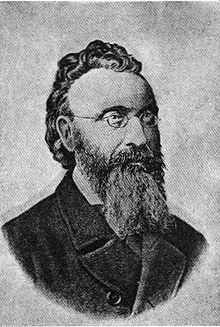
Charles Gavan Duffy, Irish nationalist, journalist, poet, and Australian politician, dies on February 9, 1903, in Nice, France. He is the 8th Premier of Victoria and one of the most colourful figures in Victorian political history.

Duffy is born on April 12, 1816, in Dublin Street, Monaghan, County Monaghan. Both of his parents die while he is still a child and his uncle, Fr. James Duffy, who is the Catholic Parish Priest of Castleblayney, becomes his guardian for a number of years. He is educated at St. Malachy’s College in Belfast and is admitted to the Irish Bar in 1845. Duffy becomes a leading figure in Irish literary circles.

Duffy, along with Thomas Osborne Davis and John Blake Dillon, founds The Nation and becomes its first editor. Davis and Dillon later become Young Irelanders. All three are members of Daniel O’Connell‘s Repeal Association. This paper, under Duffy, transforms from a literary voice into a “rebellious organisation.”

In August 1850, Duffy forms the Tenant Right League to bring about reforms in the Irish land system and protect tenants’ rights, and in 1852 is elected to the House of Commons for New Ross. By 1855, the cause of Irish tenants seems more hopeless than ever. Broken in health and spirit, Duffy publishes a farewell address to his constituency, declaring that he has resolved to retire from parliament, as it is no longer possible to accomplish the task for which he has solicited their votes.

In 1856, emigrates with his family to Australia, settling in the newly formed Colony of Victoria. A public appeal is held to enable him to buy the freehold property necessary to stand for the colonial Parliament. He is immediately elected to the Legislative Assembly for Villiers and Heytesbury in the Western District in 1856. He later represented Dalhousie and then North Gippsland. With the collapse of the Victorian Government‘s Haines Ministry during 1857, another Irish Catholic, John O’Shanassy, unexpectedly becomes Premier with Duffy his second-in-charge.

In 1871, Duffy leads the opposition to Premier Sir James McCulloch‘s plan to introduce a land tax, on the grounds that it unfairly penalises small farmers. When McCulloch’s government is defeated on this issue, Duffy becomes Premier and Chief Secretary.  The majority of the colony is Protestant, and Duffy is accused of favouring Catholics in government appointments. In June 1872, his government is defeated in the Assembly on a confidence motion allegedly motivated by sectarianism.

When Graham Berry becomes Premier in 1877, he makes Duffy Speaker of the Legislative Assembly, a post he holds without much enthusiasm until 1880, when he quits politics and retires to the south of France. He remains interested in both the politics of his adoptive country and of Ireland. He is knighted in 1873 and is made KCMG in 1877. Sir Charles Gavan Duffy dies in Nice, France, at the age of 86 in 1903.


Leave a comment

Battle of Campo Santo

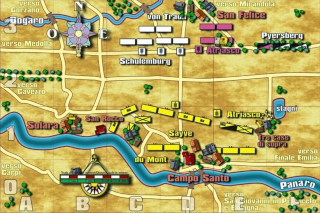
battle-of-campo-santoDuring the War of Austrian Succession, the Irish Brigade of Spain fights at the Battle of Campo Santo in Camposanto, Italy on February 8, 1743. The regiments of Ultonia, Irlanda, and Hibernia form the Irish Brigade fighting in Italy in a Spanish army, led by Gen. Jean Bonaventure Thierry du Mont, comte de Gages. The Spaniards and their Neapolitan allies are fought to a standstill by the Austrians and their Sardinian allies under Field Marshal Otto Ferdinand Graf von Abensperg und Traun on the Panaro.

In January 1743, General De Gages’ 13,000 strong Spanish army lay at Bologna, south of the Panaro. Count Traun’s Austrian and Piedmont-Sardinian army of 11,000 lay to the north of the river, blocking De Gages’ attempts to cross the formidable barrier. Traun prefers a maneuvering defense to risking his army in a pitched battle with his opponent, but concerns in Madrid are more political than strategic. Needing a victory, Philip V of Spain and his Queen Elisabeth Farnese demand that De Gages launch an offensive or tender his resignation. Accordingly, leaving Bologna on the night of February 3, De Gages slips across the Panaro and enters the Duchy of Modena, seeking a decisive encounter with Traun.

Fortunately for De Gages, Marshal Traun is ready to oblige him. Aware of the criticism leveled at him in Vienna where his enemies are trying to relieve him of his command, and also that Spain’s recent seizure of Savoy might well induce the King of Sardinia to negotiate with the Spanish Crown, the Marshal decides that a victory will quell the uproar and induce Austria’s allies to think twice about negotiating. Gathering up his army, Traun moves to block De Gages’ path and prevent him from advancing further into Modena. The two armies meet at the village of Camposanto.

On the morning of the battle, De Gages draws up his army on the outskirts of the village in the traditional fashion with his infantry in the center and the cavalry on the wings. Traun also draws up his army in the same manner, but being slightly outnumbered, he chooses to gamble with an unorthodox strategy. Instead of aligning himself directly opposite the Spaniards, he shifts his troops to the northwest, which means that the center of Traun’s infantry is directly opposite the gap between Gages’ infantry and the right wing of cavalry. Although this means that Traun would have a greater superiority of numbers on this wing and that he could also deliver a flank attack on the Spanish right, his own right flank would, however, be vulnerable to a Spanish flank attack. Marshall is relying on the troops of that wing to delay the Spanish long enough for the action on his other wing to be decisive.

Matters are helped when De Gages chooses 4:00 in the afternoon to launch the attack, which leaves only a few hours of daylight for a battle. The Spanish are initially successful on both wings, where their cavalry drives off the Austro-Piedmontese cavalry, wounding Count Aspremont in the process and leaving the Austrian infantry vulnerable. However instead of reforming to attack the infantry, the Spanish chase them off the field. Traun stabilises his left flank, and leads his infantry into the attack against the Spanish. Meanwhile, Count Schulenberg regroups the Austrian cavalry on the Austrian right, and launches a counterattack against the Spanish cavalry. On the other flank Aspremont’s replacement, General Leutrum, leads his wing forward as well, smashing the Spanish right wing. Due to darkness it is necessary for both armies to withdraw the field. The Spanish back across the Panaro towards Bologna. Due to the smoke and darkness, many units lose their way. The 1st Guadalaxara marches in the direction of the advancing austro-sardian infantry columns, and it has to surrender after a short defence inside the walls of a farm.

Casualties in the battle are 1,755 dead, 1,307 wounded and 824 prisoners for the Spanish, while the Austro-Piedmontese lose 397 dead and 1,153 wounded or prisoners. Traun himself has two horses shot from under him during the battle.

De Gages retreats to Bologna but on March 26 he is also forced to retreat to Rimini. Despite this, the battle is widely considered a victory in Madrid, and de Gages is awarded a victory title, Count of Campo Santo. Following the battle, France promises support and co-operation with the Spanish, but for the moment Traun has saved North Italy for Maria Theresa.

Once again hundreds of Irishmen die many miles from home for “every cause but their own.”


Leave a comment

Hanging of Peter Barnes & James Richards

peter-barnes-and-james-mccormack

Irish Republican Army (IRA) volunteers Peter Barnes and James Richards are hanged in Winston Green Prison in Birmingham, England on February 7, 1940 for their involvement in a bombing in Coventry the previous year which killed five people.

Barnes and Richards (also known as James McCormack) are members of the Irish Republican Army (IRA) and participate in the August 25, 1939 Coventry bombing which kills five people. Although they both admit to constructing the bomb, which is intended to be used to destroy a power station, they claim not to be involved in planting the bomb.

Seán MacBride, a former Chief of Staff of the IRA and Irish barrister, attempts to secure their release claiming they are being illegally held without a writ of habeas corpus. However, both are charged with murder on December 12 along with Brigid O’Hara and Joseph and Mary Hewitt. All five plead not guilty before the court at Birmingham Assizes.

Brigid O’Hara issues statements between August 28 and September 4 to Scotland Yard and Birmingham City Police denying any knowledge of the bombings and later provides evidence for the prosecution. Found guilty of murder on December 15, Barnes and Richards are hanged at Winston Green Prison in Birmingham on February 7, 1940. Their remains are returned to Dublin in 1969.

The reinterment in Mullingar, County Westmeath is attended by an estimated 15,000 people. Mass is said in Irish in the Cathedral before the funeral to Ballyglass Cemetery. Among those attending are three brothers of Peter Barnes and a sister and brother of McCormack.

The trial and execution results in a public outcry in Ireland against Neville Chamberlain and the British Government as Peadar O’Donnell and other prominent Irish writers sign a petition campaigning for leniency towards the condemned men.


13 Comments

Death of Robert Curtis, First Fatality of The Troubles

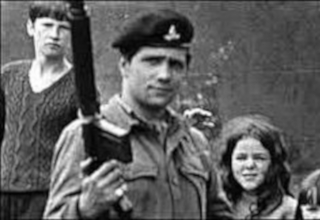
robert-curtisRobert George Curtis, officially the first military fatality during the Troubles in Northern Ireland, is killed by the Provisional Irish Republican Army (IRA) on February 6, 1971, becoming the first British soldier to die in the line of duty in Ireland since 1921. The gunman responsible is believed to be Provisional IRA member Billy Reid, who is killed later that year in a gunfight. A total of 705 British soldiers are killed during the Troubles.

156 (Inkerman) Battery, 94 Locating Regiment, Royal Artillery is deployed to Northern Ireland on January 5, 1971 under the command of the 32nd Regiment Royal Artillery. During the first week of February 1971, there is major violence in many Irish republican areas of Belfast when the British Army launches a series of searches for IRA arms. Rioting in the republican area of the New Lodge escalates and reinforcements are summoned. 156 Battery is ordered into the area. Because mobs of rioters are threatening the bordering unionist Tiger’s Bay area, the Battery is deployed along the interface to block them.

A large crowd gathers at the junction of New Lodge Road and Lepper Street. A troop of soldiers from 156 Battery, including Gunner Rob Curtis, are deployed to disperse the crowd. As the troops move to the junction they are attacked with a barrage of stones and bottles by the mob and deploy in “riot-formation” with shields as protection. Subsequently, a nail bomb is thrown at the troops. In the aftermath of the blast the crowd splits allowing a gunman to fire a long burst of automatic fire from a Sterling submachine gun, probably from the base of Templar House. The crowd then reforms, allowing the gunman to escape. Gunner Curtis is hit by a ricochet which passes through the shoulder opening of his flak jacket, penetrating his heart. He dies almost instantly. Four other troop members are wounded, one seriously.

Curtis is, at the time of his death, 20 years old and married for just over a year. His wife is expecting their first child and had just informed him in a letter that he was to become a father. He is laid to rest in West Road Cemetery, Newcastle upon Tyne, England. He is the first officially recognised fatality that the army suffers as a direct result of IRA actions. Unofficially 21 other military personnel died or were killed before his death. On the morning after his death Sir James Chichester-Clark, then Prime Minister of Northern Ireland, announces that “Northern Ireland is at war with the Irish Republican Army Provisionals.”

Some sources claim the shots were fired from a Thompson submachine gun, but some eyewitnesses are sure that it was a Sterling submachine gun that was fired. Curtis’s wife is later compensated to the sum of £6500 together with £1500 for her daughter. His daughter is married wearing her father’s wedding ring and later names her son Robert in honour of his grandfather.