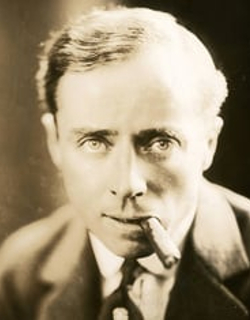
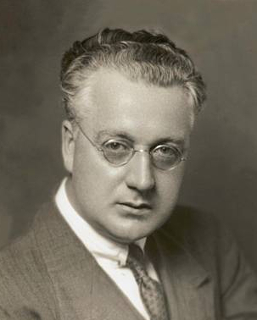
In 1911 Brenon is hired as a writer by Carl Laemmle, directing his first short the following year. Signed by William Fox in 1915, he graduates to feature films. With Paramount Pictures from 1923, he directs several spectacular productions with British themes, including the silent version of Beau Geste (1926). He regards sound pictures with a measure of apprehension.
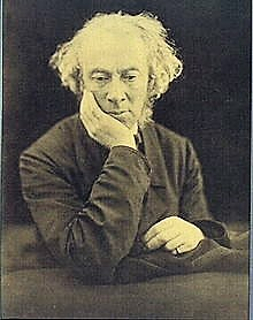
The characteristics of de Vere’s poetry are high seriousness and a fine religious enthusiasm. His research in questions of faith leads him to the Roman Catholic Church where in 1851 he is received into the Church by CardinalHenry Edward Manning in Avignon. In many of his poems, notably in the volume of sonnets called St. Peters Chains (1888), he makes rich additions to devotional verse. For a few years he holds a professorship, under Newman, in the Catholic University in Dublin.
In A Book of Irish Verse, W. B. Yeats describes de Vere’s poetry as having “less architecture than the poetry of Ferguson and Allingham, and more meditation. Indeed, his few but ever memorable successes are enchanted islands in gray seas of stately impersonal reverie and description, which drift by and leave no definite recollection. One needs, perhaps, to perfectly enjoy him, a Dominican habit, a cloister, and a breviary.”
de Vere also visits the Lake Country of England, and stays under Wordsworth’s roof, which he calls the greatest honour of his life. His veneration for Wordsworth is singularly shown in later life, when he never omits a yearly pilgrimage to the grave of the poet until advanced age makes the journey impossible.
de Vere is of tall and slender physique, thoughtful and grave in character, of exceeding dignity and grace of manner, and retains his vigorous mental powers to a great age. According to Helen Grace Smith, he is one of the most profoundly intellectual poets of his time. His census return for 1901 lists his profession as “Author.”
Aubrey de Vere dies at Curraghchase on January 20, 1902, at the age of eighty-eight. As he never married, the name of de Vere at his death becomes extinct for the second time and is assumed by his nephew.
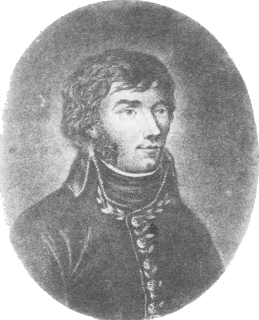
In 1794, after serving in the Army of the Coasts of Brest, Humbert serves under Louis Lazare Hoche in the Army of the Rhin-et-Moselle. Charged to prepare for an expedition against Ireland, he takes command of the Légion des Francs under Hoche, sailing in the ill-fated Expédition d’Irlande against Bantry Bay in 1796, and is engaged in actions at sea against the Royal Navy. Contrary weather and enemy action force this expedition to withdraw. The trip home ends in a naval battle, the Action of 13 January 1797, during which Humbert, on the French ship Droits de l’Homme (1794), narrowly escapes death. As the ship is destroyed and sinks, hundreds of men perish, but Humbert is among the last to escape.
On his return to France, Humbert serves in the Army of the Sambre-et-Meuse, before being appointed to command the troops in another attempt to support a rising in Ireland in 1798. His command chiefly consists of infantry of the 70th demi-brigade with a few artillerymen and some cavalry of the 3rd Hussars, however by the time he arrives off the Irish coast the United Irish rising has already suffered defeat. The expedition is able to land in Ireland at Killala on Thursday August 23, 1798, meeting with initial success in the Battle of Castlebar where he routs the Irish Militia. Humbert subsequently declares a Republic of Connacht, with hopes of taking Dublin. However, Humbert’s small force is defeated at the Battle of Ballinamuck by the Irish Royal Army, and he is taken as a prisoner of war by the authorities. The British send the French officers home in two frigates and then massacre their Irish supporters. Humbert makes no attempt to save the Irish who bravely supported him.
Humbert is shortly repatriated in a prisoner exchange and appointed in succession to the Armies of Mayence, Danube and Helvetia, with which he serves at the Second Battle of Zurich. He then embarks for Santo Domingo and participates in several Caribbean campaigns for Napoleon Bonaparte before being accused of plundering by General Brunet. It is also rumored that he engages in an affair with Pauline Bonaparte, the wife of his commanding officer Charles Leclerc. He is returned to France by order of General Leclerc in October 1802, for “prevarications, and liaison relationships with organisers of the inhabitants and with leaders of brigands.” A committed Republican, his displeasure at Napoleon’s Imperial pretensions lead to him being dismissed in 1803 and he retires to Morbihan in Brittany.
In 1810, after brief service in the Army of the North, Humbert emigrates to New Orleans, where he makes his acquaintance with French pirate Jean Lafitte. In 1813, Humbert joins the revolutionary Juan Bautista Mariano Picornell y Gomila in an unsuccessful attempt to foment rebellion in Spanish Mexico, but the effort fails. In 1814, Humbert again leaves New Orleans and joins the rebelling forces of Buenos Aires, briefly commanding a corps, before returning home. Humbert last fights the British at the Battle of New Orleans, as a volunteer private soldier in U.S. ranks, in the War of 1812, wearing his Napoleonic uniform. General Andrew Jackson thanks him for his assistance there after the American victory in January 1815. Thereafter Humbert lives peacefully as a schoolteacher until his death on January 3, 1823.
A monument to General Humbert depicting Mother Ireland stands on Humbert Street, Ballina, County Mayo. In 1989, sculptor Carmel Gallagher unveils a bust of General Humbert in Killala, Ireland, to mark the upcoming bicentennial of the Irish Rebellion of 1798.
Benn’s grandfather, Jonn Benn, came from Cumberland about 1760 as engineer of the Newry Canal. His father, also John Benn (1767-1853), was proprietor of a brewery in Belfast. He is educated at the Belfast Academy, under Rev. Dr. Bruce and afterwards under Sheridan Knowles, then a teacher of English at Belfast. He enters the collegiate classes of the Royal Belfast Academical Institution in 1816, being one of the original alumni, and takes gold medals in logic (1817) and moral philosophy (1818).
In 1819 the faculty prize is offered for the “best account of a parish.” Benn is the successful essayist, with the parish of Belfast as his theme. He also gains in 1821 the faculty prize (The Crusades), and Dr. Tennant’s gold medal (Sketch of Irish Authors in the Seventeenth and Eighteenth Centuries). His essay of 1819 attracts the attention of James M’Knight, LL.D., then editor of the Belfast News-Letter who offers to print and publish it. It is issued anonymously in an enlarged form in 1823, with three maps and sixteen engravings by J. Thomson. For so young a writer it is a work of uncommon judgment and research, exceedingly well written, with an eye for scenery and a taste for economics as well as for antiquities. It is not superseded by Benn’s later labours.
Benn, with his brother Edward (1798- 1874), engages in distilling near Downpatrick. Subsequently the brothers spend the prime of their days on an estate they purchase at Glenravel, near Ballymena. Here, in an unimproved district, they plant the hillsides, plough the moors, build good houses, and collect a valuable library. They endeavour to create a new industry by an experiment in the manufacture of potato spirit, but excise regulations in place at the time frustrate their object. The cost of the experiment, and the losses from potato disease, induce the brothers to undertake a business in Liverpool for some years. Returning to Glenravel, a casual circumstance leads to a rich discovery of iron ore in the Glenravel hills. The first specimen is smelted in 1851 under Edward Benn’s direction. In 1866 an agreement is made with James Fisher, of Barrow-in-Furness, to work the mineral beds. Hence comes a new and valuable addition to the commercial products of Ulster, which has since attained important proportions.
Meanwhile, Edward Benn is contributing antiquarian articles to various journals and forming a fine archaeological collection, now in the Ulster Museum. It his proposed to George to resume and complete the history of Belfast. He modestly indicates, as more fit for the task, William Pinkerton, who collects some materials, but dies in 1871 without having begun the history. Pinkerton’s papers are submitted to Benn for publication, but he finds employment of them impracticable, and states in his preface to his history, “It is all my own work from beginning to end.”
Benn returns to Belfast after his brother’s death in 1874, publishing A History of the Town of Belfast in 1877. A second volume appears in 1880. This supplementary volume, though the proof-sheets are “corrected by a kind friend,” the late John Carlisle, head of the English department in the Royal Academical Institution, bears evidence of the author’s affecting statement: “Before I had proceeded very far, my sight entirely failed.” Benn dies on January 8, 1882.
Edward and George Benn are members of the nonsubscribing presbyterian body, but wide in their sympathies and broad in their charities beyond the limits of their sect. Edward is the founder, and George the benefactor, of three hospitals in Belfast and their gifts to educational institutions are munificent.
Blackley is the second son of Travers Robert Blackley of Ashtown Lodge, County Dublin and Eliza, daughter of Colonel Lewery, who is taken prisoner by the French at Verdun. His maternal grandfather is Travers Hartley, MP for Dublin (1776-1790) and governor of the Bank of Ireland.
In boyhood Blackley is sent with his brother John to a school at Brussels kept by Dr. Carl Martin Friedlander, a Polish political refugee, whose daughter, Amelia Jeanne Josephine, he subsequently marries on July 24, 1855. There he acquires proficiency in French, German, and other foreign languages. In 1847 he returns to Ireland, entered Trinity College, Dublin, graduating B.A. in 1850, M.A. in 1854, and takes holy orders. In 1854 he becomes curate of St. Peter’s, Southwark, but an attack of cholera compels his retirement from London. From 1855 to 1867 he has charge of two churches at Frensham, near Farnham, Surrey. He is rector of North Waltham, Hampshire (1867-1883), and King’s Somborne (1883-1889). In 1883 he is made honorary canon of Winchester.
Blackley, who is an energetic parish priest and is keenly interested in social questions, carefully elaborates a scheme for the cure of pauperism by a statutory enforcement of thrift which has far-reaching results at home and abroad. In November 1878 he contributes to the Nineteenth Century an essay entitled National Insurance a Cheap, Practical, and Popular Way of Preventing Pauperism, and thenceforth strenuously advocates a scheme of compulsory insurance, which the National Providence League, with the Earl of Shaftesbury as president, is formed in 1880 to carry into effect. At the same time he recommends temperance as a means of social regeneration. His views reach a wide public through his writings, which include How to teach Domestic Economy (1879), Collected Essays on the Prevention of Pauperism (1880), Social Economy Reading Book, adapted to the New Code (1881), Thrift and Independence; a Word for Working-men (1884).
Blackley’s scheme provides that all persons between eighteen and twenty should subscribe to a national fund, and should receive in return a week in time of sickness, and a week after the age of seventy. The plan is urged on the House of Lords by the Earl of Carnarvon in 1880, and is the subject of inquiry by a select committee of the House of Commons from 1885 to 1887. The majority of the boards of guardians in England and Wales support the proposals, but the commons’ committee, while acknowledging Blackley’s ingenuity and knowledge, reports adversely on administrative and actuarial grounds. At the same time the friendly societies, which Blackley has censured in his Thrift and Independence, regards the principle of compulsion as a menace to their own growth, and their historian and champion, the Rev. John Frome Wilkinson, sharply criticises Blackley’s plan in The Blackley National Providence Insurance Scheme; a Protest and Appeal (1887). Blackley’s plan, although rejected for the time, stimulates kindred movements in the colonies and in foreign countries, and leads directly to the adoption of old age pensions in England by legislation in 1908, while the national insurance scheme which receives parliamentary sanction in 1911 bears some trace of Blackley’s persistent agitation.
In 1887 Blackley, who is director of the Clergy Mutual Insurance Company, makes proposals to the church congress which lead to the formation of the “Clergy Pension Scheme” and of a society for ecclesiastical fire insurance. In the autumn of 1889 Blackley, whose active propagandism brings him constantly to London, becomes vicar of St. James the Less, Vauxhall Bridge Road. There he enlarges the schools and builds a parish hall and a vicarage.
William Lewery Blackley dies after a brief illness at 79 St. George’s Square, on July 25, 1902. Brasses are put up in Blackley’s memory in the churches of St. James the Less, North Waltham, and Frensham.
Although accepted to study at Trinity College, Dublin, circumstances force Ervine to leave school at the age of 15 to begin working in an insurance office.
Two years later, Ervine immigrates to London, where he discovers a love for the theatre. He begins his writing career with Mixed Marriage (1911), an Ulster tragedy, and produces three plays between 1911 and 1915. In 1915, after a meeting with William Butler Yeats in London, he becomes the director of the Abbey Theatre in Dublin. It is, however, not a happy appointment as his personality and politics clash with the management of the theatre.
Ervine then joins the Royal Dublin Fusiliers and fights in Flanders, losing a leg in the conflict. Returning home, he feels increasingly alienated by nationalism and more attracted to the unionism of his family background. He becomes a vehement detractor of the south, describing Ireland in a letter to George Bernard Shaw as brimming with “bleating Celtic Twilighters, sex-starved Daughters of the Gael, gangsters and gombeen men.”
Ervine is a distinctively Ulster orientated writer, focusing on a naturalistic portrayal of rural and urban life. His most famous and popular work amongst his Northern Irish audience is Boyd’s Shop (1936), which becomes one of the Ulster Group Theatre’s stalwart productions. The play is a classic of the homely yet sincere Ulster genre and centres around the struggles of the folk that Ervine grew up with in his grandmother’s shop on the Albertbridge Road. Ervine creates in Boyd’s Shop a template for Ulster theatre that is to dominate until the advent of Samuel Thompson‘s Over the Bridge.
Ervine’s reactionary unionism and anti-southern hatred becomes more pronounced as he ages and eclipses his more subtle characteristics and abilities as a writer. Although many of his novels and plays are at times clouded by his prejudices, they are also very often capable of tremendous feeling and humanity showing he is a writer of note.
St. John Greer Ervine dies at the age of 87 in London on January 24, 1971.
During World War I, MacGill serves with the London Irish Rifles (1/18th Battalion, London Regiment) and is wounded at the Battle of Loos on October 28, 1915. He is recruited into Military Intelligence and writes for MI 7b between 1916 and the Armistice in 1918. He writes a memoir-type novel called Children of the Dead End.
In early 2008, a docu-drama starring Stephen Rea is made about the life of Patrick MacGill, which is released in Ireland in 2009 as Child of the Dead End. One of the film’s locations is the boathouse of Edinburgh Canal Society at Edinburgh on the Union Canal, and one of its rowing boats.
An annual literary MacGill Summer School is held in Glenties in mid-July each year in his honour. A statue in his honour is on the bridge where the main street crosses the river in Glenties. He has three children, Christine, Patricia and Sheila MacGill.
Kuno Meyer, German scholar distinguished in the field of Celticphilology and literature, is born in Hamburg, Germany on December 20, 1858. He was considered first and foremost a lexicographer among Celtic scholars but is known by the general public in Ireland rather as the man who introduced them to Selections from Ancient Irish Poetry (1911). His brother was the distinguished classical scholar, Eduard Meyer.
Meyer then takes up the post of lecturer in Teutonic languages at the new University College, Liverpool, the precursor of the University of Liverpool, which is established three years earlier.
In 1903, Meyer founds the School of Irish Learning in Dublin, and the next year creates its journal Ériu of which he is the editor. Also in 1904, he becomes Todd Professor in the Celtic Languages at the Royal Irish Academy. In October 1911, he follows Heinrich Zimmer as Professor of Celtic Philology at Friedrich Wilhelm University in Berlin. The following year, a volume of Miscellany is presented to him by pupils and friends in honour of his election, and he is made a freeman of both Dublin and Cork.
At the outbreak of World War I, Meyer leaves Europe for the United States, where he lectures at Columbia University, University of Illinois at Urbana-Champaign, and elsewhere. A pro-German speech he gives in December 1914 to Clan na Gael on Long Island causes outrage in Britain and some factions among the Irish, and as a result, he is removed from the roll of freemen in Dublin and Cork and from his Honorary Professorship of Celtic at Liverpool. He also resigns as Director of the School of Irish Learning and editor of Ériu. Harvard University also had extended an invitation to Meyer to lecture on campus, but it subsequently cancels the invitation in the fall of 1914 on account of Meyer’s propagandist activity.
Meyer nevertheless accepts candidacy for the post of exchange professor at Harvard, at the recommendation of German professors there. However, when the April 1915 issue of The Harvard Advocate awards first prize to an anti-German satirical poem “Gott mit Uns” written by an undergraduate, Meyer sends the university and the press a letter of protest, rebuking the faculty members who served as judges for failure to exercise neutrality. Meyer also declines his candidacy from the exchange professorship in the letter. In a reply, President Abbott Lawrence Lowell says, in explaining Harvard’s policy, that freedom of speech includes pro-German and pro-Allied voices alike.
Meyer is injured in a railway collision in 1915 and meets 27-year-old Florence Lewis while he is recovering in a California hospital. They marry shortly afterwards. He returns to Germany in 1917 and dies in Leipzig on October 11, 1919.
Posthumously, in 1920, Meyer’s name is restored, both by Dublin and Cork, in their Rolls of Honorary Freemen. The restoration occurs on April 19, 1920, in Dublin, where Sinn Féin had won control of the City Council three months earlier, rescinding the decision taken in 1915 by the Irish Parliamentary Party. The restoration in Cork follows on May 14, 1920.
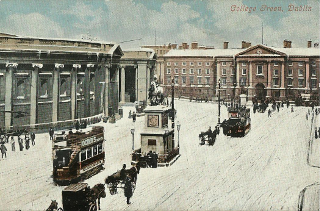
The statue is the location for annual rituals organised by loyalist elements in the city, with events held in July and November being flashpoints on the Dublin calendar. Heavily criticised by Daniel O’Connell and other nationalist voices, Dublin Castle distances itself from the ceremonies, but it is the eventual banning of the November ceremony which infuriates the Orange Order into action.
Following clashes at the event in July 1822, a decision is made by Marquess Wellesley, in his capacity as Lord Lieutenant, to seek a ban against the November event. A heavy military presence prevents the traditional loyalist display. This decision causes great resentment towards Wellesley from loyalists in the city, as would other actions such as appointing a Catholic lawyer to a position of importance in the courts. A visit by him to the Theatre Royal is seen as an opportunity to show that discontent. The Theatre Royal on Hawkins Street is relatively new at the time, having only opened the previous year. The announcement that the Lord Lieutenant would be attending the theatre causes considerable excitement in the city.
Six men meet in a tavern on Wednesday, December 11, all members of the Orange Order. John and George Atkinson, James Forbes, William Graham and Henry and Matthew Handwith drink to “the glorious, immortal and pious memory” of King William of Orange, plotting a protest against the Lord Lieutenant which would grab the attention of the city. On December 13, a meeting of Lodge 1612 of the Orange Order on Werburgh Street decides to fund the purchase of twelve pit tickets for the upcoming play, with the aim of creating a scene which would embarrass the Lord Lieutenant.
The trouble begins inside the theatre with the tossing of pamphlets with the slogan “No Popery” upon them, most of which drift towards the stage. There are some cries of “No Popish Lord Lieutenant,” and the Lord Mayor of Dublin is also subject to ridicule. The play begins as planned, only to be interrupted throughout. A series of items are thrown in the direction of the Lord Lieutenant. The event comes to be known as “The Bottle Riot” in Dublin, owing to the missiles thrown. While the Lord Lieutenant is never in any real physical danger, the incident is hugely embarrassing for the authorities, with mob rule taking centre stage at one of Dublin’s most prestigious venues.
Several days later, the behaviour of the Orangemen is the subject of a protest meeting in Dublin. This meeting is significant as it is addressed by some hugely influential figures, including the Duke of Leinster, Daniel O’Connell, Henry Grattan, Jr. and Arthur Guinness II, son of the famous brewer. Guinness denounces the men as a “mischievous faction” and calls for them to be opposed “by the severe but wholesome discipline of the laws.”
While the instigators of the affair are brought in front of the courts on two separate occasions, both cases collapse causing much anger. Lord Chief Justice of IrelandCharles Kendal Bushe remarks to the jury in his summation that “an audience may cry down a play, or hiss, or hoot an actor,” but that riotous behaviour is not permitted. One effect of the mini riot is the outlawing of the Orange Order for a period, when the Unlawful Societies Act of 1825 comes into being.
(Pictured: Undated postcard showing the monument of King William of Orange on College Green)
One of four children, Cremin is born to a family that operates a drapery business. His brother, Francis Cremin, becomes a leading academic canon lawyer who frames a number of key church documents. He is educated at St. Brendan’s College, Killarney and from 1926 at University College Cork, where he graduates with a first-class degree in Classics and Commerce.
Around 1929 Cremin is awarded the post-graduate University College Cork Honan scholarship. By 1930 he has attained a degree in economics and accountancy. For the following three years he studies in Athens, Munich and Oxford, having attained a traveling scholarship in Classics. He subsequently enters the Department of External Affairs, having succeeded in the competition for third secretary in 1935.
In April 1935 Cremin marries Patricia O’Mahony. His first position in Dublin involves working with Frederick Henry Boland on the League of Nations portfolio. In 1937 he is sent abroad on his first posting to Paris. There he works under the “Revolutionary Diplomat” Art O’Brien, until the latter retires in 1938. Sean Murphy later becomes his Minister. Ireland declares neutrality on the outbreak of World War II and Murphy and Cremin report on the developments in France throughout the Phoney War.
After the fall of France, the Irish legation is the last to leave Paris except for the American Ambassador, on June 11, 1940. After traveling to Ascain the legation eventually makes its way to the new French Capital, Vichy, where it sets about looking after the needs of Irish citizens, many of whom have been interned, as they have British passports and have been sending political reports. The political reports are of the highest value and ensure that Irish continue to observe pro-Allied neutrality throughout the war.
In 1943 Cremin is sent to Berlin to replace William Warnock. Prior to his arrival the Legation is bombed. As Chargé d’affaires in Berlin, he is responsible for sending back political reports and looking after the interests of Irish citizens. He attempts, unsuccessfully, to assist some European Jews. He does however send full reports on the Nazi treatment of the Jews in Europe. Warned to leave Berlin before the Soviets arrive, he spends the last weeks of the war near the Swiss border.
In 1945 Cremin is sent to Lisbon, where he meets authoritarian president António de Oliveira Salazar and attempts to revive Irish trade as well as reporting on the various unsuccessful coups against Salazar.
After returning to Ireland in 1946 he is involved in preparing Ireland’s Marshall Plan application and tracing the development of Ireland’s post war foreign policy. He has a distinguished career representing Ireland in many foreign missions and at the United Nations.
After retiring Cremin remains chairman of the Irish delegation to the United Nations Convention on the Law of the Sea. After his first wife dies, he marries again in 1979. He dies in Kenmare on April 19, 1987, survived by his wife, three daughters, and a son.




 seamus dubhghaill