seamus dubhghaill

Promoting Irish Culture and History from Little Rock, Arkansas, USA


Leave a comment

Death of U.S. President William McKinley

william-mckinley

William McKinley, the 25th President of the United States, dies on September 14, 1901, eight days after being shot by anarchist Leon Czolgozc and six months into his second term. McKinley leads the nation to victory in the Spanish American War, raises protective tariffs to promote American industry, and maintains the nation on the gold standard in a rejection of free silver.

McKinley is born on January 29, 1843, in Niles, Ohio, the seventh child of William McKinley Sr. and Nancy (née Allison) McKinley. The McKinleys are of English and Scots Irish descent and settled in western Pennsylvania in the 18th century, tracing back to a David McKinley who is born in Dervock, County Antrim, in present-day Northern Ireland.

McKinley is the last president to serve in the American Civil War and the only one to start the war as an enlisted soldier, beginning as a private in the Union Army and ending as a brevet major. After the war, he settles in Canton, Ohio, where he practices law and marries Ida Saxton. In 1876, he is elected to the United States Congress, where he becomes the Republican Party‘s expert on the protective tariff, which he promises will bring prosperity. His 1890 McKinley Tariff is highly controversial which, together with a Democratic redistricting aimed at gerrymandering him out of office, leads to his defeat in the Democratic landslide of 1890.

McKinley is elected Ohio’s governor in 1891 and 1893, steering a moderate course between capital and labor interests. With the aid of his close adviser Mark Hanna, he secures the Republican nomination for president in 1896, amid a deep economic depression. He defeats his Democratic rival, William Jennings Bryan, after a front porch campaign in which he advocates “sound money” and promises that high tariffs will restore prosperity.

Rapid economic growth marks McKinley’s presidency. He promotes the 1897 Dingley Act to protect manufacturers and factory workers from foreign competition, and in 1900, he secures the passage of the Gold Standard Act. He hopes to persuade Spain to grant independence to rebellious Cuba without conflict, but when negotiation fails, he leads the nation into the Spanish American War of 1898. The U.S. victory is quick and decisive. As part of the Treaty of Paris (1898), Spain turns over to the United States its main overseas colonies of Puerto Rico, Guam, and the Philippines. Cuba is promised independence, but at that time remains under the control of the U.S. Army. The United States annexes the independent Republic of Hawaii in 1898, and it became a U.S. territory.

Historians regard McKinley’s 1896 victory as a realigning election, in which the political stalemate of the post–Civil War era gives way to the Republican-dominated Fourth Party System, which begins with the Progressive Era.

McKinley defeats Bryan again in the 1900 presidential election, in a campaign focused on imperialism, protectionism, and free silver. However, his legacy is suddenly cut short when he is shot on September 6, 1901, by Leon Czolgosz, a second-generation Polish American with anarchist leanings. McKinley dies eight days later on September 14, 1901, and is succeeded by his Vice President, Theodore Roosevelt. He is buried at the McKinley National Memorial in Canton, Ohio.

As an innovator of American interventionism and pro-business sentiment, McKinley’s presidency is generally considered above average, though his highly positive public perception is soon overshadowed by Roosevelt.

Leave a comment

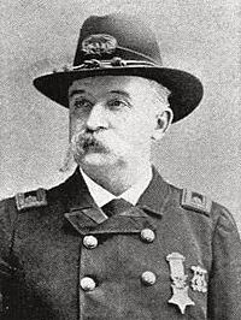
Birth of James Joseph Quinlan, Union Army Officer

james-joseph-quinlan

James Joseph Quinlan, Union Army officer during the American Civil War, is born in Clonmel, County Tipperary on September 13, 1833.

Quinlan is appointed as Major of the 88th New York Infantry in December 1861. He becomes the regiment’s Lieutenant Colonel in October 1862 and is discharged in February 1863.

Quinlan receives America’s highest military decoration, the Medal of Honor, on February 18, 1891, for his actions at the Battle of Savage’s Station in Henrico County, Virginia, the fourth of the Seven Days Battles (Peninsula Campaign). His citation states he “led his regiment on the enemy’s battery, silenced the guns, held the position against overwhelming numbers, and covered the retreat of the Second Army Corps.”

James Joseph Quinlan dies on August 29, 1906, in Queens, New York and is buried at Calvary Cemetery, Woodside, Queens County, New York.


1 Comment

Death of Lieutenant Presley Neville O’Bannon

presley-neville-obannon

Presley Neville O’Bannon, first lieutenant in the United States Marine Corps and descendant of Brien Boru O’Bannon (1683) who is apparently the first notable O’Bannon to enter the American colonies, dies on September 12, 1850.

O’Bannon is born in 1776 in Fauquier County, Virginia, to William O’Bannon, a captain of the Continental Army in the American Revolutionary War, and Anne Neville, a sister of General John Neville, commander of Fort Pitt in western Pennsylvania during the Revolution. He is probably named after Neville’s son, Presley, who is aide-de-camp to the Gilbert du Motier, Marquis de Lafayette.

O’Bannon enters the Marine Corps on January 18, 1801. As a first lieutenant assigned to the USS Argus, he commands a detachment of seven Marines and two Navy midshipmen in diplomatic Consul General William Eaton‘s small army during the Tripoli campaign of the First Barbary War. In the combined operations with the United States Navy, he leads the successful attack at the Battle of Derna, a coastal town in eastern modern Libya on April 27, 1805, giving the Marines’ Hymn its line “to the shores of Tripoli.”

Lieutenant O’Bannon becomes the first man to raise a United States flag over foreign soil in time of war. O’Bannon’s superior, William Eaton, a former Army officer, had raised the American flag several months earlier while traveling on the Nile River from Alexandria to Cairo, but it had not been in a time of war. According to Marine Corps legend, Prince Hamet Karamanli is so impressed with O’Bannon’s bravery during the attempt to restore him to his throne as the Bey of Tripoli that he gives O’Bannon a sword as a gesture of respect. This sword becomes the model for the Mameluke sword, adopted in 1825 for Marine Corps officers, which is part of the formal uniform today.

O’Bannon resigns from the Marine Corps on March 6, 1807. He moves to Logan County, Kentucky, making his home in Russellville. He serves in the Kentucky Legislature in 1812, 1817, and 1820–21, and in the Kentucky State Senate from 1824 to 1826.

Sometime before 1826, O’Bannon marries Matilda Heard, daughter of Major James Heard and Nancy Morgan, a daughter of American Revolutionary War general Daniel Morgan, commander at the Battle of Cowpens in South Carolina in 1781.

Presley O’Bannon dies at age 74 on September 12, 1850, in Pleasureville, Kentucky, where his daughter and nephew live. In 1919, his remains are moved to the Frankfort Cemetery on East Main Street in the state capital of Frankfort, Kentucky.

(Pictured: Oil painting of Lieutenant Presley Neville O’Bannon, USMC, by Colonel Donald L. Dickson, USMCR, from the Official Photograph Album Collection (COLL/2246) at the Archives Branch, Marine Corps History Division)


Leave a comment

Death of J.P. Donleavy, Novelist & Playwright

jp-donleavy

James Patrick Donleavy, Irish American novelist and playwright, dies in Mullingar, County Westmeath on September 11, 2017. His best-known work is the novel The Ginger Man, which is initially banned for obscenity.

Born in New York City on April 23, 1926, to Irish immigrants Margaret and Patrick Donleavy, Donleavy receives his education at various schools in the United States. He declares himself to be an atheist at the age of 14. He serves in the United States Navy during World War II. After the war ends, he moves to Ireland. In 1946 he begins studying at Trinity College, Dublin, but leaves in 1949 before taking a degree. Also in 1946, he marries Valerie Heron, and the couple has two children: Philip (born 1951) and Karen (born 1955). They divorce in 1969 and he remarries in 1970 to Mary Wilson Price. That union also ends in divorce in 1989.

Donleavy’s first published work is a short story entitled A Party on Saturday Afternoon, which appears in the Dublin literary periodical, Envoy, A Review of Literature and Art in 1950. He gains critical acclaim with his first novel, The Ginger Man (1955), which is one of the Modern Library 100 best novels. The novel, of which his friend and fellow writer Brendan Behan is the first person to read the completed manuscript, is banned in Ireland and the United States by reason of obscenity. Lead character Sebastian Dangerfield is in part based on Trinity College companion Gainor Crist, an American Navy veteran also studying at Trinity College on the G.I. Bill, whom Donleavy once describes in an interview as a “saint,” though of a Rabelaisian kind.

Correctly or incorrectly, his initial works are sometimes grouped with the Kitchen Sink artists as well as the “angry young men.” Another novel, A Fairy Tale of New York, provides the title of The Pogues hit song “Fairytale of New York.”

In March 2007, Donleavy is the castaway on BBC Radio 4‘s Desert Island Discs. In 2015, he is the recipient of the Bob Hughes Lifetime Achievement Award at the Bord Gáis Energy Irish Book Awards.

In 2011, it is reported that Donleavy had not fathered his two children with Mary Wilson Price. A DNA test in the early 1990s confirms that Rebecca is the daughter of brewing scion Kieran Guinness, and Rory is the son of Kieran’s older brother Finn, whom Price marries after her divorce from Donleavy. “My interest is only to look after the welfare of the child,” Donleavy tells The Times, “And after a certain stage, you can’t worry about their parentage.”

J.P. Donleavy dies of an apparent stroke in Mullingar, County Westmeath on September 11, 2017, at the aged of 91.


Leave a comment

Birth of Francis O,Neill, Music Collector & Police Officer

francis-oneill

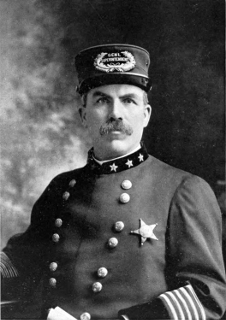
Francis O’Neill, Irish-born American police officer and collector of Irish traditional music, is born in Tralibane, near Bantry, County Cork on August 28, 1848. His biographer Nicholas Carolan refers to him as “the greatest individual influence on the evolution of Irish traditional dance music in the twentieth century.”

At an early age O’Neill hears the music of local musicians, among them Peter Hagarty, Cormac Murphy and Timothy Dowling. At the age of 16, he becomes a cabin boy on an English merchant vessel. On a voyage to New York, he meets Anna Rogers, a young emigrant whom he later marries in Bloomington, Illinois. The O’Neills move to Chicago, and in 1873 he becomes a policeman with the Chicago Police Department. He rises through the ranks quickly, eventually serving as the Chief of Police from 1901 to 1905. He has the rare distinction, in a time when political “pull” counts for more than competence, of being re-appointed twice to the position by two different mayors.

O’Neill is a flautist, fiddler and piper and is part of the vibrant Irish community in Chicago at the time. During his time as chief, he recruits many traditional Irish musicians into the police force, including Patrick O’Mahony, James O’Neill, Bernard Delaney, John McFadden and James Early. He also collects tunes from some of the major performers of the time including Patsy Touhey, who regularly sends him wax cylinders and visits him in Chicago. He also collects tunes from a wide variety of printed sources.

O’Neill retires from the police force in 1905. After that, he devotes much of his energy to publishing the music he has collected. He dies in Chicago, at the age of 87, on January 28, 1936.

In 2000, a life-size monument of Francis O’Neill playing a flute is unveiled next to the O’Neill family homestead in Tralibane, County Cork. The monument, and a commemorative wall are erected through the efforts of the Captain Francis O’Neill Memorial Company.

In 2008, Northwestern University Press issues Captain O’Neill’s Sketchy Recollections of an Eventful Life in Chicago, a non-musical memoir edited by Ellen Skerrett and Mary Lesch, O’Neill’s great-granddaughter, with a foreword by Nicholas Carolan of the Irish Traditional Music Archive. Carolan himself writes a musical biography of O’Neill, A Harvest Saved: Francis O’Neill and Irish Music in Chicago, which is published in Ireland by Ossian in 1997.

In August 2013, the inaugural Chief O’Neill Traditional Music Festival takes place in Bantry, County Cork, just a few miles from Tralibane. The 2013 event marks the centenary of the publication of O’Neill’s Irish Minstrels and Musicians. The event has taken place annually since.


Leave a comment

Birth of American Folk Hero Davy Crockett

david-crockett

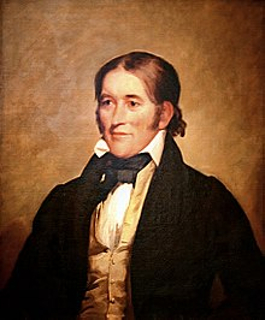
David “Davy” Crockett, 19th-century American folk hero, frontiersman, soldier, and politician, is born in Limestone, Greene County, North Carolina on August 17, 1786. He is commonly referred to in popular culture by the epithet “King of the Wild Frontier.” He represents Tennessee in the U.S. House of Representatives and serves in the Texas Revolution.

The Crockett family is of mostly French–Huguenot ancestry, although the family settles in Ireland before migrating to the Americas. Crockett is born in what is now Greene County, Tennessee (at the time part of North Carolina), close to the Nolichucky River and near the community of Limestone. He grows up in East Tennessee, where he gains a reputation for hunting and storytelling.

Crockett is made a colonel in the militia of Lawrence County, Tennessee and is elected to the Tennessee state legislature in 1821. In 1827, he is elected to the United States Congress where he vehemently opposes many of the policies of President Andrew Jackson, especially the Indian Removal Act. His opposition to Jackson’s policies leads to his defeat in the 1831 elections. He is re-elected in 1833, then narrowly loses in 1835, prompting his angry departure shortly thereafter to Texas, then the Mexican state of Tejas.

All that is certain about the fate of Crockett is that he dies fighting in the Battle of the Alamo in the Texas Revolution on the morning of March 6, 1836. According to many accounts, between five and seven Texans surrender during the battle, possibly to General Manuel Fernández Castrillón. General Antonio López de Santa Anna has ordered the Mexicans to take no prisoners, and he is incensed that those orders have been ignored. He demands the immediate execution of the survivors, but Castrillon and several other officers refuse to do so. Staff officers who had not participated in the fighting draw their swords and kill the unarmed Texians.

Crockett becomes famous during his lifetime for larger-than-life exploits popularized by stage plays and almanacs. After his death, he continues to be credited with acts of mythical proportion. In the 20th century these lead to television and movie portrayals, and he becomes one of the best-known American folk heroes.


Leave a comment

Birth of Father Michael Joseph McGivney

michael-joseph-mcgivney

Michael Joseph McGivney, American Catholic priest, is born to Irish immigrants Patrick and Mary (Lynch) McGivney on August 12, 1852, in Waterbury, Connecticut. He founds the Knights of Columbus at a local parish to serve as a mutual aid and fraternal insurance organization, particularly for immigrants and their families. It develops through the 20th century as the world’s largest Catholic fraternal organization.

McGivney attends the local Waterbury district school but leaves at 13 to work in the spoon-making department of one of the area brass mills. In 1868, at the age of 16, he enters the Séminaire de Saint-Hyacinthe in Saint-Hyacinthe, Quebec, Canada. He continues his studies at Our Lady of Angels Seminary, near Niagara Falls, New York (1871–1872) and at the Jesuits‘ St. Mary’s College, in Montreal, Quebec. He has to leave the seminary, returning home, to help finish raising his siblings after the death of his father in June 1873. He later resumes his studies at St. Mary’s Seminary, in Baltimore, Maryland. He is ordained a priest on December 22, 1877, by Archbishop James Gibbons at the Baltimore Cathedral of the Assumption.

From his own experience, McGivney recognizes the devastating effect on immigrant families of the untimely death of the father and wage earner. Many Catholics are still struggling to assimilate into the American economy. On March 29, 1882, while an assistant pastor at Saint Mary’s Church in New Haven, Connecticut, he founds the Knights of Columbus, with a small group of parishioners, as a mutual aid society to provide financial assistance in the event of the men’s death to their widows and orphans. The organization develops as a fraternal society. He is also known for his tireless work among his parishioners.

Father Michael Joseph McGivney dies from pneumonia at the age of 38 on August 14, 1890, the eve of the Assumption, in Thomaston, Connecticut.

The Knights of Columbus is among the first groups to recruit blood donors, with formal efforts dating to 1937 during the Great Depression. As of 2013, the order has more than 1.8-million-member families and 15,000 councils. During the 2012 fraternal year, $167 million and 70 million man-hours are donated to charity by the order.

In 1996, the Roman Catholic Archdiocese of Hartford opens the cause for canonization, an investigation into McGivney’s life with a view towards formal recognition by the Church of his sainthood. Father Gabriel O’Donnell, OP, is the postulator of McGivney’s cause. He is also the director of the Fr. McGivney Guild, which now has 150,000 members supporting his cause.

The diocesan investigation is closed in 2000, and the case is passed to the Congregation for the Causes of Saints in Vatican City. On March 15, 2008, Pope Benedict XVI approves a decree recognizing McGivney’s heroic virtue, thus declaring him “Venerable.” As of August 6, 2013, a miracle attributed to McGivney’s intercession is under investigation at the Vatican.


Leave a comment

Death of Robin Williams, Actor & Comedian

robin-williams

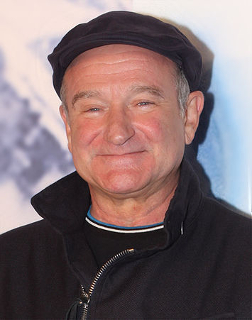
Robin McLaurin Williams, American actor and comedian, is found dead in his home in Paradise Cay, California on August 11, 2014, in what is believed to be suicide via asphyxiation.

Williams is born at St. Luke’s Hospital in Chicago, Illinois on July 21, 1951, the son of Robert Fitzgerald Williams, an Irish American and a senior executive in Ford Motor Company‘s Lincoln-Mercury Division. He had English, Irish, Scottish, Welsh, German, and French ancestry.

He starts as a stand-up comedian in San Francisco and Los Angeles in the mid-1970s. He is credited with leading San Francisco’s comedy renaissance. After rising to fame as an alien called Mork in the TV sci-fi sitcom series Mork & Mindy, he establishes a career in both stand-up comedy and feature film acting. He is known for his improvisational skills.

After his first starring film role in Popeye (1980), Williams stars or co-stars in various films that achieve both critical acclaim and financial success, including Good Morning, Vietnam (1987), Dead Poets Society (1989), Aladdin (1992), The Birdcage (1996), and Good Will Hunting (1997). He also stars in widely acclaimed films such as The World According to Garp (1982), Moscow on the Hudson (1984), Awakenings (1990), The Fisher King (1991), One Hour Photo (2002), and World’s Greatest Dad (2009), as well as box office hits such as Hook (1991), Mrs. Doubtfire (1993), Jumanji (1995) and Night at the Museum (2006).

Williams wins the 1997 Academy Award for Best Supporting Actor for his performance as psychologist Sean Maguire in Good Will Hunting. He also receives two Primetime Emmy Awards, seven Golden Globe Awards, two Screen Actors Guild Awards, and four Grammy Awards throughout his career.

On August 11, 2014, Williams commits suicide at his home in Paradise Cay, California, at the age of 63. His wife attributes his suicide to his struggle with diffuse Lewy body dementia. His body is cremated at Montes Chapel of the Hills in San Anselmo and his ashes are scattered in San Francisco Bay on August 21.

Williams’s death instantly becomes global news. The entertainment world, friends, and fans respond to his death through social and other media outlets. U.S. President Barack Obama said of Williams, “He was one of a kind. He arrived in our lives as an alien—but he ended up touching every element of the human spirit.”


Leave a comment

Birth of Elizabeth Gurley Flynn, Activist & Feminist

elizabeth-gurley-flynn

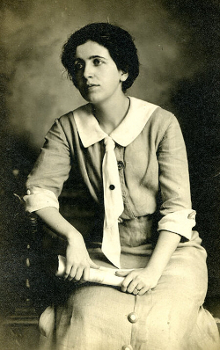
Elizabeth Gurley Flynn, labor leader, activist, and feminist who played a leading role in the Industrial Workers of the World (IWW), is born in Concord, New Hampshire on August 7, 1890. She is a founding member of the American Civil Liberties Union and a visible proponent of women’s rights, birth control, and women’s suffrage.

Flynn’s family moves to New York in 1900, where she is educated in the local public schools. She grows up being regaled by tales of Irish revolutionaries. According to their oral tradition all four of her great-grandfathers, Flynn, Gurley, Conneran, and Ryan, are members of the Society of United Irishmen, with grandfather Flynn being one of the leaders in County Mayo when the French fleet lands there during the Irish Rebellion of 1798. Her parents introduce her to socialism. When she is only fifteen, she gives her first public speech, “What Socialism Will Do for Women,” at the Harlem Socialist Club.

In 1907, Flynn becomes a full-time organizer for the Industrial Workers of the World. Over the next few years, she organizes campaigns among garment workers in Pennsylvania, silk weavers in New Jersey, restaurant workers in New York, miners in Minnesota, Missoula, Montana, and Spokane, Washington and textile workers in Massachusetts. She is arrested ten times during this period but is never convicted of any criminal activity. It is a plea bargain, on the other hand, that results in her expulsion from the IWW in 1916, along with fellow organizer Joe Ettor.

A founding member of the American Civil Liberties Union (ACLU) in 1920, Flynn plays a leading role in the campaign against the conviction of Nicola Sacco and Bartolomeo Vanzetti. She is particularly concerned with women’s rights, supporting birth control and women’s suffrage. She also criticizes the leadership of trade unions for being male-dominated and not reflecting the needs of women.

Between 1926 and 1936, Flynn lives in southwest Portland, Oregon with birth control activist, suffragette, and Wobbly Marie Equi where she is an active and vocal supporter of the 1934 West Coast Longshoremen’s Strike. In 1936, she joins the Communist Party and writes a feminist column for its journal, the Daily Worker. Two years later, she is elected to the national committee. Her membership in the Party leads to her ouster from the board of the ACLU in 1940.

During World War II, Flynn plays an important role in the campaign for equal economic opportunity and pay for women and the establishment of day care centers for working mothers. In 1942, she runs for the United States Congress at-large in New York and receives 50,000 votes. In July 1948, a dozen leaders of the Communist Party are arrested and accused of violating the Smith Act by advocating the overthrow of the U.S. government by force and violence. After they are convicted in the Foley Square trial they appeal to the Supreme Court, which upholds their conviction in Dennis v. United States.

Flynn launches a campaign for their release but, in June 1951, is herself arrested in the second wave of arrests and prosecuted under the Smith Act. After a nine-month trial, she is found guilty and serves two years in Federal Prison Camp, Alderson near Alderson, West Virginia. She later writes a prison memoir, The Alderson Story: My Life as a Political Prisoner.

After her release from prison, Flynn resumes her activities for leftist and Communist causes. She runs for the New York City Council as a Communist in 1957, garnering a total of 710 votes. She becomes national chairwoman of the Communist Party of the United States in 1961 and makes several visits to the Soviet Union.

Elizabeth Gurley Flynn dies on September 5, 1964, while on one of her visits to the Soviet Union. The Soviet government gives her a state funeral in Red Square with over 25,000 people attending. In accordance with her wishes, her remains are flown to the United States for burial in Chicago‘s German Waldheim Cemetery, near the graves of Eugene Dennis, Bill Haywood, Emma Goldman, and the Haymarket Riot Martyrs.

In 1978, the ACLU posthumously reinstates her membership.


Leave a comment

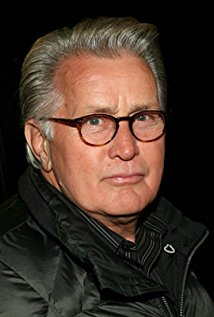
Birth of Actor Martin Sheen

martin-sheen

Ramón Gerard Antonio Estévez, known professionally as Martin Sheen, American actor of Spanish/Irish descent, is born in Dayton, Ohio on August 3, 1940. He first becomes known for his roles in the films The Subject Was Roses (1968) and Badlands (1973), and later achieves wide recognition for his leading role in Apocalypse Now (1979) and as President Josiah Bartlet in the television series The West Wing (1999-2006).

Sheen is born to immigrant parents, a first-generation Irish mother, Mary-Anne Phelan from Borrisokane, County Tipperary, and a Galician father, Francisco Estévez from Vigo in Galicia (Spain). He adopts the stage name Martin Sheen to help him gain acting parts from a combination of the CBS casting director Robert Dale Martin, who gives him his first big break, and the televangelist archbishop, Fulton J. Sheen. He is the father of four children (Emilio, Ramón, Carlos and Renée), all of whom are actors.

In film, Sheen has won the Best Actor award at the San Sebastián International Film Festival for his performance as Kit Carruthers in Badlands. Sheen’s portrayal of Capt. Willard in Apocalypse Now earns a nomination for the BAFTA Award for Best Actor in a Leading Role.

Sheen has worked with a wide variety of film directors, including Richard Attenborough, Francis Ford Coppola, Terrence Malick, David Cronenberg, Mike Nichols, Martin Scorsese, Steven Spielberg and Oliver Stone. He receives a star on the Hollywood Walk of Fame in 1989. In television, he has won a Golden Globe Award and two Screen Actors Guild Awards for playing the role of President Josiah Bartlet in The West Wing, and an Emmy Award for guest starring in the sitcom Murphy Brown.

Although known as an actor, Sheen also has directed one film, Cadence (1990), appearing alongside sons Charlie and Ramón. He has narrated, produced, and directed documentary television, earning two Daytime Emmy Awards in the 1980s. In addition to film and television, he has been active in liberal politics.