seamus dubhghaill

Promoting Irish Culture and History from Little Rock, Arkansas, USA


Leave a comment

Birth of Lord Edward FitzGerald

Lord Edward FitzGerald, Irish aristocrat who abandoned his prospects as a distinguished veteran of British service in the American Revolutionary War, and as an Irish Parliamentarian, to embrace the cause of an independent Irish republic, is born at Carton House, near Dublin, on October 15, 1763.

FitzGerald is the fifth son of James FitzGerald, 1st Duke of Leinster, and the Lady Emily Lennox, daughter of Charles Lennox, 2nd Duke of Richmond. In 1773 his father dies, and his mother soon afterwards marries William Ogilvie, who had been the tutor for him and his siblings. He spends most of his childhood in Frescati House at Blackrock, Dublin, where he is tutored by Ogilvie in a manner chiefly directed to the acquisition of knowledge that will fit him for a military career.

FitzGerald joins the British Army in 1779 and then becomes aide-de-camp on the staff of Lord Rawdon in the Southern theatre of the American Revolutionary War. He is seriously wounded at the Battle of Eutaw Springs on September 8, 1781, his life being saved by an escaped slave named Tony Small. He commissions a portrait of Small by John Roberts in 1786. He frees Small and employs him to the end of his life. He is evacuated from Charleston, South Carolina in 1782 when the British forces abandon the city.

In 1783 FitzGerald visits the West Indies before returning to Ireland, where his brother, William FitzGerald, 2nd Duke of Leinster, has procured Edward’s election to the Irish Parliament as an MP for Athy, a seat he holds until 1790. In Parliament he acts with the small Opposition Irish Patriot Party group led by Henry Grattan but takes no prominent part in debate. In the spring of 1786, he takes the then unusual step for a young nobleman of entering the Military College, Woolwich, after which he makes a tour through Spain in 1787. Dejected by unrequited love for his cousin Georgina Lennox, he sails for New Brunswick to join the 54th Regiment with the rank of Major.

In April 1789, guided by compass, FitzGerald traverses the country with a brother officer from Fredericton, New Brunswick to Quebec, falling in with Indians by the way, with whom he fraternizes. He accomplishes the journey in twenty-six days and establishes a shorter practicable route than that hitherto followed. The route crosses the extremely rugged and heavily forested northern part of the present state of Maine. In a subsequent expedition he is formally adopted at Detroit by the Bear clan of the Mohawk with the name “Eghnidal,” and makes his way down the Mississippi River to New Orleans, whence he returns to England.

Finding that his brother has procured his election for Kildare County, a seat he holds from 1790 to 1798, and desiring to maintain political independence, FitzGerald refuses the command of an expedition against Cádiz offered him by William Pitt the Younger and devotes himself for the next few years to the pleasures of society and to his parliamentary duties. He is on terms of intimacy with his first cousin Charles Fox, with Richard Sheridan and other leading Whigs. According to Thomas Moore, FitzGerald is only one of numerous suitors of Sheridan’s first wife, Elizabeth, whose attentions are received with favour. She conceives a child by him, a baby girl who is born on March 30, 1792.

His Whig connections, together with his transatlantic experiences, predisposed FitzGerald to sympathize with the doctrines of the French Revolution, which he embraces enthusiastically when he visits Paris in October 1792. He lodges with Thomas Paine and listens to the debates in the Convention. While in Paris, he becomes enamoured of a young girl named Pamela whom he chances to see at the theatre, and who has a striking likeness to Elizabeth Sheridan. On December 27, 1792, he and Pamela are married at Tournai, one of the witnesses being Louis Philippe, afterwards King of the French. In January 1793 the couple reaches Dublin.

Ireland is by then seething with dissent which is finding a focus in the increasingly popular and revolutionary Society of the United Irishmen, which has been forced underground by the outbreak of war between France and Britain in 1793. FitzGerald, fresh from the gallery of the Convention in Paris, returns to his seat in the Irish Parliament and immediately springs to their defence. Within a week of his return, he is ordered into custody and required to apologise at the bar of the House of Commons for violently denouncing in the House a government proclamation which Grattan had approved for the suppression of the United-Irish attempt to revive the Irish Volunteer movement with a “National Guard.” However, it is not until 1796 that he joins the United Irishmen, who by now have given up as hopeless the path of constitutional reform and whose aim, after the recall of Lord Fitzwilliam in 1795, is nothing less than the establishment of an independent Irish republic.

In May 1796 Theobald Wolfe Tone is in Paris endeavouring to obtain French assistance for an insurrection in Ireland. In the same month, FitzGerald and his friend Arthur O’Connor proceed to Hamburg, where they open negotiations with the Directory through Reinhard, French minister to the Hanseatic towns. The Duke of York, meeting Pamela at Devonshire House on her way through London with her husband, tells her that his plans are known and advises that he should not go abroad. The proceedings of the conspirators at Hamburg are made known to the government in London by an informer, Samuel Turner. The result of the Hamburg negotiations is Louis Lazare Hoche‘s abortive expedition to Bantry Bay in December 1796.

In September 1797 the Government learns from the informer Leonard McNally that FitzGerald is among those directing the conspiracy of the United Irishmen, which is now quickly maturing. Thomas Reynolds, converted from a conspirator to an informer, keeps the authorities posted in what is going on, though lack of evidence produced in court delays the arrest of the ringleaders. But on March 12, 1798, Reynolds’ information leads to the seizure of a number of conspirators at the house of Oliver Bond. FitzGerald, warned by Reynolds, is not among them.

As a fellow member of the Ascendancy class, the Government are anxious to make an exception for FitzGerald, avoiding the embarrassing and dangerous consequences of his subversive activities. They communicate their willingness to spare him from the normal fate meted out to traitors. FitzGerald however refuses to desert others who cannot escape, and whom he has himself led into danger. On March 30 the government proclamation of martial law authorising the military to act as they see fit to crush the United Irishmen leads to a campaign of vicious brutality in several parts of the country.

FitzGerald’s social position makes him the most important United Irish leader still at liberty. On May 9 a reward of £1,000 is offered by Dublin Castle for his apprehension. Since the arrests at Bond’s house, he has been in hiding. The date for the rising is finally fixed for May 23 and FitzGerald awaits the day hidden by Mary Moore above her family’s inn in Thomas Street, Dublin.

Tipped off that the house is going to be raided, Moore turns to Francis Magan, a Catholic barrister and trusted sympathiser, who agrees to hide Fitzgerald. Making its way to Magan’s house on May 18, Fitzgerald’s party is challenged by Major Henry Sirr and a company of Dumbarton Fencibles. Moore escapes with Fitzgerald and takes him back to Thomas Street to the house of Nicholas Murphy.

Moore explains to Magan what had happened and, unbeknownst to her, Magan informs Dublin Castle. The Moore house is raided that day. Mary, running to warn the Leinster Directory meeting nearby in James’s Gate, receives a bayonet cut across the shoulders. That same evening Sirr storms Murphy’s house where FitzGerald is in bed suffering from a fever. Alerted by the commotion, he jumps out of bed and, ignoring the pleas of the arresting officers to surrender peacefully, he stabs one and mortally wounds the other with a dagger in a desperate attempt to escape. He is secured only after Major Sirr shoots him in the shoulder.

FitzGerald is conveyed to New Prison, Dublin where he is denied proper medical treatment. After a brief detention in Dublin Castle he is taken to Newgate Prison, Dublin where his wound, which has become infected, becomes mortally inflamed. His wife, whom the government probably has enough evidence to convict of treason, has fled the country, never to see her husband again, but FitzGerald’s brother Henry and his aunt Lady Louisa Conolly are allowed to see him in his last moments. He dies at the age of 34 on June 4, 1798, as the rebellion rages outside. He is buried the next day in the cemetery of St. Werburgh’s Church, Dublin. An Act of Attainder confiscating his property is passed as 38 Geo. 3 c. 77 but is eventually repealed in 1819.

There are Lord Edward Streets named in FitzGerald’s honour in many places in Ireland, such as Dublin, Limerick, Sligo, Kilkenny, Ballina, Ballymote, and Ballycullenbeg in County Laois. The County Roscommon GAA club Tulsk Lord Edward’s and the Geraldines P. Moran’s GAA club in Cornelscourt, Dublin, are named after him.

Leave a comment

Birth of Sir Maziere Brady, 1st Baronet & Lord Chancellor of Ireland

Sir Maziere Brady, 1st Baronet, PC (Ire), Irish judge, notable for his exceptionally long, though not particularly distinguished tenure as Lord Chancellor of Ireland, is born on July 20, 1796.

Brady is born on Parliament Street, Dublin, the second son of Francis Tempest Brady of Booterstown, a manufacturer of gold and silver thread, and his wife Charlotte Hodgson, daughter of William Hodgson of Castledawson, County Londonderry. He is baptised at St. Werburgh’s Church, Dublin. He is the brother of Sir Nicholas Brady, Lord Mayor of Dublin, and uncle of the eminent ecclesiastical historian William Maziere Brady.

The Bradys are an old and distinguished Munster family who are particularly associated with the town of Bandon, County Cork. Probably the most celebrated of his ancestors is the poet and psalmist Nicholas Brady (1659–1726), who collaborated with Nahum Tate, the Poet Laureate, on New Version of the Psalms of David.

Other notable forebears include Hugh Brady, the first Protestant Bishop of Meath (d. 1584), his father-in-law Robert Weston who, like Maziere serves as Lord Chancellor of Ireland, and the judge and author Luke Gernon (d. 1672), who is now best remembered for his work A Discourse of Ireland (1620), which gives a detailed and (from the English colonial point of view) not unsympathetic picture of the state of Ireland in 1620.

Brady is educated at Trinity College Dublin and takes his Bachelor of Arts degree in 1816. He enters the Middle Temple in 1816, is called to the Bar in 1819 and becomes King’s Counsel in 1835.

In politics Brady is a Liberal and supports Catholic emancipation. He sits on a commission of inquiry into Irish municipal corporations in 1833. He is appointed Solicitor-General for Ireland in 1837 and Attorney-General for Ireland the following year. In 1840 he is appointed Lord Chief Baron of the Irish Exchequer. In 1846 he is appointed Lord Chancellor of Ireland and serves in that office, with short intervals, for the next 20 years. He retires in 1866 and is made a baronet, of Hazelbrook in the County of Dublin, in 1869. His appointment ends the practice which grew after the Acts of Union 1800 of appointing only English lawyers as Lord Chancellor of Ireland. He sits on the Government Commission on Trinity College Dublin in 1851 and is nominated as Vice-Chancellor of Queen’s University Belfast in 1850. All through his life he shows a keen interest in education.

According to Elrington Ball, Brady’s Lord Chancellorship is notable for its length but for nothing else. Ball calls him “a good Chief Baron spoiled to make a bad Chancellor.” By general agreement he had been an excellent Chief Baron of the Exchequer, having a reputation for being fair-minded, courteous and approachable, but in Ball’s view the more onerous (and partly political) office of Lord Chancellor is beyond his capacity. Unlike some judges whose training had been in the common law, he never quite masters the separate code of equity. Delaney takes a somewhat more favourable view of Brady as Lord Chancellor, arguing that while his judgements do not show any great depth of learning they do show an ability to identify the central issue of any case and to apply the correct legal principle to it.

An anonymous pamphlet from 1850, which is highly critical of the Irish judiciary in general, describes Brady as being unable to keep order in his Court, and easily intimidated by counsel, especially by that formidable trio of future judges, Jonathan Christian, Francis Alexander FitzGerald, and Abraham Brewster. The author paints an unflattering picture of Brady as sitting “baffled and bewildered” in a Court where he is “a judge but not an authority.” On the other hand, Jonathan Christian, who had often clashed with Brady in Court, later praises him as “no ordinary man” despite his shortcomings as a judge. He describes him as “independent-minded, patriotic, natural and unaffected.”

Brady is a founder member of the Stephen’s Green Club and a member of the Royal Dublin Society and the Royal Irish Academy. In addition to the arts, he shows a keen interest in science, especially after his retirement. Like most judges of the time, he has both a town house in central Dublin and a place some distance from the city centre. His country house is Hazelbrook, Terenure, Dublin. He changes his town house several times, settling finally in Pembroke Street.

Brady marries firstly Elizabeth Anne Buchanan, daughter of Bever Buchanan, apothecary of Dublin, and his wife Eleanor Hodgson, in 1823 and they have five children. Elizabeth dies in 1858. In 1860, Brady marries Mary Hatchell, daughter of John Hatchell, Attorney-General for Ireland and Elizabeth Waddy, who survives him. He dies at his house in Pembroke Street on April 13, 1871. He is buried in Mount Jerome Cemetery.


Leave a comment

Birth of Thomas Butler, 6th Earl of Ossory

Vice Admiral Thomas Butler, 6th Earl of Ossory, KG, PC, PC (Ire), Irish soldier and politician, is born on July 8, 1634, at Kilkenny Castle. He is the eldest son of James Butler, 1st Duke of Ormond, and Elizabeth Preston. He predeceases his father and therefore never becomes duke.

When Butler is born, his father is then the 12th Earl of Ormond but is raised to marquess and duke. His family, the Butler dynasty, is Old English and descends from Theobald Walter, who had been appointed Chief Butler of Ireland by King Henry II in 1177. His mother is a second cousin once removed of his father as she is a granddaughter of Black Tom, 10th Earl of Ormond. Her father, however, is Scottish, Richard Preston, 1st Earl of Desmond, a favourite of James I. Both parents are Protestants. They married on Christmas Day 1629.

Butler is one of ten siblings, eight brothers and two sisters, but five of the sons die in childhood. As the eldest living son, he is the heir apparent and is styled with the corresponding courtesy title, which at first is Viscount Thurles but changed to Earl of Ossory when his father becomes marquess in 1642. His early years are spent in Ireland until 1647 when he accompanies his father to England. In 1648 his father renews his support for the royalist cause and he and his son have to flee to France, arriving in Caen in February 1648. Lady Ormond also moves to Caen, where she arrives on June 23, 1648, with his siblings.

Butler is an accomplished athlete and a good scholar. Having come to London in 1652 he is rightly suspected of sympathising with the exiled royalists, and in 1655 is jailed by Oliver Cromwell. After his release about a year later he goes into exile to the Netherlands where Charles II has his exile court at the time.

On November 17, 1659, while in exile, Butler marries Emilia van Nassau, the second daughter of Louis of Nassau, Lord of De Lek and Beverweerd. They have eleven children, including two sons: James (1665–1745), who becomes the 2nd Duke of Ormonde in 1688; Charles (1671–1758), who becomes the de jure 3rd Duke of Ormonde following his elder brother’s attainder in 1715; Elizabeth (died 1717), who marries William Stanley, 9th Earl of Derby in 1673; Amelia (died 1760), who inherits the estates of her brother Charles and never marries; and Henrietta (died 1724), who marries Henry de Nassau d’Auverquerque, 1st Earl of Grantham.

Butler accompanies Charles II back to England in 1660. In 1661 he becomes a member of both the English and the Irish houses of commons, representing in the former Bristol and Dublin University in the latter.

In 1662 Butler is called to the Irish House of Lords under a writ of acceleration as the Earl of Ossory. His father holds the title “5th Earl of Ossory” as one of his subsidiary titles. The acceleration makes Thomas Butler the 6th Earl of Ossory. This is the only substantive title he ever holds, as he predeceases his father and therefore never succeeds to his father’s titles. His eldest son, however, would later become the 2nd Duke of Ormond and the 7th Earl of Ossory.

Butler holds several military appointments: lieutenant-general of the army in Ireland (appointed in 1665); created an English peer as Lord Butler (in 1666); Lord of the Bedchamber to Charles II (appointed in 1660), a post he holds until his death.

In 1665 a fortunate accident allows Butler to take part in the Battle of Lowestoft against the Dutch, and in May 1672, being now in command of a ship, he fights against the same enemies in the Battle of Solebay, serving with great distinction on both occasions. He is partly responsible for this latter struggle, as on March 12, 1672, before war is declared, he attacks the Dutch Smyrna fleet, an action which he greatly regrets later in life. While visiting France in 1672 he rejects the liberal offers made by Louis XIV to induce him to enter the service of France and returning to England he adds to his high reputation by his conduct during the Battle of Texel in August 1673. From 1677 until 1679, he serves alongside his father as a Lord of the Admiralty.

Butler is intimate with William, Prince of Orange, and in 1677 he joins the allied army in the Netherlands, commanding the British contingent and winning great fame at the siege of Mons in 1678. He acts as deputy for his father, who is Lord Lieutenant of Ireland, and in parliament he defends Ormond’s Irish administration with great vigour. In 1680 he is appointed governor of English Tangier, but his death prevents him from taking up his new duties.

Butler dies on July 30, 1680, at Arlington House in London. He is buried provisionally in Westminster Abbey on July 31, 1680. The ceremony of burial is performed belatedly on November 13, 1680. Some say Butler’s body is later taken to Ireland and reburied in the family vault in St. Canice’s Cathedral, Kilkenny. James, his eldest son, succeeds him as the 7th Earl of Ossory and in 1688 becomes the 2nd Duke of Ormond.

One of Butler’s most intimate friends is John Evelyn, who eulogises him in his Diary.

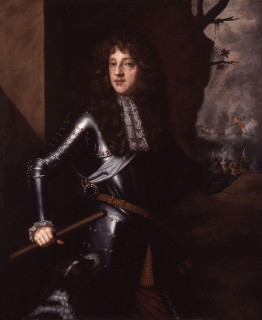
(Pictured: “Thomas Butler, Earl of Ossory” by Peter Lely, painting, circa 1678, National Portrait Gallery)


Leave a comment

Murder of William de Burgh, 3rd Earl of Ulster

William Donn de Burgh, 3rd Earl of Ulster and 4th Baron of Connaught, Irish noble who is Lord Lieutenant of Ireland (1331–32), is murdered at the age of 20 on June 6, 1333. His murder leads to the Burke Civil War.

De Burgh is born on September 17, 1312, the grandson of Richard Óg de Burgh, 2nd Earl of Ulster, via his second son, John, who dies in 1313. He is also Lord of Connaught in Ireland, and holds the manor of Clare, Suffolk.

De Burgh is summoned to Parliament from December 10, 1327 to June 15, 1328 by writs addressed to Willelmo de Burgh. In 1331 he is appointed Lord Lieutenant of Ireland for a year.

De Burgh marries, before November 16, 1327 (by a Papal Dispensation dated May 1, 1327), Maud of Lancaster, daughter of Henry, 3rd Earl of Lancaster and Maud Chaworth. They have only one surviving child, Elizabeth de Burgh, 4th Countess of Ulster, who is 13 months old when her father is murdered. She marries Lionel of Antwerp, third son of Edward III of England. Maud remarries Sir Ralph Ufford, Justiciar of Ireland (1344–46), and has further issue. She is said to have great influence over her second husband.

In February 1332, at Greencastle, near the mouth of Lough Foyle, de Burgh has his cousin, Sir Walter Liath de Burgh, starved to death. In revenge, Sir Walter’s sister, Gylle de Burgh, wife of Sir Richard de Mandeville, plans his assassination.

On June 6, 1333, William de Burgh is killed by de Mandeville, Sir John de Logan, and others. The Annals of the Four Masters note that “William Burke, Earl of Ulster, was killed by the English of Ulster. The Englishmen who committed this deed were put to death, in divers ways, by the people of the King of England; some were hanged, others killed, and others torn asunder, in revenge of his death.”

De Burgh’s widow, Maud, flees to England, where she remarries, is again widowed in 1346, and then becomes an Augustinian canoness at Campsey Priory in Suffolk, where she is buried. Upon his death, the various factions of the de Burghs, now called Burke, began the Burke Civil War for supremacy.

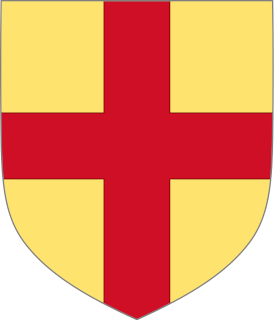
(Pictured: Arms of the House of de Burgh)


Leave a comment

Birth of James FitzGerald, 1st Duke of Leinster

Lieutenant-General James FitzGerald, 1st Duke of Leinster, PC (Ire), Irish nobleman, soldier and politician, is born on May 29, 1722. He is styled Lord Offaly until 1744 and known as The Earl of Kildare between 1744 and 1761 and as The Marquess of Kildare between 1761 and 1766.

FitzGerald is the son of Robert FitzGerald, 19th Earl of Kildare, and Lady Mary, daughter of William O’Brien, 3rd Earl of Inchiquin.

FitzGerald is a member of the Irish House of Commons for Athy from 1741 before succeeding his father as 20th Earl of Kildare in 1744. He is sworn of the Privy Council of Ireland in 1746 and in 1747, on the occasion of his marriage, he is created Viscount Leinster, of Taplow in the County of Buckingham, in the Peerage of Great Britain, and takes his seat in the British House of Lords that same year. From 1749 to 1755 he is one of the leaders of the Popular Party in Ireland and serves as the country’s Master-General of the Ordnance between 1758 and 1766, becoming Colonel of the Royal Irish Artillery in 1760. He is promoted to Major-General in 1761 and to Lieutenant-General in 1770.

In 1761 FitzGerald is created Earl of Offaly and Marquess of Kildare in the Peerage of Ireland and in 1766 he is further honoured when he is made Duke of Leinster, becoming by this time the Premier Duke, Marquess and Earl in the Peerage of Ireland.

FitzGerald marries the 15-year-old Lady Emily Lennox, daughter of Charles Lennox, 2nd Duke of Richmond and one of the famous Lennox sisters, in London on February 7, 1747. She descends from King Charles II and is therefore a distant fifth cousin of King George III (both of them are descended from King James VI and I). The couple has nineteen children.

FitzGerald dies at the age of 51 at Leinster House, Dublin, on November 19, 1773, and is buried in the city’s Christ Church Cathedral. He is succeeded by his second (but eldest surviving) son, William, Marquess of Kildare. The Duchess of Leinster causes a minor sensation by marrying her lover William Ogilvie in 1774, but continues to be known as The Dowager Duchess of Leinster. She has a further three children by him. She dies in London at the age of 82 in March 1814.

In 1999, Irish Screen, BBC America and WGBH produce Aristocrats, a six-part limited television series based on the lives of Emily Lennox and her sisters. FitzGerald is portrayed by Ben Daniels.

(Pictured: James FitzGerald, 1st Duke of Leinster, by Joshua Reynolds, 1753)


Leave a comment

Birth of Count Daniel Charles O’Connell, French General & Uncle of “The Liberator”

Count Daniel Charles O’Connell, French general and count in the French nobility, is born on May 21, 1745, in Derrynane, County Kerry, twenty-first among twenty-two children of Donal Mor O’Connell, a Catholic landowner, and his wife Mary, daughter of Daniel O’Donoghue of Glenflesk, near Killarney.

O’Connell is tutored at home in Latin and Greek, and before he is sixteen, he leaves with his cousin, Murty O’Connell, to join the French army. On February 13, 1760, he becomes a cadet in the Régiment de Royal Suédois. He spends almost his entire career in France or serving abroad with French regiments, but remains in close contact with his family, being in constant correspondence with the head of the clan, his brother Maurice O’Connell, who is almost twenty years his senior, and later arranging army appointments for a host of young nephews and cousins.

O’Connell serves with the Royal Suédois in the last two campaigns of the Seven Years’ War and is made assistant adjutant (sous-aide-major) of the regiment. At the close of the war, he is recommended for the military academy of Strasbourg (1765–66). He has a talent for self-advancement and is well regarded by his seniors, being tall, strong, handsome, disciplined, industrious, and sober. He has an almost morbid horror of drink, and his great boast is that he has never wasted a moment of his time or a farthing of his money.

Appointed to Col. Meade’s regiment of Lord Clare’s Irish Brigade with the rank of captain in October 1769, he sets sail immediately for Mauritius. Two years later he is allowed a visit home to Kerry for the first time in eleven years. In 1775 the death of Lord Clare’s son and the extinction of the title results in the reduction of the Irish Brigade and destroys O’Connell’s chance of promotion. He devotes himself to the study of chemistry, literature, and the military. A published study, Discipline of the army, comes under the notice of the military authorities, who obtain for him a Cross of Saint Louis, a pension of 2,000 livres a year, and the rank of lieutenant-colonel with which he is posted to his old regiment, the Royal Suédois, in 1778. With them he serves at the taking of Menorca in 1781 and is severely wounded at the Great Siege of Gibraltar in 1782 but manages to save the life of Charles Philippe, Count of Artois, the future Charles X. For these services he is made a count, one of only twenty-two people outside the royal family to receive this honour, and is made colonel of the German regiment of Salm-Salm in French pay, which at a grand review of 30,000 French troops in Alsace in 1785 is pronounced the best regiment. He begins to move in court circles and in 1788 kisses the hand of Marie Antoinette and rides in the king’s coach.

In 1788 O’Connell recommends to his brother Maurice the college of Saint-Omer as a suitable school for his nephews, Maurice and Daniel O’Connell, but taking belated notice of the gathering revolutionary storm, tries unsuccessfully to dissuade them. During the French Revolution of 1789 he allegedly announces his readiness to move his regiment into the capital to disperse revolutionary mobs but is not able to obtain the king’s permission. In 1790 his men mutiny, leaving him in the anomalous position of a colonel without a regiment. A protégé of the Ancien Régime, he nevertheless remains in Paris in 1790–91, serving the nouveau régime as a member of a commission engaged in revising army regulations.

In 1792 O’Connell joins Charles William Ferdinand, Duke of Brunswick‘s émigré army at Koblenz and takes part in the disastrous Battle of Valmy in Berchini’s regiment. Ever cautious, he serves as a private, refusing any command so that his name would not be mentioned in France. In November 1792 he is in London, almost penniless and bent on concealing that he had served against the republic. An alibi is procured and attested at Tralee to the effect that O’Connell had been in Ireland all the time and was forwarded to Paris to prevent the confiscation of property.

In London O’Connell petitions William Pitt the Younger to reconstruct the Irish Brigade in the service of George III. Six regiments are raised, with O’Connell appointed colonel of the 4th, but the scheme is only partially realised as three of the regiments are sent to the West Indies and Nova Scotia, where they succumb to pestilence. By 1798 the brigade has entirely ceased to exist, though he retains his full pay as a British colonel, which he draws to the end of his life. At this period his name is mooted by Gen. Henry Clarke and Theobald Wolfe Tone as a possible commander of their troops. Clarke gives his opinion that O’Connell is a good parade officer but has no genius in command, to which Wolfe Tone replies that he “was in favour of his being employed for I know he hates England.”

In 1796, O’Connell marries Martha, comtesse de Bellevue (née Drouillard de Lamarre; d. 1807), a young widow with three children, at the French chapel in Covent Garden. In 1802 he takes advantage of the peace of Amiens to return to France. On the renewal of war, the couple is detained by Napoleon as British subjects, and remain virtual prisoners in France until the restoration of the Bourbons in 1814. Back in favour, O’Connell receives the rank of lieutenant-general in the French army and commander of the Order of Saint Louis. His fortunes revive, he advances a large sum to his nephew Daniel to save him from bankruptcy in 1815 and comes to his rescue again in 1818, though by this date he has already settled the bulk of his fortune on his great-nephews. He follows his namesake’s career with keen interest, but his advice is invariably cautious and is not much heeded. After the French Revolution of 1830 he refuses to take the oath of allegiance to Louis Philippe I and is struck off the military list, though he becomes a naturalised French citizen in 1831.

O’Connell dies on July 9, 1833, at the Château de Bellevue at Meudon, near Blois, and is buried at the cemetery at Coudé. He has no children and his title, though not his fortune, descends to his godson, the Baron d’Eschegoyen’s second son, who takes the name O’Connell. A portrait by Paul Guérin hangs in Derrynane House.

(From: “O’Connell, Count Daniel Charles” by Bridget Hourican, Dictionary of Irish Biography, http://www.dib.ie)


Leave a comment

Birth of Edmund Pery, 1st Viscount Pery

Edmund Sexton Pery, 1st Viscount Pery, Irish politician who served as Speaker of the Irish House of Commons between 1771 and 1785, is born in Limerick, County Limerick on April 8, 1719.

Pery is born into one of Limerick’s most politically influential families, elder son of the Rev. Stackpole Pery and Jane Twigge. His maternal grandfather is William Twigg, Archdeacon of Limerick.

A trained barrister, Pery becomes a member of the Irish House of Commons for the Wicklow Borough constituency in 1751. On the dissolution of the house following the death of George II, he is elected for the constituency of Limerick City and serves from 1761 until 1785, becoming Speaker of the House in 1771. In 1783, he stands also for Dungannon, however chooses to sit for Limerick City. He is considered one of the most powerful politicians in Ireland in his time, leading a faction which includes his nephew, the future Earl of Limerick, and his relatives by marriage, the Hartstonges. Following his resignation, he is created Viscount Pery, of Newtown Pery, near the City of Limerick, in the Peerage of Ireland, entitling him to a seat in the Irish House of Lords. As he has no male heirs, his title becomes extinct on his death on February 24, 1806.

Pery is also noted for his part in the history of the architecture of Limerick. In 1765, he commissions the engineer Davis Ducart to design a town plan for land that he owns on the southern edge of the existing city, which leads to the construction of the Georgian area of the city later known as Newtown Pery. He is also commemorated in the naming of Pery Square.

Pery marries Patricia (Patty) Martin of Dublin in 1756, who dies a year later, and secondly Elizabeth Vesey, daughter of John Vesey, 1st Baron Knapton, and Elizabeth Brownlow. He and Elizabeth have two daughters:

Pery’s younger brother, William, is a leading figure in the Church of Ireland, becoming Bishop of Killala and Achonry and subsequently Bishop of Limerick, Ardfert and Aghadoe, and also ennobled as Baron Glentworth. William’s son, Edmund, is made Earl of Limerick in 1803 as a result of his support for the Act of Union. Pery’s younger sister is Lucy Hartstonge, the founder of what is now St. John’s Hospital, Limerick.

(Pictured: “Portrait of Edmund Sexton, later 1st Viscount Pery” by Gilbert Stuart, oil on canvas, circa 1790, National Gallery of Ireland)


Leave a comment

Birth of John Toler, 1st Earl of Norbury

John Toler, 1st Earl of Norbury PC, KC, Irish lawyer, politician and judge known as The Lord Norbury between 1800 and 1827, is born at Beechwood, Nenagh, County Tipperary, on December 3, 1745. A greatly controversial figure in his time, he is nicknamed the “Hanging Judge” and is considered to be one of the most corrupt legal figures in Irish history. He is Chief Justice of the Common Pleas for Ireland between 1800 and 1827.

Toler is the youngest son of Daniel Toler, MP, and Letitia, daughter of Thomas Otway (1665–1724), of Lissenhall, Nenagh, County Tipperary. His elder brother Daniel Toler is also a politician, serving as High Sheriff for Tipperary and also as MP for Tipperary. The Toler family is originally from Norfolk, East Anglia, England, but settles in County Tipperary in the 17th century. He is educated at Kilkenny College and at Trinity College, Dublin.

After graduating from university Toler enters the legal profession and is called to the Irish Bar in 1770. In 1781 he is appointed a King’s Counsel. He is returned to the Parliament of Ireland for Tralee in 1773, a seat he holds until 1780, and later represents Philipstown between 1783 and 1790 and Gorey from 1790 until the Acts of Union 1800. In 1789 he is appointed Solicitor-General for Ireland, which he remains until 1798 when he is promoted to Attorney-General for Ireland and sworn of the Privy Council of Ireland. In his role as Attorney-General he is responsible for the prosecution of those involved in the Irish Rebellion of 1798. According to the Dictionary of National Biography “his indifference to human suffering … disgusted even those who thought the occasion called for firmness on the part of government.” In 1799, he brings forward a law which gives the Lord Lieutenant of Ireland power to suspend the Habeas Corpus Act and to impose martial law.

In 1800 Toler is appointed Chief Justice of the Common Pleas for Ireland and raised to the Peerage of Ireland as Baron Norbury, of Ballycrenode in the County of Tipperary. His appointment to the bench is controversial and John FitzGibbon, 1st Earl of Clare, the Lord Chancellor of Ireland, is said to have quipped, “Make him a bishop, or even an archbishop, but not a chief justice.” His tenure as Chief Justice lasts for 27 years, despite the fact that, the Dictionary of National Biography opines, “his scanty knowledge of the law, his gross partiality, his callousness, and his buffoonery, completely disqualified him for the position. His court was in constant uproar owing to his noisy merriment. He joked even when the life of a human being was hanging in the balance.” This earns him the nickname the “Hanging Judge.” His most famous trial is that of Irish nationalist leader Robert Emmet. He interrupts and abuses Emmet throughout the trial before sentencing him to death. In spite of this, with his strong belief in the Protestant Ascendancy, he is considered to have had great influence over the government in Ireland in the early part of the nineteenth century.

However, Toler’s position eventually becomes untenable even to his strongest supporters, especially with the British government‘s aim of establishing a better relationship with the Catholic majority. His reputation is tainted in 1822, when a letter written to him by William Saurin, the Attorney-General for Ireland, is discovered, in which Saurin urges him to use his influence with the Irish Protestant gentry which makes up local juries against the Catholics. Saurin is dismissed soon afterwards. He finds his greatest adversary in Daniel O’Connell, to whom Toler is “an especial object of abhorrence.” At O’Connell’s instigation the case of Saurin’s letter is brought before the House of Commons of the United Kingdom by Henry Brougham. Toler survives this as well as an 1825 petition drawn up by O’Connell, which calls for his removal on the grounds of him falling asleep during a murder trial and later being unable to present any account of the evidence given. However, it is not until George Canning becomes Prime Minister in 1827 that Toler, then 82, is finally induced to resign. His resignation is sweetened by him being created Viscount Glandine and Earl of Norbury, of Glandine in King’s County, in the Peerage of Ireland. Unlike the barony of Norbury these titles are created with remainder to his second son Hector John. His eldest son Daniel is then considered mentally unsound.

Toler marries Grace, daughter of Hector Graham, in 1778. They have two sons and two daughters. In 1797 Grace is raised to the Peerage of Ireland as Baroness Norwood, of Knockalton in the County of Tipperary, in honour of her husband. She dies in 1822 and is succeeded in the barony by her eldest son, Daniel. Toler survives her by nine years and dies at the age of 85 at his Dublin home at 3 Great Denmark Street on July 27, 1831. He is succeeded in the barony of Norbury by his eldest son Daniel and in the viscountcy and earldom according to the special remainder by his second son, Hector. In 1832 the latter also succeeds his elder brother in the baronies of Norwood and Norbury. He is considered to be the father of the astronomer John Brinkley.

(Pictured: John Toler, 1st Earl of Norbury, coloured etching by unknown artist, early 19th century, National Portrait Gallery, NPG D9303)


Leave a comment

Death of James Hamilton, 3rd Duke of Abercorn

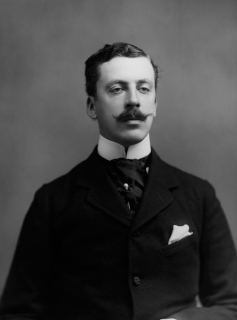
James Albert Edward Hamilton, 3rd Duke of Abercorn, dies on September 12, 1953 in London, England.

Hamilton is born in Hamilton Place, Piccadilly, London, on November 30, 1869. Styled Marquess of Hamilton between 1885 and 1913, he is a British peer and Unionist politician. He serves as the first Governor of Northern Ireland, a post he holds between 1922 and 1945. He is a great-grandfather of Diana, Princess of Wales.

Hamilton is the eldest son of James Hamilton, 2nd Duke of Abercorn, and godson of the Prince of Wales. His mother, Lady Mary Anna, is the fourth daughter of Richard Curzon-Howe, 1st Earl Howe. He is educated at Eton College and subsequently serves first in the Royal Inniskilling Fusiliers until 1892 when he joins the 1st Life Guards. He is later transferred as major to the North Irish Horse.

In early 1901 he accompanies his father on a special diplomatic mission to announce the accession of King Edward to the governments of Denmark, Sweden and Norway, Russia, Germany, and Saxony.

In the 1900 United Kingdom general election in Ireland, Hamilton stands successfully as Unionist candidate for Londonderry City, and three years later he becomes Treasurer of the Household, a post he holds until the fall of Arthur Balfour‘s Conservative administration in 1905. After serving for a time as an Opposition whip, Hamilton succeeds his father as third Duke of Abercorn in 1913. In 1922, he is appointed governor of the newly created Northern Ireland. He also serves as Lord Lieutenant of Tyrone from 1917 until his death, having previously been a Deputy Lieutenant for County Donegal. Hamilton proves a popular royal representative in Northern Ireland and is reappointed to the post in 1928 after completing his first term of office. In 1931, he declines the offer of the governor generalship of Canada, and three years later he is again reappointed governor for a third term. He remains in this capacity until his resignation in July 1945.

Hamilton is made the last non-royal Knight of the Most Illustrious Order of Saint Patrick in 1922. In 1928 he becomes a Knight of the Most Noble Order of the Garter and is also the recipient of an honorary degree from the Queen’s University Belfast. He receives the Royal Victorian Chain in 1945, the same year he is sworn of the Privy Council.

Hamilton marries Lady Rosalind Cecilia Caroline Bingham, only daughter of Charles George Bingham, 4th Earl of Lucan and his wife Lady Cecilia Catherine Gordon-Lennox at St. Paul’s Church, Knightsbridge, on November 1, 1894. They have three daughters and two sons.

Hamilton dies at his London home on September 12, 1953, and is buried at Baronscourt in County Tyrone.

(Pictured: “James Albert Edward Hamilton, 3rd Duke of Abercorn” by Alexander Bassano, Collodion Negative, 1894, Photographs Collection, National Portrait Gallery, London)


Leave a comment

Death of Red Hugh O’Donnell

Hugh Roe O’Donnell (Aodh Rua ÓDomhnaill), sixteenth century Irish nobleman also known as Red Hugh O’Donnell, dies at Simancas Castle in Valladolid, Spain, on September 10, 1602. Evidence suggests he might have been poisoned by an English spy.

O’Donnell is born on October 30, 1572, in Lifford (which is in present-day County Donegal) and is the son of Hugh McManus O’Donnell, the Gaelic Lord of Tyrconnell, a territory which takes in most of the present-day county of Donegal except for the Inishowen peninsula. His mother, Aodh MacManus’ second wife, is the formidable and extremely well-connected Scottish lady, Fionnuala Nic Dhomhnaill, known to history as the Iníon Dubh or The Dark Daughter. A daughter of James Mac Donald she had been raised at the Scottish court.

In 1587, at the age of fifteen, O’Donnell marries Rose O’Neill, the daughter of Hugh O’Neill, Earl of Tyrone, a nephew of Turlough Lynagh O’Neill who is recognised by the Irish as The O’Neill. He is, therefore, a bridge between two traditional enemies, the O’Donnell’s and the O’Neills.

The English Lord Deputy of Ireland, Sir John Perrot, recognises the importance of the young O’Donnell prince and decides to secure him as a hostage thus giving him power over the O’Donnell clan and preventing them from forming a treaty with the O’Neills. In 1587, when he is sixteen, O’Donnell and two friends, a MacSweeney and an O’Gallagher, are persuaded to board a ship at Rathmullan which has been disguised as a Spanish wine barque. Once onboard they are carried off to Dublin Castle as prisoners. The O’Donnell’s offer to pay a large ransom and the Iníon Dubh also gives up 25 Spaniards rescued from the Armada. The English agree to this but as soon as the Spaniards are handed over, they are beheaded. The agreement is not kept.

Perrot has his hostage but a most reluctant one. The young man continuously seeks ways to escape. His first opportunity comes at Christmas in 1590 when a rope is smuggled in to the prince. He escapes and flees into the Wicklow Mountains. He seeks shelter with Phelim O’Toole who has him returned to the English as he fears the anger of the infamous Perrot.

A year later, at Christmas in 1591, O’Donnell makes his second attempt at escape, this time by crawling through the Dublin Castle sewers. With him are Henry and Art O’Neill, two sons of Shane O’Neill (Shane the Proud). This time the escapees make their way to the Glenmalure stronghold of Fiach McHugh O’Byrne. Unfortunately, the winter is very severe and Art O’ Neill dies from exposure just as the O’Byrne rescue party finds them. Both Red Hugh and Henry O’Neill suffer severe frostbite but are safely returned to Ulster.

While O’Donnell is held prisoner by the English, his father becomes senile. In 1592, when O’Donnell is sufficiently recovered, he is inaugurated as the O’Donnell and England, for her treachery, has an avowed and implacable enemy.

O’Donnell aids the Maguires of Fermanagh against the English and when his father-in-law, Hugh O’Neill, initiates the Nine Years’ War by leading his clan against the English at the Battle of Clontibret (1595) and Battle of the Yellow Ford (1598), O’Donnell is at his side.

In 1595 O’Donnell ambushes an English force in the Curlew Mountains, killing 500 of them including their commander. However, the tide is turning against the Irish now. England is flooding the country with armies and many of the leading Gaelic families are beginning to make deals with them.

In 1601 the Spanish land in Kinsale and the English besiege them. O’Neill and O’Donnell march south from Ulster and Ballymote Castle in Sligo in an attempt to break the siege. This turns into a debacle causing the Irish to scatter and the Spanish to surrender. O’Neill marches back north and O’Donnell is sent to Spain to ask for more troops from Phillip III. In Spain, he is treated like a royal. He petitions aid from the King who gives him a promise of another Spanish force.

As a year passes and O’Donnell does not receive any news from Philip III of Spain, he leaves again for Valladolid, but he dies on September 10, 1602, while en route. He is attended on his deathbed by Archbishop of Tuam Fláithrí Ó Maolchonaire and two friars from Donegal named Father Muiris mac Donnchadh Ulltach Ó Duinnshléibhe and Father Muiris mac Seaán Ulltach Ó Duinnshléibhe. The Anglo-Irish double-agent, James “Spanish” Blake, is alleged to have poisoned O’Donnell.

It is, however, unlikely that O’Donnell is poisoned. A more probable cause of death is the tapeworm that Simancas documents of the time state to be the cause of his demise. His Last Will and Testament, written in his dying moments with his loyal retinue, is an extremely evocative and moving document. One original is preserved in Simancas and the other in the Chancellery archive in Valladolid.

O’Donnell is buried in the chapter of the Franciscan monastery in Valladolid. Though the building is demolished in 1837, the exact location of the tomb may have been discovered following a Spanish archaeological dig in May 2020.

O’Donnell is succeeded as chieftain of his clan and prince of Tyrconnell by his brother Rory.

(Pictured: Statue of Gaelic Chieftain Red Hugh O’Donnell in County Donegal)