seamus dubhghaill

Promoting Irish Culture and History from Little Rock, Arkansas, USA


Leave a comment

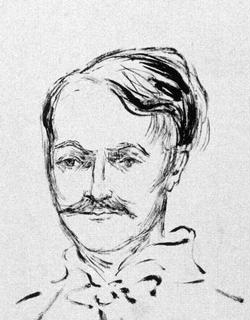
Execution of Bartholomew Teeling

bartholomew-teeling

Bartholomew Teeling, Irish republican who is leader of the Irish forces during the Irish Rebellion of 1798, is executed at Arbour Hill Prison in Dublin on September 24, 1798.

Teeling is born in Lisburn, County Antrim in what is now Northern Ireland in 1774 and is educated at the Dubordieu School in Lisburn and at Trinity College Dublin. His younger brother, Charles Teeling, goes on to be a writer. In 1796 he enlists in the Society of United Irishmen and travels to France to encourage support for a French invasion of Ireland.

Teeling returns to Ireland on August 22, 1798 as chief aide-de-camp to General Jean Joseph Amable Humbert and lands at Killala Bay between County Sligo and County Mayo with French troops. On August 28 the combined forces capture Castlebar and declare the Republic of Connacht. The Franco-Irish troops then push east through County Sligo but are halted by a cannon which the British forces have installed above Union Rock near Collooney.

On September 5, 1798, Teeling clears the way for the advancing Irish-French army by single handedly disabling a British gunner post during the Battle of Collooney in Sligo when he breaks from the French ranks and gallops towards Union Rock. He is armed with a pistol and shoots the cannon’s marksman and captures the cannon. The French and Irish advance and the British, after losing the cannon position, retreat towards their barracks at Sligo, leaving 60 dead and 100 prisoners.

During the Battle of Ballinamuck at Longford, Teeling and approximately 500 other Irishmen are captured along with their French allies. The French troops are treated as prisoners of war and later returned to France, however the Irish troops are executed by the British.

Teeling is court-martialled by Britain as an Irish rebel and for committing treason. To positively identify him, the authorities enlist William Coulson, a damask manufacturer from Lisburn, who identifies him as a son of Luke Teeling, a linen merchant who lived in Chapel Hill, Lisburn. Bartholomew Teeling is hanged at Arbour Hill Prison in Dublin on September 24, 1798.

In 1898, the centenary year of the battle, a statue of Teeling is erected in Carricknagat. One of the main streets in Sligo, which accommodates the Sligo Courthouse and main Garda Síochána barracks, is later named Teeling Street also in honour of Bartholomew Teeling.

Leave a comment

The Battle of Connor

grave-of-king-edward-de-bruce

The Battle of Connor is fought on September 10, 1315, in the townland of Tannybrake just over a mile north of what is now the modern village of Connor, County Antrim, Northern Ireland. It is part of the Bruce campaign in Ireland.

Edward Bruce lands in Larne, in modern-day County Antrim, on May 26, 1315. In early June, Donall Ó Néill of Tyrone and some twelve fellow northern Kings and lords meet Bruce at Carrickfergus and swear fealty to him as King of Ireland. Bruce holds the town of Carrickfergus but is unable to take Carrickfergus Castle. His army continues to spread south, through the Moyry Pass to take Dundalk.

Outside the town of Dundalk, Bruce encounters an army led by John FitzThomas FitzGerald, 4th Lord of Offaly, his son-in-law Edmund Butler, Earl of Carrick and Maurice FitzGerald, 4th Baron Desmond. The Scottish push them back towards Dundalk and on June 29 lay waste to the town and its inhabitants.

By July 22 Edmund Butler, the Justiciar in Dublin, assembles an army from Munster and Leinster to join Richard Óg de Burgh, 2nd Earl of Ulster, to fight Bruce. De Burgh refuses to let the government troops into Ulster, fearing widespread damage to his land. Bruce is able to exploit their dispute and defeat them separately.

Bruce slowly retreats north, drawing de Burgh in pursuit. Bruce and his O’Neill allies sack Coleraine, destroying the bridge over the River Bann to delay pursuit. Edward sends word to Fedlim Ó Conchobair that he will support his position as king in Connacht if he withdraws. He sends the same message to rival claimant Ruaidri mac Cathal Ua Conchobair. Cathal immediately returns home, raises a rebellion and declares himself king. De Burgh’s Connacht allies under Felim then follow as Felim leaves to defend his throne. Bruce’s force then crosses the River Bann in boats and attacks. The Earl of Ulster withdraws to Connor.

The armies meet in Connor on September 10, 1315. The superior force of Bruce and his Irish allies defeat the depleted Ulster forces. The capture of Connor permits Bruce to re-supply his army for the coming winter from the stores the Earl of Ulster had assembled at Connor. Earl’s cousin, William de Burgh, is captured, as well as, other lords and their heirs. Most of his army retreats to Carrickfergus Castle, which the pursuing Scots put under siege. The Earl of Ulster manages to return to Connacht.

The government forces under Butler do not engage Bruce, allowing him to consolidate his hold in Ulster. His occupation of Ulster encourages risings in Meath and Connacht, further weakening de Burgh. Despite this, and another Scottish/Irish victory at the Battle of Skerries, the campaign is to be defeated at the Battle of Faughart.

(Pictured: Grave of King Edward Bruce, Faughart, County Louth)


Leave a comment

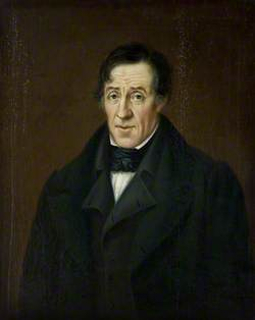
Birth of James Hope, United Irishmen Leader

james-hope

James “Jemmy” Hope, Society of United Irishmen leader who fights in the Irish Rebellions of 1798 and 1803 against British rule in Ireland, is born in Templepatrick, County Antrim on August 25, 1764.

Hope is born to a Presbyterian family originally of Covenanter stock. He is apprenticed as a linen weaver but attends night school in his spare time. Influenced by the American Revolution, he joins the Irish Volunteers, but upon the demise of that organisation and further influenced by the French Revolution, he joins the Society of the United Irishmen in 1795.

Hope quickly establishes himself as a prominent organiser and is elected to the central committee in Belfast, becoming close to leaders such as Samuel Neilson, Thomas Russell, and Henry Joy McCracken. He is almost alone among the United Irish leaders in targeting manufacturers as well as landowners as the enemies of all radicals. In 1796, he is sent to Dublin to assist the United Irish organisation there to mobilise support among the working classes, and he is successful in establishing several branches throughout the city and especially in The Liberties area. He also travels to counties in Ulster and Connacht, disseminating literature and organizing localities.

Upon the outbreak of the 1798 rebellion in Leinster, Hope is sent on a failed mission to Belfast by Henry Joy McCracken to brief the leader of the County Down United Irishmen, Rev. William Steel Dickson, with news of the planned rising in County Antrim, unaware that Dickson had been arrested only a couple of days before. He manages to escape from Belfast in time to take part in the Battle of Antrim where he plays a skillful and courageous role with his “Spartan Band,” in covering the retreat of the fleeing rebels after their defeat.

Hope manages to rejoin McCracken and his remaining forces after the battle at their camp upon Slemish mountain, but the camp gradually disperses, and the dwindling band of insurgents are then forced to go on the run. He successfully eludes capture, but his friend McCracken is captured and executed on July 17. Upon the collapse of the general rising, he refuses to avail of the terms of an amnesty offered by Charles Cornwallis, 1st Marquess Cornwallis on the grounds that to do so would be “not only a recantation of one’s principles, but a tacit acquiescence in the justice of the punishment which had been inflicted on thousands of my unfortunate associates.”

Hope lives the years following 1798 on the move between counties Dublin, Meath and Westmeath but is finally forced to flee Dublin following the failure of Robert Emmet‘s rebellion in 1803. He returns to the north and evades the authorities attentions in the ensuing repression by securing employment with a sympathetic friend from England. He is today regarded as the most egalitarian and socialist of all the United Irish leadership.

James Hope dies in 1846 and is buried in the Mallusk cemetery, Newtownabbey. His gravestone features the outline of a large dog, which supposedly brought provisions to him and his compatriots when they were hiding following the Battle of Antrim.


Leave a comment

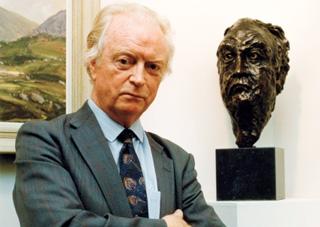
Birth of Benedict Kiely, Writer & Broadcaster

benedict-kiely

Benedict “Ben” Kiely, Irish writer and broadcaster, is born in Dromore, County Tyrone on August 15, 1919, the youngest of six children.

In 1920, the family moves from Dromore to Omagh. After living for a short time in Castle Street and Drumragh, the family finally settles in St. Patrick’s Terrace in the Gallows Hill area of Omagh. This area is to be a lasting inspiration for Kiely.

Kiely begins to feel the urge to become a writer during his teenage years. He has a keen interest in the work of George Bernard Shaw, H. G. Wells and Jonathan Swift. In 1936, after completing his education at Mount St. Columba Christian Brothers School in Omagh, he goes to work as a sorting clerk in the Omagh Post Office.

However, Kiely soon realises that the post office will not provide him with the life of the scholar which he so desires. In the spring of 1937, he leaves Omagh and begins a new life in Emo Park, Portarlington, County Laois, where he decides to train as a Jesuit priest. His life as a Jesuit is not meant to be for, exactly a year later, in the spring of 1938, he suffers a serious spinal injury, which results in a lengthy stay in Cappagh National Orthopaedic Hospital in Finglas, Dublin. During his hospitalisation, he is given plenty of time to think about the course his life has already taken, and about a course it might take. He also realises that he lacks a vocation to the priesthood and abandons his training as a Jesuit.

When Kiely gets out of hospital in 1939, he returns to Omagh to recover from his back problem. The following year, he begins working as a part-time journalist in the weekly Catholic Standard newspaper. In 1943, he graduates from National University of Ireland with a B.A. in History and Letters.

In 1945, Kiely begins working for the Irish Independent, where he is employed as a journalist and critic. In 1950, he joins The Irish Press as a literary editor. In 1964, he moves to the United States where, over a period of four years, he is a Writer-in-Residence at Emory University, visiting professor at the University of Oregon, and Writer-in-Residence at Hollins College (Virginia). In 1968, he returns to Ireland. In the spring of 1976, he is Distinguished Visiting Professor at the University of Delaware. He continues to receive acclaim for his writing and journalism, a career which spans over six decades, receiving the Award for Literature from the Irish Academy of Letters. By now, he is one of Ireland’s best-known writers. In 1996, he is named Saoi of Aosdána, the highest honour given by the Arts Council of Ireland.

Kiely visits Omagh in 2001 which is marked by the unveiling of a plaque outside his childhood home on Gallows Hill by Omagh’s Plain Speaking Community Arts group. Every September an event is held in Omagh called The Benedict Kiely Literary Weekend to celebrate his many achievements.

Benedict Kiely dies in St. Vincent’s University Hospital in Dublin on February 9, 2007.


Leave a comment

First Use of Rubber Bullets in Northern Ireland

rubber-bullet

Rubber bullets are used for the first time in Northern Ireland on August 2, 1970. Rubber bullets are invented by the British Ministry of Defence for use against rioters in Northern Ireland during The Troubles.

Rubber bullets (also called rubber baton rounds) are rubber or rubber-coated projectiles that can be fired from either standard firearms or dedicated riot guns. They are intended to be a non-lethal alternative to metal projectiles. Like other similar projectiles made from plastic, wax and wood, rubber bullets may be used for short range practice and animal control but are most commonly associated with use in riot control and to disperse protests.

The British developed rubber rounds – the “Round, Anti-Riot, 1.5in Baton” – in 1970 for use against rioters in Northern Ireland. A low-power propelling charge gives them a muzzle velocity of about 200 feet per second and maximum range of about 110 yards. The intended use is to fire at the ground so that the round bounces up and hits the target on the legs, causing pain but not injury.

From 1970 to 1975, about 55,000 rubber bullets are fired by the British Army in Northern Ireland. Often, they are fired directly at people from close range, which results in three people being killed and many more badly injured. In 1975, they are replaced by plastic bullets. In Northern Ireland over 35 years (1970–2005), about 125,000 rubber and plastic bullets are fired – an average of ten per day – causing 17 deaths.

The baton round is made available to British police forces outside Northern Ireland from 2001. In 2013 however, Ministry of Defence papers declassified from 1977 reveal it is aware rubber bullets are more dangerous than was publicly disclosed. The documents contain legal advice for the Ministry of Defence to seek a settlement over a child who had been blinded in 1972, rather than go to court which would expose problems with the bullets and make it harder to fight future related cases. The papers state that further tests would reveal serious problems with the bullets, including that they were tested “in a shorter time than was ideal”, that they “could be lethal” and that they “could and did cause serious injuries.”

(Pictured: 37 mm British Army rubber bullet, as used in Northern Ireland)


Leave a comment

The Rathlin Island Massacre

bruces-castle-ruins

The Rathlin Island massacre takes place on Rathlin Island, off the coast of what is now Northern Ireland, on July 26, 1575. More than 600 Scots and Irish are killed.

Rathlin Island is used as a sanctuary because of its natural defences and rocky shores. In earlier times, when the wind blows from the west it is almost impossible to land a boat. It is also respected as a hiding place, as it is the one-time abode of Saint Columba. Installing themselves in Rathlin Castle (also known as Bruce’s Castle), the MacDonnells of Antrim make Rathlin their base for resistance to the Enterprise of Ulster. Their military leader, Sorley Boy MacDonnell (Scottish Gaelic: Somhairle Buidhe Mac Domhnaill) and other Scots have thought it prudent to send their wives, children, elderly, and sick to Rathlin Island for safety.

Acting on the instructions of Sir Henry Sidney and the Walter Devereux, 1st Earl of Essex, Sir Francis Drake and Sir John Norreys take the castle by storm. Drake uses two cannons to batter the castle and when the walls give in, Norreys orders direct attack on July 25, and the Garrison surrenders. Norreys sets the terms of surrender, whereupon the constable, his family, and one of the hostages are given safe passage and all other defending soldiers are killed. On July 26, 1575, Norreys’ forces hunt the old, sick, very young and women who are hiding in the caves. Despite the surrender, they kill all the 200 defenders and more than 400 civilian men, women and children. Sir Francis Drake is also charged with the task of preventing any Scottish reinforcement vessels from reaching the island.

The entire family of Sorley Boy MacDonnell perishes in the massacre. Essex, who orders the killings, boasts in a letter to Francis Walsingham, the Queen’s secretary and spymaster, that Sorley Boy MacDonnell watched the massacre from the mainland helplessly and was “like to run mad from sorrow.”

Norreys stays on the island and tries to rebuild the walls of the castle so that the English might use the structure as a fortress. As Drake is not paid to defend the island, he departs with his ships. Norreys realises that it is not possible to defend the island without intercepting Scottish galleys and he returns to Carrickfergus in September 1575.

(Pictured: the ruins of Rathlin Castle)


2 Comments

Birth of Geoffrey Henry Cecil Bing, Barrister & Politician

geoffrey-henry-cecil-bing

Geoffrey Henry Cecil Bing, British barrister and politician who serves as the Labour Party Member of Parliament for Hornchurch from 1945 to 1955, is born on July 24, 1909, at Craigavad near Belfast in what is now Northern Ireland.

Bing is educated at Rockport School and Tonbridge School before going on to Lincoln College, Oxford, where he reads history. He graduates with a second-class degree in 1931, before attending Princeton University, where he is a Jane Eliza Procter Visiting Fellow between 1932 and 1933. He is called to the bar from the Inner Temple in 1934.

Always a radical and a member of the socialist left, Bing is active in the Haldane Society of Socialist Lawyers and the National Council for Civil Liberties. During the Spanish Civil War, he joins the International Brigades as a journalist, barely avoiding capture at Bilbao. He is also an early anti-Nazi.

During World War II, Bing serves in the Royal Corps of Signals, attaining the rank of major. A 1943 experiment with parachutes at the GSO2 Airborne Forces Development Centre leaves him disfigured and he bears the scars for many years.

At the 1945 general election, Bing stands for Labour in Hornchurch, winning the seat. He is re-elected in 1950 and 1951, serving until 1955. He serves briefly as a junior whip in 1945-1946 but this is widely thought to have been the unintended result of confusion on the part of Clement Attlee, who confuses him for another Labour MP of a similar name.

On the backbenches, Bing is, according to his Times obituary, “the unrestrained leader of a small group of radicals, never fully trusted by their colleagues and known as ‘Bing Boys.'” He takes a particular interest in the cases of Timothy Evans and John Christie, and he supports the campaign to overturn the conviction of Evans, which is ultimately successful. He supports Communist China and takes a keen interest in Northern Ireland, the brewers’ monopoly and parliamentary procedure.

Bing also builds a practice in West Africa. He becomes close to Kwame Nkrumah, the first post-colonial president of Ghana and is appointed Ghana’s attorney-general, a post he holds until 1961. When Nkrumah is ousted in 1966, Bing is arrested and ill-treated, before being sent home some months later. His memoir of Nkrumah’s Ghana, Reap the Whirlwind, is published in 1968.

Geoffrey Henry Cecil Bing dies in London on April 24, 1977, at the age of 67.


Leave a comment

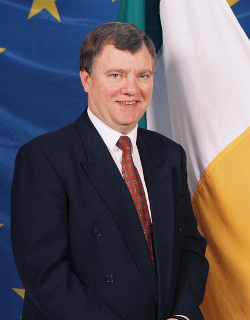
Birth of Former Politician John Cushnahan

Portrait of MEP John Walls CUSHNAHAN

John Walls Cushnahan, former politician in both Northern Ireland and the Republic of Ireland, is born in Belfast, Northern Ireland on July 23, 1948. He serves as leader of the Alliance Party of Northern Ireland and then as a Member of the European Parliament for Fine Gael.

Cushnahan is educated at St. Mary’s Christian Brothers Grammar School and Queen’s University, Belfast and works as a teacher before going into politics. He works as General Secretary of the Alliance Party from 1974 until 1982 and is a member of Belfast City Council between 1977 and 1985.

In 1982 Cushnahan is elected to the Prior Assembly for North Down and two years later he becomes the new leader of Alliance, succeeding Oliver Napier. During his tenure as leader, he seeks to strengthen the party’s links with the British Liberal Party. The Anglo-Irish Agreement is signed during this period and Cushnahan faces the difficult position of giving Alliance support to it and facing the united opposition of the Unionist parties. However, when the Assembly is dissolved in 1986, Cushnahan finds it financially difficult to remain in politics and so stands down as leader in 1987 to be succeeded by John Alderdice.

Two years later Cushnahan makes a surprise political comeback when he moves to the Republic of Ireland and stands as a Fine Gael candidate in the 1989 election to the European Parliament, winning a seat in the Munster constituency. He is an MEP for fifteen years before retiring at the 2004 elections.

Cushnahan now serves as a board member of the peace and reconciliation charity Co-operation Ireland.


Leave a comment

Birth of James Henry Cousins, Playwright & Actor

james-h-cousins

James Henry Cousins, Irish writer, playwright, actor, critic, editor, teacher and poet, is born in Belfast on July 22, 1873, a descendant of Huguenot refugees. He uses several pseudonyms including Mac Oisín and the Hindu name Jayaram.

Largely self-educated at night schools, Cousins works some time as a clerk and becomes private secretary and speechwriter to Sir Daniel Dixon, 1st Baronet, the Lord Mayor of Belfast. In 1897 he moves to Dublin where he becomes part of a literary circle which includes William Butler Yeats, George William Russell and James Joyce. It is believed that he serves as a model for the Little Chandler character in Joyce’s short story collection Dubliners.

Cousins is significantly influenced by Russell’s ability to reconcile mysticism with a pragmatic approach to social reforms and by the teachings of Helena Blavatsky. He has a lifelong interest in the paranormal and acts as reporter in several experiments carried out by William Fletcher Barrett, Professor of physics at the University of Dublin and one of the founders of the Society for Psychical Research.

Cousins produces several books of poetry while in Ireland as well as acting in the first production of Cathleen ní Houlihan, under the stage name of H. Sproule, with the famous Irish revolutionary and beauty Maud Gonne in the title role. His plays are produced in the first years of the twentieth century in the Abbey Theatre, the most famous being “the Racing Lug”. After a dispute with W.B. Yeats, who objects to “too much Cousins,” the Irish National Theatre movement splits with two-thirds of the actors and writers siding with Cousins against Yeats.

Cousins also writes widely on the subject of Theosophy and in 1915 travels to India with the voyage fees paid for by Annie Besant, the President of the Theosophical Society. He spends most of the rest of his life in the sub-continent, apart from a year as Professor of English Literature at Keio University in Tokyo and another lecturing in New York. Toward the end of his life, he converts to Hinduism. At the core of Cousins’s engagement with Indian culture is a firm belief in the “shared sensibilities between Celtic and Oriental peoples.”

While in India he becomes friendly with many key Indian personalities including poet Rabindranath Tagore, Indian classical dancer Rukmini Devi Arundale, painter Abdur Rahman Chughtai and Mahatma Gandhi. He is the person who brings change into the life of poetry of the great renowned Kannada poet and writer Kuvempu. He writes a joint autobiography with his wife Margaret Elizabeth Cousins, a suffragette and one of the co-founders of the Irish Women’s Franchise League and All India Women’s Conference (AIWC).

In his The Future Poetry Sri Aurobindo acclaims Cousins’ New Ways in English Literature as “literary criticism, which is of the first order, at once discerning and suggestive, criticism which forces us both to see and think.” He also acknowledges that he learned to intuit deeper being alerted by Cousins’ criticisms of his poems. In 1920 Cousins comes to Pondicherry to meet the Mother and Sri Aurobindo.

James Cousins dies on February 20, 1956, in Madanapalle, Andhra Pradesh, India at the age of 82.


Leave a comment

Transplant Patient Adele Chapman Leaves the Hospital

adele-chapman

Seven-year old Adele Chapman from Belfast, Britain’s first triple-organ transplant child, leaves the hospital on July 20, 1998. Twelve weeks earlier, she undergoes a pioneering liver, pancreas, and small intestine transplant at Birmingham Children’s Hospital.

Chapman has to wait two years for a donor to come forward. The hospital releases pictures of Adele in March 1998 in a bid to get donors to come forward. Her donor is of a similar age to her and also donates her heart and kidneys for transplants.

The youngest of five children, Chapman says the first thing she plans to do when she gets home is to “give my daddy and brothers and sisters a hug and a kiss.” Her mother Doreen says the family has been on a “roller coaster of emotion” over the past two years. At times, they had thought Adele would not survive. “Three months ago she was lying absolutely devastated on the bed and could not move. The transformation is just wonderful,” she said. “Now we are looking to the future.”

Chapman’s complex 10-hour operation is carried out by a team led by Jean de Ville de Goyet from Birmingham Children’s Hospital and David Mayer from the Queen Elizabeth Hospital in Birmingham. The Children’s Hospital is the only centre in the United Kingdom which can perform small intestine and liver transplants on children.

Chapman had a rare bowel disease which prevented her from eating solid food for two years. But only four weeks after her operation she is tucking into toast and doughnuts. Shortly after the surgery, the hospital says there has been no major medical or surgical problems as a result of the operation, although she still has a single feeding tube attached to her nose.

Chapman’s family calls for more donors to come forward. Donor organisations are trying to get more people signed up to the national organ donor register. The number of transplants has fallen by 10% in the years prior to 1998. Beverley Cornforth, a transplant educationalist, says the real problem is the 30% who say no to donating organs. This is often because people who die have not stated in advance that they would like to donate their organs and families are too distressed to decide for them.

(From BBC News, July 20, 1998)