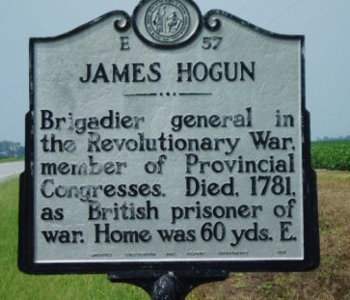
Born in Ireland around 1721, Hogun migrates to North Carolina, then a British colony, in 1751. Settling in Halifax County, he raises a family and establishes himself as a prominent local figure.
In November 1779, Hogun is sent south in command of the North Carolina Brigade to the aid of General Benjamin Lincoln, who is facing an anticipated British assault at Charleston, South Carolina. The march south, through one of the worst winters ever, is a severe one and Hogun’s numbers are reduced by the time he reached Charleston on March 3, 1780. Before the end of the month, British General Henry Clinton’s men are besieging the city. The Americans, though outnumbered more than two to one, have a few successes but soon they are running low on food and ammunition.
At a council of war May 11, the decision is made to surrender. The surrender the following day is one of the worst American defeats of the war — more than 2,500 men become British prisoners. The British hastily build a prison on Haddrel’s Point, a peninsula in Charleston’s harbor, to hold the prisoners, but the site is incomplete, and conditions are harsh.
Generals McIntosh, Lincoln, and Scott, and other high-ranking officers accept parole from the British and depart. Generals William Moultrie and Hogun refuse, preferring to stay with their men. The British are trying to recruit colonial soldiers to serve them in the West Indies. In spite of his flagging health, Hogun fears some of his men might weaken if he departs.
As winter sets in, Hogun’s condition worsens. On January 4, 1781, he passes away and was buried near the prison. Like so many other Irish-born soldiers before and after him, James Hogun had given his last full measure of devotion to his adopted country.
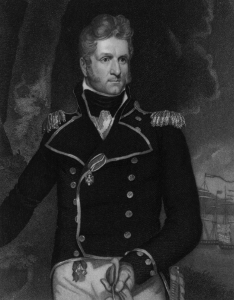
Before joining the U.S. Navy, Macdonough, for unknown reasons, changes the spelling of his last name from “McDonough” to “Macdonough.” He joins the Navy in 1800 as a midshipman and spends the first years of his naval career fighting pirates, including the famous Barbary pirates operating out of Tripoli. When the War of 1812 breaks out, Macdonough, then a lieutenant, is made the commander of all the Navy’s forces on Lake Champlain, an extremely important post due to the threat of British invasion from Canada. The opposing sides build their fleets on the Lake through most of 1813.
In August of that year, British General Sir George Prévost begins his invasion from Canada. Moving along the western edge of Lake Champlain, he hopes to use the guns of his fleet to help cover his advance. The British army outnumbers the Americans better than two to one, but Prévost needs to use the Lake to supply his army, thus the fleet of Thomas Macdonough becomes a prime target of the British fleet on Lake Champlain.
The two fleets are fairly evenly matched, but the guns of the British ships have an advantage in range. Macdonough comes up with a brilliant plan to negate this advantage. He anchors inside Plattsburgh Bay in such a manner that the British cannot fire at them from long range and have to come around Cumberland Head and approach them head on, presenting their bows to the American guns. From there it becomes a close-range slugging match, more to the liking of the Americans.
On board his flagship, the USS Saratoga, Macdonough fires the first shot, hitting the HMS Confiance, the flagship of Captain George Downie, commander of the British fleet. Macdonough continues to work the gun through the fierce 2 ½-hour battle. Twice his men are sure he has been killed as he is knocked out and lay on the deck. But twice he rises and returns to action. Finally, with Captain Downie dead, and their ships devastated, the largest ships of the British fleet strike their colors, and their gunboats run for home.
On land, General Prévost has engaged the American land forces as the British fleet attacks. When it becomes apparent the American fleet is victorious, Prévost knows that further movement south is futile. He breaks off the attack and retreats toward Canada. Thomas Macdonough’s fleet has ended the British invasion. It is one of the greatest victories in the history of the U.S. Navy.
For his enormous contribution to the momentous victory, the United States Congress has a medal struck in Macdonough’s honor, and New York and Vermont present him with huge tracks of land. He continues his Navy career after the war.
On November 10, 1825, Macdonough dies of consumption aboard ship while commanding the USS Constitution as it is passing Gibraltar. His body is returned to the United States and is buried in Middletown, Connecticut. He is laid to rest alongside his wife Ann Shaler, a lady of a prominent family in Middletown, she having died just a few months earlier.
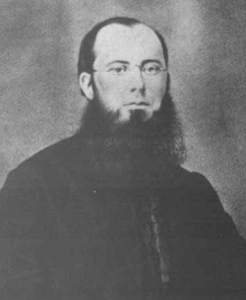
Bannon is born to James Bannon, a Dublin grain dealer, and Fanny Bannon (née O’Farrell). He goes to the vincentian Castleknock College in Dublin. In 1846 he goes to study for the priesthood at St. Patrick’s Pontifical University, Maynooth, in the minor seminary until 1850 and completing his theology course in 1853. He is ordained on June 16, 1853, by Archbishop Paul Cullen for the Dublin Diocese. He soon applies to move to America.
Shortly after ordination he moves to the Archdiocese of St. Louis, Missouri. He becomes pastor to St. John the Apostle and Evangelist Church which he builds in 1858. He serves in the First Missouri Confederate Brigade, during the American Civil War. He ministers at the battles of Corinth, Fort Gibson, and at Big Black River Bridge, Vicksburg.
He is detained on July 4, 1863, when Vicksburg surrenders. After being released by Union forces, he goes to Richmond, Virginia in August 1863, where Jefferson Davis and Secretary of State Judah Benjamin ask him to go to Ireland to discourage recruitment for the Federal forces and try to get international help for the Confederacy.
In November 1863, Bannon returns to Ireland, writing and pamphleting to discourage people from emigrating and joining the Union side of the civil war. He makes two trips to Rome to try, unsuccessfully, to get the Vatican to side with the Confederacy. Following the American Civil War, he is banned from preaching in St. Louis, and stays in Ireland, becoming a Jesuit in 1865, spending some time in Milltown Park, Tullabeg College, and in Gardiner Street.
Bannon dies on July 14, 1913, in Upper Gardiner Street, and is buried in the Jesuit plot at Glasnevin Cemetery, Dublin.
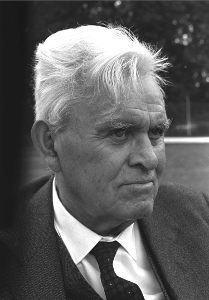
Breen is born in Grange, Donohill parish, County Tipperary, on August 11, 1894. His father dies when he is six, leaving the family very poor. He is educated locally before becoming a plasterer and later a linesman on the Great Southern Railways.
Breen is sworn into the Irish Republican Brotherhood in 1912 and the Irish Volunteers in 1914. On January 21, 1919, the day the First Dáil meets in Dublin, Breen takes part in the Soloheadbeg Ambush. The ambush party of eight men, led by Seán Treacy, attacks two Royal Irish Constabulary (RIC) men who are escorting explosives to a quarry. The two policemen, James McDonnell and Patrick O’Connell, are fatally shot during the incident. The ambush is considered to be the first incident of the Irish War of Independence.
During the conflict, the British put a £1,000 price on Breen’s head, which is later increased to £10,000. He quickly establishes himself as a leader within the Irish Republican Army (IRA). He is known for his courage. On May 13, 1919 he helps rescue his comrade Seán Hogan at gunpoint from a heavily guarded train at Knocklong station in County Limerick. Breen, who is wounded, remembers how the battalion is “vehemently denounced as a cold-blooded assassins” and roundly condemned by the Catholic Church. After the fight, Treacy, Séamus Robinson, and Breen meet Michael Collins in Dublin, where they are told to make themselves scarce although they do not necessarily agree.
Breen and Sean Treacy shoot their way out through a British military cordon in the northern suburb of Drumcondra (Fernside). They escape, only for Treacy to be killed the next day. Breen is shot at least four times, twice in the lung.
The British reaction is to make Tipperary a “Special Military Area,” with curfews and travel permits. Volunteer GHQ authorises entrerprising attacks on barracks. The British policy forces Breen and Treacy to retreat to Dublin. They join Michael Collins’ Squad of assassins, later known as the Dublin Guard, and Dublin becomes the centre of the war.
Breen is present in December 1919 at the ambush in Ashtown beside Phoenix Park in Dublin where Martin Savage is killed while trying to assassinate the Lord Lieutenant of Ireland, Viscount John French. The IRA hides behind hedges and a dungheap as the convoy of vehicles drives past. They have been instructed to ignore the first car but this contains their target, Lord French. Their roadblock fails as a policeman removes the horse and cart intended to stop the car.
Breen utterly rejects the Anglo-Irish Treaty, which makes him, like many others, angry and embittered. In the June 1922 elections Breen is nominated as a candidate by both the pro- and anti-Treaty sides, but is not elected.
Breen is elected to Dáil Éireann at the 1923 general election as a Republican anti-Treaty Teachta Dála (TD) for the Tipperary constituency. Following the Anglo-Irish Treaty, Breen joins the Anti-Treaty IRA in the civil war, fighting against those of his former comrades in arms who support the Treaty. He is arrested by the National Army of the Irish Free State and interned at Limerick Prison. He spends two months there before going on hunger strike for six days followed by a thirst strike of six days, prompting his release.
Breen writes a best-selling account of his guerrilla days, My Fight for Irish Freedom, in 1924. He represents Tipperary from the Fourth Dáil in 1923 as a Republican with Éamon de Valera and Frank Aiken. He is defeated in the June 1927 general election and travels to the United States where he opens a prohibitionspeakeasy. In 1932 he returns to Ireland and regains his seat as a member of Fianna Fáil in the Dáil at that year’s general election. During World War II he is said to hold largely pro-Axis views. He represents his Tipperary constituency without a break until his retirement at the 1965 election.
Breen dies in Dublin on December 27, 1969 and is buried in Donohill, near his birthplace. His funeral is the largest seen in west Tipperary since that of his close friend and comrade-in-arms Seán Treacy at Kilfeacle in October 1920. An estimated attendance of 10,000 mourners assemble in the tiny hamlet, giving ample testimony to the esteem in which he was held.
Breen is the subject of a 2007 biography Dan Breen and the IRA by Joe Ambrose.
Grace Evelyn Gifford Plunkett, Irish artist and cartoonist who is active in the Republican movement, dies suddenly in her apartment in South Richmond Street, Portobello, Dublin, on December 13, 1955.
Gifford is the second youngest of twelve children born to Frederick Gifford, a solicitor and Roman Catholic, and Isabella Julia Burton Gifford, a Protestant. She grows up in the fashionable suburb of Rathmines in Dublin. The boys are baptised as Catholics and the girls as Protestant, but effectively the children are all raised as Protestants. The girls attend Alexandra College in Earlsfort Terrace, and the boys attend the The High School in Harcourt St.
At the age of 16, Gifford enters the Dublin Metropolitan School of Art, where she studies under the Irish artist William Orpen. Orpen regards Gifford as one of his most talented pupils. He often sketches her and eventually paints her as one of his subjects for a series on “Young Ireland.” Around this time, Gifford’s talent for caricature is discovered and developed. In 1907 she attends a course in Fine Art at the Slade School of Fine Art, London.
Gifford returns to Dublin in 1908 and, with great difficulty, attempts to earn a living as a caricaturist, publishing her cartoons in The Shanachie, Irish Life, Meadowstreet, and The Irish Review, which is edited from 1913 by Joseph Plunkett. She considers emigrating but gives up the idea. Later that year, she meets Plunkett for the first time at the opening of St. Edna’s School, a new bilingual school in Ranelagh, Dublin. Plunkett is a friend of her brother-in-law, another of the future leaders of the 1916 Easter Rising, Thomas MacDonagh, who is married to Gifford’s sister Muriel.
Her growing interest in the Roman Catholic religion leads to the deepening of Gifford and Plunkett’s relationship. Plunkett proposes to her in 1915. She accepts and takes formal instruction in Catholic doctrine. She is received into the Catholic Church in April 1916. The couple plan to marry on Easter Sunday that year, in a double wedding with his sister and her fiancé.
After the Rising, her brother-in-law Thomas MacDonagh is executed by firing squad along with Patrick Pearse and Thomas Clarke on May 3. That same day, Gifford learns that Plunkett is to be shot at dawn. She purchases a ring in a jeweler’s shop in Dublin city centre and, with the help of a priest, persuades the military authorities to allow them to marry. She and Plunkett are married on the night of May 3, 1916, in the chapel of Kilmainham Gaol, a few short hours before he is executed.
Grace Plunkett decides to devote herself through her art to the promotion of Sinn Féin policies and resumes her commercial work to earn a living. She is elected to the Sinn Féin executive in 1917.
During the Irish Civil War, Plunkett is arrested with many others in February 1923 and interned at Kilmainham Gaol for three months. She is released in May 1923.
When the Civil War ends, Plunkett has no home of her own and little money. Like many Anti-Treaty Republicans, she is the target of social ostracism and has difficulty finding work. She moves from one rented apartment to another and eats in the city-centre restaurants. She befriends many people and has many admirers but has no wish to remarry. Her material circumstances improve in 1932 when she receives a Civil List pension from Éamon de Valera‘s Fianna Fáil government. She lives for many years in a flat in Nassau St. with a balcony overlooking the sports ground of Trinity College.
Plunkett’s in-laws refuse to honour her husband’s will, which leaves everything to his widow. Legally, the will is invalid because there is only one of the required two witnesses and also the marriage takes place after the will is made, automatically revoking it. She begins legal proceedings against her in-laws in 1934. The Count and Countess Plunkett settle out of court and Plunkett is paid £700, plus costs.
From the late 1940s onwards, Plunkett’s health declines. In 1950 she is brought to St. Vincent’s Hospital, then in the city centre. She convalesces in a nursing home, which she does not like because it restricts her freedom.
After her sudden death on December 13, 1955, Grace Gifford Plunkett’s body is removed to St. Kevin’s Church, Harrington Street, and among the attendees at her funeral is President Seán T. O’Kelly. She is buried with full military honours near the republican plot in Glasnevin Cemetery.
Grace Gifford Plunkett is the subject of “Grace,” a song written in 1985 by Frank and Seán O’Meara, which becomes popular in Ireland and elsewhere and has been recorded by many musicians.
McKelvey is born into a nationalist family in Stewartstown, County Tyrone. He has a keen interest in the Gaelic Athletic Association and the Irish language. He studies as an accountant and gains some of the qualifications necessary for this profession, but never fully qualifies. He works for a time at the Income Tax Office on Queen’s Square in Belfast and later finds work in Belfast’s engineering industry with Mackies on Springfield Road. He joins the Irish Republican Brotherhood and the Irish Volunteers, which after 1919, become known as the Irish Republican Army (IRA). He is a founding member of the O’Donovan Rossa Club, Belfast, founded in 1916 on the Falls Road. Each year the club honours him with a juvenile hurling blitz, an invitational competition which is participated in by clubs throughout Ireland.
McKelvey participates in the Irish War of Independence (1919–1921) against the British, in which he commands the IRA’s Belfast Brigade. On August 22, 1920, he helps to organise the killing of Royal Irish Constabulary (RIC) Detective Oswald Swanzy in Lisburn. The killing itself is carried out by IRA men from Cork, but McKelvey arranges a taxi to carry the assassins to and from the scene and disposes of their weapons. In reprisal for this shooting, 300 Catholic homes in Lisburn are burned out. McKelvey is forced to lie low in Dublin for some time after these events.
In March 1921, the IRA is re-organised by its leadership in Dublin into Divisions and McKelvey is appointed commander of the Third Northern Division, responsible for Belfast and the surrounding area. In May 1921, McKelvey’s command suffers a severe setback, when fifty of his best men are sent to County Cavan to train and link up with the IRA units there, only to be surrounded and captured by the British Army on Lappanduff hill on May 9. In most of Ireland, hostilities are ended with a truce declared on July 11, 1921.
McKelvey is alone among the leadership of the Belfast IRA in going against the acceptance of the Anglo-Irish Treaty. Most of his comrades support Michael Collins‘ assurances that, although the Treaty accepts the partition of Northern Ireland from the rest of the country, this is only a temporary concession which will be dealt with later. McKelvey does not accept this. As a result, he leaves his command as head of the IRA Third Northern Division and joins the Anti-Treaty IRA in Dublin.
In March 1922, McKelvey participates in the anti-Treaty IRA‘s repudiation of the authority of the Dáil, the civil government of the Irish Republic declared in 1919, and is elected to the IRA Army Executive. In April 1922 he helps command the occupation of the Four Courts in defiance of the new Irish Free State. This action helps to spark the civil war between pro- and anti-Treaty factions. McKelvey is among the most hardline of the anti-Treaty republicans and briefly, in June 1922, becomes IRA Chief of Staff, replacing Liam Lynch.
On June 28, 1922, the new Irish Free State government shells the Four Courts to assert its authority over the militants defending it. The Republicans in the Four Courts surrender after two days of fighting and McKelvey is captured. He is held for the following five months in Mountjoy Prison in Dublin.
On December 8, 1922, Joe McKelvey is executed by firing squad along with three other Anti-Treaty militants, Rory O’Connor, Liam Mellows, and Richard Barrett. The executions are ordered in reprisal for the Anti-Treaty IRA’s murder of Sean Hales, a Pro-Treaty member of the Third Dáil.
The Ulster Volunteer Force (UVF) explodes a bomb at McGurk’s Bar, an Irish Catholic-owned pub in Belfast, on December 4, 1971, killing fifteen Catholic civilians including two children and wounding seventeen others. This is the highest death toll from a single incident in Belfast during the Troubles. The bombing sparks a series of tit-for-tat bombings and shootings by loyalists and republicans, which help make 1972 the bloodiest year of the conflict.
On the evening of Saturday, December 4, 1971, a four-man UVF team meets in the Shankill area of Belfast and are ordered to bomb a pub on North Queen Street. According to the only convicted bomber, Robert Campbell, they are told not to return until the job is done. Campbell says that their target had not been McGurk’s, but another pub nearby. It is believed this is a pub called The Gem, which is allegedly linked to the Official Irish Republican Army (IRA). The 50-pound bomb is disguised as a brown parcel, which they place in a car and drive to their target. Campbell says they stop near The Gem at about 7:30 p.m. but are unable to gain access to it because there are security guards outside. After waiting for almost an hour, they drive a short distance to McGurk’s. At about 8:45 PM, one of them places the bomb in the porch entrance on Great George’s Street and rushes back to the car. It explodes just moments after they drive off. Campbell implies that McGurk’s had been chosen only because it was “the nearest Catholic pub.”
The blast causes the building to collapse. Bystanders immediately rush to free the dead and wounded from the rubble. Firefighters, paramedics, police, and soldiers are quickly on the scene. Fifteen Catholic civilians are killed, including two children, and an additional seventeen are wounded. The rescue effort lasts many hours.
Within two hours of the blast, a sectarian clash erupts nearby at the New Lodge–Tiger’s Bayinterface. The British Army and Royal Ulster Constabulary (RUC) move in, and a gun battle develops. A British Army officer, Major Jeremy Snow, is shot by the IRA on New Lodge Road and dies of his wounds on December 8. Two RUC officers and five civilians are also wounded by gunfire. Eventually, five companies of troops are sent into the district, and they search almost 50 houses.
Meanwhile, the UVF team has driven to a nearby pickup point where they dump their car. They walk to the area of St. Anne’s Cathedral and are picked up by another car. They are driven back to the Shankill area and meet the man who had ordered the attack in an Orange Hall, telling him that “the job has been done.”
Among those killed are Philomena and Maria McGurk, wife and 12-year-old daughter of pub owner Patrick McGurk. Patrick and his three sons are seriously injured. Shortly after the attack, McGurk appears on television calling for no retaliation, “It doesn’t matter who planted the bomb. What’s done can’t be undone. I’ve been trying to keep bitterness out of it.”
In March 1976, the RUC receives intelligence that links UVF member Robert Campbell and four others to the McGurk’s bombing. Campbell is arrested on July 27, 1977, and held at Castlereagh RUC base. He admits his part in the bombing but refuses to name the others.
On July 29, 1977, Campbell is charged with 15 counts of murder and 17 counts of attempted murder. On September 6, 1978, he pleads guilty to all charges and receives life imprisonment with “a recommendation to serve no less than 20 years,” in part for a separate conviction for the murder of a Protestant delivery driver in 1976. He is the only person to have been charged for the bombing. He eventually serves fifteen years in prison and is released on September 9, 1993.
Mulligan is born in Coleraine, County Londonderry to Hugh and Sarah Mulligan. The family immigrates to North America in 1746, settling in New York City. Mulligan attends King’s College, now Columbia University, in New York City. After graduating, Mulligan works as a clerk for his father’s accounting business. He later goes on to open a tailoring and haberdashery business, catering to wealthy British Crown force officers.
Mulligan is introduced to Alexander Hamilton shortly after Hamilton arrives in New York. Mulligan helps Hamilton enroll at the Elizabethtown Academy in New Jersey, and later, the College of New Jersey at Princeton, now Princeton University. After Hamilton enrolls at King’s College, he lives with Mulligan in New York City. Mulligan has a profound impact on Hamilton’s desire for revolution.
In 1765, Mulligan is one of the first colonists to join the Sons of Liberty, a secret society formed to protect the rights of the colonists and to fight British taxation. He also helps to mob British soldiers in the Battle of Golden Hill. He is a member of the New York Committee of Correspondence, a group that rallies opposition to the British through written communications. In August 1775, he and the Corsicans, a New York volunteer militia company, under fire from HMS Asia, successfully raid four British cannons in the Battery. In 1776, Mulligan and the Sons of Liberty knock down a statue of King George III in Bowling Green, melting the lead in the center to cast bullets to use against the British. Mulligan continues to fight for liberty following the Declaration of Independence.
While staying with the Mulligan family, Alexander Hamilton comes to share Mulligan’s views. Initially siding with the British before coming to New York, Hamilton is persuaded to change his views and join the Sons of Liberty. As a result, Hamilton writes an essay in 1775 in favor of independence, which causes a sensation and helps hasten the Revolution. When George Washington speaks of his need for reliable information from within New York City in 1776, after the Continental Army is driven out, Hamilton recommends Mulligan due to his placement as tailor to British soldiers and higher-ups.
This proves to be incredibly successful, with Mulligan saving Washington’s life on two occasions. The first occurs when a British officer, who requests a watch coat late one evening, tells Mulligan of their plans. “Before another day, we’ll have the rebel general in our hands.” Mulligan quickly informs Washington, who changes his plans and avoids capture.
Mulligan’s slave, Cato, is a Black Patriot who serves as spy together with Mulligan, and often acts the role of courier, in part through British-held territory, by exploiting his status as a slave, letting him pass on intelligence to the Continental Army without being stopped.
It is not known what happened to Mulligan’s slave Cato. However, on January 25, 1785, Mulligan becomes one of the 19 founding members, along with Alexander Hamilton and John Jay, of the New York Manumission Society, an early American organization founded to promote abolition of slaves.
Following the Revolution, Mulligan’s tailoring business prospers. He retires at the age of 80 and dies five years later on March 4, 1825. Mulligan is buried in the Sanders tomb behind Trinity Church. When the church is enlarged, the Sanders tomb is covered. Today, there is a tombstone located in the southwest quadrant of the churchyard bearing Mulligan’s name.
Joseph Mary Plunkett, Irish nationalist, poet, journalist, and a leader of the 1916 Easter Rising, is born at 26 Upper Fitzwilliam Street in Dublin on November 21, 1887.
Both his parents come from wealthy backgrounds, and his father, George Noble Plunkett, has been made a papal count. Despite being born into a life of privilege, young Joe Plunkett does not have an easy childhood.
Plunkett contracts tuberculosis at a young age. This is to be a lifelong burden. His mother is unwilling to believe his health is as bad as it is. He spends part of his youth in the warmer climates of the Mediterranean and North Africa. He spends time in Algiers where he studies Arabic literature and language and composes poetry in Arabic. He is educated at the Catholic University School and by the Jesuits at Belvedere College in Dublin and later at Stonyhurst College, in Lancashire, England, where he acquires some military knowledge from the Officers’ Training Corps. Throughout his life, Plunkett takes an active interest in Irish heritage and the Irish language and also studies Esperanto. He is one of the founders of the Irish Esperanto League. He joins the Gaelic League and begins studying with Thomas MacDonagh, with whom he forms a lifelong friendship. The two are both poets with an interest in theatre, and both are early members of the Irish Volunteers, joining their provisional committee. Plunkett’s interest in Irish nationalism spreads throughout his family, notably to his younger brothers George and John, as well as his father, who allows his property in Kimmage, south Dublin, to be used as a training camp for young men who wish to escape conscription in Britain during the First World War. Men there are instead trained to fight for Ireland.
Sometime in 1915 Plunkett joins the Irish Republican Brotherhood (IRB) and soon after is sent to Germany to meet with Roger Casement, who is negotiating with the German government on behalf of Ireland. Casement’s role as emissary is self-appointed, and, as he is not a member of the IRB, the organisation’s leadership wishes to have one of their own contact Germany to negotiate German aid for an uprising the following year. Plunkett is seeking, but not limiting himself to, a shipment of arms. Casement, on the other hand, spends most of his energies recruiting Irish prisoners of war in Germany to form a brigade to fight instead for Ireland. Some nationalists in Ireland see this as a fruitless endeavour, and prefer to seek weapons. Plunkett successfully gets a promise of a German arms shipment to coincide with the rising.
Plunkett is one of the original members of the IRB Military Committee that is responsible for planning the Easter Rising, and it is largely his plan that is followed. Shortly before the rising is to begin, Plunkett is hospitalised following a turn for the worse in his health. He has an operation on his neck glands days before Easter and has to struggle out of bed to take part in what is to follow. Still bandaged, he takes his place in the General Post Office with several other of the rising’s leaders, including Patrick Pearse and Tom Clarke, though his health prevents him from being terribly active. His energetic aide-de-camp is Michael Collins.
Following the surrender Plunkett is held in Kilmainham Gaol, and faces a court-martial. Seven hours before his execution by firing squad at the age of 28, he is married in the prison chapel to his sweetheart Grace Gifford, a Protestant convert to Catholicism, whose sister, Muriel, had years before also converted and married his best friend Thomas MacDonagh, who is also executed for his role in the Easter Rising. Plunkett is executed by firing squad on May 4, 1916, and is the fourth and youngest signatory of the Proclamation of the Irish Republic to be executed.
The main railway station in Waterford City is named after Plunkett as is Joseph Plunkett Tower in Ballymun. Plunkett barracks in the Curragh Camp, County Kildare is also named after him.
Jones attends grammar school in Dublin for three years until emigrating with his family to the United States in 1840. They settle on a farm in Cattaraugus County, New York where Jones spends most of his childhood. Because of his poor background, he receives only a limited education at the Union School in Ellicottville. In 1850, the 20-year-old Jones becomes involved in journalism and travels as a correspondent throughout the Western States for a leading New York journal. He later becomes the local editor for the Buffalo Republic and one of the editors of the Buffalo Sentinel.
Eventually, Jones decides to pursue a career in law and later studies under the firm of Addison Rice. He is admitted to the bar in 1856 and afterwards practices law with Addison in Ellicottville as a full partner. By 1860, he has established himself as one of the most prominent lawyers in western New York. A lifelong Democrat, he becomes disillusioned by the party’s support of Southern succession from the Union and, in May 1861, decides to join the military in defense of the United States.
Upon the outbreak of the American Civil War, Jones readily joins the Union Army. On July 7, 1861, he enlisted with the 37th New York Volunteers, popularly known as the “Irish Rifles”, under Colonel John H. McCunn. Jones has a successful career serving in the Union Army, being involved in thirty major battles and countless skirmishes, and reaching the rank of brigadier general. He remains at that rank for the rest of the war and resigns on June 17, 1865. He is one of ten Irish Americans to become brigade commanders and one of four Irish-born officers to become a divisional commander.
After his resignation, Jones resumes his law practice in Ellicottville and in November 1865 is elected on the Republican ticket as Clerk of the New York Court of Appeals. On August 13, 1868, Jones is appointed by Gov. Reuben E. Fenton as Register of New York City to fill the vacancy resulting from the death of Charles G. Halpine. On April 1, 1869, Jones is appointed by President Ulysses S. Grant as Postmaster of New York City. From 1875 to 1877, Jones is again Register of New York City, elected in November 1874 on the Republican ticket. Afterwards he resumes his private practice.
In 1878, Jones is involved in the Alexander T. Stewart bodysnatching case when he is contacted by the kidnappers to act as an intermediary between themselves and the Stewart estate. When negotiations stall between the Stewart family’s lawyer Henry Hilton, he assists Stewart’s widow in negotiating for the return of her husband’s body.
Jones suffers serious medical problems in his old age, specifically deafness and chronic diarrhea, which his physician blames on his exposure to artillery fire and his time in the swamps along the Chickahominy River during his military service. He also suffered from constant pain in his right sciatic nerve, attributed to his old war wound suffered at Chancellorsville, as well as his wound in the gluteal region.
In early July 1900, Jones begins suffering from severe gastroenteritis. His condition does not respond to therapeutic treatments as he loses control of his bowels and is unable to keep down solid food, living on scalded milk and brandy. On July 18, 1900, Jones dies from cardiac failure, indirectly caused by his gastroenteritis, at his home in Port Richmond, New York. His funeral is held at St. Mary’s Church two days later and he is buried in St. Peter’s Cemetery.


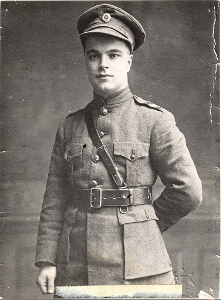


 seamus dubhghaill