seamus dubhghaill

Promoting Irish Culture and History from Little Rock, Arkansas, USA


Leave a comment

Birth of Lord Edward FitzGerald

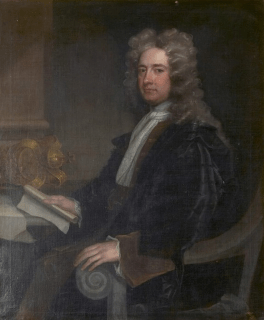
Lord Edward FitzGerald, Irish aristocrat who abandoned his prospects as a distinguished veteran of British service in the American Revolutionary War, and as an Irish Parliamentarian, to embrace the cause of an independent Irish republic, is born at Carton House, near Dublin, on October 15, 1763.

FitzGerald is the fifth son of James FitzGerald, 1st Duke of Leinster, and the Lady Emily Lennox, daughter of Charles Lennox, 2nd Duke of Richmond. In 1773 his father dies, and his mother soon afterwards marries William Ogilvie, who had been the tutor for him and his siblings. He spends most of his childhood in Frescati House at Blackrock, Dublin, where he is tutored by Ogilvie in a manner chiefly directed to the acquisition of knowledge that will fit him for a military career.

FitzGerald joins the British Army in 1779 and then becomes aide-de-camp on the staff of Lord Rawdon in the Southern theatre of the American Revolutionary War. He is seriously wounded at the Battle of Eutaw Springs on September 8, 1781, his life being saved by an escaped slave named Tony Small. He commissions a portrait of Small by John Roberts in 1786. He frees Small and employs him to the end of his life. He is evacuated from Charleston, South Carolina in 1782 when the British forces abandon the city.

In 1783 FitzGerald visits the West Indies before returning to Ireland, where his brother, William FitzGerald, 2nd Duke of Leinster, has procured Edward’s election to the Irish Parliament as an MP for Athy, a seat he holds until 1790. In Parliament he acts with the small Opposition Irish Patriot Party group led by Henry Grattan but takes no prominent part in debate. In the spring of 1786, he takes the then unusual step for a young nobleman of entering the Military College, Woolwich, after which he makes a tour through Spain in 1787. Dejected by unrequited love for his cousin Georgina Lennox, he sails for New Brunswick to join the 54th Regiment with the rank of Major.

In April 1789, guided by compass, FitzGerald traverses the country with a brother officer from Fredericton, New Brunswick to Quebec, falling in with Indians by the way, with whom he fraternizes. He accomplishes the journey in twenty-six days and establishes a shorter practicable route than that hitherto followed. The route crosses the extremely rugged and heavily forested northern part of the present state of Maine. In a subsequent expedition he is formally adopted at Detroit by the Bear clan of the Mohawk with the name “Eghnidal,” and makes his way down the Mississippi River to New Orleans, whence he returns to England.

Finding that his brother has procured his election for Kildare County, a seat he holds from 1790 to 1798, and desiring to maintain political independence, FitzGerald refuses the command of an expedition against Cádiz offered him by William Pitt the Younger and devotes himself for the next few years to the pleasures of society and to his parliamentary duties. He is on terms of intimacy with his first cousin Charles Fox, with Richard Sheridan and other leading Whigs. According to Thomas Moore, FitzGerald is only one of numerous suitors of Sheridan’s first wife, Elizabeth, whose attentions are received with favour. She conceives a child by him, a baby girl who is born on March 30, 1792.

His Whig connections, together with his transatlantic experiences, predisposed FitzGerald to sympathize with the doctrines of the French Revolution, which he embraces enthusiastically when he visits Paris in October 1792. He lodges with Thomas Paine and listens to the debates in the Convention. While in Paris, he becomes enamoured of a young girl named Pamela whom he chances to see at the theatre, and who has a striking likeness to Elizabeth Sheridan. On December 27, 1792, he and Pamela are married at Tournai, one of the witnesses being Louis Philippe, afterwards King of the French. In January 1793 the couple reaches Dublin.

Ireland is by then seething with dissent which is finding a focus in the increasingly popular and revolutionary Society of the United Irishmen, which has been forced underground by the outbreak of war between France and Britain in 1793. FitzGerald, fresh from the gallery of the Convention in Paris, returns to his seat in the Irish Parliament and immediately springs to their defence. Within a week of his return, he is ordered into custody and required to apologise at the bar of the House of Commons for violently denouncing in the House a government proclamation which Grattan had approved for the suppression of the United-Irish attempt to revive the Irish Volunteer movement with a “National Guard.” However, it is not until 1796 that he joins the United Irishmen, who by now have given up as hopeless the path of constitutional reform and whose aim, after the recall of Lord Fitzwilliam in 1795, is nothing less than the establishment of an independent Irish republic.

In May 1796 Theobald Wolfe Tone is in Paris endeavouring to obtain French assistance for an insurrection in Ireland. In the same month, FitzGerald and his friend Arthur O’Connor proceed to Hamburg, where they open negotiations with the Directory through Reinhard, French minister to the Hanseatic towns. The Duke of York, meeting Pamela at Devonshire House on her way through London with her husband, tells her that his plans are known and advises that he should not go abroad. The proceedings of the conspirators at Hamburg are made known to the government in London by an informer, Samuel Turner. The result of the Hamburg negotiations is Louis Lazare Hoche‘s abortive expedition to Bantry Bay in December 1796.

In September 1797 the Government learns from the informer Leonard McNally that FitzGerald is among those directing the conspiracy of the United Irishmen, which is now quickly maturing. Thomas Reynolds, converted from a conspirator to an informer, keeps the authorities posted in what is going on, though lack of evidence produced in court delays the arrest of the ringleaders. But on March 12, 1798, Reynolds’ information leads to the seizure of a number of conspirators at the house of Oliver Bond. FitzGerald, warned by Reynolds, is not among them.

As a fellow member of the Ascendancy class, the Government are anxious to make an exception for FitzGerald, avoiding the embarrassing and dangerous consequences of his subversive activities. They communicate their willingness to spare him from the normal fate meted out to traitors. FitzGerald however refuses to desert others who cannot escape, and whom he has himself led into danger. On March 30 the government proclamation of martial law authorising the military to act as they see fit to crush the United Irishmen leads to a campaign of vicious brutality in several parts of the country.

FitzGerald’s social position makes him the most important United Irish leader still at liberty. On May 9 a reward of £1,000 is offered by Dublin Castle for his apprehension. Since the arrests at Bond’s house, he has been in hiding. The date for the rising is finally fixed for May 23 and FitzGerald awaits the day hidden by Mary Moore above her family’s inn in Thomas Street, Dublin.

Tipped off that the house is going to be raided, Moore turns to Francis Magan, a Catholic barrister and trusted sympathiser, who agrees to hide Fitzgerald. Making its way to Magan’s house on May 18, Fitzgerald’s party is challenged by Major Henry Sirr and a company of Dumbarton Fencibles. Moore escapes with Fitzgerald and takes him back to Thomas Street to the house of Nicholas Murphy.

Moore explains to Magan what had happened and, unbeknownst to her, Magan informs Dublin Castle. The Moore house is raided that day. Mary, running to warn the Leinster Directory meeting nearby in James’s Gate, receives a bayonet cut across the shoulders. That same evening Sirr storms Murphy’s house where FitzGerald is in bed suffering from a fever. Alerted by the commotion, he jumps out of bed and, ignoring the pleas of the arresting officers to surrender peacefully, he stabs one and mortally wounds the other with a dagger in a desperate attempt to escape. He is secured only after Major Sirr shoots him in the shoulder.

FitzGerald is conveyed to New Prison, Dublin where he is denied proper medical treatment. After a brief detention in Dublin Castle he is taken to Newgate Prison, Dublin where his wound, which has become infected, becomes mortally inflamed. His wife, whom the government probably has enough evidence to convict of treason, has fled the country, never to see her husband again, but FitzGerald’s brother Henry and his aunt Lady Louisa Conolly are allowed to see him in his last moments. He dies at the age of 34 on June 4, 1798, as the rebellion rages outside. He is buried the next day in the cemetery of St. Werburgh’s Church, Dublin. An Act of Attainder confiscating his property is passed as 38 Geo. 3 c. 77 but is eventually repealed in 1819.

There are Lord Edward Streets named in FitzGerald’s honour in many places in Ireland, such as Dublin, Limerick, Sligo, Kilkenny, Ballina, Ballymote, and Ballycullenbeg in County Laois. The County Roscommon GAA club Tulsk Lord Edward’s and the Geraldines P. Moran’s GAA club in Cornelscourt, Dublin, are named after him.

Leave a comment

State Funeral in Honour of the “Forgotten Ten”

On October 14, 2001, the first multiple state funeral is held in honour of the “Forgotten Ten,” a term applied to ten Irish Republican Army (IRA) volunteers who were executed by British forces in Mountjoy Prison, Dublin, following courts martial for their role in the Irish War of Independence.

Based upon military law at the time, they are buried within the prison precincts, their graves unmarked in the unconsecrated ground. The names of the Forgotten Ten are Kevin Barry, Thomas Whelan, Patrick Moran, Patrick Doyle, Bernard Ryan, Thomas Bryan, Frank Flood, Thomas Traynor, Edmond Foley, and Patrick Maher. The hangman is John Ellis.

Following the Irish War of Independence, Mountjoy Prison is transferred to the control of the Irish Free State, which becomes the State of Ireland in 1937. In the 1920s, the families of the dead men request their remains be returned to them for proper burial. This effort is joined in the later 1920s by the National Graves Association. Through the efforts of the Association, the graves of the men are identified in 1934, and in 1996 a Celtic cross is erected in Glasnevin Cemetery, Dublin, to commemorate them.

The campaign to rebury the men drags on for 80 years from their deaths. Following an intense period of negotiations, the Irish government relents. Plans to exhume the bodies of the ten men are announced on November 1, 2000, the 80th anniversary of the execution of Kevin Barry. On October 14, 2001, the Forgotten Ten are afforded full state honours, with a private service at Mountjoy Prison for the families of the dead, a Requiem Mass at St. Mary’s Pro-Cathedral and burial in Glasnevin Cemetery.

According to The Guardian, some criticise the event as glorifying militant Irish republicanism. It coincides with the Fianna Fáil Ardfheis. The progress of the cortège through the centre of Dublin is witnessed by crowds estimated as being in the tens of thousands who break into spontaneous applause as the coffins pass. On O’Connell Street, a lone piper plays a lament as the cortège pauses outside the General Post Office (GPO), the focal point of the 1916 Easter Rising. In his homily during the Requiem Mass, Cardinal Cahal Daly, a long-time critic of the IRA campaign in Northern Ireland, insists that there is a clear distinction between the conflict of 1916–22 and the paramilitary-led violence of the previous 30 years:

“The true inheritors today of the ideals of the men and women of 1916 to 1922 are those who are explicitly and visibly committed to leaving the physical force tradition behind… Surely this state funeral can be an occasion for examination of conscience about the ideals of the men who died, and about our responsibility for translating those ideals into today’s realities.”

In his graveside oration Taoiseach Bertie Ahern echoes these sentiments and also pays tribute to the Ten:

“These 10 young men were executed during the War of Independence. The country was under tremendous pressure at the time. There was a united effort. Meanwhile, elected by the people, Dáil Éireann was developing, in spite of a war going on. Democracy was being put to work. Independent civic institutions, including the Dáil courts, were beginning to function. Before their deaths, the ten had seen the light of freedom. They understood that Ireland would be free and independent.”

The state funeral, broadcast live on national television and radio, is only the 13th since independence. Patrick Maher is not reburied with his comrades. In accordance with his wishes, and those of his family, he is reinterred in Ballylanders, County Limerick.

A feature length Irish language documentary on the re-interments, An Deichniúr Dearmadta (The Forgotten Ten) airs on TG4 on March 28, 2002.

(Pictured: The grave of nine of the Forgotten Ten in Glasnevin Cemetery, Dublin)


Leave a comment

William Conolly Resigns as Speaker of the Irish House of Commons

William Conolly, Irish politician, Commissioner of Revenue, lawyer and landowner also known as Speaker Conolly, resigns as Speaker of the Irish House of Commons on October 13, 1729, on grounds of ill health. Sir Ralph Gore is elected unanimously in his place. His name is spelled Conolly rather than the more familiar Connolly, derived ultimately from the Gaelic surname “Ó Conghalaigh.”

Conolly is born on April 9, 1662, in Ballyshannon, County Donegal, the son of an innkeeper, Patrick Conolly. His father is a native of County Monaghan, and a descendant of the Ó Conghalaigh clan of Airgíalla, who settles in County Donegal, embraces the Anglican Church, and has children William, Patrick, Hugh, Phelim and Thady. His father sets aside enough money that he is able to send Conolly to Dublin to study law. He qualifies as an attorney in 1685, aged twenty-three.

Conolly practises as a lawyer in Dublin and in 1694 he marries Katherine Conyngham, daughter of General Sir Albert Conyngham. The Conynghams are an Ulster Scots family who are originally from Mountcharles in County Donegal. The family later settles at Slane Castle in County Meath in the 1780s, where the Conynghams still reside. They have no children, and on Katherine’s death in 1752 the estates are inherited by William James Conolly, his nephew by his brother Patrick.

Conolly makes his fortune from land transfers, following the confiscations by the Crown of lands belonging to supporters of King James II, in the wake of the Glorious Revolution and the accession of William III and Mary II in 1688–91, known as the “Williamite War in Ireland.” About 600,000 Irish acres are confiscated to be sold to pay for the costs of the war, nearly 5% of the land area of Ireland. Conolly is the largest individual buyer, in particular buying 3,300 acres in County Meath that had been assigned to the Earl of Albemarle.

Conolly builds the first winged Palladian house in Ireland, Castletown House in Celbridge, County Kildare, starting in 1722, and specifies that every part of it has to be made from Irish materials. His Dublin townhouse is on Capel Street, then the most fashionable part of the city. He also commissions the former Customs House (now the site of the Clarence Hotel) and the Irish Houses of Parliament, the world’s first building specifically designed as a bicameral parliament.

Conolly is the most important of the “Undertakers,” the managers of Government business in the Irish House of Commons, in the early 18th century. He is associated with the moderate faction of Whigs and is opposed by the Brodrick faction from Cork. He is a Member of Parliament for Donegal Borough from 1692 to 1703 and subsequently for Londonderry County until his death in 1729. In 1703 and 1713, he is also elected for Newtown Limavady and in 1727 for Ballyshannon but chooses each time not to sit.

Conolly is Speaker of the Irish House of Commons and a Commissioner of the Revenue from 1715 to his death in 1729. He is re-elected as Speaker of the House of Commons in the first session of George II‘s parliament and continues to serve until he collapses in the Commons on September 26, 1729. He is eventually persuaded to resign the Speaker’s chair on October 13, and he dies at his house in Capel Street, Dublin, on October 30. He is buried in Celbridge following a spectacular public funeral, which sees the beginnings of the custom of mourners wearing linen scarves to promote the Irish linen industry.

On his death, the Archbishop of Armagh, Hugh Boulter, estimates Conolly’s income in 1729 at £17,000 p.a. His widow Katherine continues to live in style at Castletown until her death in 1752. She builds the Wonderful Barn and the Conolly Folly in the 1740s. Then their estates pass briefly to William’s nephew William junior, and then on to his great-nephew Thomas Conolly M.P., known as “Squire Tom,” who is married to Lady Louisa Conolly.

A pub in Celbridge, The Speaker’s Bar, is named in his memory. There is also a pub in Firhouse, Dublin, called The Speaker Conolly named after him.


Leave a comment

Birth of Emer Colleran, Microbiologist & Environmental Advocate

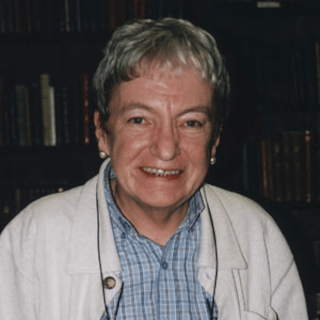
Emer Colleran, Irish microbiologist, academic and an environmental advocate, is born in Ballinrobe, County Mayo, on October 12, 1945. She is professor of microbiology at the National University of Ireland, Galway, a member of the Royal Irish Academy, one of Mary Robinson‘s nominees on the Council of State, and chairwoman of An Taisce, the National Trust for Ireland.

Colleran, and her twin Noreen, are born to John and Josie Colleran. One of a family of five children, her father is a school principal and her mother, also a primary school teacher, dies when she is just 11 years old. She completes her secondary education at St. Louis secondary school in Kiltimagh. She spends a lot of time outdoors as a child, particularly fishing, which sparks her interest in the environment.

On entering higher education, Colleran has a grant from the Department of Education, which requires that she do her studies through the Irish language. Her first choice, Medicine, is not available in Irish so she chooses Science. She graduates with a first-class primary degree in Science at University College Galway (now National University of Ireland, Galway) in 1967.

Colleran specialises in anaerobic digestion as a postgraduate and in 1971 becomes a postdoctoral fellow for two years at the University of Bristol in the UK.

Colleran lectures in biology at Athlone Regional Technical College (now Athlone Institute of Technology) and Galway Regional Technical College (now Galway-Mayo Institute of Technology) before her appointment as a lecturer in microbiology at NUI Galway in 1976. She is appointed Associate Professor of Microbiology by the Senate of the National University of Ireland in 1990. She is a member of the university’s governing authority for a number of years, but steps down in May 2000 in connection with the selection procedure for the new university president. In October of that year, she is appointed professor of microbiology and chair of the department at NUI Galway.

Colleran is the first director of the Environment Change Institute at NUI Galway set up under the Higher Education Authority‘s Programme for Research in Third Level Institutions in 2000. In 2010, the Environmental Change Institute and the Martin Ryan Marine Research Institute are merged to form the current day Ryan Institute at NUI Galway.

In 1973 Colleran is elected to the committee of the Galway Association of An Taisce, part of a national voluntary organisation the aims of which are to conservation in Ireland through education, publicity and positive action. She serves as membership secretary and then treasurer to the Galway branch before becoming chairman. In 1981, as chairman of the Galway branch, she hits back at claims from Galway County Council that An Taisce are “an anonymous group, wielding power unfairly.” She is involved in the compilation of a controversial planning report, published by An Taisce in 1983, which highlights abuse of planning laws by city and county councillors across Ireland, and in particular in counties Galway, Mayo, Donegal, Kerry and Louth.

Colleran serves as Environmental Officer for An Taisce before being elected National Chairman in 1987, the first time a chairman has come from one of the western county associations. She continues to use her position to campaign against misuse of planning laws, for a clamp down on pollution of rivers and lakes, and against a move to scrap An Foras Forbartha, a body that provides independent monitoring of pollution. During her three years as chairman, until May 1990, she is particularly involved in debates over local environmental and planning issues, in particular over gold mining in the west of Ireland, a proposed airport for Clifden, and the planned sewage treatment plant at Mutton Island, County Galway.

In 1991 plans are announced for a new visitor centre, to be located at Mullaghmore in The Burren. Colleran is among those who are part of an appeal, saying that while the plan for the national park is welcomed by An Taisce, they want the visitor centre to be located three or four miles from Mullaghmore.

President Mary Robinson appoints seven new members to her Council of State in February 1991, including Colleran. Other new members appointed at the time are Monica Barnes, Patricia O’Donovan, Quintan Oliver, Rosemarie Smith, Dónal Toolan and D. Kenneth Whitaker. The new Council of State represents a wide spectrum of Irish life and is widely welcomed, although Fine Gael is disappointed that its leader John Bruton is not included.

In 1991, Colleran is one of 15 people appointed to Taoiseach Charles Haughey‘s Green 2000 Advisory Group, to determine which problems will face the environment in the next century. The group is led by Dr. David Cabot, special advisor on environmental affairs.

Colleran is appointed a member of the National Heritage Council in 1995 by the Minister for Arts, Culture and the Gaeltacht, Michael D. Higgins. In the same year the Minister of State at the Department of the Marine, Eamon Gilmore, appoints her to the chair of the Sea Trout working group to oversee the implementation of recommendations to tackle a decline in sea trout stocks, particularly in the west of Ireland.

In 2003 Colleran is elected as a member of the Royal Irish Academy.

Colleran is recognised at the annual NUI Galway Alumni Awards in 2004 when she receives the award for Natural Science, sponsored by Seavite Bodycare Ltd., which acknowledges a graduate who has made an outstanding contribution in the field of natural science.

Colleran dies on June 30, 2018, at University Hospital Galway.


Leave a comment

John Asgill Expelled from the Irish House of Commons

John Asgill, eccentric English writer and newly elected Member of Parliament (MP) for Enniscorthy, is expelled from the Irish parliament on October 11, 1703, on account of a pamphlet he published in Dublin in 1698, arguing that man may pass into eternal life without dying. The pamphlet is burned by the common hangman and he spends much of the rest of his life in prison in England for blasphemy or for matters arising from land speculation in Ireland.

John Asgill is born at Hanley Castle, Worcestershire, England, on March 25, 1659, the son of Edward and Hester Asgill. Little is known of his early life but in 1686 he becomes a student at the Middle Temple and is called to the bar in 1692. He founds the first land bank in 1695 with Nicholas Barbon, which, after proving to be a profitable venture, merges with the land bank of John Briscoe in 1696. However, after profits drop, the bank closes in 1699. He is then elected that year as Member of Parliament for Bramber.

In 1700 Asgill publishes An Argument Proving, that … Man may be Translated, a pamphlet aiming to prove that death is not obligatory upon Christians. Within days of its publication, he leaves England to travel to Ireland, where he hopes to profit from the Williamite confiscation, acting on behalf of individuals affected by the 1699 resumption act. He is reasonably successful but is unable to gain the profits that he had anticipated. He becomes involved in lengthy litigation with the estate of the Jacobite Nicholas Browne, which continues until the early 1730s.

In an attempt to further his interests Asgill enters the Irish House of Commons in 1703, representing Enniscorthy. His Irish parliamentary career is to be short. On September 25, the first day of the session, his pamphlet on death is discussed and voted “wicked and blasphemous” and ordered to be burned by the common hangman. He is allowed to make a personal defence of his work on October 11, but this proves insufficient. He is expelled and the Commons order that “he be forever hereafter incapable of being chosen, returned or sitting a member of any succeeding parliament in this kingdom.”

While in Ireland Asgill is re-elected to the English House of Commons for Bramber in 1702 and so returns to England. On June 12, 1707 he is arrested and imprisoned at Fleet Prison for debt. He claims parliamentary immunity as a member of a current parliament despite the confusion whether the last English parliament and the first Parliament of Great Britain are the same body, and in December the House of Commons agrees. Nevertheless, two days after ordering his release from prison, he is expelled from the Commons both for his religious views and because he is a declared bankrupt.

Asgill falls on hard times and spends the rest of his life imprisoned in the Fleet or within the bounds of the King’s Bench but his zeal as a pamphleteer continues unabated.

Asgill dies on November 10, 1738, in the parish of Southwark, and is survived by his sister Martha.


Leave a comment

Birth of Mary Anne Holmes, Poet & Writer

Mary Anne Holmes, Irish poet and writer, is born Mary Anne Emmet on October 10, 1773, in Dublin. She is connected by her brothers Thomas Addis and Robert Emmet, to the republican politics of the Society of United Irishmen.

Holmes is one of the four surviving children of Dr. Robert Emmet, state physician of Ireland, and Elizabeth Emmet (née Mason). As a young woman she is noted for her intelligence and is a classical scholar. Her father lauds her “good character” and is very hopeful she will make a good wife. Much like her brothers, Robert and Thomas Addis, who are both to join the Society of United Irishmen, she is interested in politics and is a member of liberal intellectual circles. She is a correspondent of Margaret King about their common passion for the writings of Mary Wollstonecraft.

In 1793, a family friend, William Drennan, describes her as genteel but distant. He predicts her match with the barrister Robert Holmes, who she secretly marries on September 21, 1799, in the Dublin Unitarian Church. The couple have at least four children, with Drennan attending all the births. One of their children is Elizabeth Emmet Lenox-Conyngham. Robert Holmes attends to the Emmet family legal affairs for a time, with the couple living with her parents at Casino, near Milltown, Dublin. Holmes helps to raise the children of her brother Thomas Addis, after he is sent to Fort George, Highland, Scotland for his involvement with the United Irishmen. During this time, their mother’s letters to Thomas Addis note Holmes’ devotion to her husband but also her delicate health and tendency towards low spirits. Holmes is the only surviving child of their 17 children who is still in Ireland, and she is a comfort to her parents in their old age. Her father dies in 1802, and her mother almost dies in 1803 at the same time as the arrest and execution of her brother Robert. Some claim that Holmes attempted to recover her brother’s body but failed.

After the failed Irish rebellion of 1803, Holmes’s husband is arrested but she is allowed to spend approximately a week with him. It is long claimed that she collapses and dies on her doorstep following his release in February 1804. In truth, she gives birth to a son at home, following which her health worsens, and her hearing also deteriorates. Her son, Hugh, also later dies. She is attended to by Drennan, who worries that she is succumbing to tuberculosis that December. She dies on March 10, 1805, and is buried with her parents in the graveyard of St. Peter’s Church, Aungier Street, Dublin. There is a legend that her brother Robert’s body is interred with her in secret, but this is unconfirmed. A portrait of Holmes by Thomas Hickey is held by Kilmainham Gaol.

Holmes writes prose and verse for The Press, a publication associated with the Society of United Irishmen. In 1799 she is active, along with members of her extended family, in the movement opposed to the legislative union of Ireland with the United Kingdom. The pamphlet An address to the people of Ireland is attributed to her but is now thought to have been written by Roger O’Connor. Holmes’ poems are included in her daughter’s 1833 book of verse The dream and other poems.

(Pictured: Portrait of Mary Anne Holmes by Thomas Hickey, held in the collections of Kilmainham Gaol)


Leave a comment

Death of Ernesto “Che” Guevara, Revolutionary, Physician, Writer & Diplomat

Ernesto “Che” Guevara, an Argentine Marxist revolutionary, physician, writer, guerrilla leader, diplomat, and military theorist of Spanish-Irish descent, dies in La Higuera, Vallegrande, Bolivia, on October 9, 1967. After his execution by the Bolivian army, he is regarded as a martyred hero by generations of leftists worldwide, and his image becomes an icon of leftist radicalism and anti-imperialism.

Guevara is born on June 14, 1928, in Rosario, Santa Fe, Argentina, the eldest of five children in a middle-class family of Spanish-Irish descent and leftist leanings. Although suffering from asthma, he excels as an athlete and a scholar, completing his medical studies in 1953. He spends many of his holidays traveling in Latin America, and his observations of the great poverty of the masses contributes to his eventual conclusion that the only solution lay in violent revolution. He comes to look upon Latin America not as a collection of separate nations but as a cultural and economic entity, the liberation of which would require an intercontinental strategy.

In particular, Guevara’s worldview is changed by a nine-month journey he begins in December 1951, while on hiatus from medical school, with his friend Alberto Granado. That trip, which begins on a motorcycle they call “the Powerful” (which breaks down and is abandoned early in the journey), takes them from Argentina through Chile, Peru, Colombia, and on to Venezuela, from which Guevara travels alone on to Miami, returning to Argentina by plane. During the trip he keeps a journal that is posthumously published under his family’s guidance as The Motorcycle Diaries: Notes on a Latin American Journey (2003) and adapted to film as The Motorcycle Diaries (2004).

In 1953 Guevara goes to Guatemala, where Jacobo Árbenz heads a progressive regime that is attempting to bring about a social revolution. It is about this time he acquires his nickname, from a verbal mannerism of Argentines who punctuate their speech with the interjection “che.” The overthrow of the Árbenz regime in 1954 in a coup supported by the United States Central Intelligence Agency (CIA) persuades him that the United States will always oppose progressive leftist governments. This becomes the cornerstone of his plans to bring about socialism by means of a worldwide revolution. It is in Guatemala that he becomes a dedicated Marxist.

Guevara leaves Guatemala for Mexico, where he meets the Cuban brothers Fidel and Raúl Castro, political exiles who are preparing an attempt to overthrow the dictatorship of Fulgencio Batista in Cuba. He joins Fidel Castro’s 26th of July Movement, which lands a force of 81 men (including Guevara) in the Cuban Oriente Province on December 2, 1956. Immediately detected by Batista’s army, they are almost wiped out. The few survivors, including the wounded Guevara, reach the Sierra Maestra, where they become the nucleus of a guerrilla army. The rebels slowly gain in strength, seizing weapons from Batista’s forces and winning support and new recruits. Guevara had initially come along as the force’s doctor, but he has also trained in weapons use, and he becomes one of Castro’s most-trusted aides. Indeed, the complex Guevara, though trained as a healer, also, on occasion, acts as the executioner (or orders the execution) of suspected traitors and deserters.

After Castro’s victorious troops enter Havana on January 8, 1959, Guevara serves for several months at La Cabaña prison, where he oversees the executions of individuals deemed to be enemies of the revolution. He becomes a Cuban citizen, as prominent in the newly established Marxist government as he had been in the revolutionary army, representing Cuba on many commercial missions. He also becomes well known in the West for his opposition to all forms of imperialism and neocolonialism and for his attacks on U.S. foreign policy. He serves as chief of the Industrial Department of the National Institute of Agrarian Reform, president of the National Bank of Cuba (famously demonstrating his disdain for capitalism by signing currency simply “Che”), and Minister of Industries.

During the early 1960s, Guevara defines Cuba’s policies and his own views in many speeches and writings, notably “El socialismo y el hombre en Cuba” (1965; “Man and Socialism in Cuba,” 1967), an examination of Cuba’s new brand of communism, and a highly influential manual, La guerra de guerrillas (1960; Guerrilla Warfare, 1961). The last book includes his delineation of his foco theory (foquismo), a doctrine of revolution in Latin America drawn from the experience of the Cuban Revolution and predicated on three main tenets: 1) guerrilla forces are capable of defeating the army; 2) all the conditions for making a revolution do not have to be in place to begin a revolution, because the rebellion itself can bring them about; and 3) the countryside of underdeveloped Latin America is suited for armed combat.

Guevara expounds a vision of a new socialist citizen who would work for the good of society rather than for personal profit, a notion he embodies through his own hard work. Often he sleeps in his office, and, in support of the volunteer labour program he had organized, he spends his day off working in a sugarcane field. He grows increasingly disheartened, however, as Cuba becomes a client state of the Soviet Union, and he feels betrayed by the Soviets when they remove their missiles from the island without consulting the Cuban leadership during the Cuban Missile Crisis of 1962. He begins looking to the People’s Republic of China and its leader Mao Zedong for support and as an example.

In December 1964 Guevara travels to New York City, where he condemns U.S. intervention in Cuban affairs and incursions into Cuban airspace in an address to the United Nations General Assembly. Back in Cuba, increasingly disillusioned with the direction of the Cuban social experiment and its reliance on the Soviets, he begins focusing his attention on fostering revolution elsewhere. After April 1965 he drops out of public life. His movements and whereabouts for the next two years remain secret. It is later learned that he had traveled to what is now the Democratic Republic of the Congo with other Cuban guerrilla fighters in what proved to be a futile attempt to help the Patrice Lumumba battalion, which was fighting a civil war there. During that period he resigns his ministerial position in the Cuban government and renounces his Cuban citizenship. After the failure of his efforts in the Congo, he flees first to Tanzania and then to a safe house in a village near Prague.

In the autumn of 1966 Guevara goes to Bolivia, incognito (beardless and bald), to create and lead a guerrilla group in the region of Santa Cruz. After some initial combat successes, he and his guerrilla band find themselves constantly on the run from the Bolivian army. On October 9, 1967, the group is almost annihilated by a special detachment of the Bolivian army aided by CIA advisers. Guevara, who is wounded in the attack, is captured and shot. Before his body disappears to be secretly buried, his hands are cut off. They are preserved in formaldehyde so that his fingerprints can be used to confirm his identity.

In 1995 one of Guevara’s biographers, Jon Lee Anderson, announces that he had learned that Guevara and several of his comrades had been buried in a mass grave near the town of Vallegrande in central Bolivia. In 1997 a skeleton that is believed be that of the revolutionary and the remains of his six comrades are disinterred and transported to Cuba to be interred in a massive memorial and monument in Santa Clara on the 30th anniversary of Guevara’s death. In 2007 a French and a Spanish journalist make a case that the body brought to Cuba is not actually Guevara’s. The Cuban government refutes the claim, citing scientific evidence from 1997 that, it says, proves that the remains are those of Guevara.

Guevara would live on as a powerful symbol, bigger in some ways in death than in life. He is almost always referenced simply as Che — like Elvis Presley, so popular an icon that his first name alone is identifier enough. Many on the political right condemn him as brutal, cruel, murderous, and all too willing to employ violence to reach revolutionary ends. On the other hand, his romanticized image as a revolutionary looms especially large for the generation of young leftist radicals in Western Europe and North America in the turbulent 1960s. Almost from the time of his death, his whiskered face adorns T-shirts and posters. Framed by a red-star-studded beret and long hair, his face frozen in a resolute expression, the iconic image is derived from a photo taken by Cuban photographer Alberto Korda on March 5, 1960, at a ceremony for those killed when a ship that had brought arms to Havana exploded. At first the image of Che is worn as a statement of rebellion, then as the epitome of radical chic, and, with the passage of time, as a kind of abstract logo whose original significance may even have been lost on its wearer, though for some he remains an enduring inspiration for revolutionary action.


Leave a comment

Birth of Mick Galwey, Gaelic Football & Rugby Union Player

Michael Joseph Galwey, Gaelic football and rugby union player, is born on October 8, 1966, in Currow, County Kerry. As a 19-year-old he wins an All-Ireland Senior Football Championship with the Kerry Gaelic football team in 1986, before turning to rugby union. He is thus the only winner of an “All-Ireland” in both rugby union and Gaelic football. He also holds County Championship medals in Senior, Junior and Minor grades. His nickname ‘Gaillimh’ comes from the name of the Irish town Galway, in the Irish language.

Before becoming a rugby player Galwey plays Gaelic football with Kerry. His first success at intercounty level comes in 1986 when he is part of the Kerry team that wins that year’s All-Ireland. He plays in the semi-final win over Meath. The following year he wins a Munster Under 21 Championship medal and later plays in the All-Ireland final but his side loses out to Donegal. In 1989 he plays his second and last championship game with Kerry in the Munster Championship first round win over Limerick, a game that he also captains the side in.

At club level Galwey plays with his local Currow club. The club produces three other senior Irish Rugby Internationals – Moss Keane, Mick Doyle and Tommy Doyle, an All-Ireland Minor winner in 1962, along with an U-20 Irish Rugby International, JJ Hanrahan. He plays a key part in helping Currow win their first Kerry Junior Football Championship in 1988 when they beat Rathmore in the final.

Galwey also plays with the St. Kieran’s divisional team. In 1988 he helps them win their first and to date only Kerry Senior Football Championship title.

After making the switch to rugby union, Galwey is a key figure in Shannon RFC‘s side during their four in a row winning streak of All-Ireland League titles in the late 1990s. Throughout his career he proves to be a leader who can inspire and motivate players around him to punch above their collective weights. He instills a “don’t panic” and professional attitude in his Shannon team which later becomes the hallmarks of Munster Rugby during his tenancy as captain. He is seen as a legend of the sport in his native Munster, particularly in Limerick.

Galwey’s involvement in the Irish national squad is more of a mixed bag. Making his debut in 1991 against France, his 11-year international career is rarely without controversy. Owing to the selection decisions of various national coaches and selectors, he becomes the most dropped player in international history. He fights his way back onto the Irish squad, becoming the team’s captain ten years after he made his debut. In the 1993 Five Nations Championship match against England, he rounds off a fine display in the 17–3 defeat by scoring the only try of the game. His efforts are rewarded later that year when he is selected for the Lions tour to New Zealand.

Galwey plays for the Ireland national rugby sevens team at the inaugural 1993 Rugby World Cup Sevens.

Galwey’s rugby record includes 41 caps for Ireland, four times as captain and scorer of three tries; 1993 Lions tour to New Zealand; 130 caps for Munster, 85 as captain, 1 Celtic League; 10 Munster senior cups and 6 All-Ireland Leagues with Shannon R.F.C.; 113 games for Shannon in the All-Ireland League, scoring 28 tries.

Galwey has coached Shannon to two All-Ireland League victories and two Munster Senior Cups.


Leave a comment

Death of Edward Cecil Guinness, 1st Earl of Iveagh

Edward Cecil Guinness, 1st Earl of Iveagh, Irish businessman and philanthropist, dies at his London home in Grosvenor Place on October 7, 1927

Guinness is born on November 10, 1847 at St. Anne’s, Clontarf, County Dublin, the youngest of three sons of Sir Benjamin Lee Guinness, brewer, of Dublin, and Elizabeth, third daughter of Edward Guinness of Dublin. He is not sent to public school but is taught at home by a private tutor before entering Trinity College Dublin, where he takes his degree in 1870. His father dies in 1868, leaving him a share in the brewery, and he takes over management of the business with his brother Arthur, who in 1876 sells his shares, making Edward sole proprietor.

Guinness is also prominent in municipal life, holding the offices of Sheriff of Dublin City in 1876 and High Sheriff of the County of Dublin in 1885, the year in which he is created a baronet. He is a brilliantly effective businessman, with close attention to detail and a focus solely on the brewery, to the extent of remaining independent from the rest of the brewing trade. In 1888 he bluntly tells the Country Brewers’ Association, “I have always declined to identify myself with any trade question, or to take any side in a controversy on the liquor question, and to this I must adhere.” In 1886 Guinness is floated as a public company, a superbly successful venture with applications for shares exceeding £100 million, and Edward remains as chairman until 1890, although his formal retirement in that year brings little reduction in his involvement with the company, and he continues to make the final decision on many minor matters as well as all major questions of policy.

Socially innovative, with a concern for the welfare of employees, from as early as 1870 Guinness establishes a free dispensary for his workforce and makes provisions for pension and other allowances – acts of social reform that are remarkable for the time. To mark his retirement in 1890 he places in trust £250,000 to be expended in the erection of working-class housing in London and Dublin. Both funds are administered from London until 1903, when the Dublin fund is amalgamated by the Iveagh Trust act with other schemes carried out in Dublin by Edward, who had been raised to the peerage of the United Kingdom in 1891 as Baron Iveagh of Iveagh, County Down. The funds, which increase considerably from the original amount, are thereafter managed entirely in Dublin as a separate undertaking under the name of the Iveagh Trust, still in existence in the early twenty-first century.

As one of the pioneers of the voluntary housing movement Guinness is essentially carrying on the tradition of “merchant prince and city father” established by his father and shared by his brother. Wealthy, ambitious, and resolutely unionist, he gives generous financial support to the Irish Unionist Alliance, and is also public-spirited, religious, and devoted to duty. Acknowledging that the Iveagh Trust is essentially ameliorative, he believes that major social change will only be achieved if numerous other wealthy people follow his example. He insists that gifts of money from the fund are permissible only to assist individuals to improve their condition “without placing them in the position of being the recipients of a bounty.” Numerous other philanthropic donations follow, including another £250,000 for slum clearance in the Bull Alley district of Dublin; various contributions to Dublin hospitals, particularly in 1903 and 1911 on the occasion of royal visits; and in 1907 the opening of the Iveagh Markets, situated in the Francis Street and Patrick Street areas of Dublin, are made possible with his financial backing. Generous contributions are also made to Trinity College Dublin, of which he is elected chancellor in 1908, and he donates land in Iveagh Gardens to University College Dublin (UCD).

In 1905 Guinness is raised to a viscountcy and in September 1909 the nationalist corporation of Dublin presents him with an address of thanks for his many gifts, and even discusses the possibility of offering him the lord mayoralty of the city, which he declines owing to his political affiliations. By this time he lives chiefly in England, having bought Elveden Hall in Suffolk, where he frequently entertains royalty. He also purchases Lord Kensington’s London estate and makes many donations to medical research societies in England, and in conjunction with Sir Ernest Cassel he founds the London Radium Institute, as well as donates £250,000 to the Laster Institute of Tropical Medicine for the endowment of bacteriological research.

In 1919 Guinness is elevated to an earldom and in 1925 purchases the remainder of the Kenwood estate to the north of Hampstead Heath and arranges for it to become public property, ensuring the estate will not be sold for building purposes, and also bequeaths to the nation a valuable collection of art for use in the gallery at the same location. As well as being elected a fellow of the Royal Society, he is awarded honorary doctorates from the University of Dublin and the University of Aberdeen.

In 1873, Guinness marries his third cousin Adelaide Maud, nicknamed “Dodo.” She is descended from the banking line of Guinnesses, and is the daughter of Richard Samuel Guinness, barrister and MP, and his wife Katherine, a daughter of Sir Charles Jenkinson. They have three sons, the eldest of whom, Rupert Edward Cecil Lee, succeeds his father as 2nd Earl of Iveagh.

Guinness dies at his London home in Grosvenor Place on October 7, 1927, and is buried at Elveden, Suffolk. He leaves an estate valued at £11 million.


Leave a comment

Birth of Maeve Kyle, Olympic Athlete & Hockey Player

Maeve Esther Enid Kyle, OBE, Irish Olympic athlete and hockey player, is born Maeve Esther Enid Shankey in County Kilkenny on October 6, 1928.

Kyle briefly attends Kilkenny College where her father C.G. Shankey is headmaster, before attending Alexandra College and finally, Trinity College, Dublin. She is the granddaughter of William Thrift.

Kyle competes in the 100m and 200m in the 1956 Summer Olympics in Melbourne, Australia, and subsequently in the 1960 Summer Olympics in Rome, Italy, and the 1964 Summer Olympics in Tokyo, Japan, where she reaches the semi-finals of both the 400m and 800m. She takes the bronze medal in the 400m at the 1966 European Athletics Indoor Championships in Dortmund, Germany. She wins four gold medals in W45 Category at the 1977 World Masters Athletics Championships in Gothenburg, Sweden, in the 100m, 400m, high jump and long jump. She holds World Masters records at W40 for the 100m (12:00 secs) and 400m (55.30 secs) and W45 100m (12.50 secs) and W50 long jump at 5.04m.

In field hockey, Kyle gains 58 Irish caps as well as representing three of the four Irish provinces (Leinster, Munster and Ulster) at different stages of her career. She is named in the World All Star team in 1953 and 1959. She is also a competitor in tennis, swimming, sailing and cricket and works as a coach. She is chair of Coaching NI. In 2006, she is awarded the honorary degree of Doctor of the University (DUniv) from the University of Ulster.

Kyle is awarded the Lifetime Achievement Award at the 2006 Coaching Awards in London in recognition of her work with athletes at the Ballymena and Antrim Athletics Club. Earlier in 2006 she is one of 10 players who are initially installed into Irish hockey’s Hall of Fame. She is appointed Officer of the Order of the British Empire (OBE) in the 2008 New Year Honours.