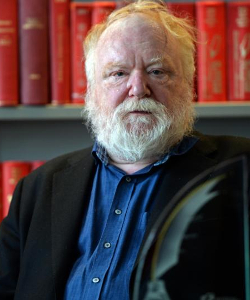
He first comes to prominence with his play The Factory Girls but establishes his reputation with his play about World War I, Observe the Sons of Ulster Marching Towards the Somme, which is staged in Dublin‘s Abbey Theatre and internationally. The play makes a name for him when it is performed at Hampstead Theatre, drawing comments about McGuinness’s Irish Catholic background. It wins numerous awards including the London Evening Standard Award for Most Promising Playwright for McGuinness and the Christopher Ewart-Biggs Memorial Prize. He has also written new versions of classic dramas, including works by Henrik Ibsen, Anton Chekhov, and Euripides, adapting the literal translations of others. In addition, he writes the screenplay for the film Dancing at Lughnasa, adapting the stage play by fellow UlstermanBrian Friel.
McGuinness’s first poetry anthology, Booterstown, is published in 1994. Several of his poems have been recorded by Marianne Faithfull, including Electra, After the Ceasefire and The Wedding.
McGuinness previously lectured in Linguistics and Drama at the University of Ulster, Medieval Studies at University College, Dublin and English at the National University of Ireland, Maynooth. Then he is a writer-in-residence lecturing at University College Dublin before being appointed Professor of Creative Writing in the School of English, Drama and Film there in 2007.
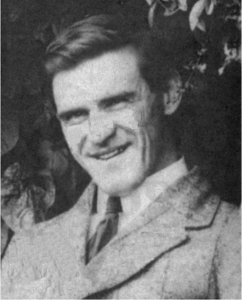
Shiels is born to Robert Shiels and Eileen (née MacSweeney). He emigrates to Canada as a young man. While working on the building of the Canadian Pacific Railway in 1913, he is involved in a serious accident that leaves him in a wheelchair for the rest of his life. He returns to Ballymoney and starts a shipping company with his brother and also begins writing. Starting with poems and short stories, he soon progresses to plays, which he provides to the Ulster Literary Theatre under the pen name of George S. Morsheils.
Starting with Bedmates (1921), his plays begin to be regularly accepted by the Abbey Theatre for production. His 1930 work The New Gossoon is so well-received that the Abbey’s touring company, The Abbey Theatre Irish Players, bring the play to Broadway for limited runs three times, in 1932, 1934, and 1937. In 1940, a production of Shiels’ The Rugged Path sets an Abbey record by attracting a total audience of 25,000 people over eight weeks.
When his success as a playwright allows him, he leaves the shipping business and moves to Carnlough on the coast of County Antrim, where he lives from 1932 until his death on September 19, 1949.
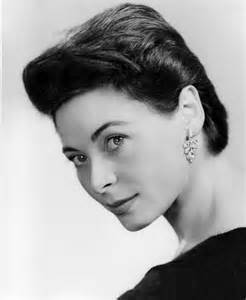
McKenna grows up in Galway, where her father is Professor of Mathematics at University College Galway, and in County Monaghan, speaking fluent Irish. She is still in her teens when she becomes a member of an amateur Gaelic theatre group and makes her stage debut at Galway’s Gaelic theatre, the Taibhdhearc na Gaillimhe, in 1940.
McKenna is remembered for her English language performances at the Abbey Theatre in Dublin where she eventually stars in what many consider her finest role in the George Bernard Shaw play, Saint Joan.
While performing at the Abbey Theatre in the 1940s, she meets actor Denis O’Dea, whom she marries in 1946. Until 1970 they live in Richmond Street South, Dublin. They have one child, a son Donnacha O’Dea, who swims for Ireland at the 1968 Summer Olympics and later wins a World Series of Poker bracelet in 1998.
In 1947, McKenna makes her debut on the London stage in The Chalk Garden. She reprises the role on Broadway in 1955, for which she receives a Tony Award nomination for “Best Actress in a Leading Role, Drama.” In 1956, she appears in the Cambridge Drama Festival production of Saint Joan at the Off-BroadwayPhoenix Theatre. Theatre critic Elliot Norton calls her performance the finest portrayal of Joan of Arc in memory. Siobhán McKenna’s popularity earns her the cover of Life magazine. She receives a second Tony Best Actress nomination for her role in the 1958 play, The Rope Dancers, in which she stars with Art Carney and Joan Blondell.
Although primarily a stage actress, McKenna appears in a number of made-for-television films and dramas. She also appears in several motion pictures such as King of Kings in 1961, as the Virgin Mary. In 1964, she performs in Of Human Bondage and the following year in Doctor Zhivago. She also appears in the miniseries The Last Days of Pompeii as Fortunata, wife of Gaius, played by Laurence Olivier. She stars in the title role of the Tales of the Unexpected episode “The Landlady.”
McKenna is awarded the Gold Medal of the Éire Society of Boston, for having “significantly fulfilled the ideals of the Éire Society, in particular, spreading awareness of the cultural achievements of the Irish people.”
McKenna’s final stage appearance comes in the 1985 play Bailegangaire for the Druid Theatre Company. Despite surgery, she dies of lung cancer on November 16, 1986, in Dublin, at 63 years of age. She is buried at Rahoon Cemetery in County Galway.
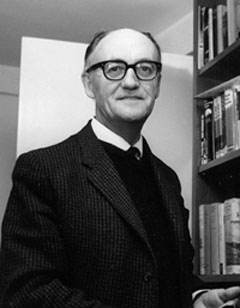
Walter Macken, writer of short stories, novels and plays, is born at 18 St. Joseph’s Terrace in Galway, County Galway on May 3, 1915.
Macken’s father, Walter Macken, Sr., formerly a carpenter, joins the British Army in 1915 and is killed in March of the following year at St Eloi. The family therefore has to rely on lodgers and a small service pension to sustain them.
Macken attends the Presentation Convent for Infants from (1918-1921), St. Mary’s, a Diocesan College where they train people who want to become priests (1923-1924), and Patrician Brothers both Primary and Secondary (1921-1922 and 1924-1934), where he takes his Leaving Certificate. He is writing short stories, novels, and plays in exercise books from the age of eight and carries on these works well into his teens.
Macken is originally an actor, principally with the Taibhdhearc na Gaillimhe in Galway, where he meets his wife Peggy, and The Abbey Theatre in Dublin. He also plays lead roles on Broadway in M. J. Molloy‘s The King of Friday’s Men and his own play Home Is the Hero. The success of his third book, Rain on the Wind, winner of the Literary Guild award in the United States, enables him to focus his energies on writing.
His son Ultan Macken is a well-known journalist in the print and broadcast media of Ireland, and wrote a biography of his father, Walter Macken: Dreams on Paper.
Walter Macken dies of heart failure at the age of 51 in Menlo, County Galway, on April 22, 1967.
John Millington Synge, a leading figure in the Irish Literary Revival, is born at Rathfarnham, near Dublin, on April 16, 1871. He is a poetic dramatist of great power who portrays the harsh rural conditions of the Aran Islands and the western Irish seaboard with sophisticated craftsmanship.
After studying at Trinity College and at the Royal Irish Academy of Music in Dublin, Synge pursues further studies from 1893 to 1897 in Germany, Italy, and France. In 1894 he abandons his plan to become a musician and instead concentrates on languages and literature. He meets William Butler Yeats while studying at the Sorbonne in Paris in 1896. Yeats inspires him with enthusiasm for the Irish renaissance and advises him to stop writing critical essays and instead to go to the Aran Islands and draw material from life. Already struggling against the progression of Hodgkin’s lymphoma which is untreatable at the time and eventually causes his death, Synge lives in the islands during part of each year between 1898 and 1902, observing the people and learning their language, recording his impressions in The Aran Islands (1907) and basing his one-act plays In the Shadow of the Glen and Riders to the Sea (1904) on islanders’ stories. In 1905 his first three-act play, The Well of the Saints, is produced.
Synge’s travels on the Irish west coast inspire his most famous play, The Playboy of the Western World (1907). This morbid comedy deals with the moment of glory of a peasant boy who becomes a hero in a strange village when he boasts of having just killed his father but who loses the villagers’ respect when his father turns up alive. In protest against the play’s unsentimental treatment of the Irishmen’s love for boasting and their tendency to glamorize ruffians, the audience riots at its opening at Dublin’s Abbey Theatre. Riots of Irish Americans accompany its opening in New York City in 1911, and there are further riots in Boston and Philadelphia. Synge remains associated with the Abbey Theatre, where his plays gradually win acceptance, until his death. His unfinished Deirdre of the Sorrows, a vigorous poetic dramatization of one of the great love stories of Celtic mythology, is performed there in 1910.
In the seven plays he writes during his comparatively short career as a dramatist, Synge records the colourful and outrageous sayings, flights of fancy, eloquent invective, bawdy witticisms, and earthy phrases of the peasantry from Kerry to Donegal. In the process he creates a new, musical dramatic idiom, spoken in English but vitalized by Irish syntax, ways of thought, and imagery.
The son of a bank manager, McAnally is educated at Saint Eunan’s College in Letterkenny where he writes, produces and stages a musical called “Madame Screwball” at the age of sixteen. He enters St. Patrick’s College, Maynooth at the age of 18 but leaves after a short time having decided that the priesthood is not his vocation. He joins the Abbey Theatre in 1947 where he meets and marries actress Ronnie Masterson.
The couple later forms Old Quay Productions and present an assortment of classic plays in the 1960s and 1970s. McAnally makes his theatre debut in 1962 with A Nice Bunch of Cheap Flowers and gives a well-received performance as George in Who’s Afraid of Virginia Woolf?, opposite Constance Cummings, at the Piccadilly Theatre.
On television he is a familiar face, often in glossy thriller series like television series The Avengers, Man in a Suitcase, and Strange Report. In 1968 he takes the title role in Spindoe, a series charting the return to power of an English gangster, Alec Spindoe, after a five-year prison term. This is a spin-off from another series, The Fellows (1967) in which McAnally had appeared in several episodes as the Spindoe character. He could render English accents very convincingly.
McAnally regularly acts in the Abbey Theatre and at Irish festivals, but in the last decade of life he achieves award-winning notice on TV and films. His impressive performance as Cardinal Altamirano in the film The Mission (1986) earns him Evening Standard and BAFTA awards. He earns a second BAFTA award for his role in the BBC’s A Perfect Spy (1987). In 1988 he wins the BAFTA for Best Actor for his performance in A Very British Coup, a role that also brings him a Jacob’s Award. In the last year of his life, he portrays the father of Christy Brown, played by Daniel Day-Lewis, in the Academy Award-winning film, My Left Foot (1989).
McAnally dies suddenly of a heart attack on June 15, 1989, at the age of 63, at his home in County Wicklow which he shares with Irish actress Britta Smith. He remains married to actress Ronnie Masterson until his death, although they reside in different homes. He receives a posthumous BAFTA award for his last film in 1990.
At the time of his death, McAnally is due to play “Bull McCabe” in Jim Sheridan‘s film The Field. The part eventually goes to Richard Harris who receives an Academy Award nomination for his performance. McAnally had also been cast in the lead role of First and Last, a drama about a man who walked from Land’s End to John o’ Groats. Filming is almost a third of the way done when he dies, but the whole play has to be re-filmed, with Joss Ackland taking the role instead.
Joseph Tomelty, Irish character actor and playwright, is born at Portaferry, County Down, on March 5, 1911. He works in film, television, radio, and on the stage, starring in Sam Thompson‘s 1960 play Over the Bridge.
Tomelty is the eldest of seven children. His father is known as “Rollickin’ James” for his skill on the fiddle. He leaves his local primary school at the age of 12 and is apprenticed to the trade of housepainter, his father’s trade. He moves to Belfast and attends classes at Belfast Technical College.
Tomelty first acts with St. Peter’s Players and with others in 1937 and 1938 takes part in discussions which lead to the formation of the Northern Ireland Players on a more professional basis. Radio plays Barnum is Right and Elopement are broadcast in December 1938 and February 1939 respectively. The Northern Ireland Players choose the stage version of Barnum is Right for their first major commercial venture at the Empire Theatre in June 1939.
In 1940 the Northern Ireland Players join forces with the Ulster Theatre and the Jewish Institute Dramatic Society to form the Group Theatre. In 1942 Tomelty becomes its general manager remaining in the post until 1951. His play, Idolatry at Innishargie, enjoys a short run at the Group Theatre in 1942, but The End House, a controversial political play, does not even appear there. The play deals with what he describes as “the inhumanity that resulted from the Special Powers Act.” It is however performed at the Abbey Theatre in Dublin in 1944.
Meanwhile, his career as a character actor rapidly develops and a successful stage and film career is underway. In 1948 he is commissioned by the BBC in Belfast to write the weekly radio comedy drama series The McCooeys. This radio series lasts for seven years with Tomelty writing 6,000 word scripts for each episode. He continues to write plays, including his masterpiece, and a modern Irish theatre classic, All Souls’ Night in 1948.
In 1954 Tomelty is injured in an automobile accident while filming Bhowani Junction in England and, while he recovers, he is never as productive again. He dies in Belfast on June 7, 1995.
Arthur Shields, Irish actor on television, stage, and film, is born on February 15, 1896, into an Irish Protestant family in Portobello, Dublin. Shields starts acting in the Abbey Theatre when he is 17 years old. He is the younger brother of Oscar-winning actor Barry Fitzgerald. They are the sons of Adolphus Shields, who is well-known in Dublin as a labor organizer although the 1901 census lists his occupation as “press reader,” and Fanny Sophia Sheilds.
Shields returns to the Abbey Theatre and has a varied career there from 1914-1939 as actor, assistant director, director, and stage manager. He appears in more than 300 roles in 350 plays while he is at the Abbey. Three of the productions he appears in are by Irish playwright Teresa Deevy – The Reapers, Temporal Powers, and Katie Roche. Three times he brings the Abbey Company to the United States.
Shields dies of complications related to emphysema on April 27, 1970, in Santa Barbara, California. He is survived by his wife, actress Laurie Bailey, a daughter, a son, and four great-grandchildren. His body is cremated, with the ashes taken to Dublin, where a burial with full military honors takes place.
The Playboy of the Western World, a three-act play written by Irish playwright John Millington Synge, is first performed at the Abbey Theatre, Dublin, on January 26, 1907. The play is set in Michael James Flaherty’s public house in County Mayo during the early 1900s. It tells the story of Christy Mahon, a young man running away from his farm, claiming he killed his father. The locals are more interested in vicariously enjoying his story than in condemning the immorality of his murderous deed, and in fact, Christy’s tale captures the romantic attention of the barmaid Pegeen Mike, the daughter of Flaherty. The play is best known for its use of the poetic, evocative language of Hiberno-English, heavily influenced by the Irish language, as Synge celebrates the lyrical speech of the Irish.
The Playboy Riots occur during and following the opening performance of the play. The riots are stirred up by Irish nationalists who view the contents of the play as an offence to public morals and an insult against Ireland. The riots take place in Dublin, spreading out from the Abbey Theatre, and are finally quelled by the actions of the Dublin Metropolitan Police.
The fact that the play is based on a story of apparent patricide also attracts a hostile public reaction. Egged on by nationalists, including Sinn Féin leader Arthur Griffith, who believe that the theatre is not sufficiently political and describes the play as “a vile and inhuman story told in the foulest language we have ever listened to from a public platform,” and with the pretext of a perceived slight on the virtue of Irish womanhood in the line “a drift of females standing in their shifts” (a shift being a female undergarment), a significant portion of the crowd riots, causing the remainder of the play to be acted out in dumbshow. Nevertheless, press opinion soon turns against the rioters and the protests peter out.
Years later, William Butler Yeats declares to rioters against Seán O’Casey‘s pacifist drama The Plough and the Stars, in reference to the Playboy Riots, “You have disgraced yourself again. Is this to be the recurring celebration of the arrival of Irish genius?”
In the 1965 film Young Cassidy, a riot occurs during a play by the fictitious playwright Cassidy, following which the character W.B. Yeats refers to Synge and speaks similar words, starting with “You have disgraced yourselves again.”
The production of Synge’s play meets with more disturbances in the United States in 1911. On opening night in New York City, hecklers boo, hiss and throw vegetables and stink bombs while men scuffle in the aisles. The company is later arrested in Philadelphia and charged with putting on an immoral performance. The charges are later dismissed.
Fallon’s upbringing and his early impressions of Athenry and the surrounding landscape are intimately described in his poetry. After passing the civil service exams in 1923 he moves to Dublin to work in the Customs House. In Dublin he becomes part of the circle of George William Russell (Æ) who encourages his literary ambitions and arranges for the publication of his early poetry. His early poetry, short stories, and literary criticism are published in The Dublin Magazine and The Bell.
He forms close friendships with Seumas O’Sullivan, editor of The Dublin Magazine, the poets Austin Clarke, Robert Farren, F.R. Higgins, and Patrick McDonagh and later the novelist James Plunkett. In 1939, Fallon leaves Dublin to serve as a Customs official in County Wexford, living in Prospect House, near Wexford Town with his wife, Dorothea (née Maher) and his six sons. During this time, he becomes a close friend of the painter Tony O’Malley.
Fallon is a regular contributor to Radio Éireann in the 1940s and 1950s, serving variously as a journalist, scriptwriter, and literary critic. A number of his short stories and early dramatic pieces are broadcast by the station during the 1940s. The first of Fallon’s verse plays for radio, Diarmuid and Gráinne, is broadcast by Radio Éireann in November 1950. This is followed by The Vision of Mac Conglinne (1953), Two Men with a Face (1953), The Poplar (1953), Steeple Jerkin (1954), A Man in the Window (1955), Outpost (1955), The Wooing of Étain (1955), Deirdre’s King (1956), The Five Stations (1957), The Hags of Clough (1957), The Third Bachelor (1958), At the Bridge Inn (1960), and Lighting up Time (1961).
Three plays adapted from Irish mythology, Diarmuid and Gráinne, The Vision of Mac Conglinne, and Deirdre’s King receive particular contemporary critical acclaim. The landscape, mythology, and history of Ireland, interwoven with classical themes and religious symbolism, are frequent themes in his poetry and dramatic works.
A number of his radio plays are later broadcast on the BBC Third Programme, and, in translation, in Germany, Holland, and Hungary. A stage play, The Seventh Step, is staged at The Globe Theatre in Dublin in 1954. A second stage play, Sweet Love ’till Morn, is staged in the Abbey Theatre in 1971. Fallon also writes dramatic pieces for television such as A Sword of Steel (1966) and The Fenians (1967), the latter produced by James Plunkett.
Fallon retires from the Civil Service in 1963, returning to Dublin before moving to Cornwall in 1967 to live with his son, the sculptor Conor Fallon and his daughter-in-law, the artist Nancy Wynne-Jones. He and his wife return to Ireland in 1971. He spends his last years in Kinsale. He is visiting his son Ivan Fallon in Kent at the time of his death on October 9, 1974.
While his poetry has previously appeared in The Dublin Magazine, The Bell, The Irish Times, and a number of anthologies, his first volume of collected poetry, Poems, incorporating a number of previously unpublished poems, is not produced until 1974, months before his death. Three volumes of his poetry, edited by his son, the journalist and critic Brian Fallon, are published after his death – Poems and Versions (1983), Collected Poems (1990), with an introduction by Seamus Heaney, and A Look in the Mirror and Other Poems (2003), with an introduction by Eavan Boland. In 2005, three of Fallon’s verse plays, The Vision of Mac Conglinne, The Poplar, and The Hags of Clough are published in a single volume. A selection of his prose writings and criticism edited by Brian Fallon, A Poet’s Journal, is published in the same year.