seamus dubhghaill

Promoting Irish Culture and History from Little Rock, Arkansas, USA


Leave a comment

The Beginning of the IRA’s Border Campaign

The Irish Republican Army (IRA) begins what it calls “The Campaign of Resistance to British Occupation” on December 12, 1956. Also known as the “Border Campaign,” it is a guerrilla warfare campaign carried out by the IRA against targets in Northern Ireland, with the aim of overthrowing British rule there and creating a united Ireland. Although the campaign is a military failure, but for some of its members, the campaign is justified as it keeps the IRA engaged for another generation.

The border campaign is the first major military undertaking carried out by the IRA since the 1940s, when the harsh security measures of the Republic of Ireland and Northern Ireland governments had severely weakened it. In 1939 the IRA tries a bombing campaign in England to try to force British withdrawal from Northern Ireland. From 1942 to 1944 it also mounts an ineffective campaign in Northern Ireland. Internment on both sides of the border, as well as internal feuding and disputes over future policy, all but destroy the organisation. These campaigns are officially called off on March 10, 1945. By 1947, the IRA has only 200 activists, according to its own general staff.

Chief of Staff of the Irish Republican Army Tony Magan sets out to create “a new Army, untarnished by the dissent and scandals of the previous decade.” Magan believes that a degree of political mobilization is necessary and the relationship with Sinn Féin, which had soured during the 1930s, is improved. At the 1949 IRA Convention, the IRA orders its members to join Sinn Féin, which partially becomes the “civilian wing” of the IRA.

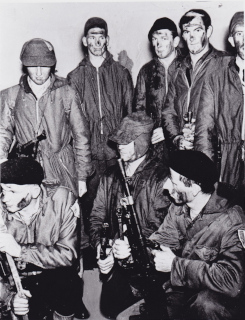
By the mid-1950s, the IRA has substantially re-armed. This is achieved by means of arms raids launched between 1951 and 1954, on British military bases in Northern Ireland and England. By 1955, splits are occurring in the IRA, as several small groups, impatient for action, launch their own attacks in Northern Ireland. In November 1956, the IRA finally begins planning its border campaign.

On December 12 the campaign is launched with simultaneous attacks by around 150 IRA members on targets on the Border in the early hours. A BBC relay transmitter is bombed in Derry, a courthouse is burned in Magherafelt by a unit led by an 18-year-old Seamus Costello, as is a B-Specials post near Newry and a half-built Army barracks at Enniskillen is blown up. A raid on Gough Barracks in Armagh is beaten off after a brief exchange of fire.

The IRA issues a statement announcing the start of the campaign, “Spearheaded by Ireland’s freedom fighters, our people have carried the fight to the enemy…Out of this national liberation struggle a new Ireland will emerge, upright and free. In that new Ireland, we shall build a country fit for all our people to live in. That then is our aim: an independent, united, democratic Irish Republic. For this we shall fight until the invader is driven from our soil and victory is ours.”

The year 1957 is the most active year of the IRA’s campaign, with 341 incidents recorded. The most dramatic attack of the whole campaign takes place on January 1 when fourteen IRA volunteers, including Séan Garland, Alan O Brien and Dáithí Ó Conaill plan an attack on a joint Royal Ulster Constabulary (RUC)/B-Specials barracks in Brookeborough, County Fermanagh, though they attack the wrong building. On 11 November, the IRA suffers its worst loss of life in the period when four of its members die preparing a bomb in a farmhouse at Edentubber, County Louth, which explodes prematurely. The civilian owner of the house is also killed.

By 1958, the campaign’s initial impetus has largely dissipated. Certain IRA activities produce public hostility, and by 1958, there are already many within the IRA in favour of calling off the campaign. The Cork IRA, for instance, has effectively withdrawn. By mid-1958, 500 republicans are in gaol or interned, North and South.

The period after the summer of 1958 sees a steep drop in the intensity of the IRA campaign. That the IRA’s campaign had run its course by 1960 is testified by the fact that the Republic of Ireland’s government closes the Curragh Camp, which housed internees in the South, on March 15, 1959, judging them to be no further threat. The Northern Irish government follows suit on April 25, 1961.

In November 1961 a RUC officer, William Hunter, is killed in a gun battle with the IRA in south County Armagh. This is the final fatality of the conflict. Minister for Justice Charles Haughey reactivates the Special Criminal Court, which hands down long prison sentences to convicted IRA men.

Although it had petered out by the late 1950s, by late 1961 the campaign is over and is officially called off on February 26, 1962, in a press release issued that day, drafted by Ruairí Ó Brádaigh who consults with several other persons including members of the IRA Army Council. The campaign costs the lives of eight IRA men, four republican supporters and six RUC members. In addition, 32 RUC members are wounded. A total of 256 Republicans are interned in Northern Ireland during this period and another 150 or so in the Republic. Of those in Northern Ireland, 89 sign a pledge to renounce violence in return for their freedom.

(Pictured: A group of IRA men before embarking on an operation in the 1950s | Photo credited to http://laochrauladh.blogspot.ie/)


Leave a comment

Thomas McMahon Sentenced to Life for Mountbatten’s Assassination

Thomas McMahon, former volunteer in the South Armagh Brigade of the Provisional Irish Republican Army (IRA) and one of the IRA’s most experienced bomb-makers, is sentenced to life in prison on November 23, 1979, for the assassination of Louis Mountbatten, 1st Earl Mountbatten of Burma, and three others (two children and an elderly lady) at Mullaghmore, County Sligo.

McMahon plants a bomb in Shadow V, a 27-foot fishing boat belonging to Mountbatten at Mullaghmore, near Donegal Bay. Lord Mountbatten and the others are killed on August 27, 1979, when the bomb detonates. The other victims are Doreen Knatchbull, Baroness Brabourne, Mountbatten’s elder daughter’s mother-in-law, his grandson Nicholas Knatchbull and 15-year-old crewmember Paul Maxwell.

McMahon is arrested by the Garda, the Republic of Ireland‘s police force, two hours before the bomb detonates at a Garda checkpoint between Longford and Granard on suspicion of driving a stolen vehicle.

The IRA claims responsibility for the act in a statement released immediately afterwards. In the statement from the organisation they say, “This operation is one of the discriminate ways we can bring to the attention of the English people the continuing occupation of our country.”

McMahon is tried for the assassinations in the Republic of Ireland and convicted by forensic evidence supplied by Dr. James O’Donovan that shows flecks of paint from the boat and traces of nitroglycerine on his clothes. He is sentenced to life imprisonment for murder on November 23, 1979, but is released in 1998 under the terms of the Good Friday Agreement.

Following his release, Toby Harnden in Bandit Country: The IRA & South Armagh (1999) reports that McMahon is holding a tricolour in the first rank of the IRA colour party at a 1998 IRA meeting in Cullyhanna. However, according to a BBC report, McMahon says that he left the IRA in 1990.

McMahon twice refuses to meet John Maxwell, the father of Paul Maxwell, who seeks him out to explain the reasons for his son’s death. In a May 2011 interview for The Telegraph, Maxwell states that he had “made two approaches to McMahon, the first through a priest, who warned me in advance that he thought there wouldn’t be any positive response. And there wasn’t. I have some reservations about meeting him, obviously – it might work out in such a way that I would regret having made the contact. On the other hand, if we met and I could even begin to understand his motivation. If we could meet on some kind of a human level, a man-to-man level, it could help me come to terms with it. But that might be very optimistic. McMahon knows the door is open at this end.”

McMahon likewise refuses requests from Nicholas Knatchbull’s twin brother, who lost an eye in the same explosion. The latter, however, has forgiven McMahon and other members of the IRA who committed the act.

McMahon’s wife has stated, “Tommy never talks about Mountbatten, only the boys who died. He does have genuine remorse. Oh God yes.”

McMahon lives with his wife Rose in Lisanisk, Carrickmacross, County Monaghan. He has two grown sons. He helps with Martin McGuinness‘s presidential campaign in 2011, erecting posters for McGuinness around Carrickmacross.


Leave a comment

Birth of Gerry Robinson, Businessman & Television Presenter

Sir Gerrard Jude “Gerry” Robinson, Irish-born British business executive and television presenter, is born in Dunfanaghy, County Donegal on October 23, 1948. He is the former non-executive Chairman of Allied Domecq and the ex-Chairman/chief executive of Granada.

The ninth of ten children born to Anthony and Elizabeth Robinson, Robinson moves with his family to England in his early teens. He briefly trains to become a Catholic priest at St. Mary’s Missionary College of the Holy Ghost Fathers at Castlehead, Grange-over-Sands, Lancashire. He begins a career in accounting in 1965 as a clerk with the Matchbox toy company. While with the firm, he progresses through various accounting roles to become Chief Management Accountant in 1974. During that time he also qualifies as an Associate Chartered Management Accountant.

In 1974, Robinson leaves Matchbox to work for Lex Vehicle Leasing as a management accountant. He rises through the company and is ultimately appointed finance director. In 1980, he joins the UK franchise of Coca-Cola, owned at the time by Grand Metropolitan. In 1983 he is appointed managing director of Grand Metropolitan’s international services division. In 1987 he leads the successful £163m management buyout of the loss-making contract services and catering division of Compass Group, known as Compass Caterers. He joins Granada as CEO in 1991 and ousts Granada’s chairman, David Plowright, in 1992, which leads John Cleese to call Robinson “an upstart caterer.”

Robinson steers the company through various mergers, and hostile takeovers including London Weekend Television (1993) and Forte Group (1996). In 1999 he is the subject of a biography, Lord of the Dance, written by business journalist William Kay, and published by Orion Business Books. In 2005 he makes an unsuccessful attempt to oust Doug Flynn as CEO of Rentokil Initial and install himself as Executive chairman for a 5% stake in the company, then valued at £56M.

Robinson’s first foray into broadcasting is a revival of the BBC‘s Troubleshooter series, originally fronted by Sir John Harvey-Jones in the early 1990s. Titled I’ll Show Them Who’s Boss and co-produced by the Open University, in 2004 he goes into struggling businesses to try to turn them round by advice and mentoring.

In January 2007 following a similar format, he presents a three-part series, Can Gerry Robinson Fix the NHS? as he attempts to reduce waiting lists at Rotherham General Hospital. He returns a year later for a sequel, Can Gerry Robinson Fix the NHS? One Year On. In December 2009, he presents a programme in a similar format entitled Can Gerry Robinson Fix Dementia Care Homes?.

In June 2009 Robinson presents a special edition of The Money Programme entitled Gerry Robinson’s Car Crash investigating the history and future of the British motor industry. He regularly appears on British TV as a celebrity businessman. In July 2009 he starts a TV series called Gerry’s Big Decision, in which he reviews struggling companies and decides whether it is worth investing his own money to save them. From January 14 through February 18, 2011 he presents BBC Two show Can’t Take It with You, which helps people to write their wills.

Robinson also serves as chairman of the Arts Council England for six years from 1998, in which capacity he is one of the many victims of a spoof by British comedian Ali G. He has divorced and remarried and has four children. He lives in Raphoe, County Donegal and has established a botanical garden with a narrow-gauge railway – the Difflin Lake Railway – which is open to the public. He was knighted in the 2004 New Year Honours list.


Leave a comment

Death of The Chieftains Harpist Derek Bell

George Derek Fleetwood Bell, harpist, pianist, oboist, musicologist and composer best known for his accompaniment work on various instruments with The Chieftains, dies unexpectedly on October 17, 2002 in Phoenix, Arizona during a recovery period from minor surgery.

Bell is born in Belfast, Northern Ireland. He is something of a child prodigy, composing his first concerto at the age of twelve. He graduates from the Royal College of Music in 1957. While studying there, he became friends with the flautist James Galway. From 1958 to 1990 he composes several classical works, including three piano sonatas, two symphonies, Three Images of Ireland in Druid Times (in 1993) for harp, strings and timpani, Nocturne on an Icelandic Melody (1997) for oboe d’amore and piano and Three Transcendental Concert Studies (2000) for oboe and piano.

As manager of the Belfast Symphony Orchestra, Bell is responsible for maintaining the instruments and keeping them in tune. Out of curiosity, he asks Sheila Larchet-Cuthbert to teach him how to play the harp. In 1965 he becomes an oboist and harpist with the BBC Northern Ireland Orchestra. He serves as a professor of harp at the Academy of Music in Belfast.

Bell is briefly featured in a 1986 BBC documentary, The Celts, in which he discusses the role and evolution of the harp in Celtic Irish and Welsh society. He also appears with Van Morrison at the Riverside Theatre at the University of Ulster in April 1988.

Bell is an admirer of the music of Nikolai Karlovich Medtner and is the co-founder, with the bass-baritone Hugh Sheehan, of the first British Medtner Society which gives a series of successful concerts of Medtner’s music in the 1970s long before Medtner’s music is recognised as it is today.

On St. Patrick’s Day in 1972 Bell performs on the radio the music of Turlough O’Carolan, an 18th-century blind Irish harpist. At that time O’Carolan’s music is virtually unknown, though today almost every album of harp music contains one of his compositions. Working with him on the project are several members of The Chieftains. Bell becomes friends with the leader of The Chieftains, Paddy Moloney. For two precarious years, he records both with the BBC Northern Ireland Orchestra and with The Chieftains, until finally becoming a full-time member of the Chieftains in 1975.

Bell is the only member of the band to wear a necktie at every public performance. He favours socks with novelty designs, such as images of Looney Tunes characters. He wears scruffy suits, often with trousers that are too short. He is eccentric and tells obscene jokes. The title of his 1981 solo album Derek Bell Plays With Himself has a conscious double entendre.

While touring in Moscow he grabs his alarm clock and puts it in his pocket while rushing to catch a plane. He is then stopped by the Soviet police on suspicion of carrying a concealed weapon. Paddy Moloney affectionately calls him “Ding Dong” Bell. He relishes the eclectic collaborations, such as those with Van Morrison, Sting and the Chinese orchestra. In 1991 he records with his old friend James Galway. He is awarded an MBE in the 2000 Queen’s Birthday Honours for services to traditional music.

Bell dies of cardiac arrest in Phoenix, Arizona on October 17, 2002, just four days shy of his 67th birthday. He is remembered at Cambridge House Grammar School, Ballymena, as House Patron of Bell House.


Leave a comment

The Tullyvallen Massacre

tullyvallen-orange-hall

The Tullyvallen massacre takes place on September 1, 1975, when Irish republican gunmen attack an Orange Order meeting hall at Tullyvallen, near Newtownhamilton in County Armagh, Northern Ireland. The Orange Order is an Ulster Protestant and unionist brotherhood. Five Orangemen are killed and seven wounded in the shooting. The “South Armagh Republican Action Force” claims responsibility, saying it is retaliation for a string of attacks on Catholic civilians by Loyalists. It is believed members of the Provisional Irish Republican Army (IRA) carried out the attack, despite the organisation being on ceasefire.

On February 10, 1975, the Provisional IRA and British government enter into a truce and restart negotiations. The IRA agrees to halt attacks on the British security forces, and the security forces mostly end their raids and searches. There is a rise in sectarian killings during the truce. Loyalists, fearing they are about to be forsaken by the British government and forced into a united Ireland, increase their attacks on Irish Catholics/nationalists. They hope to force the IRA to retaliate and thus end the truce. Some IRA units concentrate on tackling the loyalists. The fall-off of regular operations causes unruliness within the IRA and some members, with or without permission from higher up, engage in tit-for-tat killings.

On August 22, loyalists kill three Catholic civilians in a gun and bomb attack on a pub in Armagh. Two days later, loyalists shoot dead two Catholic civilians after stopping their car at a fake British Army checkpoint in the Tullyvallen area. Both of these attacks are linked to the Glenanne gang. On August 30, loyalists kill two more Catholic civilians in a gun and bomb attack on a pub in Belfast.

On the night of September 1, a group of Orangemen are holding a meeting in their isolated Orange hall in the rural area of Tullyvallen. At about 10:00 PM, two masked gunmen burst into the hall armed with assault rifles and spray it with bullets while others stand outside and fire through the windows. The Orangemen scramble for cover. One of them is an off-duty Royal Ulster Constabulary (RUC) officer. He returns fire with a pistol and believes he hit one of the attackers. Five of the Orangemen, all Protestant civilians, are killed while seven others are wounded. Before leaving, the attackers also plant a two-pound bomb outside the hall, but it fails to detonate.

The victims are John Johnston (80), James McKee (73) and his son William McKee (40), Nevin McConnell (48), and William Herron (68) who dies two days later. They all belong to Tullyvallen Guiding Star Temperance Orange Lodge. Three of the dead are former members of the Ulster Special Constabulary.

A caller to the BBC claims responsibility for the attack on behalf of the “South Armagh Republican Action Force” or “South Armagh Reaction Force,” saying it is retaliation for “the assassinations of fellow Catholics.” The Irish Times reports on September 10: “The Provisional IRA has told the British government that dissident members of its organisation were responsible” and “stressed that the shooting did not have the consent of the organisation’s leadership.”

In response to the attack, the Orange Order calls for the creation of a legal militia, or “Home Guard,” to deal with republican paramilitaries.

Some of the rifles used in the attack are later used in the Kingsmill massacre in January 1976, when ten Protestant workmen are killed. Like the Tullyvallen massacre, it is claimed by the “South Armagh Reaction Force” as retaliation for the killing of Catholics elsewhere.

In November 1977, 22-year-old Cullyhanna man John Anthony McCooey is convicted of driving the gunmen to and from the scene and of IRA membership. He is also convicted of involvement in the killings of Ulster Defence Regiment (UDR) soldier Joseph McCullough, chaplain of Tullyvallen Orange lodge, in February 1976, and UDR soldier Robert McConnell in April 1976.


Leave a comment

Birth of Garech Browne, Irish Arts & Music Patron

garech-domnagh-browne

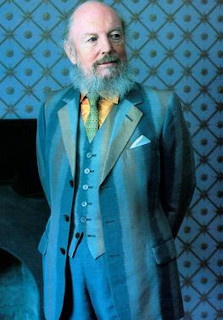
Garech Domnagh Browne, art collector and notable patron of Irish arts and traditional Irish music, is born in Chapelizod, Dublin on June 25, 1939. He is often known by the Irish designation of his name, Garech de Brún, or alternatively Garech a Brún, especially in Ireland.

Browne is the eldest of the three sons of Dominick Browne, 4th Baron Oranmore and Browne and his second wife, Oonagh Guinness, daughter of Arthur Ernest Guinness and wealthy heiress to the Guinness fortune. His father has the rare distinction of sitting in the House of Lords for 72 years, until his death at the age of 100 in August 2002, without ever speaking in a debate.

As both his parents are married three times, Browne has two stepmothers and two stepfathers, as well as a number of older half-siblings. His only full brother, Tara Browne, is a young London socialite whose death at the age of 21 in a car crash in London’s West End helps inspire John Lennon when writing the song “A Day in the Life” with Paul McCartney. Browne is educated at Institut Le Rosey, Switzerland. Although a member of the extended Guinness family, he takes no active part in its brewing business.

When in Ireland, Browne lives at Luggala, set deep in the Wicklow Mountains in County Wicklow. The house, which he inherited from his mother, has been variously described as a castle or hunting lodge of large proportions. He once states he would rather have not been born, calling it “frightful to bring anyone into this world.”

Browne is a leading proponent for the revival and preservation of traditional Irish music through his record label Claddagh Records which he founds with others in 1959. His former home, Woodtown Manor near Dublin, is for many years a welcoming place for Irish poets, writers and musicians. The folk-pop group Clannad makes many recordings of their music there.

Browne is instrumental in the formation of the traditional Irish folk group The Chieftains. In 1962, after setting up Claddagh Records, he asks his friend, the famed uileann piper Paddy Moloney, to form a group for a one-off album. Moloney responds with the first line-up for the band, which goes on to achieve international commercial success.

Browne is interviewed at length for the Grace Notes traditional music programme on RTÉ lyric fm on 18 March 2010. He is a friend and patron of British artist Francis Bacon and in January 2017 is featured in the BBC documentary Francis Bacon: A Brush with Violence.

Garech Browne dies at the age of 78 in London on March 10, 2018. In his will and testament, he bequeaths to the city of Galway the granite remains of a medieval “bow gate.” The location of this gate, which had otherwise gone unmentioned by Browne, remains a mystery for over a year following his death. It is discovered on the grounds of the Luggala estate in 2019. According to a Galway historian, the gate may have formed part of the city’s defences in the 17th century, and was later removed from the city by Browne’s father, when it was probably taken to the Browne family home at Castle MacGarrett, just outside Claremorris in County Mayo. The gate is one of a number of items left to the Irish State by Browne.


Leave a comment

George Mitchell begins Northern Ireland Talks with Sinn Féin

george-mitchell-in-belfast

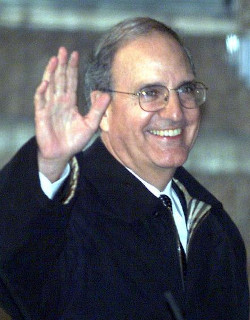
On June 10, 1996, former U.S. Senator George Mitchell begins Northern Ireland talks with Sinn Féin, who are blocked by the lack of an Irish Republican Army (IRA) ceasefire from what are supposed to be all-party talks on Northern Ireland’s future.

Pressure is coming from all sides on the Irish Republican Army to give peace a chance in Northern Ireland. Governments in London, Dublin, and Washington, D.C., as well as the vast majority of Northern Ireland’s citizens, are calling on the paramilitary group to call a new ceasefire. Even Gerry Adams, president of Sinn Féin, the IRA’s political wing, appeals to the IRA to reconsider its refusal to renew the ceasefire it broke in February with a bomb blast in London.

An opinion poll in the Dublin-based Sunday Tribune shows 97 percent of people, including 84 percent of Sinn Féin voters, want the IRA to renew its ceasefire.

The talks aim to reconcile two main political traditions in Northern Ireland, Protestant-backed unionism, which wants the province to stay part of the United Kingdom, and Catholic-backed Irish nationalism, which seeks to unite Northern Ireland with the Republic of Ireland.

Earlier in the year Senator Mitchell reported to the British government on the prospects for peace in Northern Ireland and drew up six principles which, if fulfilled by all the parties, would produce a lasting political settlement.

As internal and international pressure on the IRA mounts, politicians from the Ulster Unionist Party (UUP), a moderate party representing the province’s Protestants, shows signs of drifting apart on whether Sinn Féin should be allowed to participate. Even if the IRA announces “a ceasefire of convenience,” Sinn Féin should be barred from attending, says Peter Robinson, deputy leader of the radical Democratic Unionist Party (DUP).

Furthermore, the choice of Mitchell to head the talks makes some Protestants uneasy. Earlier, DUP leader Ian Paisley says Mitchell could not be trusted as chairman. “He is carrying too much American Irish baggage.”

Yet David Trimble, leader of the larger UUP, says a new IRA ceasefire might “get Sinn Féin to the door.” To be fully admitted to the all-party talks, however, its leadership will have to “commit itself to peace and democracy.” Trimble adds that he has doubts about Mitchell’s objectivity and had sought “certain assurances” before finally agreeing to lead a UUP delegation to the opening round. Mitchell, at an impromptu news conference in Belfast, says he plans to show “fairness and impartiality.”

The attitudes of the two unionist parties appear to reflect concern that the IRA would declare a ceasefire before the talks open, or during the early stages, technically clearing the way for Sinn Féin participation. David Wilshire, a senior Conservative member of Britain’s Parliament, who supports the unionist cause, says that a ceasefire by the IRA now would be a “cynical ploy.” He adds that “the government should not fall for it.”

Sinn Féin leaders, meanwhile, meet on Saturday, June 8, and announced that regardless of the IRA’s intentions, Adams and other Sinn Féin leaders will turn up at the opening session and demand to be admitted. They cite the party’s strong showing at special elections in May to the peace forum at which they obtain 15 percent of the vote and win a strong mandate from Catholic voters in West Belfast.

It is “the British government’s responsibility” to urge the IRA to renew its truce, says Martin McGuinness, Adams’s deputy. Yet Adams himself makes a direct approach to the IRA. This is confirmed by Albert Reynolds, the former Irish Taoiseach. He says that Adams has advised him that he is about to make a new ceasefire appeal to the IRA leadership. “I am now satisfied Gerry Adams and Sinn Féin will seek an early reinstatement of the ceasefire which, of course, has not broken down in Northern Ireland. I see a set of similar elements to those in 1994, which brought about the ceasefire, now coming together. Everyone must now compromise,” Reynolds says.

On June 8, the IRA tells the British Broadcasting Corporation that its military council has called a meeting to examine the agenda for the Northern Ireland talks.

(From:”Hopes for N. Ireland Talks Rely on Squeezing the IRA” by Alexander MacLeod, The Christian Science Monitor, June 10, 1996)


Leave a comment

Birth of Actor Colin Farrell

colin-farrell

Irish actor Colin James Farrell is born on May 31, 1976, in Castleknock, Dublin.

Farrell is educated at St. Brigid’s National School, followed by secondary school at Castleknock College, an exclusive all boys private school and then Gormanston College in County Meath. He unsuccessfully auditions for the Irish musical group Boyzone around this time.

Farrell is inspired to try acting when Henry Thomas‘ performance in E.T. the Extra-Terrestrial moves him to tears. With his brother’s encouragement, he attends the Gaiety School of Acting, dropping out in 1998 when he is cast as Danny Byrne on Ballykissangel, a BBC drama about a young English priest who becomes part of an Irish rural community.

Farrell makes his film debut in the Tim Roth-directed drama The War Zone in 1999 and is discovered by Hollywood when Joel Schumacher casts him as the lead in the war drama Tigerland in 2000. He then stars in Schumacher’s psychological thriller Phone Booth (2003) where he plays a hostage in a New York City phone booth, and the American thrillers S.W.A.T. (2003) and The Recruit (2003), establishing his international box-office appeal. During this time, he also appears in Steven Spielberg‘s science fiction thriller Minority Report (2002) and as the villain Bullseye in the superhero film Daredevil (2003).

After starring in the independent films Intermission (2003) and A Home at the End of the World (2004), Farrell heads Oliver Stone‘s biopic Alexander (2004) and Terrence Malick‘s The New World (2005). Roles in Michael Mann‘s Miami Vice (2006), the adaptation of John Fante‘s Ask the Dust (2006), and Woody Allen‘s Cassandra’s Dream (2007) follow, underscoring his popularity among Hollywood writers and directors. However, it is his role in Martin McDonagh‘s In Bruges (2008) that earns him a Hollywood Foreign Press Association Golden Globe Award for Best Actor – Motion Picture Musical or Comedy.

Farrell stars in the black comedy film Horrible Bosses (2011), for which he receives critical praise, along with the comedy-horror film Fright Night (2011) and the science fiction action film Total Recall (2012), both remakes, and McDonagh’s second feature, the black comedy crime film Seven Psychopaths (2012). He also stars in the Niels Arden Oplev action film Dead Man Down (2013), and as Travers Goff in the period drama Saving Mr. Banks (2013). In 2014, he stars as Peter Lake in the supernatural fable Winter’s Tale, an adaptation of the novel of the same name by Mark Helprin. In 2015, he stars as Detective Ray Velcoro in the second season of HBO‘s True Detective, and also stars in the film The Lobster, for which he is nominated for his second Golden Globe Award for Best Actor – Motion Picture Musical or Comedy. In 2016, he plays Percival Graves in the Harry Potter spin-off film Fantastic Beasts and Where to Find Them.

In December 2005, Farrell checks into a rehabilitation treatment centre for addictions to recreational drugs and painkillers. He speaks about it on the Late Show with David Letterman after coming out of rehab and continues to do so in the years following. “There was an energy that was created,” he says of the time when he was addicted, “a character that was created, that no doubt benefited me. And then there was a stage where it all began to crumble around me.”

In 2007, Farrell joins other celebrities as a spokesman for the Special Olympics World Games in Shanghai, China. He has also lent his support to the anti-bullying campaign Stand Up! organised by the Irish LGBT youth organisation BeLonG To in March 2012. He appears on The Ellen DeGeneres Show two years earlier to increase awareness of the subject. In 2015 he becomes an official Ambassador of the Homeless World Cup which uses street football to inspire homeless people to change their lives.


Leave a comment

Birth of Writer James Plunkett Kelly

james-plunkett

James Plunkett Kelly, Irish writer who writes under the pseudonym of James Plunkett, is born in Dublin on May 21, 1920.

Plunkett is the son of a World War I veteran who was a member of James Larkin‘s Irish Transport and General Workers Union, which had a life-long impact on the young writer. He is educated at Synge Street CBS. He works as a clerk in the Dublin Gas Company and later joins the trade union movement, serving under Larkin between 1946 and 1947.

Plunkett grows up among the Dublin working class and they, along with the petite bourgeoisie and lower intelligentsia, make up the bulk of the dramatis personae of his oeuvre. His best-known works are the novel Strumpet City, set in Dublin in the years leading up to the lockout of 1913 and during the course of the strike, and the short stories in the collection The Trusting and the Maimed. His other works include a radio play on Larkin, who figures prominently in his work.

During the 1960s, Plunkett works as a producer at Telefís Éireann. He wins two Jacob’s Awards, in 1965 and 1969, for his TV productions. In 1971 he writes and presents “Inis Fail – Isle of Destiny,” his very personal appreciation of Ireland. It is the final episode of the BBC series Bird’s Eye View, shot entirely from a helicopter, and the first co-production between the BBC and RTÉ. He is a member of Aosdána.

Plunkett dies in a Dublin nursing home at the age of 83 on May 28, 2003. A second-year class, “2 Plunkett” at Synge Street CBS, is named in his honour.


Leave a comment

Birth of Gloria Hunniford, Television & Radio Presenter

gloria-hunniford

Mary Winifred Gloria Hunniford, Northern IrishNorthern Irish television and radio presenter and singer on programmes on the BBC and ITV, is born into a Protestant family on April 10, 1940 in Portadown, County Armagh. Her father is a member of the Orange Order.

Hunniford starts as a BBC production assistant in Belfast and a local radio broadcaster. In the 1970s and 1980s, she is the presenter of Good Evening Ulster and on the ITV Network Sunday Sunday and We Love TV. She also appears on Lily Savage’s Blankety Blank and on Call My Bluff. She is a regular reporter on This Morning and The One Show.

From 1998 to 2003, Hunniford presents Open House with Gloria Hunniford for Channel 5. In August 2010, she appears as a panellist/presenter on the ITV daytime programme 3@Three. Since 2009, she has co-presented Rip Off Britain, a consumer complaints programme on BBC One with Angela Rippon and, for the first two series, Jennie Bond, and then, for the third series, with Julia Somerville replacing Bond. Together, the trio of Hunniford, Rippon and Somerville also present Charlie’s Consumer Angels.

In 2012, Hunniford presents the BBC One documentary series Doorstep Crime 999. From September 8, 2014, she is a presenter on ITV chat show Loose Women. She is previously a guest panelist in 2003. From September 2014 to July 2015, she appears on the panel in 31 episodes of the programme, three of which she anchors. As of April 6, 2017, she has appeared 93 times, four of which she anchors and two where she is a guest panelist.

In 2014, Hunniford presents the first series of the BBC One programme Home Away from Home. Gyles Brandreth presents the second series. She also presents three series of Food: Truth or Scare with Chris Bavin from 2016.

Hunniford makes a health and exercise video called Fit for Life and also appears on the UK music video of the Muppets cover to “She Drives me Crazy.” She has written an Irish Cookery Book with her sister Lena entitled Gloria Hunniford’s Family Cookbook.

On The Alan Titchmarsh Show on May 6, 2011, Hunniford reveals her support for David Cameron‘s Conservative-led coalition government, describing herself as “a bit of a David Cameron fan,” although she criticises the government’s decision to continue giving aid to Pakistan when it is making cuts in the UK.

In August 2014, Hunniford is one of 200 public figures who are signatories to a letter to The Guardian opposing Scottish independence in the run-up to September’s referendum on that issue.