A statement is read out from Dublin after the previous night’s meeting of the executive of the Northern Republican Clubs, a political movement allied to the IRA. It states, “The overwhelming desire of the great majority of all the people of the north is for an end to military actions by all sides.”
It goes on to say that a suspension of activities will be a chance to prevent all-out civil war in Ulster. The group insists it will continue a campaign of civil disobedience and the political struggle until its demands are met, namely:
The Royal Ulster Constabulary (RUC) and British Army are the first to benefit from such a ceasefire as they have been the primary targets of the IRA. Residents of Belfast in particular have been worn down by the four-year campaign of violence and this news is very welcome there.
Father Hugh O’Neill, who leads a Londonderry peace movement, says, “Please God, everyone will now sit down and begin to talk.”
Trimble has vowed to quit as head of the Stormont Executive, where his party shares power with Sinn Féin, if the Irish Republican Party (IRA) has not started to get rid of its guns by July 1. Paisley, however, has accused Trimble and British Prime MinisterTony Blair of breaking their promises to the people of Northern Ireland by allowing into government a party linked to a terrorist group, without prior arms decommissioning.
While Clinton is no longer the most powerful man in the world, his charisma and his past efforts to keep the peace process moving are still appreciated by many. He receives Northern Ireland political leaders countless times at the White House and gives support and encouragement by phone during difficult periods of the peace talks.
The leader of the Social Democratic and Labour Party (SDLP), John Hume, who welcomes Clinton to Derry, says the former president has done a great deal of good for all the people of Ireland. But the Democratic Unionist Party (DUP) deputy leader, Peter Robinson, claims that Clinton and Blair could have a negative effect on Trimble’s campaign. “As a unionist, I wouldn’t like to be sitting next to either of them just before an election,” he said. “Blair’s name is associated with the now-broken pledges he wrote on a board here just before the [Good Friday agreement] referendum, so for him to come over and moralise now won’t do much good. And Clinton is so disgraced and powerless that, while he might prop up the nationalist SDLP and Sinn Féin vote, he’ll have no impact on unionists voters.”
(Pictured: Bill Clinton and SDLP leader John Hume at public address at Guildhall Square in Derry. Sinn Féin leader Gerry Adams and Chelsea Clinton are in the second row.)
Cahill is educated at St. Mary’s Christian Brothers’ Grammar School. At age 14 he leaves school to assist in his father’s print shop. Soon after, he joins the Catholic Young Men’s Society, which campaigns on social issues with a focus on eradicating moneylenders from working-class areas of Belfast, as they often charge usurious interest rates. At the age of seventeen, he joins Na Fianna Éireann, a republican-orientated Scouting movement. Na Fianna Eireann is regarded as the “Junior Irish Republican Army.”
Cahill joins the local Clonard-based ‘C’ Company of the Belfast Brigade of the Irish Republican Army in 1938. Four years later, during an anniversary march by the IRA for the Easter Rising, he gets into a shootout with five other IRA men against four Royal Ulster Constabulary (RUC) officers. Several men are wounded, and Constable Patrick Murphy is killed. Cahill and four of the other men spend time in prison in Belfast. The IRA declares a formal ceasefire in 1945. Afterwards, republican prisoners begin to be released. Cahill is released in October 1949.
The IRA launches a new campaign in 1956. The IRA border campaign attacks ten targets in six counties, damaging bridges, courthouses and border roads. By 1957, three RUC officers and seven republicans have been killed during the campaign. Cahill is arrested and interned in January 1957 with several other republicans. He is released from internment in April 1961. Following his release from prison, he is disappointed at the direction of the IRA and resigns from the organisation around 1962.
In 1969, Cahill is a key figure in the founding of the Provisional Irish Republican Army. During his time in the Provisional IRA, he helps import weapons and raise financial support. He serves as the chief of staff in 1972 but is arrested the following year when a ship importing weapons was intercepted.
After his release, Cahill continues to serve on the IRA Army Council and leads all financial dealings for Sinn Féin. In the 1990s, the IRA and Sinn Féin begin to work on seeking peace. Cahill serves on the council that calls a cessation on July 21, 1996. He attends several of the talks that finally lead to the Good Friday Agreement on April 10, 1998. Shortly after the agreement is made, he resigns as treasurer of Sinn Féin. To honour his service, he is made honorary Sinn Féin Vice-President for life. He serves the Republican movement in Ireland all his life, as one of the longest-serving political activists in Ireland of any political party.
Cahill dies at age 84 in Belfast on July 23, 2004. He had been diagnosed with asbestosis, which he probably developed while working at the Harland & Wolff shipyards in his twenties. He and several other former shipyard workers later sue the company for their exposure to the dangerous substances but only win minimal compensation.
The night before the bombing, snipers from the UVF West Belfast Brigade take up position along the second floor of an abandoned row of flats at the edge of the Ulster Protestant Springmartin estate. The flats overlooked the Catholic Ballymurphy estate. Rifles, mostly World War II stock, are ferried to the area from dumps in the Shankill Road.
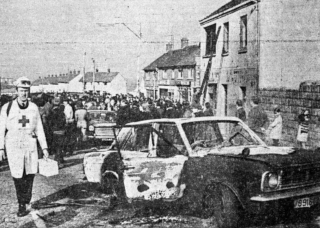
The violence begins shortly after 5:00 PM on Saturday, May 13, 1972, when a car bomb, planted by Ulster loyalists, explodes without warning outside the crowded Kelly’s Bar, at the junction of the Springfield Road and Whiterock Road. The pub is in a mainly Irish Catholic and nationalist area of Ballymurphy and most of its customers are from the area. At the time of the blast, the pub is crowded with men watching an association football match between England and West Germany on colour television. Following the blast, the UVF snipers open fire on the survivors. This begins the worst fighting in Northern Ireland since the suspension of the Parliament of Northern Ireland and the imposition of direct rule from London.
Sixty-three people are injured, eight of them seriously. John Moran, age 19, who had been working at Kelly’s as a part-time barman, dies of his injuries on May 23.
For the rest of the night and throughout the next day, local IRA units fight gun battles with both the UVF and British Army. Most of the fighting takes place along the interface between the Catholic Ballymurphy and Ulster Protestant Springmartin housing estates, and the British Army base that sits between them. Five civilians (four Catholics, one Protestant), a British soldier and a member of the IRA Youth Section are killed in the violence. Four of the dead are teenagers.
At first, the British Army claims that the blast had been an “accident” caused by a Provisional IRA bomb. The Secretary of State for Northern Ireland, William Whitelaw, tells the House of Commons on May 18 that the blast is caused by a Provisional IRA bomb that exploded prematurely. However, locals suspect that the loyalist Ulster Defence Association (UDA) had planted the bomb. Republican sources say that IRA volunteers would not risk storing such a large number of explosives in such a crowded pub. It later emerges that the bomb had indeed been planted by loyalists.
A memorial plaque on the site of the former pub names three members of staff who lost their lives as a result of the bomb and the gun battles that followed. It reads:
This plaque marks the spot where Kelly’s Bar once stood and here on 13th May 1972 a no warning Loyalist car bomb exploded. As a result, 66 people were injured and three innocent members of staff of Kelly’s Bar lost their lives. They were: Tommy McIlroy (died 13th May 1972) John Moran (died from his injuries 23rd May 1972) Gerard Clarke (died from his injuries 6th September 1989) Ar dheis Dé go raibh a namacha”
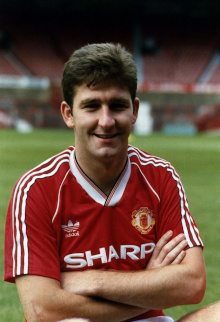
Whiteside grows up on Shankill Road, and because of his aggressive, physical playing style he is later nicknamed the “Shankill Skinhead” by Manchester United supporters. The family later moves to 10 Danube Street. He remains relatively unscathed by The Troubles as his Protestant parents keep a firm watch on their children to ensure that they do not stray far from home and that none of them become involved with Ulster loyalism. At around seven years of age, he joins the Boys’ Brigade, and quickly shows his natural talent for football, scoring ten goals in a game against boys almost twice his age. He is educated at Cairnmartin High School and becomes famous in the Shankill area as a footballing prodigy by the age of eleven.
Whiteside is said to have been discovered by Ipswich Town scout Jim Rodgers, who is told by manager Bobby Robson to wait until Whiteside grows older. Instead, it is Manchester United’s 80-year-old Ulster scout Bob Bishop, who previously unearthed Belfast-born George Best and Sammy McIlroy for the club, who first offers him a trial at an English club. He finds that he has been offered schoolboy terms at the club during a school trip to the United States, on which he and his classmates meet PresidentJimmy Carter in the Oval Office, a rare and extraordinary occasion for children from a disadvantaged background.
Whiteside signs professional forms in 1982 at the age of 17 and quickly becomes a key member of the Manchester United club. He scores 68 goals in 278 league and cup appearances for the club over the next seven years, picking up two FA Cup winners medals in 1983 and 1985, as well as playing in the 1982 FA Youth Cup final, the 1983 League Cup final, and the FA Charity Shield in 1983.
Whiteside remains with United until July 1989, when he is sold to Everton F.C. for £600,000. However intense running sessions run by coach Mick Lyons take their toll on his right knee, and on September 20, 1990, he takes a knock in a practice match, which requires him to have another operation on his right knee. After the return of Howard Kendall as manager in November 1990, he manages to appear in a few reserve team games, but this only delays the inevitable, and he is forced to retire from the game at the age of 26 in June 1991.
Upon retirement, Whiteside studies to become a podiatrist, graduating with a degree from the University of Salford, and serves Northwich Victoria F.C. as their assistant manager/physio from October 1991 until March 1992. He quits the role as he does not enjoy the amount of time spent travelling between games. He instead became an after-dinner speaker and also works for the Professional Footballers’ Association, while taking a postgraduate course at Manchester Metropolitan University. He later takes up private practice as a podiatrist in Manchester. Since 1994, he has also worked at the corporate hospitality department at Old Trafford. In 2003, he releases a book entitled My Memories of Manchester United. With the help of writer Rob Bagchi, he releases his autobiography entitled Determined in August 2007, published by Headline Publishing Group, and with a foreword by actor James Nesbitt.
Whiteside holds records as the youngest player to take part in a World Cup, the youngest player to score in a League Cup and FA Cup final, and the youngest player to score a senior goal for Manchester United. Winning 38 caps for Northern Ireland, he plays at the 1982 and 1986 World Cups and also helps his country to win the last ever British Home Championship in 1983–1984.
Born in 1958, Nugent’s adolescence comes at a time when Northern Ireland is exploding into turmoil. On March 20, 1973, at the age of 15, he is standing with a friend on the corner of Merrion Street and Grosvenor Road when a car pulls up beside them and one of the occupants asks them for directions. Another occupant of the vehicle then opens fire with a submachine gun. Nugent is seriously wounded after being shot eight times in the chest, arms and back by the Ulster loyalists in the car. His friend, Bernard McErlean, aged 16, is killed.
At some point afterwards, Nugent joins the Provisional IRA. At the age of sixteen he is arrested by the British Army and spends five months on remand in Crumlin Road Gaol. When he is eventually tried, the case against him is withdrawn and he is released. He becomes an active volunteer until his arrest and internment, without trial, on February 9, 1975.
Nugent spends nine months in Cage 4 at the Long Kesh Detention Centre until November 12, 1975. He is arrested and imprisoned again on May 12, 1976, following the hijacking of a bus. On September 14, 1976, he is sentenced to three years and becomes the first Republican prisoner convicted since the withdrawal of Special Category Status for those convicted through juryless courts, due to the new British policy of ‘criminalisation’ introduced that March. Among other things, this change in policy means convicted paramilitaries can no longer wear their own clothes. Viewing himself as a political prisoner and not a criminal, he refuses to wear the uniform saying the prison guards would have to “…nail it to my back.” This begins the blanket protest.
Nugent is soon joined by Jackie McMullan, the next prisoner to don the blanket, followed by six more Irish republican prisoners from the Beechmount area of Belfast. By Christmas 1976 the number of participants has risen to over forty prisoners. Most incoming republican prisoners emulate Nugent, and this starts five years of prison protests in pursuit of political status, which culminates in the 1981 Irish hunger strike and the death of eleven, including seven IRA and three Irish National Liberation Army prisoners.
Nugent, the father of four, is found dead of a heart attack at his home in Anderstown, Belfast on May 4, 2000.
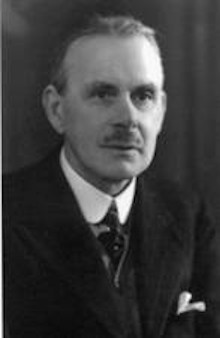
Andrews is born in Comber, County Down, on July 17, 1871, the eldest child in the family of four sons and one daughter of Thomas Andrews, flax spinner, and his wife Eliza Pirrie, a sister of William Pirrie, 1st Viscount Pirrie, chairman of Harland & Wolff. He is named after his maternal great-uncle, John Miller of Comber (1795–1883). As a young man, with his parents and family, he is a committed and active member of the Non-subscribing Presbyterian Church of Ireland. He regularly attends Sunday worship in the church built on land donated by his great-grandfather James Andrews in his home town Comber.
In 1902 Andrews marries Jessie Ormrod, eldest daughter of Bolton stockbroker Joseph Ormrod at Rivington Unitarian Chapel, Rivington, near Chorley, Lancashire, England. They have one son and two daughters. His younger brother, Sir James, marries Jessie’s sister.
In April 1943 backbench dissent forces him from office. He is replaced as Prime Minister by Sir Basil Brooke. Andrews remains, however, the recognised leader of the UUP for three more years. Five years later he becomes the Grand Master of the Orange Order. Throughout his life he is deeply involved in the Orange Order. He holds the positions of Grand Master of County Down from 1941 and Grand Master of Ireland (1948–1954). In 1949 he is appointed Imperial Grand Master of the Grand Orange Council of the World.
From 1949, he is the last parliamentary survivor of the original 1921 Northern Ireland Parliament, and as such is recognised as the Father of the House. He is the only Prime Minister of Northern Ireland not to have been granted a peerage. His predecessor and successor received hereditary viscountcies, and later prime ministers are granted life peerages.
Andrews serves on the Comber Congregational Committee from 1896 until his death, holding the position of Chairman from 1935 onward. He dies in Comber on August 5, 1956 and is buried in the small graveyard adjoining the Non-subscribing Presbyterian Church of Ireland.
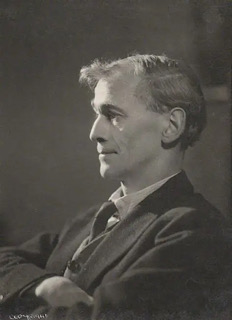
Lynd is born to Robert John Lynd, a Presbyterian minister, and Sarah Rentoul Lynd, the second of seven children. His paternal great-grandfather emigrated from Scotland to Ireland. He is educated at Royal Belfast Academical Institution and Queen’s University Belfast. His father serves a term as Presbyterian Church Moderator, but he is just one of a long line of Presbyterian clergy in the family.
Lynd marries the writer Sylvia Dryhurst on April 21, 1909. They meet at Gaelic League meetings in London. Their daughters Máire and Sigle become close friends of Isaiah Berlin. Sigle’s son, born in 1941, is artist Tim Wheeler. In March 1924, they move to what is to be their long-term married home, the elegant Regency house of 5 Keats Grove in the leafy suburb of Hampstead in northwest London. The house had been lived in by various members of Sylvia’s family.
The Lynds are literary hosts, in the group including J. B. Priestley. They are on good terms also with Hugh Walpole. Priestley, Walpole and Sylvia Lynd are founding committee members of the Book Society. Irish guests include James Joyce and James Stephens. On one occasion reported by Victor Gollancz in Reminiscences of Affection, Joyce intones Anna Livia Plurabelle to his own piano accompaniment. Joyce and his wife Nora Barnacle hold their wedding lunch at the Lynds’ house after getting married at Hampstead Town Hall on July 4, 1931.
Lynd uses the pseudonym Y.Y. in writing for the New Statesman. According to C. H. Rolph‘s Kingsley, Lynd’s weekly essay, which runs from 1913 to 1945, is “irreplaceable.” In 1941, editor Kingsley Martin decides to alternate it with pieces by James Bridie on Ireland, but the experiment is not at all a success.
Lynd’s political views are at a certain point radicalised by his experience of how Ulster and Home Rule develop in the 1912–1914 period. He is appalled at the threat of the use of violence to deliver Ulster from Home Rule and the later decision to postpone the implementation of the Third Home Rule Bill. He later writes, “Then came August 1914 and England began a war for the freedom of small nations by postponing the freedom of the only small nation in Europe which it was within her power to liberate with the stroke of a pen.”
Lynd becomes fluent in the Irish language and is a Gaelic League member. As a Sinn Féin activist, he uses the name Robiard Ó Flionn/Roibeard Ua Flionn. He dies in Hampstead, London on October 6, 1949. He is buried in Belfast City Cemetery.
Hunniford starts as a BBC production assistant in Belfast and a local radio broadcaster. In the 1970s and 1980s, she is the presenter of Good Evening Ulster and on the ITV Network Sunday Sunday and We Love TV. She also appears on Lily Savage’s Blankety Blank and on Call My Bluff. She is a regular reporter on This Morning and The One Show.
From 1998 to 2003, Hunniford presents Open House with Gloria Hunniford for Channel 5. In August 2010, she appears as a panellist/presenter on the ITV daytime programme 3@Three. Since 2009, she has co-presented Rip Off Britain, a consumer complaints programme on BBC One with Angela Rippon and, for the first two series, Jennie Bond, and then, for the third series, with Julia Somerville replacing Bond. Together, the trio of Hunniford, Rippon and Somerville also present Charlie’s Consumer Angels.
In 2012, Hunniford presents the BBC One documentary series Doorstep Crime 999. From September 8, 2014, she is a presenter on ITV chat show Loose Women. She is previously a guest panelist in 2003. From September 2014 to July 2015, she appears on the panel in 31 episodes of the programme, three of which she anchors. As of April 6, 2017, she has appeared 93 times, four of which she anchors and two where she is a guest panelist.
In 2014, Hunniford presents the first series of the BBC One programme Home Away from Home. Gyles Brandreth presents the second series. She also presents three series of Food: Truth or Scare with Chris Bavin from 2016.
Hunniford makes a health and exercise video called Fit for Life and also appears on the UK music video of the Muppets cover to “She Drives me Crazy.” She has written an Irish Cookery Book with her sister Lena entitled Gloria Hunniford’s Family Cookbook.
On The Alan Titchmarsh Show on May 6, 2011, Hunniford reveals her support for David Cameron‘s Conservative-led coalition government, describing herself as “a bit of a David Cameron fan,” although she criticises the government’s decision to continue giving aid to Pakistan when it is making cuts in the UK.
In August 2014, Hunniford is one of 200 public figures who are signatories to a letter to The Guardian opposing Scottish independence in the run-up to September’s referendum on that issue.
Since Northern Ireland’s creation in 1922, the Catholic minority suffers from varying degrees of discrimination from the Protestant and Unionist majority. Many nationalist historians regard the ethos of Northern Ireland as unambiguously sectarian, however, academic and author Senia Paseta posits that discrimination was never as calculated as republicans maintained nor as fictional as unionists claimed. In fact, laws against religious discrimination are enshrined in the Government of Ireland Act 1920, Northern Ireland’s constitution. No government of Northern Ireland, even if they want to, can create laws which overtly discriminated against any religious body of peoples.
The genesis of NICRA lay in a meeting in Maghera in August 1966 between the Wolfe Tone Societies which is attended by Cathal Goulding, then chief of staff of the Irish Republican Army (IRA). During its formation, NICRA’s membership extends to trade unionists, communists, liberals, socialists, with republicans eventually constituting five of the thirteen members of its executive council. The organisation initially also has some unionists, with Young Unionist Robin Cole taking a position on its executive council. Official Sinn Féin and Official Irish Republican Army influence over NICRA grows in later years, but only as the latter’s importance declines, when violence escalated between late 1969 until 1972, when NICRA ceased its work.
Events escalate in Northern Ireland until August 1969, when the annual Apprentice Boys of Derry march is attacked as it marches through the city’s walls and past a perimeter with the nationalist Bogside. Initially some loyalist supporters throw pennies down from the walls onto Catholics in the Bogside. Catholics then throw nails and stones at loyalists leading to an intense confrontation. The Royal Ulster Constabulary (RUC) intervenes, and a three-day riot known as the Battle of the Bogside ensues. Rioting quickly spreads throughout nationalist areas in Northern Ireland, where at least seven are killed and hundreds wounded. Thousands of Catholics are driven from their homes by loyalists. These events are often seen as the start of the Troubles.
In a subsequent official inquiry, Lord Leslie Scarman concludes, “We are satisfied that the spread of the disturbances [in Derry in August 1969] owed much to a deliberate decision of some minority groups to relieve police pressure on the rioters in Londonderry. Amongst these groups must be included NICRA, whose executive decided to organise demonstrators in the province so as to prevent reinforcement of the police in Londonderry.” In December 1969 and January 1970, both Sinn Féin and the IRA split into “Official” and “Provisional” wings, with the “Official” wings retaining influence in NICRA.
The British government introduces internment on August 9, 1971, at the request of Northern Ireland Prime MinisterBrian Faulkner. The British Army, in co-operation with the RUC, intern 342 people. One hundred sixteen of those interned are innocent of involvement with the IRA and are quickly released.
The introduction of internment is not a closely guarded secret, with newspaper editorials appearing and discussion on television. The IRA goes underground or flees across the border. As a result, fewer than 100 arrests are from the IRA. By this stage, support for NICRA begins to wane, however NICRA continues to organise anti-internment marches. In Derry on January 30, 1972, NICRA takes part in a mass anti-internment march which had also been banned. Fourteen unarmed demonstrators are shot and killed by British troops during the march which becomes known as Bloody Sunday.

 The Official Irish Republican Army (IRA) announces a ceasefire on May 29, 1972. This marks the end of the Official IRA’s paramilitary campaign. The organization, however, reserves the right of self-defence against attacks by the British Army and sectarian groups. The Provisional Irish Republican Army dismisses the truce as having “little effect” on the situation.




 seamus dubhghaill