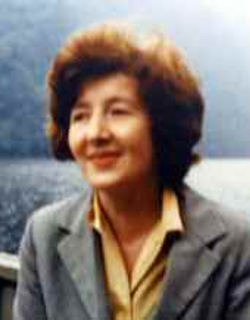
Daly is a militant member of the Prisoners’ Relatives Action Committee and the national Hunger Strike Committee. In that campaign, she works with Seamus Costello and soon joins him in the Irish Republican Socialist Party (IRSP) and the Irish National Liberation Army (INLA). After Costello is assassinated, she becomes chairperson, leading the party for two years. During this time, she and her husband are instrumental in opposing Sinn Féin‘s drift towards federalism.
On June 26, 1980, Daly is shot dead at her home in the Andersonstown area of west Belfast. At the time of her assassination, she is in charge of the IRSP prisoners’ welfare.
According to reports in The Irish Times, members of the Ulster Defence Association gain entry to her home with the intention of killing her husband, who is also a republican activist. Daly is captured and tied up while they wait for him to return home. However, he is in Dublin at the time and so does not arrive. After a considerable time, the UDA men decide to kill Daly instead. Muffling the sound of the gun with a cushion, they shoot her in the head and cut the phone lines before fleeing. Her body is discovered when her ten-year-old daughter arrives home from school.
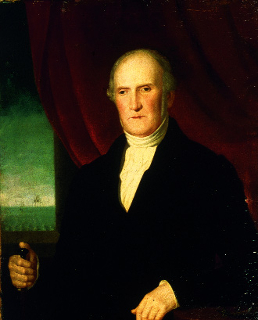
Mitchell is born in Dublin on April 13, 1780. His family moves to Belfast while he is a child. He receives his formal education at Belfast Academy where he excels in mathematics. He begins to notice that his eyesight is failing. By the age of 16 he can no longer read and by the age of 22 he is completely blind.
Undeterred, Mitchell borrows £100 and starts up a successful business making bricks in the Ballymacarrett area of Belfast. This enables him to start building his own houses and he completes approximately twenty in the city. It is during this period that his talent for inventing comes to the fore and he fabricates several machines for use in brickmaking and the building trade.
Mitchell patents the screw-pile in 1833, for which he later gains some fame. The screw-pile is used for the erection of lighthouses and other structures on mudbanks and shifting sands, including bridges and piers. His designs and methods are employed all over the world from the Portland, Mainebreakwater to bridges in Bombay. Initially it is used for the construction of lighthouses on Maplin Sands in the Thames Estuary in 1838, at Fleetwood Lancashire (UK) Morecambe Bay in 1839 and at Belfast Lough where his lighthouse is finished in July 1844.
In May 1851 Mitchell moves to Cobh to lay the foundation for the Spit Bank Lighthouse. The success of these undertakings leads to the use of his invention on the breakwater at Portland, the viaduct and bridges on the Bombay, Baroda and Central India Railway and a broad system of Indian telegraphs.
Alexander Mitchell dies at Glen Devis near Belfast on June 25, 1868, and is buried in the old Clifton graveyard in Belfast. His wife and daughter predecease him.
On June 16, 1994, high-ranking UVF Commander volunteer Trevor King is standing on the Shankill Road about one hundred yards from “The Eagle,” the UVF’s Belfast GHQ, talking to fellow UVF members David Hamilton and Colin Craig. A car drives past them and as it does so Irish National Liberation Army (INLA) gunmen inside the vehicle open fire on the three men. The car is later found burning close to Divis Tower.
David Lister and Hugh Jordan claim that Gino Gallagher, who is himself shot dead in 1996 during an internal dispute, is the main gunman in the attack. However, Henry McDonald and Jack Holland say that Gallagher is inside the car, which is scouting the area for UVF members, and not one of the gunmen.
Colin Craig is killed on the spot. King and David Hamilton lay in the street, seriously wounded as panic and chaos erupt on the Shankill in the wake of the shooting. Presbyterian minister Roy Magee is in “The Eagle” discussing an upcoming Combined Loyalist Military Command (CLMC) meeting and the possibility of a loyalist ceasefire with the UVF Brigade Staff when the attack takes place. He and the others race out of the building after hearing the gunfire.
King is rushed to the hospital where he is put on a life-support machine. The shooting has left him paralysed from the neck down. He dies on July 9 with Reverend Magee at his bedside. According to Magee, King himself makes the decision to turn off the machine.
The killings are a blow for the Northern Ireland peace process and a morale boost for the INLA. The attack is the INLA’s most notorious since the Droppin Well bombing in 1982 which killed seventeen people, eleven British soldiers and 6 civilians.
The following day, the UVF launches two retaliatory attacks. In the first, UVF members shoot dead a Catholic civilian taxi driver in Carrickfergus. In the second, they shoot dead two Protestant civilians in Newtownabbey, whom they believe to be Catholics. Two days after the killings the UVF decide to launch another revenge attack when they kill six Catholic civilians in a bar while they are watching the Ireland vs. Italy 1994 FIFA World Cup game opener in what becomes known as the Loughinisland massacre. The tit-for-tat attacks continue during the spring and summer of 1994 until the Provisional Irish Republican Army ceasefire of August 31, 1994, and the Combined Loyalist Military Command ceasefire in October. The attacks on the Shankill are the INLA’s deadliest attacks of the 1990s.
When interviewed for Boston College for research on the conflict, Progressive Unionist Party leader David Ervine suggests the INLA might have been working in cahoots with the Provisional IRA in targeting prominent Loyalists, as the month after the Provisional IRA kill three leading Ulster Defence Association (UDA) men.
(Pictured: Trevor King mural, Disraeli Street, May 2012)
The hull of the RMS Titanic, is launched at 12:15 PM on May 31, 1911 at the Harland & Wolff shipyard in Belfast, Northern Ireland in the presence of Lord William Pirrie, J. Pierpoint Morgan, J. Bruce Ismay and 100,000 onlookers. Twenty-two tons of soap and tallow are spread on the slipway to lubricate the ship’s passage into the River Lagan. In keeping with the White Star Line‘s traditional policy, the ship is not formally named or christened with champagne. The ship is towed to a fitting-out berth where, over the course of the next year, her engines, funnels and superstructure are installed and her interior is fitted out.
The construction of RMS Olympic and RMS Titanic take place virtually in parallel. The sheer size of the RMS Titanic and her sister ships pose a major engineering challenge for Harland and Wolff. No shipbuilder has ever before attempted to construct vessels this size. RMS Titanic‘s keel is laid down on March 31, 1909. The 2,000 hull plates are single pieces of rolled steel plate, mostly up to 6 feet wide and 30 feet long and weigh between 2.5 and 3 tons.
Some of the last items to be fitted on RMS Titanic before the ship’s launch are her two side anchors and one centre anchor. The anchors themselves are a challenge to make with the centre anchor being the largest ever forged by hand and weighing nearly 16 tons. Twenty Clydesdale draught horses are needed to haul the centre anchor by wagon from the N. Hingley & Sons Ltd. forge shop in Netherton, near Dudley, United Kingdom to the Dudley railway station two miles away. From there it is shipped by rail to Fleetwood in Lancashire before being loaded aboard a ship and sent to Belfast.
The work of constructing the ships is difficult and dangerous. For the 15,000 men who work at Harland and Wolff at the time, safety precautions are rudimentary at best. Much of the work is dangerous and is carried out without any safety equipment like hard hats or hand guards on machinery. As a result, deaths and injuries are to be expected. During RMS Titanic‘s construction, 246 injuries are recorded, 28 of them “severe,” such as arms severed by machines or legs crushed under falling pieces of steel. Six people die on the ship herself while she is being constructed and fitted out, and another two die in the shipyard workshops and sheds. Just before the launch a worker is killed when a piece of wood falls on him.
(Pictured: Launch of the hull of the RMS Titanic with an unfinished superstructure in 1911)
Fagan is the eldest of the five children of Sir James Fagan, a surgeon at the Belfast Royal Hospital and an inspector of Irish reformatories, and Mary Catherine Fagan, née Hughes. He attends Clongowes Wood College near Clane, County Kildare and then moves to England. Initially interested in a career in the church, he begins studying law at Trinity College, Oxford in 1892 but leaves in 1893 without a degree. He works for a time in the Indian Civil Service but abandons this career for the stage.
Fagan begins his career as an actor with the company of Sir Frank Benson for two years, then joining, from 1895 to 1899, the company of Herbert Beerbohm Tree at Her Majesty’s Theatre. There he appears in Katherine and Petruchio, A Man’s Shadow, Julius Caesar, The Musketeers and Carnac Sahib. He starts writing plays in 1899, with The Rebels, for the time forsaking acting. In 1913 he returns to the stage touring as the Rt Hon. Denzil Trevena in his own play, The Earth. He next writes The Fourth of August (1914) and Doctor O’Toole (1917). In 1917 he produces his first play, his own adaptation of the Brieux play Damaged Goods at St. Martin’s Theatre. He next produces The Wonder Tales and The Little Brother at the Ambassadors Theatre in London.
Fagan takes over the Court Theatre in London’s Sloane Square as a Shakespearean playhouse in 1920. The Times calls his revivals of Twelfth Night, The Merchant of Venice, Henry the Fourth (Part Two) and A Midsummer Night’s Dream “memorable for their freshness, sanity and distinction, and [deserving of] a place in theatrical history.” At the Court, he revives Damaged Goods and, in 1921, with the assistance of the author, produces George Bernard Shaw‘s Heartbreak House, with Edith Evans as “Lady Utterwood.” In 1922 he produces his play The Wheel at the Apollo Theatre. Its success allows him to repay his creditors. Even more successful is his adaptation of Treasure Island at the Savoy Theatre with Arthur Bourchier as “Long John Silver,” which opens December 26, 1922. It is revived every Christmas until the outbreak of World War II.
Fagan is persuaded by Jane Ellis, the actress who with Alfred Ballard founds the Oxford Playhouse “Red Barn” in 1923, to be its first manager. His first production at the Oxford Playhouse is a restaging of Shaw’s Heartbreak House and numbered Shaw among the audience. He produces The Cherry Orchard, at various theatres, to favourable reviews, popularising Anton Chekhov in Britain. From November 16, 1925, with Dennis Eadie, he presents Juno and the Paycock at the Royalty Theatre, thus bringing Seán O’Casey to the attention of London’s theatre-going public. O’Casey’s The Plough follows the next year.
Fagan receives little support from the University of Oxford or the play-going public and resigns in 1929. His successor is Stanford Holme, who broadens its appeal and, despite the straitened times, makes it financially viable. In 1929, he is a director of the Festival Theatre, Cambridge, where his friend Terence Gray is director. He also produces many works for the Irish Players.
Beginning in the 1920s, several of Fagan’s plays are adapted for film. He moves to Hollywood in 1929 for the filming by Paramount Pictures of his play The Wheel as The Wheel of Life. Other film work includes his co-adaptation of the screenplay for the 1932 film Smilin’ Through, and he co-writes Paramount’s Forgotten Commandments the same year. His play Bella Donna is filmed four times, including posthumously in 1946, and a 1936 film, The Improper Duchess is based on his 1931 play of the same name.
James Bernard Fagan dies in Hollywood, California, on February 17, 1933, at the age of 59 of a heart attack following a bout of influenza.
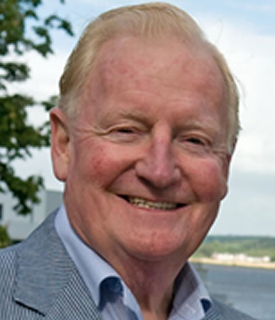
Duddy runs a fish and chip shop in the late 1960s which is supplied with beef burgers from a supplier whose van driver is Martin McGuinness. He is first approached by MI6 officer Frank Steele in the early 1970s but turns the approach down.
In light of the dissolution of Stormont in 1972, Duddy’s role as an intermediary starts in January 1972, when asked by friend and Derry’s Chief Police Office Frank Lagan to persuade the Official Irish Republican Army and the Provisional Irish Republican Army to remove their weapons from the Bogside. Both sides comply, but the Official IRA retains a few weapons for defensive purposes. After thirteen unarmed civil rights marchers are shot dead by British Parachute Regiment troops in what becomes known as Bloody Sunday, Duddy warns Lagan, “This is absolutely catastrophic. We’re going to have a war on our hands.”
In the aftermath of the events and repercussions of Bloody Sunday, MI6 agent Michael Oatley arrives in Belfast in 1973 seeking to understand the situation in Northern Ireland and hopefully create a communications channel between the IRA and the British Government. Duddy becomes the go-between for the communications, and this leads to the IRA ceasefire of 1975/76.
Duddy and Oatley are the main channel of communications between the British Government and the IRA leadership during the 1981 Irish hunger strike. Duddy is codenamed “Soon” by the British. Over the period of July 4-6, 1981, they exchange many telephone calls, with Duddy urging the “utmost haste” on the part of the British because “the situation would be irreparably damaged if a hunger striker died.” He suggests steps which could be taken to give the Provisional IRA a way of ending the strike. British Prime MinisterMargaret Thatcher personally amends the text of an offer which is conveyed to the IRA through Duddy, but the British consider the reply unsatisfactory and do not continue to negotiate through Duddy. Hunger striker Joe McDonnell dies the following day.
In November 1991, as his now friend Oatley is about to retire from MI6 service, Duddy calls Oatley to a diner in Derry. When dinner has finished, McGuinness enters the property. During the meeting, McGuinness and Oatley discuss options for moving the situation forward. A few weeks later, Duddy is pursued by a British businessman who wants to create jobs in Derry. In the first meeting, the businessman produces a letter from then Secretary of State for Northern IrelandPeter Brooke, introducing the “businessman” as Oatley’s MI6 successor. Duddy calls the MI6 agent “Fred,” and acting as the go-between they successfully negotiate a ceasefire. Talks between McGuinness and representatives of the British government are held secretly in his house.
On March 26, 2008, the BBC broadcasts a documentary entitled The Secret Peacemaker about Duddy, directed by Peter Norrey, and presented by Peter Taylor, a journalist who has known Duddy is “the link” for ten years.
In the spring of 2009, Duddy donates his private archives to the James Hardiman Library, NUI Galway, where they are now available to researchers. They chart his involvement in the peace process from 1972 to 1993, and his ongoing interest, and correspondence relating to Northern Ireland, until 2007. The Brendan Duddy Archive is opened in 2011.
At the age of 80, Brendan Duddy dies at Altnagelvin Area Hospital in Derry, Northern Ireland on May 12, 2017.
Seven senators serve on the subcommittee, with three Republicans and three Democrats in addition to Smith as chair. The other six senators are Jonathan Bourne (R-Oregon), Theodore E. Burton (R-Ohio), Duncan U. Fletcher (D-Florida), Francis G. Newlands (D-Nevada), George Clement Perkins (R-California), and Furnifold McLendel Simmons (D-North Carolina). The composition of the subcommittee is carefully chosen to represent the conservative, moderate and liberal wings of the two parties.
During 18 days of official investigations, punctuated by recesses, testimony is recorded from over 80 witnesses. These include surviving passengers and crew members, as well as captains and crew members of other ships in the vicinity, expert witnesses, and various officials and others involved in receiving and transmitting the news of the disaster. The evidence submitted varies from spoken testimony and questioning, to the deposition of correspondence and affidavits. Subjects covered include the ice warnings received, the inadequate (but legal) number of lifeboats, the handling of the ship and its speed, RMS Titanic‘s distress calls, and the handling of the evacuation of the ship.
The final report is presented to the United States Senate on May 28, 1912. It is nineteen pages long and includes 44 pages of exhibits, and summarises 1,145 pages of testimony and affidavits. Its recommendations, along with those of the British inquiry that concludes on July 3, 1912, lead to many changes in safety practices following the disaster.
The report is strongly critical of established seafaring practices and the roles that RMS Titanic‘s builders, owners, officers and crew had played in contributing to the disaster. It highlights the arrogance and complacency that had been prevalent aboard the ship and more generally in the shipping industry and the British Board of Trade. However, it does not find the International Mercantile Marine Company, an American consortium, or the White Star Line negligent under existing maritime laws, as they had merely followed standard practice, and the disaster could thus only be categorised as an “act of God.”
The inquiry is heavily criticised in Britain, both for its conduct and for Smith’s style of questioning. Many newspapers publish scathing editorial cartoons depicting Smith in unflattering terms. The British government is also hostile towards the inquiry. The British Ambassador to the United States, James Bryce, demands that President William Howard Taft dissolve the committee and refuses to recognise its jurisdiction.
Some British writers, however, applaud the inquiry. G. K. Chesterton contrasts the American objective of maximum openness with what he calls Britain’s “national evil,” which he describes as being to “hush everything up; it is to damp everything down; it is to leave the great affair unfinished, to leave every enormous question unanswered.” The American reaction is also generally positive. The American press welcomes Smith’s findings and accepts his recommendations, commending the senator for establishing the key facts of the disaster.
(Pictured: U.S. Senator William Alden Smith, chairman of the Senate inquiry into the RMS Titanic disaster)
Killen is the third of four sons and nine children of John Killen (1768–1828), a grocer and seedsman in Ballymena, by his wife Martha, daughter of Jesse Dool, a farmer in Duneane. His paternal grandfather, a farmer at Carnmoney, marries Blanche Brice, a descendant of Edward Brice. A brother, James Miller Killen (1815–1879), is a minister in Comber, County Down. Thomas Young Killen is his father’s great-nephew.
After attending local primary schools, Killen goes to Ballymena Academy around 1816, and in November 1821 enters the collegiate department of the Royal Belfast Academical Institution, under James Thomson. In 1827, he is licensed to preach by the Presbytery of Ballymena, and on November 11, 1829 he is ordained minister at Raphoe, County Donegal.
In July 1841 Killen is appointed, by the General Assembly of the Presbyterian Church in Ireland, its professor of church history, ecclesiastical government, and pastoral theology, in succession to James Seaton Reid. He concentrates on history. When Assembly’s College, Belfast is set up in 1853, he becomes one of the professors there. In 1869 he is appointed president of the college, in succession to Henry Cooke, and undertakes fundraising for professorial endowments and new buildings. In 1889 he resigns his chair but continues as president.
During his career Killen receives the degrees of D.D. (1845) and of LL.D. (1901) from the University of Glasgow. His portrait, painted by Richard Hooke, hangs in the Gamble library of the college.
William Dool Killen dies on January 10, 1902, and is buried in Balmoral Cemetery, Belfast, where a monument marks his resting place.
Following the embarkation of the crew the passengers begin arriving at 9:30 AM, when the London and South Western Railway‘s boat train from London Waterloo station reaches Southampton Terminus railway station on the quayside, alongside RMS Titanic‘s berth. In all, 923 passengers board RMS Titanic at Southampton, 179 First Class, 247 Second Class and 494 Third Class. The large number of Third Class passengers means they are the first to board, with First and Second Class passengers following up to an hour before departure. Stewards show them to their cabins, and First Class passengers are personally greeted by Captain Edward Smith upon boarding. Third Class passengers are inspected for ailments and physical impairments that might lead to their being refused entry to the United States, a prospect the White Star Line wishes to avoid, as it would have to carry anyone who fails the examination back across the Atlantic. A total of 922 passengers are recorded as embarking on RMS Titanic at Southampton. Additional passengers are to be picked up at Cherbourg, France and Queenstown.
The maiden voyage begins on time, at noon. An accident is narrowly averted only a few minutes later as RMS Titanic passes the moored liners SS City of New York of the American Line and what would have been her running mate on the service from Southampton, White Star’s RMS Oceanic. Her huge displacement causes both of the smaller ships to be lifted by a bulge of water and then dropped into a trough. SS City of New York‘s mooring cables cannot take the sudden strain and snap, swinging her around stern-first towards RMS Titanic. A nearby tugboat, Vulcan, comes to the rescue by taking SS City of New York under tow, and Captain Smith orders RMS Titanic‘s engines to be put “full astern.” The two ships avoid a collision by a matter of about 4 feet. The incident delays RMS Titanic‘s departure for about an hour, while the drifting SS City of New York is brought under control.
After making it safely through the complex tides and channels of Southampton Water and the Solent, RMS Titanic heads out into the English Channel. She heads for the French port of Cherbourg, a journey of 77 nautical miles. The weather is windy, very fine but cold and overcast. Four hours after RMS Titanic leaves Southampton, she arrives at Cherbourg and is met by the tenders SS Traffic and the SS Nomadic which have to be used to transfer passengers from shore to ship because Cherbourg lacks docking facilities for a ship the size of RMS Titanic. An additional 274 passengers are taken aboard. Twenty-four passengers who have booked passage only cross-channel from Southampton leave aboard the tenders to be conveyed to shore. The process is completed in about 90 minutes. At 8:00 PM RMS Titanic weighs anchor and departs for Queenstown on the south coast of Ireland with arrival scheduled late the following morning.
(Pictured: RMS Titanic departing the Southampton docks on April 10, 1912)
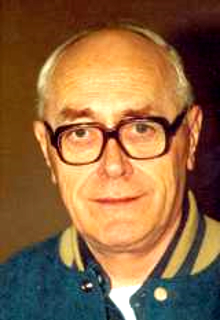
White is educated in Belfast at St. John’s Primary School and St. Joseph’s Technical Secondary School. As a teenager he lives with foster parents. He wants to study medicine but financial circumstances prevented this. Between 1943 and 1965 he works for several Belfast tailoring firms and then as assistant manager of a Co-op department store. He marries Margaret “Peggy” Sarah Martin, another science fiction fan, in 1955 and the couple has three children. He later works for the aeroplane builders Short Brothers as a technical clerk, publicity assistant and publicity officer.
White becomes a science fiction fan in 1941, attracted particularly by the works of E. E. “Doc” Smith, which features good aliens as well as evil ones, and of Robert A. Heinlein, many of whose stories concern ordinary people. In 1947 he meets another Irish fan, Walt Willis, and the two help to produce the fan magazines Slant and Hyphen, which feature stories and articles by noted authors including John Brunner, A. Bertram Chandler and Bob Shaw. In 2004 both White and Willis are nominated for the retrospective Hugo Award for Best Fan Writer of 1953, although neither wins. White says that he started writing stories because the Slant team felt that Astounding Stories of Super-Science was too dominated by prophesies of nuclear doom, and his friends dared him to write the kind of story that they all liked to read. Getting published is fairly easy during the 1950s, as the World War II restrictions on paper are ended, and there are at least 12 science magazines in Britain and about 40 in the United States. His first published short story, Assisted Passage, a parody of 1950s Anglo-Australian emigration policies, appears in the January 1953 edition of the magazine New Worlds. Further stories appear in New Worlds during the next few years, but White’s attempt to access the more lucrative American market by submitting stories to Astounding Stories of Super-Science stall after the publication of The Scavengers. As a result, White’s work is little-known outside the UK until the 1960s.
In 1957, Ace Books publishes White’s first novel, The Secret Visitors, which includes locations in Northern Ireland. Ace Books’ science fiction editor, Donald A. Wollheim, thinks the original ending is too tame and suggests that White should insert an all-out space battle just after the climactic courtroom scene. In November of the same year New Worlds publishes White’s novella Sector General, and editor John Carnell requests more stories set in the same universe, founding the series for which White is known best. White gains a steady following for his scientifically accurate stories, which are examples of hard science fiction in New Worlds, despite the magazine’s promotion of literary New Wave science fiction during the 1960s.
White keeps his job with Short Brothers and writes in the evenings, as his stories do not make enough money for him to become a full-time author. In 1980 he teaches a literature course at a Belfast branch of the Workers’ Educational Association. When diabetes has severely impaired his eyesight, he takes early retirement in 1984 and relocates to the north County Antrim resort town of Portstewart, where he continues to write. For many years he is a Council Member of the British Science Fiction Association and, with Harry Harrison and Anne McCaffrey, a Patron of the Irish Science Fiction Association. He is also a strong pacifist.
James White dies of a stroke in Portstewart, Belfast, Northern Ireland on August 23, 1999, while his novels Double Contact and The First Protector are being prepared for publication.





 seamus dubhghaill