seamus dubhghaill

Promoting Irish Culture and History from Little Rock, Arkansas, USA


Leave a comment

Death of William III, King of England, Scotland & Ireland

Kneller, Godfrey, 1646-1723; King William III (1650-1702)

William III, also widely known as William of Orange, dies at Kensington Palace on March 8, 1702, following a fall from his horse when it stumbles on a molehill. Upon his death, Anne accedes to the throne of Britain and Ireland.

William is sovereign Prince of Orange from birth, Stadtholder of Holland, Zeeland, Utrecht, Gelderland and Overijssel in the Dutch Republic from 1672 and King of England, Ireland and Scotland from 1689 until his death in 1702. As King of Scotland, he is known as William II. He is sometimes informally known in Northern Ireland and Scotland as “King Billy.”

William is born on November 4, 1650, at Binnenhof, The Hague, Dutch Republic. He inherits the Principality of Orange from his father, William II, who dies a week before William’s birth. His mother, Mary, is the daughter of King Charles I of England. In 1677, William marries his fifteen-year-old first cousin, Mary, the daughter of his maternal uncle James, Duke of York.

A Protestant, William participates in several wars against the powerful Catholic King of France, Louis XIV, in coalition with Protestant and Catholic powers in Europe. Many Protestants herald him as a champion of their faith. In 1685, William’s Catholic uncle and father-in-law, James, becomes king of England, Scotland and Ireland. James’s reign is unpopular with the Protestant majority in Britain. William, supported by a group of influential British political and religious leaders, invades England in what becomes known as the Glorious Revolution. On November 5, 1688, he lands at the southern English port of Brixham. James is deposed and William and his wife become joint sovereigns in his place.

William’s reputation as a staunch Protestant enables him to take power in Britain when many are fearful of a revival of Catholicism under James. William’s victory at the Battle of the Boyne in 1690 is still commemorated by loyalists in Northern Ireland and Scotland.

William and Mary reign together until Mary’s death from smallpox on December 28, 1694, after which William rules as sole monarch. Despite his conversion to Anglicanism, his popularity plummets during his reign as a sole monarch. His reign in Britain marks the beginning of the transition from the personal rule of the House of Stuart to the more Parliament-centred rule of the House of Hanover.

On March 8, 1702, William dies of pneumonia, a complication from a broken collarbone following a fall from his horse, Sorrel. The horse had been confiscated from Sir John Fenwick, one of the Jacobites who had conspired against William. Because his horse had stumbled into a mole’s burrow, many Jacobites toast “the little gentleman in the black velvet waistcoat.” Years later, Winston Churchill, in his A History of the English-Speaking Peoples, states that the fall “opened the door to a troop of lurking foes.” William is buried in Westminster Abbey alongside his wife. His sister-in-law, Anne, becomes queen regnant of England, Scotland and Ireland.

William’s death means that he would remain the only member of the Dutch House of Orange to reign over England.


Leave a comment

Birth of Daniel Mannix, Archbishop of Melbourne

daniel-mannix

Daniel Mannix, Archbishop of Melbourne, advocate of Irish independence, and one of the most influential and controversial public figures in 20th-century Australia, is born near Charleville, County Cork on March 4, 1864.

Mannix is the son of a tenant farmer, Timothy Mannix, and his wife Ellen (née Cagney). He is educated at Congregation of Christian Brothers schools and at St. Patrick’s College, Maynooth, County Kildare, where he is ordained priest in 1890. He teaches philosophy (1891) and theology (1894) at St. Patrick’s and from 1903 to 1912 he serves as president of the college. During his presidency, he welcomes both King Edward VII in 1905 and King George V in 1911 with loyal displays, which attract criticism by supporters of the Irish Home Rule movement.

Consecrated titular archbishop of Pharsalus in 1912, Mannix arrives in Melbourne in the following year as coadjutor archbishop, becoming archbishop of Melbourne in 1917.

Mannix’s forthright demands for state aid for the education of Roman Catholics in return for their taxes and his opposition to drafting soldiers for World War I make him the subject of controversy. A zealous supporter of Irish independence, he makes an official journey to Rome in 1920 via the United States, where his lengthy speech making attracts enthusiastic crowds. His campaign on behalf of the Irish, however, causes the British government to prevent him from landing in Ireland, which he finally visits in 1925.

After World War II Mannix seeks to stop Communist infiltration of the Australian trade unions. He plays a controversial part in the dissensions within the Australian Labor Party and backs the largely right-wing Catholic Democratic Labor Party, which breaks away. A promoter of Catholic Action (i.e., lay apostolic activity in the temporal society) and of the Catholic social movement, he is responsible for the establishment of 181 schools, including Newman College and St. Mary’s College at the University of Melbourne, and 108 parishes.

By the 1960s the distinct identity of the Irish community in Melbourne is fading, and Irish Catholics are increasingly outnumbered by Italians, Maltese and other postwar immigrant Catholic communities. Mannix, who turned 90 in 1954, remains active and in full authority, but he is no longer a central figure in the city’s politics. He dies suddenly on November 6, 1963, aged 99, while the Archdiocese of Melbourne is preparing to celebrate his 100th birthday. He is buried in the crypt of St. Patrick’s Cathedral, Melbourne.


Leave a comment

First Clash of the Tithe War

battle-at-carrickshock

The first clash of the Tithe War takes place on March 3, 1831, in Graiguenamanagh, County Kilkenny, when a force of 120 yeomanry attempts to enforce seizure orders on cattle belonging to a Roman Catholic priest. Encouraged by his bishop, he has organised people to resist tithe collection by placing their stock under his ownership prior to sale.

The Tithe War is a campaign of mainly nonviolent civil disobedience, punctuated by sporadic violent episodes, in Ireland between 1830 and 1836 in reaction to the enforcement of tithes on the Roman Catholic majority for the upkeep of the established state church – the Church of Ireland. Tithes are payable in cash or kind and payment is compulsory, irrespective of an individual’s religious adherence.

After Emancipation in 1829, an organized campaign of resistance to collection begins. It is sufficiently successful to have a serious financial effect on the welfare of established church clergy. In 1831, the government compiles lists of defaulters and issues collection orders for the seizure of goods and chattels. Spasmodic violence breaks out in various parts of Ireland, particularly in counties Kilkenny, Tipperary and Wexford. The Royal Irish Constabulary, which had been established in 1822, attempts to enforce the orders of seizures. At markets and fairs, the constabulary often seize stock and produce, which often results in violent resistance.

A campaign of passive resistance is proposed by Patrick “Patt” Lalor, a farmer of Tenakill, Queen’s County (now County Laois), who later serves as a repeal MP. He declares at a public meeting in February 1831 in Maryborough that he would never again pay tithes and, although the tithe men might take his property and offer it for sale, his countrymen would not buy or bid for it if offered for sale. Lalor holds true to his word and does not resist the confiscation of 20 sheep from his farm but is able to ensure no buyers appear at subsequent auctions.

Following the clash at Graiguenamanagh, the revolt soon spreads. On June 18, 1831, in Bunclody, County Wexford, people resisting the seizure of cattle are fired upon by the Royal Irish Constabulary, who kill twelve and wound twenty. One yeoman is shot dead in retaliation. This massacre causes objectors to organise and use warnings such as church bells to signal the community to round up the cattle and stock. On December 14, 1831, resisters use such warnings to ambush a detachment of 40 Constabulary at Carrickshock, County Kilkenny. Twelve constables, including the Chief Constable, are killed and more wounded.

Regular clashes causing fatalities continue over the next two years. On December 18, 1834, the conflict comes to a head at Rathcormac, County Cork, when armed Constabulary reinforced by the regular British Army kill twelve and wound forty-two during several hours of fighting when trying to enforce a tithe order reputedly to the value of 40 shillings.

Finding and collecting livestock chattels and the associated mayhem creates public outrage and proves an increasing strain on police relations. The government suspends collections. In 1838, parliament introduces a Tithe Commutation Act. This reduces the amount payable directly by about a quarter and makes the remainder payable in rent to landlords. They in turn are to pass payment to the authorities. Tithes are thus effectively added to a tenant’s rent payment. This partial relief and elimination of the confrontational collections ends the violent aspect of the Tithe War.

Full relief from the tax is not achieved until the Irish Church Act 1869, which disestablishes the Church of Ireland, by the William Ewart Gladstone government.

(Pictured: The battle at Carrickshock, from Cassell’s Illustrated History of England’, volume VII – 1895.)


Leave a comment

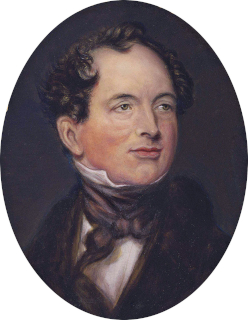
Death of Thomas Moore, Poet, Singer & Songwriter

thomas-moore

Thomas Moore, Irish poet, singer, songwriter, and entertainer, dies at Sloperton Cottage, Bromham, Wiltshire, England on February 25, 1852. He is best remembered for the lyrics of “The Minstrel Boy” and “The Last Rose of Summer.” He is a close friend of Lord Byron and Percy Bysshe Shelley.

The son of a Roman Catholic wine merchant, Moore is born at 12 Aungier Street in Dublin on May 28, 1779. From a relatively early age he shows an interest in music and other performing arts. He attends several Dublin schools including Samuel Whyte’s English Grammar School in Grafton Street where he learns the English accent with which he speaks for the rest of his life. In 1795 he graduates from Trinity College, Dublin in an effort to fulfill his mother’s dream of his becoming a lawyer.

Upon graduation from Trinity, Moore studies law in London. His major poetic work, Irish Melodies (1807–34), earns him an income of £500 annually for a quarter of a century. It contains such titles as “The Last Rose of Summer” and “Oft in the Stilly Night.” The Melodies, a group of 130 poems set to the music of Moore and Sir John Andrew Stevenson and performed for London’s aristocracy, arouses sympathy and support for the Irish nationalists, among whom Moore is a popular hero.

Lalla-Rookh (1817), a narrative poem set in an atmosphere of Oriental splendour, gives Moore a reputation among his contemporaries rivaling that of Byron and Sir Walter Scott. It is perhaps the most translated poem of its time, and it earns what is up until then the highest price paid by an English publisher for a poem (£3,000). His many satirical works, such as The Fudge Family in Paris (1818), portray the politics and manners of the Regency era.

In 1824 Moore becomes a participant in one of the most celebrated episodes of the Romantic era. He is the recipient of Byron’s memoirs, but he and the publisher John Murray burn them, presumably to protect Byron. He later brings out the Letters and Journals of Lord Byron: With Notices of his Life (1830), in which he includes a life of the poet. His lifelong espousal of the Catholic cause leads him to produce such brilliant works as his parody of agrarian insurgency, The Memoirs of Captain Rock (1824), and his courageous biography of the revolutionary leader of the Irish Rebellion of 1798, The Life and Death of Lord Edward Fitzgerald (1831).

Moore finally settles in Sloperton Cottage at Bromham, Wiltshire, England, and becomes a novelist and biographer as well as a successful poet. Around the time of the Reform Act he is invited to stand for parliament, and considers it, but nothing comes of it. In 1829 he is painted by Thomas Lawrence, one of the last works completed by the artist before his death.

Moore’s personal life is dogged by tragedy including the deaths of all five of his children within his lifetime and a stroke in later life, which disables him from performances – the activity for which he is most renowned. He dies being cared for by his wife at Sloperton on February 25, 1852. His remains are in a vault at St. Nicholas churchyard, Bromham, within view of his cottage-home, beside his daughter Anastasia.


Leave a comment

Birth of William Carleton, Writer & Novelist

william-carleton

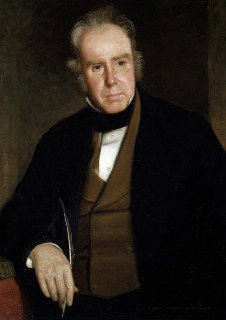
William Carleton, Irish writer and novelist, is born in Clogher, County Tyrone on February 20, 1794. He is best known for his Traits and Stories of the Irish Peasantry, a collection of ethnic sketches of the stereotypical Irishman.

Carleton receives a basic education at various hedge schools. Most of his learning is gained from a curate, Father Keenan, who teaches at a classical school at Donagh, County Monaghan which he attends from 1814 to 1816. He studies for the priesthood at St. Patrick’s Pontifical University, Maynooth, but leaves after two years. Around the age of 19 he undertakes one of the religious pilgrimages then common in Ireland. His experiences as a pilgrim make him give up the thought of entering the church.

Carleton’s vacillating ideas as to a mode of life are determined by reading the picaresque novel Gil Blas by Alain-René Lesage. He decides to try what fortune has in store for him, and he goes to Killanny, County Louth. For six months he serves as tutor to the family of a farmer named Piers Murphy. After some other experiments he sets out for Dublin, arriving with two shillings and sixpence in his pocket.

Carleton first seeks occupation as a bird-stuffer, but a proposal to use potatoes and meal as stuffing fails to recommend him. He then tries to become a soldier, but the colonel of the regiment dissuades him. After staying in a number of cheap lodgings, he eventually finds a place in a house on Francis Street which contains a circulating library. The landlady allows him to read from 12 to 16 hours a day. He obtains some teaching and a clerkship in a Sunday School office, begins to contribute to journals. “The Pilgrimage to Lough Derg,” which is published in the Christian Examiner, attracts great attention.

In 1830 Carleton publishes his first full-length book, Traits and Stories of the Irish Peasantry (2 volumes), which is considered his best achievement. A second series (3 volumes) appears in 1833, and Tales of Ireland in 1834. From that time until a few years prior to his death he writes constantly. “Fardorougha the Miser, or the Convicts of Lisnamona” appears in 1837–1838 in the Dublin University Magazine.

Carleton remained active publishing in Dublin magazines through the 1830s and 1840s writing many ethnic stories often drawn from the south Tyrone locality. He also writes a lot of fiction. During the last months of his life, he begins an autobiography which he brings down to the beginning of his literary career. This forms the first part of The Life of William Carleton by David James O’Donoghue, which contains full information about his life, and a list of his scattered writings.

Carleton’s later years are characterised by drunkenness and poverty. In spite of his considerable literary production, he remains poor but receives a pension in 1848 of £200 a year granted by Lord John Russell in response to a memorial on Carleton’s behalf signed by numbers of distinguished persons in Ireland.

William Carleton dies at his home at Woodville, Sandford Road, in Ranelagh, Dublin on January 30, 1869, and is interred at Mount Jerome Cemetery, Harold’s Cross, Dublin. The house, now demolished, is close to the entrance to the Jesuit residence at Milltown Park. Despite his conversion to Protestantism, Carleton remains on friendly terms with one of the priests there, Reverend Robert Carbery, who offers to give him the Last Rites of the Catholic Church. In the final weeks before his death, Carleton politely declines the offer, stating he had not been a Roman Catholic “for half a century and more.”

(Pictured: Portrait of Irish author William Carleton (1794-1869) by John Slattery (fl. 1850s))


Leave a comment

Murder of Patrick Finucane, Human Rights Lawyer

patrick-finucane

Patrick Finucane, Irish human rights lawyer, is killed on February 12, 1989, by loyalist paramilitaries acting in collusion with the British government intelligence service MI5. His killing is one of the most controversial during the Troubles in Northern Ireland.

Finucane is born into a Roman Catholic family on the Falls Road, Belfast on March 21, 1949. At the start of the Troubles, his family is forced out of their home. He graduates from Trinity College, Dublin in 1973. He comes to prominence due to successfully challenging the British government in several important human rights cases during the 1980s.

Finucane is shot fourteen times and killed at his home in Fortwilliam Drive, north Belfast, by Ken Barrett and another masked man using a Browning Hi-Power 9mm pistol and a .38 revolver respectively. The two gunmen knock down the front door with a sledgehammer and enter the kitchen where Finucane has been having a Sunday meal with his family. They immediately open fire and shoot him twice, knocking him to the floor. Then while standing over him, the leading gunman fires twelve bullets into his face at close range. Finucane’s wife Geraldine is slightly wounded in the shooting attack which their three children witness as they hide underneath the table.

The Royal Ulster Constabulary (RUC) immediately launches an investigation into the killing. The investigation, led by Detective Superintendent Alan Simpson, runs for six weeks and he later states that from the beginning, there had been a noticeable lack of intelligence coming from the other agencies regarding the killing. Finucane’s killing is widely suspected by human rights groups to have been perpetrated in collusion with officers of the RUC and, in 2003, the British Government Stevens Report states that the killing is indeed carried out with the collusion of police in Northern Ireland.

In September 2004, an Ulster Defence Association (UDA) member, and at the time of the murder a paid informant for the Royal Ulster Constabulary, Ken Barrett, pleads guilty to Finucane’s murder.

The Ulster Defence Association/Ulster Freedom Fighters (UDA/UFF) claim they killed Finucane because he was a high-ranking officer in the Irish Republican Army (IRA). Police at his inquest say they have no evidence to support this claim. Finucane had represented republicans in many high-profile cases, but he had also represented loyalists. Several members of his family have republican links, but the family strongly denies Finucane is a member of the IRA. Informer Sean O’Callaghan claims that he attended an IRA finance meeting alongside Finucane and Gerry Adams in Letterkenny in 1980. However, both Finucane and Adams have consistently denied being IRA members.

In Finucane’s case, both the RUC and the Stevens Report find that he is not a member of the IRA. Republicans strongly criticise the claims made by O’Callaghan in his book The Informer and subsequent newspaper articles. One Republican source says O’Callaghan “…has been forced to overstate his former importance in the IRA and to make increasingly outlandish accusations against individual republicans.”

In 2011 British Prime Minister David Cameron meets with Finucane’s family and admits the collusion, although no member of the British security services has yet been prosecuted.


Leave a comment

Birth of Margo, Irish Country Music Singer

margaret-catherine-o-donnell

Irish singer Margo, born Margeret Catherine O’Donnell, is born on February 6, 1951 in County Donegal. She rises to prominence during the 1960s in the Irish country music scene and has had an extensive career since.

Margo is brought up in the small village of Kincasslagh, in The Rosses area of County Donegal. She grows up in a Catholic family, with her parents Francis and Julia (née McGonagle) O’Donnell, and her siblings: John, Kathleen, James, and Daniel, who is also a singer. Her father dies of a heart attack when she is a young woman.

Margo starts performing country music at a very young age in 1964 with a local showband, The Keynotes. She records her first single in 1968, Bonny Irish Boy/Dear God, which is a success as is her second single, If I Could See the World Through the Eyes of a Child/Road By the River, released in 1969. She has been a successful singer for five decades and has sold more than 1,000,000 records to date. She has performed with Johnny Cash, Loretta Lynn and Dolly Parton. She presents numerous TV shows for RTÉ in the 1970s and has collected many awards during her career.

Margo is sister to Irish singer Daniel O’Donnell, who got his start with Margo’s band in the early 1980s while attending college in Galway. Margo is named “2007 Donegal Person Of The Year” and spends most of 2007 traveling Ireland acting as an ambassador to her native county. She makes her home in Castleblayney, County Monaghan, where she has lived for several decades along with her partner.

Since 1977, Margo has been active in the search for Mary Boyle, a distant relative from Kincasslagh, who went missing at age six near Ballyshannon, County Donegal.


Leave a comment

Birth of Máiread Maguire, Northern Irish Peace Activist

mairead-maguire

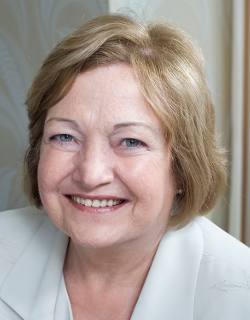
Máiread Maguire, née Máiread Corrigan, also called Máiread Corrigan Maguire, peace activist from Northern Ireland, is born in Belfast on January 27, 1944. Along with Betty Williams and Ciaran McKeown, she founds the Peace People, a grassroots movement of both Roman Catholic and Protestant citizens dedicated to ending the sectarian violence in Northern Ireland. For their work, Maguire and Williams share the 1976 Nobel Peace Prize.

Although Maguire from a young age earns her living as a secretary, she also is from her youth a member of the Legion of Mary, a lay Catholic welfare organization, and through it she becomes deeply involved in voluntary social work among children and teenagers in various Catholic neighbourhoods of Belfast. She is stirred to act against the growing violence in Northern Ireland after witnessing in August 1976 an incident in which a car being driven by an Irish Republican Army (IRA) terrorist goes out of control when the IRA man is shot by British troops. The car strikes and kills three children of Maguire’s sister.

Within days each woman publicly denounces the violence and calls for mass opposition to it. Marches of Catholic and Protestant women, numbering in the thousands, are organized, and shortly afterward the Peace People is founded based on the conviction that genuine reconciliation and prevention of future violence are possible, primarily through the integration of schools, residential areas, and athletic clubs. The organization publishes a biweekly paper, Peace by Peace, and provides a bus service to and from Belfast’s jails for families of prisoners.

Although Williams breaks away from the Peace People in 1980, Maguire remains an active member and later serves as the group’s honorary president. In 2006 she joins Williams and fellow Nobel Peace Prize winners Shirin Ebadi, Jody Williams, Wangari Maathai, and Rigoberta Menchú to found the Nobel Women’s Initiative. She is also active in various Palestinian causes, notably efforts to end the Israeli government’s blockade of the Gaza Strip, and she is deported from Israel on several occasions.

In October 2012, Maguire travels to New York City to serve on the Russell Tribunal on Israel/Palestine alongside writer Alice Walker, activist Angela Davis, former Congresswoman Cynthia McKinney, and Pink Floyd’s Roger Waters. The Russell Tribunal’s findings and conclusions challenge governments and civil society to have courage and act by implementing sanctions, thereby refusing to be silent and complicit in the face of Israel ’s violation of International Laws.

In March 2018, Maguire and two Nobel peace laureates, Shirin Ebadi and Tawakkol Karman, visit rohingya camps in Cox’s Bazar and share opinion on the crisis. After returning to Dhaka, they discuss the Rohingya crisis with members of the civil society of Bangladesh.

Maguire is a proponent of the belief that violence is a disease that humans develop but are not born with. She believes humankind is moving away from a mindset of violence and war and evolving to a higher consciousness of nonviolence and love. Among the figures she considers spiritual prophets in this regard are Jesus, Francis of Assisi, Mahatma Gandhi, Abdul Ghaffār Khān, Fr. John L. McKenzie, and Martin Luther King, Jr. She professes to reject violence in all its forms.


Leave a comment

Birth of Thomas Clarke Luby, Irish Revolutionary

thomas-clarke-luby

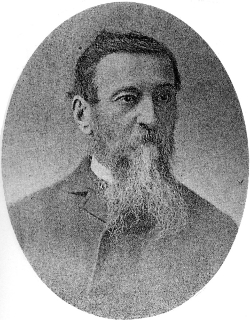
Thomas Clarke Luby, Irish revolutionary, author, journalist and one of the founding members of the Irish Republican Brotherhood, is born in Dublin on January 16, 1822.

Luby is the son of a Church of Ireland clergyman from Templemore, County Tipperary, his mother being a Catholic. He is educated at Trinity College Dublin where he studies law and puts in the necessary number of terms in London and Dublin where he acquires a reputation as a scholar and takes his degree. He goes on to teach at the college for a time.

Luby supports the Repeal Association and contributes to The Nation newspaper. After the breach with Daniel O’Connell, he joins the Young Irelanders in the Irish Confederation. He is deeply influenced by James Fintan Lalor at this time. Following the suppression of the Young Ireland Rebellion of 1848, he with Lalor and Philip Gray attempt to revive the fighting in 1849 as members of the secret Irish Democratic Association. This, however, ends in failure.

In 1851 Luby travels to France, where he hopes to join the French Foreign Legion to learn infantry tactics but finds the recruiting temporarily suspended. From France he goes to Australia for a year before returning to Ireland. From the end of 1855 he edits the Tribune newspaper founded by John E. Pigot who had been a member of The Nation group. During this time, he remains in touch with the small group of ’49 men including Philip Gray and attempts to start a new revolutionary movement. Luby’s views on social issues grow more conservative after 1848 which he makes clear to James Stephens whom he meets in 1856.

In the autumn of 1857 Owen Considine arrives with a message signed by four Irish exiles in the United States, two of whom are John O’Mahony and Michael Doheny. The message conveys the confidence they have in Stephens and asks him to establish an organisation in Ireland to win national independence. Considine also carries a private letter from O’Mahony to Stephens which is a warning, and which is overlooked by Luby and Stephens at the time. Both believe that there is a strong organisation behind the letter, only later to find it is rather a number of loosely linked groups. On December 23 Stephens dispatches Joseph Denieffe to America with his reply which is disguised as a business letter dated and addressed from Paris. In his reply, Stephen’s outlines his conditions and his requirements from the organisation in America.

On March 17, 1858, Denieffe arrives in Dublin with the acceptance of Stephens’s terms by the New York Committee and the eighty pounds. On that very evening the Irish Republican Brotherhood is established in Peter Langan’s timberyard in Lombard Street.

In mid-1863 Stephens informs his colleagues he wishes to start a newspaper, with financial aid from O’Mahony and the Fenian Brotherhood in America. The offices are established at 12 Parliament Street, almost at the gates of Dublin Castle. The first issue of the Irish People appears on November 28, 1863. The staff of the paper along with Luby are Charles J. Kickham and Denis Dowling Mulcahy as the editorial staff. Jeremiah O’Donovan Rossa and James O’Connor have charge of the business office, with John Haltigan being the printer. John O’Leary is brought from London to take charge in the role of Editor.

On July 15, 1865, American-made plans for a rising in Ireland are discovered. Superintendent Daniel Ryan, head of the G Division of the Dublin Metropolitan Police at Dublin Castle, has an informer within the offices of the Irish People who supplies him with an “action this year” message on its way to the IRB unit in Tipperary. With this information, Ryan raids the offices of the Irish People on Thursday, September 15, followed by the arrests of Luby, O’Leary and O’Donovan Rossa. Kickham is caught after a month on the run. Stephens is also caught with the support of Fenian prison warders. The last number of the paper is dated September 16, 1865.

After his arrest and the suppression of the Irish People, Luby is sentenced to twenty years of penal servitude. He is released in January 1871 but is compelled to remain away from Ireland until the expiration of his sentence.

Upon his release Luby goes first to the Continent and later settles in New York City. He lectures all over the country for years and writes for a number of Irish newspapers on political topics. At the memorial meeting on the death of John Mitchel, he delivers the principal address in Madison Square Garden.

Thomas Clarke Luby dies at 109½ Oak Street, Jersey City, New Jersey of paralysis, on November 29, 1901, and is buried in a grave shared with his wife in Bayview Cemetery in Jersey City. His epitaph reads: “Thomas Clarke Luby 1822–1901 He devoted his life to love of Ireland and quest of truth.”


Leave a comment

Birth of Aubrey Thomas de Vere, Critic & Poet

aubrey-de-vere

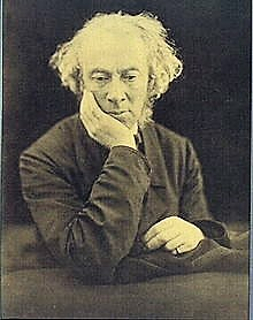
Aubrey Thomas de Vere, a critic and poet who adapts early Gaelic tales, is born on January 10, 1814, at Curraghchase House, now in ruins at Curraghchase, Kilcornan, County Limerick.

Hunt de Vere is the third son of Sir Aubrey de Vere, 2nd Baronet and his wife Mary Spring Rice, daughter of Stephen Edward Rice and Catherine Spring, of Mount Trenchard, County Limerick. He is a nephew of Thomas Spring Rice, 1st Baron Monteagle of Brandon and a younger brother of Sir Stephen de Vere, 4th Baronet. His sister Ellen marries Robert O’Brien, the brother of William Smith O’Brien. In 1832, his father drops the original surname “Hunt” by royal licence, assuming the surname “de Vere.”

de Vere is strongly influenced by his friendship with the astronomer Sir William Rowan Hamilton through whom he comes to a knowledge and reverent admiration for William Wordsworth and Samuel Taylor Coleridge. He is educated privately at home and in 1832 enters Trinity College, Dublin, where he reads Immanuel Kant and Coleridge. Later he visits Oxford, Cambridge, and Rome, and comes under the potent influence of John Henry Newman. He is also a close friend of Henry Taylor.

The characteristics of de Vere’s poetry are high seriousness and a fine religious enthusiasm. His research in questions of faith leads him to the Roman Catholic Church where in 1851 he is received into the Church by Cardinal Henry Edward Manning in Avignon. In many of his poems, notably in the volume of sonnets called St. Peters Chains (1888), he makes rich additions to devotional verse. For a few years he holds a professorship, under Newman, in the Catholic University in Dublin.

In A Book of Irish VerseW. B. Yeats describes de Vere’s poetry as having “less architecture than the poetry of Ferguson and Allingham, and more meditation. Indeed, his few but ever memorable successes are enchanted islands in gray seas of stately impersonal reverie and description, which drift by and leave no definite recollection. One needs, perhaps, to perfectly enjoy him, a Dominican habit, a cloister, and a breviary.”

de Vere also visits the Lake Country of England, and stays under Wordsworth’s roof, which he calls the greatest honour of his life. His veneration for Wordsworth is singularly shown in later life, when he never omits a yearly pilgrimage to the grave of the poet until advanced age makes the journey impossible.

de Vere is of tall and slender physique, thoughtful and grave in character, of exceeding dignity and grace of manner, and retains his vigorous mental powers to a great age. According to Helen Grace Smith, he is one of the most profoundly intellectual poets of his time. His census return for 1901 lists his profession as “Author.”

Aubrey de Vere dies at Curraghchase on January 20, 1902, at the age of eighty-eight. As he never married, the name of de Vere at his death becomes extinct for the second time and is assumed by his nephew.