seamus dubhghaill

Promoting Irish Culture and History from Little Rock, Arkansas, USA


Leave a comment

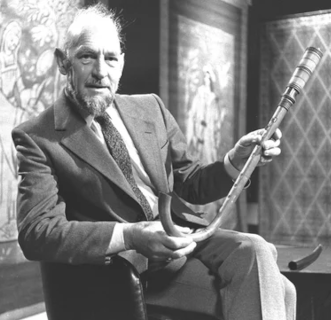
Birth of Composer Geoffrey Molyneux Palmer

Geoffrey Molyneux Palmer (Irish: Seathrún de Pámar), Irish composer, is born to Protestant Irish parents in Staines, Middlesex, England, on October 8, 1882. His compositions consist mainly of operas and vocal music, among them the first musical settings of poems by James Joyce.

Palmer grows up in South Woodford, an area of East London, where his father, Abram Smythe Palmer, is vicar at Holy Trinity Church. He studies at the University of Oxford where, in 1901, he is the youngest Bachelor of Music (BMus) in college history. Between 1904 and 1907 he studies composition with Charles Villiers Stanford at the Royal College of Music, London. He moves to Ireland in 1910 where he is initially active as a church organist in Dublin suburbs. From his early twenties he suffers from multiple sclerosis, which makes a professional independence increasingly difficult.

Palmer’s music includes at least three operas, a number of choral pieces and many songs. His strong interest in opera comes during a politically difficult period in Irish history. Ireland is struggling for independence, and cultural politicians often regard opera (and classical music in general) as alien to Irish culture. Initially, however, he is successful, his earliest stage work being Finn Varra Maa (a transliteration from the Gaelic meaning “good Finbar”), subtitled The Irish Santa Claus. It survives as a libretto only, published in a drama series by Talbot Press, Dublin, in 1917. Contrary to what the (sub-)title may suggest, the work is a political satire that is much criticised for its nationalismSruth na Maoile (“The Sea of Moyle”) is first performed in July 1923 and restaged by the O’Mara Opera Company in the cultural by-programme of the Tailteann Games in August 1924. Its story is based on the legend of the Children of Lir, while the music relies on numerous references to Irish traditional music, including the song Silent O Moylefrom Thomas Moore‘s Irish Melodies. A third work, Grania Goes (1924), conceived as a light, comic opera, cannot be performed in the years following Irish independence. The manuscript scores of the Sruth na Maoile and Grania Goes are in the National Library of Ireland.

Between 1925 and 1930, Palmer embarks on a cycle of three full-scale operas on the Cuchullain cycle to words by William Mervyn Crofton. In one of them, Deirdre of the Sorrows (1925), Crofton acknowledges Palmer’s “beautiful music.” Despite this, Palmer’s illness prevents the completion of the score, which is later handed over to the composer Staf Gebruers (1902–70), but they are never performed. The manuscript scores of the operas Cuchullain and Deirdre of the Sorrows composed by Gebruers are held by his son Adrian. Unfortunately, despite extensive searching, the score of The Wooing of Emer has not been located, though it is referenced in Gebruers’ own inventories and mentioned as being of three hours duration. In addition, there is a copy of The King’s Song, also composed by Gebruers with lyrics by Crofton and described as from Act 1 of The Black Hag, but whether or not this has any connection with Palmer is unknown.

Palmer is mainly known as the composer of light songs and ballads, often in a folkloristic style, that find publishers in England and are frequently performed. “They show a skilled hand with a talent for vocal harmony but little originality.” His choral music is mainly on a similar miniature scale, an exception being the early cantata The Abbot of Innisfallen (1909). There are some isolated examples of orchestral music performed by the orchestra of Radio Éireann, but the surviving references may not give a full picture of his output.

In the last decades of his life, Palmer was confined to a wheelchair and depends upon the care of his two sisters, who were running Hillcourt, a private girls’ boarding school in Glenageary, near their home in Sandycove (south Dublin). Palmer dies in Dublin on November 29, 1957.


Leave a comment

Birth of Theatre Producer Pádraig Cusack

Pádraig Cusack, Irish theatre producer who has worked with the National Theatre of Great Britain, the Abbey Theatre in Dublin, the National Centre for the Performing Arts (NCPA) in Mumbai and numerous international festivals, is born on March 16, 1962, in Dalkey, County Dublin.

Cusack, the youngest son of the Irish actor Cyril Cusack and actress Maureen Cusack, is the brother of actresses Niamh Cusack, Sinéad Cusack and Sorcha Cusack, and half-brother of Catherine Cusack. He has one brother, Paul Cusack, who is a television producer. He is married and has two daughters, Megan, an actress, who in 2020 joins the leading cast in the Netflix/BBC popular series Call the Midwife in the recurring role of Nurse Nancy Corrigan, and Kitty, a psychology student. Two of his nephews are also actors, Max Irons and Calam Lynch.

Cusack is educated bi-lingually in Irish and English, initially at Scoil Lorcáin in Monkstown, County Dublin, and subsequently at Coláiste Eoin, Booterstown, County Dublin. He is a Taylor Exhibition music scholar at Trinity College Dublin (TCD), before winning a scholarship to train to be a professional cellist at the Royal Northern College of Music in Manchester, England. In 1995, he returns to education to take a post-graduate degree in Business at University College Cork (UCC).

Having begun his career as a freelance musician, playing with the BBC Philharmonic orchestra and English National Opera North, an accident ends Cusack’s career as a musician, resulting in him pursuing a career in arts administration. Initially he focuses on the classical music sector, working at two leading concert venues in London, the Wigmore Hall and the Southbank Centre.

In 1992, Cusack makes his first move into theatre following his appointment as Administrative Director of West Yorkshire Playhouse in Leeds, alongside Jude Kelly, where he produces a number of plays including the touring production of Five Guys Named Moe for Cameron Mackintosh Limited. In 1996, he is appointed Head of Planning of the Royal National Theatre under the outgoing artistic director, Sir Richard Eyre, and subsequently with Sir Trevor Nunn and Sir Nicholas Hytner. In 2009, he becomes the National Theatre’s Associate Producer. During this period, he produces numerous productions for tour both in the UK and internationally, taking the work of the National Theatre to five continents. Alongside this, he works as a touring consultant for the Abbey Theatre in Dublin, the Royal Court Theatre, London, Fiery Angel in London’s West End, Canadian Stage in Toronto, Bangarra Dance Theatre in Sydney, TheEmergencyRoom and Corn Exchange in Dublin and Galway International Arts Festival. In June 2016, he is appointed Executive Producer of Wales Millennium Centre in Cardiff. In addition to this, he is Consultant Producer to the National Centre for the Performing Arts (India) in Mumbai.

As well as his theatre producing work, Cusack offers representation to a number of Irish artists including the director Annie Ryan, the composer Mel Mercier and the British playwright Matt Wilkinson.

In 2023, Cusack is the recipient of the Olwen Wymark Award from the Writers’ Guild of Great Britain for his championing of new writing which is presented at the 18th Annual Awards Ceremony in London.


Leave a comment

Birth of Irish Broadcaster George Hamilton

Irish broadcaster George Hamilton is born in Belfast, Northern Ireland, on January 2, 1950. He is best known as the chief football commentator for RTÉ, for which he also commentates on other sporting events, such as the Olympic Games. He presents a classical music programme on RTÉ lyric fm on Saturdays and Sundays called The Hamilton Scores.

Hamilton is christened in the same Presbyterian church as George Best. His father Jimmy plays for Cliftonville F.C., but he is a Glentoran F.C. “superfan.”

While a student at Methodist College Belfast, Hamilton is, for a time, principal cellist with the school orchestra. He then studies German and French at Queen’s University Belfast.

Hamilton begins his commentary career with BBC Sport, before joining RTÉ eight years later in 1984. He had previously worked for RTÉ during the 1978 FIFA World Cup. Since 2003, he works for RTÉ lyric fm, Ireland’s classical radio station, on Saturday mornings. For many years, he fronts a popular weekly quiz show on RTÉ, Know Your Sport, alongside fellow commentator Jimmy Magee.

Hamilton is chief commentator for RTÉ Sport‘s coverage of the 2010 FIFA World Cup in South Africa, the ninth one in which he has been involved. He is RTÉ’s chief commentator at UEFA Euro 2012 and commentates on all of Ireland’s matches in the competition. He is involved in the coverage of the Olympic Games since the 1980 Summer Olympics in Moscow.

Hamilton is known for his use of colourful phrases and memorable quotes when commentating on games, his phrase describing David O’Leary‘s penalty against Romania in the 1990 FIFA World Cup, “The nation holds its breath,” is used for a book of Irish football quotations, compiled by Eoghan Corry, for which Hamilton writes the foreword.

The sports humour website, DangerHere.com, takes its title from another quote by Hamilton: “And Bonner has gone 165 minutes of these championships without conceding a goal. Oh, danger here…”

On August 16, 2011, Hamilton feels unwell and has a suspected heart attack. He later has several hours of emergency bypass surgery at the Blackrock Clinic in Dublin after being transferred from St. Vincent’s University Hospital. He recovers and resumes both his commentating and radio show.


Leave a comment

Death of Composer Brian Patrick Boydell

Brian Patrick Boydell, Irish composer whose works include orchestral pieces, chamber music, and songs, dies on November 8, 2000. He is Professor of Music at Trinity College Dublin for 20 years, founder of the Dowland Consort, conductor of the Dublin Orchestral Players, and a prolific broadcaster and writer on musical matters. He was also a prolific musicologist specialising in 18th-century Irish musical history.

Boydell is born on March 17, 1917, in Howth, County Dublin, into a prosperous Anglo-Irish family. His father James runs the family maltings business while his mother, Eileen Collins, is one of the first women graduates of Trinity College. Following their son’s birth, the Boydells move from Howth and live in a succession of rented houses before settling in Shankill, County Dublin. The young Boydell begins his formal education at Monkstown Park in Dublin and is subsequently sent to the Dragon School at Oxford, England. From there he goes to Rugby School, where he comes under the influence of Kenneth Stubbs, the music master. Although he later speaks of his resentment at the anti-Irish attitude he experiences at Rugby, he appreciates the very good education in science and music he receives there.

Having completed his secondary education, Boydell spends the summer of 1935 developing his musical knowledge at Heidelberg, Germany, where he writes his first songs and also studies organ. He wins a choral scholarship to Clare College, Cambridge, where, perhaps through parental pressure, he studies natural science, graduating in 1938 with a first-class degree.

However, his love of music leads him next to the Royal College of Music where he studies composition under Patrick Hadley, Herbert Howells and Vaughan Williams. Already a good pianist, he also becomes a proficient oboe player during this time.

Upon the outbreak of World War II, Boydell returns to Dublin and achieves further academic success in 1942 with a Bachelor of Music degree from Trinity College. He also takes further lessons in composition from John F. Larchet.

Boydell’s busy working life combines teaching, performing and composing. Following a brief stint in his father’s business, he plunges himself into Dublin’s classical music scene. In 1943, he succeeds Havelock Nelson as conductor of the Dublin Orchestral Players, beginning an association with the amateur orchestra that endures for a quarter of a century (until 1966). In 1944, he is appointed Professor of Singing at the Royal Irish Academy of Music, a position he holds for eight years. Along with fellow composers Edgar M. Deale, Aloys Fleischmann, and Frederick May he founds the Music Association of Ireland in 1948 as a vehicle to promote classical music throughout the country.

Boydell’s interest in Renaissance music, in particular the madrigal, leads in 1959 to founding the Dowland Consort, a vocal ensemble with which he performs for many years and records an LP. In 1962, having obtained a Doctorate in Music, he is appointed Professor of Music at Trinity College, a position he holds until 1982. He immediately revamps the course making it more relevant to the second half of the twentieth century. He also finds time to sit on the Arts Council throughout the 1960s, 70s, and early 80s.

Boydell’s communication skills combined with his infectious enthusiasm makes him a natural broadcaster. The appeal of his programmes on the history and performance of music, first on RTÉ Radio 1 and later on Telefís Éireann, go beyond a specialist audience and are, for many people, their introduction to a new world of aural pleasure.

Boydell has many interests beyond music. As a surrealist painter in the 1940s, having taken lessons from Mainie Jellett, he is a member of The White Stag Group. He is also passionate about cars and photography.

Following retirement from Trinity as Fellow Emeritus, Boydell devotes himself to musical scholarship, writing two books on the music of 18th century Dublin. He also contributes to The New Grove Dictionary of Music and Musicians.

Boydell dies at his home in Howth on November 8, 2000, at the age of 83 and in the company of his wife of 56 years, Mary (née Jones) and their sons, Cormac and Barra. A third son, Marnac, predeceases him.

Boydell is awarded several honorary titles in recognition of his services to music, including the Honorary Doctorate of Music from the National University of Ireland (1974), the Order of Merit of the Italian Republic (1983), the election to Aosdána, Ireland’s academy of creative artists (1984), and Honorary Fellowship of the Royal Irish Academy of Music (1990).


Leave a comment

Launch of RTÉ Lyric FM

rte-lyric-fm

RTÉ Lyric FM, an Irish 24-hour classical music and arts radio station owned by the public-service broadcaster Raidió Teilifís Éireann (RTÉ), is launched on May 3, 2016. The station, which is based in Limerick, County Limerick, is available on FM throughout Ireland, on Sky UK digital satellite in Ireland and the United Kingdom, and via the Internet worldwide.

RTÉ Lyric FM develops from FM3 Classical Music, which begins broadcasting on November 6, 1984. FM3 broadcasts classical music on the RTÉ Raidió na Gaeltachta (RnaG) network at breakfast time, lunchtime and in the evenings. The station is rarely marketed, except via promotions on RTÉ Radio 1, and has low listenership ratings. It is probably best known for occasionally simulcasting the stereo soundtrack of movies being shown on the RTÉ television channels prior to RTÉ’s deployment of NICAM digital stereo.

As Raidió na Gaeltachta expands broadcast hours, FM3’s service hours changed to 7:30 PM until 1:00 AM and 6:30 AM until 8:00 AM. Eventually it stays on air until breakfast time when RnaG comes back on.

On May 1, 1999, RTÉ puts in place an additional national FM transmitter network, and it is decided to separate FM3 from Radio na Gaeltachta, and expand its remit to include other types of minority music. The resulting station is Lyric FM (currently styled RTÉ lyric fm). It also moves from Dublin to Limerick as part of a policy of regionalisation. At the time of the station’s launch, RTÉ lyric fm’s digital studios in Cornmarket Row, Limerick, are the most advanced in the country.

RTÉ Lyric FM wins PPI National Station of the Year for the second time in 2004.

In May 2009, the station celebrates 10 years broadcasting. This is celebrated with a concert by the RTÉ National Symphony Orchestra and RTÉ Philharmonic Choir. Current presenters include Marty Whelan, George Hamilton, John Kelly, Liz Nolan, Paul Herriott, Niall Carroll, Lorcan Murray, Bernard Clarke, Aedín Gormley, and Ellen Cranitch.

RTÉ Lyric FM attracts an audience share of 1.6%. The current head of the station is Aodán Ó Dubhghaill.

Recent schedule changes have caused some dissent amongst listeners and the station has been accused of dumbing down. A petition is also launched to save the Sunday early morning programme “Gloria” presented by Tim Thurston.


Leave a comment

Birth of Radiohead Guitarist Ed O’Brien

ed-obrien-radiohead

Edward John O’Brien, English guitarist, member of the alternative rock band Radiohead and grandson of a Tipperary emigrant, is born in Oxford, Oxfordshire, England on April 15, 1968. In 2010, Rolling Stone names him the 59th greatest guitarist of all time. Along with the other members of Radiohead, he is inducted into the Rock and Roll Hall of Fame in 2019.

O’Brien grows up listening to post-punk acts such as Siouxsie and the Banshees, Adam and the Ants, Depeche Mode, The Police and David Bowie. His earliest guitar influence is Andy Summers of The Police, particularly his use of delay and chorus effects on “Walking on the Moon.” His other influences include Peter Buck of R.E.M., Paul Weller of The Jam, Johnny Marr of The Smiths, John McGeoch of Magazine and Siouxsie and the Banshees, and The Edge of U2. He attends Abingdon School, an independent school for boys, in Oxfordshire, England, where he meets the other members of Radiohead. In 1985, they formed On a Friday, the name referring to the band’s usual rehearsal day in the school’s music room. O’Brien also studies economics at the University of Manchester.

In 1991, On a Friday sign a six-album record contract with EMI and changes their name to Radiohead. They find early success with their 1992 single “Creep“. Their third album, OK Computer (1997), propels them to international fame and is often acclaimed as one of the best albums of all time. O’Brien becomes depressed during the extensive OK Computer tour. After the tour, he returns to Oxford and falls further into depression.

Radiohead’s next albums, Kid A (2000) and Amnesiac (2001), are recorded simultaneously and mark a dramatic change in sound, incorporating influences from electronic music, classical music, jazz and krautrock. O’Brien keeps an online diary of Radiohead’s progress during the recording and initially struggles with the band’s change in direction. At the suggestion of Michael Brook, creator of the Infinite Guitar, he begins using sustain units, which allow guitar notes to be sustained infinitely. He combines these with looping and delay effects to create synthesiser-like sounds. By 2011, Radiohead has sold more than 30 million albums worldwide.

O’Brien releases solo music under the name EOB. His first solo track, the ambient composition “Santa Teresa,” is released on October 4, 2019. His first solo album, Earth, is announced in December 2019 and is due for release in April 2020 on Capitol Records. Recording for Earth begins in late 2017 and ends in early 2019. It is produced by Flood, Catherine Marks, and Adam “Cecil” Bartlett and is mixed by Alan Moulder, with contributions from drummer Omar Hakim, The Invisible members Nathan East and Dave Okumu, folk singer Laura Marling, Portishead guitarist Adrian Utley, Wilco drummer Glenn Kotche and Radiohead bassist Colin Greenwood. He begins a North American tour in February 2020.

O’Brien lives in London with his wife, Susan Kobrin, who worked for Amnesty International. The couple have a son, Salvador, born in January 2004, and a daughter, Oona, born in 2006. He is a cricket fan and supports Manchester United Football Club. Around 2000, he gives up alcohol and takes up meditation. In 2011, he and his family move to Brazil and live for a year on a farm near Ubatuba. In 2020, he announces that he believes he has contracted COVID-19 but is recovering in isolation.


Leave a comment

Opening of the National Concert Hall

national-concert-hall-dublin

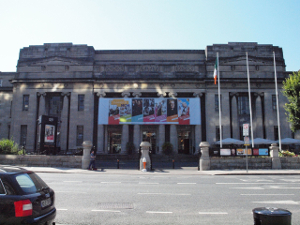
The National Concert Hall is opened in Dublin on September 9, 1981. It is a concert hall located on Earlsfort Terrace, close to St. Stephen’s Green, and is the principal national venue for classical music concerts in Ireland.

Originally built for the Dublin International Exhibition of Arts and Manufactures of 1865, the structure is converted into the central building of University College Dublin (UCD) at the foundation of the National University of Ireland in 1908. When UCD begins to relocate to a new campus at Belfield in the 1960s, part of the building is converted, and reopened as the National Concert Hall in 1981. Since then, the structure has been shared with UCD. In 2005 it is announced that UCD is to relocate all of its faculties to Belfield in the near term, allowing the NCH to develop a major expansion plan on the entire site, bringing it in line with international peers.

Today the National Concert Hall is one of Ireland’s National Cultural Institutions, under the aegis of the Irish Government‘s Department of Culture, Heritage and the Gaeltacht and, as such, is grant-aided by the Irish Government. The National Concert Hall is a statutory corporate body, with a management team, and a Government-appointed Board.

Although its facade is quite impressive, the venue’s architectural acoustics have been criticized. It is also unsuitable for large-scale opera stagings, lacking full stage facilities. Consequently, calls for a purpose-built venue are made from time to time.

Due to its central location, lunchtime concerts and recitals are common and attended by many workers from nearby office buildings. During the summer, outdoor recitals are given in the adjacent Iveagh Gardens. The resident orchestra is the RTÉ National Symphony Orchestra. Other regular performances are made from the rest of the RTÉ Performing Groups.

The National Concert Hall generally makes a small surplus, unlike most of Ireland’s National Cultural Institutions. This is despite the fact that although it has a high level of attendance, it has only a small public funding element, especially compared to the Abbey Theatre.