seamus dubhghaill

Promoting Irish Culture and History from Little Rock, Arkansas, USA


Leave a comment

Death of Edmund Mortimer, 3rd Earl of March

Edmund Mortimer, 3rd Earl of March and jure uxoris Earl of Ulster, is killed at Cork on December 27, 1381. His sudden death leaves the colony without effective leadership and prompts a military crisis.

Mortimer, the son of Roger Mortimer, 2nd Earl of March, by his wife Philippa, daughter of William Montagu, 1st Earl of Salisbury and Catherine Grandison, is born on February 1, 1352. An infant at the death of his father, as a ward of the crown he is placed by Edward III of England under the care of William of Wykeham and Richard FitzAlan, 3rd Earl of Arundel. The position of the young earl, powerful on account of his possessions and hereditary influence in the Welsh marches, is rendered still more important by his marriage on August 24, 1369 at the age of 17 to the 14-year-old Philippa, the only child of the late Lionel of Antwerp, 1st Duke of Clarence, the second son of Edward III.

Lionel’s late wife, Elizabeth, had been daughter and heiress of William Donn de Burgh, 3rd Earl of Ulster, and Lionel had himself been created Earl of Ulster before his marriage. Mortimer inherits the title Earl of Ulster on Lionel’s death. Therefore, the Earl of March not only represents one of the chief Anglo-Norman lordships in Ireland in right of his wife Philippa, but Philippa’s line is also the second most senior line of descent in the succession to the crown, after Edward the Black Prince and his son, King Richard II of England. John of Gaunt, younger brother of Prince Edward, had become the 1st Duke of Lancaster and thus the source of the House of Lancaster‘s claim to the throne.

This marriage has, therefore, far-reaching consequences in English history, ultimately giving rise to the claim of the House of York to the crown of England contested in the Wars of the Roses between the Yorks and the Lancasters; Edward IV being descended from the second adult son of Edward III as great-great-grandson of Philippa, countess of March, and in the male line from Edmund of Langley, 1st Duke of York and the fourth adult son of Edward III. Mortimer’s son, Roger Mortimer, 4th Earl of March, becomes heir presumptive to the English crown during the reign of Richard II.

Mortimer, now styled Earl of March and Ulster, becomes Earl Marshal of England in 1369, and is employed in various diplomatic missions during the following years. He is a member of the committee appointed by the Peers to confer with the Commons in 1373, the first instance of such a joint conference since the institution of representative parliaments on the question of granting supplies for John of Gaunt’s war in France.

Mortimer participates in the opposition to Edward III and the court party, which grows in strength towards the end of the reign, taking the popular side and being prominent in the Good Parliament of 1376 among the lords who support the Prince of Wales and oppose the Court Party and John of Gaunt. The Speaker of the House of Commons in this parliament is Mortimer’s steward, Peter de la Mare, who firmly withstands John of Gaunt in stating the grievances of the Commons, in supporting the impeachment of several high court officials, and in procuring the banishment of the king’s mistress, Alice Perrers. Mortimer is a member of the administrative council appointed by the same parliament after the death of Edward, the Black Prince, to attend the king and advise him in all public affairs.

Following the end of the Good Parliament its acts are reversed by John of Gaunt, Mortimer’s steward is jailed, and he himself is ordered to inspect Calais and other remote royal castles as part of his duty as Marshal of England. He instead chooses to resign the post.

On the accession of Richard II in 1377, Mortimer becomes a member of the standing council of government; though as husband of the heir-presumptive to the crown he wisely refrains from claiming any actual administrative office. The richest and most powerful person in the realm is, however, the king’s uncle John of Gaunt, whose jealousy leads Mortimer to accept the office of Lord Lieutenant of Ireland in 1379. He succeeds in asserting his authority in eastern Ulster, but fails to subdue the O’Neill dynasty farther west. Proceeding to Munster to put down the turbulent southern chieftains, he is killed at Cork on December 27, 1381. He is buried in Wigmore Abbey, of which he had been a benefactor, and where his wife Philippa is also interred.

(Pictured: Coat of Arms of the House of Mortimer)

Leave a comment

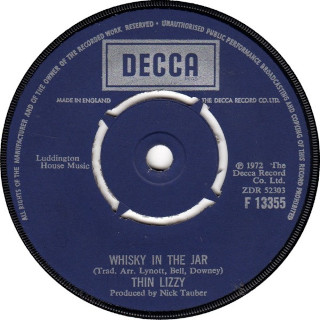
Thin Lizzy Reaches No. 1 with “Whiskey In The Jar”

Irish rock band Thin Lizzy reaches No. 1 on the Irish Singles Chart with its rendition of “Whiskey In The Jar” on December 19, 1972.

“Whiskey in the Jar” is the tale of a highwayman or footpad who, after robbing a military or government official, is betrayed by a woman; whether she is his wife or sweetheart is not made clear. Various versions of the song take place in County Kerry, Kilmoganny, Cork, Sligo and other locales throughout Ireland. It is also sometimes placed in the American South, in various places among the Ozarks or Appalachians, possibly due to Irish settlement in these places. Names in the song change, and the official can be a Captain or a Colonel, called Farrell or Pepper among other names. The protagonist’s wife or lover is sometimes called Molly, Jenny, Emzy, or Ginny among various other names. The details of the betrayal are also different, being either betraying him to the person he robbed and replacing his ammunition with sand or water, or not, resulting in his killing the person.

The song first gains wide exposure when Irish folk band The Dubliners perform it internationally as a signature song, and record it on three albums in the 1960s. In the United States, the song is popularized by The Highwaymen, who record it on their 1962 album Encore. The song has also been recorded by singers and folk groups such as Roger Whittaker, The Irish Rovers, Seven Nations, Off Kilter, King Creosote, Brobdingnagian Bards, Charlie Zahm, and Christy Moore.

Thin Lizzy’s 1972 single (bonus track on Vagabonds of the Western World [1991 edition]) stays at the top of the Irish charts for 17 weeks, and the British release stays in the top 30 for 12 weeks, peaking at No. 6, in 1973. This version has since been covered by U2, Pulp (first released on a 1996 various artist compilation album Childline and later on deluxe edition of Different Class in 2006), Smokie, Metallica (Garage Inc. in 1998, which wins a Grammy Award), Belle and Sebastian (The Blues Are Still Blue EP in 2006), Gary Moore (2006), Nicky Moore (Top Musicians Play Thin Lizzy in 2008), Simple Minds (Searching for the Lost Boys in 2009), Blaggards (Live in Texas in 2010) and Israeli musician Izhar Ashdot. The song is also on the Grateful Dead live compilation So Many Roads (1965-1995) disc five.


Leave a comment

Republican Prisoner Denny Barry Dies on Hunger Strike

Irish Republican prisoner Denis “Denny” Barry dies on hunger strike in Newbridge internment camp on November 20, 1923, shortly after the Irish Civil War.

Barry is born into a farming family in Riverstick, ten miles south of Cork city, on July 15, 1883. He enjoys Gaelic culture and sport and is a prominent member of the Ballymartle hurling club. He later joins the famous Blackrock National Hurling Club where he wins four senior county championships in a row during the years of 1910 to 1913.

In 1913, Barry joins the newly formed Irish Volunteers. He is a member of the first Cork brigade and has been politically active in Sinn Féin. In 1915, he moves to Kilkenny to take up employment there, where he continues his volunteer activities. Shortly after the Easter Rising in 1916, he is arrested in Kilkenny in a British Government crackdown and sent to Frongoch internment camp in North Wales. In 1917 he becomes election agent for W. T. Cosgrave in the Kilkenny by-election, one in which Cosgrave is successfully elected. However, just six years later he finds himself imprisoned by Cosgrave’s own government.

In 1922 Barry is imprisoned in Newbridge camp in Kildare and takes part in the hunger strike of 1923. On November 20, 1923, after 34 days protesting against the harsh regime and undignified conditions, he dies but even in death he is still refused dignity.

Barry’s body is not released to his family and is instead, on the orders of Minister of Defence, Richard Mulcahy, buried in the grounds of Newbridge internment camp. The Barry family takes legal action against this and eventually receives the body, but this is not the last of their troubles.

Upon their arrival in Cork with Barry’s body, the Bishop of Cork, Daniel Cohalan, instructs his priests not to allow Barry’s funeral in any church. Ironically just a few short years before, Bishop Cohalan had been a strong vocal supporter of Terence MacSwiney, Sinn Féin Lord Mayor of Cork, who died on hunger strike in Brixton Prison.

Shortly after MacSwiney’s death, Bishop Cohalan’s attitude towards the Irish Republican Army (IRA) changes and he issues a decree condemning the IRA in which he states, “Anyone who shall within the diocese of Cork organise or take part in an ambush or in kidnapping or otherwise, shall be guilty of murder or attempted murder and shall incur by the very fact the censure of excommunication.”

On December 10, 1922, Bishop Cohalan preaches publicly his support for the Anglo-Irish Treaty which establishes the Irish Free State, and he urges his flock to do the same. This leads to an even greater wedge between the Catholic Church and many IRA members, yet it is the incident with Barry that seriously taints the Bishop of Cork and the Catholic Church in republican eyes.

Because of Bishop Cohalan’s stern objection to Barry’s body being permitted into a Catholic church, his body has to lay in state in the Cork Sinn Féin headquarters on the Grand Parade in Cork city. He is then taken in a funeral procession to St. Finbarr’s Cemetery where he is buried in the Republican plot next to Terence MacSwiney, whose funeral Bishop Cohalan had presided over three years previously. In place of a priest is David Kent, Sinn Féin Teachta Dála for Cork and brother of Thomas Kent, who was executed for his part in the 1916 Rising. Kent gives an oration, recites the Rosary and sprinkles holy water on the grave.

On November 28, 1923, the day Barry is buried, Bishop Cohalan sends an open letter to The Cork Examiner publicly denying a Christian burial for Barry and urging all men of the cloth to stay away from any such attempts for such a funeral. He goes so far as to write to the Bishop of Kildare and Leighlin, Dr. Patrick Foley, to enquire about Barry getting the last sacraments. Barry did indeed receive the last rites from a Fr. Doyle who was serving as prison chaplain, and this does not impress the Bishop of Cork.

Barry’s funeral precession through Cork City draws massive crowds with people from all walks of Cork’s political, social and sporting life attending to pay their respects to this man who had been at the heart of the revolution in Cork during the last decade of his life. The IRA, Cumann na mBan and Na Fíanna Éireann march in military formations with the funeral party.

Two days after Barry’s death another IRA prisoner, Andrew O’Sullivan, from Cork dies and the strike is called off the following day. Women prisoners are then released while men remain in prison until the following year.

A memorial to Barry is unveiled in Riverstick in 1966.


Leave a comment

Birth of Architect Benjamin Woodward

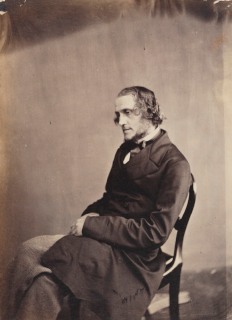
Benjamin Woodward, Irish architect who, in partnership with Sir Thomas Newenham Deane, designs a number of buildings in Dublin, Cork and Oxford, is born in Tullamore, County Offaly on November 16, 1816.

Woodward is trained as an engineer but develops an interest in medieval architecture, producing measured drawings of Holy Cross Abbey in County Tipperary. These drawings are exhibited at the Royal Institute of British Architects (RIBA) in London in 1846.

The same year Woodward joins the office of Sir Thomas Deane and becomes a partner in 1851 along with Deane’s son, Thomas Newenham Deane. It seems that Deane looks after business matters and leaves the design work to Woodward.

Woodward’s two most important buildings are the Museum at Trinity College, Dublin (1854-1857) and the Oxford University Museum of Natural History, Oxford, (1854-1860). He is also responsible for the Kildare Street Club in Dublin (1858-1861) and Queen’s College Cork, now University College Cork (1845-1849).

The work of Deane and Woodward is characterised by naturalistic decoration with foliage and animals carved into capitals and plinths around windows and doors. It is extolled by John Ruskin in particular when he visits the Museum at Trinity College, Dublin. Woodward collaborates in particular with the O’Shea brothers, James and John, who are stone carvers from County Cork. They, along with London sculptors, carve the abundant decorative stonework at Trinity, showing owls, lizards, cats and monkeys, as well as other flora and fauna. Later the O’Sheas carve stonework at the Kildare Street Club, including the famous window piece showing the club members as monkeys playing billiards. Some stories tell of the O’Sheas getting into trouble and possibly even being sacked for carving cats or monkeys at the Oxford University Museum.

Benjamin Woodward dies on May 16, 1861.

(Pictured: Benjamin Woodward attributed to Lewis Carroll, albumen print, late 1850s, © National Portrait Gallery, London)


Leave a comment

Birth of Morgan O’Connell, Soldier & Politician

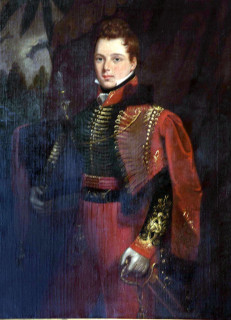
Morgan O’Connell, soldier, politician and son of the Irish Nationalist leader Daniel O’Connell, the Liberator of Ireland, is born in Dublin on October 31, 1804. He serves in the Irish South American legion and the Imperial Austrian Army. He is MP for Meath from 1832 until 1840 and afterwards assistant registrar of deeds for Ireland from 1840 until 1868.

O’Connell, one of seven children (and the second of four sons) of Daniel and Mary O’Connell, is born at 30 Merrion Square, Dublin. His brothers Maurice, John and Daniel are also MPs.

In 1819, self-styled General John Devereux comes to Dublin to enlist military aid for Simón Bolívar‘s army to liberate Venezuela from Spanish rule. He succeeds in forming an Irish Legion, to be part of Bolivar’s British Legions. O’Connell, encouraged by his father, is one of the officers who purchases a commission in it even though he is only 15 years old. The enterprise is mismanaged; there is no commissariat organisation on board the ships, and a part of the force die on the voyage. The remainder are disembarked on the Spanish Main at Margarita Island, where many deaths take place from starvation eight days after the Irish mutineers leave for Jamaica.

Bolivar, who had noted his pleasure at the departure of “these vile mercenaries,” is too astute a diplomat to offend the son of his Irish counterpart. O’Connell is accorded the appropriate privileges of his rank, and toasts are drunk to the health of his father, the “most enlightened man in all Europe.” A portion of the expedition, under Francis O’ Connor, effects an alliance with Bolivar, and to the energy of these allies the republican successes are chiefly due.

Bolivar makes sure that the untrained Irish lad stays out of danger. “I have numberless hardships to go through,” said Bolivar, “which I would not bring him into, for the character of his father is well known to me.” But ceremonial duties soon bore the restless young Irishman. After a year at Bolivar’s headquarters Morgan leaves for Ireland.

If South America did not satisfy O’Connell’s taste for adventure, he has more than his fill on the return journey. He survives a bout of tropical fever and is shipwrecked twice in succession, ending up stranded in Cuba. A schooner captain, who turns out to be a long-lost Irish cousin, rescues him. After the captain is killed in a fight with his boatswain, he hitches a ride to Jamaica on a Danish ship commanded by a skipper from Cork. From Jamaica, another Irish officer offers Morgan passage home.

Arriving in January 1822, O’Connell is greeted by his proud father as a prodigal son returned. His South American adventure, declares Daniel O’Connell, has made a man of Morgan. Otherwise, said O’Connell, “it would have been difficult to tame him down to the sobriety of business.” After his return to Ireland, he again seeks foreign service in the Austrian army.

On December 19, 1832, O’Connell enters parliament in the Liberal interest, as one of the members for Meath, and continues to represent that constituency until January 1840, when he is appointed first assistant-registrar of deeds for Ireland, at a salary of £1,200 a year, a position he holds until 1868. In politics he is never in perfect accord with his father, and his retirement from parliament is probably caused by his inability to accept the Repeal movement.

During his parliamentary career O’Connell fights a duel with Lord William Arden, 2nd Baron Alvanley, a captain in the British Army, at Chalk Farm, on May 4, 1835. A challenge had been sent by Alvanley to O’Connell’s father, who, in accordance with a vow he had made after shooting John D’Esterre, declines the meeting. The younger O’Connell thereupon takes up the challenge on his father’s account. Two shots each are exchanged, but no one is hurt. Afterwards, in December 1835, he receives a challenge from Benjamin Disraeli, in consequence of an attack made on Disraeli by O’Connell’s father. He declines to meet Disraeli.

On July 23, 1840, O’Connell marries Kate Mary, youngest daughter of Michael Balfe of South Park, County Roscommon.

Morgan O’Connell dies at 12 St. Stephen’s Green, Dublin, on January 20, 1885. He is buried in Glasnevin Cemetery in Dublin on January 23.

(Pictured: Morgan O’Connell, oil on canvas, artist unknown, c. 1819/20)


Leave a comment

Irish Nurse’s Organization Votes to Reactivate Industrial Action

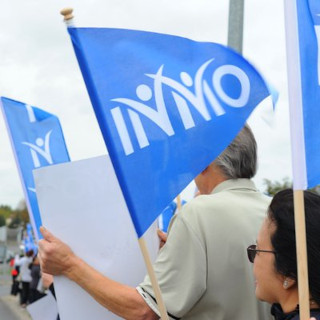
Two hundred delegates of the 24,000-strong Irish Nurses Organisation (INO) nurse’s union vote unanimously on October 27, 1998, to reactivate industrial action if their claims are not met. The delegates gather at the Burlington Hotel in Dublin.

The more difficult task is to modify the pay demands made by the State’s 2,500 ward sisters. The INO executive calls for senior ward sisters to receive salaries of £31,000 a year, or £6,400 more than the current maximum. However, one of the INO branch amendments calls for a new maximum of £35,000, the same salary as directors of nursing in major hospitals.

The conference is called to report on progress to date in talks, spell out objectives and obtain a mandate for strike action if negotiations break down. There is little progress to report. Talks at the Labour Relations Commission the previous week failed to resolve claims on extra-long-service increments for staff nurses, or better rates of pay for ward sisters. Both issues are now referred to the Labour Court, which is already dealing with allowances for extra professional qualifications held by nurses.

The Labour Court is due to hear submissions from the INO, other nursing unions and health service managers on the qualifications issue the following day. About half of the State’s staff nurses have such qualifications, worth £347 a year. The union wants them re-rated at 10% of basic salary, worth up to £2,200 a year for staff nurses at the top of the scale. Despite the negotiating gap, this issue is less difficult to resolve than the others, because it is less likely to lead to follow-on claims from other public service unions.

The union is looking for new long-service increments at the top of the current 15-year scale, which will add 18% to basic salary. As 80% of nurses never graduate to ward sister level, the INO argues that a nurse with 22 years’ service should be earning £25,000.

It is also seeking a minimum 10% pay differential between the maximum amount staff nurses can earn and the pay for the new Clinical Nurse Managers I, recommended by the Nursing Commission. The differential for Clinical Nurse Managers II should be 15% and that for Clinical Nurse Managers III should be 25%.

The union argues that any smaller differentials will make it unattractive for staff nurses to accept promotion and forgo the opportunity for unsocial hours premiums. Recent offers from the management on overtime pay could make promotion even less attractive.

A week earlier the nursing unions defer a nationwide overtime ban only after management agrees to introduce a national framework for overtime payments. Ominously, the concession comes after an overtime ban was introduced in Cork. For the first time nurses nationwide will be paid time-and-a-half, or double time for overtime.

But the unions also demand permanent part-time nursing posts be introduced, as a means of combating the increasing nursing shortage. That there is a shortage of staff nurses is the one issue unions, health service managers and the Department of Health are agreed on. It is severest in Dublin hospitals, where over 300 beds have closed.


Leave a comment

Death of Terence MacSwiney, Playwright & Politician

Terence James MacSwiney, Irish playwright, author, politician and Sinn Féin Lord Mayor of Cork during the Irish War of Independence, dies in London‘s Brixton Prison on October 25, 1920, after 73 days on hunger strike. His death brings him and the Irish Republican campaign to international attention.

MacSwiney is born at 23 North Main Street, Cork, County Cork, one of eight children of John and Mary MacSwiney. Following the failure of this business, John MacSwiney emigrates to Australia in 1885 leaving the children in the care of their mother and his eldest daughter.

MacSwiney is educated by the Christian Brothers at the North Monastery school in Cork but leaves at fifteen to help support the family. He becomes an accountancy clerk but continues his studies and matriculates successfully. He continues in full-time employment while he studies at the Royal University (now University College Cork), graduating with a degree in Mental and Moral Science in 1907.

In 1901 MacSwiney helps to found the Celtic Literary Society, and in 1908 he founds the Cork Dramatic Society with Daniel Corkery and writes a number of plays for them. His first play, The Last Warriors of Coole, is produced in 1910. His fifth play, The Revolutionist (1915), takes the political stand made by a single man as its theme.

Described as a sensitive poet-intellectual, MacSwiney’s writings in the newspaper Irish Freedom bring him to the attention of the Irish Republican Brotherhood. He is one of the founders of the Cork Brigade of the Irish Volunteers in 1913 and is President of the Cork branch of Sinn Féin. He founds a newspaper, Fianna Fáil, in 1914, but it is suppressed after only 11 issues. In April 1916, he is intended to be second in command of the Easter Rising in Cork and Kerry but stands down his forces on the order of Eoin MacNeill.

Following the rising, MacSwiney is imprisoned by the British Government under the Defence of the Realm Act 1914 in Reading and Wakefield Gaols until December 1916. In February 1917 he is deported from Ireland and imprisoned in Shrewsbury and Bromyard internment camps until his release in June 1917. It is during his exile in Bromyard that he marries Muriel Murphy of the Cork distillery-owning family. In November 1917, he is arrested in Cork for wearing an Irish Republican Army (IRA) uniform, and inspired by the example of Thomas Ashe, goes on a hunger strike for three days prior to his release.

In the 1918 Irish general election, MacSwiney is returned unopposed to the first Dáil Éireann as Sinn Féin representative for Mid Cork, succeeding the Nationalist MP D. D. Sheehan. After the murder of his friend Tomás Mac Curtain, the Lord Mayor of Cork on March 20, 1920, he is elected as Lord Mayor. On August 12, 1920, he is arrested in Cork for possession of “seditous articles and documents,” and also possession of a cipher key. He is summarily tried by a court on August 16 and sentenced to two years’ imprisonment at Brixton Prison in England.

In prison MacSwiney immediately starts a hunger strike in protest of his internment and the fact that he was tried by a military court. Eleven other Irish Republican prisoners in Cork Jail go on hunger strike at the same time. On August 26, the British Government states that “the release of the Lord Mayor would have disastrous results in Ireland and would probably lead to a mutiny of both military and police in south of Ireland.”

MacSwiney’s hunger strike gains world attention. The British Government is threatened with a boycott of British goods by Americans, while four countries in South America appeal to Pope Benedict XV to intervene. Protests are held in Germany and France as well. An Australian member of Parliament, Hugh Mahon, is expelled from the Parliament of Australia for “seditious and disloyal utterances at a public meeting,” after protesting against the actions of the British Government. Two weeks later, the Spanish Catalan organization Autonomous Center of Employees of Commerce and Industry (CADCI) sends a petition to British Prime Minister David Lloyd George calling for his release and the newspaper of the organization, Acció (Acción in Spanish), begins a campaign for MacSwiney.

Food is often placed near MacSwiney to persuade him to give up the hunger strike. Attempts at force-feeding are undertaken in the final days of his strike. On October 20, 1920, he slips into a coma and dies five days later after 73 days on hunger strike. His body lay in St. George’s Cathedral, Southwark in London where 30,000 people file past it. Fearing large-scale demonstrations in Dublin, the authorities divert his coffin directly to Cork, and his funeral in the Cathedral of St. Mary and St. Anne on October 31 attracts huge crowds. He is buried in the Republican plot in St. Finbarr’s Cemetery in Cork. Arthur Griffith delivers the graveside oration.


Leave a comment

Body of Jack Lynch Moved to Church of St. Paul of the Cross

On October 21, 1999, President Mary McAleese leads mourners at the removal of the body of former Taoiseach and Fianna Fáil leader, Jack Lynch, from Dublin’s Royal Hospital, where he had died the previous day, to the Church of St. Paul of the Cross, Mount Argus.

Jack Lynch, in full John Mary Lynch, is born on August 15, 1917, in Cork, County Cork. He serves as Taoiseach of Ireland from 1966 to 1973 and from 1977 to 1979.

Lynch studies law and enters the civil service with the Department of Justice in 1936. He eventually decides on a legal career, is called to the bar in 1945, resigns from the civil service, and practices on the Cork circuit. He already enjoys a national reputation as a sports hero as he had won five All-Ireland medals as a Cork hurler and another as a footballer.

Lynch joins Fianna Fáil and wins a seat in Dáil Éireann, the lower house of the Oireachtas, in 1948. He works closely with Éamon de Valera in opposition (1948–51), and de Valera appoints him a Parliamentary Secretary in 1951–1954, Minister for the Gaeltacht in 1957, and Minister for Education in 1957–1959. When Seán Lemass succeeds de Valera as Taoiseach in 1959, he makes Lynch Minister for Industry and Commerce and in 1965–1966 Minister for Finance.

Lemass’s retirement in 1966 causes an internal party conflict over the succession that leads to Lynch’s selection as a compromise candidate, a position he reluctantly accepts. In November 1966 he becomes leader of Fianna Fáil and Taoiseach. In June 1969 he becomes the only Fianna Fáil leader other than de Valera to win an overall majority in a general election.

In 1969–1973 Lynch plays an important role when civil unrest leads to the collapse of the government of Northern Ireland and poses a threat to the stability of the Irish state. He fires two cabinet ministers who are suspected of involvement in smuggling arms to the Provisional Irish Republican Army (IRA). He also creates a consensus in Irish party politics on a policy of conciliation and cooperation with the British government in seeking a solution to the Northern Ireland problem based on establishing power-sharing between the unionist majority and the Roman Catholic minority.

In 1972 Lynch wins an 83% majority in a referendum on Ireland’s entry into the European Economic Community and, on January 1, 1973, Ireland becomes a member. Although he is defeated in the 1973 Irish general election, he again demonstrates his remarkable popularity at the polls in 1977 when Fianna Fáil wins their largest and their last overall majority. In December 1979, however, discouraged by challenges to his authority from party colleagues, he resigns his leadership and soon after retires from politics. He serves on a number of corporate boards after his retirement.

Lynch dies in the Royal Hospital, Donnybrook, Dublin on October 20, 1999, at the age of 82. He is honoured with a state funeral which is attended by the President Mary McAleese, Taoiseach Bertie Ahern, former Taoisigh John Bruton, Albert Reynolds and Charles Haughey, and various political persons from all parties. The coffin is then flown from Dublin to Cork where a procession through the streets of the city draws some of the biggest crowds in the city’s history. Following the Requiem Mass celebrated in his home parish of the Cathedral of St. Mary and St. Anne, his friend and political ally, Desmond O’Malley, delivers the graveside oration, paying tribute to Lynch’s sense of decency. He is buried in St. Finbarr’s Cemetery, Cork.


Leave a comment

Death of IRA Leader Seán Treacy

Seán Allis Treacy, one of the leaders of the Third Tipperary Brigade of the Irish Republican Army during the Irish War of Independence, is killed on October 14, 1920, in a gun battle in Talbot Street, Dublin.

Treacy is born on February 14, 1895, in Soloheadbeg, County Tipperary. He leaves school at the age of 14 and works as farmer while also developing deep patriotic convictions. He is a member of the Gaelic League, and of the Irish Republican Brotherhood (IRB) from 1911 and the Irish Volunteers from 1913.

Treacy is picked up in the mass arrests following the Easter Rising in 1916. He spends much of the following two years in prison, where he goes on hunger strike on several occasions. In 1918, he is appointed Vice Officer-Commanding of the Third Tipperary Brigade of the Irish Volunteers, which becomes the Irish Republican Army in 1919.

On January 21, 1919, Treacy and Dan Breen, together with Seán Hogan, Séamus Robinson, and five other volunteers, help to ignite the conflict that is to become the Irish War of Independence. They ambush and shoot dead Constables Patrick MacDonnell and James O’Connell of the Royal Irish Constabulary (RIC), who are guarding a transport of gelignite explosives, during the Soloheadbeg Ambush near Treacy’s home. Treacy leads the planning of the ambush and briefs the brigade’s OC Robinson on his return from prison in late 1918. Robinson supports the plans and agrees they will not go to GHQ for permission to undertake the attack.

As a result of the Soloheadbeg Ambush, South Tipperary is placed under martial law and declared a Special Military Area under the Defence of the Realm Act. After Soloheadbeg ambush party member Seán Hogan is arrested on May 12, 1919, Treacy, Breen, and Séamus Robinson are joined by five men from the IRA’s East Limerick Brigade to organise Hogan’s rescue. Hogan is brought to the train which is intended to take him from Thurles to Cork on May 13, 1919. As the train steams across the Tipperary border and into County Limerick, the IRA party boards the train in Knocklong. A close-range struggle ensues on the train. Treacy and Breen are seriously wounded in the gunfight and two RIC men die, but Hogan is rescued. His rescuers rush him into the village of Knocklong where a butcher cuts off his handcuffs using a cleaver.

A search for Treacy and the others is mounted across Ireland. Treacy leaves Tipperary for Dublin to avoid capture. In Dublin, Michael Collins employs Treacy on assassination operations with “the Squad“. In the summer of 1920, he returns to Tipperary and organises several attacks on RIC barracks before again moving his base of operations to Dublin.

By spring 1920 the political police of both the Crimes Special Branch of the Royal Irish Constabulary (RIC) and G-Division (Special Branch) of the Dublin Metropolitan Police (DMP) have been effectively neutalised by IRA counterintelligence operatives working for Michael Collins. The British thoroughly reorganise their administration at Dublin Castle and begin to import dozens of professional secret service agents from all parts of the British Empire into Ireland to track down IRA operatives and Sinn Féin leaders.

On October 11, 1920, Treacy and Breen are holed up in a safe house on the north side of Dublin when it is raided by a police unit. In the ensuing shootout, two senior British officers are wounded and die the next day while Treacy and Breen are wounded, Breen seriously. Treacy and Breen manage to escape through a window and shoot their way through the police cordon.

Treacy is discovered at the Republican Outfitters shop at 94 Talbot Street on October 14 a British Secret Intelligence Service surveillance team led by Major Carew and Lt. Gilbert Price. They are stalking him in hopes that he will lead them to Collins or to other high-value IRA targets. Treacy realises that he is being followed and runs for his bicycle but grabs the wrong bike, taking one that is far too big for him, and falls. Price draws his pistol and closes in on Treacy. Treacy draws his parabellum automatic pistol and shoots Price and another British agent before he is hit in the head, dying instantly.

Treacy is buried at Kilfeacle graveyard where, despite a large presence of British military personnel, a volley of shots is fired over the grave.


Leave a comment

Kerrygold Butter Launched on the World Market

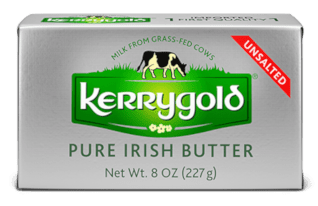
Kerrygold Pure Irish Butter, created by Sir Anthony O’Reilly, is launched on the world market on October 8, 1962.

O’Reilly is the CEO of what is then called An Bord Bainne (Irish for “The Irish Dairy Board”). His aim is to create a premium brand worthy of the rich quality of Irish milk. The name for the brand is chosen in 1962 from a total of 60 suggestions. Some of the names proposed include Shannon Gold, Tub-o-gold, Golden Farm, Butter-cup, and even Leprechaun.

Surprisingly, Kerrygold is first launched in the UK, not in Ireland. The butter is launched in October 1962 in Manchester. It is available in London three years later.

In 1964, the butter begins exporting to overseas markets. It is not until 1973 that the brand is even made available for sale in Ireland. Kerrygold eventually expands its offerings to include other dairy products, such as its Dubliner Cheese (named after the city of Dublin, although it is made in Cork).

Kerrygold advertising campaigns become legendary. The most well-known is the “Who’s taking the horse to France?” commercial, which first airs in 1994.

Today, the golden foil packaging of Kerrygold butter is recognized around the world in 60 countries. Kerrygold is the number one branded butter in Germany, and in the United States, it is the number one imported butter brand and the number three overall butter brand.

In 2017, Kerrygold is banned in Wisconsin for not complying with a 1970 state law making it unlawful to sell any butter in the state unless it has been tested by industry experts and issued a grade. Some critics suggest that the law is only proposed to protect the state’s own dairy industry. Fans of Kerrygold butter in Wisconsin are forced to travel across state lines to stock up due to the ban.

Two lawsuits are filed challenging the constitutionality of the state’s butter grading law.

Ornua, the rebranded An Bord Bainne, confirms in November 2017 its Kerrygold butter is back on store shelves in Wisconsin as the company now complies with the state’s law requiring butter sold in Wisconsin to pass a government-mandated grading test.