seamus dubhghaill

Promoting Irish Culture and History from Little Rock, Arkansas, USA


Leave a comment

The Death of Theobald Wolfe Tone

theobald-wolfe-tone

Theobald Wolfe Tone, Irish republican and rebel who sought to overthrow English rule in Ireland and who led a French military force to Ireland during the Irish Rebellion of 1798, dies at Provost’s Prison, Dublin on November 19, 1798, from a stab wound to his neck which he inflicted upon himself on November 12. His attempted suicide is the result of being refused a soldier’s execution by firing squad and being sentenced to death by hanging.

Wolfe Tone is born in Dublin on June 20, 1763. The son of a coach maker, he studies law and is called to the Irish bar in 1789 but soon gives up his practice. In October 1791 he helps found the Society of United Irishmen, initially a predominantly Protestant organization that works for parliamentary reforms, such as universal suffrage and Roman Catholic emancipation. In Dublin in 1792 he organizes a Roman Catholic convention of elected delegates that forces Parliament to pass the Catholic Relief Act of 1793. He himself, however, is anticlerical and hopes for a general revolt against religious creeds in Ireland as a sequel to the attainment of Irish political freedom.

By 1794 Wolfe Tone and his United Irishmen friends begin to seek armed aid from Revolutionary France to help overthrow English rule. After an initial effort fails, he goes to the United States and obtains letters of introduction from the French minister at Philadelphia to the Committee of Public Safety in Paris. In February 1796 he arrives in the French capital, presents his plan for a French invasion of Ireland, and is favourably received. The Directory then appoints one of the most brilliant young French generals, Lazare Hoche, to command the expedition and makes Tone an adjutant in the French army.

On December 16, 1796, Wolfe Tone sails from Brest with 43 ships and nearly 14,000 men. But the ships are badly handled and, after reaching the coast of west Cork and Kerry, are dispersed by a storm. He again brings an Irish invasion plan to Paris in October 1797, but the principal French military leader, Napoleon Bonaparte, takes little interest. When insurrection breaks out in Ireland in May 1798, Wolfe Tone can only obtain enough French forces to make small raids on different parts of the Irish coast. In September he enters Lough Swilly, Donegal, with 3,000 men and is captured there.

At his trial in Dublin on November 10, Wolfe Tone defiantly proclaims his undying hostility to England and his desire “in fair and open war to produce the separation of the two countries.” He is found guilty and is sentenced to be hanged. Early in the morning of November 12, 1798, the day he is to be hanged, he cuts his throat with a penknife and dies at the age of 35 in Provost’s Prison, Dublin, not far from where he was born. He is buried in Bodenstown, County Kildare, near his birthplace, and his grave is in the care of the National Graves Association.


Leave a comment

Death of Poet William Allingham

william-allingham

William Allingham, Irish poet, diarist and editor, dies in Hampstead, London, England on November 18, 1889. He writes several volumes of lyric verse, and his poem “The Faeries” is much anthologised. However, he is better known for his posthumously published Diary, in which he records his lively encounters with Alfred Tennyson, Thomas Carlyle and other writers and artists. His wife, Helen Allingham, is a well-known watercolourist and illustrator.

Allingham is born on March 19, 1824, in the small town of Ballyshannon, County Donegal, and is the son of the manager of a local bank who is of English descent. During his childhood his parents move twice within the town, where he enjoys the country sights and gardens, learns to paint and listens to his mother’s piano playing. When he is nine, his mother dies.

Allingham obtains a post in the custom house of his native town and holds several similar posts in Ireland and England until 1870. During this period, he publishes Poems (1850), which includes his well-known poem “The Fairies,” and Day and Night Songs (1855). Laurence Bloomfield in Ireland, his most ambitious, though not his most successful work, a narrative poem illustrative of Irish social questions, appears in 1864. He also edits The Ballad Book for the Golden Treasury series in 1864, and Fifty Modern Poems in 1865.

In April 1870 Allingham retires from the customs service, moves to London and becomes sub-editor of Fraser’s Magazine, eventually becoming editor in succession to James Anthony Froude in June 1874, a post he holds until 1879. On August 22, 1874, he marries the illustrator, Helen Paterson, who is twenty-four years younger than he. His wife gives up her work as an illustrator and becomes well known under her married name as a water-colour painter. At first the couple lives in London, at 12 Trafalgar Square, Chelsea, near Allingham’s friend, Thomas Carlyle, and it is there that they have their first two children – Gerald Carlyle (b. 1875 November) and Eva Margaret (b. 1877 February).

Allingham’s Songs, Poems and Ballads appears in 1877. In 1881, after the death of Carlyle, the Allinghams move to Sandhills near Witley in Surrey, where their third child, Henry William, is born in 1882. At this period Allingham publishes Evil May Day (1883), Blackberries (1884) and Irish Songs and Poems (1887).

In 1888, due to Allingham’s declining health, they move back to the capital, to the heights of Hampstead village. However, on November 18, 1889, he dies at Hampstead. According to his wishes he is cremated. His ashes are interred at St. Anne’s church in his native Ballyshannon.

Posthumously Allingham’s Varieties in Prose is published in 1893. William Allingham A Diary, edited by Mrs. Helen Allingham and D. Radford, is published in 1907. It contains Allingham’s reminiscences of Tennyson, Carlyle and other writers and artists.


Leave a comment

Birth of Father Leonard Eugene Boyle

leonard-eugene-boyle

Leonard Eugene Boyle, Irish and Canadian scholar in medieval studies and palaeography, is born in Ballintra, County Donegal on November 13, 1923. He is the first Irish and North American Prefect of the Vatican Library in Rome from 1984 to 1997.

Boyle spends some years in Tralee, County Kerry, following the July 1940 death of his older brother John, who is a member of Garda Síochána and drowns while on holiday in Ballybunion, County Kerry. He is educated in the Irish language and enters the Dominican Order in 1943. He is ordained a priest in 1949 having received his doctorate in Oxford.

Boyle frequently visits Tralee, where a number of his family still reside, and is involved in many projects in the town. His immense knowledge and expertise in historical and archaeological issues is freely given in order to enhance the town. Of particular concern is his hope that the site of the original Dominican Priory at the centre of the town be conserved for future archaeological excavation.

After moving to Toronto, Boyle teaches at the Pontifical Institute of Mediaeval Studies and at the Centre for Medieval Studies at the University of Toronto from 1961 to 1984. He also serves as Professor of Latin Palaeography and History of Medieval Theology at the Pontifical University of St. Thomas Aquinas in Rome from 1956 to 1961.

In 1984 Boyle is appointed Prefect of the Vatican Library by Pope John Paul II. This appointment takes him by surprise but appears to be a recognition of his immense scholarship, expertise in antiquity and renowned interest in learning as a whole. In an effort to modernise the Vatican Library, he sets about the digitisation of the library’s many thousands of manuscripts that date from hundreds of years BC, which leads to their greater availability to scholars around the world. He also extends the opening hours of the library and employs women for the first time as part of the library’s staff. In 1987, he is made an Officer of the Order of Canada. In 1997, he is ousted as Prefect after his dealings with some American fund-raising associates result in lawsuits involving the Vatican.

Known for his wit and independence of mind and spirit, Boyle is once asked of his interest in being a Cardinal given the fact that all of his predecessors have gone on to be Cardinals. His reply is in the negative saying “nothing but the papacy” would do him.

Father Boyle dies on October 25, 1999. He is buried in his beloved Basilica di San Clemente, in 2000, a year after his death, following official desire to give him the honour of interment in the vaults of San Clemente — one of Rome’s holiest and most historical shrines.


Leave a comment

Sinking of the HMS Wasp

hms-wasp

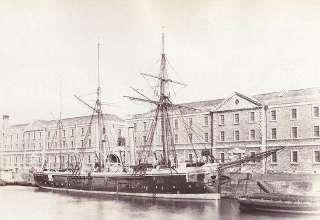
HMS Wasp, a composite screw Banterer-class gunboat of the Royal Navy, is wrecked off Tory Island, County Donegal on September 22, 1884 with the loss of 52 lives. There are six survivors.

The Banterer class is designed by Nathaniel Barnaby, the Admiralty Director of Naval Construction. The keel of the HMS Wasp is laid at Barrow Iron Shipbuilding as yard number 71 and she is launched on October 5, 1880. She is commissioned on December 1, 1881 and is rigged with three masts, making her a barquentine-rigged vessel.

On her final voyage, HMS Wasp, under the command of Lieutenant J.D. Nicholls, is sailing from Westport, County Mayo, in the West of Ireland, to Moville in Inishowen, County Donegal, in Ulster, to pick up a party of police, bailiffs and court officials. These are to be transported to Inishtrahull, an island off Malin Head, to carry out evictions for non-payment of rents. Ironically, the ship had delivered urgently needed supplies of seed potatoes to the same islanders the previous year.

In the early morning of September 22, 1884, HMS Wasp is near Tory Island. The weather is cloudy with occasional squalls and rain showers. The commanding officer and most of the crew are in their bunks. The lieutenant navigating the ship is relatively unfamiliar with the area in which the ship is sailing. At 3:55 AM HMS Wasp runs aground on a reef. The initial shock breaks the hull of the ship and she begins to rapidly fill with water. The commander orders the ship’s boats lowered but HMS Wasp hits the reefs again, sinking so quickly that the boats cannot be launched. HMS Wasp sinks within fifteen minutes. Six crewmen manage to cling to one of the gunboat’s spars and they wash ashore on Tory Island and are found by islanders. The other 52 crew aboard drown.

A court martial is held for the survivors. The finding is that the cause of the wreck was a lack of care taken with the vessel’s navigation, but the survivors are all exonerated. The wreck is sold to the Cornish Salvage Co. in November 1910.


Leave a comment

The Completion of the “Annals of the Four Masters”

annals-of-the-four-masters

The Annals of the Kingdom of Ireland or the Annals of the Four Masters, chronicles of medieval Irish history, are completed on August 10, 1636. The entries span from the Deluge, dated as 2,242 years after creation to 1616 AD.

The annals are mainly a compilation of earlier annals, although there is some original work, and are one of the principal Irish language sources for Irish history up to 1616. They are compiled between 1632 and 1636 at a Franciscan friary near the Drowes River in County Leitrim, on the border with County Donegal and County Sligo. The patron of the project is Fearghal Ó Gadhra, MP, a Gaelic lord in Coolavin, County Sligo. While many of the early chapters are essentially lists of names and dates, the later chapters, dealing with events of which the authors have first-hand accounts, are much more detailed.

The chief compiler of the annals is Brother Mícheál Ó Cléirigh from Ballyshannon, who is assisted by, among others, Cú Choigcríche Ó Cléirigh, Fearfeasa Ó Maol Chonaire and Peregrine Ó Duibhgeannain. Although only one of the authors, Mícheál Ó Cléirigh, is a Franciscan friar, they become known as “The Four Friars” or in the original Irish, Na Ceithre Máistrí. The Anglicized version of this is “The Four Masters,” the name that has become associated with the annals themselves.

Due to the criticisms by Irish historian Tuileagna Ó Maol Chonaire, the text is not published during the lifetime of any of the participants. The first substantial English translation (starting at 1171 AD) is published by Owen Connellan in 1846. The Connellan translation includes the annals from the eleventh to the seventeenth centuries. The only version to have a four-colour frontispiece, it includes a large folding map showing the location of families in Ireland. This edition, neglected for over 150 years, is republished in the early twenty-first century. The original Connellan translation is followed several years later by a full translation by the historian John O’Donovan. The translation is funded by a government grant of £1,000 obtained by the notable mathematician Sir William Rowan Hamilton while he is president of the Royal Irish Academy.

The reliability and usefulness of the Annals as a historical source has sometimes been questioned on the grounds that they are limited to accounts of the births, deaths and activities of the Gaelic nobility of Ireland and often ignore wider social trends or events. On the other hand, the Annals, as one of the few prose sources in Irish from this period, also provide a valuable insight into events such as the Desmond Rebellions and the Nine Years’ War from a Gaelic Irish perspective.

The early part of this work is based upon the Lebor Gabála Érenn. Today, most scholars regard the Lebor Gabála Érenn as primarily myth rather than history. It appears to be mostly based on medieval Christian pseudo-histories, but it also incorporates some of Ireland’s native pagan mythology. Scholars believe the goal of its writers was to provide an epic history for Ireland that could compare to that of the Israelites or the Romans, and which reconciled native myth with the Christian view of history.

The several manuscript copies are held at Trinity College, Dublin, the Royal Irish Academy, University College Dublin and the National Library of Ireland.

(Pictured: Illustration of “the four masters” by B. H. Holbrooke, 1846)


Leave a comment

Birth of Seán Doherty, Fianna Fáil Politician

sean-doherty

Seán Doherty, Fianna Fáil politician who serves as Cathaoirleach of Seanad Éireann from 1989 to 1992 and Minister for Justice from March 1982 to December 1982, is born on June 29, 1944, in Cootehall near Boyle, County Roscommon. He also serves as a Teachta Dála (TD) from 1977 to 1989 and 1992 to 2002 and is a Senator for the Administrative Panel from 1989 to 1992.

Doherty is educated at national level in County Leitrim and then at University College Dublin and King’s Inns. In 1965, he becomes a member of the Garda Síochána and serves as a detective in Sligo before joining the Special Detective Unit in Dublin in the early 1970s. In 1973, he takes a seat on the Roscommon County Council, which had been vacated after the death of his father.

After serving for four years on the Roscommon County Council, Doherty is elected as a Fianna Fáil TD for the Roscommon–Leitrim constituency at the 1977 general election.

In 1979, Doherty is a key member of the so-called “gang of five” which supports Charles Haughey‘s attempt to take over the leadership of the party. The other members are Albert Reynolds, Mark Killilea Jnr, Tom McEllistrim and Jackie Fahey. Haughey is successful in the Fianna Fáil leadership election and Doherty is rewarded by being appointed Minister of State at the Department of Justice from 1979 to 1981. In the short-lived 1982 Fianna Fáil government he enters the Cabinet as Minister for Justice. In this post he becomes involved in a series of controversies.

Doherty’s brother-in-law, Garda Thomas Nangle, is charged with assaulting James McGovern, a native of County Fermanagh, in a public house in December 1981. On September 27, 1982, hours before the case is due to be heard in District Court in the small village of Dowra, County Cavan, McGovern is arrested by the Special Branch of the Royal Ulster Constabulary (RUC) on the basis of entirely false Garda intelligence that he is involved in terrorism. The case against Nangle is dismissed because the principal witness, McGovern, fails to appear in court. The solicitor representing Nangle is Kevin Doherty, Seán Doherty’s brother. This questionable use of Garda/RUC Special Branch liaison, set up under the 1985 Hillsborough Anglo-Irish Agreement, prevents meetings between the Garda commissioner and the RUC chief constable for almost three years.

After Doherty leaves office it is revealed in The Irish Times that he ordered the tapping of three journalists home telephones. The newspaper also discloses that he has been interfering in the workings of the Garda and the administration of justice for both political and personal reasons. He immediately resigns from the party only to rejoin it in 1984.

At the 1989 general election his loses his seat in Dáil Éireann to the independent candidate Tom Foxe. He is also an unsuccessful candidate in the elections on the same day to the European Parliament, but he is later elected instead to the Seanad on the Administrative Panel and becomes the Cathaoirleach (Chairman) of the 19th Seanad.

In January 1992 the phone tapping scandal returns to haunt Fianna Fáil. Doherty announces in a television interview that he had shown transcripts of the conversations to Charles Haughey while Haughey was Taoiseach in 1982 although he had previously denied this. Haughey denies the claim also, but is forced to resign from the government, and then resigns as leader of Fianna Fáil. Doherty then regains his seat at the 1992 general election and holds it until his retirement at the 2002 general election.

Seán Doherty dies at Letterkenny General Hospital of a brain hemorrhage on June 7, 2005, while on a family holiday in County Donegal.


Leave a comment

The Ballymanus Mine Disaster

ballymanus-mine-memorial

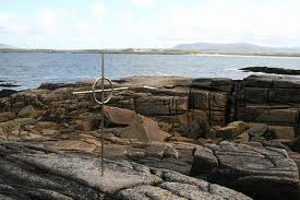
The Ballymanus mine disaster occurs on May 10, 1943 on a beach at Ballymanus, County Donegal when local villagers attempt to bring ashore an unexploded naval mine. Seventeen men and boys between 13 and 34 are killed in the explosion. Another two die later.

According to contemporary reports, the mine is spotted by a number of people, including a local coastguard and two local youths who wade out and tie ropes around it in an attempt to haul it ashore. They are then joined by other men and boys from the local area but as it is being hauled along the beach it is believed to strike a rock and explode, killing 17 people instantly. Two more die in the hospital soon afterwards. More than 40 houses in the nearby village are damaged by the blast. The explosion is so loud it is heard over 40 miles away in Letterkenny.

The scene on the beach is one of devastation. Parts of bodies lay everywhere, which makes identification difficult. Army personnel from Rockhill, outside Letterkenny, have the job of collecting the limbs and scattered bodies and bringing them to a local hall.

Ireland is officially neutral during World War II, and there would not be the same level of awareness amongst the public of the dangers of unexploded ordnance as in countries involved in the conflict. Other commentators note that 15 other mines are made safe in Donegal in the same year, that local senior Garda Síochána members are aware of the mine at least 3 hours before the explosion and are expected to secure a cordon around any reported mines. However, while some effort is made to advise the community of the dangers, the additional actions prescribed in the standing orders had not been taken.

(Pictured: Ballymanus Mine Memorial, Mullaghduff, Donegal)


4 Comments

Birth of John Pitt Kennedy, Engineer & Agricultural Reformer

john-pitt-kennedy-gravesite

Lieutenant-Colonel John Pitt Kennedy, British military engineer, agricultural reformer and civil servant, is born at Carndonagh, County Donegal on May 8, 1796.

Kennedy is educated at Foyle College, Derry, and the Royal Military Academy, Woolwich, becoming lieutenant in the Royal Engineers in 1815. Four years afterwards, he is sent to Malta, and thence to Corfu. He superintends the construction of a canal at Lefkada in 1820, serves next under Sir Charles James Napier at Cephalonia building lighthouses, roads, and quays, and is sub-inspector of militia in the Ionian Islands (1828–31).

During a period in India Kennedy meets Sir Charles James Napier and when he returns to Ireland he sets up agricultural schools designed to improve the economy of the country. One is at Cloghan near Ballybofey, and another at Eglinton near Derry. He becomes a farm manager and marries Anna, daughter of Sir Charles Styles, who owns large estates around Ballybofey, in 1838. Kennedy′s methods of improving the condition of the agricultural classes are indicated by the title of his work, Instruct; Employ; Don’t Hang Them: or Ireland Tranquilized without Soldiers and Enriched without English Capital (1835). He writes several others of similar nature, and as inspector general for Irish education (1837), as secretary to the Devon Commission (1843), and to the Famine Relief Committee (1845), his labours are unceasing in behalf of his native land.

Kennedy returns to the army in 1849 as military secretary to Sir Charles Napier and accompanies him to India, where he builds the military road named after him and extending from Kalka via Shimla to Kunawur and Tibet. He publishes British Home and Colonial Empire (1865–69), as well as a number of technical works relating to his Indian career. He also serves as District Grandmaster of Bengal.

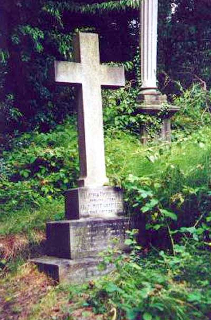
John Pitt Kennedy dies in 1879 and is buried in Highgate Cemetery (East) in Highgate, London Borough of Camden, Greater London, England.

(Pictured: John Pitt Kennedy gravesite in Highgate Cemetery, London)


Leave a comment

The Murder of Outlaw Redmond O’Hanlon

redmond-ohanlon

Redmond O’Hanlon, Irish guerrilla outlaw and an important figure in the Irish Rebellion of 1641, is shot and killed by his foster brother on April 25, 1681.

O’Hanlon is born in 1620 near Poyntzpass, County Armagh, in what is now Northern Ireland, the son of Loughlin O’Hanlon, rightful heir to Tandragee Castle. As a young man he is sent for a “proper” education in England and later works as a footman to Sir George Acheson of Markethill, but is dismissed for stealing horses. After the Irish Rebellion of 1641, he joins the Irish Catholic rebel forces. He serves under Owen Roe O’Neill at the Irish victory at the Battle of Benburb in 1646 but flees to France after the defeat of the Irish Confederation in the Cromwellian conquest of Ireland. O’Hanlon’s family lands are confiscated under the Act for the Settlement of Ireland 1652.

O’Hanlon spends several years in exile as an officer with the French army and is awarded the title of Count of the French Empire. He returns to Ireland around 1660, after the Restoration of King Charles II of England. After realizing there will be no restitution of his family’s lands, he takes to the hills around Slieve Gullion and becomes a notorious highwayman.

Although O’Hanlon is often compared to a real-life Robin Hood, the truth is more complex. Protestant landlords, militia officers, and even Anglican and Catholic priests work as informal members of the O’Hanlon gang, giving him information and scouting sites for him to rob. He also forces the landlords and merchants of northern Ireland to pay protection money. It is stated that the criminal activities of O’Hanlon are bringing in more money than the King’s revenue collectors.

In 1674 the colonial authorities in Dublin put a price on O’Hanlon’s head with posters advertising for his capture, dead or alive. The Anglo-Irish landowner Henry St. John, who had been granted the traditional lands of the O’Hanlon clan, receives O’Hanlon’s undying hatred when he begins evicting his clansmen in large numbers. St. John responds by waging a private war against the O’Hanlon Gang. The loss of his 19-year-old son while pursuing O’Hanlon only makes Henry St. John increasingly brutal toward anyone suspected of aiding Redmond O’Hanlon. On September 9, 1679, St. John is riding on his estate with a manservant and the Reverend Lawrence Power, the Church of Ireland Rector of Tandragee. A party of O’Hanlon’s associates ride into view and seize him, warning that he would be killed if a rescue is attempted. Then, a group of the family’s retainers ride into view and open fire on the kidnappers. As a result, Henry St. John receives two pistol balls in the forehead.

At the landlord’s funeral, an outraged Reverend Power denounces the outlaws and the landowners who do business with them. Outraged, James Butler, 1st Duke of Ormond, the Lord Deputy of Ireland, orders the assassination of O’Hanlon.

Count Redmond O’Hanlon is murdered in his sleep by his foster brother and close associate Art MacCall O’Hanlon at Eight Mile Bridge near Hilltown, County Down, on April 25, 1681. Art receives a full pardon and two hundred pounds from the Duke of Ormond for murdering his leader. William Lucas, the militia officer who had recruited Art and arranges the killing, receives a Lieutenant’s commission in the British Army.

As is the custom of the day, there are gruesome displays of his body parts including his head which is placed on a spike over Downpatrick jail. His remains are eventually removed to lie in a family plot in Conwal Parish Church cemetery in Letterkenny, County Donegal, where his parents had fled from Henry St. John. His bones, however, are not left to rest in peace there and his grave is constantly desecrated by the duke’s supporters. His remains are finally removed by his family and interred in his final secret resting place, somewhere within Lurgan Parish.


Leave a comment

Birth of Minister William Dool Killen

william-dool-killen

William Dool Killen, a minister of the Presbyterian Church in Ireland and church historian, is born at Church Street, Ballymena, County Antrim, on April 16, 1806.

Killen is the third of four sons and nine children of John Killen (1768–1828), a grocer and seedsman in Ballymena, by his wife Martha, daughter of Jesse Dool, a farmer in Duneane. His paternal grandfather, a farmer at Carnmoney, marries Blanche Brice, a descendant of Edward Brice. A brother, James Miller Killen (1815–1879), is a minister in Comber, County Down. Thomas Young Killen is his father’s great-nephew.

After attending local primary schools, Killen goes to Ballymena Academy around 1816, and in November 1821 enters the collegiate department of the Royal Belfast Academical Institution, under James Thomson. In 1827, he is licensed to preach by the Presbytery of Ballymena, and on November 11, 1829 he is ordained minister at Raphoe, County Donegal.

In July 1841 Killen is appointed, by the General Assembly of the Presbyterian Church in Ireland, its professor of church history, ecclesiastical government, and pastoral theology, in succession to James Seaton Reid. He concentrates on history. When Assembly’s College, Belfast is set up in 1853, he becomes one of the professors there. In 1869 he is appointed president of the college, in succession to Henry Cooke, and undertakes fundraising for professorial endowments and new buildings. In 1889 he resigns his chair but continues as president.

During his career Killen receives the degrees of D.D. (1845) and of LL.D. (1901) from the University of Glasgow. His portrait, painted by Richard Hooke, hangs in the Gamble library of the college.

William Dool Killen dies on January 10, 1902, and is buried in Balmoral Cemetery, Belfast, where a monument marks his resting place.