seamus dubhghaill

Promoting Irish Culture and History from Little Rock, Arkansas, USA


Leave a comment

Birth of Margaret Anna Cusack, Founder of Poor Clares Convent

margaret-anne-cusack

Margaret Anna Cusack, founder of the first Poor Clares convent in the west of Ireland and a talented writer who publishes on the issues of social injustice, is born to an aristocratic family of English origin in Coolock, County Dublin on May 6, 1829. Her writings and actions focus on advocacy of women’s rights including equal pay, equal opportunity for education, and legal reform to give women control of their own property.

Cusack is raised in the Anglican church tradition until her conversion to Catholicism in 1858. She enters the Irish Poor Clare Sisters and is among the first group of Sisters sent to found the convent at Kenmare, County Kerry.

During the next 21 years, Cusack, now known as Sister Francis Clare, dedicates herself to writing. Her writings include a wide range of concerns including lives of the saints, local histories, biographies, books and pamphlets on social issues and letters to the press. As the “Nun of Kenmare” she writes on behalf of the liberation of women and children who are victims of oppression. Income from her books and from her famine relief fund is distributed throughout Ireland. While doing all she can to feed the hungry, at the same time she campaigns vigorously against the abuse of absentee landlords, lack of education for the poor and against a whole system of laws which degrade and oppress a section of society.

To broaden the scope of her work Cusack moves to Knock, County Mayo in 1881 with the idea of expanding the ministry of the Poor Clares. She starts an industrial school for young women and evening classes for daytime land-workers. Several women are attracted by this work and in 1884 she decides to found her own community, The Sisters of St. Joseph of Peace.

Continued conflict in Knock with Church leaders leads Cusack to seek support in England. Under Cardinal Henry Edward Manning and Bishop Edward Bagshawe, she receives approbation for the new religious order from Pope Leo XIII and the Congregation of the Sisters of St. Joseph of Peace is founded in January 1884, in the Diocese of Nottingham, England.

Later, Cusack travels to the United States to continue her work with immigrant Irish women but is immediately rebuked by Archbishop Michael Corrigan of New York. Just at that time, New Jersey stretches out a hand of welcome and encouragement as Bishop Winand Wigger of the Archdiocese of Newark invites her to establish homes for young Irish working women there. Within a few years, however, she claims that because of Archbishop Corrigan’s criticism of her among bishops throughout the United States, the work of her new community cannot continue as long as she remains with them.

Physically exhausted, sick and disillusioned with a patriarchal Church, Cusack withdraws from the Sisters of St. Joseph of Peace and leaves behind the sisters she so dearly loved. She eventually returns to her friends in the Church of England. In later years, she keeps in contact with the Sisters and expresses a loving concern for them. She dies on June 5, 1899, and is buried in the cemetery reserved for the Church of England at Leamington Spa, Warwickshire, England.

Cusack passes into obscurity for a long time until, as a result of the Second Vatican Council, religious orders are encouraged to review their roots and the intent of their founders. Since then, there have been a number a studies on Cusack, such as Philomena McCarthy’s The Nun of Kenmare: The True Facts. With the rediscovery of the life and times of Cusack, she has been hailed as a feminist and a social reformer ahead of her time.


Leave a comment

Birth of Ray MacSharry, Fianna Fáil Politician

raymond-mcsharry

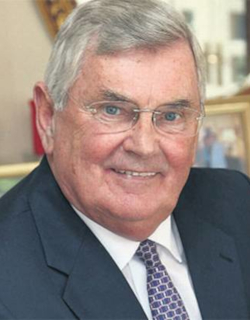
Raymond MacSharry, Fianna Fáil politician who serves in a range of cabinet positions, most notably as Tánaiste, Minister for Finance, and European Commissioner, is born on April 29, 1938, in Sligo, County Sligo.

MacSharry is educated at the local national school before later briefly attending Summerhill College. After leaving school he works as a livestock dealer throughout Sligo and Mayo before becoming involved in the Meat Exporters Factory in his native town. MacSharry also owns his own haulage firm.

Although MacSharry comes from a non-political family, he himself becomes an active member of Fianna Fáil in Sligo. In 1967 he makes his first move into politics when he secures election to both Sligo Borough Council and Sligo County Council. It was from this local base that he launches his national election campaign.

MacSharry is first elected to Dáil Éireann as a Fianna Fáil Teachta Dála (TD) for the Sligo–Leitrim constituency at the 1969 general election. He is re-elected to the Dáil at the 1973 general election, however, Fianna Fáil are out of power as a Fine GaelLabour Party government comes to power. In Jack Lynch‘s subsequent front bench reshuffle, MacSharry is appointed opposition spokesperson on the Office of Public Works.

Following the 1977 general election, Fianna Fáil returns to government with a massive twenty-seat Dáil majority. With the introduction of the new Minister of State positions in 1978, MacSharry finally secures a junior ministerial post, as Minister of State at the Department of the Public Service.

Charles Haughey succeeds in becoming party leader after Jack Lynch’s resignation in 1979, albeit by a narrow margin of just six votes, and is later elected Taoiseach by the Dáil. MacSharry’s loyalty is subsequently rewarded when he is appointed Minister for Agriculture in the new government.

Fianna Fáil falls out of power in 1981 but returns to power following the February 1982 general election. MacSharry is promoted to the positions of Tánaiste and Minister for Finance, however, the government falls after just nine months in office and a new coalition government of Fine Gael, and the Labour Party take office.

In 1983 MacSharry resigns from the Fianna Fáil front bench due to a telephone tapping controversy, when it is revealed that as Tánaiste and Minister for Finance, he had borrowed police tape recorders to secretly record conversations with a cabinet colleague. He spends a number of years in the political wilderness following the phone-tapping scandal. He is elected to the European Parliament as a Member of the European Parliament (MEP) for Connacht–Ulster in 1984.

Following the 1987 general election MacSharry is returned to the Dáil once again. He resigns his European Parliament seat when he is appointed Minister for Finance in Haughey’s new government. In 1988 his loyalty to Haughey is rewarded when he is appointed European Commissioner. As a result of this he resigns his Dáil seat and ends his domestic political career.

Following the completion of his term as Commissioner, MacSharry retires from politics to pursue business interests. He is currently a director on the boards of a variety of companies including Bank of Ireland and Ryanair Holdings. In 1999 he is appointed chairman of Eircom plc. He is also a member of the Comite d’Honneur of the Institute of International and European Affairs.


Leave a comment

Birth of Patrick Nally, Athlete & Member of the Irish Republican Brotherhood

CREATOR: gd-jpeg v1.0 (using IJG JPEG v62), quality = 100

Patrick William Nally, a member of the Supreme Council of the Irish Republican Brotherhood and well known Connacht athlete from Balla, County Mayo, is born on March 13, 1857.

Nally is the eldest son and one of six brothers, of a prosperous farmer of “advanced nationalist” views. From an early age he is a Fenian, and by the late 1870s is a leading organiser of the Irish Republican Brotherhood.

Nally is also present at the founding meeting in August 1879, of the Land League of Mayo, later becoming the Irish National Land League. He is elected a joint secretary. By 1880, he has become a member of the IRB’s Supreme Council.

In 1879, Michael Cusack, credited with founding the Gaelic Athletic Association, meets Nally, who had in 1877 attempted to start a nationalist athletics association but it never got off the ground. Cusack finds that Nally’s views on the influence of British landlordism on Irish athletics are the same as his.

Cusack recalls how both Nally and himself while walking through the Phoenix Park in Dublin and seeing only a handful of people playing sports in the park so depressed them that they agree it is time to “make an effort to preserve the physical strength of our race.” Nally organises a National Athletics Sports meeting in County Mayo in September 1879 which is a success, with Cusack organising a similar event which is open to ‘artisans’ in Dublin the following April.

In 1881, Nally is sentenced to ten years imprisonment in Mountjoy Prison, Dublin, for what becomes known as the “Crossmolina Conspiracy,” where he is reportedly subjected to harsh treatment. He dies in prison on November 8, 1891. His funeral is organised by James Boland, with whom he had conspired in Manchester.

The resultant Nally GAA Club in Dublin would be closely associated with working class nationalists and republicans during the 1890s and beyond. One of the stands in Croke Park is named after Nally, and is unique for being the only stand in the stadium named after a person who had no connection to the Gaelic Athletic Association.


Leave a comment

Birth of George Moore, Writer, Poet & Dramatist

george-augustus-moore

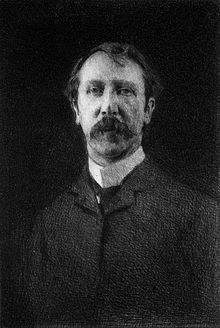
George Augustus Moore, novelist, short story writer, poet, art critic, memoirist, and dramatist, is born in Moore Hall, near Lough Carra, County Mayo on February 24, 1852. He is considered an innovator in fiction in his day.

Moore comes from a distinguished Catholic family of Irish landholders. When he is 21, he leaves Ireland for Paris to become a painter. His Reminiscences of the Impressionist Painters (1906) vividly describes the Café Nouvelle-Athènes and the circle of Impressionist painters who frequent it. He is particularly friendly with Édouard Manet, who sketches three portraits of him. Another account of the years in Paris, in which he introduces the younger generation in England to his version of fin de siècle decadence, is his first autobiography, Confessions of a Young Man (1888).

Deciding that he has no talent for painting, Moore returns to London in 1882 to write. His first novels, A Modern Lover (1883) and A Mummer’s Wife (1885), introduce a new note of French Naturalism into the English scene, and he later adopts the realistic techniques of Gustave Flaubert and Honoré de Balzac. Esther Waters (1894), his best novel, deals with the plight of a servant girl who has a baby out of wedlock. It is a story of hardship and humiliation illumined by the novelist’s compassion. It is an immediate success, and he follows it with works in a similar vein: Evelyn Innes (1898) and Sister Teresa (1901).

In 1901 Moore moves to Dublin, partly because of his loathing for the South African War and partly because of the Irish Literary Revival spearheaded by his friend, the poet William Butler Yeats. In Dublin he contributes notably to the planning of the Abbey Theatre. He also produces The Untilled Field (1903), a volume of fine short stories reminiscent of Ivan Turgenev’s writing that focuses on the drudgery of Irish rural life, and a short poetic novel, The Lake (1905). The real fruits of his life in Ireland, however, come with the trilogy Hail and Farewell (Ave, 1911; Salve, 1912; Vale, 1914). Discursive, affectionate, and satirical by turns, it reads like a sustained monologue that is both a carefully studied piece of self-revelation and an acute, though not always reliable, portrait gallery of his Irish acquaintance, which included Yeats, George William Russell, and Lady Gregory. Above all it is a perfectly modulated display of the comic spirit.

The increasing narrowness of the Irish mind, politics, and clericalism sends Moore back to England in 1911. After Hail and Farewell, he makes another literary departure. Aiming at epic effect he produces The Brook Kerith (1916), an elaborate and stylish retelling of the Gospel story that is surprisingly effective despite some dull patches. He continues his attempts to find a prose style worthy of epic theme in Héloïse and Abélard (1921). His other works include A Story-Teller’s Holiday (1918), a blend of autobiography, anecdote, Irish legend, and satire, Conversations in Ebury Street (1924), autobiography, The Pastoral Loves of Daphnis and Chloe (1924) and Ulick and Soracha (1926), an Irish legendary romance.

George Moore dies at his home at Ebury Street in the London district of Belgravia on January 21, 1933, leaving a fortune of £70,000. He is cremated in London at a service attended by Ramsay MacDonald among others. An urn containing his ashes is interred on Castle Island in Lough Carra in view of the ruins of Moore Hall, which had been burned by anti-treaty forces in 1923, during the final months of the Irish Civil War.


Leave a comment

Birth of Louis Brennan, Irish Australian Inventor

louis-brennan

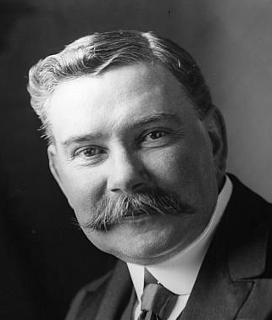
Louis Brennan, Irish Australian mechanical engineer and inventor, is born in Castlebar, County Mayo on January 28, 1852.

Brennan moves to Melbourne, Australia in 1861 with his parents. He starts his career as a watchmaker and a few years later is articled to Alexander Kennedy Smith, a renowned civil and mechanical engineer of the period. He serves as a sergeant in the Victorian Engineers under the command of Captain John James Clark. He invents the idea of a steerable torpedo in 1874, from observing that if a thread is pulled on a reel at an angle with suitable leverage, the reel will move away from the thread side. He spends some years working out his invention and receives a grant of £700 from the Victorian government towards his expenses. He patents the Brennan torpedo in 1877. The idea is trialed at Camden Fort near Crosshaven, County Cork.

Brennan goes to England in 1880 and brings his invention before the War Office. Sir Andrew Clarke alerts the authorities to the possibilities of the torpedo if used in the defence of harbours and channels, and the patent is eventually bought for a sum believed to be more than £100,000 (£ 9,331,100 in 2019). In 1887 he is appointed superintendent of the Brennan torpedo factory and is consulting engineer from 1896 to 1907.

Brennan does much work on a gyro monorail locomotive which is kept upright by a gyrostat. In 1903 he patents a gyroscopically balanced monorail system that he designs for military use. He successfully demonstrates the system on November 10, 1909, at Gillingham, England, but fears that the gyroscopes might fail prevents adoption of the system for widespread use.

From 1916 to 1919 Brennan serves in the munition invention department. From 1919 to 1926 he is engaged by the air ministry in aircraft research work at the Royal Aircraft Establishment, Farnborough, and gives much time to the invention of a helicopter. The government spends a large sum of money on it, but in 1926 the air ministry gives up working on it, much to Brennan’s disappointment.

Brennan marries Anna Quinn on 10 September 10, 1892. The marriage results in a son and a daughter. He is created a Companion of the Order of the Bath in 1892 and is foundation member of the National Academy of Ireland in 1922.

In January 1932 Brennan is knocked down by a car at Montreux, Switzerland, and dies on January 17, 1932. He is buried at St. Mary’s Catholic Cemetery, Kensal Green, London, in an unmarked plot numbered 2454 that is opposite the Chapel record office. On March 11, 2014, Taoiseach Enda Kenny unveils a new gravestone for Brennan at St. Mary’s in a ceremony honouring the inventor’s life and career.

Gillingham Library retains the archive of his papers.


Leave a comment

Death of General Jean Joseph Amable Humbert

jean-joseph-amable-humbert

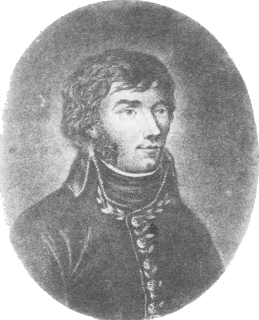
General Jean Joseph Amable Humbert, French soldier and French Revolution participant who leads a failed invasion of Ireland to assist Irish rebels in the Irish Rebellion of 1798, dies on January 3, 1823, in New Orleans, Louisiana.

Born in the townland of La Coâre Saint-Nabord, outside Remiremont Vosges, Humbert is a sergeant in the National Guard of Lyon. He rapidly advances through the ranks to become brigadier general on April 9, 1794, and fights in the Western campaigns before being allocated to the Army of the Rhine.

In 1794, after serving in the Army of the Coasts of Brest, Humbert serves under Louis Lazare Hoche in the Army of the Rhin-et-Moselle. Charged to prepare for an expedition against Ireland, he takes command of the Légion des Francs under Hoche, sailing in the ill-fated Expédition d’Irlande against Bantry Bay in 1796, and is engaged in actions at sea against the Royal Navy. Contrary weather and enemy action force this expedition to withdraw. The trip home ends in a naval battle, the Action of 13 January 1797, during which Humbert, on the French ship Droits de l’Homme (1794), narrowly escapes death. As the ship is destroyed and sinks, hundreds of men perish, but Humbert is among the last to escape.

On his return to France, Humbert serves in the Army of the Sambre-et-Meuse, before being appointed to command the troops in another attempt to support a rising in Ireland in 1798. His command chiefly consists of infantry of the 70th demi-brigade with a few artillerymen and some cavalry of the 3rd Hussars, however by the time he arrives off the Irish coast the United Irish rising has already suffered defeat. The expedition is able to land in Ireland at Killala on Thursday August 23, 1798, meeting with initial success in the Battle of Castlebar where he routs the Irish Militia. Humbert subsequently declares a Republic of Connacht, with hopes of taking Dublin. However, Humbert’s small force is defeated at the Battle of Ballinamuck by the Irish Royal Army, and he is taken as a prisoner of war by the authorities. The British send the French officers home in two frigates and then massacre their Irish supporters. Humbert makes no attempt to save the Irish who bravely supported him.

Humbert is shortly repatriated in a prisoner exchange and appointed in succession to the Armies of Mayence, Danube and Helvetia, with which he serves at the Second Battle of Zurich. He then embarks for Santo Domingo and participates in several Caribbean campaigns for Napoleon Bonaparte before being accused of plundering by General Brunet. It is also rumored that he engages in an affair with Pauline Bonaparte, the wife of his commanding officer Charles Leclerc. He is returned to France by order of General Leclerc in October 1802, for “prevarications, and liaison relationships with organisers of the inhabitants and with leaders of brigands.” A committed Republican, his displeasure at Napoleon’s Imperial pretensions lead to him being dismissed in 1803 and he retires to Morbihan in Brittany.

In 1810, after brief service in the Army of the North, Humbert emigrates to New Orleans, where he makes his acquaintance with French pirate Jean Lafitte. In 1813, Humbert joins the revolutionary Juan Bautista Mariano Picornell y Gomila in an unsuccessful attempt to foment rebellion in Spanish Mexico, but the effort fails. In 1814, Humbert again leaves New Orleans and joins the rebelling forces of Buenos Aires, briefly commanding a corps, before returning home. Humbert last fights the British at the Battle of New Orleans, as a volunteer private soldier in U.S. ranks, in the War of 1812, wearing his Napoleonic uniform. General Andrew Jackson thanks him for his assistance there after the American victory in January 1815. Thereafter Humbert lives peacefully as a schoolteacher until his death on January 3, 1823.

A monument to General Humbert depicting Mother Ireland stands on Humbert Street, Ballina, County Mayo. In 1989, sculptor Carmel Gallagher unveils a bust of General Humbert in Killala, Ireland, to mark the upcoming bicentennial of the Irish Rebellion of 1798.


Leave a comment

The Londonderry Tragedy

OLYMPUS DIGITAL CAMERA

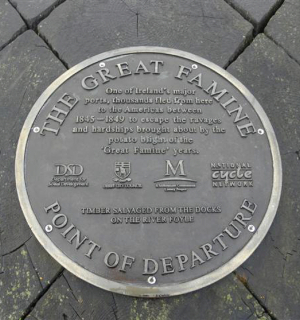
One of the most tragic events of the Great Famine occurs on December 1, 1848 when 72 people suffocate in the small aft cabin of the paddle steamer Londonderry, which often sails between Sligo and Liverpool.

One hundred seventy-two men, women, and children, mostly impoverished farmers from County Mayo and County Sligo, and their families, fleeing the ravages of the Great Famine, board the Londonderry in Sligo in late November. As the steamer is approaching Derry on the first leg of its journey to England, a sudden storm prompts Captain Alexander Johnstone to order his crew to force all the passengers into a small aft cabin, measuring about eighteen feet in length and, at most, twelve feet wide. The situation is exacerbated when the only ventilation available is covered with a tarpaulin to ensure that water does not get into the cabin. As a result, many of the passengers begin to suffocate.

The captain seeks refuge from the storm in the harbour at Derry on December 1. When the hatches of the Londonderry are opened it reveals a horrific scene. The corpses of 31 women, 23 men and 18 children are found in the grossly overcrowded hold. Soldiers are called to the docks as public rage intensifies. The public outcry that follows belatedly forces the British government to publish guidelines for the safe transport of Irish Immigrants, too late unfortunately for the victims of the coffin ship Londonderry.

After the tragic voyage, the master and two mates are arrested. During an inquest, survivors accuse the Scottish crew of being cruel and savage. The captain says that he had given orders for the decks to be cleared for the passengers’ safety while the storm raged.

The coroner’s jury returns a verdict of manslaughter, commenting that more consideration was shown to the cattle than the passengers entrusted to their care.

In 1996 six coffins are found by workmen on a building site in the Waterside area of Derry, in grounds close to the former workhouse. They are believed to be the remains of some of the poverty-stricken travelers from the ill-fated paddle steamer.

(Pictured: The Great Hunger Plaque, Derry, near Derry County Borough, Derry, Clooney Park, Creggan and Boom Hall)


Leave a comment

Death of Michael Cusack, Founder of the GAA

michael-cusack

Michael Cusack, teacher and founder of the Gaelic Athletic Association, dies in Dublin on November 25, 1906.

Cusack is born on the eastern fringe of the Burren to Irish speaking parents in Carran, County Clare on September 20, 1847, during the Great Famine. He becomes a national school teacher and in 1874, after teaching in various parts of Ireland, becomes a professor at Blackrock College, then known as the French College. In 1877, he establishes his own civil service academy, Cusack’s Academy, in Dublin which proves successful in preparing pupils for the civil service examinations.

A romantic nationalist, Cusack is also reputed to have been associated with the Fenian movement. He is active in the Gaelic revival, initially as a member of the Society for the Preservation of the Irish Language which is founded in 1876, and later the Gaelic League who in 1879 breaks away from the Society. Also in 1879, he meets Pat Nally, who is a member of the Irish Republican Brotherhood and a leading nationalist and athlete. He finds that he and Nally agree on the influence of British landlordism on Irish athletics.

He would recall how both Nally and himself, While walking through Phoenix Park in Dublin and seeing only a handful of people playing sports in the park so depresses Cusack and Nally that they agree it is time to “make an effort to preserve the physical strength of [their] race.” Nally organises a National Athletics Sports meeting in County Mayo in September 1879 which is a success, with Cusack organising a similar event which is open to artisans in Dublin the following April.

On November 1, 1884, Cusack together with Maurice Davin, of Carrick-on-Suir, County Tipperary, calls a meeting in Hayes’ Commercial Hotel, Thurles, County Tipperary, and founds the Gaelic Athletic Association (GAA). Davin is elected president and Cusack becomes its first secretary. Later, Archbishop Thomas William Croke, Archbishop of Cashel & Emly, Michael Davitt and Charles Stewart Parnell become patrons. Cusack also becomes involved in the Irish language movement, founding The Celtic Times, a weekly newspaper which focuses on “native games” and Irish culture.

Michael Cusack dies in Dublin on November 27, 1906, at the age of 59. He is buried in Dublin’s Glasnevin Cemetery.


Leave a comment

Birth of Donagh MacDonagh, Playwright & Writer

donagh-macdonagh

Donagh MacDonagh, Irish writer, judge, presenter, broadcaster, and playwright, is born in Dublin on November 22, 1912. He is the son of Irish nationalist and poet Thomas MacDonagh.

MacDonagh is still a young child when his father is executed in 1916 for his part in the Easter Rising. Tragedy strikes again when his mother dies of a heart attack a year afterwards while swimming at Skerries to Lambay Island, County Dublin on July 9, 1917. He and his sister are then cared for by their maternal aunts, in particular Catherine Wilson.

His parents’ families then engage in a series of child custody lawsuits as the MacDonaghs are Roman Catholic and the Giffords are Protestant. In the climate of Ne Temere, the MacDonaghs are successful.

He and his sister Barbara, who later marries actor Liam Redmond, live briefly with their paternal aunt Eleanor Bingham in County Clare before being put into the custody of strangers until their late teens when they are taken in by Jack MacDonagh.

MacDonagh is educated at Belvedere College and University College Dublin (UCD) with contemporaries Cyril Cusack, Denis Devlin, Charles Donnelly, Brian O’Nolan, Niall Sheridan and Mervyn Wall. In 1935 he is called to the Bar and practises on the Western Circuit. In 1941 he is appointed a District Justice in County Mayo. To date, he remains the youngest person appointed as a judge in Ireland. He is Justice for the Dublin Metropolitan Courts at the time of his death.

MacDonagh publishes three volumes of poetry: Veterans and Other Poems (1941), The Hungry Grass (1947) and A Warning to Conquerors (1968). He also edits the Oxford Book of Irish Verse (1958) with Lennox Robinson. He also writes poetic dramas and ballad operas. One play, Happy As Larry, is translated into a number of languages. He has three other plays produced: God’s Gentry (1951), Lady Spider (1959) and Step in the Hollow, a piece of situation comedy nonsense.

MacDonagh also writes short stories. He publishes Twenty Poems with Niall Sheridan, stages the first Irish production of “Murder in the Cathedral” with Liam Redmond, later his brother-in-law, and is a popular broadcaster on Radio Éireann.

MacDonagh is married twice, to Maura Smyth and, following her death after she drowns in a bath whilst having an epileptic seizure, to her sister, Nuala Smyth. He has four children, Iseult and Breifne by Maura and Niall and Barbara by Nuala.

Donagh MacDonagh dies in Dublin on January 1, 1968, and is buried at Deans Grange Cemetery.


Leave a comment

The Treaty of Limerick

treaty-stone-limerick

The Treaty of Limerick, which actually consists of two treaties, is signed on October 3, 1691, ending the Williamite War in Ireland between the Jacobites and the supporters of William III of England, widely known as William of Orange. Reputedly they are signed on the Treaty Stone, an irregular block of limestone which once served as a mounting block for horses. This stone is now displayed on a pedestal in Limerick, put there to prevent souvenir hunters from taking pieces of it. Because of the treaty, Limerick is sometimes known as the Treaty City.

After his victory at the Battle of the Boyne in July 1690, William III issues the Declaration of Finglas which offers a pardon to Jacobite soldiers but excludes their senior officers from its provisions. This encourages the Jacobite leaders to continue fighting and they win a major victory during the 1691 Siege of Limerick. However, defeats the following year at the Battle of Aughrim and the second siege of Limerick leave the Williamites victorious. Nonetheless the terms they offer to Jacobite leaders at Limerick are considerably more generous than those a year earlier at Finglas.

One treaty, the Military Articles, deals with the treatment of the disbanded Jacobite army. This treaty contains twenty-nine articles. Under the treaty, Jacobite soldiers in formed regiments have the option to leave with their arms and flags for France to continue serving under James II of England in the Irish Brigade. Some 14,000 Jacobites choose this option. Individual soldiers wanting to join the French, Spanish or Austrian armies also emigrate in what becomes known as the Flight of the Wild Geese. The Jacobite soldiers also have the option of joining the Williamite army. One thousand soldiers chose this option. The Jacobite soldiers thirdly have the option of returning home which some 2,000 soldiers choose.

The second treaty, the Civil Articles, which contains thirteen articles, protects the rights of the defeated Jacobite landed gentry who choose to remain in Ireland, most of whom are Catholics. Their property is not to be confiscated so long as they swear allegiance to William III and Mary II, and Catholic noblemen are to be allowed to bear arms. William requires peace in Ireland and is allied to the Papacy in 1691 within the League of Augsburg.

It is often thought that the Treaty of Limerick is the only treaty between Jacobites and Williamites. A similar treaty had been signed on the surrender of Galway on July 22, 1691, but without the strict loyalty oath required under the Treaty of Limerick. The Galway garrison had been organised by the mostly Catholic landed gentry of counties Galway and Mayo, who benefited from their property guarantees in the following century.

(Pictured: The Treaty Stone on which the Treaty of Limerick may have been signed)