seamus dubhghaill

Promoting Irish Culture and History from Little Rock, Arkansas, USA


Leave a comment

Death of Michael Corcoran, General in the Union Army

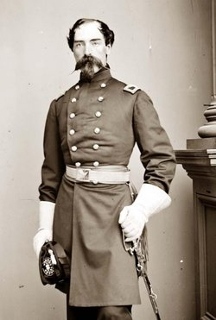
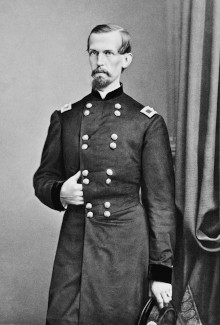
Michael Corcoran, Irish American general in the Union Army during the American Civil War and a close confidant of President Abraham Lincoln, dies on December 22, 1863, of a fractured skull after being thrown from a runaway horse.

Corcoran is born in Carrowkeel, near Ballymote, County Sligo, on September 21, 1827. As its colonel, he leads the 69th Infantry Regiment (New York) to Washington, D.C. and is one of the first to serve in the defense of Washington by building Fort Corcoran. He then leads the 69th into action at the First Battle of Bull Run. After promotion to brigadier general, he leaves the 69th and forms the Corcoran Legion, consisting of at least five other New York regiments.

Corcoran is the only child of Thomas Corcoran, an officer in the British Army, and Mary McDonagh. Through his mother, he claims descent from Patrick Sarsfield, hero of the Williamite War in Ireland and leader of the Wild Geese. In 1846 he takes an appointment to the Revenue Police, enforcing the laws and searching for illicit stills and distilling activities in Creeslough, County Donegal. He also joins a guerrilla group called the Ribbonmen.

On August 30, 1849, Corcoran emigrates from Sligo to the United States and settles in New York City where he finds work as a clerk in the tavern owned by John Heaney, whose niece, Elizabeth, he marries in 1854.

Corcoran enlists as a Private in the 69th New York Militia. By 1859 he is appointed colonel of the regiment. The regiment is a state militia unit at the time composed of citizens, not soldiers, and is involved in the maintenance of public order. On October 11, 1860, he refuses to march the regiment on parade for the 19-year-old Prince of Wales, who is visiting New York City at the time, protesting the British imposition of the Irish Famine. He is removed from command and a court martial is pending over that matter when the Civil War begins.

Corcoran also becomes involved in Democratic politics at Tammany Hall. He becomes district leader, a member of the judicial nominations committee, an elected school inspector for his ward, and a member of the Fourteenth Ward General Committee. He is one of the founders of the Fenian Brotherhood in America.

With the outbreak of war, the court martial is dropped and Corcoran is restored to his command because he had been instrumental in bringing other Irish immigrants to the Union cause. He leads the 69th to Washington, D.C. and serves for a while in the Washington defenses building, Fort Corcoran. In July 1861 he leads the regiment into action at the First Battle of Bull Run and is taken prisoner.

While Corcoran is imprisoned, the United States makes threats to execute captured Confederate privateers. Corcoran and several other Union prisoners are selected by lot for execution if the United States carries out its threats against the privateers. This event is known as the Enchantress Affair, but no executions are ever carried out by either side. Corcoran is then offered a parole under the conditions that he does not take up arms against the Confederacy. Intending to resume his place in the Union army upon his release he refuses the offer of parole. He is appointed Brigadier General of volunteers in July and exchanged in August 1862. His role in the Enchantress Affair and his refusal for parole gains him some attention and upon his release he is invited to dinner with President Abraham Lincoln.

In April 1863 Corcoran is involved in an incident that ends with Corcoran shooting and killing Edgar A. Kimball, commander of the 9th New York Volunteer Infantry Regiment. Corcoran attempts to pass through the 9th New York’s area without giving the required password after receiving the challenge from a sentry. When Kimball intervenes on the side of the sentry, Corcoran shoots him. Corcoran is not charged with a crime or reprimanded and continues to serve.

Corcoran returns to the army and sets about recruiting more Irish volunteers. He raises and takes command of what becomes known as the Corcoran Legion. Placed in command of the 1st Division, VII Corps he is engaged in the Battle of Deserted House and takes part in the Battle of Suffolk. In late 1863 he is placed in command of a division in the XXII Corps and returns to serve in the Washington defenses. While riding alone in Fairfax, Virginia he is thrown from a runaway horse and suffers a fractured skull. He dies at the age of 36 at the William Gunnell House on December 22, 1863.

New York City Mayor Michael Bloomberg unveils Ireland’s national monument to the Fighting 69th in Ballymote on August 22, 2006. The monument is sculpted by Philip Flanagan. The inscription around the top of the monument reads “Michael Corcoran 1827–1863” Around the base is inscribed “New York Ballymote Creeslough Bull Run.” Underneath the monument is a piece of steel from the World Trade Center, donated by the family of Michael Lynch, who died in the tower on September 11, 2001. Lynch’s family are also from County Sligo.
Leave a comment

Birth of John Purroy Mitchel, the 95th Mayor of New York City

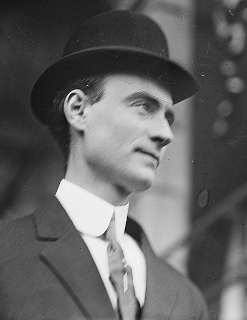
John Purroy Mitchel, the 95th mayor of New York City (1914-17), is born on July 19, 1879, at Fordham, Bronx, New York City. He is remembered for his short career as leader of reform politics in New York as well as for his early death as a U.S. Army Air Service officer in the last months of World War I.

Mitchel is born to James Mitchel, a New York City fire marshal, and Mary Purroy who works as a schoolteacher until her marriage. His father is Irish, and Presbyterian in faith, the son of the famous Irish nationalist John Mitchel, and a veteran of the Confederate States Army. Two of his uncles were killed fighting for the Confederacy. His maternal grandfather, Venezuelan-born Juan Bautista Purroy, was that country’s consul in New York, which makes Mitchel the first Mayor of New York City of Latino descent. His great-grandfather, José Joaquin de Purroy, was a lawyer from Spain who settled in Venezuela. He graduates from a Catholic secondary school at Fordham Preparatory School in the late 1890s. He obtains his bachelor’s degree from Columbia College in 1899 and graduates from New York Law School in 1902 with honors. He then pursues a career as a private attorney.

In December 1906, Mitchel’s career takes flight when he is hired by family friend and New York City corporation counsel William B. Ellison to investigate the office of John F. Ahearn, borough president of Manhattan, for incompetence, waste and inefficiency. As a result, Ahearn is dismissed as borough president of Manhattan. He begins his career as assistant corporation counsel and then becomes a member of the Commissioners of Accounts, from which he investigates city departments. He gains results and recognition for his thorough and professional investigations into various city departments and high-ranking officials. Along with the help of Henry Bruère and other staff members of the Bureau of Municipal Research, he turns the insignificant Commissioners of Accounts into an administration of importance.

The young Mitchel’s reputation as a reformer garners him the support of the anti-Tammany forces. In 1909, he is elected president of the New York City Board of Aldermen, an organization similar to the current New York City Council. As president of the Board of Aldermen, he is able to enact fiscal reforms. He cuts waste and improves accounting practices. Also, he unsuccessfully fights for a municipal-owned transit system and the city sees him vote against allowing the Interborough Rapid Transit and the Brooklyn Rapid Transit companies permission to extend their existing subway and elevated lines. For a six-week period in 1910 after current Mayor William J. Gaynor is injured by a bullet wound, he serves as acting mayor. His biggest accomplishment during his short tenure is the act of neutrality during a garment industry strike.

As the mayoral election approaches in 1913, the Citizens Municipal Committee of 107 sets out to find a candidate that will give New York “a non-partisan, efficient and progressive government.” They are assisted in this endeavor by the Fusion Executive Committee, led by Joseph M. Price of the City Club of New York. After nine ballots, Mitchel is nominated as a candidate for mayor. During his campaign, he focuses on making City Hall a place of decency and honesty. He also focuses on business as he promises New Yorkers that he will modernize the administrative and financial machinery and the processes of city government.

At the age of 34, Mitchel is elected mayor on the Republican Party slate as he wins an overwhelming victory, defeating Democratic candidate Edward E. McCall by 121,000 votes, thus becoming the second youngest mayor of New York City. He is often referred to as “The Boy Mayor of New York.”

Mitchel’s administration introduces widespread reforms, particularly in the Police Department, which has long been highly corrupt, and which is cleaned up by Mitchel’s Police Commissioner Arthur H. Woods. Woods is able to break up gangs and in his first year in office and he arrests more than 200 criminals. Woods also launches an attack on robbery, prostitution, pickpocketing and gambling. Woods ultimately transforms the police department into a crime-fighting machine. Mitchel aims to get rid of corruption wherever he sees it. His administration sets out to restructure and modernize New York City and its government. He is able to expand the city’s regulatory activities, runs the police department more honestly and efficiently and, much like in 1910, he maintains impartiality during garment and transportation workers strikes in 1916.

At 1:30 p.m. on April 17, 1914, Michael P. Mahoney fires a gun at the mayor as Mitchel is getting in his car to go to lunch. The bullet ricochets off a pedestrian and hits Frank Lyon Polk, New York City’s corporation counsel, in the chin.

Mitchel’s early popularity is soon diminished due to his fiscal policies and vision of education. He is heavily criticized for combining vocational and academic courses. He begins to trim the size of the Board of Education and attempts to control teachers’ salaries.

Mitchel advocates universal military training to prepare for war. In a speech at Princeton University on March 1, 1917, he describes universal military training as “the [only] truly democratic solution to the problem of preparedness on land.” His universal military training alienates New Yorkers and is not popular. Many feel he focuses too much on military patriotism and is indifferent to politics. This soon leads to a loss of support for his re-election bid in 1917.

Mitchel runs again for mayor in the highly charged wartime election of 1917. His re-election bid takes a hit as many New Yorkers feel he is socializing with the social elite, focuses too much on the economy and efficiency and his concern on military preparedness. He narrowly loses the Republican primary to William M. Bennett after a contentious recount but then runs for re-election as a pro-war Fusion candidate.

Mitchel’s main campaign theme is patriotism, with a media campaign that denounces Germans, Irish, and Jews as unpatriotic sympathizers with the enemy cause. He runs against Republican Bennett, antiwar Socialist Morris Hillquit, and the Tammany Hall Democrat John F. Hylan. Hylan ridicules and denounces Mitchel’s upper-class reform as an affront to democracy and to the voters. He wins by a landslide without taking a clear position on the war. Mitchel barely beats Hillquit for second place.

After failing to get re-elected, Mitchel joins the Air Service as a flying cadet, completing training in San Diego and obtaining the rank of major. On the morning of July 6, 1918, when returning from a short military training flight to Gerstner Field, near Lake Charles, Louisiana, his plane suddenly goes into a nosedive, causing him to fall from his plane due to an unfastened seatbelt. He plummets 500 feet to his death, his body landing in a marsh about a half mile south of the field.

Mitchel’s body is returned to Manhattan, New York City. His funeral is held at St. Patrick’s Cathedral, and he is buried in Woodlawn Cemetery in The Bronx, New York City, on July 11, 1918.

Mitchel Field on Long Island is named for him in 1918. A bronze memorial plaque with his likeness is also affixed between the two stone pylons at the western end of Hamilton Hall, the main college building at Columbia University. A plaque of his likeness is on the entrance to the base of the Central Park Reservoir elevated cinder jogging track at 90th Street and Fifth Avenue entrance to Central Park. The New York City Fire Department operates a fireboat named John Purroy Mitchel from 1921 to 1966.


1 Comment

Birth of John Morrissey, Irish American Politician & Boxing Champion

John Morrissey, Irish American politician, bare-knuckle boxing champion and criminal also known as ‘Old Smoke,’ is born on February 12, 1831, at Templemore, County Tipperary.

Morrissey is the only son among eight children of Timothy Morrissey, factory worker, and Julia (or Mary) Morrissey. In 1834 the family emigrates to Canada and then the United States, settling at Troy, New York. From the age of ten he works, first in a mill, and then as an iron worker due to his size and strength. He becomes involved in various street gangs, developing a reputation as a pugilist of great strength and resolve. As leader of the Down-Town gang, he defeats six members of the rival Up-Town gang in a single afternoon in 1848. He takes work on a Hudson River steamer and marries Sarah Smith, daughter of the ship’s captain, around 1849. They have one child who dies before reaching adulthood.

In a New York saloon Morrissey challenges Charley ‘Dutch’ Duane to a prize fight and, when he is not to be found, with typical bravado he extends the challenge to everyone present. This impresses the owner, Isaiah Rynders, the Tammany Hall politician, and he employs Morrissey to help the Democratic Party, which involves intimidating voters at election time. A fistfight with gang rival Tom McCann earns him the nickname ‘Old Smoke.’ Mid-fight he is forced onto a bed of coals, but despite having his flesh burned, refuses to concede defeat. He fights his way back and beats McCann into unconsciousness. Stowing away to California to challenge other fighters, he begins a gambling house to raise money and embarks on a privateering expedition to the Queen Charlotte Islands in a quixotic attempt to make his fortune.

In his first professional prize fight on August 21, 1852, Morrissey defeats George Thompson at Mare Island, California, in dubious circumstances, and begins calling himself the ‘champion of America.’ However, it is only on October 12, 1853, that he officially earns this title, when he wins the heavyweight championship of America in a bout at Boston Corner, New York, against Yankee Sullivan. The fight lasts thirty-seven rounds, and Morrissey has the worst of most of them, but he is awarded the contest after a free-for-all in the ring.

Increasingly involved in New York politics, Morrissey and his supporters fight street battles against the rival gang of William Poole, known as ‘Bill the Butcher,’ a Know Nothing politician later fictionalised in the film Gangs of New York (2002). On July 26, 1854, the two men fight on the docks, but Morrissey is beaten badly and forced to surrender. This marks the beginning of a bitter feud between the two parties, with heavy casualties on both sides, which climaxes on March 8, 1855, when Poole is murdered. Morrissey is indicted as a conspirator in the crime but is soon released because of his political connections.

On October 20, 1858, Morrissey fights John C. Heenan (1835–73) in another heavyweight championship bout. Heenan breaks his hand early in the fight and is always at a disadvantage. After taking much punishment Morrissey finally makes his dominance count. There is a rematch on April 4, 1859, which Morrissey again wins, and after this he retires from the ring. Investing his prize money, he runs two saloons and a gambling house in New York. With the huge profits from his gambling empire, he invests in real estate in Saratoga Springs, New York, opening the Saratoga Race Course there in 1863 which has endured to become America’s oldest major sports venue.

A political career beckons as a reward for Morrissey’s consistent support for the Democratic Party. He is elected to the United States House of Representatives in 1866 representing New York’s fifth district, is re-elected the following year, and serves until March 3, 1871. He supports President Andrew Johnson against demands for his impeachment and is skeptical about the Radicals’ plans for reconstruction in the south. In his final years he serves in the New York State Senate (1875–78).

After contracting pneumonia, Morrissey dies at the Adelphi Hotel, Saratoga Springs, on May 1, 1878, and is buried at Saint Peter’s Cemetery, Troy. On the day of his funeral, flags at New York City Hall are lowered to half-mast, while the National Police Gazette declares on May 4, 1878, that “few men of our day have arisen from beginnings so discouraging to a place so high in the general esteem of the community.” His name is included in the list of ‘pioneer’ inductees in the International Boxing Hall of Fame in Canastota, New York, and each year the John Morrissey Stakes are held at Saratoga Race Course in honour of its founder.

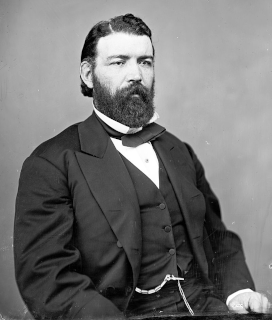
(Pictured: John Morrissey, U.S. Representative from New York, circa 1870s, source Library of Congress)


Leave a comment

Birth of Grace Kelly, Award Winning Actress & Princess of Monaco

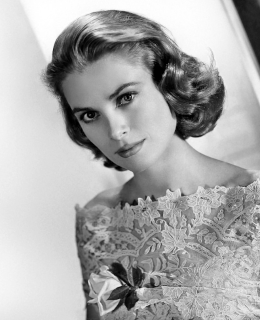
Grace Patricia Kelly, an American Academy Award winning actress, is born into an affluent Catholic family of half Irish and half German descent in Philadelphia, Pennsylvania, on November 12, 1929. After starring in several significant films in the early to mid-1950s, she becomes Princess of Monaco by marrying Prince Rainier III in April 1956.

Kelly’s father, Irish American John B. Kelly, Sr., wins three Olympic gold medals for sculling, and owns a successful brickwork contracting company that is well known on the East Coast. As Democratic nominee in the 1935 election for Mayor of Philadelphia, he loses by the closest margin in the city’s history. In later years he serves on the Fairmount Park Commission and, during World War II, is appointed by President Franklin D. Roosevelt as National Director of Physical Fitness. Her mother, Margaret Majer, has German parents. She teaches physical education at the University of Pennsylvania and is the first woman to coach women’s athletics at Penn. She also models for a time in her youth. After marrying John Kelly in 1924, she focuses on being a housewife until her four children are of school age, following which she begins actively participating in various civic organizations.

Kelly receives her elementary education in the parish of Saint Bridget’s in East Falls. While attending Ravenhill Academy, a reputable Catholic girls’ school, she models fashions at local charity events with her mother and sisters. In 1942, at the age of 12, she plays the lead in Don’t Feed the Animals, a play produced by the Old Academy Players also in East Falls. In May 1947, she graduates from Stevens School, a socially prominent private institution in nearby Chestnut Hill, where she participates in drama and dance programs. Owing to her low mathematics scores, she is rejected by Bennington College in July 1947. Despite her parents’ initial disapproval, she decides to pursue her dreams of becoming an actress.

After graduating from the American Academy of Dramatic Arts in 1949, Kelly begins appearing in New York City theatrical productions and over 40 live drama productions broadcast in early 1950s Golden Age of Television. She gains stardom from her performance in John Ford‘s adventure-romance Mogambo (1953), for which she is nominated for an Academy Award for Best Supporting Actress. She wins the Academy Award for Best Actress for her performance in the drama The Country Girl (1954). Other notable works include the western High Noon (1952), the romance-comedy High Society (1956), and three consecutive Alfred Hitchcock suspense thrillers: Dial M for Murder (1954), Rear Window (1954), and To Catch a Thief (1955). She works with some of the most prominent leading men of the era, including Gary Cooper, Clark Gable, Ray Milland, James Stewart, Bing Crosby, William Holden, Cary Grant, Alec Guinness, and Frank Sinatra.

Kelly retires from acting at age 26 to marry Rainier and begins her duties as Princess of Monaco. Hitchcock hopes that she will appear in more of his films which require an “icy blonde” lead actress, but he is unable to coax her out of retirement. The Prince and Princess have three children: Princess Caroline, Prince Albert, and Princess Stéphanie. Princess Grace retains her link to America by her dual U.S. and Monégasque citizenship. Her charity work focuses on young children and the arts, establishing the Princess Grace Foundation-USA to support local artisans in 1964. Her organization for children’s rights, World Association of Children;s Friends (AMADE), gains consultive status within UNICEF and UNESCO. Her final film contribution is in 1977 to documentary The Children of Theatre Street directed by Robert Dornhelm, where she serves as the narrator. The documentary is nominated for an Academy Award for Best Documentary Feature.

On September 13, 1982, Princess Grace suffers a small stroke while driving back to Monaco from her country home in Roc Agel. As a result, she loses control of her 1971 Rover P6 3500 and drives off the steep, winding road and down the 120-foot mountainside. Her teenage daughter Stéphanie, who is in the passenger seat, tries but fails to regain control of the car. The Princess is taken to the Monaco Hospital (later named the Princess Grace Hospital Centre) with injuries to the brain and thorax and a fractured femur. She dies the following night at 10:55 PM after Rainier decides to turn off her life support. Stéphanie suffers a slight concussion and a hairline fracture of a cervical vertebra and is unable to attend her mother’s funeral.

Princess Grace’s funeral is held at the Cathedral of Our Lady Immaculate in Monaco-Ville, on September 18, 1982. After a Requiem Mass, she is buried in the Grimaldi family vault. Over 400 people attend, including Cary Grant, Nancy Reagan, Danielle Mitterrand, the Princess of Wales, and Empress Farah of Iran.

Rainier, who does not remarry, is buried alongside her after his death in 2005.


Leave a comment

Death of Ulysses S. Grant, 18th President of the United States

Ulysses S. Grant, American military leader who serves as the 18th president of the United States (1869 to 1877), dies on July 23, 1883, after a long and painful battle with throat cancer.

Grant is born Hiram Ulysses Grant in Point Pleasant, Ohio, on April 27, 1822, to Jesse Root Grant, a tanner and merchant, and Hannah Simpson Grant. His mother descends from Presbyterian immigrants from Ballygawley, County Tyrone.

Raised in Ohio, Grant possesses an exceptional ability with horses, which serves him well through his military career. He is admitted to West Point, graduates 21st in the class of 1843 and serves with distinction in the Mexican–American War. In 1848, he marries Julia Dent, and together they have four children. He abruptly resigns his army commission in 1854 and returns to his family but lives in poverty for seven years.

Grant joins the Union Army after the American Civil War breaks out in 1861 and rises to prominence after winning several early Union victories on the Western Theater. In 1863 he leads the Vicksburg campaign, which gains control of the Mississippi River. President Abraham Lincoln promotes him to lieutenant general after his victory at Chattanooga. For thirteen months, he fights Robert E. Lee during the high-casualty Overland Campaign and at Petersburg. On April 9, 1865, Lee surrenders to Grant at Appomattox. A week later, Lincoln is assassinated and is succeeded by Andrew Johnson, who promotes him to General of the Army in 1866. Later he openly breaks with Johnson over Reconstruction policies as he used the Reconstruction Acts, which had been passed over Johnson’s veto, to enforce civil rights for recently freed African Americans.

A war hero, drawn in by his sense of duty, Grant is unanimously nominated by the Republican Party and is elected president in 1868. As president, Grant stabilizes the post-war national economy, supports ratification of the Fifteenth Amendment, and crushes the Ku Klux Klan. He appoints African Americans and Jewish Americans to prominent federal offices. In 1871, to help reduce federal patronage, he creates the first Civil Service Commission. The Liberal Republicans and Democrats unite behind his opponent in the 1872 presidential election, but he is handily re-elected. His Native American policy is to assimilate Indians into the White culture. The Great Sioux War of 1876 is fought during his term. In his foreign policy, the Alabama claims against Great Britain are peacefully resolved, but his prized Caribbean Dominican Republic annexation is rejected by the United States Senate.

Grant’s responses to corruption charges, in his federal departments rife with scandal, are mixed, often naïvely defending the culprits, particularly his war-time comrade Orville E. Babcock. But he also appoints cabinet reformers, such as John Brooks Henderson, for the prosecution of the Whiskey Ring. The Panic of 1873 plunges the nation into a severe economic depression that allows the Democrats to win the House majority. In the intensely disputed 1876 presidential election, he facilitates the approval by Congress of a peaceful compromise.

In his retirement, Grant is the first president to circumnavigate the world on his tour, meeting with Queen Victoria and many prominent foreign leaders. In 1880, he is unsuccessful in obtaining the Republican presidential nomination for a third term. In the final year of his life, facing severe financial reversals and dying of throat cancer, he writes his memoirs, which prove to be a major critical and financial success.

After a year-long struggle with throat cancer, surrounded by his family, Grant dies at 8:08 AM at his Mount McGregor cottage on July 23, 1885, at the age of 63. Philip Sheridan, then Commanding General of the Army, orders a day-long tribute to Grant on all military posts, and President Grover Cleveland orders a thirty-day nationwide period of mourning. After private services, the honor guard places Grant’s body on a special funeral train, which travels to West Point and New York City. A quarter of a million people view it in the two days before the funeral. Tens of thousands of men, many of them veterans from the Grand Army of the Republic (GAR), march with Grant’s casket drawn by two dozen black stallions to Riverside Park in the Morningside Heights neighborhood of Upper Manhattan. His pallbearers include Union generals William Tecumseh Sherman and Philip Sheridan, Confederate generals Simon Bolivar Buckner and Joseph E. Johnston, Admiral David Dixon Porter, and Senator John A. Logan, the head of the GAR. Following the casket in the seven-mile-long procession are President Cleveland, the two living former presidents Rutherford B. Hayes and Chester A. Arthur, all of the President’s Cabinet, as well as the justices of the Supreme Court.

Attendance at the New York funeral tops 1.5 million. Ceremonies are held in other major cities around the country, while Grant is eulogized in the press and likened to George Washington and Abraham Lincoln. His body is laid to rest in a temporary tomb in Riverside Park. Twelve years later, on April 17, 1897, he is reinterred in the General Grant National Memorial, also known as “Grant’s Tomb,” the largest mausoleum in North America.


Leave a comment

Death of Brigadier General Robert Nugent of the U.S. Army

Brigadier General Robert Nugent, Irish-born American United States Army officer during the American Civil War and the Indian Wars, dies at the age of 76 in Brooklyn, New York on June 20, 1901.

Born in Kilkeel, County Down on June 27, 1824, Nugent serves with the 69th New York Infantry Regiment, from its days as a militia unit and into its incorporation into the Union Army at the start of the war and is one of its senior officers at the First Battle of Bull Run.

When the unit is originally mustered out of service, the 90-day enlistment terms having expired, Nugent accepts a commission as a captain in the regular army. He is immediately assigned to the 13th Infantry Regiment whose commanding officer, General William Tecumseh Sherman, personally requests. Taking a leave of absence to return to New York, he assists Thomas Francis Meagher in organizing the Irish Brigade. The newly reformed 69th Infantry Regiment is the first unit assigned to the Irish Brigade and, with Nugent as its colonel, he leads the “Fighting 69th” at the Battles of Seven Pines, Gaines’ Mill, Savage’s Station, White Oak Swamp, Glendale, and Malvern Hill.

Nugent is wounded, shot in the stomach, at the Battle of Fredericksburg and is eventually forced to resign his command. He is appointed acting assistant provost marshal for the southern district of New York, which includes New York City and Long Island, by the U.S. Department of War. An Irishman and Democrat, his appointment is thought to assure the Irish American population that conscription efforts would be carried out fairly. The Irish-American, a popular Irish language newspaper, writes that the selection is a “wise and deservedly popular one.” He does encounter resistance from city officials wanting him to remain uninvolved, however by mid-June he reports to his superior officer and provost marshal general Colonel James Fry that conscription efforts are “nearing completion without serious incident.”

Understanding the seriousness of the situation, Nugent attempts to keep the draft selections quiet and in isolated parts of the city. In Manhattan however, lotteries are placed in the heart of Irish tenement and shanty neighborhoods where the draft is most opposed.

In the ensuing New York City draft riots, Nugent takes command of troops and attempts to defend the city against the rioters. Despite issuing the cancellation of the draft, the riots continue for almost a week. His home on West 86th Street is looted and burned by the rioters during that time, his wife and children barely escaping from their home. Upon breaking into his house, furniture is destroyed, and paintings of Nugent and Meagher are slashed, although Brigadier General Michael Corcoran‘s is left untouched.

On October 28, Nugent is relieved of his post and succeeded by General William Hayes. Returning to active duty, he assumes command of the Irish Brigade in November 1864, shortly after the death of Corcoran, and is present at the Battle of Spotsylvania Court House, the Siege of Petersburg and the Appomattox campaign. As its last commanding officer, he and the Irish Brigade also march in the victory parade held in Washington, D.C. following Robert E. Lee‘s surrender at Appomattox Court House.

Nugent is brevetted Brigadier General for distinguished leadership of the 69th Regiment on March 13, 1865. The veterans of the Irish Brigade are honorably discharged and mustered out three months later. Nugent, however, remains in the regular U.S. Army for the next twenty years, a formidable “Indian fighter” during the America Indian Wars with the 13th and 24th Infantry Regiments. In 1879, he retires at the rank of major and resides in New York where he is involved in the Grand Army of the Republic, the War Veterans’ Association of the 7th Regiment and an honorary member of The Old Guard.

Nugent becomes ill in his old age, complications arising from his wounds suffered at Fredericksburg, and remains bedridden for two months before his death at his McDonough Street home in Brooklyn on June 20, 1901. In accordance with his last wishes, he is buried at Cypress Hills National Cemetery, located in the Cypress Hills neighborhood of Brooklyn.


Leave a comment

Birth of John F. Kennedy, 35th President of the United States

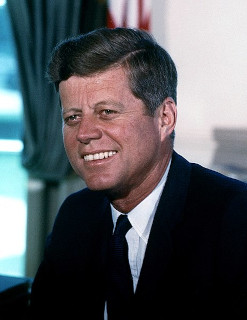
John Fitzgerald Kennedy, Irish American politician who serves as the 35th president of the United States, is born in Brookline, Massachusetts on May 29, 1917. He serves from 1961 until his assassination in 1963 during the height of the Cold War, with the majority of his work as president concerning relations with the Soviet Union and Cuba.

Kennedy is born into the wealthy, political Kennedy family, the son of Joseph P. Kennedy Sr., a businessman and politician, and Rose Kennedy (née Fitzgerald), a philanthropist and socialite. All four of his grandparents are children of Irish immigrants. He graduates from Harvard University in 1940, before joining the United States Naval Reserve the following year. During World War II, he commands a series of PT boats in the Pacific theater and earns the Navy and Marine Corps Medal for his service.

Following a brief stint in journalism, Kennedy, a Democrat, represents a working-class Boston district in the U.S. House of Representatives from 1947 to 1953. He is subsequently elected to the U.S. Senate and serves as the junior senator for Massachusetts from 1953 to 1960. While in the Senate, Kennedy publishes his book, Profiles in Courage, which wins a Pulitzer Prize.

Kennedy meets his future wife, Jacqueline Lee “Jackie” Bouvier (1929–1994), while he is a congressman. Charles L. Bartlett, a journalist, introduces the pair at a dinner party. They are married a year after he is elected senator, on September 12, 1953. Following a miscarriage in 1955 and a stillbirth in 1956, they produce three children, Caroline, John, Jr., and Patrick, who dies of complications two days after birth.

In the 1960 presidential election, Kennedy narrowly defeats Republican opponent Richard Nixon, who is the incumbent vice president. His humor, charm, and youth in addition to his father’s money and contacts are great assets in the campaign. His campaign gains momentum after the first televised presidential debates in American history. He is the first Catholic elected president of the United States.

Kennedy’s administration includes high tensions with communist states in the Cold War. As a result, he increases the number of American military advisors in South Vietnam. The Strategic Hamlet Program begins in Vietnam during his presidency. In April 1961, he authorizes an attempt to overthrow the Cuban government of Fidel Castro in the failed Bay of Pigs Invasion. He authorizes the Cuban Project, also known as Operation Mongoose, in November 1961. He rejects Operation Northwoods, plans for false flag attacks to gain approval for a war against Cuba, in March 1962. However, his administration continues to plan for an invasion of Cuba in the summer of 1962.

In October 1962, U.S. spy planes discover Soviet missile bases have been deployed in Cuba. The resulting period of tensions, termed the Cuban Missile Crisis, nearly results in the breakout of a global thermonuclear conflict. He also signs the first nuclear weapons treaty in October 1963.

Kennedy presides over the establishment of the Peace Corps, Alliance for Progress with Latin America, and the continuation of the Apollo space program with the goal of landing a man on the Moon. He also supports the civil rights movement but is only somewhat successful in passing his New Frontier domestic policies.

On November 22, 1963, Kennedy is assassinated in Dallas, Texas. Vice President Lyndon B. Johnson assumes the presidency upon Kennedy’s death. Marxist and former U.S. Marine Lee Harvey Oswald is arrested for the state crime but is shot and killed by Jack Ruby two days later. The FBI and the Warren Commission both conclude Oswald had acted alone in the assassination, but various groups contest the Warren Report and believe that Kennedy was the victim of a conspiracy.

After Kennedy’s death, Congress enacts many of his proposals, including the Civil Rights Act of 1964 and the Revenue Act of 1964. Despite his truncated presidency, he ranks highly in polls of U.S. presidents with historians and the general public. His personal life has also been the focus of considerable sustained interest following public revelations in the 1970s of his chronic health ailments and extramarital affairs. He is the last U.S. President to have been assassinated as well as the last U.S. president to die in office.

(Pictured: John F. Kennedy, photograph in the Oval Office, July 11, 1963)


2 Comments

Birth of Michael Corcoran, Union Army General

Michael Corcoran, Irish American general in the Union Army during the American Civil War and a close confidant of President Abraham Lincoln, is born in Carrowkeel, near Ballymote, County Sligo, on September 21, 1827. As its colonel, he leads the 69th Infantry Regiment (New York) to Washington, D.C. and is one of the first to serve in the defense of Washington by building Fort Corcoran. He then leads the 69th into action at the First Battle of Bull Run. After promotion to brigadier general, he leaves the 69th and forms the Corcoran Legion, consisting of at least five other New York regiments.

Corcoran is the only child of Thomas Corcoran, an officer in the British Army, and Mary McDonagh. Through his mother, he claims descent from Patrick Sarsfield, hero of the Williamite War in Ireland and leader of the Wild Geese. In 1846 he takes an appointment to the Revenue Police, enforcing the laws and searching for illicit stills and distilling activities in Creeslough, County Donegal. He also joins a guerrilla group called the Ribbonmen.

On August 30, 1849, Corcoran emigrates from Sligo to the United States and settles in New York City where he finds work as a clerk in the tavern owned by John Heaney, whose niece, Elizabeth, he marries in 1854.

Corcoran enlists as a Private in the 69th New York Militia. By 1859 he is appointed colonel of the regiment. The regiment is a state militia unit at the time composed of citizens, not soldiers, and is involved in the maintenance of public order. On October 11, 1860, he refuses to march the regiment on parade for the 19-year-old Prince of Wales, who is visiting New York City at the time, protesting the British imposition of the Irish Famine. He is removed from command and a court martial is pending over that matter when the Civil War begins.

Corcoran also becomes involved in Democratic politics at Tammany Hall. He becomes district leader, a member of the judicial nominations committee, an elected school inspector for his ward, and a member of the Fourteenth Ward General Committee. He is one of the founders of the Fenian Brotherhood in America.

With the outbreak of war, the court martial is dropped and Corcoran is restored to his command because he had been instrumental in bringing other Irish immigrants to the Union cause. He leads the 69th to Washington, D.C. and serves for a while in the Washington defenses building, Fort Corcoran. In July 1861 he leads the regiment into action at the First Battle of Bull Run and is taken prisoner.

While Corcoran is imprisoned, the United States makes threats to execute captured Confederate privateers. Corcoran and several other Union prisoners are selected by lot for execution if the United States carries out its threats against the privateers. This event is known as the Enchantress Affair, but no executions are ever carried out by either side. Corcoran is then offered a parole under the conditions that he does not take up arms against the Confederacy. Intending to resume his place in the Union army upon his release he refuses the offer of parole. He is appointed Brigadier General of volunteers in July and exchanged in August 1862. His role in the Enchantress Affair and his refusal for parole gains him some attention and upon his release he is invited to dinner with President Abraham Lincoln.

In April 1863 Corcoran is involved in an incident that ends with Corcoran shooting and killing Edgar A. Kimball, commander of the 9th New York Volunteer Infantry Regiment. Corcoran attempts to pass through the 9th New York’s area without giving the required password after receiving the challenge from a sentry. When Kimball intervenes on the side of the sentry, Corcoran shoots him. Corcoran is not charged with a crime or reprimanded and continues to serve.

Corcoran returns to the army and sets about recruiting more Irish volunteers. He raises and takes command of what becomes known as the Corcoran Legion. Placed in command of the 1st Division, VII Corps he is engaged in the Battle of Deserted House and takes part in the Battle of Suffolk. In late 1863 he is placed in command of a division in the XXII Corps and returns to serve in the Washington defenses. While riding alone in Fairfax, Virginia he is thrown from a runaway horse and suffers a fractured skull. He dies at the age of 36 at the William Gunnell House on December 22, 1863.

New York City Mayor Michael Bloomberg unveils Ireland’s national monument to the Fighting 69th in Ballymote on August 22, 2006. The monument is sculpted by Philip Flanagan. The inscription around the top of the monument reads “Michael Corcoran 1827–1863” Around the base is inscribed “New York Ballymote Creeslough Bull Run.” Underneath the monument is a piece of steel from the World Trade Center, donated by the family of Michael Lynch, who died in the tower on September 11, 2001. Lynch’s family are also from County Sligo.


Leave a comment

Death of Andrew Johnson, 17th President of the United States

andrew-johnson

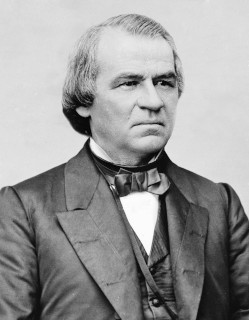
Andrew Johnson, the 17th President of the United States (1865 – 1869), dies on July 31, 1875, at his daughter Mary’s farm near Elizabethton, Tennessee after suffering two strokes.

Johnson assumes the presidency at the time of the assassination of Abraham Lincoln as he is Lincoln’s Vice President. He is a Democrat who runs with Lincoln on the National Union ticket, coming to office as the American Civil War concludes. He favors quick restoration of the seceded states to the Union without protection for the former slaves. This leads to conflict with the Republican-dominated Congress, culminating in his impeachment by the House of Representatives in 1868. He is acquitted in the Senate by one vote. His main accomplishment as president is the Alaska Purchase.

Johnson is born in poverty in Raleigh, North Carolina on December 29, 1808. His grandfather emigrated to the United States from County Antrim in what is now Northern Ireland. He never attends school and is apprenticed as a tailor and works in several frontier towns before settling in Greeneville, Tennessee. He serves as alderman and mayor there before being elected to the Tennessee House of Representatives in 1835. After brief service in the Tennessee Senate, he is elected to the U.S. House of Representatives in 1843, where he serves five two-year terms.

On October 17, 1853, Johnson becomes the 15th Governor of Tennessee serving for four years until November 3, 1857. He is elected by the legislature to the United States Senate on October 8, 1857. During his congressional service, he seeks passage of the Homestead Act of 1862 which is enacted soon after he leaves his Senate seat in 1862.

Southern slave states secede to form the Confederate States of America, which includes Tennessee, but Johnson remains firmly with the Union. He is the only sitting senator from a Confederate state who does not resign his seat upon learning of his state’s secession. In 1862, Lincoln appoints him as military governor of Tennessee after most of it has been retaken. In 1864, he is a logical choice as running mate for Lincoln, who wishes to send a message of national unity in his re-election campaign. Their ticket easily wins the election. He is sworn in as Vice President on March 4, 1865. He gives a rambling speech, after which he secludes himself to avoid public ridicule. Six weeks later, the assassination of Lincoln elevates him to the presidency.

Johnson implements his own form of Presidential Reconstruction, a series of proclamations directing the seceded states to hold conventions and elections to reform their civil governments. Southern states return many of their old leaders and pass Black Codes to deprive the freedmen of many civil liberties, but Congressional Republicans refuse to seat legislators from those states and advance legislation to overrule the Southern actions. Johnson vetoes their bills, and Congressional Republicans override him, setting a pattern for the remainder of his presidency.

Johnson opposes the Fourteenth Amendment which gives citizenship to former slaves. In 1866, he goes on an unprecedented national tour promoting his executive policies, seeking to break Republican opposition. As the conflict grows between the branches of government, Congress passes the Tenure of Office Act in 1867 restricting his ability to fire Cabinet officials. He persists in trying to dismiss Secretary of War Edwin Stanton but ends up being impeached by the House of Representatives and narrowly avoiding conviction in the Senate. He does not win the 1868 Democratic presidential nomination and leaves office the following year.

Johnson returns to Tennessee after his presidency and gains some vindication when he is elected to the Senate in 1875, making him the only former president to serve in the Senate. In late July 1875, convinced some of his opponents are defaming him in the Ohio gubernatorial race, he decides to travel there to give speeches. He begins the trip on July 28 and breaks the journey at his daughter Mary’s farm near Elizabethton, where his daughter Martha is also staying. That evening he suffers a stroke but refuses medical treatment until the following day. When he does not improve two doctors are sent for from Elizabethton. He seems to respond to their ministrations but suffers another stroke on the evening of July 30 and dies early the following morning at the age of 66.

President Ulysses S. Grant has the “painful duty” of announcing the death of the only surviving past president. Northern newspapers, in their obituaries, tend to focus on Johnson’s loyalty during the war, while Southern ones pay tribute to his actions as president. Johnson’s funeral is held on August 3 in Greeneville. He is buried with his body wrapped in an American flag and a copy of the U.S. Constitution placed under his head, according to his wishes. The burial ground is dedicated as the Andrew Johnson National Cemetery in 1906 and, with his home and tailor’s shop, is part of the Andrew Johnson National Historic Site.


Leave a comment

Birth of Walter P. Lane, Confederate General

LEAD Technologies Inc. V1.01

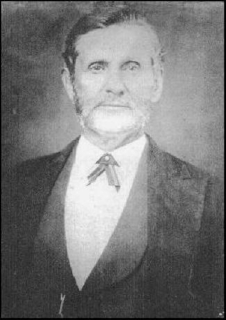
Walter Paye Lane, Confederate general during the American Civil War who also serves in the armies of the Republic of Texas and the United States of America, is born in County Cork on February 18, 1817.

The Lane family emigrates to Fairview in Guernsey County, Ohio, in 1821, and moves to Kentucky in 1825. In 1836 Lane moves to Texas to participate in its war for independence against Mexico. After Texas has gained its independence, he lives in San Augustine County in East Texas and then San Antonio, where he briefly serves as a Texas Ranger.

In 1846 Lane joins the First Regiment, Texas Mounted Riflemen, as a first lieutenant to fight in the Mexican American War. He fights with honors at the Battle of Monterey and is later given the rank of major and command of his own battalion. After the Mexican American War, he wanders about doing various things in Arizona, California, and Peru before opening a mercantile business in Marshall, Texas, in 1858.

When the American Civil War breaks out, Lane is among the first Texans to call for secession. His military reputation is so great that the first volunteer Confederate company raised in Harrison County is named for him, though he joins the 3rd Texas Cavalry. He participates in the Battle of Wilson’s Creek, the Battle of Chustenahlah, the Battle of Pea Ridge and both the Siege of Corinth and Second Battle of Corinth. He leads the 3rd Texas at the battle of Franklin, Mississippi, and is commended by General P. G. T. Beauregard for his efforts. He is severely wounded in the Battle of Mansfield in 1864, where Confederates forces rebuff a push to capture either or both Shreveport, Louisiana, or Marshall, Texas. Before the war ends, Lane is promoted to the rank of brigadier general in 1865, being confirmed on the last day the Confederate States Congress meets.

After the Civil War, Lane returns to Marshall where he helps to establish the Texas Veterans Association. After Reconstruction, he and his brother George, a local judge, found the first White Citizens Party in Texas and run Republicans and African Americans out of Marshall. With Democratic white hegemony brutally reestablished in Marshall and Harrison County, he declares the city and county “redeemed.”

Lane dies in Marshall, Texas on January 28, 1892, and is buried in the Marshall Cemetery near downtown Marshall. His memoirs, The Adventures and Recollections of General Walter P. Lane, are published posthumously in 1928.