seamus dubhghaill

Promoting Irish Culture and History from Little Rock, Arkansas, USA


2 Comments

Imprisonment of Fenian Charles Kickham

charles-kickham

Sentenced to fourteen years hard labour for treason, Irish nationalist and Fenian Charles Kickham is incarcerated in Pentonville Prison on February 10, 1865. He is released in 1869, partly due to ill health. He is a contributor to The Irish People and the organiser of the Fenian movement and the Irish Republican Brotherhood (IRB), which the English authorities deem seditious. He also authors a number of novels including the critically acclaimed Knocknagow (1873).

The revolutionary movement which comes to be known as Fenianism is unlike that of 1848 in the character of its leaders. The older political agitation is associated with a brilliant outburst of intellectual effort. The majority of the leaders have left behind high intellectual heritage, or asserted under other skies, and in more favourable circumstances, their possession of great intellectual powers. The Fenian movement, on the other hand, is poor in its literary products. Few of its leading spirits reach to any lofty position since its collapse. The best part of Fenian literature is found in The Irish People, the journalistic organ of the association. Along with Kickham, the chief contributors to the journal are Thomas Clarke Luby and John O’Leary.

Kickham is born at Mullenahone, County Tipperary on May 9, 1828. At the age of thirteen he meets with an accident that deprives him of his hearing. He probably owes the many fine productions of his pen to this accident. At around 18 years of age, he begins to contribute poems and tales to Irish journals and magazines and when The Irish People is started, he becomes one of its chief lead writers. As a result of his involvement in the Fenian movement, he draws the attention of the government and is tried, convicted and sentenced to fourteen years of penal servitude. His comment at the conclusion of the trial is terse: “I have endeavoured to serve Ireland, and now I am prepared to suffer for Ireland.” Four years after his conviction he is released.

Kickham publishes two complete stories, Sally Cavanagh, or The Untenanted Graves, and Knocknagow, or The Homes of Tipperary. These stories have been read wherever there is an Irish home and have made sad or joyous thousands of Irish hearts. They have also found approval in the columns of English and not friendly journals, which have found themselves able to meet him in friendliness on the impartial ground of literature. His books deserve their popularity with the peasant and the approval of the critic. His pictures of life, especially of peasant life, are wonderfully true to nature, full of keen observation, humour, and fidelity. In his attention to minute details and homely incident he resembles in a great degree the style of Erckmann-Chatrian.

Kickham’s ballads are equally popular and are just what ballads for the people should be – simple in language, direct in purpose, and in an easy and common measure. A collected edition of his works is published by Duffy & Son of Dublin.

Charles Kickham dies at the age of 54 on August 22, 1882, at the house of James O’Connor, a former member of the IRB and afterwards MP for Wicklow, 2 Montpelier Place, Blackrock, Dublin, where he had been living for many years and had been cared for by the poet Rose Kavanagh. He is buried in Mullinahone, County Tipperary.

(From: The Cabinet of Irish Literature, Volume 4, edited by T. P. O’Connor)


Leave a comment

Hanging of Peter Barnes & James Richards

peter-barnes-and-james-mccormack

Irish Republican Army (IRA) volunteers Peter Barnes and James Richards are hanged in Winston Green Prison in Birmingham, England on February 7, 1940 for their involvement in a bombing in Coventry the previous year which killed five people.

Barnes and Richards (also known as James McCormack) are members of the Irish Republican Army (IRA) and participate in the August 25, 1939 Coventry bombing which kills five people. Although they both admit to constructing the bomb, which is intended to be used to destroy a power station, they claim not to be involved in planting the bomb.

Seán MacBride, a former Chief of Staff of the IRA and Irish barrister, attempts to secure their release claiming they are being illegally held without a writ of habeas corpus. However, both are charged with murder on December 12 along with Brigid O’Hara and Joseph and Mary Hewitt. All five plead not guilty before the court at Birmingham Assizes.

Brigid O’Hara issues statements between August 28 and September 4 to Scotland Yard and Birmingham City Police denying any knowledge of the bombings and later provides evidence for the prosecution. Found guilty of murder on December 15, Barnes and Richards are hanged at Winston Green Prison in Birmingham on February 7, 1940. Their remains are returned to Dublin in 1969.

The reinterment in Mullingar, County Westmeath is attended by an estimated 15,000 people. Mass is said in Irish in the Cathedral before the funeral to Ballyglass Cemetery. Among those attending are three brothers of Peter Barnes and a sister and brother of McCormack.

The trial and execution results in a public outcry in Ireland against Neville Chamberlain and the British Government as Peadar O’Donnell and other prominent Irish writers sign a petition campaigning for leniency towards the condemned men.


Leave a comment

Founding of the Irish National Army

irish-national-army-cap-badge

The first regiment of the Irish National Army, sometimes unofficially referred to as the Free State army or the Regulars, is set up in Dublin on January 31, 1922.

The National Army is the army of the Irish Free State from January 1922 until October 1924. Its role in this period is defined by its service in the Irish Civil War, in defence of the institutions established by the Anglo-Irish Treaty. Michael Collins is the army’s first chief of staff from its establishment until his death in an ambush at Béal na mBláth on August 22, 1922.

The National Army is constituted from the revolutionary Irish Republican Army (IRA), which emerges from the successful Irish War of Independence fought as a guerrilla campaign against the British Army and Royal Irish Constabulary. Its first troops are those IRA volunteers who support the Anglo-Irish Treaty and the Provisional Government of Ireland formed there under. The army makes its first public appearance on January 31, 1922, when command of Beggars Bush Barracks is handed over from the British Army.

Conflict arises between the National Army and the anti-Treaty components of the IRA, which does not support the government of the Irish Free State. On June 28, 1922, the National Army commences an artillery bombardment of anti-Treaty IRA forces who are occupying the Four Courts in Dublin, thus beginning the Irish Civil War.

The National Army is greatly expanded in size to fight the civil war against the anti-Treaty IRA, in a mostly counter-insurgency campaign that is brought to a successful conclusion in May 1923. From October 1, 1924, the Army is reorganised into a smaller, better regulated force. The term “National Army” is superseded by the legal establishment of the Defence Forces as the Irish Free State’s military force.


Leave a comment

Birth of Sculptor John Hughes

john-hughes

John Hughes, Irish sculptor, is born in Dublin on January 30, 1865.

Hughes is educated at North Richmond Street CBS. He enters the Metropolitan School of Art in Dublin in 1878 and trains as a part-time student for ten years. In 1890 he wins a scholarship to the South Kensington School of Art in London, after which another scholarship takes him to Paris, France. He then studies further in Italy.

Hughes is appointed as teacher to the Metropolitan School of Art in Dublin in 1894 and in 1902 becomes Professor of Sculpture in the Royal Hibernian Academy School. His last residence in Dublin is at 28 Lennox Street, Portobello.

From 1903 Hughes lives in Italy and in France, dying in Nice in 1941.

Hughes’s influences are mainly from the Italian Renaissance and include:


1 Comment

Archibald Hamilton Rowan Tried for Distribution of Seditious Paper

archibald-hamilton-rowan

Archibald Hamilton Rowan, a founding member of the Dublin Society of United Irishmen, is tried on a charge of distributing seditious paper on January 29, 1794.

Hamilton Rowan is born in the home of his grandfather, William Rowan, in London on May 1, 1751, and lives there with his mother and sister for much of his early life. He is admitted to Queens’ College, Cambridge in 1768, but is expelled from the college and rusticated for an attempt to throw a tutor into the River Cam. He is sent for a period in 1769 to Warrington Academy.

Hamilton Rowan travels throughout the 1770s and 1780s, visiting parts of Europe, the Americas, and North Africa. In 1781 he marries Sarah Dawson in Paris, France. The couple has ten children. He is the godfather of the Irish mathematician William Rowan Hamilton.

Hamilton Rowan returns to Ireland in his thirties, in 1784, to live at Rathcoffey near Clane in County Kildare. He becomes a celebrity and, despite his wealth and privilege, a strong advocate for Irish liberty. That same year he joins the Killyleagh Volunteers, a militia group later associated with radical reform. He first gains public attention by championing the cause of fourteen-year-old Mary Neal in 1788. Neal had been lured into a Dublin brothel and then assaulted by Lord Carhampton. Hamilton Rowan publicly denounces Carhampton and publishes a pamphlet A Brief Investigation of the Sufferings of John, Anne, and Mary Neal in the same year. An imposing figure at more than six feet tall, his notoriety grows when he enters a Dublin dining club threatening several of Mary Neal’s detractors, with his massive Newfoundland at his side and a shillelagh in hand. The incident wins him public applause and celebrity as a champion of the poor.

In 1790 Hamilton Rowan joins the Northern Whig Club, and by October has become a founding member of the Dublin Society of United Irishmen, working alongside famous radicals such as William Drennan and Theobald Wolfe Tone. He is arrested in 1792 for seditious libel when caught handing out “An Address to the Volunteers of Ireland,” a piece of United Irish propaganda. Unknown to him, from 1791 Dublin Castle has a spy in the Dublin Society, Thomas Collins, whose activity is never discovered. From February 1793 Britain and Ireland join the War of the First Coalition against France, and the United Irish movement is outlawed in 1794.

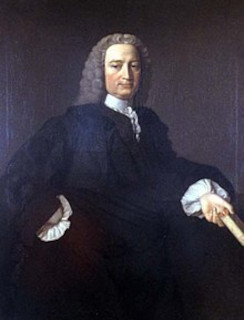
Hamilton Rowan’s reputation for radicalism and bluster grow during this time when he leaves Ireland to confront the Lord Advocate of Scotland about negative comments made in respect to his character and that of members of the Society of United Irishmen. As a prominent member of the Irish gentry, he is an important figure in the United Irishmen and becomes the contact for the Scottish radical societies as a result of his visit. Upon his return to Dublin, he is charged and was found guilty of seditious libel, even though he is excellently defended by the famous John Philpot Curran. He is sentenced to two years imprisonment, receives a fine of £500, and is forced to pay two assurities for good behaviour of £1,000 each. In January 1794 he retires to his apartments in Dublin’s Newgate Prison.

In the years following, Hamilton Rowan spends time in exile in France, the United States and Germany. He is allowed to return to Ireland in 1806. He returns to the ancestral home of Killyleagh Castle, County Down, receiving a hero’s welcome. While he has agreed to be a model citizen under the conditions of his return to Ireland, he remains active in politics and retains his youthful radicalism. Following his last public appearance at a meeting in the Rotunda in Dublin on January 20, 1829, he is lifted up by a mob and paraded through the streets.

Hamilton Rowan dies at the age of 84 in his home on November 1, 1834. He is buried in the vaults of St. Mary’s Church, Dublin.


Leave a comment

Death of Helena Molony, Feminist & Labour Activist

helena-moloney

Helena Mary Molony, prominent Irish republican, feminist and labour activist, dies in Dublin on January 28, 1967. She fights in the 1916 Easter Rising and later becomes the second woman president of the Irish Trades Union Congress (ITUC).

Molony is born in Dublin on January 15, 1883, to Michael Molony, a grocer, and Catherine McGrath. Her mother dies early in her life. Her father later remarries, but both became alcoholics, something which influences her years later.

In 1903, inspired by a pro-nationalist speech given by Maud Gonne, Molony joins Inghinidhe na hÉireann and begins a lifelong commitment to the nationalist cause. In 1908 she becomes the editor of the organisation’s monthly newspaper, Bean na hÉireann (Woman of Ireland). The newspaper brings together a nationalist group – Constance Markievicz designs the title page and writes the gardening column, Sydney Gifford writes for the paper and is on its production team and contributors include Eva Gore-Booth, Susan L. Mitchell, and Katharine Tynan, as well as Patrick Pearse, Thomas MacDonagh, George William Russell, Roger Casement, Arthur Griffith and James Stephens.

Molony is central to the school meals activism of the movement. With Maud Gonne, Marie Perolz and others, she organises the supply of daily school meals to children in impoverished areas, and pressures Dublin Corporation and other bodies to provide proper meals to the starved children of Dublin city.

Molony also has a career as an actress and is a member of the Abbey Theatre. However, her primary commitment is to her political work. She is a strong political influence, credited with bringing many into the movement, including Constance Markievicz and Dr. Kathleen Lynn.

As a labour activist, Molony is a close colleague of Markievicz and of James Connolly. In November 1915 Connolly appoints her secretary of the Irish Women Workers’ Union, in succession to Delia Larkin. This union had been formed during the strike at Jacob’s Biscuit Factory that was part of the 1913 Dublin lock-out. She manages the union’s shirt factory in Liberty Hall, founded to give employment to the strikers put out of work and blacklisted after the strike. She is friendly with the family of Thomas MacDonagh and his wife, Muriel, and is the godmother of their daughter Barbara, whose godfather is Patrick Pearse.

Fianna Éireann, the cadet body of the Irish Volunteers, is founded by Constance Markievicz in Molony’s home at 34 Lower Camden Street, Dublin, on August 16, 1909. Markievicz works closely with Molony and Bulmer Hobson in organising the fledgling Fianna. It is during this period of working together in building the Fianna that Molony and Hobson grow close and became romantically linked. However, the relationship does not last.

Molony is a prominent member of Cumann na mBan, the republican women’s paramilitary organisation formed in April 1914 as an auxiliary of the Irish Volunteers. Members of Cumann na mBan train alongside the men of the Irish Volunteers in preparation for the armed rebellion against the English forces in Ireland.

During the 1916 Easter Rising, Molony is one of the Citizen Army soldiers who attacks Dublin Castle. During the defence of City Hall, her commanding officer, Sean Connolly, is killed and she is captured and imprisoned until December 1916.

After the Irish Civil War, Molony becomes the second female president of the Irish Trades Union Congress. She remains active in the republican cause during the 1930s, particularly with the Women’s Prisoner’s Defense League and the People’s Rights Association.

Molony retires from public life in 1946 but continued to work for women’s labour rights. She dies in Dublin on January 28, 1967.


Leave a comment

Birth of Tomás Mac Giolla, Irish Workers’ Party Politician

tomas-mac-giolla

Tomás Mac Giolla, Workers’ Party of Ireland politician who serves as Lord Mayor of Dublin from 1993 to 1994, leader of the Workers’ Party from 1962 to 1988 and leader of Sinn Féin from 1962 to 1970, is born Thomas Gill in Nenagh, County Tipperary on January 25, 1924. He serves as a Teachta Dála (TD) for the Dublin West constituency from 1982 to 1992.

Mac Giolla’s uncle T. P. Gill is a Member of Parliament (MP) and member of the Irish Parliamentary Party (IPP) of Charles Stewart Parnell. His father, Robert Paul Gill, an engineer and architect, also stands unsuccessfully for election on a number of occasions. His mother is Mary Hourigan.

Mac Giolla is educated at the local national school in Nenagh before completing his secondary education at St. Flannan’s College in Ennis, County Clare. It is while at St. Flannan’s that he changes to using the Irish language version of his name. He wins a scholarship to University College Dublin where he qualifies with a Bachelor of Arts degree, followed by a degree in Commerce.

A qualified accountant, Mac Giolla is employed by the Irish Electricity Supply Board (ESB) from 1947 until he goes into full-time politics in 1977.

In his early life Mac Giolla is an active republican. He joins Sinn Féin and the Irish Republican Army (IRA) around 1950. He is interned by the Government of Ireland during the 1956–1962 IRA border campaign. He also serves a number of prison sentences in Mountjoy Prison in Dublin.

At the 1961 Irish general election, Mac Giolla unsuccessfully contests the Tipperary North constituency for Sinn Féin. In 1962, he becomes President of Sinn Féin and is one of the people who moves the party to the left during the 1960s. In 1969, Sinn Féin splits, and he remains leader of Official Sinn Féin. It is also in 1962 that he marries May McLoughlin who is also an active member of Sinn Féin as well as Cumann na mBan, the women’s section of the IRA. In 1977, the party changes its name to Sinn Féin the Workers Party and in 1982 it becomes simply the Workers’ Party.

Mac Giolla is elected to Dublin City Council representing the Ballyfermot local electoral area in 1979 and at every subsequent local election until he retires from the council in 1997. In the November 1982 Irish general election, he is elected to Dáil Éireann for his party. In 1988, he steps down as party leader and is succeeded by Proinsias De Rossa. He serves as Lord Mayor of Dublin from 1993 to 1994 and remains a member of Dublin Corporation until 1998.

While president Mac Giolla is regarded as a mediator between the Marxist-Leninist wing headed by Sean Garland and the social democratic wing of Prionsias De Rossa. At the 1992 special Ardfheis he votes for the motion to abandon democratic centralism and to re-constitute the party much as the Italian Communist Party became the Democratic Party of the Left. However, the motion fails to reach the required two-thirds majority. Following the departure of six Workers’ Party TDs led by De Rossa to form the new Democratic Left party in 1992, Mac Giolla is the sole member of the Workers’ Party in the Dáil. He loses his Dáil seat at the 1992 Irish general election by a margin of just 59 votes to Liam Lawlor of Fianna Fáil.

In 1999, Mac Giolla writes to the chairman of the Flood Tribunal calling for an investigation into revelations that former Dublin Assistant City and County Manager George Redmond had been the official supervisor at the election count in Dublin West and was a close associate of Liam Lawlor. In 2003, Redmond is convicted of corruption by a Dublin court but subsequently has his conviction quashed due to conflicting evidence.

In his eighties Mac Giolla continues to be active and is a member of the group which campaigns to prevent the demolition of No. 16 Moore Street in Dublin city centre, where the surrender after the Easter Rising was completed. He also serves on the Dublin ’98 committee to commemorate the 200th anniversary of the Irish Rebellion of 1798.

Tomás Mac Giolla dies in Beaumont Hospital in Beaumont, Dublin on February 4, 2010, after a long illness.


Leave a comment

Death of Architect Michael Scott

michael-scott

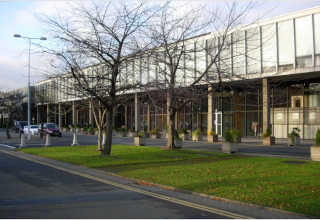
Michael Scott, Irish architect whose buildings include the Busáras building in Dublin, Cork Opera House, the Abbey Theatre and both Tullamore and Portlaoise Hospitals, dies on January 24, 1989.

Scott is born in Drogheda on June 24, 1905. His family originates in the province of Munster. His father, William Scott, is a school inspector from near Sneem on the Iveragh Peninsula in County Kerry. His mother is from County Cork. He is educated at Belvedere College in Dublin. There he first demonstrates his skills at painting and acting. Initially he wants to pursue a career as a painter, but his father points out that it might make more financial sense to become an architect.

Scott becomes an apprentice for the sum of £375 per annum to the Dublin architectural firm Jones and Kelly. He remains there from 1923 until 1926, where he studies under Alfred E. Jones. In the evenings after work, he also attends the Metropolitan School of Art and the Abbey School of Acting, and appears in many plays there until 1927, including the first productions of Seán O’Casey’s Juno and the Paycock and The Plough and the Stars. On completing his pupilage, he becomes an assistant to Charles James Dunlop and then has a brief spell as an assistant architect in the Office of Public Works.

In 1931 Scott partners with Norman D. Good to form Scott and Good, and they open an office in Dublin. They design the hospital at Tullamore (1934–1937) and Portlaoise General Hospital (1935). Between 1937 and 1938, he is the President of the Architectural Association of Ireland (AAI). He founds his company, Michael Scott Architects, in 1938. That same year he also designs his house Geragh, at Sandycove, County Dublin.

Scott’s most important pre-war commission is the Irish Pavilion for the 1939 New York World’s Fair. He produces a shamrock shaped building constructed in steel, concrete and glass. It is selected by an international jury as the best building in the show. As a result, he is presented with a silver medal for distinguished services and given honorary citizenship of the city of New York by then Mayor Fiorello H. La Guardia. Other better-known architects who design national pavilions for this World Fair include Alvar Aalto of Finland and Oscar Niemeyer of Brazil.

Scott has three major commissions from the Córas Iompair Éireann CIÉ, the Inchicore Chassis Works, the Donnybrook Bus Garage and, most famously, the Dublin Central Bus Station, to be known as àras Mhic Dhiarmada or Busáras. Though initially controversial, Busáras wins Scott the Royal Institute of the Architects of Ireland Triennial Gold Medal for Architecture.

Later, Ronnie Tallon and Robin Walker become partners, and the firm is renamed Scott Tallon Walker in 1975, shortly after the firm wins the Royal Institute of British Architects (RIBA) Royal Gold Medal.

Scott, who spends most of his life living at Sandycove Point, just south of Dún Laoghaire in south Dublin, dies in Dublin on January 24, 1989, and is buried near Sneem in County Kerry.


Leave a comment

Birth of Politician Henry Welbore Agar-Ellis

henry-welbore-agar-ellis

Henry Welbore Agar-Ellis, 2nd Viscount Clifden, Irish politician styled The Honourable Henry Agar between 1776 and 1789, is born Henry Welbore Agar at Gowran Castle, Gowran, County Kilkenny on January 22, 1761. He is perhaps the only person to sit consecutively in four different Houses of Parliament – the two in Ireland and the two in England.

Agar is the eldest son of James Agar, 1st Viscount Clifden, son of Henry Agar and Anne, daughter of Welbore Ellis, Bishop of Meath, and sister of Welbore Ellis, 1st Baron Mendip. His mother is Lucia, daughter of Colonel John Martin, of Dublin. He is the nephew of Charles Agar, 1st Earl of Normanton.

Agar is returned to the Irish House of Commons for both Gowran and Kilkenny County in 1783, but chooses to sit for the latter, a seat he holds until 1789, when he succeeds his father in the Irish viscountcy and enters the Irish House of Lords. He is appointed Clerk of the Privy Council of Ireland in 1785, which he remains until 1817.

In 1793 Agar is elected to the House of Commons of the United Kingdom as one of two representatives for Heytesbury. He succeeds his great-uncle Lord Mendip as second Baron Mendip in 1802 according to a special remainder in the letters patent. This is an English peerage and forces him to resign from the House of Commons and enter the House of Lords. Two years later he assumes by Royal licence the surname of Ellis in lieu of Agar.

Lord Clifden marries Lady Caroline , daughter of George Spencer, 4th Duke of Marlborough, in 1792. His only son, George, becomes a successful politician and is created Baron Dover in his father’s lifetime, but predeceases his father. Lady Clifden dies at the age of 50 at Blenheim Palace in November 1813. Lord Clifden remains a widower until his death at the age of 75 at Hanover Square, Mayfair, London, on July 13, 1836. He is succeeded in his titles by his grandson Henry, the eldest son of Lord Dover.


Leave a comment

Birth of Badminton Player Frank Devlin

frank_devlin

Joseph Francis Devlin, Irish badminton player known as Frank Devlin, is born in Dublin on January 19, 1900.

Raised in Dublin, Devlin first develops his badminton skills in the family garden during his childhood with his friend Gordon “Curly” Mack. The two childhood friends graduate from the garden to win an impressive six titles together in men’s doubles at the All England Open Badminton Championships.

Devlin is the second most successful player ever in the All England Open Badminton Championships with 18 titles between 1925 and 1931, including three triple championships in 1926, 1927 and 1929. He dominates the 1920s with six titles at the Irish Open and two titles at the Scottish Open.

Despite being Irish Devlin is part of the English team that tours Canada in 1925 to promote the sport on behalf of the Canadian Badminton Association which had recently been formed in 1921. He is also part of a second English touring team that visits Canada during 1930. A match is held at the Granite Club in Toronto which England wins 7-2.

When his playing career comes to an end in 1931, Devlin moves to North America to become the first known full-time badminton coach. He first sets foot in Winnipeg and then in Baltimore. After spending time coaching in North America, he returns to Ireland and teaches his skills to the next generations until he is well into his eighties.

Adding to his success with the racket, Devlin earns a solid reputation as a writer. Over four decades, he authors many books on the technical and tactical aspects of badminton. He is a strong believer in sound technique and becomes the first known player to use the overhead backhand clear.

Frank Devlin dies on October 27, 1988, at 88 years of age.

Two of Devlin’s daughters, Judy and Susan, become badminton legends in their own right, and win six All England women’s doubles titles together as partners. Judy, who also wins ten All England titles in women’s singles, is inducted with her late father into the Badminton Hall of Fame in 1997.

(Pictured (L to R): Sir George Thomas of England and Frank Devlin of Ireland)