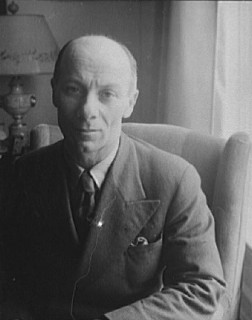
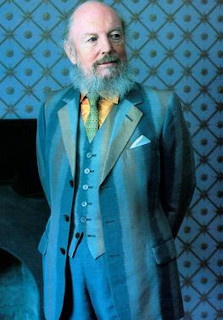
Murray is educated at St. Patrick’s Teacher Training College in Drumcondra, Dublin. He works as a schoolteacher and in 1900 is appointed headmaster of the national school in Rathduff, County Cork. His first play, The Wheel of Fortune, is produced in 1909 by the Little Theatre in Cork, a theatre he had co-founded with Daniel Corkery, Con O’Leary and Terence MacSwiney. The play is revised and renamed Sovereign Love in 1913. In 1915, he moves to Dublin as headmaster of the Model Schools at Inchicore, where he remains until his retirement from teaching in 1932.
Murray’s play Birthright is performed in the Abbey Theatre in 1910 and establishes him as a writer of force. In all, he writes fifteen plays, all of which are produced by the Abbey. His two most highly regarded works are Maurice Harte (1912) and Autumn Fire (1924). Both of these and Birthright are performed in New York City on Broadway, with Autumn Fire having a run of 71 performances. He also writes an autobiographical novel Spring Horizon (1937).
It has been stated both by A. DeGiacomo and by R. Allen Cave that, in the Art competitions at the 1924 Summer Olympics in Paris, France, Murray is awarded a bronze medal for his play Birthright. However, according to the official record for the games, although Murray is a participant in the literature category with this play and also with Maurice Harte, he does not win a medal.
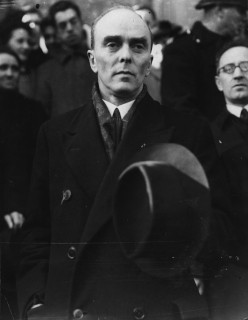
Under the Irish Republic‘s Dáil Constitution adopted in 1919, Dáil Éireann continues to exist after it has ratified the Anglo-Irish Treaty. In protest at the ratification, Éamon de Valera resigns the presidency of the Dáil then seeks re-election from among its members in order to clarify his mandate, but Arthur Griffith defeats him in the vote and assumes the presidency.
The Provisional Government takes office two days later on January 16, 1922, when British administration hands over Dublin Castle to Collins in person. At this time, Westminster has not formally appointed the new Irish ministers or conferred their government with any powers.
The handover of Dublin Castle to the Provisional Government is one of the earliest and most remarkable events in the short life of the Provisional Government. For centuries Dublin Castle is the symbol, as well as the citadel, of British rule in Ireland. The transfer of its Castle administration to the representatives of the Irish people is greatly welcomed in Dublin. It is regarded as a significant outward and visible sign that British rule is ending.
By mid-1922, Collins in effect lays down his responsibilities as Chairman of the Provisional Government to become Commander-in-Chief of the Irish Army, a formal structured uniformed army that forms around the pro-Treaty Irish Republican Army (IRA). As part of those duties, he travels to his native County Cork. En route home on August 22, 1922, at Béal na Bláth, he is killed in an ambush. Arthur Griffith dies of a cerebral haemorrhage ten days prior to Collins’ assassination. After Collins’ and Griffith’s deaths in August 1922, W. T. Cosgrave becomes both Chairman of the Provisional Government and President of Dáil Éireann, and the distinction between the two posts becomes irrelevant.
(Pictured: The Provisional Government of Ireland with President Arthur Griffith (front row center) and his cabinet and party includng Michael Collins (to Griffith’s right) likely taken at the Mansion House in February 1922)
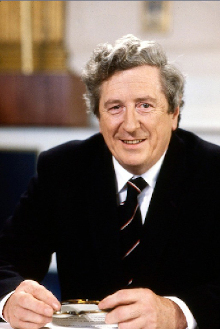
Micheal O’Siadhail, poet and linguist, is born in Dublin on January 12, 1947. Among his awards are The Marten Toonder Prize and The Irish American Culture Institute Prize for Literature.
O’Siadhail is born into a middle-class Dublin family. His father, a chartered accountant, is born in County Monaghan and works most of his life in Dublin, and his mother is a Dubliner with roots in County Tipperary. Both of them are portrayed in his work in several poems such as “Kinsmen” and “Promise”. From the age of twelve, he is educated at the Jesuit boarding school Clongowes Wood College, an experience he is later to describe in a sequence of poems “Departure” (The Chosen Garden).
At Clongowes O’Siadhail is influenced by his English teacher, the writer Tom MacIntyre, who introduces him to contemporary poetry. At thirteen he first visits the Aran Islands. This pre-industrial society with its large-scale emigration has a profound impact on him. His earlier work reflects this tension between his love of his native Dublin and his emotional involvement with those outlying communities and which features in the sequence “Fists of Stone” (The Chosen Garden).
In 1970 O’Siadhail marries Bríd Ní Chearbhaill, who is born in Gweedore, County Donegal. She is for most of her life a teacher and later head mistress in an inner-city Dublin primary school until her retirement in 1995 due to Parkinson’s disease. She is a central figure in his oeuvre celebrated in the sequence “Rerooting” in The Chosen Garden and in Love Life, which is a meditation on their lifelong relationship. One Crimson Thread travels with the progression of her Parkinson’s Disease. She dies on June 17, 2013.
For seventeen years, O’Siadhail earns his living as an academic; firstly, as a lecturer at Trinity College (1969–73) where he is awarded a Master of Letters degree in 1971 and then as a research professor at the Dublin Institute for Advanced Studies. During these years he gives named lectures in Dublin and at Harvard University and Yale University and is a visiting professor at the University of Iceland in 1982. In 1987 he resigns his professorship to devote himself to writing poetry which he describes as “a quantum leap.”
During his years as an academic, O’Siadhail, writing under the Irish spelling of his name, published works on the linguistics of Irish and a textbook for learners of Irish.
O’Siadhail serves as a member of the Arts Council of the Republic of Ireland (1987–93), of the Advisory Committee on Cultural Relations (1989–97) and is editor of Poetry Ireland Review. He is the founding chairman of ILE (Ireland Literature Exchange). As a founder member of Aosdána (Academy of Distinguished Irish Artists) he is part of a circle of artists and works with his friend the composer Seóirse Bodley, the painters Cecil King and Mick O’Dea and in 2008 gives a reading as part of Brian Friel‘s eightieth birthday celebration.
Colum was born on December 8, 1881, in Columcille, County Longford, the first of eight children born to Patrick and Susan Columb. In 1892, the family moves to Glasthule, near Dublin and he attends the local national school. He starts writing after he finishes school and meets a number of the leading Irish writers of the time, including W. B. Yeats, Lady Gregory and Æ. He also joins the Gaelic League and is a member of the first board of the Abbey Theatre. He becomes a regular user of the National Library of Ireland, where he meets James Joyce and the two become lifelong friends.
Influenced by the literary activity of the Celtic revival centered in Dublin at the turn of the century, Colum publishes the collection of poetry Wild Earth (1907). He co-founds The Irish Review in 1911, then three years later settles permanently in the United States. His varied literary output includes volumes of poetry including Dramatic Legends (1922) and Creatures (1927), plays such as Broken Soil (first performed 1903) and The Land (1905), novels, anthologies of folklore and children’s books. The reminiscence Our Friend James Joyce (1959) is written with his wife Mary (Maguire), a well-known literary critic.
The Colums spent the years from 1930 to 1933 living in Paris and Nice, where Padraic renews his friendship with James Joyce and becomes involved in the transcription of Finnegans Wake. After their time in France, the couple moves to New York City, where they do some teaching at Columbia University and City College of New York. He is a prolific author and publishes a total of 61 books, not counting his plays. While in New York, he writes the screenplay for the 1954 stop-motion animated film Hansel and Gretel: An Opera Fantasy. It is his only screenplay.
Mary dies in 1957, and Colum completes Our Friend James Joyce, which they had worked on together. It is published in 1958. He divides his later years between the United States and Ireland. In 1961 the Catholic Library Association awards him the Regina Medal.
Harry Aaron Kernoff, Irish painter of London/Russian extraction, is born in London on January 10, 1900. He is primarily remembered for his sympathetic interest in Dublin and its people.
Kernoff’s family moves to Dublin when he is 14 years old where he ultimately becomes a leading figure in Irish modernism. He studies drawing and painting during night classes at the Metropolitan School of Art. In 1923, he wins the Taylor Scholarship and becomes a full-time art student. During his studies he meets and is encouraged by fellow artists Patrick Tuohy (1894-1930), Seán Keating (1889-1977), and Maurice MacGonigal (1900-79).
Influenced by Keating, he paints the Irish landscape, genre scenes, portraits, street and pub scenes, as well as Dublin landmarks with sympathy and understanding. This is particularly evident in his woodcuts. While living in his adopted Dublin Jewish community he produces picture illustrations of his local scenes for a neighbourhood writer and friend Nick Harris for his book entitled Dublin’s Little Jerusalem.
Kernoff spends the vast majority of his life unappreciated, and makes little or nothing from his paintings until a few years before his death, when he begins to be appreciated by contemporary critics. He never marries.
Outside his home in Dublin, where he lives with two unmarried sisters, there is a long-standing sign in the front garden which says “… Descendants of the Abravanels…” The Abravanel (or Abrabanel) family is one of the most famous Sephardic Jewish families in history, noted for their large quotas of Rabbis, scholars, and members of a variety of scientific and artistic fields, dating from about the 13th century in Lisbon. The emergence of the famous philosopher and scholar Don Isaac Abravanel in the middle of the 16th century brings his works to greater universal recognition.
Kernoff dies in Dublin on December 25, 1974.
(Pictured: Portrait of Harry Aaron Kernoff, Oil on Canvas by John F. Kelly)
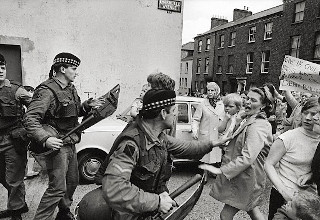
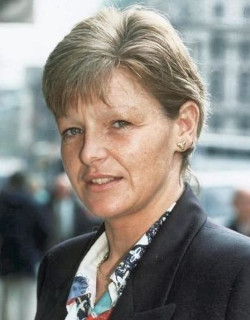
Tibble sees Quinn fleeing from the police after he has been noticed acting suspiciously near a house in which Quinn and fellow members of the Balcombe Street Gang are later found to have been preparing bombs. Tibble chases Quinn on his motorbike and, while attempting to stop him, is fatally shot twice in the chest.
Quinn escapes to Dublin in the aftermath of the shooting and serves a short prison sentence after his arrest for assaulting a police officer there. After his release in 1978 he returns to his hometown of San Francisco but is arrested in 1981 and later extradited to England in February 1988 where he is convicted of murder and jailed for life with a recommended minimum term of 35 years.
Quinn serves eleven years before he is released in April 1999, aged 51, along with the rest of the Balcombe Street Gang, under the terms of the Good Friday Agreement. While with the IRA, Quinn adopts an Irish accent and is tagged with the nickname “Yankee Joe” because of his American origins.
Power is born Jane O’Toole in Baltinglass, County Wicklow on May 1, 1858. In the 1880s she joins the Ladies’ Land League and finds herself immersed in their activities during the Land War. She compiles lists of those evicted from their homes and also organises the Land League in Wicklow and Carlow. In 1883 she marries John Wyse Power, a journalist who shares her political beliefs and is a member of the Irish Republican Brotherhood (IRB). They have four children together, a fact that does not interfere with her political work.
Power helps set up the Irish Women’s Franchise League and is also a founding member of Inghinidhe na hÉireann and Sinn Féin becoming Vice-President of both organisations. She is later on the Provisional Committee that sets up Cumann na mBan. She rises in the ranks to become one of the most important women of the revolution. In October 1914, she is elected the first President of Cumann na mBan. She is a successful businesswoman owning four branches of her Irish Farm Produce Company. The 1916 Proclamation of the Irish Republic is written in her home at 21 Henry Street, and she always maintains that the Military Council signed the proclamation in no particular order; they just signed as it was passed to each of the signatories, though, with James Connolly being eager to be the first to sign. Even the identity of the head of the Provisional Government was not altogether clear.
During the 1916 Easter Rising she supplies food to the Irish Volunteers. After the Rising she and her daughter, Nancy, help re-organise Cumann na mBan and distribute funds to families suffering hardships, as well as the Prisoners Dependants Fund. These funds had been sent by Clan na Gael in the United States. She is subsequently elected as one of five women members onto Dublin Corporation in 1920 for the Inns Quay – Rotunda District.
Power supports the Anglo-Irish Treaty and by the end of 1921, she is convinced that in doing so, will mean the need to leave Cumann na mBan to form a separate organisation. She helps set up Cumann na Saoirse (The League for Freedom), the pro-Treaty women’s organisation and becomes its Vice-President. She is a Free State Senator from 1922 until 1936 and is also a member of Cumann na nGaedheal.
Jennie Wyse Power dies on January 5, 1941, aged 82, at her home in Dublin. She is interred in Glasnevin Cemetery with her husband and daughter, Máire (who predeceased her). Her funeral is attended by many from both sides of the Dáil and the former revolutionary movement.
Potter is educated at St. Mary’s school in Fairview. She has a long career in Irish theatre, mainly as Ireland’s première comedienne, but also as a straight actress. She first appears professionally with Jimmy O’Dea in pantomime and appears frequently on television and in cabaret. She is a regular performer at the Gaiety Theatre in Dublin and for many years stars in Christmas pantomime. She becomes the first star to have a bronze cast of her handprints outside the theatre. She marries Jack O’Leary in 1959, an Irish army officer whom she had first met in 1943, and he writes most of her comedic material.
Among Potter’s many dramatic roles in the theatre is that of Maisie Madigan in Juno and the Paycock. While still a teenager, she tours abroad before World War II as a singer and dancer with Jack Hylton and his orchestra. On a tour of Germany, they once perform in front of Adolf Hitler and other Nazis. She plays the role of Dante Riordan in Joseph Strick‘s film, A Portrait of the Artist as a Young Man (1977). In September 1938, she appears on the BBC Television Service with Jack Hylton and his band. Film of her performance is held by the Alexandra Palace Television Society. In 2001, the Archivist of the Alexandra Palace Television Society gives Potter a copy of her 1938 television appearance.
Potter is conferred with the Freedom of the City of Dublin in 1984, and is later awarded an honorary degree from Trinity College, Dublin. She dies in her sleep at her home in Clontarf on April 7, 2004, at the age of 79. She is survived by her husband Jack O’Leary, and her sons John and Hugh.
Charles O’Conor, Irish writer and antiquarian who is enormously influential as a protagonist for the preservation of Irish culture and history in the eighteenth century, is born on January 1, 1710 in Killintrany, County Sligo. He combines an encyclopaedic knowledge of Irish manuscripts and Gaelic culture in demolishing many specious theories and suppositions concerning Irish history.
O’Conor is born into a cadet branch of the land-owning family of O’Conor Don and is sent for his education to Father Walter Skelton’s school in Dublin. He grows up in an environment that celebrates Gaelic culture and heritage. He begins collecting and studying ancient manuscripts at an early age.
His marriage brings him financial stability so that he can devote himself to his writing, but he is widowed in 1750, within a year of his father’s death. When his eldest son Denis marries in 1760, he gives up the residence at Bellanagare to him and moves into a small cottage that he had built on the estate. He devotes the remainder of his life to the collection and study of Irish manuscripts, to the publication of dissertations, and especially to the cause of Irish and Catholic emancipation.
O’Conor is well known in Ireland from his youth as a civil-tongued, but adamant, advocate of Gaelic culture and history. He garners fame outside Ireland through his Dissertations on the ancient history of Ireland (1753), which is generally well received. When Samuel Johnson is made aware of it, he is moved to write a letter to O’Conor in 1755, complimenting the book, complimenting the Irish people, and urging O’Conor to write on the topic of Celtic languages.
The book is less well received in some Scottish circles, where there exists a movement to write Celtic history based upon Scottish origins. When James Macpherson publishes a spurious story in 1761 about having found an ancient Gaelic (and Scottish) cycle of poems by a certain “Ossian“, among the critics who rejects it as false is O’Conor, as an inclusion in the 1766 rewrite of his 1753 work. While the issue was laid to public rest by others, notably Samuel Johnson, the issue is laid to intellectual rest by O’Conor in 1775, with the publication of his Dissertation on the origin and antiquities of the antient Scots. The fact that the issue occurs provides O’Conor the opportunity to establish Ireland as the source of Gaelic culture in the minds of the non-Irish general public.
O’Conor’s later life is that of the respected dean of Irish historians. He continues to write as always in favour of ideas that he favours and are consistent with the historical record, and against any and all ideas that are inconsistent with the historical record, including those of other Irish historians. Such is his esteemed reputation that even those whom he challenges would include his challenges in the next edition of their own books. He continues to collect, study, and annotate Irish manuscripts. Upon his death in Bellanagare, County Roscommon on July 1, 1791, his collection becomes the first part of the Annals of the Four Masters at the Stowe Library. In 1883 these are returned to the Royal Irish Academy library.
His unfinished History of Ireland, that Johnson had encouraged in 1777, is destroyed on his instructions at his death.
Educated in England, Boucicault begins acting in 1837 and in 1840 submits his first play to Lucia Elizabeth Vestris at Covent Garden, however it is rejected. His second play, London Assurance (1841), which foreshadows the modern social drama, is a huge success and is frequently revived into the 20th century. Other notable early plays were Old Heads and Young Hearts (1844) and The Corsican Brothers (1852).
In 1853 Boucicault and his second wife, Agnes Robertson, arrive in New York City, where his plays and adaptations are long popular. He leads a movement of playwrights that produces in 1856 the first copyright law for drama in the United States. His play The Poor of New York, based on the panics of 1837 and 1857, has a long run at Wallack’s Theatre in 1857 and is presented elsewhere as, for example, The Poor of Liverpool. The Octoroon (1859) causes a sensation with its implied attack on slavery.
Boucicault and his actress wife join Laura Keene’s theatre in 1860 and begin a series of his popular Irish plays — The Colleen Bawn, or The Brides of Garryowen (1860), Arrah-na-Pogue (1864), The O’Dowd (1873), andThe Shaughraun (1874). Returning to London in 1862, he provides Joseph Jefferson with a successful adaptation of Rip Van Winkle (1865). In 1872 he returns to the United States, where he remains, except for a trip to Australia that results in his third marriage (for which he renounced the legitimacy of his second marriage). Among his associates in the 1870s is the young David Belasco. At the time of his death on September 18, 1890, in New York City, he is a poorly paid teacher of acting. He is buried in Mount Hope Cemetery, Hastings, Westchester County, New York.
About 150 plays are credited to Boucicault, who, as both writer and actor, raises the stage Irishman from caricature to character. To the American drama he brings a careful construction and a keen observation and recording of detail. His concern with social themes prefigures the future development of drama in both Europe and America.
(Pictured: Dionysius Boucicault, taken 1890 or before. Photograph: Harvard Theatre Collection/Wikimedia Commons)