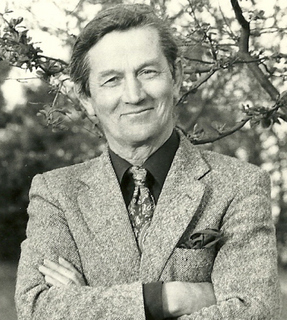
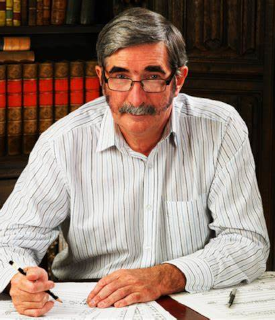
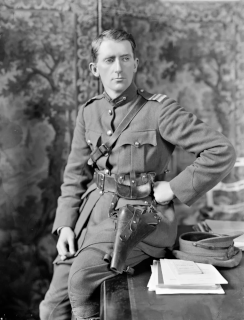
Norton is educated at Synge Street CBS. From an early age he wants to be an actor, and regularly attends performances at the Abbey Theatre. His mother, Frances, plays the violin and his father, Eugene, is a baritone singer and works as a bakery manager. He has one sibling, the late acting teacher Betty Ann Norton.
Norton has been acting for over forty years in theatre, television, and film, and frequently plays clergymen, most notably Bishop Brennan in the sitcom Father Ted, as well as roles in The Sweeney (1975), Peak Practice (1993), Sunset Heights (1997), A Love Divided (1999), Rebus: Black and Blue (2000), Mad About Mambo (2000), Boxed (2003) and Jimmy’s Hall (2014). He stars as Finian McLonergan in the critically acclaimed New York City Center‘s 2009 production of Finian’s Rainbow, and in October 2009 reprises the role in the Broadway revival at the St. James Theatre. His co-stars are Cheyenne Jackson (Woody) and Kate Baldwin (Sharon).
As well as Bishop Brennan in Father Ted, Norton also plays Albert Einstein in two episodes of Star Trek: The Next Generation (namely “The Nth Degree” and “Descent“); the librarian Lieutenant James Porteous in the highly acclaimed 1970s British television drama series Colditz; Phil Harrister, a criminal involved in an intricate bank robbery, in The Sweeney episode “Contact Breaker”; O’Brady in the Minder episode “National Pelmet“; and Rory, a roguish but genteel Irishman who is diagnosed with cirrhosis of the liver, in The Royal episode “Beggars and Choosers.”
Norton makee his film debut with a small role in the 1965 thriller The Face of Fu Manchu starring Christopher Lee, and later appears in the 1969 epic film Alfred the Great as Thanet. He plays the part of Pongo in the screen version of Spike Milligan‘s war-time memoir Adolf Hitler: My Part in his Downfall. In 1971 he plays Chris Cawsey (aka “The Rat Man”), one of several villains in the controversial Sam Peckinpah film Straw Dogs starring Dustin Hoffman. His character has a deviously infectious, deliberately irritating laugh that helps build tension throughout the film.
In 2011 Norton appears as the character Old Mr. Black in the film Extremely Loud & Incredibly Close directed by Stephen Daldry. He appears in the 2011 film Water for Elephants, in which he portrays a circus worker called “Camel” who befriends a character played by Robert Pattinson. In 2012 he appears as the character Tommy in the short film Homemade written by Matthew Roche and directed by Luke McManus. He is in the Ken Loach film Jimmy’s Hall which is released in 2014. He plays the role of Mr. Heelshire in the 2016 film The Boy. In 2018 he plays the role of Mr. Binnacle in Mary Poppins Returns.
Norton has a longtime partnership with playwright Conor McPherson, having originated roles in six of his plays in Dublin, London and New York, and for which he has won both the Tony and Olivier Award. Norton plays Jack in The Weir (1997), Joe in Port Authority (2001), Matthew in Come On Over (2001), Richard in The Seafarer (2006–7), Reverend Berkeley in The Veil (2011), and Maurice in The Night Alive (2013).
At the age of 20, O’Hanlon is killed on January 1, 1957, along with Seán South while taking part in an attack on the Royal Ulster Constabulary barracks in Brookeborough, County Fermanagh, during the border campaign. Several other IRA members are wounded in the botched attack. The IRA flees the scene in a dumper truck. They abandon it near the border. They leave South and O’Hanlon, both then unconscious, in a cow byre, and crossed into the Republic of Ireland on foot for help for their comrades. The wounded IRA men are treated as “car crash victims” by sympathetic staff in the Mater Misericordiae Hospital in Dublin.
O’Hanlon’s mother remains firmly committed to the IRA and is hurt by the suggestion that there was an alternative to IRA activity or that her son was anything other than an Irish hero.
A marble monument now stands at the spot where South and O’Hanlon lost their lives. An annual lecture has been held in memory of O’Hanlon since 1982, and approximately 500 people attended a 50th commemoration of the men’s deaths in January 2007 in Limerick.
In 1971, a monument is unveiled to O’Hanlon in his hometown on a hill overlooking the Clones Road on which he had made his last journey home. A Gaelic football team is founded in Monaghan in 2003 and called the Fergal O’Hanlons.
Aherne is born in Limerick, County Limerick, on January 26, 1919. As a youth, he initially emerges as a prominent hurler with Treaty Sarsfields and also plays one game for Limerick. However, he subsequently decides to concentrate on football and begins his senior career with Limerick United where his teammates include Davy Walsh. During World War II, he serves in the Irish Army and is stationed at Crosshaven. His impressive performances in the League of Ireland attract attention and in 1946 he is signed by Belfast Celtic.
While at Belfast Celtic, Aherne plays alongside Jackie Vernon, Billy McMillan, Robin Lawler and Johnny Campbell and helps them win the Irish Cup in 1947 and an Irish League title in 1948. He is also at Celtic during the infamous Boxing Day riot which breaks out during a game against local rivals Linfield F.C. In March 1949, he leaves Celtic and signs for Luton Town. However, in May 1949, he temporarily rejoins Celtic for their final tour before the club disbands. Together with McMillan, Campbell, Lawlor, guest player Mick O’Flanagan and manager Elisha Scott, he goes on the Celtic tour of North America. The highlight of the 10-game tour comes on May 29 when Celtic beats the reigning British champions, Scotland, 2–0.
Aherne signed for Luton Town for a fee of £6,000 and makes his English Football League debut on March 19 in a 2–1 away defeat to Tottenham Hotspur. Despite the fact he is over 30 when he joins Luton, he quickly establishes himself as a regular. He plays competitive football into his late thirties and is ever-present during the 1954–55 season when Luton wins promotion to Division One. After playing 288 games for Luton, including 267 in the league, he retires after a hairline fracture of the ankle ends his career. Even then he continues to play for a local league team, Luton Celtic, into his forties.
When Aherne begins his international career in 1946 there are in effect, two Ireland teams, chosen by two rival associations. Both associations, the Belfast-based Irish Football Association and the Dublin-based Football Association of Ireland, claim jurisdiction over the whole of Ireland and select players from the whole island. As a result, several notable Irish players from this era, including Aherne play for both teams.
Between 1946 and 1953 Aherne makes 16 appearances for the FAI XI. He makes his FAI debut in June 1946 during an Iberian tour, playing in both the 3–1 defeat to Portugal on June 16 and then helping the FAI XI gain a surprise 1–0 victory against Spain on June 23. He remains a regular in the FAI XI throughout the late 1940s and early 1950s and is featured prominently in the qualifying rounds for the 1950 FIFA World Cup. He is also a member of the FAI XI team that defeats England 2–0 at Goodison Park, becoming the first non-UK team to beat England at home.
On November 16, 1953, during a 1–1 draw with France, Aherne briefly becomes involved in controversy. Although only a friendly, the game quickly becomes heated and at one point, with Aherne chasing Raymond Kopa down the tunnel after play had been stopped for a foul. Kopa allegedly runs for his life after upsetting Aherne once too often. The FAI selectors are not impressed, and Aherne is told a repeat will end his international career. As it turns out, he makes only one more appearance for the FAI XI. That comes on October 4, 1953, in 5–3 defeat against France during a qualifier for the 1954 FIFA World Cup.
Between 1946 and 1950, Aherne also makes six appearances for the IFA XI. These include two Victory Internationals played in early 1946. On February 2 at Windsor Park, he makes his debut for the IFA XI in a 3–2 defeat to Scotland. Then on May 4 he helps the IFA XI defeat Wales 1–0 at Ninian Park. On September 28, 1946, he also plays for the IFA XI in a heavy defeat to England. The highlight of his career with the IFA XI comes on October 4, 1947, when he helps them gain a 2–0 win against Scotland.
Ahern makes his last appearance for the IFA XI in a 0–0 draw with Wales on March 8, 1950. As well as being part of the 1950 British Home Championship, the game also doubles up as a qualifier for the 1950 FIFA World Cup. Aherne, together with Con Martin, Reg Ryan and Davy Walsh, is one of four players from the Republic, included in the IFA XI that day and as a result he plays for two different associations in the same FIFA World Cup tournament. This situation eventually leads to intervention by FIFA and as a result Aherne becomes one of the last four Republic-born players to play for the IFA XI.
After retiring as a player Aherne settles in Luton where he coaches the Luton Town youth team, works in the local car industry and runs a very successful licensed premises. He also continues to visit Limerick regularly and remains healthy and active until he is diagnosed with Alzheimer’s disease in the mid-1990s. He dies on December 30, 1999, at the age of 80 and is survived by his wife, Eileen, two sons, Pat and Brian, and three daughters, Maura, Trisha and Catherine.
Lalor is born on March 10, 1807, in Tinnakill House, Raheen, County Laois, the first son of twelve children of Patrick “Patt” Lalor and Anne Dillon, the daughter of Patrick Dillon of Sheane near Maryborough. His father is an extensive farmer and is the first CatholicMP for Laois (1832–1835). The household is a very political one where active discussion on national issues is encouraged.
Because of an accident when he is young, Lalor is semi-crippled all his life. He is not a very healthy young man and consequently is educated at home. In February 1825 he goes to St. Patrick’s, Carlow College. He studies chemistry under a Mr. Holt and the classics under Father Andrew Fitzgerald. While in college he becomes a member of the Apollo Society, where literature and music are studied, his favourite author at the time being Henry St. John, 1st Viscount Bolingbroke. He suffers greatly through ill health during his time in college, and in February 1826, being ill and very weak he has to return home.
Lalor’s father is passionately opposed to the payment of tithes and urges Catholics not to pay. He supports this stand, but it is the land question and the power of the landlords to evict tenants that exercises him in particular. His father is also a great supporter of Daniel O’Connell and the Repeal movement. However, Lalor does not support the Repeal movement as he considers it to be flawed. As a result, a rift occurs between him and his father on this question. Such is the rift that he leaves home and spends time in Belfast and Dublin. He finally returns home due to ill health and heals his differences with his father.
It is while writing from home that Lalor achieves national prominence. He contributes articles to The Nation and The Felon. He advocates rent strikes and active resistance to any wrongdoings. His central theme is the rights of the tenant farmer to his own land. In his opinion, land reform is the biggest issue of the time. He writes articles such as “What must be done,” “The Faith of a felon,” “Resistance,” and “Clearing Decks.” It is he who says it is time for revolution and active resistance. This is especially evident during the famine years when tenants are being evicted for nonpayment of rent. As a result, he is arrested and imprisoned. Upon his release he continues to write. He is now a nationally acclaimed writer, revolutionary, and reformer.
Ill health once again curtails his efforts. An attack of bronchitis eventually brings about his early death on December 27, 1849, at his lodgings in Great Britain Street (now Parnell Street) at the age of 43. He is buried in Glasnevin Cemetery in Dublin.
The James Fintan Lawlor Commemorative Committee, chaired by David Lawlor is formed in August 2005 to erect a memorial to mark the 200th anniversary of the birth of James Fintan Lalor. Laois County Council provides the site; Irish Life and Permanent sponsors the project; the Department of the Environment provides half the cost. The bronze statue of Lalor holding a pamphlet aloft is sculpted by Mayo-based artist Rory Breslin. The inscription on the limestone plinth reads: “Ireland her own, and all therein, from the sod to the sky. The soil of Ireland for the people of Ireland.”
Michael Davitt considered Lalor “the only real Irish revolutionary mind in the ’48 period.” His ideas were the ideological underpinning of the Irish National League during the Land War.
Cairnes is the son of William Elliott Cairnes (1787–1863) of Stameen, near Drogheda, and Marianne Woolsey, whose mother is the sister of Sir William Bellingham, 1st Baronet of Castlebellingham. William decides upon a business career, against the wishes of his mother, Catherine Moore of Moore Hall, Killinchy, and becomes a partner in the Woolsey Brewery at Castlebellingham. In 1825, he starts on his own account in Drogheda, making the Drogheda Brewery an unqualified success. He is remembered for his great business capacity and for the deep interest he takes in charity.
After leaving school, Cairnes spends some years in the counting house of his father at Drogheda. His tastes, however, lay altogether in the direction of study, and he is permitted to enter Trinity College Dublin, where he takes the degree of BA in 1848, and six years later that of MA. After passing through the curriculum of Arts, he engages in the study of Law and is called to the Irish bar. But he lacks a desire to pursue the legal profession, and over some ensuing years, he devotes himself to writing in various publications about social and economic questions and treatises that relate to Ireland. He focuses mostly on political economy, which he studies thoroughly.
While residing in Dublin, Cairnes makes the acquaintance of the Archbishop of DublinRichard Whately, who conceives a very high respect for Cairnes’ character and abilities. In 1856, a vacancy occurs in the chair of political economy at Dublin, founded by Whately, and Cairnes receives the appointment. In accordance with the regulations of the foundation, the lectures of his first year’s course are published. The book appears in 1857 with the title Character and Logical Method of Political Economy. It follows up on and expands John Stuart Mill‘s treatment in the Essays on some Unsettled Questions in Political Economy and forms an admirable introduction to the study of economics as a science. In it the author’s peculiar powers of thought and expression are displayed to the best advantage. Logical exactness, precision of language, and firm grasp of the true nature of economic facts, are the qualities characteristic of this as of all his other works. If the book had done nothing more, it would still have conferred inestimable benefit on political economists by its clear exposition of the true nature and meaning of the ambiguous term law. To the view of the province and method of political economy expounded in this early work the author always remains true, and several of his later essays, such as those on Political Economy and Land, Political Economy and Laissez-Faire, are but reiterations of the same doctrine. His next contribution to economical science is a series of articles on the gold question, published partly in Fraser’s Magazine, in which the probable consequences of the increased supply of gold attendant on the Australian and Californian gold discoveries are analysed with great skill and ability. And a critical article on Michel Chevalier‘s work, On the Probable Fall in the Value of Gold, appears in the Edinburgh Review for July 1860.
In 1861, Cairnes is appointed to the professorship of jurisprudence and political economy in Queens College Galway, and in the following year he publishes his admirable work The Slave Power, one of the finest specimens of applied economic philosophy. The inherent disadvantages of the employment of slave labour are exposed with great fullness and ability, and the conclusions arrived at have taken their place among the recognised doctrines of political economy. The opinions expressed by Cairnes as to the probable issue of American Civil War are largely verified by the actual course of events, and the appearance of the book has a marked influence on the attitude taken by serious political thinkers in England towards the Confederate States of America.
During the remainder of his residence at Galway, Cairnes publishes nothing beyond some fragments and pamphlets, mainly upon Irish questions. The most valuable of these papers are the series devoted to the consideration of university education. His health, at no time very good, is still further weakened in 1865 by a fall from his horse. He is ever afterwards incapacitated from active exertion and is constantly liable to have his work interfered with by attacks of illness.
In 1866 Cairnes is appointed professor of political economy in University College, London. He is compelled to spend the session 1868–1869 in Italy, but on his return continues to lecture until 1872. During his last session he conducts a mixed class, ladies being admitted to his lectures. His health soon renders it impossible for him to discharge his public duties. He resigns his post in 1872 and retires with the honorary title of professor emeritus of political economy. In 1873 his own university confers on him the degree of LL.D.
Noble’s mother dies when she is ten years old. She is sent to an orphanage and dishonestly told that her three siblings were dead. She escapes and lives rough in Dublin, where she is gang raped. Her baby son is put up for adoption against her will. After discovering the state had lied about the death of her siblings, she locates her brother in England. She moves there to live with him after she turns eighteen. This is where she meets and marries her husband and has three children, Helenita, Nicolas and Androula. She is a victim of domestic violence.
In 1989, Noble visits Vietnam and begins to care for homeless children, after a recurring dream, during the Vietnam War. This leads her to create the Christina Noble Children’s Foundation in the same year. To date, she and the Foundation have helped over 700,000 children in Vietnam and Mongolia.
Keating is born in Limerick, County Limerick on September 28, 1889. He studies drawing at the Limerick Technical School before a scholarship arranged by William Orpen allows him to go study at the Metropolitan School of Art in Dublin at the age of twenty. Over the next few years, he spends two weeks or so during the late summer on the Aran Islands and his many portraits of island people depict them as rugged heroic figures.
In 1914 he wins the RDS Taylor award with a painting titled The Reconciliation. The prize includes £50.00 which allows him to go to London to work as Orpen’s studio assistant in 1915. In late 1915 or early 1916, he returns to Ireland where he documents the Irish War of Independence and the subsequent Irish Civil War. Examples include Men of the South (1921–22) which shows a group of Irish Republican Army (IRA) men ready to ambush a military vehicle and An Allegory (first exhibited in 1924), in which the two opposing sides in the Irish Civil War are seen to bury the tri-colour covered coffin amid the roots of an ancient tree. The painting includes a self-portrait of the artist.
Keating is elected an Associate of the Royal Hibernian Academy (RHA) in 1918, and a full member in 1923. One of the cardinal achievements of the Irish Free State in the 1920s is the building, in partnership with Siemens, of a hydro-electric power generator at Ardnacrusha, near Limerick. Between 1926 and 1927, at his own volition, he produces a considerable number of paintings related to this scheme. He exhibits several examples of the paintings in the RHA exhibitions in 1927 and 1928. Most of the paintings are now in the collection of ESB Group.
In 1936 group of prominent Limerick politicians, artists and patrons establish the first Limerick City Collection of Art from various donations and bequests. Keating is part of this artist-led initiative to form a municipal art gallery in Limerick similar to those already in Dublin and Cork. The collection is formed primarily out of donations and bequests. As a pivotal member of the committee, Keating himself donates many works to the collection which is first exhibited as a municipal collection in the Savoy Cinema, Limerick City on November 23, 1937. It is not until 1948 that an extension to the rear of Limerick Free Library and Museum becomes the home to the City Collection as the Limerick Free Art Gallery. In 1985 the Library and Museum are transferred to larger buildings.
In 1939 Keating is commissioned to paint a mural for the Irish pavilion at the New York World’s Fair. He is President of the RHA from 1950 to 1962 and shows at the annual exhibition for 61 years from 1914. Although he is an intellectual painter in the sense that he consciously sets out to explore the visual identity of the Irish nation, and his paintings show a very idealised realism, he fears that the modern movement will bring back a decline in artistic standards. Throughout his career, he exhibits nearly 300 works at the RHA and also shows at the Oireachtas.
Seán Keating dies on December 21, 1977 at the Adelaide Hospital in Dublin and is buried at Cruagh Cemetery, Rathfarnham. The 1978 RHA Exhibition features a small memorial collection of his work.
Posthumous exhibitions of his work are mounted by The Grafton Gallery, Dublin (1986) and the Electricity Supply Board (1987). Sean Keating – The Pilgrim Soul, a documentary presented and written by his son Justin Keating, airs on RTÉ in 1996.
(Pictured: Photograph of Keating’s “An Allegory” painted between 1922 and 1924. The painting represents Keating’s own disillusionment and loss of idealism resulting from the outbreak of the Irish Civil War. The only figure of the group addressing the observer is a self-portrait of the artist.)
Browne grows up in the Bogside area of Derry. The Browne family also lives in Athlone and Ballinrobe for a period of time. His mother Mary Therese (née Cooney) is born in 1885 in Hollymount, County Mayo. His father Joseph Brown, a Royal Irish Constabulary (RIC) sergeant, later works as an inspector for the National Society for the Prevention of Cruelty to Children and, partly as a result of this work, all of the Browne family becomes infected with tuberculosis. Both parents die of the disease during the 1920s. His father is the first to die, leaving only £100 behind to support a wife and seven children. Fearing that if she and the children remain in Ireland they will be forced into a workhouse, Mary sells all their possessions and takes the family to London. Within two days of their arrival, Mary is dead, later buried in a pauper’s grave. Of her seven children, six contract tuberculosis. Noël is only one of two Browne children to survive into adulthood after those bouts with TB.
In 1929, Browne is admitted free of charge to St. Anthony’s, a preparatory school in Eastbourne, England. He then wins a scholarship to Beaumont College, the Jesuitpublic school near Old Windsor, Berkshire, where he befriends Neville Chance, a wealthy boy from Dublin. Neville’s father, the eminent surgeon Arthur Chance, subsequently pays Browne’s way through medical school at Trinity College Dublin.
In 1940, while still a student, Browne suffers a serious relapse of tuberculosis. His treatment at a sanatorium in Midhurst, Sussex is paid for by the Chance family. He recovers, passes his medical exams in 1942, and starts his career as a medical intern at Dr. Steevens’ Hospital in Dublin, where he works under Bethel Solomons. He subsequently works in numerous sanatoria throughout Ireland and England, witnessing the ravages of the disease. He soon concludes that politics is the only way in which he can make an attack on the scourge of tuberculosis.
The poverty and tragedy that had shaped Browne’s childhood deeply affects him. He considers both his survival and his level of education a complete fluke, a stroke of random chance that saved him when he was seemingly destined to die unknown and in poverty like the rest of his family. He finds this completely distasteful and is moved to enter politics as a means to ensure no one else would suffer the same fate that had befallen his family.
A ‘White Paper’ on proposed healthcare reforms had been prepared by the previous government, and results in the 1947 Health Act. In February 1948, Browne becomes Minister for Health and starts the reforms advocated by the Paper and introduced by the Act.
The health reforms coincide with the development of a new vaccine and of new drugs (e.g., BCG and penicillin) that help to treat a previously untreatable group of medical conditions. Browne introduces mass free screening for tuberculosis sufferers and launches a huge construction program to build new hospitals and sanitoria, financed by the income and accumulated investments from the Department of Health-controlled Hospital Sweeps funds. This, along with the introduction of Streptomycin, helps dramatically reduce the incidence of tuberculosis in Ireland.
As Minister for Health Browne comes into conflict with the bishops of the Catholic Church and the medical profession over the Mother and Child Scheme. This plan, also introduced by the 1947 Health Act, provides for free state-funded healthcare for all mothers and children aged under 16, with no means test, a move which is regarded as radical at the time in Ireland, but not in the rest of Europe. Virtually all doctors in private practice oppose the scheme, because it would undermine the “fee for service” model on which their income depended.
The Church hierarchy, which controls many hospitals, vigorously opposes the expansion of “socialised medicine” in the Irish republic. They claim that the Mother and Child Scheme interferes with parental rights, and fear that the provision of non-religious medical advice to mothers will lead to birth control contrary to Catholic teaching. They greatly dislike Browne, seeing him as a “Trinity Catholic,” one who has defied the Church’s ruling that the faithful should not attend Trinity College Dublin, which had been founded by Protestants and for many years did not allow Catholics to study there.
Under pressure from bishops, the coalition government backs away from the Mother and Child Scheme and forces Browne’s resignation as Minister for Health. Following his departure from government, he embarrasses his opponents by arranging for The Irish Times to publish TaoiseachJohn A. Costello‘s and MacBride’s correspondence with the Catholic hierarchy, which details their capitulation to the bishops.
The controversy over the Mother and Child Scheme leads to the fall of the coalition government in which Browne had served as a Minister. But Church opposition to socialised medicine continues under the subsequent Fianna Fáil-led government. The hierarchy does not accept a no-means-test mother-and-infant scheme even when Fianna Fáil reduces the age limit from sixteen years to six weeks, and the government again backs down.
After his resignation as Minister for Health, Browne leaves Clann na Poblachta, but is re-elected to the Dáil as an Independent TD from Dublin South-East in the subsequent election.
Browne joins Fianna Fáil in 1953 but loses his Dáil seat at the 1954 Irish general election. He fails to be selected as a candidate for the 1957 Irish general election and he resigns from the party. He is re-elected at that election for Dublin South-East as an Independent TD.
In 1977 Browne is the first Irish parliamentarian to call for law reforms in regard to homosexuality, which is illegal at the time, and in 1979 is one of the few Irish politicians to attend the opening of the Hirschfeld Centre, Dublin’s first full-time LGBT community space.
In 1990, a number of left-wing representatives within the Labour Party, led by Michael D. Higgins, approach Browne and suggest that he should be the party’s candidate in the presidential election due later that year. Though in failing health, Browne agrees. However, the offer horrifies party leader Dick Spring and his close associates for two reasons. Firstly, the leadership had secretly decided to run Mary Robinson, a barrister and former senator. Secondly, many around Spring are “appalled” at the idea of running Browne, believing he has “little or no respect for the party” and is “likely in any event to self-destruct as a candidate.” When Spring informs Browne by telephone that the party’s Administrative Council has chosen Robinson over him, Browne hangs up the telephone.
Browne spends the remaining seven years of his life constantly criticising Robinson who had gone on to win the election, thus becoming the seventh President of Ireland, and who is considered highly popular during her term. During the campaign he also indicates support for the rival Fine Gael candidate, Austin Currie.
After retiring from politics, Browne moves with his wife Phyllis to Baile na hAbhann, County Galway. He dies at the age of 81 in the Regional Hospital, Galway, on May 21, 1997. He is buried in a small graveyard near Baile na hAbhann.
Buckley grows up in a rural environment and is introduced to traditional music learning the button accordion from the local player Liam Moloney when he is 9 years of age. In 1969 he moves to Dublin to study for the Teacher’s Diploma at St. Patrick’s College, Drumcondra. Here he has his first opportunity to hear live classical and modern music including contemporary and avantgarde works by Irish composers including Aloys Fleischmann, Brian Boydell, John Kinsella, and Seóirse Bodley, as well as works by international composers such as Krzysztof Penderecki. He becomes a student at the Royal Irish Academy of Music, Dublin (1969–74), studying the flute with Doris Keogh and composition with A. J. Potter and James Wilson. He continues his musical studies with Alun Hoddinott in Cardiff, Wales (1978–82), Aloys Fleischmann in Cork (M.A. in composition, 1980), and briefly with John Cage during a summer school for composers and choreographers at Guildford, Surrey, in 1981. Initially working as secondary school teacher, from 1982 he is able to work independently as a composer.
In 1983, Buckley is the co-founder, with James Wilson, of the annual Ennis Summer School for composition, which becomes an influential training ground for aspiring young Irish composers; pupils include Michael Alcorn, Rhona Clarke, and Gráinne Mulvey. He becomes a member of Aosdána in 1984. Since 2001 he has been a lecturer in music at St. Patrick’s College, Drumcondra. From the National University of Ireland at Maynooth (now Maynooth University) he receives a PhD in 2002 and a DMus in 2007.
Apart from membership in Aosdána, Buckley is honoured with the Varming Prize (1976), the Macaulay Fellowship (1978), the Arts Council‘s Composers’ Bursary (1982) and the Marten Toonder Award (1991).
Buckley’s output includes many commissions for solo instruments, chamber ensembles, choirs, bands and orchestra. His music has been widely performed and broadcast in Ireland and in more than fifty countries worldwide. He has represented Ireland at the UNESCOInternational Rostrum of Composers on five occasions and at the 1990 Prix Italia. His music has also been performed at five International Society for Contemporary Music (ISCM) festivals.
Buckley’s music does not adhere to any particular compositional school. He acknowledges the influence of Luciano Berio, Witold Lutoslawski,György Ligeti, and Olivier Messiaen. His harmonic approach is freely atonal. Structurally, there is frequently a gradual build-up from initially very limited pitch material to large formal constructions. Many compositions work towards a climax in the fourth quarter of a piece and then return to initial pitch sequences. In a number of early works he explores the Celtic myths of his native Ireland in orchestral scores such as Taller than Roman Spears (1977) and Fornocht do chonac thú (1980) and in small-scale works such as Oileáin (1979) for piano, Boireann (1983) for flute and piano, or I am Wind on Sea (1987) for mezzo-soprano and percussion. Later this aspect becomes less important for him. Works since the late 1980s display “a textural subtlety in marked contrast to the more robust sonorities explored in Buckley’s earlier keyboard works,” a “French refinement of sound, and an elevation of timbre as central characteristics” and “a concern with achieving a greater degree of formal unity” and “an exploration of analogies between sound and light.” O’Leary (2013) describes his style as “characterised by a broad harmonic idiom, contrasting consonance and dissonance in a non-tonal but strongly coloured soundworld.”
In 2010, Buckley arranges a number of Irish traditional songs for flute, some with harp, viola, percussion and string quartet. These are skilled and tasteful settings in a tonal harmonic language, quite unlike his original compositions.
Mulcahy is born in Manor Street, Waterford, County Waterford, on May 10, 1886, the son of post office clerk Patrick Mulcahy and Elizabeth Slattery. He is educated at Mount Sion Christian Brothers School and later in Thurles, County Tipperary, where his father is the postmaster.
Mulcahy is second-in-command to Thomas Ashe in an encounter with the armed Royal Irish Constabulary (RIC) at Ashbourne, County Meath, during the 1916 Easter Rising, one of the few stand-out victories won by republicans in that week and generally credited to Mulcahy’s grasp of tactics. In his book on the Rising, Charles Townshend principally credits Mulcahy with the defeat of the RIC at Ashbourne, for conceiving and leading a flanking movement on the RIC column that had engaged with the Irish Volunteers. Arrested after the Rising, he is interned at Knutsford and at the Frongoch internment camp in Wales until his release on December 24, 1916.
Mulcahy and Michael Collins are largely responsible for directing the military campaign against the British during the Irish War of Independence. During this period of upheaval in 1919, he marries Mary Josephine (Min) Ryan, sister of Kate and Phyllis Ryan, the successive wives of Seán T. O’Kelly. Her brother is James Ryan. O’Kelly and Ryan both later serve in Fianna Fáil governments.
Mulcahy supports the Anglo-Irish Treaty of December 1921. Archive film shows that Mulcahy, as Minister of Defence, is the Irish officer who raises the Irish tricolour at the first hand-over of a British barracks to the National Army in January 1922. He is defence minister in the Provisional Government on its creation and succeeds Collins, after the latter’s assassination, as Commander-in-Chief of the Provisional Government’s forces during the subsequent Irish Civil War.
Mulcahy earns notoriety through his order that anti-Treaty activists captured carrying arms are liable for execution. A total of 77 anti-Treaty prisoners are executed by the Provisional Government. He serves as Minister for Defence in the new Free State government from January 1924 until March 1924, but resigns in protest because of the sacking of the Army Council after criticism by the Executive Council over the handling of the “Army Mutiny,” when some National Army War of Independence officers almost revolt after he demobilises many of them at the end of the Irish Civil War. He re-enters the cabinet as Minister for Local Government and Public Health in 1927.
After the resignation of W. T. Cosgrave as Leader of Fine Gael in 1944, Mulcahy becomes party leader while still a member of the Seanad. Thomas F. O’Higgins is parliamentary leader of the party in the Dáil at the time and Leader of the Opposition. Facing his first general election as party leader, Mulcahy draws up a list of 13 young candidates to contest seats for Fine Gael. Of the eight who run, four are elected. He is returned again to the 12th Dáil as a TD for Tipperary at the 1944 Irish general election. While Fine Gael’s decline had been slowed, its future is still in doubt.
Following the 1948 Irish general election Mulcahy is elected for Tipperary South, but the dominant Fianna Fáil party finishes six seats short of a majority. However, it is 37 seats ahead of Fine Gael, and conventional wisdom suggests that Fianna Fáil is the only party that can possibly form a government. Just as negotiations get underway, however, Mulcahy realises that if Fine Gael, the Labour Party, the National Labour Party, Clann na Poblachta and Clann na Talmhan band together, they would have only one seat fewer than Fianna Fáil and, if they can get support from seven independents, they will be able to form a government. He plays a leading role in persuading the other parties to put aside their differences and join forces to consign the then Taoiseach and Fianna Fáil leader Éamon de Valera, to the opposition benches.
Mulcahy initially seems set to become Taoiseach in a coalition government. However, he is not acceptable to Clann na Poblachta’s leader, Seán MacBride. Many Irish republicans had never forgiven him for his role in the Irish Civil War executions carried out under the Cosgrave government in the 1920s. Consequently, MacBride lets it be known that he and his party will not serve under Mulcahy. Without Clann na Poblachta, the other parties would have 57 seats between them — 17 seats short of a majority in the 147-seat Dáil. According to Mulcahy, the suggestion that another person serve as Taoiseach comes from Labour leader William Norton. He steps aside and encourages his party colleague John A. Costello, a former Attorney General of Ireland, to become the parliamentary leader of Fine Gael and the coalition’s candidate for Taoiseach. For the next decade, Costello serves as the party’s parliamentary leader while Mulcahy remained the nominal leader of the party.
Mulcahy goes on to serve as Minister for Education under Costello from 1948 until 1951. Another coalition government comes to power at the 1954 Irish general election, with Mulcahy once again stepping aside to become Minister for Education in the Second Inter-Party Government. The government falls in 1957, but he remains as Fine Gael leader until October 1959. In October the following year, he tells his Tipperary constituents that he does not intend to contest the next election.
Mulcahy dies from natural causes at the age of 85 in Dublin on December 16, 1971. He is buried in Littleton, County Tipperary.