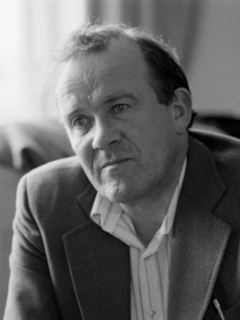
Ó hEithir’s parents are national school teachers, Pádraic Ó hEithir and Delia Ní Fhlaithearta. He is a nephew of Aran Islands authors Liam Ó Flaithearta and Tom Maidhc Ó Flaithearta, the brothers of his mother. He attends the Kilronan national school where his parents teach. He receives his secondary school education at Coláiste Éinde (St. Enda’s College), Galway. He attends University College Galway for three years, finishing his university course in 1952 but leaves without sitting his final examinations. He writes in both Irish and English and is highly regarded for the originality and liveliness of his journalism, especially his work in Irish.
Ó hEithir marries Catherine von Hildebrand, a young student recently arrived in Dublin from Colombia, in 1957 and they have five children: Ruairí, Máirín, Brian, Aindriú, and Rónán. Catherine is born in Paris, the daughter of Deirdre Mulcahy from Sligo and Franz von Hildebrand from Munich, son of the noted philosopher and theologian Dietrich von Hildebrand.
After college, Ó hEithir spends a number of years working as an itinerant bookseller for Comhdháil Náisiúnta na Gaeilge. He serves as an editor at Sáirséal agus Dill, the Irish language publishing house, and as Irish language editor for The Irish Press from 1957 to 1963. He also writes a column for The Sunday Press. He is a regular columnist with the journal Comhar and also contributes a weekly column to The Irish Times. He also serves as a staff journalist with Raidió Teilifís Éireann (RTÉ), working on the current affairs programmes Cúrsaí and Féach.
In 1975 the Irish American Cultural Institute awards Ó hEithir a scholarship of £2,000 to allow him to devote more time to writing. The following year his first novel, Lig sinn i gcathú (1976), loosely based on his student days in Galway, becomes a best-seller. He and Catherine move to Paris in 1986, where most of his second novel, Sionnach ar mo Dhuán (1988), is written. Hopes of having produced his definitive novel are soon dashed by a series of devastating reviews.
Ó hEithir visits Colombia with his wife in the summer of 1990. On his return, he is presented with the Butler literary award of $10,000 in further recognition of his writing in Irish. A month later, after a very short illness, he dies of cancer in St. Vincent’s University Hospital in Dublin on October 26, 1990. He is survived by his wife, Catherine, daughter Máirín, and sons Ruairí, Brian, and Aindriú.
Aengus Fanning, Irish journalist and editor of the Sunday Independent from 1984 until his death, dies on January 17, 2012, following a battle with lung cancer. He is also a former editor of farming for the Irish Independent. He is listed at number 31 on a list of “most influential people” in Irish society compiled for Village magazine.
Fanning is born on April 22, 1944, in the family home at Cloonbeg Terrace, Tralee, County Kerry, the fourth child among five sons and one daughter of Arnold (‘Paddy’) Fanning, a teacher, and his wife Clara (née Connell). Originally from Rostrevor, County Down, his mother is born a Presbyterian and converts to Catholicism to marry his father, though neither is religious. His father is a noted organiser of local theatrical productions, having written a one-act play, Vigil, which is staged in the Abbey Theatre in 1929.
Fanning has a keen interest in sport, having represented Kerry in Gaelic football in his youth. He is also passionate about cricket. He also plays the clarinet and is a jazz fan. He is a graduate of University College Cork (UCC).
In May 1964 Fanning is hired as a reporter by his uncle, James Fanning, the owner of the Midland Tribune in Birr, County Offaly, and pursues an unglamorous beat covering court sittings, local authority meetings and GAA matches. Needing a better salary to start a family, he joins Independent Newspapers (IN) in Dublin as a general reporter in May 1969, and soon after marries Mary O’Brien from Streamstown, County Offaly. They settle in Dún Laoghaire, County Dublin, and have three sons.
Fanning covers the Northern Irelandtroubles during 1969–70, before reporting increasingly on farming matters, becoming the IN group’s agricultural correspondent in 1973, as Ireland’s European Economic Community (EEC) accession sparks a farming boom. He is made head of news analysis at the Irish Independent in 1982, improving the op-ed page and using it to advocate more market-driven economic policies.
Fanning is appointed editor of the mid-to-upmarket Sunday Independent in 1984 from. Under his leadership, the newspaper adopts what Irish newspaper historian John Horgan calls a “new emphasis on pungent opinion columns, gossip and fashion” which results in the paper overtaking its main rival, The Sunday Press. For a time, his deputy editor is journalist Anne Harris.
In a 1993 interview with Ivor Kenny in the book Talking to Ourselves, Fanning describes himself as a classical liberal who is opposed to both Ulster loyalist and Provisional Irish Republican Army terrorism. He also expresses a strong advocacy of the free market, arguing that the goal of a good newspaper is to be as commercially successful as possible:
“If three or four papers out of 15 are successful and the others are not, they might say they’re not driven by the market, they have some higher vocation: to serve the public interest or some pompous stuff like that. That’s how they feel good about themselves. Fair enough, if that’s how they want to explain the world. It’s a grand excuse for relative failure… I think we live or die by the market, it will always win through.”
Fanning recruits a number of noted writers to contribute to the newspaper, including historians Conor Cruise O’Brien and Ronan Fanning, journalists Shane Ross and Gene Kerrigan, poet Anthony Cronin and novelist Colm Tóibín. However, his editorship is not without controversy. The columns published by Eamon Dunphy and Terry Keane draw criticism. Michael Foley notes some Irish commentators criticised Fanning’s Sunday Independent, claiming the newspaper was publishing “a mix of sleaze and prurience.”
Fanning also defends the controversial Mary Ellen Synon, who calls the Paralympics games “perverse.” One of the more bizarre incidents occurs in 2001 when he is involved in fisticuffs with a colleague at the newspaper – operations editor Campbell Spray.
Diagnosed with lung cancer in April 2011, Fanning spends his last months undergoing treatment in St. Vincent’s University Hospital, Dublin, dying there on January 17, 2012, at the age of 69. His remains are cremated at Mount Jerome Crematorium.
Anne Harris, Fanning’s second wife, succeeds him as editor and lasts three years. As well as pioneering changes in the domestic print media’s role, Fanning’s Sunday Independent led Irish society’s turn towards free market hedonism, catching the public mood better than its more conventionally liberal rivals by rendering this cultural transformation in an exuberant, somewhat parodied form, and without regard for lingering post-Catholic inhibitions.
Elizabeth Corbet Yeats, known as Lolly, Anglo-Irisheducator and publisher, dies on January 16, 1940. She works as an art teacher and publishes several books on art and is a founder of Dun Emer Press which publishes several works by her brother, W. B. Yeats. She is the first commercial printer in Ireland to work exclusively with hand presses.
Yeats is born at 23 Fitzroy Road, London, on March 11, 1868. She is the daughter of the Irish artist John Butler Yeats and Susan Yeats (née Pollexfen). She is sister to W. B., Jack and Susan Mary “Lily” Yeats. From the age of four she lives in Merville, Sligo, at the home of her grandfather William Pollexfen. In November 1874 her family moves to 14 Edith Villas, West Kensington, London. Her governess is Martha Jowitt from 1876 until 1879 before the family moves to Bedford Park, Chiswick, in 1878.
The family moves to Eardley Crescent, South Kensington, London, in 1886. While there Yeats starts to write fiction and publishes a homemade magazine, The Pleiades, with six friends, contributing “Story without a plot” to the Christmas 1888 issue. In addition, she publishes “Scamp and three friends” in The Vegetarian.
Yeats also attends the Chiswick School of Art with her sister Susan and brother Jack Butler Yeats, learning “Freehand drawing in all its branches, practical Geometry and perspective, pottery and tile painting, design for decorative purposes.”
In the 1890s Yeats lives at 3 Blenheim Road, Bedford Park, London, and trains as a kindergarten teacher at the Froebel College in Bedford, Bedfordshire. She undertakes her teaching practice at the Bedford Park High School. In 1892, when her training is completed, she teaches as a visiting art mistress at the Froebel Society, Chiswick High School and the Central Foundation School.
Yeats earns a good income from lecturing and publication of four popular painting manuals: Brushwork (1896), Brushwork Studies of Flowers, Fruits and Animals (1898), Brushwork Copy Book (1899), and Elementary Brushwork Studies (1900).
Yeats trains and works as an art teacher and is a member of William Morris‘s circle in London before her family returns to Dublin in 1900. She writes and creates the artwork for Elementary Brush-Work Studies (1900), an educational book that teaches young children the technique of painting flowers and plants using her simple method. At the suggestion of Emery Walker, who works with Morris on the Kelmscott Press, she studies printing with the Women’s Printing Society in London.
In Dublin, Yeats accepts the invitation to join Evelyn Gleeson to form the Dun Emer Guild along with Lily, who is an embroiderer. She manages the Dun Emer Press from 1902 with a printing press acquired from a provincial newspaper. The Press is located at Runnymede, the house of Evelyn Gleeson. This is set up with the intention of training young women in bookbinding and printing as well as embroidery and weaving. In 1903 she starts printing and Dun Emer’s first book is W. B. Yeats’s In the Seven Woods (1903).
Despite being a gifted printer, the costings exceed the quality of work that Yeats produces with the result that the press is often at risk financially. Eleven books, decorated with pastels by George William Russell, appear under the Dun Emer imprint produced from a first-floor room. She has several disagreements with her brother William over his directions as literary editor. She also dislikes Evelyn Gleeson. In October 1906 she travels to New York to advertise her products but publishes Dun Emer’s last book, William’s Discoveries (1907), in late November when she returns to Dublin.
After many years of strained relations between the Yeats sisters and Evelyn Gleeson, their business relationship is finally ended. Subsequently, in 1908, Lolly and her brother William start the Cuala Press, publishing over 70 books including 48 by the poet. Yeats manages the press while her sister Lily controls the embroidery section. Cuala continues to be a family strain. Their father, John Butler Yeats, has to castigate his son William for sending overtly critical letters to his sisters about the press. However, Cuala produces magnificent books: W. B. Yeats’ The Green Helmet and Other Poems (1910) and a series of Broadsides (published 1908–15, with illustrations from Jack Yeats).
Yeats works with Cuala Press until just before her death in Dublin on January 16, 1940, after a diagnosis of high blood pressure and heart trouble.
(Pictured: “Elizabeth Corbet Yeats” by Jack Butler Yeats, oil on canvas, circa 1899, National Gallery of Ireland)
On January 12, 1939, the Army Council sends an ultimatum, signed by Patrick Fleming, to British Foreign SecretaryLord Halifax. The communiqué duly informs the British government of “The Government of the Irish Republic” intention to go to “war.” Excerpt from the ultimatum:
“I have the honour to inform you that the Government of the Irish Republic, having as its first duty towards its people the establishment and maintenance of peace and order here, demand the withdrawal of all British armed forces stationed in Ireland. The occupation of our territory by troops of another nation and the persistent subvention here of activities directly against the expressed national will and in the interests of a foreign power, prevent the expansion and development of our institution in consonance with our social needs and purposes, and must cease.”
“The Government of the Irish Republic believe that a period of four days is sufficient notice for your Government to signify its intentions in the matter of the military evacuation and for the issue of your Declaration of Abdication in respect of our country. Our Government reserves the right of appropriate action without further notice if upon the expiration of this period of grace, these conditions remain unfulfilled.”
~ General Headquarters, Dublin, January 12th, 1939, to His Excellency the Rt. Hon. Viscount Halifax, C.G.B.
On Sunday, January 15, with no reply from the British Government, a proclamation is posted in public places throughout Ireland announcing the IRA’s declaration of war on Britain. This proclamation is written by Joseph McGarrity, leader of Clan na Gael in the United States, and is signed by six members of the Army Council: Stephen Hayes, Patrick Fleming, Peadar O’Flaherty, George Oliver Plunkett, Larry Grogan and Seán Russell. The seventh Army Council member, Máirtín Ó Cadhain, refuses to sign as he believes the IRA is not ready to begin the campaign.
This proclamation also calls upon Irishmen both at home and “in Exile” to give their utmost support to compel the withdrawal of the British from the island of Ireland so that a free Irish Republic can be established. As the campaign begins in Britain the same proclamation appears posted around Irish communities in British cities. The proclamation references the December 17, 1938 statement by the group naming itself the “Executive Council of Dáil Éireann, Government of the Republic” and reads:
“On the twenty-third day of April in the year 1916 in the City of Dublin, seven men, who were representative in spirit and outlook and purpose of the Irish Nation that had never yielded to nor accepted the British conquest, set their humble and almost unknown names to the foregoing document that has passed into history, making the names of the seven signatories immortal. These signatures were sealed with the blood of the immortal seven, and of many others who followed them into one of the most gallant fights in the history of the world; and the Irish Nation rose from shame to honour, from humiliation to pride, from slavery to freedom….”
“Unfortunately, because men were foolish enough to treat with an armed enemy within their gates, the English won the peace. Weakness and treachery caused a resumption of the war and the old English tactics of ‘divide and conquer’ were exploited to the fullest extent. Partition was introduced, the country divided into two parts with two separate Parliaments subject to and controlled by the British Government. The armed forces of England still occupy six of our counties in the North and reserve the right ‘in time of war or strained relations’ to reoccupy the ports which they have just evacuated in the southern part of Ireland. Ireland is still tied, as she has been for centuries past, to take part in England’s wars. In the Six Counties, a large number of Republican soldiers are held prisoners by England. Further weakness on the part of some of our people, broken faith and make-believe, have postponed the enthronement of the living Republic, but the proclamation of Easter Week and the declaration of independence stand and must stand for ever. No man, no matter how far he has fallen away from his national faith, has dared to repudiate them. They constitute the rallying centre for the unbought manhood of Ireland in the fight that must be made to make them effective and to redeem the nation’s self-respect that was abandoned by a section of our people in 1923.”
“The time has come to make that fight. There is no need to redeclare the Republic of Ireland, now or in the future. There is no need to reaffirm the declaration of Irish independence. But the hour has come for the supreme effort to make both effective. So in the name of the unconquered dead and the faithful living, we pledge ourselves to that task. We call upon England to withdraw her armed forces, her civilian officials and institutions, and representatives of all kinds from every part of Ireland as an essential preliminary to arrangements for peace and friendship between the two countries; and we call upon the people of all Ireland, at home and in exile, to assist us in the effort we, are about to make, in God’s name, to compel that evacuation and to enthrone the Republic of Ireland.”
Significantly, there is an IRA bomb incident in or around a major British city almost every other day in the first nine months of 1939. During the campaign there are 300 explosions, 10 deaths and 96 injuries.
(From: “IRA Army Council Declare War on England and the Sabotage Campaign (S-Plan) Begins a Day Later,” Stair na hÉireann, https://stairnaheireann.net | Pictured: The aftermath of an IRA bike bomb in Coventry on August 25, 1939)
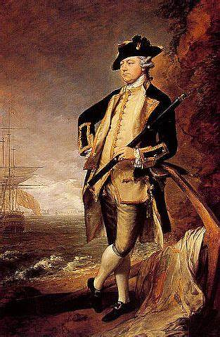
Luttrell is born in 1713, the second son of Henry Luttrell, of Luttrellstown Castle (whose family had held Luttrellstown Castle and the demesne and adjoining lands since the land had been granted to Sir Geoffrey de Luterel in about 1210 by King John of England) and his wife Elizabeth Jones. His father is a noted commander in the JacobiteIrish Army between 1689 and 1691. He later receives a pardon from the Williamite authorities and is accused by his former Jacobite comrades of having betrayed them. He is murdered when his sedan chair is attacked in Dublin on October 22, 1717.
On October 13, 1768, Luttrell is created Baron Irnham of Luttrellstown in the Peerage of Ireland. As his title is an Irish peerage, he is able to keep his seat in the British House of Commons. He is elevated to the title of Viscount Carhampton on January 9, 1781, and is made Earl of Carhampton on June 23, 1785. He lives at Four Oaks Hall, Four Oaks, Sutton Coldfield, from 1751 to 1766.
On January 22, 1735, Luttrell marries Judith Maria Lawes, daughter of Sir Nicholas Lawes, Governor of Jamaica and Elizabeth Cotton (née Lawley), by whom he has eight children:
John Luttrell-Olmius, 3rd Earl of Carhampton (c. 1745 – 1829), marries the Honorable Elizabeth Olmius and in 1787 by Royal Licence the additional surname of ‘Olmius’ out of respect after death of his father-in-law.
Temple Simon Luttrell (c. 1738 – 1803)
James Luttrell (c. 1751 – 1788), naval officer, dies of consumption.
Luttrell’s rakish behaviour earns him the nickname “King of Hell,” with “Hell” being a district of Dublin notorious for its brothels. He reputedly starts the courtesanMary Nesbitt in her career by seducing her.
Luttrell dies at Four Oaks, Warwick, England, on January 14, 1787. He is buried at Kingsbury, Warwick, England.
Clare Marsh, still life and portrait artist, is born Emily Cecil Clare Marsh on January 13, 1875, at New Court, Bray, County Wicklow, the house of her maternal grandfather, Andrew McCullagh, a wine merchant.
Marsh’s parents are Arthur and Rachel Marsh (née McCullagh). She has four siblings. Her family is descended from the Anglo-Irish aristocracy, specifically from Francis Marsh of Edgeworth, Gloucestershire, with his wife the great-aunt of James II‘s first wife. The family later moves to Raheen, Clondalkin, and later to Cappaghmore, Clondalkin. There is little information about her early life although she is involved in the suffrage movement.
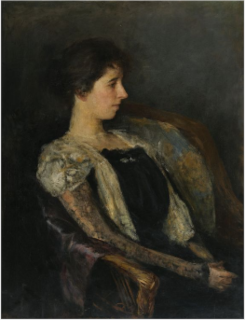
Marsh meets Mary Swanzy at Mary Manning‘s art classes, with Swanzy remembering Marsh as being from “a background of impecuniosity, which did not apparently worry them in spite of a more affluent upbringing.” She is influenced artistically by her aunt and John Butler Yeats, with whom she becomes close friends. In the summer of 1898, Yeats paints Marsh’s portrait at Manning’s studio. She is more drawn to the work of Yeats than of his son, Jack, and models her portraits on that of the older Yeats. He mentors her, encouraging her to see other artists’ work as much as possible and saying, “to produce a picture will force you to think.” He urges her to paint more industriously. She exhibits with the Royal Hibernian Academy (RHA) for the first time in 1900 with East wind effect and Roses. Yeats later claims that Marsh helped him with “line drawing or sketching, by putting him on the track of bulk drawing.”
Alongside Manning’s classes, Marsh takes night classes in sculpture with John Hughes and Oliver Sheppard at the Metropolitan School of Art. Aside from a trip to Paris in 1910 or 1911, she is taught exclusively in Dublin throughout her 20s. She takes a course at Norman Garstin‘s studio in Penzance, and stays in North Wales in 1914, painting two Trearddur Bay scenes. She paints still life and portraits, including one of Lily Yeats. It appears that her portraits of children and dogs are popular based on her submitted works to the RHA, exhibiting without a break from 1900 to 1921. The Hugh Lane Gallery holds her portrait of Lord Ashbourne, which demonstrates her painting style of loose brush strokes with an air of informality. Yeats suggests that she spend some time in the United States, where he is living at the time. She spends two months in New York City, staying with cousins at White Plains and then moves into a room neighbouring that of Yeats in Petitpas. Her uncle strongly disproves of this living arrangement, so she leaves and returns to Ireland in January 1912, which upsets Yeats greatly.
Upon her return from New York, Marsh starts holding classes at her studio at South Anne Street which Swanzy recalls are “well liked and always full,” with Susan Yeats becoming a pupil. She becomes the Professor of Fine Arts at Alexandra College in 1916. In the same year, she paints the fires and destruction of the 1916 Easter Rising. She paints a portrait of Jack Butler Yeats in 1918, which is now held by the Highlanes Gallery. John Butler Yeats later sympathises with her in a letter that she and other women are not elected members of the RHA. Knowing that Yeats is in financial difficulty, she sells some of his drawings and sends the money to him. It appears that over time, she works more with colour, as demonstrated in her portrait of Susan Yeats. Her final paintings are night studies, some of which show a possible influence from Swanzy with whom she shares a studio in the autumn of 1920. She is also believed to be one of the founding members of the Society of Dublin Painters.
Marsh dies on May 5, 1923. A posthumous exhibition of her work is held in October 1923. Due to her early death, she largely falls into obscurity until one of her works is included in the 1987 “Irish Women Artists from the Eighteenth Century to the Present Day” exhibition and publication from the National Gallery of Ireland. The National Gallery of Ireland holds a selection of sketches and paintings by Marsh, and a sketch of her by Swanzy. She is included in an exhibition of art by women artists at the Highlanes Gallery in 2012.
(Pictured: “Self-Portrait” by Clare Marsh, oil on canvas, circa 1900, National Gallery of Ireland)
Despite the controversy over the book, people in Frank McCourt‘s hometown of Limerick turn out in huge numbers to attend the sold-out film premiere of Angela’s Ashes on January 12, 2000. A simultaneous premiere takes place in Dublin.
Although set in Limerick, many street scenes are filmed in Cork. For example, the “fleas in the mattress” scene is filmed at Farren Street, Blackpool, and other scenes are shot at Roche’s Buildings, Lower John Street and Barrack Street.
With an estimated $25 million budget, the film grosses only $13,042,112 in the United States, making it a box-office bomb.
On Rotten Tomatoes, the film has an approval rating of 52%, based on reviews from 87 critics, with an average rating of 5.8/10. The site’s consensus states: “In spite of its attempts to accurately record Frank McCourt’s memoirs, the onscreen adaptation fails to capture any of the drama or humor of his life.” On Metacritic, the film has a score of 54 out of 100, based on reviews from 32 critics, indicating “mixed or average reviews.”
Michael Legge is praised for his portrayal of the adolescent Frank. In particular, he is said to excel in his role as an innocent teenager growing up with typical coming of age rites involving sexuality, maturity and peer pressure in a Catholic Irish setting.
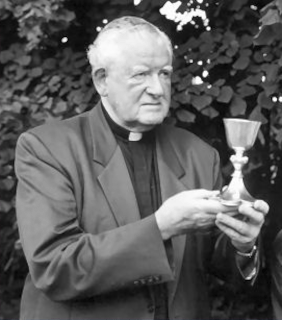
Flannery edits the Dominican bi-monthly journal entitled Doctrine and Life from 1958 to 1988, while at St. Saviour’s Priory, Dublin, where he also serves as prior from 1957 to 1960. He also edits the Religious Life Review. He publishes many English language documents on the Second Vatican Council.
Gorbachev, the man who led Russia through the most difficult days of his country’s shift to democracy, is also conferred with an honorary degree. On his arrival he goes to Trinity College Dublin to receive the honour before launching the new European Russian Trust. He later dines as a guest of the Irish Government in Dublin Castle.
On the following day, Gorbachev is accompanied by Dublin’s Lord Mayor Michael Mulcahy during a visit to see members of the city’s Russian community at the Hugh Lane Gallery. He also chats with local shop owners and residents during an informal tour of The Liberties area. After addressing the Institute of European Affairs and lunching with President McAleese at Áras an Uachtaráin, the president’s official residence and principal workplace, he is granted freedom of the Irish capital at a special ceremony.
Following his visit with President McAleese, Gorbachev jokes with Mulcahy that he fully intends to exercise his right to graze sheep in the city. Mulcahy says, “This visit will help to cement relations between us, as well as doing appropriate honour to a genuinely great man whose place in history is already secure.”
Gorbachev formally announced his resignation as Soviet President and Commander-in-Chief on December 25, 1991. The following day, the Soviet of the Republics, the upper house of the Supreme Soviet of the Soviet Union, formally voted the Soviet Union out of existence. The Soviet Union officially ceased to exist at midnight on December 31, 1991. As of that date, all Soviet institutions that had not been taken over by Russia ceased to function.
(Pictured: Mikhail Gorbachev samples a pint of Guinness watched by Dublin’s Lord Mayor Michael Mulcahy, in Doheny & Nesbitt’s pub in Merrion Row. Picture by Donal Doherty)
Sirr is born in Dublin Castle on November 25, 1764, the son of Major Joseph Sirr, the Town Major of Dublin from 1762 to 1767. He serves in the British Army from 1778 until 1791 and is thereafter a wine merchant. In 1792 he marries Eliza D’Arcy, the daughter of James D’Arcy. He is the father of Rev. Joseph D’Arcy Sirr, MRIA and of Henry Charles Sirr.
In 1796, upon the formation of yeomanry in Dublin, Sirr volunteers his services, and is appointed acting Town Major, and is thenceforward known as the chief agent of the Castle authorities. In 1798 he is promoted to the position of Town Major, and receives, in accordance with precedent, a residence in Dublin Castle.
Sirr is active in the efforts of the Castle to suppress the republican and insurrectionary Society of United Irishmen. In the months prior to their rising in May and June 1798, he is prominent in the arrests of Peter Finnerty, the editor of their Dublin paper, The Press, on October 31, 1797, and of their leaders Thomas Russell and the popular Lord Edward Fitzgerald. It is the capture of FitzGerald on May 19, 1798, that brings him before the public.
In 1802, in a lawsuit, Hevey v. Sirr, presided over by Arthur Wolfe, 1st Viscount Kilwarden, Sirr is fined £150 damages, and costs, for the assault and false imprisonment of John Hevey. His lawyer in this case refers to his “very great exertions and laudable efforts” to crush the Irish Rebellion of 1798. The opposing lawyer, John Philpot Curran, tells a long tale of a grudge held by Sirr against Hevey, the latter a prosperous businessman and a Yeoman volunteer against the Rebellion, who has happened to be in court during a treason case brought by Sirr. Hevey recognises the witness for the prosecution, describes him in court “a man of infamous character,” and convinces the jury that no credit is due to the witness. The treason case collapses. Sirr and his colleague had then subjected Hevey to wrongful arrest, imprisonment incommunicado, extortion of goods and money, and condemnation to hanging. Curran implies that these techniques are typical of the methods used by Sirr and by others to suppress the Rebellion.
On August 25, 1803, Sirr is instrumental in the arrest of Robert Emmet, in the course of who’s abortive rising the previous month in Dublin, Kilwarden had been murdered.
In 1808 the Dublin police is re-organised and Sirr’s post is abolished, but he is allowed to retain the title. Niles’ Register of March 24, 1821 remarks that “Several persons have been arrested at a public house in Dublin, by major Sirr, charged with being engaged in a treasonable meeting, and committed to prison. We thought that this old sinner, given to eternal infamy by the eloquence of Curran, had gone home.”
Sirr is an avid collector of documents and curios. He sells McCormac’s Cross and other valuable antiquities in exchange for second-rate copied paintings. The remains are given by his older son, Joseph, to Trinity College, Dublin at some time between 1841 and 1843. It now forms the Sirr Collection of the Trinity College Library, Dublin.
Henry Charles Sirr dies on January 7, 1841, in Dublin Castle. He is buried in the churchyard of St. Werburgh’s Church, while his victim, Lord Edward FitzGerald, is buried in the vaults of the same church.