seamus dubhghaill

Promoting Irish Culture and History from Little Rock, Arkansas, USA


Leave a comment

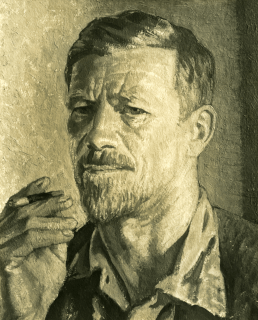
Birth of Edward Conor Marshall O’Brien, Ship Builder & Designer

Edward Conor Marshall O’Brien, Irish aristocrat and intellectual, is born in Cahirmoyle, County Limerick, on November 3, 1880. His views are republican and nationalist. He is also owner and captain of one of the first boats to sail under the tri-colour of the Irish Free State. He is the first amateur Irish sailor to sail around the world.

O’Brien is a ship builder and designer, and his notable boats include the Kelpie (used for gun running in 1914), the Saoirse (in which he circumnavigates the globe) and the Ilen (a Falkland Islands service ship).

O’Brien’s grandfather is William O’Brien who is a member of Young Ireland. His grandfather and his aunt Charlotte Grace O’Brien both play roles in social reform. Robert Donough, his uncle, is an architect, and the painter Dermod O’Brien is his brother. He is educated in England at Winchester College and the University of Oxford, and in Ireland at Trinity College Dublin (TCD). After his education he comes back to Ireland and starts practicing as an architect in 1903. According to the 1911 census he lives at 58 Mount Street, south County Dublin.

O’Brien is credited with two buildings in his lifetime: the Co-operative Hall in County Donegal and the People’s Hall in County Limerick. He is also known as a naval architect, having designed two ships, the Saoirse and the llen. He later captains both of these ships himself.

In Saoirse, a 20-ton, 42-foot ketch designed and built in 1922 in Baltimore, County Cork, he and three crew members circumnavigate the globe between 1923 and 1925 – the first recorded by an amateur skipper from west to east, the first yacht circumnavigation by way of the three great capes: Cape Horn, Cape of Good Hope and Cape Leeuwin, and the first boat flying the Irish tri-colour to enter many of the world’s ports and harbours. His voyage begins and ends at the Port of Foynes, County Limerick, where he lives. His account of the voyage, Across Three Oceans, (1927) becomes one of the classics of maritime literature.

Up until O’Brien’s circumnavigation, this route is the preserve of square-rigged grain ships taking part in the grain race from Australia to England via Cape Horn (also known as the clipper route).

O’Brien’s seagoing experiences are put to use in his design of the Ilen, which is built for the Falkland Islands as a service boat and launched in the spring of 1926. In 1998, Ilen returns to the site where she was first built, on the River Ilen near Baltimore, County Cork, where she undergoes a full restoration and is re-launched in May 2018. This task provides work-based learning for the students of the Ilen School.

O’Brien has some involvement with gun running in 1914 on behalf of the Irish Volunteers, for political reasons and because he has experience in sailing. On July 26, 1914, nine hundred guns are brought to Howth harbour aboard Erskine Childers‘ yacht Asgard. As part of the same operation, O’Brien transports arms on his yacht, Kelpie. The guns on Kelpie are transshipped to another yacht, Chotah, owned by Sir Thomas Myles, before being landed at Kilcoole in County Wicklow on August 1, 1914. After the gun running incidents, he serves in the Royal Naval Volunteer Reserve.

O’Brien is a keen mountaineer as well as a sailor, known for climbing in bare feet. He climbs Mount Brandon in southwest Ireland and Snowdon in North Wales with George Mallory and Geoffrey Winthrop Young among others. Later, during his circumnavigation (1923–1925) he plans to climb Aoraki / Mount Cook in the Southern Alps in New Zealand‘s South Island. However, because of delays during his circumnavigation, he arrives in New Zealand too late.

In 1928, O’Brien marries a well-known artist, Kathleen Francis, the youngest daughter of Sir George Clausen, RA. The couple thereafter moves to Ibiza, where they live on the Saoirse until Kathleen’s death in 1936. They have no children. Relocating to Cornwall, where he lives with his sister, he writes books on sailing and works of fiction for children. Although too old for active service when war with Germany breaks out in 1939, he assists the British war effort by serving in the Small Ships Pool, which delivers support vessels across the Atlantic and brings food supplies from the United States in private yachts.

In 1940 O’Brien sells Saoirse to the Royal Cornwall Yacht Club. The boat remains in use until 1980, when it is lost off the Jamaican coast. After the war he retires to another sister’s home in Foynes, County Limerick, where he lives and continues to write books for children until his death on April 18, 1952.

Leave a comment

The Launch of the SS Canberra

ss-canberra

The SS Canberra, an ocean liner in the P&O fleet which later operates on cruises, is launched in Belfast, Northern Ireland on March 16, 1960. She is built at the Harland & Wolff shipyard in Belfast at a cost of £17,000,000.

The ship is named on March 17, 1958, after the federal capital of Australia, Canberra. Her launch is sponsored by Dame Pattie Menzies, GBE, wife of the then Prime Minister of Australia, Robert Menzies. She enters service in May 1961 and begins her maiden voyage in June.

At the end of 1972 she is withdrawn and refitted to carry 1,500 single class passengers on cruises. Unusually, this transition from an early life as a purpose-built ocean liner to a long and successful career in cruising, occurs without any major external alterations, and with only minimal internal and mechanical changes over the years.

On April 2, 1982, Argentina invades the Falkland Islands, which initiates the Falklands War. At the time, SS Canberra is cruising in the Mediterranean Sea. The next day, her captain, Dennis Scott-Masson, receives a message asking his time of arrival at Gibraltar, which is not on his itinerary. When he calls at Gibraltar, he learns that the Ministry of Defence had requisitioned SS Canberra for use as a troopship. SS Canberra sails to Southampton, Hampshire where she is quickly refitted, sailing on April 9 for the South Atlantic.

SS Canberra anchors in San Carlos Water on May 21 as part of the landings by British forces to retake the islands. Although her size and white colour make her an unmissable target for the Argentine Air Force, the liner is not badly hit in the landings as the Argentine pilots tend to attack the Royal Navy frigates and destroyers instead of the supply and troop ships. After the war, Argentine pilots claim they were told not to hit SS Canberra, as they mistook her for a hospital ship.

SS Canberra then sails to South Georgia island, where 3,000 troops are transferred from Queen Elizabeth 2. They are landed at San Carlos on June 2. When the war ends, SS Canberra is used as a cartel to repatriate captured Argentine soldiers, landing them at Puerto Madryn, before returning to Southampton to a rapturous welcome on July 11.

After a lengthy refit, SS Canberra returns to civilian service as a cruise ship. Her role in the Falklands War makes her very popular with the British public, and ticket sales after her return are elevated for many years as a result. Age and high running costs eventually catch up with her though, as she has much higher fuel consumption than most modern cruise ships. Although Premier Cruise Line makes a bid for the old ship, P&O had already decided that they do not want SS Canberra to operate under a different flag.

SS Canberra is withdrawn from P&O service in September 1997 and sold to ship breakers for scrapping on October 10, 1997, leaving for Gadani ship-breaking yard in Pakistan on October 31, 1997. Her deep draft means that she cannot be beached as far as most ships, and due to her solid construction, the scrapping process takes nearly a year instead of the estimated three months, being totally scrapped by the end of 1998.

The SS Canberra appears in the 1971 James Bond film Diamonds Are Forever as the liner where Mr. Wint and Mr. Kidd try to kill Bond. In 1997, singer/songwriter Gerard Kenny releases the single “Farewell Canberra” which is specially composed for the final voyage.


Leave a comment

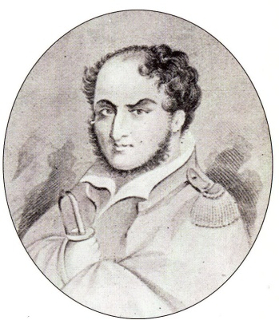
Death of Joseph Holt, United Irish General

joseph-holt

Joseph Holt, United Irish general and leader of a large guerrilla force which fights against British troops in County Wicklow from June–October 1798, dies at Kingstown, now Dún Laoghaire, near Dublin on May 16, 1826.

Holt is one of six sons of John Holt, a farmer in County Wicklow. He joins the Irish Volunteers in the 1780s and holds a number of minor public offices but becomes involved in law enforcement as a sub-constable, billet master for the militia and a bounty hunter. He is involved in the Battle of Vinegar Hill which is an engagement during the Irish Rebellion of 1798 on June 21, 1798, when over 15,000 British soldiers launch an attack on Vinegar Hill outside Enniscorthy, County Wexford.

Despite Holt’s apparent loyalism, he becomes a member of the Society of United Irishmen in 1797 and gradually begins to attract suspicion until finally in May 1798, his house is burned down by the militia of Fermanagh. He then takes to the Wicklow mountains, gradually assuming a position of prominence with the United Irish rebels. The defeat of the County Wexford rebels at Vinegar Hill on June 21 sees surviving rebel factions heading towards the Wicklow Mountains to link up with Holt’s forces.

Emerging to meet them, Holt is given much of the credit for the planning of the ambush and defeat of a pursuing force of 200 British cavalry in the Battle of Ballyellis on June 30, 1798. However, the subsequent Midlands campaign to revive the rebellion is a disaster, and he is lucky to escape with his life back to the safety of the Wicklow Mountains.

Holt largely holds out in expectation of the arrival of French aid but news of the defeat of the French in the Battle of Ballinamuck together with his ill-health brought about by the hardships of his fugitive life, age and family considerations prompt him to initiate contact with the Dublin Castle authorities with a view to a negotiated surrender. Dublin Castle is eager to end the rebellion in Wicklow and allows him exile after incarceration in the Bermingham Tower without trial in New South Wales.

Holt goes out on the Minerva and meets Captain William Cox who has been appointed paymaster of the New South Wales Corps. The ship arrives at Sydney on January 11, 1800, and shortly afterwards Holt agrees to manage Captain Cox’s farm. He always claims in Australia that he is a political exile and not a convict. In 1804 when the Castle Hill uprising occurs Holt, who is not involved, has been warned that evening that it is about to happen. During the night he sets up a defense of Captain Cox’s house. He is nonetheless afterwards hounded by Governor Philip Gidley King and many false witnesses are brought against him. Although there is no plausible evidence at all against him, he is exiled by King to Norfolk Island in April 1804, and there put to hard labour.

Holt is officially pardoned on January 1, 1811, and in December 1812, with his wife and younger son, takes passage to Europe on the Isabella. The ship is wrecked by a reef, so the passengers and crew are landed at Eagle Island, one of the Falkland Islands. He shows great resolution and ingenuity in making the best of the conditions on the island. He is rescued on April 4, 1813, but does not reach England until February 22, 1814, as he travels via the United States. He retires to Ireland where he lives for the rest of his life but regrets he had left Australia.

Joseph Holt dies at Kingstown, now Dún Laoghaire, near Dublin on May 16, 1826, and is buried in Carrickbrennan Churchyard at Monkstown.


Leave a comment

Birth of Robert Blair “Paddy” Mayne

robert-blair-paddy-mayne

Robert Blair “Paddy” Mayne, British Army soldier, solicitor, Ireland rugby union international, amateur boxer, and a founding member of the Special Air Service (SAS), is born in Newtownards, County Down, on January 11, 1915.

Mayne attends school at Regent House School, a school for students aged 4 to 18. While at Regent he discovers his skill and love for the game of rugby. He also enjoys cricket and golf and becomes a marksman with the rifle club. He goes on to Queen’s University Belfast to study law. At university he takes up boxing and becomes the Irish Universities Heavyweight Champion in August 1936. He also wins the Scrabo Golf Club President’s cup in 1937. He graduates from Queen’s University in 1939.

During 1938, Mayne travels to Africa on the 1938 British Lions Tour to South Africa. He plays on a team that tours around Africa playing other local clubs. While traveling, it is discovered that Mayne has a wild side and on various occasions finds himself in trouble. His “go to” is to trash the hotel rooms of his teammates. The team includes some of the best players from around Ireland and Britain.

In 1939, with outbreak of World War II, Mayne joins the Supplementary Reserves in Newtownards and receives a commission in the Royal Artillery. He serves in several units in Ireland and England, generally with light and heavy anti-aircraft units. He volunteers for the No. 11 (Scottish) Commando unit which is sent to the Middle East. There he sees action during the Syria-Lebanon campaign. Specifically, during the Battle of the Litani River, he draws attention from Captain David Stirling who is forming the new Special Air Service (SAS). Sterling recruits Mayne for the new SAS while he is in jail for striking his commanding officer.

From November 1941 to the end of 1942, Mayne is involved in several raids behind enemy lines with the SAS. He uses jeeps to go to various Axis bases and begin blowing up planes and fuel dumps. It is claimed that he personally destroyed 100 planes during these missions. In addition to serving in the Middle East, he serves as well in Sicily, Italy, Belgium, the Netherlands, Germany, Norway and France. In most of these locations he works with the resistance behind the enemy lines. In France he helps to train the French Resistance.

By the end of the war, Mayne has been promoted to the rank of Lieutenant Colonel and has also received the British Army’s Distinguished Service Order with three bars, which means he received the award four times. After the war he joins the British Antarctic Survey in the Falkland Islands. He returns home to Newtownards when back issues, which started while he was serving in the Middle East, become more difficult for him.

Mayne is initiated into Eklektikos Lodge No. 542 in Newtownards in 1945. He is a very enthusiastic mason and joins a second lodge in Newtownards, Friendship Lodge No. 447. On the evening of December 13, 1955, he attends a meeting of Friendship Lodge and then joins some of his masonic brothers at a local bar. At about 4:00 AM on December 14, he is found dead in his Riley RM roadster in Mill Street, Newtownards, having reportedly collided with a farmer’s vehicle.

At his funeral hundreds of mourners turn out to pay their respects and to see him interred in a family plot in the town’s old Movilla Abbey graveyard. After his death his masonic jewel is preserved for many years by an old school friend before it is presented to Newtownards Borough Council where it is displayed in the Mayoral Chamber of the Council Offices.