seamus dubhghaill

Promoting Irish Culture and History from Little Rock, Arkansas, USA


Leave a comment

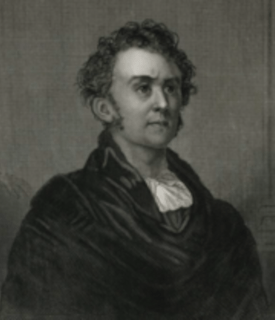
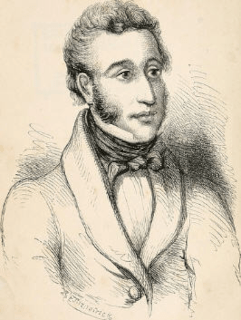
Death of John Blake Dillon, Founding Member of Young Ireland

John Blake Dillon, Irish writer and politician who is one of the founding members of the Young Ireland movement, dies in Killiney, County Dublin on September 15, 1866.

Dillon is born on May 5, 1814, in the town of Ballaghaderreen, on the border of counties Mayo and Roscommon. He is a son of Anne Blake and her husband Luke Dillon (d. 1826), who had been a land agent for his cousin Patrick Dillon, 11th Earl of Roscommon. His niece is Anne Deane, who helps to raise his family after his death.

Dillon is educated at St. Patrick’s College, Maynooth, leaving after only two years there, having decided that he is not meant for the priesthood. He later studies law at Trinity College, Dublin, and in London, before being called to the Irish Bar. It is during his time at Trinity College that he first meets and befriends Thomas Davis.

While working for The Morning Register newspaper Dillon meets Charles Gavan Duffy, with whom he and Davis found The Nation in 1842, which is dedicated to promoting Irish nationalism and all three men become important members of Daniel O’Connell‘s Repeal Association, which advocates the repeal of the Act of Union 1800 between Great Britain and Ireland.

The young wing of the party, of which they are key members with William Smith O’Brien and Thomas Francis Meagher, come to be known as Young Ireland and advocate the threat of force to achieve repeal of the Act of Union. This is in contrast to the committed pacifism of O’Connell’s “Old Ireland” wing. This posturing eventually leads to the Young Ireland rebellion of 1848 where a countryside devastated by the Great Famine fails to rise up and support the rebels.

According to fellow Irish nationalist, Justin McCarthy, “…it has been said of him that while he strongly discouraged the idea of armed rebellion and had no faith in the possibility of Ireland’s succeeding by any movement of insurrection, yet when Smith O’Brien risked Ireland’s chances in the open field, he cast his lot with his leader and stood by his side in Tipperary.”

After the failure of Young Ireland’s uprising, Dillon flees Ireland, escaping first to France and, eventually, to the United States, where he serves the New York Bar.

Dillon returns to Ireland on amnesty in 1855 and in 1865 is elected as a Member of Parliament for Tipperary. By now he advocates a Federal union of Britain and Ireland and denounces the violent methods advocated by the Irish Republican Brotherhood or Fenian movement.

Dillon dies of cholera on September 15, 1866, in Killiney, County Dublin, at the age of 52, and is buried in Glasnevin Cemetery in Dublin.

Dillon is the father of John Dillon and grandfather of James Dillon.

Leave a comment

Death of Short Story Writer Michael Banim

Michael Banim, Irish short story writer and brother of John Banim, dies in Booterstown, a coastal suburb of Dublin, on August 30, 1874.

Banim is born in Kilkenny, County Kilkenny on August 5, 1796. He is educated at Dr. Magrath’s Catholic school. He goes on to study for the bar, but a decline in his father’s business causes him to retire from his studies. He returns home to take over the family business, which he returns to prosperity, restoring his parents to comfort, both material and mental. In 1826 he visits John in London, making the acquaintance of many distinguished men of letters. When the struggle for Catholic emancipation is at its height, he works energetically for the cause.

Around 1822, Banim’s brother John broaches his idea for a series of national tales. He assists John in the O’Hara Tales, where he uses the name “Abel O’Hara,” and there is difficulty in allocating their respective contributions. While John is the more experienced writer, Michael provides material based on his social observations. They revise each other’s work. He writes in such hours as he can snatch from business and is the principal author of about thirteen out of the twenty-four works attributed to the brothers, including Crohoore of the Bill-Hook, The Croppy, and Father Connell. He is amiable, unambitious, modest, and generous to a degree. He keeps himself in the background, letting his younger brother have all the honor of their joint production. In 1828 he has the honor of a visit from the Comte de Montalembert, who has read the O’Hara Tales and is then on a tour through Ireland.

When his brother John is struck down by illness, Banim writes and earnestly invites him to return to Kilkenny and share his home. “You speak a great deal too much,” he observes in one letter, “about what you think you owe me. As you are my brother, never allude to it again. My creed on this subject is, that one brother should not want while the other can supply him.” However, John remains in France, seeking medical care in Paris.

Following his brother’s death in 1842, Banim writes Clough Fionn (1852), and The Town of the Cascades (1864). In 1861 he writes prefaces and notes for a reprint of the “O’Hara” novels by the publishing firm William H. Sadlier, Inc. of New York City. Besides their desire to give a true picture of their country, still crippled and prostrate from the effects of the Penal Laws, the Banims are undoubtedly influenced by the Romantic movement, then at its height.

In 1840, Banim marries Catherine O’Dwyer with whom he has two daughters, Mathilde and Mary. Although a man of means, in less than a year he loses almost the whole of his fortune through the failure of a merchant. Poor health follows. He is appointed postmaster of Kilkenny in 1852, a position he holds until illness forces him to retire in 1873. He also serves a term as mayor. His health failing, he goes with his family to reside at Booterstown, near Dublin, where he dies on August 30, 1874. His widow is granted a civil list pension.


Leave a comment

Birth of Richard Lalor Shiel, Politician, Writer & Orator

Richard Lalor Sheil, Irish politician, writer and orator, is born at Drumdowney, Slieverue, County Kilkenny on August 17, 1791. The family is temporarily domiciled at Drumdowney while their new mansion at Bellevue, near Waterford, is under construction.

Shiel’s father is Edward Sheil, who acquires considerable wealth in Cadiz in southern Spain and owns an estate in County Tipperary. His mother is Catherine McCarthy of Springhouse, near Bansha, County Tipperary, a member of the old aristocratic family of Mac Cárthaigh Riabhach of Springhouse, who in their time were Princes of Carbery and Counts of Toulouse in France. He is taught French and Latin by the Abbé de Grimeau, a French refugee. He is then sent to a Catholic school in Kensington, London, presided over by a French nobleman, M. de Broglie. For a time, he attends the lay college in St. Patrick’s College, Maynooth. In October 1804, he is removed to Stonyhurst College, Lancashire, and in November 1807 enters Trinity College, Dublin, where he specially distinguishes himself in the debates of the Historical Society.

After taking his degree in 1811 Sheil is admitted a student of Lincoln’s Inn and is called to the Irish bar in 1814. He is one of the founders of the Catholic Association in 1823 and draws up the petition for inquiry into the mode of administering the laws in Ireland, which is presented in that year to both Houses of Parliament.

In 1825, Sheil accompanies Daniel O’Connell to London to protest against the suppression of the Catholic Association. The protest is unsuccessful, but, although nominally dissolved, the association continues its propaganda after the defeat of the Catholic Relief Bill in 1825. He is one of O’Connell’s leading supporters in the agitation persistently carried on until Catholic emancipation was granted in 1829.

In the same year Shiel is returned to Parliament for Milborne Port, and in 1831 for County Louth, holding that seat until 1832. He takes a prominent part in all the debates relating to Ireland, and although he is greater as a platform orator than as a debater, he gradually wins the somewhat reluctant admiration of the House. In August 1839, he becomes Vice-President of the Board of Trade in Lord Melbourne‘s ministry.

After the accession of Lord John Russell to power in 1846, Shiel is appointed Master of the Mint, and in 1850 he is appointed minister at the court of Tuscany. He dies in Florence on May 23, 1851. His remains are conveyed back to Ireland by a British ship-of-war, and interred at Long Orchard, near Templetuohy, County Tipperary.

George W. E. Russell says of Shiel, “Sheil was very small, and of mean presence, with a singularly fidgety manner, a shrill voice, and a delivery unintelligibly rapid. But in sheer beauty of elaborated diction not O’Connell nor anyone else could surpass him.”

Shiel’s play, Adelaide, or the Emigrants, is performed at the Crow Street Theatre in Dublin, on February 19, 1814, with success, and, on May 23, 1816, it is performed at Covent Garden in London. The Apostate, produced at the latter theatre on May 3, 1817, establishes his reputation as a dramatist. His other principal plays are Bellamira (written in 1818), Evadne (1819), Huguenot (produced in 1822) and Montini (1820).

In 1822, Sheil begins, with William Henry Curran, to contribute to The New Monthly Magazine a series of papers entitled “Sketches of the Irish Bar.” Curran, in fact, does most of the writing. These pieces are edited by Marmion Wilme Savage in 1855 in two volumes, under the title of Sketches Legal and Political. Sheil’s Speeches are edited in 1845 by Thomas MacNevin.

In 1816, Shiel marries a Miss O’Halloran, niece of Sir William MacMahon, Master of the Rolls in Ireland. They have one son, who predeceases Sheil. His wife dies in January 1822. In July 1830, he marries Anastasia Lalor Power, a widow. He then adds the middle name Lalor.


Leave a comment

Death of Thomas Butler, 6th Earl of Ossory

Vice Admiral Thomas Butler, 6th Earl of Ossory, KG, PC, PC (Ire), Irish soldier and politician, dies in London on July 30, 1680.

Thomas is born on July 8, 1634, at Kilkenny Castle, the eldest son and one of ten siblings of James Butler, 1st Duke of Ormond and his wife Elizabeth Preston. His father is then the 12th Earl of Ormond but would be raised to marquess and duke. His family, the Butler dynasty, is Old English and descends from Theobald Walter, who had been appointed Chief Butler of Ireland by Henry II of England in 1177. His mother is a second cousin once removed of his father as she is a granddaughter of Thomas Butler, 10th Earl of Ormond. Her father, however, is Scottish, Richard Preston, 1st Earl of Desmond, a favourite of James I. Both parents are Protestants.

As the eldest living son, he is the heir apparent and is styled with the corresponding courtesy title, which at first is Viscount Thurles but changed to Earl of Ossory when his father becomes marquess in 1642. His early years are spent in Ireland until 1647 when he accompanies his father to England. In 1648 his father renews his support for the royalist cause and he and his son have to flee to France, arriving in Caen in February 1648. Lady Ormond also moves to Caen, where she arrives on June 23, 1648, with his siblings.

Butler is an accomplished athlete and a good scholar. Having come to London in 1652 he is rightly suspected of sympathising with the exiled royalists, and in 1655 is jailed by Oliver Cromwell. After his release about a year later he goes into exile to the Netherlands where Charles II has his exile court at the time.

On November 17, 1659, while in exile, Butler marries Emilia van Nassau, the second daughter of Louis of Nassau, Lord of De Lek and Beverweerd. They have eleven children.

Butler accompanies Charles II back to England in 1660. In 1661 he becomes a member of both the English and the Irish houses of commons, representing in the former Bristol and Dublin University in the latter.

In 1662 Butler is called to the Irish House of Lords under a writ of acceleration as the Earl of Ossory. His father holds the title “5th Earl of Ossory” as one of his subsidiary titles. The acceleration makes Thomas Butler the 6th Earl of Ossory. This is the only substantive title he ever holds, as he predeceases his father and therefore never succeeds to his father’s titles.

Butler holds several military appointments including lieutenant-general of the army in Ireland, created an English peer as Lord Butler in 1666, and Lord of the Bedchamber to Charles II (appointed in 1660 and held until his death).

In 1665 a fortunate accident allows Butler to take part in the Battle of Lowestoft against the Dutch, and in May 1672, being now in command of a ship, he fights against the same enemies in the Battle of Solebay, serving with great distinction on both occasions. While visiting France in 1672 he rejects the liberal offers made by Louis XIV to induce him to enter the service of France and returning to England he adds to his high reputation by his conduct during the Battle of Texel in August 1673. From 1677 until 1679, he serves alongside his father as a Lord of the Admiralty.

Butler is intimate with William II, Prince of Orange, and in 1677 he joins the allied army in the Netherlands, commanding the British contingent and winning great fame at the siege of Mons in 1678. He acts as deputy for his father, who is Lord Lieutenant of Ireland. In 1680 he is appointed governor of English Tangier, but his death prevents him from taking up his new duties.

Butler dies on July 30, 1680, at Arlington House in London. He is buried provisionally in Westminster Abbey on July 31, 1680. The ceremony of burial is performed belatedly on November 13, 1680. Some say his body is later taken to Ireland and reburied in the family vault in St. Canice’s Cathedral, Kilkenny. James, his eldest son, succeeds him as the 7th Earl of Ossory and becomes the 2nd Duke of Ormond in 1688.

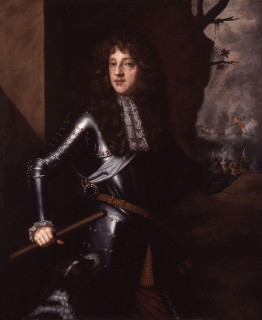
(Pictured: “Thomas Butler, Earl of Ossory,” painting by Peter Lely, circa 1678, Source: National Portrait Gallery)


Leave a comment

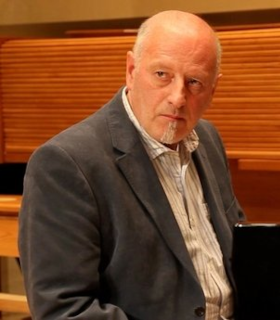
Birth of Composer Roger Doyle

Roger Doyle, composer best known for his electroacoustic work and for his piano music for theatre, is born in Malahide, County Dublin on July 17, 1949. As a teenager he is influenced by Igor Stravinsky, Claude Debussy, Pierre Henry and The Beatles.

Doyle studies piano from the age of nine. After leaving school he attends the Royal Irish Academy of Music for three years, studying composing, during which time he is awarded two composition scholarships. He also studies at the Institute of Sonology at Utrecht University in the Netherlands and the Finnish Radio Experimental Music Studio on scholarships.

As a performer Doyle begins as a drummer with the groups Supply Demand and Curve and Jazz Therapy, playing free improvisatory and fusion music. He releases his first LP, Oizzo No, in 1975, and his second, Thalia, in 1978 on CBS Classics. Rapid Eye Movements (1981) is his third LP, and his attempt at a “masterpiece before the age of thirty.”

Doyle begins his magnum opus, Babel, in 1989, a 5-CD set that takes ten years to compose. Each track corresponds to a ‘room’ or place within an imagined giant tower city, a kind of aural virtual reality. It celebrates the multiplicity of musical language. One hundred three pieces of music are composed for it and he works with 48 collaborators. From 2002 to 2007 he works on the three-volume electronic work Passades. Twenty-seven albums of his music have been released. He has also composed scores for several films including Budawanny, Pigs and the documentary Atlantean by Bob Quinn.

In 2013 Doyle founds META Productions with opera director Eric Fraad, committed to exploring new forms of opera for the 21st century. Their first production is the electronic opera Heresy. Originally titled The Death by Fire of Giordano Bruno, a 40-minute ‘in development’ version is performed as part of a fully staged concert of his works at both the Kilkenny Arts Festival and in the Dublin Theatre Festival 2013. The two hour Heresy is presented as part of ‘Project 50’, a season of work celebrating 50 years of Project Arts Centre in November 2016. The opera is based on episodes from the life and works of Giordano Bruno. It is broadcast on RTÉ Lyric fm in September 2017 and released as a double album on Heresy records in 2018. Recent album releases are The Thousand Year Old Boy (2013), Time Machine (2015), Frail Things In Eternal Places (2016), and The Heresy Ostraca (2019).

Doyle founds the music theatre company Operating Theatre with Irish actress Olwen Fouéré. They produce many important site-specific productions, including Passades, Here Lies and Angel/Babel, all featuring his music as an equal partner in the theatrical environment. Operating Theatre performs in conventional and site-specific venues in Ireland, England, the Netherlands, France, Venezuela and the United States and releases several records. With Icontact Dance Company, he produces Tower of Babel – Delusional Architecture, featuring as much of Babel as he has composed by that point. This work is originally performed in a whole wing of the Irish Museum of Modern Art in 1992. Arguably his most famous theatre work is the music he wrote and performs on piano onstage for the Steven Berkoff version of the Oscar Wilde play Salome which plays in Dublin‘s Gate Theatre, in London‘s West End and on three world tours. The Irish Times notes that “his name is revered in the realm of theatre.”

Doyle’s works Four Sketches and All the Rage are awarded second and first prizes in the Dublin Symphony Orchestra composition competition in 1970 and 1974 respectively. He has won the Programme Music Prize (1997) and the Magisterium Award (2007) at the Bourges International Electro-Acoustic Music Competition in Bourges, France. He also receives the Irish Arts Council‘s Marten Toonder Award in 2000 in recognition of his innovative work as a composer. He is a member of Aosdána, and has recently been made Adjunct Professor of Music at Trinity College Dublin.

President Michael D. Higgins confers the honour of Saoi on Doyle on August 16, 2019 by placing a gold torc around his neck. This is the highest honour of Aosdána that can be bestowed by fellow Aosdána members. No more than seven living members can be so honoured at one time. The Irish Times describes his album Chalant – Memento Mori as “a richly rewarding work that runs the full, glorious gamut of human emotion.” It is Album of the Week on March 30, 2012 in the same paper.


Leave a comment

Death of Landscape Artist Dairine Vanston

Dairine (Doreen) Vanston, Irish landscape artist who works in a Cubist style, dies in Enniskerry, County Wicklow on July 12, 1988.

Vanston is born in Dublin on October 19, 1903. She is the daughter of solicitor John S. B. Vanston, and sculptor Lilla Vanston (née Coffey). She attends Alexandra College, going on to study at Goldsmith’s College, London under Roger Bissière. She then goes to Paris to the Académie Ranson, being sent there following the advice of Paul Henry. While in Paris she meets Guillermo Padilla, a Costa Rican law student at the University of Paris. They marry in 1926 and she takes the name Vanston de Padilla. The couple lives for a time in Italy, before moving to San José, Costa Rica. The marriage breaks down in the early 1930s, at which point she returns to Paris with her son and studies with André Lhote. She is living in France at the outbreak of World War II with Jankel Adler, but is able to escape to London in 1940, and later to Dublin.

Vanston’s time in Paris leaves a lasting impression on her work, including use of primary colours and a strong Cubist influence. She belongs to what critic Brian Fallon calls the “Franco-Irish generation of painters who looked to Paris,” along with Mainie Jellett, Evie Hone, and Norah McGuinness. Her time spent living in Costa Rica in the late 1920s and early 1930s imbues her work with tropical and highly toned colours. In Dublin in 1935, she exhibits 17 paintings, largely Costa Rican landscapes, at Daniel Egan’s gallery on St. Stephen’s Green. This is the closest thing to a solo show she would mount, with this show also featuring Grace Henry, Cecil Ffrench Salkeld, and Edward Gribbon.

Meeting the English artist Basil Rakoczi, who is also living in Dublin during World War II, leads Vanston to become associated with The White Stag group. In November 1941, she exhibits for the first time at a group show with 24 other artists, including Patrick Scott. One work that is shown at this exhibition is the painting Keel dance hall, which demonstrates that she spends time in the west of Ireland. The most important event staged by the group is the Exhibition of subjective art, which takes place at 6 Lower Baggot St. in January 1944. The Dublin Magazine notes her work at this show as the most effective of the experimental vanguard. This work, Dying animal, is a Cubist work with semi-representation forms rendered in bold colours. In 1945, her work is featured in a White Stag exhibition in London of young Irish painters at the Arcade gallery, Old Bond St.

In 1947, Vanston spends almost a year in Costa Rica where she paints primarily in watercolours. Apart from this period, she lives and works in Dublin, living at 3 Mount Street Crescent near St. Stephen’s Church. At the inaugural Irish Exhibition of Living Art in 1943, she exhibits five works. At the first Exhibition of Independent Artists in 1960, of which she is a founder, she exhibits three landscapes and a work entitled War. She largely exhibits with the Independent Artists, the Irish Exhibition of Living Art, and the Oireachtas na Gaeilge, and does not exhibit with the Royal Hibernian Academy. Later in life, she exhibits with the Figurative Image exhibitions in Dublin, and is amongst the first painters chosen for Aosdána. A number of her works are featured in the 1987 exhibition, Irish women artists, from the eighteenth century to the present arranged by the National Gallery of Ireland and The Douglas Hyde Gallery.

Vanston dies on July 12, 1988, in a nursing home in Enniskerry, County Wicklow. Her work is greatly admired, but has received little by way of critical attention, which may have been to do with her slow rate of output. A number of her works have proved difficult to trace. She was a private person, even refusing to cooperate with the Taylor Galleries in the 1980s when they wanted to mount a retrospective of her work. The National Self-Portrait Collection in Limerick holds a work by Vanston.

(Pictured: “Landscape with Lake and Hills” (1964), oil on paper (monotype) by Dairine Vanston)


Leave a comment

Death of Maximilian Ulysses Browne, Austrian Military Officer

Maximilian Ulysses, Reichsgraf von Browne, Baron de Camus and Mountany, an Irish refugee, scion of the Wild Geese and an Austrian military officer, dies in Prague, Kingdom of Bohemia on June 26, 1757. He is one of the highest-ranking officers serving the Hapsburg Emperor during the middle of the 18th century and one of the most prominent Irish soldiers never to fight for Ireland.

Browne is born in Basel, Switzerland, the son of Count Ulysses von Browne (b. Limerick 1659) and his wife Annabella Fitzgerald, a daughter of the House of Desmond. Both families had been exiled from Ireland in the aftermath of the Nine Years’ War.

Browne’s early career is helped by family and marital connections. His father and his father’s brother, George (b. Limerick 1657), are created Counts of the Holy Roman Empire by Emperor Charles VI in 1716 after serving with distinction in the service of the Holy Roman Emperors. The brothers enjoy a lengthy, close friendship with John Churchill, 1st Duke of Marlborough, who is primarily responsible for their establishment in the Imperial Service of Austria. On his father’s death he becomes third Earl of Browne in the Jacobite peerage. His wife, Countess Marie Philippine von Martinitz, has valuable connections at court and his sister, Barbara (b. Limerick 1700), is married to Freiherr Francis Patrick O’Neillan, a Major General in the Austrian Service. So, by the age of 29 Browne is already colonel of an Austrian infantry regiment.

Browne justifies his early promotion in the field, and in the Italian campaign of 1734 he greatly distinguishes himself. In the Tirolese fighting of 1735, and in the Turkish war, he wins further distinction as a general officer.

Browne is a lieutenant field marshal in command of the Silesian garrisons when in 1740 Frederick II and the Prussian army overruns the province. His careful employment of such resources as he possesses materially hinders the king in his conquest and allows time for Austria to collect a field army. He is present at Mollwitz, where he receives a severe wound. His vehement opposition to all half-hearted measures brings him frequently into conflict with his superiors but contributes materially to the unusual energy displayed by the Austrian armies in 1742 and 1743.

In the following campaigns Browne exhibits the same qualities of generalship and the same impatience of control. In 1745 he serves under Count Traun and is promoted to the rank of Feldzeugmeister. In 1746 he is present in the Italian campaign and the battles of Piacenza and Rottofreddo. He and an advanced guard force their way across the Apennine Mountains and enter Genoa. He is thereafter placed in command of the invasion of France mounted in winter 1746-47, leading to the Siege of Antibes, but he is obliged to break off the invasion and return to Italy in February 1747 after Genoa rises in rebellion against the Austrian garrison he had left behind. In early 1747 he is appointed commander of all imperial forces in Italy, replacing Antoniotto Botta Adorno. At the end of the war, he is engaged in the negotiations on troop withdrawals from Italy, which leads to the convention of Nice on January 21, 1749. He becomes commander-in-chief in Bohemia in 1751, and field marshal two years later.

Browne is still in Bohemia when the Seven Years’ War opens with Frederick’s invasion of Saxony in 1756. His army, advancing to the relief of Pirna, is met, and, after a hard struggle, defeated by the king at the Battle of Lobositz, but he draws off in excellent order, and soon makes another attempt with a picked force to reach Pirna, by wild mountain tracks. He never spares himself, bivouacking in the snow with his men, and Thomas Carlyle records that private soldiers made rough shelters over him as he slept.

Brown actually reaches the Elbe at Bad Schandau, but as the Saxons are unable to break out, he retires, having succeeded, however, in delaying the development of Frederick’s operations for a whole campaign. In the campaign of 1757, he voluntarily serves under Prince Charles Alexander of Lorraine who is made commander-in-chief. On May 6 of that year, while leading a bayonet charge at the Battle of Prague, Browne, like Kurt Christoph, Graf von Schwerin, on the same day, meets his death. He is carried mortally wounded into Prague, and there dies on June 26, 1757.


Leave a comment

Republic of Ireland Advances to the Round-of-16 at Euro 2016

Robbie Brady heads the Republic of Ireland into the round-of-16 of Euro 2016 as the Irish score in the 85th minute to sensationally defeat Italy 1-0 at Stade Pierre-Mauroy in Villeneuve-d’Ascq, France on June 22, 2016. In addition to congratulatory remarks to the team, President Michael D. Higgins pays tribute to the Irish fans who “have earned widespread acclaim for their behaviour in France.”

Brady heads home the only goal of the match as Ireland seals progress after finishing third in Group E with four points. The victory sets up a round-of-16 meeting with Euro 2016 host France in Lyon, their first meeting since the controversial 2010 FIFA World Cup qualifier that saw them controversially defeated as the result of a Thierry Henry handball.

Ireland had been unfortunate to draw their opener against Sweden and, while they then suffered a sobering 3-0 loss to Belgium, they do not appear to have suffered a loss of confidence against the Azzurri. Ireland goes into the match against Italy knowing only a win will secure progress but they are given hope when Italy manager Antonio Conte, who is already certain of top spot, makes eight changes to the side that defeated Sweden.

Jeff Hendrick sends a fierce drive just wide from outside the box on nine minutes, while Daryl Murphy‘s header brings a fingertip save from Salvatore Sirigu midway through the half. It is not until six minutes before the break that Italy shows any sort of threat, with Ciro Immobile swiveling before steering a shot wide. Ireland then sees a penalty appeal rejected when James McClean goes down under pressure from Federico Bernardeschi.

Ireland continues to press for a winner in the second half, but Simone Zaza provides a reminder of Italy’s quality on 53 minutes with a superb volley on the turn from Mattia De Sciglio‘s cross that sails just over the bar. At the other end, Ireland continues to make chances but finds it difficult to break through a stubborn Italy defence. With just over an hour gone Hendrick does make space for a shot in the area, but his shot is wayward.

Conte brings on Lorenzo Insigne for Immobile on 73 minutes and the Napoli forward nearly breaks the deadlock shortly afterwards, curling a shot against the far post after a driving run toward goal in similar fashion to Éder‘s late winner against Sweden.

Ireland then has a golden opportunity to break the deadlock when substitute Wes Hoolahan goes clean through on goal, but he scuffs his shot and Sirigu is able to gather at the second attempt. A minute later, they make the breakthrough. Hoolahan sends in the cross for his Norwich City teammate Brady, who is allowed the space to head past Sirigu and send Ireland into the next round.

Italy, who faces reigning champions Spain in the round-of-16, hopes for a much improved performance when their regular starters return to action.

In the round-of-16 match against France, Ireland takes the lead in the match with an early penalty from Robbie Brady, but France goes on to win 2–1 to advance to the quarter-finals

(From: “Republic of Ireland beat Italy to reach round of 16” by ESPN staff, http://www.espn.com, June 22, 2016)


Leave a comment

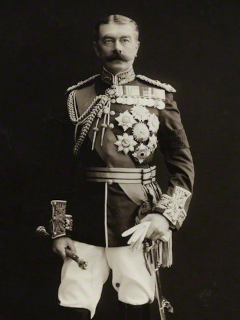
Death of Horatio Herbert Kitchener, 1st Earl Kitchener

Horatio Herbert Kitchener, 1st Earl Kitchener, Irish-born senior British Army officer and colonial administrator, drowns in the sinking of the HMS Hampshire west of Orkney, Scotland, on June 5, 1916. He wins notoriety for his imperial campaigns, especially his scorched earth policy against the Boers, his expansion of Lord Robertsinternment camps during the Second Boer War and his central role in the early part of World War I.

Kitchener is born in Ballylongford near Listowel, County Kerry, son of army officer Henry Horatio Kitchener and Frances Anne Chevallier, daughter of John Chevallier, a priest, of Aspall Hall, and his third wife, Elizabeth. The family moves to Switzerland when he is young, where he is educated at Montreux, then at the Royal Military Academy, Woolwich. He joins a French field ambulance unit in the Franco-Prussian War but is returned to England after he comes down with pneumonia.

Kitchener is credited in 1898 for winning the Battle of Omdurman and securing control of the Sudan for which he is made Baron Kitchener of Khartoum. As Chief of Staff (1900–1902) in the Second Boer War he plays a key role in Lord Roberts’ conquest of the Boer Republics, then succeeds Roberts as commander-in-chief, by which time Boer forces have taken to guerrilla warfare and British forces imprison Boer civilians in concentration camps. His term as Commander-in-Chief (1902–09) of the Army in India sees him quarrel with another eminent proconsul, the Viceroy Lord Curzon, who eventually resigns. He then returns to Egypt as British Agent and Consul General.

In 1914, at the start of World War I, Kitchener becomes Secretary of State for War, a Cabinet Minister. One of the few to foresee a long war, lasting for at least three years, and with the authority to act effectively on that perception, he organises the largest volunteer army that Britain had ever seen, and oversees a significant expansion of materials production to fight on the Western Front. Despite having warned of the difficulty of provisioning for a long war, he is blamed for the shortage of shells in the spring of 1915, one of the events leading to the formation of a coalition government and is stripped of his control over munitions and strategy.

On June 5, 1916, Kitchener is making his way to Russia on HMS Hampshire to attend negotiations with Tsar Nicholas II. At the last minute, Admiral Sir John Jellicoe changes the HMS Hampshire‘s route on the basis of a misreading of the weather forecast and ignoring (or not being aware of) recent intelligence and sightings of German U-boat activity in the vicinity of the amended route. Shortly before 7:30 PM the same day, steaming for the Russian port of Arkhangelsk during a Force 9 gale, HMS Hampshire strikes a mine laid by the newly launched German U-boat U-75 and sinks 1.5 miles west of the Orkney. Only twelve men survive. Amongst the dead are Kitchener and all ten members of his entourage. He is seen standing on the quarterdeck during the approximately twenty minutes that it takes the ship to sink. His body is never recovered.


Leave a comment

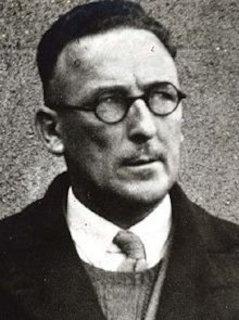
Death of Séamus O’Donovan, IRA Volunteer & Nazi Collaborator

James O’Donovan, a leading volunteer in the Irish Republican Army (IRA) and Nazi collaborator also known as Séamus or Jim O’Donovan, dies in Dublin on June 4, 1979. He is best known for his contacts with the Abwehr military intelligence of Nazi Germany.

Born on November 3, 1896, in County Roscommon, O’Donovan is an explosives expert and reputedly invents the “Irish War Flour” (named after the flour sacks in which it was smuggled into Dublin aboard ships) and “Irish Cheddar” devices. He subsequently becomes IRA Director of Chemicals in 1921. During the Irish War of Independence, he is imprisoned in Mountjoy Prison and Kilmainham Gaol and later interned in Newbridge, County Kildare.

In addition to fighting in the Irish War of Independence, O’Donovan fights on the Anti-Treaty side during the Irish Civil War. In 1930 he becomes manager at Electricity Supply Board (ESB) headquarters in Dublin.

In August 1938, at the request of IRA Chief of Staff Seán Russell, O’Donovan writes the S-Plan, a bombing campaign targeting the United Kingdom. In his unpublished memoirs he writes that he “conducted the entire training of cadre units, was responsible for all but locally derived intelligence, carried out small pieces of research and, in general, controlled the whole explosives and munitions end” of S-Plan. During this time, he and Russell are the only GHQ members of the old IRA still in the organisation.

As “Agent V-Held”, O’Donovan visits Germany three times in 1939 on behalf of the IRA. On February 28 he negotiates an arms and radio equipment delivery at the Abwehrstelle in Hamburg. On April 26 he concludes a new arms deal with the Abwehrstelle and establishes, with the help of a Breton, a secret courier connection to Ireland via France. On August 23, he receives the last instructions for the event of war.

On February 9, 1940, Abwehr II agent Ernst Weber-Drohl lands at Killala Bay, County Sligo aboard U-37. He is equipped with an ‘Ufa’ transmitter, cash, and instructions for O’Donovan, who by this time is the chief IRA contact for Abwehr I/II. The transmitter is lost upon landing, but when Weber-Drohl reaches O’Donovan at Shankill, Killiney, County Dublin, he is able to deliver new transmission codes, $14,450 in cash, and a message from “Pfalzgraf Section” asking that the IRA concentrate its S-Plan attacks on military rather than civilian targets.

O’Donovan becomes increasingly enamoured of Nazi ideology during this time, and visits Germany three times. In 1942 he writes an article arguing that Ireland’s future lay in an alliance with a victorious Germany and attacks Britain and the United States for being “centres of Freemasonry, international financial control and Jewry.” Even long after the pact with the Germans falls apart, he continues to express his sympathy for the Nazi regime. His son, Gerard O’Donovan, recalls that every Saturday night a visitor would come to the family home and send messages to Germany.

In 1940, O’Donovan is involved in setting up Córas na Poblachta, a minor Irish republican political party which proves unsuccessful.

O’Donovan dies in Dublin on June 4, 1979.