seamus dubhghaill

Promoting Irish Culture and History from Little Rock, Arkansas, USA


Leave a comment

Birth of John Hughes, 1st Archbishop of New York

john-joseph-hughes

John Joseph Hughes, prelate of the Roman Catholic Church in the United States and the fourth Bishop and first Archbishop of the Archdiocese of New York, is born in the hamlet of Annaloghan, near Aughnacloy, County Tyrone in Northern Ireland on June 24, 1797.

Hughes is the third of seven children of Patrick and Margaret (née McKenna) Hughes. He and his family suffer religious persecution in their native land. He is sent with his elder brothers to a day school in the nearby village of Augher, and afterwards attends a grammar school in Aughnacloy. The family emigrates to the United States in 1816 and settles in Chambersburg, Pennsylvania. Hughes joins them there the following year.

After several unsuccessful applications to Mount St. Mary’s College in Emmitsburg, Maryland, he is eventually hired as a gardener at the college. During this time, he befriends Mother Elizabeth Ann Seton, who is impressed by Hughes and persuades the Rector to reconsider his admission. Hughes is subsequently admitted as a regular student of Mount St. Mary’s in September 1820.

On October 15, 1826, Hughes is ordained to the priesthood by Bishop Henry Conwell at St. Joseph’s Church in Philadelphia. His first assignment is as a curate at St. Augustine’s Church in Philadelphia, where he assists its pastor by celebrating Mass, hearing confessions, preaching sermons, and other duties in the parish.

Hughes is chosen by Pope Gregory XVI as the coadjutor bishop of the Diocese of New York on August 7, 1837. He is consecrated bishop at St. Patrick’s Old Cathedral on January 7, 1838, with the title of the titular see of Basilinopolis, by the Bishop of New York, John Dubois, his former Rector.

Hughes campaigns actively on behalf of Irish immigrants and attempts to secure state support for parochial schools. Although this attempt fails, he founds an independent Catholic school system which becomes an integral part of the Catholic Church’s structure at the Third Plenary Council of Baltimore (1884), which mandates that all parishes have a school and that all Catholic children be sent to those schools. In 1841, Hughes founds St. John’s College in New York City which is now Fordham University.

Hughes is appointed Apostolic Administrator of the diocese due to Bishop Dubois’ failing health. As coadjutor, he automatically succeeds Dubois upon the bishop’s death on December 20, 1842, taking over a diocese which covers the entire state of New York and northern New Jersey. He is a staunch opponent of Abolitionism and the Free-Soil movement, whose proponents often express anti-Catholic attitudes. Hughes also founds the Ultramontane newspaper New York Freeman to express his ideas.

Hughes becomes an archbishop on July 19, 1850, when the diocese is elevated to the status of archdiocese by Pope Pius IX. As archbishop, he becomes the metropolitan for the Catholic bishops serving all the dioceses established in the entire Northeastern United States. To the dismay of many in New York’s Protestant upper-class, Hughes foresees the uptown expansion of the city and begins construction of the current St. Patrick’s Cathedral on Fifth Avenue between 50th and 51st Street, laying its cornerstone on August 15, 1858. At the request of President Abraham Lincoln, Hughes serves as semiofficial envoy to the Vatican and to France in late 1861 and early 1862. Lincoln also seeks Hughes’ advice on the appointment of hospital chaplains.

Hughes serves as archbishop until his death. He is originally buried in St. Patrick’s Old Cathedral, but his remains are exhumed in 1882 and re-interred in the crypt under the altar of the new cathedral he had begun.

2 Comments

Death of Actress Maureen O’Sullivan

maureen-osullivan

Maureen Paula O’Sullivan, Irish American actress best known for playing Jane in the Tarzan series of films starring Johnny Weissmuller, dies in Scottsdale, Arizona, of complications from heart surgery on June 23, 1998.

O’Sullivan is born in Boyle, County Roscommon on May 17, 1911, the daughter of Evangeline “Mary Eva” Lovatt and Charles Joseph O’Sullivan, an officer in the Connaught Rangers who serves in World War I. She attends a convent school in Dublin, then the Convent of the Sacred Heart at Roehampton, England. One of her classmates there is Vivian Mary Hartley, future Academy Award-winning actress Vivien Leigh. After attending finishing school in France, O’Sullivan returns to Dublin to work with the poor.

O’Sullivan’s film career begins when she meets motion picture director Frank Borzage, who is doing location filming on Song o’ My Heart for 20th Century Fox. He suggests she take a screen test, which she does, and wins a part in the movie, which stars Irish tenor John McCormack. She travels to the United States to complete the movie in Hollywood. O’Sullivan appears in six movies at Fox, then makes three more at other movie studios.

In 1932, she signs a contract with Metro-Goldwyn-Mayer. After several roles there and at other movie studios, she is chosen by Irving Thalberg to appear as Jane Parker in Tarzan the Ape Man, opposite co-star Johnny Weissmuller. She is one of the more popular ingenues at MGM throughout the 1930s and appears in a number of other productions with various stars. In all, O’Sullivan plays Jane in six features between 1932 and 1942.

She stars with William Powell and Myrna Loy in The Thin Man (1934) and plays Kitty in Anna Karenina (1935) with Greta Garbo and Basil Rathbone. After co-starring with the Marx Bros. in A Day At The Races (1937), she appears as Molly Beaumont in A Yank at Oxford (1938), which is written partly by F. Scott Fitzgerald. At her request, he rewrites her part to give it substance and novelty.

She plays another Jane in Pride and Prejudice (1940) with Laurence Olivier and Greer Garson and supports Ann Sothern in Maisie Was a Lady (1941). After appearing in Tarzan’s New York Adventure (1942), O’Sullivan asks MGM to release her from her contract so she can care for her husband who has just left the Navy with typhoid. She retreats from show business, devoting her time to her family. In 1948, she re-appears on the screen in The Big Clock, directed by her husband for Paramount Pictures. She continues to appear occasionally in her husband’s movies and on television. However, by 1960 she believes she has permanently retired. In 1958, Farrow’s and O’Sullivan’s eldest son, Michael, dies in a plane crash in California.

Actor Pat O’Brien encourages her to take a part in summer stock, and the play A Roomful of Roses opens in 1961. That leads to another play, Never Too Late, in which she co-stars with Paul Ford in what is her Broadway debut. Shortly after it opens on Broadway, John Farrow dies of a heart attack. O’Sullivan sticks with acting after Farrow’s death. She is also an executive director of a bridal consulting service, Wediquette International. In June and July 1972, O’Sullivan is in DenverColorado, to star in the Elitch Theatre production of Butterflies are Free with Karen Grassle and Brandon deWilde. The show ends on July 1, 1972. Five days later, while still in Denver, deWilde is killed in a motor vehicle accident.

When her daughter, actress Mia Farrow, becomes involved with Woody Allen both professionally and romantically, she appears in Hannah and Her Sisters, playing Farrow’s mother. She has roles in Peggy Sue Got Married (1986) and the science fiction oddity Stranded (1987). Mia Farrow names one of her own sons Ronan O’Sullivan Farrow for her mother. In 1994, she appears with Robert Wagner and Stefanie Powers in Hart to Hart: Home Is Where the Hart Is, a feature-length made-for-TV movie with the wealthy husband-and-wife team from the popular weekly detective series Hart to Hart.

Maureen O’Sullivan dies in Scottsdale, Arizona, of complications from heart surgery on June 23, 1998, at the age of 87. O’Sullivan is buried at Most Holy Redeemer Cemetery, Niskayuna, New York. She is survived by six of her children, 32 grandchildren, and 13 great-grandchildren. Michael, her oldest son, is killed at age 19 in a plane crash in 1958.


Leave a comment

Birth of William Butler Yeats, Poet & Nobel Prize Winner

william-butler-yeats

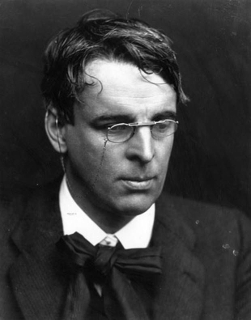
William Butler Yeats, one of the greatest English-language poets of the 20th century and recipient of the Nobel Prize in Literature in 1923, is born in Sandymount, County Dublin on June 13, 1865.

Yeats is the oldest child of John Butler Yeats and Susan Mary Pollexfen. Although John trained as a lawyer, he abandons the law for art soon after his first son is born. Yeats spends much of his early years in London, where his father is studying art, but frequently returns to Ireland.

In the mid-1880s, Yeats pursues his own interest in art as a student at the Metropolitan School of Art in Dublin. Following the publication of his poems in the Dublin University Review in 1885, he soon abandons art school for other pursuits.

After returning to London in the late 1880s, Yeats meets writers Oscar Wilde, Lionel Johnson and George Bernard Shaw. He also becomes acquainted with Maud Gonne, a supporter of Irish independence. This revolutionary woman serves as a muse for Yeats for years. He even proposes marriage to her several times, but she turns him down. He dedicates his 1892 drama The Countess Cathleen to her.

Around this time, Yeats founds the Rhymers’ Club poetry group with Ernest Rhys. He also joins the Hermetic Order of the Golden Dawn, an organization that explores topics related to the occult and mysticism. While he is fascinated with otherworldly elements, Yeats’s interest in Ireland, especially its folktales, fuels much of his output. The title work of The Wanderings of Oisin and Other Poems (1889) draws from the story of a mythic Irish hero.

In addition to his poetry, Yeats devotes significant energy to writing plays. He teams with Lady Gregory to develop works for the Irish stage, the two collaborating for the 1902 production of Cathleen ni Houlihan. Around that time, he helps found the Irish National Theatre Society, serving as its president and co-director, with Lady Gregory and John Millington Synge. More works soon follow, including On Baile’s Strand, Deirdre and At the Hawk’s Well.

Following his marriage to Georgie Hyde-Lees in 1917, Yeats begins a new creative period through experiments with automatic writing. The newlyweds sit together for writing sessions they believe to be guided by forces from the spirit world, through which Yeats formulates intricate theories of human nature and history. They soon have two children, daughter Anne and son Michael.

Yeats then becomes a political figure in the new Irish Free State, serving as a senator for six years beginning in 1922. The following year, he receives an important accolade for his writing as the recipient of the Nobel Prize in Literature. According to the official Nobel Prize website, he is selected “for his always inspired poetry, which in a highly artistic form gives expression to the spirit of a whole nation.”

Yeats continues to write until his death. Some of his important later works include The Wild Swans at Coole (1917), A Vision (1925), The Tower (1928) and Words for Music Perhaps and Other Poems (1932). He dies on January 28, 1939, at the Hôtel Idéal Séjour, in Menton, France. He is buried after a discreet and private funeral at Roquebrune-Cap-Martin. In September 1948, his body is moved to the churchyard of St. Columba’s Church, Drumcliff, County Sligo, on the Irish Naval Service corvette Macha.

The publication of Last Poems and Two Plays shortly after his death further cements his legacy as a leading poet and playwright.


Leave a comment

Death of Charles O’Brien, 5th Viscount Clare

charles_o_brien

Charles O’Brien, 5th Viscount Clare, is mortally wounded in the Battle of Ramilles on May 23, 1706. He is the son of Daniel O’Brien, 3rd Viscount Clare and Philadelphia Lennard. He marries Charlotte Bulkeley, daughter of Henry Bulkeley and Sophia Stuart, on January 9, 1696, at Saint-Germain-en-Laye, France. Henry Bulkeley is the “Master of the Household” for Kings Charles II and James II. Charles O’Brien and Charlotte Bulkeley have two children, Charles O’Brien, 6th Viscount Clare (March 27, 1699 – September 9, 1761) and Henry O’Brien (born February 12, 1701).

The family fights as part of the Jacobite Irish Army during the War of the Two Kings, before going into exile in the Flight of the Wild Geese. Charles succeeds his brother, Daniel O’Brien, 4th Viscount Clare, to the title as 5th Viscount Clare in the Jacobite Peerage on his brother’s death from a mortal wound received in the Battle of Marsaglia in Italy on October 4, 1693. Charles is transferred from the Queen’s Dismounted Dragoons where he is a colonel, to the command of O’Brien’s Regiment on April 6, 1696. Later in the year he leads the regiment in the siege of Valenza in Lombardy, and the next year they are stationed with the army at Meuse.

By 1698 over one third of King James’ army is either dead or crippled, and when the Treaty of Ryswick ends the war between Louis and William, James’ soldiers are disbanded, unemployed, and homeless. Many become beggars but others join the Irish Brigade in the Spanish army, while others travel to Austria and enter the Catholic Corps.

Hostilities are renewed and Clare’s Regiment is assigned to the Army of Germany for two years in 1701-02. At the Battle of Cremona in 1702, the Irishmen defend the town against Prince Eugene and the imperial army. The attack is to be a surprise, but the Wild Geese foil the attempt. The following year Lord Clare is promoted to brevet Brigadier of Infantry on April 2, 1703. A few months later on September 20, 1703, the unit takes part in the successful Battle of Hochstedt, better known as the Battle of Blenheim. A year later the unit is involved with the unsuccessful battle on August 13, 1704, at the second Battle of Blenheim. Although Clare’s Regiment experiences ups and downs, they are always admired. Two months after Blenheim, Charles rises to the brevet rank of Marshal-de-Camp on October 26, 1704, and a year later he is assigned to the Army of the Moselle under the Marshel de Villars. Clare’s Regiment fights in the disastrous Battle of Ramillies on May 23, 1706, where they distinguish themselves with great glory, but Lord Clare is mortally wounded and dies at Brussels, Belgium.

Due to the great service the O’Brien family has given to France, and having risked all, King Louis XIV makes sure that the regiment is kept in the family and appoints Lt. Col. Murrough O’Brien (of the Carrigonnell O’Brien’s) as its commander until the minor Charles comes of age.


Leave a comment

Ireland Becomes Founder Member of the Council of Europe

council-of-europe-logo

On May 5, 1949, Ireland becomes one of ten founder members of the Council of Europe, an international organisation whose stated aim is to uphold human rights, democracy and the rule of law in Europe.

The Council of Europe currently has 47 member states, covers approximately 820 million people and operates with an annual budget of approximately half a billion euros.

The organisation is distinct from the 28-nation European Union (EU), although it is sometimes confused with it, partly because the EU has adopted the original European Flag which was created by the Council of Europe in 1955, as well as the European Anthem. No country has ever joined the EU without first belonging to the Council of Europe, which is an official United Nations Observer.

Unlike the EU, the Council of Europe cannot make binding laws, but it does have the power to enforce select international agreements reached by European states on various topics. The best known body of the Council of Europe is the European Court of Human Rights, which enforces the European Convention on Human Rights.

The Council’s two statutory bodies are the Committee of Ministers, comprising the foreign ministers of each member state, and the Parliamentary Assembly, composed of members of the national parliaments of each member state. The Commissioner for Human Rights is an independent institution within the Council of Europe, mandated to promote awareness of and respect for human rights in the member states. The Secretary General heads the secretariat of the organisation. Other major CoE bodies include the European Directorate for the Quality of Medicines.

The headquarters of the Council of Europe are in Strasbourg, France. English and French are its two official languages. The Committee of Ministers, the Parliamentary Assembly and the Congress also use German, Italian, Russian, and Turkish for some of their work.


Leave a comment

John Sutton Appointed Lord Lieutenant of Ireland

john-sutton-coat-of-armsJohn Sutton, 1st Baron Dudley, an English nobleman, is appointed Lord Lieutenant of Ireland on April 30, 1428, serving for two years. A diplomat and councillor of Henry VI, he fights in several battles during the Hundred Years’ War and the Wars of the Roses.

Born on December 25, 1400, Sutton is baptised at Barton-under-Needwood, Staffordshire. His father is Sir John de Sutton V and his mother is Constance Blount, daughter of Sir Walter Blount. He marries Elizabeth de Berkeley, of Beverston, widow of Edward Charleton, 5th Baron Cherleton, sometime after March 14, 1420.

Sutton is summoned to Parliament from February 15, 1440, by writs directed to “Johanni de Sutton de Duddeley militi,” whereby he obtains a Barony by writ as Lord Dudley. He is the first of his family to adopt the surname of Dudley as an pseudonym for Sutton.

As Lord Steward in 1422 Sutton brings home the body of King Henry V to England, and is chief mourner and standard bearer at his funeral. From 1428–1430 he serves as Lord Lieutenant of Ireland. He fights in several campaigns throughout the period of the wars with France, and on several occasions acts as a diplomat in the mid-1440s, when he also meets Charles VII of France. In 1443 he is made a king’s councillor and becomes one of the favourite companions of King Henry VI. In 1451 he becomes a Knight of the Garter. Early on in the Wars of the Roses he is a resolute defender of the House of Lancaster, but changes his allegiance to York before the Battle of Towton in 1461.

At the First Battle of St. Albans in 1455, Sutton takes part with his son Edmund, where he is taken prisoner along with Henry VI. At the Battle of Blore Heath on September 23, 1459 he is again present equally with his son, commanding a wing under Lord Audley. Sutton is wounded and again captured. At Towton in 1461 he is rewarded after the battle for his participation on the side of Edward, Earl of March, son of Richard of York, 3rd Duke of York. On June 28 of that year, Edward IV is proclaimed King in London.

John Sutton dies intestate on September 30, 1487. His will is dated August 17, 1487. The barony is inherited by his grandson, Edward Sutton, 2nd Baron Dudley, son of Sir Edmund Sutton who was the heir but dies after July 6, 1483 but before his father.

(Pictured: Coat of Arms of Sir John Sutton, 1st Baron Dudley, KG)


Leave a comment

Death of Honora “Nano” Nagle, Sister John of God

honora-nano-nagle

Honora “Nano” Nagle, Sister John of God and founder of the Sisters of the Presentation the Blessed Virgin Mary, dies of tuberculosis on April 26, 1784. Her recognition as one of the greatest women of Ireland derives from dedication to the poor and oppressed. Her mission between the cutting edge of the gospel and the miseries of her day inspires the Presentation Sisters to minister in joyful service, responding to current needs throughout the world in faithfulness to the gospel.

Born to a wealthy family in Ballygriffin, just north of Killavullen, County Cork in 1718, Nagle’s parents send her to France to be educated since strict penal laws bar Catholic children from attending school in Ireland. She returns to Ireland after her father’s death in 1746. Her mother dies soon afterwards. Prayer and reflection lead Nagle back to France to become a sister.

Even as she begins her new life as a sister, Nagle’s thoughts often return to the children of the poor families back in Ireland.

At age 32, Nagle leaves the convent in France and returns to Ireland, where she secretly gathers the children of the poor and teaches them catechism, reading, writing and mathematics. As she spends her days with the children, they tell her of their sick friends or family members. She begins to visit the sick and the elderly after school, bringing them food, medicine and comfort.

Nagle often makes visits late into the night, carrying her lamp among the alleyways. Before long, she becomes known as the Lady of the Lantern.

Nagle decides to open a convent where women can share the mission of Jesus through prayer, teaching and care for the sick and needy. She and three companions open the first Presentation Convent on Cove Lane (now Douglas Street) in Cork, County Cork on Christmas Day in 1775. There she receives the habit on June 29, 1776, taking the name of Mother Mary of St. John of God. The sisters make their first annual vows on June 24, 1777.

Honora “Nano” Nagle dies from tuberculosis at the age of 65 on April 26, 1784. She leaves her compelling vision of service to a growing community of Presentation Sisters. Her final words are emblematic of her timeless legacy, and they remain a guiding principle for the Sisters: “Love one another as you have hitherto done.”

Nagle is recognized as a woman of faith, hope and heroic virtue by the Roman Catholic Church and is declared Venerable on October 31, 2013, by Pope Francis. Once evidence of an authentic miracle is attributed to her intercession with God, she acquires the title Blessed. Another miracle initiates canonization and public recognition of Nagle as a Saint.


Leave a comment

The Murder of Outlaw Redmond O’Hanlon

redmond-ohanlon

Redmond O’Hanlon, Irish guerrilla outlaw and an important figure in the Irish Rebellion of 1641, is shot and killed by his foster brother on April 25, 1681.

O’Hanlon is born in 1620 near Poyntzpass, County Armagh, in what is now Northern Ireland, the son of Loughlin O’Hanlon, rightful heir to Tandragee Castle. As a young man he is sent for a “proper” education in England and later works as a footman to Sir George Acheson of Markethill, but is dismissed for stealing horses. After the Irish Rebellion of 1641, he joins the Irish Catholic rebel forces. He serves under Owen Roe O’Neill at the Irish victory at the Battle of Benburb in 1646 but flees to France after the defeat of the Irish Confederation in the Cromwellian conquest of Ireland. O’Hanlon’s family lands are confiscated under the Act for the Settlement of Ireland 1652.

O’Hanlon spends several years in exile as an officer with the French army and is awarded the title of Count of the French Empire. He returns to Ireland around 1660, after the Restoration of King Charles II of England. After realizing there will be no restitution of his family’s lands, he takes to the hills around Slieve Gullion and becomes a notorious highwayman.

Although O’Hanlon is often compared to a real-life Robin Hood, the truth is more complex. Protestant landlords, militia officers, and even Anglican and Catholic priests work as informal members of the O’Hanlon gang, giving him information and scouting sites for him to rob. He also forces the landlords and merchants of northern Ireland to pay protection money. It is stated that the criminal activities of O’Hanlon are bringing in more money than the King’s revenue collectors.

In 1674 the colonial authorities in Dublin put a price on O’Hanlon’s head with posters advertising for his capture, dead or alive. The Anglo-Irish landowner Henry St. John, who had been granted the traditional lands of the O’Hanlon clan, receives O’Hanlon’s undying hatred when he begins evicting his clansmen in large numbers. St. John responds by waging a private war against the O’Hanlon Gang. The loss of his 19-year-old son while pursuing O’Hanlon only makes Henry St. John increasingly brutal toward anyone suspected of aiding Redmond O’Hanlon. On September 9, 1679, St. John is riding on his estate with a manservant and the Reverend Lawrence Power, the Church of Ireland Rector of Tandragee. A party of O’Hanlon’s associates ride into view and seize him, warning that he would be killed if a rescue is attempted. Then, a group of the family’s retainers ride into view and open fire on the kidnappers. As a result, Henry St. John receives two pistol balls in the forehead.

At the landlord’s funeral, an outraged Reverend Power denounces the outlaws and the landowners who do business with them. Outraged, James Butler, 1st Duke of Ormond, the Lord Deputy of Ireland, orders the assassination of O’Hanlon.

Count Redmond O’Hanlon is murdered in his sleep by his foster brother and close associate Art MacCall O’Hanlon at Eight Mile Bridge near Hilltown, County Down, on April 25, 1681. Art receives a full pardon and two hundred pounds from the Duke of Ormond for murdering his leader. William Lucas, the militia officer who had recruited Art and arranges the killing, receives a Lieutenant’s commission in the British Army.

As is the custom of the day, there are gruesome displays of his body parts including his head which is placed on a spike over Downpatrick jail. His remains are eventually removed to lie in a family plot in Conwal Parish Church cemetery in Letterkenny, County Donegal, where his parents had fled from Henry St. John. His bones, however, are not left to rest in peace there and his grave is constantly desecrated by the duke’s supporters. His remains are finally removed by his family and interred in his final secret resting place, somewhere within Lurgan Parish.


Leave a comment

The Siege of Derry Begins

siege-of-derry

The Siege of Derry, the first major event in the Williamite War in Ireland, begins on April 18, 1689. The siege lasts nearly three and a half months, ending on July 30, 1689, when relief ships bringing the English Army sail down Lough Foyle.

The Glorious Revolution of 1688 is a relatively bloodless revolution in which James II, King of England, Ireland and Scotland and a Roman Catholic convert, is ousted from power by the Parliament of England. The English throne is then offered to his Protestant daughter Mary and her husband William III of England, also known as William of Orange. In Scotland, the privy council asks William III to assume responsibility for the government in January 1689, and he and Mary are formally offered the Scottish throne in March. The situation is different in Ireland where most of the population are Catholics. Irish Catholics are hoping that James will re-grant them lands, which had been seized from them after the Cromwellian conquest of Ireland (1649–53). James thus looks to Ireland to muster support in regaining his kingdoms just as his father, Charles I, had done in the English Civil War of the 1640s.

On December 10, James flees London. He is caught but flees a second time on December 23 and makes his way to France. On March 12, James I lands in Kinsale with 6,000 French soldiers. He takes Dublin and marches north with an army of Irish and French Catholics.

In April 1689 reinforcements from England arrive under the command of Colonel John Cunningham, who is a native of the city. He is under instructions to take his orders from the Derry City Governor, Lieutenant Colonel Robert Lundy. Lundy advises Colonel Cunningham to leave as arrangements have been made for the city to be surrendered. Lundy calls a meeting with several of his most loyal supporters to discuss surrender. News of the meeting spread, angering many of the citizens. That night, Lundy and many others leave the city aboard a ship to Scotland. The city’s defence is overseen by Major Henry Baker, Colonel Adam Murray, and Major George Walker, also an Anglican priest. Their slogan is “No Surrender.”

As the Jacobite army nears, all the buildings outside the city walls are set alight by the defenders to prevent them being used as cover by the besiegers.

The Jacobite army reaches Derry on April 18. James and his retinue ride to within 300 yards of Bishop’s Gate and demand the surrender of the city. He is rebuffed with shouts of “No surrender!” and some of the city’s defenders fire at him. James asks for surrender three more times but is refused each time. This marks the beginning of the siege. Cannon and mortar fire are exchanged, and disease takes hold within the city. James returns to Dublin and leaves his forces under the command of Richard Hamilton.

Royal Navy warships under Admiral George Rooke arrive in Lough Foyle on June 11 but initially decline to ram through the heavily defended defensive boom across the River Foyle at Culmore.

On July 28, two armed merchant ships, Mountjoy and Phoenix, sail toward the boom, protected by the frigate HMS Dartmouth under Captain John Leake. Mountjoy rams and breaches the boom, and the ships move in, unloading many tons of food to relieve the siege. The city had endured 105 days of siege during which some 4,000 Protestants of a population of 8,000 are said to have died.

The siege is commemorated yearly by the Protestant Apprentice Boys of Derry who stage the week-long Maiden City Festival culminating in a parade around the walls of the city by local members, followed by a parade of the city by the full Association. Although violence has attended these parades in the past, those in recent years have been largely peaceful.

The song “Derry’s Walls” is written to commemorate the siege.


Leave a comment

RMS Titanic Departs Southampton, England

titanic-departing-southampton-dock

The RMS Titanic leaves port in Southampton, England for her first and only voyage on April 10, 1912. Built by the Belfast shipbuilders Harland & Wolff, the RMS Titanic is the second of the three Olympic-class ocean liners — the first being the RMS Olympic and the third being the HMHS Britannic.

Following the embarkation of the crew the passengers begin arriving at 9:30 AM, when the London and South Western Railway‘s boat train from London Waterloo station reaches Southampton Terminus railway station on the quayside, alongside RMS Titanic‘s berth. In all, 923 passengers board RMS Titanic at Southampton, 179 First Class, 247 Second Class and 494 Third Class. The large number of Third Class passengers means they are the first to board, with First and Second Class passengers following up to an hour before departure. Stewards show them to their cabins, and First Class passengers are personally greeted by Captain Edward Smith upon boarding. Third Class passengers are inspected for ailments and physical impairments that might lead to their being refused entry to the United States, a prospect the White Star Line wishes to avoid, as it would have to carry anyone who fails the examination back across the Atlantic. A total of 922 passengers are recorded as embarking on RMS Titanic at Southampton. Additional passengers are to be picked up at Cherbourg, France and Queenstown.

The maiden voyage begins on time, at noon. An accident is narrowly averted only a few minutes later as RMS Titanic passes the moored liners SS City of New York of the American Line and what would have been her running mate on the service from Southampton, White Star’s RMS Oceanic. Her huge displacement causes both of the smaller ships to be lifted by a bulge of water and then dropped into a trough. SS City of New York‘s mooring cables cannot take the sudden strain and snap, swinging her around stern-first towards RMS Titanic. A nearby tugboat, Vulcan, comes to the rescue by taking SS City of New York under tow, and Captain Smith orders RMS Titanic‘s engines to be put “full astern.” The two ships avoid a collision by a matter of about 4 feet. The incident delays RMS Titanic‘s departure for about an hour, while the drifting SS City of New York is brought under control.

After making it safely through the complex tides and channels of Southampton Water and the Solent, RMS Titanic heads out into the English Channel. She heads for the French port of Cherbourg, a journey of 77 nautical miles. The weather is windy, very fine but cold and overcast. Four hours after RMS Titanic leaves Southampton, she arrives at Cherbourg and is met by the tenders SS Traffic and the SS Nomadic which have to be used to transfer passengers from shore to ship because Cherbourg lacks docking facilities for a ship the size of RMS Titanic. An additional 274 passengers are taken aboard. Twenty-four passengers who have booked passage only cross-channel from Southampton leave aboard the tenders to be conveyed to shore. The process is completed in about 90 minutes. At 8:00 PM RMS Titanic weighs anchor and departs for Queenstown on the south coast of Ireland with arrival scheduled late the following morning.

(Pictured: RMS Titanic departing the Southampton docks on April 10, 1912)