seamus dubhghaill

Promoting Irish Culture and History from Little Rock, Arkansas, USA


Leave a comment

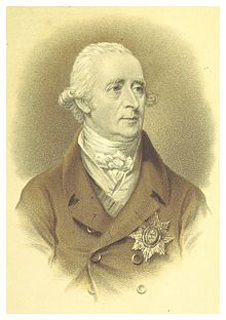
Birth of Sir Eyre Coote, Soldier, Politician & Governor of Jamaica

Sir Eyre Coote, Irish-born British soldier and politician who serves as Governor of Jamaica, is born on May 20, 1759.

Coote is the second son of the Very Reverend Charles Coote of Shaen Castle, Queen’s County (now County Laois), Dean of Kilfenora, County Clare, and Grace Coote (née Tilson). Educated at Eton College (1767–71), he enters Trinity College Dublin (TCD) on November 1, 1774, but does not graduate. In 1776 he is commissioned ensign in the 37th (North Hampshire) Regiment of Foot and carries the regiment’s colours at the Battle of Long Island on August 27, 1776, during the American Revolutionary War. He fights in several of the major battles in the war, including Rhode Island (September 15, 1776), Brandywine (September 11, 1777) and the siege of Charleston (1780). He serves under Charles Cornwallis, 1st Marquess Cornwallis, in Virginia and is taken prisoner during the siege of Yorktown in October 1781.

On his release Coote returns to England, is promoted major in the 47th (Lancashire) Regiment of Foot in 1783, and in 1784 inherits the substantial estates of his uncle Sir Eyre Coote. He inherits a further £200,000 by remainder on his father’s death in 1796. He resides for a time at Portrane House, Maryborough, Queen’s County, and is elected MP for Ballynakill (1790–97) and Maryborough (1797–1800). Although he opposes the union, he vacates his seat to allow his elder brother Charles, 2nd Baron Castle Coote, to return a pro-union member. He serves with distinction in the West Indies (1793–95), particularly at the storming of Guadeloupe on July 3, 1794, and becomes colonel of the 70th (Surrey) Regiment of Foot (1794), aide-de-camp to King George III (1795), and brigadier-general in charge of the camp at Bandon, County Cork (1796).

Coote is active in suppressing the United Irishmen in Cork throughout 1797, and in June arrests several soldiers and locals suspected of attempting to suborn the Bandon camp. On January 1, 1798, he is promoted major-general and given the command at Dover. He leads the expedition of 1,400 men that destroy the canal gates at Ostend on May 18, 1798, holding out stubbornly for two days against superior Dutch forces until he is seriously wounded and his force overwhelmed. Taken prisoner, he is exchanged and in 1800 commands a brigade in Sir Ralph Abercromby‘s Mediterranean campaign, distinguishing himself at Abu Qir and Alexandria. For his services in Egypt, he receives the thanks of parliament, is made a Knight of the Bath, and is granted the Crescent by the Sultan.

In 1801 Coote returns to Ireland. Elected MP for Queen’s County (1802–06), he generally supports the government and is appointed governor of the fort of Maryborough. He gives the site and a large sum of money towards the building of the old county hospital in Maryborough. In 1805 he is promoted lieutenant-general, and he serves as lieutenant-governor of Jamaica (1806–08). His physical and mental health deteriorates in the West Indian climate, and he is relieved of his post in April 1808. He is second in command in the Walcheren Campaign of 1809 and leads the force that takes the fortress of Flushing. However, he shows signs of severe stress during the campaign and asks to be relieved from command because his eldest daughter is seriously ill.

Coote is conferred LL.D. at Trinity College, Cambridge in 1811. Elected MP for Barnstaple, Devon (1812–18), he usually votes with government, but opposes them by supporting Catholic emancipation, claiming that Catholics strongly deserve relief because of the great contribution Catholic soldiers had made during the war. He strongly opposes the abolition of flogging in the army. Despite a growing reputation for eccentricity, he is promoted full general in 1814 and appointed Knight Grand Cross (GCB) on January 2, 1815, but his conduct becomes increasingly erratic. In November 1815 he pays boys at Christ’s Hospital school, London, to allow him to flog them and to flog him in return. Discovered by the school matron, he is charged with indecent behaviour. The Lord Mayor of London dismisses the case and Coote donates £1,000 to the school, but the scandal leads to a military inquiry on April 18, 1816. Although it is argued that his mind had been affected by the Jamaican sun and the deaths of his daughters, the inquiry finds that he is not insane and that his conduct is unworthy of an officer. Despite the protests of many senior officers, he is discharged from the army and deprived of his honours.

Coote continues to decline and dies in London on December 10, 1823. He is buried at his seat of West Park, Hampshire, where in 1828 a large monument is erected to him and his uncle Sir Eyre Coote.

Coote first marries Sarah Robard in 1785, with whom he has three daughters, all of whom die young of consumption. Secondly, he marries in 1805, Katherine, daughter of John Bagwell of Marlfield, County Tipperary, with whom he has one son, his heir Eyre Coote III, MP for Clonmel (1830–33). He also has a child by Sally, a slave girl in Jamaica, from whom Colin Powell, United States Army general and Secretary of State, claims descent.


Leave a comment

House of Lords Votes for the Acts of Union

The House of Lords votes on February 10, 1800, for the Acts of Union which sees Ireland lose its own parliament, direct rule is imposed on Ireland, and the United Kingdom of Great Britain and Ireland is created. The acts come into force on January 1, 1801, and the merged Parliament of the United Kingdom has its first meeting on January 22, 1801. Both acts remain in force, with amendments, in the United Kingdom of Great Britain and Northern Ireland but have been repealed in the Republic of Ireland.

Before these Acts, Ireland had been in personal union with England since 1541, when the Parliament of Ireland had passed the Crown of Ireland Act 1542, proclaiming King Henry VIII of England to be King of Ireland. Since the 12th century, the King of England had been technical overlord of the Lordship of Ireland, a papal possession. Both the Kingdoms of Ireland and England later came into personal union with that of Scotland upon the Union of the Crowns in 1603.

In 1707, the Kingdom of England and the Kingdom of Scotland were united into a single kingdom: the Kingdom of Great Britain. The Irish Parliament at that time was subject to a number of restrictions that placed it subservient to the Parliament of England and, following the union of England and Scotland, the Parliament of Great Britain. Ireland, however, gained effective legislative independence from Great Britain through the Constitution of 1782.

By this time access to institutional power in Ireland was restricted to a small minority, the Anglo-Irish of the Protestant Ascendancy, and frustration at the lack of reform among the Catholic majority eventually led, along with other reasons, to the Irish Rebellion in 1798, involving a French invasion of Ireland and the seeking of complete independence from Great Britain. This rebellion was crushed with much bloodshed, and the subsequent drive for union between Great Britain and Ireland that passes in 1800 is motivated at least in part by the belief that the rebellion was caused as much by reactionary loyalist brutality as by the Society of United Irishmen.

Furthermore, Catholic emancipation is being discussed in Great Britain, and fears that a newly enfranchised Catholic majority will drastically change the character of the Irish government and parliament also contributes to a desire from London to merge the Parliaments.

Complementary acts have to be passed in the Parliament of Great Britain and in the Parliament of Ireland. The Parliament of Ireland had recently gained a large measure of legislative independence under the Constitution of 1782. Many members of the Irish Parliament jealously guard this autonomy and a motion for union is legally rejected in 1799.

Only Anglicans are permitted to become members of the Parliament of Ireland, though the great majority of the Irish population are Roman Catholic, with many Presbyterians in Ulster. In 1793 Roman Catholics regain the right to vote if they own or rent property worth £2 per acre. The Catholic hierarchy is strongly in favour of union, hoping for rapid emancipation and the right to sit as MPs, which is delayed after the passage of the acts until the passage of the Roman Catholic Relief Act 1829.

From the perspective of Great Britain, the union is desirable because of the uncertainty that followed the Irish Rebellion of 1798 and the French Revolution of 1789. If Ireland adopted Catholic Emancipation, willingly or not, a Roman Catholic Parliament could break away from Britain and ally with the French. Also the Irish and British Parliaments, when creating a regency during King George III‘s “madness”, gave the Prince Regent different powers. These considerations lead Great Britain to decide to attempt merger of the two kingdoms and their Parliaments.

The final passage of the Act in the Irish Parliament is achieved with substantial majorities, in part according to contemporary documents through bribery, namely the awarding of peerages and honours to critics to get their votes. Whereas the first attempt had been defeated in the Irish House of Commons by 109 votes against to 104 for, the second vote in 1800 produces a result of 158 to 115.

In the first Parliament of the United Kingdom of Great Britain and Ireland, the members of the House of Commons are not elected afresh. By royal proclamation authorised by the Act, all the members of the last House of Commons from Great Britain take seats in the new House, and from Ireland 100 members are chosen from the last Irish House of Commons: two members from each of the 32 counties and from the two largest boroughs, and one from each of the next 31 boroughs (chosen by lot) and from the University of Dublin. The other 84 Irish parliamentary boroughs are disfranchised, all being pocket boroughs, whose patrons receive £15,000 compensation for the loss of what is considered their property.

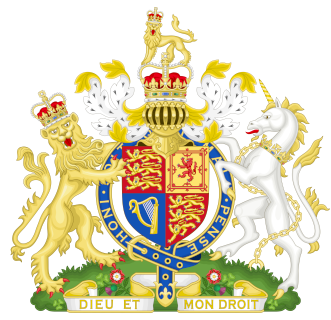
(Pictured: Coat of Arms of the United Kingdom from 1837 to 1952 used by Queen Victoria, King Edward VII, George V, Edward VIII and George VI)


Leave a comment

Death of John Hely-Hutchinson, Lawyer & Statesman

CH35304

John Hely (later Hely-Hutchinson), Irish lawyer, statesman, and Provost of Trinity College Dublin, dies on September 4, 1794, at Buxton, Derbyshire, England.

Hely is born in 1724 at Gortroe, Mallow, son of Francis Hely, a gentleman of County Cork. He is educated at Trinity College Dublin (BA 1744) and is called to the Irish bar in 1748. He takes the additional name of Hutchinson upon his marriage in 1751 to Christiana Nixon, heiress of her uncle, Richard Hutchinson.

Hely-Hutchinson is elected member of the Irish House of Commons for the borough of Lanesborough in 1759, but from 1761 to 1790 he represents Cork City. He at first attaches himself to the patriotic party in opposition to the government, and although he afterwards joins the administration, he never abandons his advocacy of popular measures.

After a session or two in parliament he is made a privy councillor and prime Serjeant-at-law. From this time, he gives a general, though by no means invariable, support to the government. In 1767 the ministry contemplates an increase of the army establishment in Ireland from 12,000 to 15,000 men, but the Augmentation Bill meets with strenuous opposition, not only from Henry Flood, John Ponsonby and the habitual opponents of the government, but from the Undertakers, or proprietors of boroughs, on whom the government has hitherto relied on to secure them a majority in the House of Commons.

It therefore becomes necessary for Lord Townshend to turn to other methods for procuring support. Early in 1768 an English Act is passed for the increase of the army, and a message from King George III setting forth the necessity for the measure is laid before the House of Commons in Dublin. An address favourable to the government policy is, however, rejected as Hely-Hutchinson, together with the speaker and the attorney general, do their utmost both in public and private to obstruct the bill. Parliament is dissolved in May 1768, and the lord lieutenant sets about the task of purchasing or otherwise securing a majority in the new parliament. Peerages, pensions and places are bestowed lavishly on those whose support could be thus secured. Hely-Hutchinson is won over by the concession that the Irish army should be established by the authority of an Irish act of parliament instead of an English one.

The Augmentation Bill is carried in the session of 1769 by a large majority. Hely-Hutchinson’s support had been so valuable that he receives as reward an addition of £1,000 a year to the salary of his sinecure of alnager, a major’s commission in a cavalry regiment, and a promise of the Secretaryship of State. He is at this time one of the most brilliant debaters in the Irish parliament and is enjoying an exceedingly lucrative practice at the bar. This income, however, together with his well-salaried sinecure, and his place as prime serjeant, he surrenders in 1774 to become provost of Trinity College, although the statute requiring the provost to be in holy orders has to be dispensed with in his favour.

For this great academic position Hely-Hutchinson is in no way qualified and his appointment to it for purely political service to the government is justly criticised with much asperity. His conduct in using his position as provost to secure the parliamentary representation of the university for his eldest son brings him into conflict with Patrick Duigenan, while a similar attempt on behalf of his second son in 1790 leads to his being accused before a select committee of the House of Commons of impropriety as returning officer. But although without scholarship Hely-Hutchinson is an efficient provost, during whose rule material benefits are conferred on Trinity College.

Hely-Hutchinson continues to occupy a prominent place in parliament, where he advocates free trade, the relief of the Catholics from penal legislation, and the reform of parliament. He is one of the very earliest politicians to recognise the soundness of Adam Smith‘s views on trade and he quotes from the Wealth of Nations, adopting some of its principles, in his Commercial Restraints of Ireland, published in 1779, which William Edward Hartpole Lecky pronounces one of the best specimens of political literature produced in Ireland in the latter half of the 18th century.

In the same year, the economic condition of Ireland being the cause of great anxiety, the government solicits from several leading politicians their opinion on the state of the country with suggestions for a remedy. Hely-Hutchinson’s response is a remarkably able state paper, which also shows clear traces of the influence of Adam Smith. The Commercial Restraints, condemned by the authorities as seditious, goes far to restore Hely-Hutchinson’s popularity which has been damaged by his greed of office. Not less enlightened are his views on the Catholic question. In a speech in parliament on Catholic education in 1782 the provost declares that Catholic students are in fact to be found at Trinity College, but that he desires their presence there to be legalised on the largest scale.

In 1777 Hely-Hutchinson becomes Secretary of State. When Henry Grattan in 1782 moves an address to the king containing a declaration of Irish legislative independence, he supports the attorney general’s motion postponing the question. On April 16, however, after the Easter recess, he reads a message from the Lord Lieutenant, the William Cavendish-Bentinck, 3rd Duke of Portland, giving the king’s permission for the House to take the matter into consideration, and he expresses his personal sympathy with the popular cause which Grattan on the same day brings to a triumphant issue. Hely-Hutchinson supports the opposition on the regency question in 1788, and one of his last votes in the House is in favour of parliamentary reform. In 1790 he exchanges the constituency of Cork for that of Taghmon in County Wexford, for which borough he remains member until his death at Buxton, Derbyshire on September 4, 1794.

(Pictured: Portrait, oil on canvas, of John Hely-Hutchinson (1724–1794) by Sir Joshua Reynolds (1723–1792))


Leave a comment

First Balloon Crossing of the Irish Sea

william-windham-sadler

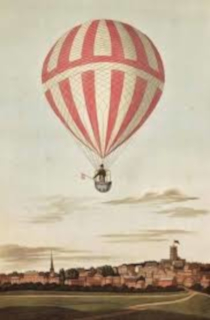
William Windham Sadler makes the first balloon crossing of the Irish Sea, from Dublin to Anglesey, on July 22, 1817.

Sadler is born near Dublin on October 17, 1796, the son by a second wife of James Sadler, one of the earliest British balloonists. The elder Sadler makes his first ascent on May 5, 1785, in company with William Windham, the politician, who subsequently consents to stand godfather to his son. In October 1811 he makes a rapid flight from Birmingham to Boston, Lincolnshire, in less than four hours. Less successful is his attempt to cross the Irish Sea on October 1, 1812, when he ascends from the lawn of the Belvedere House, Dublin, receiving his flag from the Duchess of Richmond. In spite of a tear in the balloon fabric, which he partially repairs with his neckcloth, he nearly succeeds in crossing the Channel. However, when over Anglesey a strong southerly current carries him out to sea, and he has a most perilous escape, being rescued by a fishing craft, which ran its bowsprit through the balloon. He is not deterred from making other ascents, and his name is long familiar in connection with ballooning. George III takes a special interest in his ascents.

The younger Sadler is brought up as an engineer, acquires a good practical knowledge of chemistry, and enters the service of the first Liverpool gas company. He gives up his employment there for professional aërostation, with which, upon his marriage in 1819, he combines the management of an extensive bathing establishment at Liverpool.

Sadler’s most notable feat is performed in 1817, when, with a view to carrying his father’s adventure of 1812 to a successful issue, he ascends from the Portobello barracks at Dublin on June 22. He rises to a great height, obtains the proper westerly current, and manages to keep the balloon in it across the St. George’s Channel. In mid-channel he writes, “I enjoyed at a glance the opposite shores of Ireland and Wales, and the entire circumference of Man.” Having started at 1:20 PM, Sadler alights a mile south of Holyhead at 6:45 PM.

On September 29, 1824, Sadler makes his thirty-first ascent at Bolton. He prepares to descend at dusk near Blackburn, but the wind dashes his car against a lofty chimney, and he is hurled to the ground, sustaining injuries of which he dies at 8:00 on the following morning. He is buried at Christchurch in Liverpool, where he was very popular. He well deserves the title of ‘intrepid’ bestowed on his father by Erasmus Darwin, but he did little to advance a scientific knowledge of aërostation by making systematic observations.


Leave a comment

The Roman Catholic Relief Act 1829 Receives Royal Assent

coat-of-arms-of-the-united-kingdom

The Roman Catholic Relief Act 1829, the culmination of the process of Catholic emancipation throughout the United Kingdom, receives royal assent on April 13, 1829. In Ireland it repeals the Test Act 1673 and the remaining Penal Laws which had been in force since the passing of the Disenfranchising Act of the Parliament of Ireland of 1728. Its passage follows a vigorous campaign that threatens insurrection led by Irish lawyer Daniel O’Connell. The British leaders, starting with the Prime MinisterArthur Wellesley, 1st Duke of Wellington, and his top aide Robert Peel, although personally opposed, give in to avoid civil strife. Ireland is quiet after the passage.

In 1778, English Catholics are relieved of the restrictions on land inheritance and purchase. A savage reaction to these concessions produces the Gordon Riots of 1780, and the whole history of Catholic Emancipation is one of struggle against great resistance. In 1791 the Roman Catholic Relief Act repeals most of the disabilities in Great Britain, provided Catholics take an oath of loyalty. In 1793 the army, the navy, the universities, and the judiciary are opened to Catholics, although seats in Parliament and some offices are still denied. These reforms are sponsored by William Pitt the Younger, who hopes thereby to split the alliance of Irish Catholics and Protestants. But Pitt’s attempt to secure a general repeal of the Penal Laws is thwarted by George III. Pope Pius VII consents to a royal veto on episcopal nominations if the Penal Laws are repealed, but the move fails. In Ireland the repeal of Poynings’ Law in 1782 is followed by an act (1792) of the Irish Parliament relaxing the marriage and education laws and an act (1793) allowing Catholics to vote and hold most offices.

The Roman Catholic Relief Act 1829 permits members of the Catholic Church to sit in the parliament at Westminster and to hold all but a handful of public offices. O’Connell had won a seat in a by-election for Clare in 1828 against an Anglican. Under the then extant penal law, O’Connell as a Catholic, is forbidden to take his seat in Parliament. Peel, the Home Secretary, until then is called “Orange Peel” because he always supports the Orange (anti-Catholic) position. Peel now concludes, “Though emancipation was a great danger, civil strife was a greater danger.” Fearing a revolution in Ireland, Peel draws up the Catholic Relief Bill and guides it through the House of Commons. To overcome the vehement opposition of both the House of Lords and King George IV, the Duke of Wellington works tirelessly to ensure passage in the House of Lords and threatens to resign as Prime Minister if the King does not give Royal Assent.

With the Universities Tests Act 1871, which opens the universities to Roman Catholics, Catholic Emancipation in the United Kingdom is virtually complete.


Leave a comment

Birth of Sir Philip Francis

philip-francis

Sir Philip Francis, Irish-born British politician and pamphleteer, is born in Dublin on October 22, 1740. He is known as an antagonist of Warren Hastings, the first governor-general of British India.

The son of Dr. Philip Francis, a man known by his translations of Horace, Aeschines and Demosthenes, Francis is educated in Dublin and London and holds a variety of clerical posts in the government from 1756 to 1773. He may have written the Letters of Junius, a series of bitter lampoons against the government of King George III published by a London newspaper from 1769 to 1772, when he was a clerk in the war office. The authorship of the letters has been assigned to Francis on a variety of grounds, including a computer-aided analysis of the Junius texts in the 1960s.

In June 1773 the prime minister, Lord Frederick North, appointed Francis a member of the newly created four-man council that is to rule British possessions in India with Governor-General Hastings. He leads two of his colleagues in a struggle against Hastings, in part because he covets Hastings’ job, but there are also differences between the two men on policy matters, including land-revenue collection. Although Hastings gains the upper hand by 1776 after two of the opposing councilors die, Francis continues his attacks and, in 1780, the governor-general wounds him in a duel.

Returning to England in 1781, Francis turns public opinion against Hastings with a series of anonymous pamphlets. He enters the House of Commons of the United Kingdom in 1784 and is the moving spirit behind Hastings’ impeachment, begun in 1788. The acquittal of Hastings in 1795 embitters Francis deeply and leads to his defeat in a parliamentary election. He served again in Parliament from 1802 to 1807, at which time he retires from politics. He is knighted in 1806.

Sir Philip Francis dies in London on December 23, 1818.


2 Comments

Formation of The Irish Guards

The Irish Guards regiment is formed on April 1, 1900 by order of Queen Victoria to commemorate the Irishmen who fought in the Second Boer War for the British Empire. The Irish Guards, part of the Guards Division, is a Foot Guards regiment based in Cavalry Barracks, Hounslow.

The regiment takes its motto, “Quis Separabit” or “Who shall separate us?” from the Order of St. Patrick, an order of chivalry founded by George III.

As a Foot Guards Regiment the Irish Guards Regiment is involved in state ceremonial and public duties at Buckingham PalaceWindsor CastleSt. James’s Palace, and the Tower of London. HRH Prince William is Colonel of the Regiment and wore the uniform of the Irish Guards for his marriage to Kate Middleton.

Saint Patrick’s Day is the traditional celebration of the Irish Guards and fresh shamrock is presented to members of the regiment.

The 1st Battalion Irish Guards is broken down into five separate Companies – three rifle companies, Numbers One, Two, and Four Companies, the Support Company (3 Company) and Headquarter Company. The rifle companies use the Warrior tracked armoured vehicle. In common with her sister Guards regiments, the regimental organization also includes the Band of the Irish Guards and the Corps of Drums, a fife and drum band.

The Battalion has deployed on recent conflicts including Iraq and Afghanistan. The Battalion has also recently carried out a tour of Cyprus under the United Nations. As well as deploying on operations the Battalion has also deployed on various oversea exercises to BosniaLatviaOmanKenya, and numerous other countries.

(Photo used with approval of copyright holder James Brunker, https://james-brunker.pixels.com/featured/irish-guards-on-the-march-james-brunker.html)


Leave a comment

Birth of Edmund Burke, Political Writer & Orator

edmund-burke

Edmund Burke, one of the greatest political writers and orators in history, is born in Arran Quay, Dublin, on January 12, 1729. British statesman, parliamentary orator, and political thinker, he plays a prominent part in all major political issues for about thirty years after 1765 and remains an important figure in the history of political theory.

Burke is the son of a mixed marriage – his father, a solicitor, is Protestant, his mother is Roman Catholic. He enters Trinity College, Dublin in 1744, and studies law at Middle Temple in London in 1750. He fails to secure a call to the bar and instead begins a literary career. He writes several books and is editor of the The Annual Register before entering politics. Burke’s A Vindication of Natural Society is published in 1756 and in 1757 A Philosophical Inquiry into the Origin of Our Ideas of the Sublime and Beautiful appears. Also on March 12, 1757, Burke marries Jane Nugent, the daughter of Christopher Nugent, an Irish Catholic doctor.

His political career begins in 1765 when he becomes the private secretary of one of the Whig leaders in the Parliament of Great Britain, Charles Watson-Wentworth, 2nd Marquess of Rockingham. Burke soon proves to be one of the main characters in the constitutional controversy in Britain under George III, who at the time is trying to establish more actual power for the crown. Although the crown has lost some influence under the first two Georges, one of the major political problems in 18th century Britain is the fact that both the king and Parliament have considerable control over the executive. Burke responds to these affairs in his pamphlet Thoughts on the Cause of the Present Discontents (1770), in which he argues that although George’s actions are legal in the sense that they are not against the letter of the constitution, they are all the more against it in spirit. In the pamphlet Burke elaborates on his famous and new justification of a party, defined as “a body of men united on public principle, which could act as a constitutional link between king and parliament, providing consistency and strength in administration, or principled criticism in opposition.”

Concerning the imperial controversy at the time, Burke argues that the British government has acted in a both unwise and inconsistent manner. Again, Burke claims that Britain’s way of dealing with the colony question is strictly legal and he urges that also “claims of circumstance, utility, and moral principle should be considered, as well as precedent.” In other words, if the British, persistently clinging to their narrow legalism, are not to clash with the ideas and opinions of the colonists on these matters, they will have to offer more respect and regard for the colonies’ cause. Burke calls for “legislative reason” in two of his parliamentary speeches on the subject, On American Taxation (1774) and On Moving His Resolutions for Conciliation with America (1775). However, British imperial policy in the controversy continues to ignore these questions.

Burke’s view of the revolution in France is a much different story. He publishes Reflections on the Revolution in France in 1790, attacking the revolution’s motives and principles. Many writers oppose his views, the most famous being Thomas Paine in his Rights of Man. Burke is a consistent advocate of Catholic emancipation, which politically damages him, but he is never an advocate of self-rule for the Irish.

Edmund Burke dies in London on July 9, 1797. Many quotes from his writings and orations have come down through the years, perhaps one is most applicable to the situation in Ireland today: “All government, indeed every human benefit and enjoyment, every virtue, and every prudent act, is founded on compromise and barter.”


Leave a comment

Hercules Mulligan Cleared of Suspicions by George Washington

hercules-mulligan

Hercules Mulligan, tailor and spy during the American Revolutionary War, is cleared of suspicions of possible Loyalist sympathies when George Washington has breakfast with him on November 25, 1783, the day after the British evacuate New York City and Washington enters it at the end of the war.

Mulligan is born in Coleraine, County Londonderry to Hugh and Sarah Mulligan. The family immigrates to North America in 1746, settling in New York City. Mulligan attends King’s College, now Columbia University, in New York City. After graduating, Mulligan works as a clerk for his father’s accounting business. He later goes on to open a tailoring and haberdashery business, catering to wealthy British Crown force officers.

Mulligan is introduced to Alexander Hamilton shortly after Hamilton arrives in New York. Mulligan helps Hamilton enroll at the Elizabethtown Academy in New Jersey, and later, the College of New Jersey at Princeton, now Princeton University. After Hamilton enrolls at King’s College, he lives with Mulligan in New York City. Mulligan has a profound impact on Hamilton’s desire for revolution.

In 1765, Mulligan is one of the first colonists to join the Sons of Liberty, a secret society formed to protect the rights of the colonists and to fight British taxation. He also helps to mob British soldiers in the Battle of Golden Hill. He is a member of the New York Committee of Correspondence, a group that rallies opposition to the British through written communications. In August 1775, he and the Corsicans, a New York volunteer militia company, under fire from HMS Asia, successfully raid four British cannons in the Battery. In 1776, Mulligan and the Sons of Liberty knock down a statue of King George III in Bowling Green, melting the lead in the center to cast bullets to use against the British. Mulligan continues to fight for liberty following the Declaration of Independence.

While staying with the Mulligan family, Alexander Hamilton comes to share Mulligan’s views. Initially siding with the British before coming to New York, Hamilton is persuaded to change his views and join the Sons of Liberty. As a result, Hamilton writes an essay in 1775 in favor of independence, which causes a sensation and helps hasten the Revolution. When George Washington speaks of his need for reliable information from within New York City in 1776, after the Continental Army is driven out, Hamilton recommends Mulligan due to his placement as tailor to British soldiers and higher-ups.

This proves to be incredibly successful, with Mulligan saving Washington’s life on two occasions. The first occurs when a British officer, who requests a watch coat late one evening, tells Mulligan of their plans. “Before another day, we’ll have the rebel general in our hands.” Mulligan quickly informs Washington, who changes his plans and avoids capture.

Mulligan’s slave, Cato, is a Black Patriot who serves as spy together with Mulligan, and often acts the role of courier, in part through British-held territory, by exploiting his status as a slave, letting him pass on intelligence to the Continental Army without being stopped.

It is not known what happened to Mulligan’s slave Cato. However, on January 25, 1785, Mulligan becomes one of the 19 founding members, along with Alexander Hamilton and John Jay, of the New York Manumission Society, an early American organization founded to promote abolition of slaves.

Following the Revolution, Mulligan’s tailoring business prospers. He retires at the age of 80 and dies five years later on March 4, 1825. Mulligan is buried in the Sanders tomb behind Trinity Church. When the church is enlarged, the Sanders tomb is covered. Today, there is a tombstone located in the southwest quadrant of the churchyard bearing Mulligan’s name.