seamus dubhghaill

Promoting Irish Culture and History from Little Rock, Arkansas, USA


Leave a comment

Birth of Robert Blair “Paddy” Mayne

robert-blair-paddy-mayne

Robert Blair “Paddy” Mayne, British Army soldier, solicitor, Ireland rugby union international, amateur boxer, and a founding member of the Special Air Service (SAS), is born in Newtownards, County Down, on January 11, 1915.

Mayne attends school at Regent House School, a school for students aged 4 to 18. While at Regent he discovers his skill and love for the game of rugby. He also enjoys cricket and golf and becomes a marksman with the rifle club. He goes on to Queen’s University Belfast to study law. At university he takes up boxing and becomes the Irish Universities Heavyweight Champion in August 1936. He also wins the Scrabo Golf Club President’s cup in 1937. He graduates from Queen’s University in 1939.

During 1938, Mayne travels to Africa on the 1938 British Lions Tour to South Africa. He plays on a team that tours around Africa playing other local clubs. While traveling, it is discovered that Mayne has a wild side and on various occasions finds himself in trouble. His “go to” is to trash the hotel rooms of his teammates. The team includes some of the best players from around Ireland and Britain.

In 1939, with outbreak of World War II, Mayne joins the Supplementary Reserves in Newtownards and receives a commission in the Royal Artillery. He serves in several units in Ireland and England, generally with light and heavy anti-aircraft units. He volunteers for the No. 11 (Scottish) Commando unit which is sent to the Middle East. There he sees action during the Syria-Lebanon campaign. Specifically, during the Battle of the Litani River, he draws attention from Captain David Stirling who is forming the new Special Air Service (SAS). Sterling recruits Mayne for the new SAS while he is in jail for striking his commanding officer.

From November 1941 to the end of 1942, Mayne is involved in several raids behind enemy lines with the SAS. He uses jeeps to go to various Axis bases and begin blowing up planes and fuel dumps. It is claimed that he personally destroyed 100 planes during these missions. In addition to serving in the Middle East, he serves as well in Sicily, Italy, Belgium, the Netherlands, Germany, Norway and France. In most of these locations he works with the resistance behind the enemy lines. In France he helps to train the French Resistance.

By the end of the war, Mayne has been promoted to the rank of Lieutenant Colonel and has also received the British Army’s Distinguished Service Order with three bars, which means he received the award four times. After the war he joins the British Antarctic Survey in the Falkland Islands. He returns home to Newtownards when back issues, which started while he was serving in the Middle East, become more difficult for him.

Mayne is initiated into Eklektikos Lodge No. 542 in Newtownards in 1945. He is a very enthusiastic mason and joins a second lodge in Newtownards, Friendship Lodge No. 447. On the evening of December 13, 1955, he attends a meeting of Friendship Lodge and then joins some of his masonic brothers at a local bar. At about 4:00 AM on December 14, he is found dead in his Riley RM roadster in Mill Street, Newtownards, having reportedly collided with a farmer’s vehicle.

At his funeral hundreds of mourners turn out to pay their respects and to see him interred in a family plot in the town’s old Movilla Abbey graveyard. After his death his masonic jewel is preserved for many years by an old school friend before it is presented to Newtownards Borough Council where it is displayed in the Mayoral Chamber of the Council Offices.


Leave a comment

Birth of Irish Republican Army Officer Liam Lynch

Liam Lynch, officer in the Irish Republican Army during the Irish War of Independence and the commanding general of the Irish Republican Army during the Irish Civil War, is born in the townland of Barnagurraha, County Limerick, on November 9, 1893.

In 1910, at the age of 17, he starts an apprenticeship in O’Neill’s hardware trade in Mitchelstown, where he joins the Gaelic League and the Ancient Order of Hibernians. Later he works at Barry’s Timber Merchants in Fermoy. In the aftermath of the 1916 Easter Rising, he witnesses the shooting and arrest of David, Thomas and Richard Kent of Bawnard House by the Royal Irish Constabulary. After this, he determines to dedicate his life to Irish republicanism. In 1917 he is elected First Lieutenant of the Irish Volunteer Company, which resides in Fermoy.

In Cork in 1919, Lynch re-organises the Irish Volunteers, the paramilitary organisation that becomes the Irish Republican Army (IRA), becoming commandant of the Cork No. 2 Brigade of the IRA during the guerrilla Irish War of Independence. He is captured, along with the other officers of the Cork No. 2 Brigade, in a British raid on Cork City Hall in August 1920. He provides a false name and is released three days later. In September 1920, he and Ernie O’Malley command a force that takes the British Army barracks at Mallow. The arms in the barracks are seized and the building is partially burned. In April 1921, the IRA is re-organised into divisions based on regions. Lynch’s reputation is such that he is made commander of the 1st Southern Division.

The war formally ends with the signing of the Anglo-Irish Treaty between the Irish negotiating team and the British government in December 1921. Lynch is opposed to the Treaty, on the ground that it disestablishes the Irish Republic proclaimed in 1916 in favour of Dominion status for Ireland within the British Empire. He becomes Chief of Staff of the IRA in March 1922, much of which is also against the Treaty.

Although Lynch opposes the seizure of the Four Courts in Dublin by a group of hardline republicans, he joins its garrison in June 1922 when it is attacked by the newly formed National Army. This marks the beginning of the Irish Civil War. The ‘Munster Republic’ falls in August 1922, when Free State troops land by sea in Cork and Kerry. The Anti-Treaty forces then disperse and pursue guerrilla tactics.

Lynch contributes to the growing bitterness of the war by issuing what are known as the “orders of frightfulness” against the Provisional government on November 30, 1922. This General Order sanctions the killing of Free State Teachta Dála (TDs) and Senators, as well as certain judges and newspaper editors in reprisal for the Free State’s killing of captured republicans. Lynch is heavily criticised by some republicans for his failure to co-ordinate their war effort and for letting the conflict peter out into inconclusive guerrilla warfare. Lynch makes unsuccessful efforts to import mountain artillery from Germany to turn the tide of the war.

In March 1923, the Anti-Treaty IRA Army Executive meets in a remote location in the Nire Valley. Several members of the executive propose ending the civil war. However, Lynch opposes them and narrowly carries a vote to continue the war.

On April 10, 1923, a National Army unit is seen approaching Lynch’s secret headquarters in the Knockmealdown Mountains. Lynch is carrying important papers that could not fall into enemy hands, so he and his six comrades begin a strategic retreat. To their surprise, they run into another unit of 50 soldiers approaching from the opposite side. Lynch is hit by rifle fire from the road at the foot of the hill. Knowing the value of the papers they carry, he orders his men to leave him behind.

When the soldiers finally reach Lynch, they initially believe him to be Éamon de Valera, but he informs them, “I am Liam Lynch, Chief-of-Staff of the Irish Republican Army. Get me a priest and doctor, I’m dying.” He is carried on an improvised stretcher manufactured from guns to “Nugents” pub in Newcastle, at the foot of the mountains. He is later brought to the hospital in Clonmel and dies that evening. He is laid to rest two days later at Kilcrumper Cemetery, near Fermoy, County Cork.


Leave a comment

Death of Frank Harris, Novelist & Journalist

Frank Harris, British editor, novelist, short story writer, journalist and publisher, dies on August 26, 1931. He is friendly with many well-known figures of his day.

Harris is born James Thomas Harris on February 14, 1855, in Galway, County Galway, to Welsh parents. While living with his older brother he is, for a year or more, a pupil at The Royal School, Armagh. At the age of twelve he is sent to Wales to continue his education as a boarder at the Ruabon Grammar School in Denbighshire, a time he is to remember later in My Life and Loves. Harris is unhappy at the school and runs away within a year.

Harris runs away to the United States in late 1869, arriving in New York City virtually penniless. The 13-year-old takes a series of odd jobs to support himself, working first as a shoeshiner, a porter, a general laborer, and a construction worker on the erection of the Brooklyn Bridge. He later turns these early occupational experiences into art, incorporating tales from them into his book The Bomb.

From New York Harris moves to the American Midwest, settling in Chicago, where he takes a job as a hotel clerk and eventually a manager. Owing to Chicago’s central place in the meat packing industry, Harris makes the acquaintance of various cattlemen, who inspire him to leave the big city to take up work as a cowboy. He eventually grows tired of life in the cattle industry and enrolls at the University of Kansas, where he studies law and earns a degree, gaining admission to the Kansas state bar association.

Harris is not cut out to be a lawyer and soon decides to turn his attention to literature. He returns to England in 1882, later traveling to various cities in Germany, Austria, France, and Greece on his literary quest. He works briefly as an American newspaper correspondent before settling down in England to seriously pursue the vocation of journalism.

Harris first comes to general notice as the editor of a series of London papers including The Evening News, The Fortnightly Review and the Saturday Review, the last-named being the high point of his journalistic career, with H. G. Wells and George Bernard Shaw as regular contributors.

From 1908 to 1914 Harris concentrates on working as a novelist, authoring a series of popular books such as The Bomb, The Man Shakespeare, and The Yellow Ticket and Other Stories. With the advent of World War I in the summer of 1914, Harris decides to return to the United States.

From 1916 to 1922 he edits the U.S. edition of Pearson’s Magazine, a popular monthly which combines short story fiction with socialist-tinted features on contemporary news topics. One issue of the publication is banned from the mails by United States Postmaster General Albert S. Burleson during the period of American participation in the Great War. Despite this Harris manages to navigate the delicate situation which faces the left wing press and to keep the Pearson’s Magazine functioning and solvent during the war years.

Harris becomes an American citizen in April 1921. In 1922 he travels to Berlin to publish his best-known work, his autobiography My Life and Loves. It is notorious for its graphic descriptions of Harris’ purported sexual encounters and for its exaggeration of the scope of his adventures and his role in history. Years later, Time Magazine reflects in its March 21, 1960 issue “Had he not been a thundering liar, Frank Harris would have been a great autobiographer….he had the crippling disqualification that he told the truth, as Max Beerbohm remarked, only ‘when his invention flagged’.” A fifth volume, supposedly taken from his notes but of doubtful provenance, is published in 1954, long after his death.

Harris also writes short stories and novels, two books on Shakespeare, a series of biographical sketches in five volumes under the title Contemporary Portraits and biographies of his friends Oscar Wilde and George Bernard Shaw. His attempts at playwriting are less successful. Only Mr. and Mrs. Daventry (1900), which is based on an idea by Oscar Wilde, is produced on the stage.

Married three times, Harris dies of a heart attack in Nice at the age of 75 on August 26, 1931. He is subsequently buried at Cimetière Caucade in the same city. Just after his death a biography written by Hugh Kingsmill (pseudonym of Hugh Kingsmill Lunn) is published.


Leave a comment

Birth of John Millington Synge, Poetic Dramatist

John Millington Synge, a leading figure in the Irish Literary Revival, is born at Rathfarnham, near Dublin, on April 16, 1871. He is a poetic dramatist of great power who portrays the harsh rural conditions of the Aran Islands and the western Irish seaboard with sophisticated craftsmanship.

After studying at Trinity College and at the Royal Irish Academy of Music in Dublin, Synge pursues further studies from 1893 to 1897 in GermanyItaly, and France. In 1894 he abandons his plan to become a musician and instead concentrates on languages and literature. He meets William Butler Yeats while studying at the Sorbonne in Paris in 1896. Yeats inspires him with enthusiasm for the Irish renaissance and advises him to stop writing critical essays and instead to go to the Aran Islands and draw material from life. Already struggling against the progression of Hodgkin’s lymphoma which is untreatable at the time and eventually causes his death, Synge lives in the islands during part of each year between 1898 and 1902, observing the people and learning their language, recording his impressions in The Aran Islands (1907) and basing his one-act plays In the Shadow of the Glen and Riders to the Sea (1904) on islanders’ stories. In 1905 his first three-act play, The Well of the Saints, is produced.

Synge’s travels on the Irish west coast inspire his most famous play, The Playboy of the Western World (1907). This morbid comedy deals with the moment of glory of a peasant boy who becomes a hero in a strange village when he boasts of having just killed his father but who loses the villagers’ respect when his father turns up alive. In protest against the play’s unsentimental treatment of the Irishmen’s love for boasting and their tendency to glamorize ruffians, the audience riots at its opening at Dublin’s Abbey Theatre. Riots of Irish Americans accompany its opening in New York City in 1911, and there are further riots in Boston and Philadelphia. Synge remains associated with the Abbey Theatre, where his plays gradually win acceptance, until his death. His unfinished Deirdre of the Sorrows, a vigorous poetic dramatization of one of the great love stories of Celtic mythology, is performed there in 1910.

John Millington Synge dies at the Elpis Nursing Home in Dublin on March 24, 1909, at the age of 37, and is buried in Mount Jerome Cemetery and CrematoriumHarold’s Cross, Dublin.

In the seven plays he writes during his comparatively short career as a dramatist, Synge records the colourful and outrageous sayings, flights of fancy, eloquent invective, bawdy witticisms, and earthy phrases of the peasantry from Kerry to Donegal. In the process he creates a new, musical dramatic idiom, spoken in English but vitalized by Irish syntax, ways of thought, and imagery.


Leave a comment

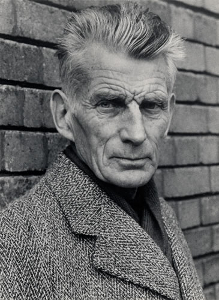
Birth of Playwright & Poet Samuel Barclay Beckett

Samuel Barclay Beckett, avant-garde novelist, playwright, theatre director, and poet, is born on Good Friday, April 13, 1906, in FoxrockDublin. His father, William Frank Beckett, works in the construction business and his mother, Maria Jones Roe, is a nurse. Beckett attends Earlsfort House School in Dublin and then, at age 14, he goes to Portora Royal School, the same school attended by Oscar Wilde. He receives his bachelor’s degree from Trinity College, Dublin in 1927. In his youth he periodically experiences severe depression keeping him in bed until mid-day. This experience later influences his writing.

In 1928, Beckett finds a welcome home in Paris where he meets and becomes a devoted student of James Joyce. In 1931, he embarks on a restless sojourn through Great BritainFrance and Germany. He writes poems and stories and does odd jobs to support himself. On his journey, he comes across many individuals who inspire some of his most interesting characters.

In 1937, Beckett settles in Paris. Shortly thereafter, he is stabbed by a pimp after refusing his solicitations. While recovering in the hospital, he meets Suzanne Dechevaux-Dumesnuil, a piano student in Paris. The two become life-long companions and eventually marry. After meeting with his attacker, Beckett drops the charges, partly to avoid the publicity.

During World War II, Beckett’s Irish citizenship allows him to remain in Paris as a citizen of a neutral country. He fights in the resistance movement until 1942 when members of his group are arrested by the Gestapo. He and Suzanne flee to the unoccupied zone until the end of the war.

After the war, Beckett is awarded the Croix de Guerre for bravery during his time in the French resistance. He settles in Paris and begins his most prolific period as a writer. In five years, he writes EleutheriaWaiting for GodotEndgame, the novels MolloyMalone DiesThe Unnamable, and Mercier et Camier, two books of short stories, and a book of criticism.

Beckett’s first publication, Molloy, enjoys modest sales, but more importantly praise from French critics. Soon, Waiting for Godot, achieves quick success at the small Theatre de Babylone putting Beckett in the international spotlight. The play runs for 400 performances and enjoys critical praise.

Beckett writes in both French and English, but his most well-known works, written between World War II and the 1960s, are written in French. Early on he realizes his writing has to be subjective and come from his own thoughts and experiences. His works are filled with allusions to other writers such as Dante AlighieriRené Descartes, and James Joyce. Beckett’s plays are not written along traditional lines with conventional plot and time and place references. Instead, he focuses on essential elements of the human condition in dark humorous ways. This style of writing has been called “Theater of the Absurd” by Martin Esslin, referring to poet Albert Camus’ concept of “the absurd.” The plays focus on human despair and the will to survive in a hopeless world that offers no help in understanding.

The 1960s are a period of change for Beckett. He finds great success with his plays across the world. Invitations come to attend rehearsals and performances which lead to a career as a theater director. In 1961, he secretly marries Suzanne Dechevaux-Dumesnuil who takes care of his business affairs. A commission from the BBC in 1956 leads to offers to write for radio and cinema through the 1960s.

Beckett continues to write throughout the 1970s and 1980s, mostly in a small house outside Paris. There he can give total dedication to his art evading publicity. In 1969, he is awarded the Nobel Prize in Literature, though he declines accepting it personally to avoid making a speech at the ceremonies. However, he should not be considered a recluse. He often times meets with other artists, scholars and admirers to talk about his work.

By the late 1980s, Beckett is in failing health and is moved to a small nursing home. His wife Suzanne dies in July 1989. His life is confined to a small room where he receives visitors and writes. He dies on December 22, 1989, in a hospital of respiratory problems just months after his wife.


Leave a comment

Birth of James Hamilton, First Governor of Northern Ireland

james-hamilton

James Albert Edward Hamilton, 3rd Duke of Abercorn, is born in Hamilton Place, Piccadilly, London, on November 30, 1869. Styled Marquess of Hamilton between 1885 and 1913, he is a British peer and Unionist politician. He serves as the first Governor of Northern Ireland, a post he holds between 1922 and 1945. He is a great-grandfather of Diana, Princess of Wales.

Hamilton is the eldest son of James Hamilton, 2nd Duke of Abercorn, and godson of the Prince of Wales. His mother, Lady Mary Anna, is the fourth daughter of Richard Curzon-Howe, 1st Earl Howe. He is educated at Eton College and subsequently serves first in the Royal Inniskilling Fusiliers until 1892 when he joins the 1st Life Guards. He is later transferred as major to the North Irish Horse.

In early 1901 he accompanies his father on a special diplomatic mission to announce the accession of King Edward to the governments of Denmark, Sweden and Norway, Russia, Germany, and Saxony.

In the 1900 general election, Hamilton stands successfully as Unionist candidate for Londonderry City, and three years later he becomes Treasurer of the Household, a post he holds until the fall of Arthur Balfour‘s Conservative administration in 1905. After serving for a time as an Opposition whip, Hamilton succeeds his father as third Duke of Abercorn in 1913. In 1922, he is appointed governor of the newly created Northern Ireland. He also serves as Lord Lieutenant of Tyrone from 1917 until his death, having previously been a Deputy Lieutenant for County Donegal. Abercorn proves a popular royal representative in Northern Ireland and is reappointed to the post in 1928 after completing his first term of office. In 1931, he declines the offer of the governor generalship of Canada, and three years later he is again reappointed governor for a third term. He remains in this capacity until his resignation in July 1945.

Abercorn is made the last non-royal Knight of the Most Illustrious Order of Saint Patrick in 1922. In 1928 he becomes a Knight of the Most Noble Order of the Garter and is also the recipient of an honorary degree from the Queen’s University Belfast. He receives the Royal Victorian Chain in 1945, the same year he is sworn of the Privy Council.

Abercorn marries Lady Rosalind Cecilia Caroline Bingham, only daughter of Charles Bingham, 4th Earl of Lucan and his wife Lady Cecilia Catherine Gordon-Lennox at St. Paul’s Church, Knightsbridge, on November 1, 1894. They have three daughters and two sons.

Abercorn dies at his London home on September 12, 1953, and is buried at Baronscourt in County Tyrone.


Leave a comment

Death of Irish American Painter William Harnett

william-harnett

William Michael Harnett, Irish American painter known for his trompe-l’œil still lifes of ordinary objects, dies at New York Hospital on October 29, 1892.

Harnett is born in Clonakilty, County Cork, on August 10, 1848, during the time of the Great Famine. Shortly after his birth his family emigrates to America, settling in Philadelphia. Becoming a United States citizen in 1868, he makes a living as a young man by engraving designs on table silver, while also taking night classes at the Pennsylvania Academy of the Fine Arts and later, in New York City, at Cooper Union and at the National Academy of Design. His first known oil painting, a still life, dates from 1874.

The style of trompe-l’œil painting that Harnett develops is distinctive and inspired many imitators, but it is not without precedent. A number of 17th century Dutch painters, Pieter Claesz for instance, specialize in tabletop still life of astonishing verisimilitude. Raphaelle Peale, working in Philadelphia in the early 19th century, pioneers the form in America. What sets Harnett’s work apart, besides his enormous skill, is his interest in depicting objects not usually made the subject of a painting.

Harnett paints musical instruments, hanging game, and tankards, but also painted the unconventional Golden Horseshoe (1886), a single rusted horseshoe shown nailed to a board. He paints a casual jumble of second-hand books set on top of a crate, Job Lot, Cheap (1878), as well as firearms and even paper currency. His works sell well, but they are more likely to be found hanging in a tavern or a business office than in a museum, as they did not conform to contemporary notions of high art.

Harnett spent the years 1880–1886 in Europe, staying in Munich from 1881 until early 1885. Harnett’s best-known paintings, the four versions of After the Hunt, are painted between 1883 and 1885. Each is an imposing composition of hunting equipment and dead game, hanging on a door with ornate hinges at the right and keyhole plate at the left. These paintings, like the horseshoe or currency depictions mentioned earlier, are especially effective as trompe-l’œil because the objects occupy a shallow space, meaning that the illusion is not spoiled by parallax shift if the viewer moves.

job-lot-cheap

Overall, Harnett’s work is most comparable to that of the slightly younger John F. Peto. The two artists know each other, and a comparison can be made between two paintings featuring violins. Harnett’s Music and Good Luck from 1888 shows the violin hanging upright on a door with ornate hinges and with a slightly torn piece of sheet music behind it. The elements are arranged in a stable, deliberate manner. Peto’s 1890 painting shows the violin hanging askew, as well as chipped and worn, with one string broken. The sheet music is dog-eared and torn around the edges and placed haphazardly behind the instrument. The hinges are less ornate, and one is broken. Harnett’s objects show signs of use but are well preserved, while Peto’s more humble objects are nearly used up.

Crippling rheumatism plagues Harnett in his last years, reducing the number but not the quality of his paintings. He seeks relief in the waters at Karlsbad and Wiesbaden, Germany and later at Hot Springs, Arkansas. But he continues to worsen and is hospitalized several times. He dies in New York City in 1892.


Leave a comment

Canonisation of Sir Oliver Plunkett

oliver-plunkett

Sir Oliver Plunkett is canonised in Rome by Pope Paul VI on October 12, 1975, the first new Irish saint in almost seven hundred years, and the first of the Irish martyrs to be beatified. For the canonisation, the customary second miracle is waived.

Plunkett is born on November 1, 1625, in Loughcrew, County Meath, to parents with Hiberno-Norman ancestors. Until his sixteenth year, his education is entrusted to his cousin Patrick Plunkett, Abbot of St. Mary’s, Dublin, and brother of Luke Plunkett, the first Earl of Fingall, who later becomes successively Bishop of Ardagh and of Meath. As an aspirant to the priesthood, Plunkett sets out for Rome in 1647.

Plunkett is admitted to the Pontifical Irish College in Rome and proves to be an able pupil. He is ordained a priest in 1654 and deputed by the Irish bishops to act as their representative in Rome. Meanwhile, the Cromwellian conquest of Ireland (1649–1653) has defeated the Roman Catholic cause in Ireland. As a result, it is impossible for Plunkett to return to Ireland for many years, so he petitions to remain in Rome. At the Congregation of Propaganda Fide on July 9, 1669, he is appointed Archbishop of Armagh and is consecrated on November 30 at Ghent. He returns to Ireland on March 7, 1670, as the English Restoration of 1660 has begun on a basis of toleration.

Plunkett sets about reorganising the ravaged Roman Church and builds schools both for the young and for clergy. The Penal Laws have been relaxed in line with the Declaration of Breda in 1660 and he is able to establish a Jesuit College in Drogheda in 1670, which becomes the first Catholic-Protestant integrated school in Ireland.

On the enactment of the Test Act in 1673, to which Plunkett does not agree for doctrinal reasons, the college is closed and demolished. Plunkett goes into hiding, travelling only in disguise, and refuses a government edict to register at a seaport to await passage into exile.

In 1678 the so-called Popish Plot, concocted in England by clergyman Titus Oates, leads to further anti-Roman Catholic action. Archbishop Peter Talbot of Dublin is arrested, and Plunkett again goes into hiding. Despite being on the run and with a price on his head, Plunkett refuses to leave his flock.

Plunkett is arrested in Dublin in December 1679 and imprisoned in Dublin Castle. He is tried at Dundalk for conspiring against the state by allegedly plotting to bring 20,000 French soldiers into the country, and for levying a tax on his clergy to support 70,000 men for rebellion. The trial soon collapses as the prosecution witnesses are themselves wanted men and afraid to appear in court. Plunkett is moved to Newgate Prison in London in order to face trial at Westminster Hall. The first grand jury finds no true bill, but he is not released. The second trial is generally regarded as a serious miscarriage of justice as Plunkett is denied defending counsel.

Archbishop Plunkett is found guilty of high treason in June 1681 “for promoting the Roman faith,” and is condemned to death. Plunkett is hanged, drawn, and quartered at Tyburn on July 1, 1681, the last Roman Catholic martyr to die in England. His body is initially buried in two tin boxes in the courtyard of St. Giles in the Fields church. The remains are exhumed in 1683 and moved to the Benedictine monastery at Lamspringe, near Hildesheim in Germany. His head is brought to Rome, and from there to Armagh, and eventually to Drogheda where it has rested in St. Peter’s Church since June 29, 1921. Most of the body is brought to Downside Abbey, England, where the major part is located today, with some parts remaining at Lamspringe.


Leave a comment

Birth of Patrick d’Arcy, Scientist & Soldier

patrick-darcy

Patrick d’Arcy, scientist and soldier in the Irish Brigade of France, is born in Kitulla, County Galway, on September 27, 1725.

The d’Arcy family, who are Catholics, suffer under the Penal Laws. In 1739 d’Arcy is sent to Paris for his education. He is tutored in mathematics by Jean-Baptiste Clairaut, and becomes a friend of Jean-Baptiste’s son, Alexis-Claude Clairaut, who is a brilliant young mathematician. d’Arcy makes original contributions to dynamics. He is best known for his part in the discovery of the principle of angular momentum, in a form which is known as “the principle of areas,” which he announces in 1746.

Perhaps seeking more adventure than an academic life can provide, d’Arcy enlists in the French army. He fights in Germany in the regiment of Condé and serves as an aide-de-camp to Marshal Saxe at the Battle of Fontenoy. He obtains the title of “Count” in the French nobility and is a generous patron of Irish refugees in France. He sails for Scotland in 1745, attempting to fight in “Bonnie” Prince Charlie‘s rising, but his ship is captured, and he is taken prisoner.

After his release, d’Arcy returns to France where he continues both his scientific and military careers. In addition to his contributions to dynamics, he performs research on artillery and electricity. One of his experiments on visual perception, reported in 1765, is often referenced. It involves a rotating disk on which a burning coal ember is placed. When the disk is spun at an angular velocity exceeding seven revolutions per second, a full circle of light is perceived. This and other experiments make d’Arcy the first person to demonstrate the illusion of a moving image, although Joseph Plateau greatly elaborates on this initial finding.

Patrick d’Arcy is elected to the Academie Royale des Sciences in 1749. He died from cholera in Paris on October 18, 1779.


Leave a comment

Birth of Chaim Herzog, Sixth President of Israel

chaim-herzog

Chaim Herzog, Israeli politician, general, lawyer, and author who serves as the sixth President of Israel between 1983 and 1993, is born in Cliftonpark Avenue in Belfast on September 17, 1918.

Herzog is raised predominantly in Dublin, the son of Ireland’s Chief Rabbi Yitzhak HaLevi Herzog and his wife Sara. Herzog’s father, a fluent speaker of the Irish language, is known as “the Sinn Féin Rabbi” for his support of the First Dáil and the Irish Republican cause during the Irish War of Independence. Herzog studies at Wesley College, Dublin, and is involved with the Federation of Zionist Youth and Habonim Dror, the Labour-Zionist movement, during his teenage years.

The family emigrates to Mandatory Palestine in 1935 and Herzog serves in the Jewish paramilitary group Haganah during the 1936–1939 Arab revolt. He goes on to earn a degree in law at University College London, and then qualifies as a barrister at Lincoln’s Inn.

Herzog joins the British Army during World War II, operating primarily in Germany as a tank commander in the Armoured Corps. There, he is given his lifelong nickname of “Vivian” because the British could not pronounce the name, “Chaim.” A Jewish soldier had volunteered that “Vivian” is the English equivalent of “Chaim.”

Herzog returns to Palestine after the war and, following the end of the British Mandate and Israel’s Declaration of Independence in 1948, operates in the Battles of Latrun during the 1948 Arab–Israeli War. He retires from the Israel Defence Forces in 1962 with the rank of Major-General.

After leaving the army, Herzog opens a private law practice. He returns to public life when the Six-Day War breaks out in 1967, serving as a military commentator for Kol Israel radio news. Following the capture of the West Bank, he is appointed Military Governor of East Jerusalem, and Judea and Samaria.

In 1972 Herzog is a co-founder of Herzog, Fox & Ne’eman, which becomes one of Israel’s largest law firms. Between 1975 and 1978 he serves as Israel’s Permanent Representative to the United Nations, in which capacity he repudiates UN General Assembly Resolution 3379, the “Zionism is Racism” resolution, and symbolically tears it up before the assembly.

Herzog enters politics in the 1981 elections, winning a Knesset seat as a member of the Alignment. Two years later, in March 1983, he is elected to the largely ceremonial role of President. He serves two five-year terms before retiring in 1993. He dies on April 17, 1997, and is buried on Mount Herzl, Jerusalem. His son, Isaac Herzog, has led the Israeli Labour Party and the parliamentary Opposition in the Knesset since 2013.