MacDermott is born in Belfast on April 12, 1896, the third surviving son and sixth of seven children of the Reverend John MacDermott DD, a Presbyterian clergyman who is minister of Belmont and moderator of the Presbyterian Church in Ireland, and of his wife Lydia Allen MacDermott (née Wilson), the daughter of a Strabane solicitor. He is educated at Campbell College, Belfast, from where he wins a scholarship to read Law at the Queen’s University Belfast (QUB) in 1914.
Eight years later MacDermott is appointed to determine industrial assurance disputes in Northern Ireland, and in 1931 becomes a lecturer in Jurisprudence at Queen’s University Belfast, teaching for four years.
In 1940, MacDermott is appointed Minister of Public Security in the Government of Northern Ireland, and the following year becomes the Attorney General for Northern Ireland. He is succeeded in this post by William Lowry, whose son, Lord Lowry, would eventually succeed MacDermott as Lord Chief Justice. In 1944, he resigns his parliamentary seat on appointment as a High Court Judge for Northern Ireland, and three years later, on April 23, 1947, is made a Lord of Appeal in Ordinary, becoming a life peer as Baron MacDermott, of Belmont in the city of Belfast.
MacDermott returns from the House of Lords to take up his appointment as Lord Chief Justice of Northern Ireland. His successors to the latter office become Law Lords subsequently. Whilst Lord Chief Justice, he is affectionately known as “the Baron.”
In 1977, aged over eighty, MacDermott offers to redeliver a lecture at the Ulster College, which had been interrupted by a bomb meant for him and which had severely wounded him.
Having been made a Northern Ireland Privy Counsellor seven years earlier, MacDermott is sworn of the British Privy Council in 1947.
Four years later, in 1951, MacDermott is appointed Lord Chief Justice of Northern Ireland, a post he holds for twenty years. He is also Pro-Chancellor of his alma mater from 1951 to 1969. In 1958, he chairs the commission on the Isle of ManConstitution. He dies at his home in Belfast on July 13, 1979.
In 1926, MacDermott weds Louise Palmer Johnston, later Lady MacDermott. Their son, Sir John MacDermott, is also sworn into the British Privy Council in 1987, as a Lord Justice of Appeal in Northern Ireland. He later became a Surveillance Commissioner for Northern Ireland.
In October 1964, during the general election campaign, a photo of McMillen is placed in the window of the election office in Divis Street flanked on one side by the Starry Plough flag and on the other by the tricolour. His campaign draws national attention after Ian Paisley demands that police remove the tricolour from McMillen’s election offices. The RUC raids the premises and confiscates the flag, sparking several days of rioting during which McMillen leads several thousand protesters in defiantly displaying the tricolour. He recalls the IRA gaining a “couple of dozen recruits” following the election, but he finishes at the bottom of the poll with 3,256 votes (6%). Around this time, he succeeds Billy McKee as the Officer commanding (OC) of the Belfast Brigade.
McMillen is keen to work for the unity of Protestant and Catholic workers. Roy Garland recalls that McMillan’s grandfather was master of an Orange lodge in Edinburgh and McMillan knew of that heritage and the meaning of the colours of the Irish flag. He prominently displays in his election offices a verse of a poem by John Frazier, a Presbyterian from County Offaly: “Till then the Orange lily be your badge my patriot brother. The everlasting green for me and we for one and other.”
In 1967, McMillen is involved in the formation of the Northern Ireland Civil Rights Association (NICRA) and is a member of a three-man committee which draws up the Association’s constitution. The NICRA’s peaceful activities result in violent opposition from many unionists, leading to fears that Catholic areas will come under attack. In May 1969, when asked at an IRA army council meeting by Ruairí Ó Brádaigh how many weapons the Belfast Brigade has for defensive operations, McMillen states they have only one pistol, a machine gun and some ammunition.
By August 14, 1969, serious rioting has broken out in Belfast and Catholic districts come under attack from both civilian unionists and the RUC. McMillen’s IRA command by this point still has only a limited number of weapons because the leadership in Dublin are reluctant to release guns. While he is involved in some armed actions on this day, he is widely blamed by those who established the Provisional IRA for the IRA’s failure to adequately defend Catholic neighbourhoods from Ulster loyalist attack. He is arrested and temporarily detained by the RUC on the morning of August 15 but is released shortly afterward.
McMillen’s role in the 1969 riots is very important within IRA circles, as it is one of the major factors contributing to the split in the movement in late 1969. In a June 1972 lecture organised by Official Sinn Féin in Dublin, he defends his conduct, stating that by 1969 the total membership of the Belfast IRA is approximately 120 men, and their armaments have increased to a grand total of 24 weapons, most of which are short-range pistols.
In September, McMillen calls a meeting of IRA commanders in Belfast. Billy McKee and several other republicans arrive at the meeting armed and demand McMillen’s resignation. He refuses, but many of those unhappy with his leadership break away and refuse to take orders from him or the Dublin IRA leadership. Most of them join the Provisional Irish Republican Army, when this group splits off from the IRA in December 1969. McMillen himself remains loyal to the IRA’s Dublin leadership, which becomes known as the Official IRA. The split rapidly develops into a bitter rivalry between the two groups. In April 1970, he is shot and wounded by Provisional IRA members in the Lower Falls area of Belfast.
In June 1970, McMillen’s Official IRA have their first major confrontation with the British Army, which had been deployed to Belfast in the previous year, in an incident known as the Falls Curfew. The British Army mounts an arms search in the Official IRA stronghold of the Lower Falls, where they are attacked with a grenade by Provisional IRA members. In response, the British flood the area with troops and declare a curfew. This leads to a three-day gun battle between 80 to 90 Official IRA members led by McMillen and up to 3,000 British troops. Five civilians are killed in the fighting and about 60 are wounded. In addition, 35 rifles, 6 machine guns, 14 shotguns, grenades, explosives and 21,000 rounds of ammunition, all belonging to the OIRA, are seized. McMillen blames the Provisionals for instigating the incident and then refusing to help the Officials against the British.
This ill-feeling eventually leads to an all-out feud between the republican factions in Belfast in March 1971. The Provisionals attempt to kill McMillen again, as well as his second-in-command, Jim Sullivan. In retaliation, McMillen has Charlie Hughes, a young PIRA member, killed. Tom Cahill, brother of leading Provisional Joe Cahill, is also shot and wounded. After these deaths, the two IRA factions in Belfast negotiate a ceasefire and direct their attention instead at the British Army.
When the Northern Ireland authorities introduce internment in August 1971, McMillen flees Belfast for Dundalk in the Republic of Ireland, where he remains for several months. During this time, the Official IRA carries out many attacks on the British Army and other targets in Northern Ireland. However, in April 1972, the organisation in Belfast is badly weakened by the death of their commander in the Markets area, Joe McCann. In May of that year, the Dublin leadership of the OIRA calls a ceasefire, a move which McMillen supports. Nevertheless, in the year after the ceasefire, his command kills seven British soldiers in what they term “retaliatory attacks.” McMillen serves on the Ard Chomhairle (leadership council) of Official Sinn Féin.
By 1974, a group of OIRA members around Seamus Costello are unhappy with the ceasefire. In December 1974, they break away from the Official movement, forming the Irish Republican Socialist Party (IRSP) and the Irish National Liberation Army (INLA). Some OIRA members under McMillen’s command, including the entire Divis Flats unit, defect to the new grouping. This provokes another intra-republican feud in Belfast. The feud begins with arms raids on OIRA dumps and beatings of their members by the INLA. McMillen, in response is accused of drawing up a “death list” of IRSP/INLA members and even of handing information on them over to the loyalist Ulster Volunteer Force (UVF).
The first killing comes on February 20, 1975, when the OIRA shoot dead an INLA member named Hugh Ferguson in west Belfast. A spate of shootings follows on both sides.
On April 28, 1975, McMillen is shot dead by INLA member Gerard Steenson, as he is shopping in a hardware shop on Spinner Street with his wife Mary. He is hit in the neck and dies at the scene. His killing is unauthorised and is condemned by INLA/IRSP leader Seamus Costello. Despite this, the OIRA tries to kill Costello on May 9, 1975, and eventually kills him two years later. McMillen’s death is a major blow to the OIRA in Belfast.
Spence, the sixth of seven children, is born and raised in the Shankill Road area of West Belfast in Northern Ireland, the son of William Edward Spence, a member of the Ulster Volunteers who fought in World War I, and Isabella “Bella” Hayes. The family home is 66 Joseph Street in an area of the lower Shankill known colloquially as “the Hammer.” He is educated at the Riddel School on Malvern Street and the Hemsworth Square school, finishing his education at the age of fourteen. He is also a member of the Church Lads’ Brigade, a Church of Ireland group, and the Junior Orange Order. His family has a long tradition of Orange Order membership.
Spence takes various manual jobs in the area until joining the British Army in 1957 as a member of the Royal Ulster Rifles. He rises to the rank of Provost Sergeant (battalion police). He is stationed in Cyprus and sees action fighting against the forces of Colonel Georgios Grivas. He serves until 1961 when ill-health forces him to leave. He then finds employment at the Harland & Wolff shipyard in Belfast, where he works as a stager (builder of the scaffolding in which the ships are constructed), a skilled job that commands respect among working class Protestants and ensures for him a higher status within the Shankill.
From an early age Spence is a member of the Prince Albert Temperance Loyal Orange Lodge, where fellow members include John McQuade. He is also a member of the Royal Black Institution and the Apprentice Boys of Derry. Due to his later involvement in a murder, he is expelled from the Orange Order and the Royal Black Institution. The Reverend Martin Smyth is influential in his being thrown out of the Orange Order.
Spence’s older brother Billy is a founding member of Ulster Protestant Action (UPA) in 1956, and he is also a member of the group. He is frequently involved in street fights with republicans and garners a reputation as a “hard man.” He is also associated loosely with prominent loyalists such as Ian Paisley and Desmond Boal and is advised by both men in 1959 when he launches a protest against Gerry Fitt at Belfast City Hall after Fitt had described Spence’s regiment as “murderers” over allegations that they had killed civilians in Cyprus. He, along with other Shankill Road loyalists, break from Paisley in 1965 when they side with James Kilfedder in a row that follows the latter’s campaigns in Belfast West. Paisley intimates that Kilfedder, a rival for the leadership of dissident unionism, is close to Fine Gael after learning that he had attended party meetings while a student at Trinity College Dublin (TCD). The Shankill loyalists support Kilfedder and following his election as MP send a letter to Paisley accusing him of treachery during the entire affair.
Spence claims that he is approached in 1965 by two men, one of whom was an Ulster Unionist Party MP, who tells him that the Ulster Volunteer Force is to be re-established and that he is to have responsibility for the Shankill. He is sworn in soon afterward in a ceremony held in secret near Pomeroy, County Tyrone. Because of his military experience, he is chosen as the military commander and public face of the UVF when the group is established. However, RUC Special Branch believes that his brother Billy, who keeps a much lower public profile, is the real leader of the group. Whatever the truth of this intelligence, Spence’s Shankill UVF team is made up of only around 12 men on its formation. Their base of operations is the Standard Bar, a pub on the Shankill Road frequented by Spence and his allies.
On May 7, 1966, a group of UVF men led by Spence petrol bomb a Catholic-owned pub on the Shankill Road. Fire also engulfs the house next door, killing the elderly Protestant widow, Matilda Gould (77), who lives there. On May 27, he orders four UVF men to kill an Irish Republican Army (IRA) member, Leo Martin, who lives on the Falls Road. Unable to find their target, the men drive around in search of any Catholic instead. They shoot dead John Scullion (28), a Catholic civilian, as he walks home. Spence later writes “at the time, the attitude was that if you couldn’t get an IRA man you should shoot a Taig, he’s your last resort.” On June 26, the same gang shoots dead Catholic civilian Peter Ward (18) and wounds two others as they leave a pub on Malvern Street in the lower Shankill. Two days later, the government of Northern Ireland uses the Special Powers Act to declare the UVF illegal. Shortly after, Spence and three others are arrested.
In October 1966, Spence is sentenced to life imprisonment for the murder of Ward, although he has always claimed his innocence. He is sent to Crumlin Road Prison. During its July 12, 1967, march, the Orange lodge to which he belongs stops outside the prison in tribute to him. This occurs despite him having been officially expelled from the Orange Order following his conviction. His involvement in the killings gives him legendary status among many young loyalists and he is claimed as an inspiration by the likes of Michael Stone. Tim Pat Coogan describes Spence as a “loyalist folk hero.” The murder of Ward is, however, repudiated by Paisley and condemned in his Protestant Telegraph, sealing the split between the two.
Spence appeals against his conviction and is the subject of a release petition organised by the Ulster Constitution Defence Committee, although nothing comes of either initiative. Despite the fact that control of the UVF lay with his closest ally, Samuel “Bo” McClelland, from prison he is often at odds with the group’s leadership, in particular with regards to the 1971 McGurk’s Bar bombing. Spence now argues that UVF members are soldiers and soldiers should not kill civilians, as had been the case at McGurk’s Bar. He respects some Irish republican paramilitaries, who he feels also live as soldiers, and to this end he writes a sympathetic letter to the widow of Official IRA leader Joe McCann after he is killed in 1972.
Spence is granted two days leave in early July 1972 to attend the wedding of his daughter Elizabeth to Winston Churchill “Winkie” Rea. The latter had formally asked Spence for his daughter’s hand in marriage during a prison visit. Met by two members of the Red Hand Commando upon his release, Spence is informed of the need for a restructuring within the UVF and told not to return to prison. He initially refuses and goes on to attend his daughter’s wedding. Afterward a plot is concocted where Jim Curry, a Red Hand Commando member, will drive Spence back to prison but the car is to be stopped and Spence “kidnapped.” As arranged, the car in which he is a passenger is stopped in Springmartin and he is taken away by UVF members. He remains at large for four months and during that time gives an interview to ITV‘s World in Action in which he calls for the UVF to take an increased role in the Northern Ireland conflict against the Provisional IRA. At the same time, he distances himself from any policy of random murders of Catholics. He also takes on responsibility for the restructuring, returning the UVF to the same command structure and organisational base that Edward Carson had utilised for the original UVF, with brigades, battalions, companies, platoons and sections. He also directs a significant restocking of the group’s arsenal, with guns mostly taken from the security forces. He gives his permission for UVF brigadier Billy Hanna to establish the UVF’s Mid-Ulster Brigade in Lurgan. His fugitive status earns him the short-lived nickname the “Orange Pimpernel.” He is arrested along with around thirty other men at a UVF drinking club in Brennan Street, but after giving a false name, he is released.
Spence’s time on the outside comes to an end on November 4 when he is captured by Colonel Derek Wilford of the Parachute Regiment, who identifies him by tattoos on his hands. He is sent directly to Long Kesh Detention Centre soon afterward, where he shares a cell with William “Plum” Smith, one of the Red Hand Commandos whom he had met upon his initial release and who had since been jailed for attempted murder.
Spence soon becomes the UVF commander within the Long Kesh Detention Centre. He runs his part of Long Kesh along military lines, drilling inmates and training them in weapons use while also expecting a maintenance of discipline. As the loyalist Long Kesh commander, he initially also has jurisdiction over the imprisoned members of the Ulster Defence Association (UDA), although this comes to an end in 1973 when, following a deterioration in relations between the two groups outside the prison walls, James Craig becomes the UDA’s Maze commander. By this time Spence polarises opinion within the UVF, with some members fiercely loyal to a man they see as a folk hero and others resenting his draconian leadership and increasing emphasis on politics, with one anonymous member even labelling him “a cunt in a cravat.”
Spence begins to move toward a position of using political means to advance one’s aims, and he persuades the UVF leadership to declare a temporary ceasefire in 1973. Following Merlyn Rees‘ decision to legalise the UVF in 1974, Spence encourages them to enter politics and support the establishment of the Volunteer Political Party (VPP). However, his ideas are abandoned as the UVF ceasefire falls apart that same year following the Ulster Workers’ Council strike and the Dublin and Monaghan bombings. The carnage of the latter shocks and horrifies Spence. Furthermore, the VPP suffers a heavy defeat in West Belfast in the October 1974 United Kingdom general election, when the DUP candidate, John McQuade, captures six times as many votes as the VPP’s Ken Gibson.
Spence is increasingly disillusioned with the UVF, and he imparts these views to fellow inmates at Long Kesh. According to Billy Mitchell, Spence quizzes him and others sent to Long Kesh about why they are there, seeking an ideological answer to his question. When the prisoner is unable to provide one, Spence then seeks to convince them of the wisdom of his more politicised path, something that he accomplishes with Mitchell. David Ervine and Billy Hutchinson are among the other UVF men imprisoned in the mid-1970s to become disciples of Spence. In 1977, he publicly condemns the use of violence for political gain, on the grounds that it is counterproductive. In 1978, he leaves the UVF altogether. His brother Bobby, also a UVF member, dies in October 1980 inside the Maze, a few months after the death of their brother Billy.
Released from prison in 1984, Spence soon becomes a leading member of the UVF-linked Progressive Unionist Party (PUP) and a central figure in the Northern Ireland peace process. He initially works solely for the PUP but eventually also sets up the Shankill Activity Centre, a government-supported scheme to provide training and leisure opportunities for unemployed youths.
Spence is entrusted by the Combined Loyalist Military Command (CLMC) to read out their October 13, 1994, statement that announces the loyalist ceasefire. Flanked by his PUP colleagues Jim McDonald and William Plum Smith, as well as Ulster Democratic Party (UDP) members Gary McMichael, John White and David Adams, he reads the statement from Fernhill, a former Cunningham family home on their former Glencairn estate in Belfast’s Glencairn area. This building had been an important training centre for members of Edward Carson’s original UVF. A few days after the announcement, he makes a trip to the United States along with the PUP’s David Ervine and Billy Hutchinson and the UDP’s McMichael, Adams and Joe English. Among their engagements is one as guests of honour of the National Committee on American Foreign Policy. He goes on to become a leading advocate for the Good Friday Agreement.
In August 2000, Spence is caught up in moves by Johnny Adair‘s “C” Company of the UDA to take control of the Shankill by forcing out the UVF and other opponents. Due to his involvement in the peace process and the eventual Good Friday Agreement, the authorities insist against his wishes to install additional security measures to the doors and windows. As a result, when Adair’s men try to force their way into Spence’s Shankill home, they only manage to push a long stick through a partially open window of the bungalow and dislodge a few of his military frames off the opposite wall. There is no other damage and other than that small disruption no one is able to gain any physical entry into the property. When Spence’s wife dies three years later, he says that C Company is responsible for her death, as the events had taken on her health.
On May 3, 2007, Spence reads out the statement by the UVF announcing that it will keep its weapons but put them beyond the reach of ordinary members. The statement also includes a warning that activities could “provoke another generation of loyalists toward armed resistance.” He does not specify what activities or what is being resisted.
Spence marries Louie Donaldson, a native of the city’s Grosvenor Road, on June 20, 1953, at Wellwood Street Mission, Sandy Row. The couple has three daughters, Elizabeth (born 1954), Sandra (1956) and Catherine (1960). Louie dies in 2003. Spence, a talented footballer in his youth with Old Lodge F.C., is a lifelong supporter of Linfield F.C.
Spence dies in a Belfast hospital at the age of 78 on September 25, 2011. He had been suffering from a long-term illness and was admitted to hospital 12 days prior to his death. He is praised by, among others, PUP leader Brian Ervine, who states that “his contribution to the peace is incalculable.” Sinn Féin‘s Gerry Kelly claims that while Spence had been central to the development of loyalist paramilitarism, “he will also be remembered as a major influence in drawing loyalism away from sectarian strife.”
However, a granddaughter of Matilda Gould, a 74-year-old Protestant widow who had died from burns sustained in the UVF’s attempted bombing of a Catholic bar next door to her home, objects to Spence being called a “peacemaker” and describes him as a “bad evil man.” The unnamed woman states, “When you go out and throw a petrol bomb through a widow’s window, you’re no peacemaker.”
Spence’s funeral service is held in St. Michael’s Church of Ireland on the Shankill Road. Notable mourners include Unionist politicians Dawn Purvis, Mike Nesbitt, Michael McGimpsey, Hugh Smyth and Brian Ervine, UVF chief John “Bunter” Graham and UDA South Belfast brigadier Jackie McDonald. In accordance with his wishes, there are no paramilitary trappings at the funeral or reference to his time in the UVF. Instead, his coffin is adorned with the beret and regimental flag of the Royal Ulster Rifles, his former regiment. He is buried in Bangor, County Down.
The McMahon murders occur on March 24, 1922 when six Catholic civilians are shot dead at the home of the McMahon family in Belfast. Police officers break into their house at night and shoot all eight males inside, in an apparent sectarian attack. The victims are businessman Owen McMahon, four of his sons, and one of his employees. Two others are shot but survive, and a female family member is assaulted. The survivors say that most of the gunmen wore police uniforms and it is suspected that they were members of the Ulster Special Constabulary (USC). It is believed to be a reprisal for the Irish Republican Army‘s (IRA) killing of two policemen the previous day.
The McMahon killings are believed to be a reprisal for the IRA’s killing of two USC policemen in Belfast. On March 23, 1922, USC officers Thomas Cunningham and William Cairnside are patrolling Great Victoria Street in the city centre when they are approached by a group of IRA members and shot dead. Two Catholics, Peter Murphy (61) and Sarah McShane (15), are shot dead in a suspected reprisal attack several hours later in the Catholic Short Strand area by unidentified gunmen. The McMahon family has no connection to any paramilitary violence.
At about 1:00 a.m. on March 24, 1922, two men wearing police uniforms seize a sledgehammer from a Belfast Corporation workman, who is guarding a building site at Carlisle Circus. A curfew is in place at the time, due to the daily violence in the city. At nearby Clifton Avenue they meet three other men and the party of five proceed to the home of Owen McMahon. Eight males and three females are in the house that night. The males are Owen, his six sons, and Edward McKinney, a parish just north of Buncrana in Inishowen, County Donegal. He works for the McMahons as a barman. The women are Owen’s wife Eliza, her daughter and her niece. At about 1:20 a.m., the gang uses the sledgehammer to break down the door of the McMahon residence.
Owen’s wife, Eliza, says that four of the men wore police caps and carried revolvers while another wore civilian clothes. John McMahon, one of Owen’s sons, says, “Four of the five men were dressed in the uniform of the RIC but, from their appearance, I know they are Specials, not regular RIC.” All of the men hide their faces. The four men in police uniform rush up the stairs and herd the males into the dining room. The women are taken into another room. When Owen asks why his family is being singled-out, one of the gunmen says it is because he is “a respected papist.” The gunmen say “you boys say your prayers,” before opening fire. The shooting continues for five minutes. Five of the men are killed outright and two are wounded, one fatally.
Owen McMahon (50), Gerard McMahon (15), Frank McMahon (24), Patrick McMahon (22) and Edward McKinney (25) are killed outright while Bernard McMahon (26) dies later. The youngest McMahon son, 12-year-old Michael, survives the attack by hiding behind furniture and pretending to be hit. John McMahon (30) survives despite serious gunshot wounds. Eliza McMahon raises the alarm by opening the drawing room window and shouting “Murder! Murder!” A matron at an adjoining nursing home is alerted and phones the police and an ambulance.
It is alleged that a group of policemen operating out of Brown Square Barracks in the Shankill Road area are behind the killings. This has never been proved, but historian Eamon Phoenix, of Stranmillis University College in Belfast, has said there is “strong circumstantial evidence” that District InspectorJohn Nixon was responsible. Historian Tim Pat Coogan believes the police were responsible. An inquiry is carried out by the Department of Defence of the Irish Free State, but not by the Northern Irish authorities. A 1924 Free State report alleges that twelve policemen, whom the report identifies by name, had carried out the McMahon murders, as well as several other attacks on Catholics.
The killings cause outrage among Belfast’s Catholic population and over 10,000 people attend the funerals of those killed.
David Lloyd George and Winston Churchill, worried that the violence could collapse the new Northern Ireland administration, organise a meeting in London between Irish republican leader Michael Collins and Sir James Craig, Prime Minister of Northern Ireland, both to try to stop the IRA violence which Collins has been tacitly encouraging and supporting, and to pressure Craig to provide more protection for Catholics. Craig denies the nationalist assertion that the McMahon killings were part of an anti-Catholic pogrom on behalf of state forces.
No one is ever prosecuted for the killings but District Inspector John Nixon of the Royal Irish Constabulary (RIC) is strongly suspected of being responsible. Nixon is later forced to step down from the Royal Ulster Constabulary, the force that succeeds the RIC in June 1922, albeit on full pension, in 1924 after being heard giving (in breach of police regulations) a political speech to an Orange Order meeting saying that, “not an inch of Ulster should be yielded” to the Free State.
Fermanagh County Council is formed under orders issued in accordance with the Local Government (Ireland) Act 1898 which comes into effect on April 18, 1899. Elections are held using proportional representation until 1922 when it is abolished in favour of first-past-the-post voting. On December 15, 1921, shortly before the partition of Ireland and transfer of power from the Dublin Castle administration, Fermanagh County Council passes a resolution on a 13–10 majority not to recognise the newly formed Parliament of Northern Ireland and pledges their allegiance to the unrecognised republicanSecond Dáil of the self-proclaimed Irish Republic in Southern Ireland before the ratification of the Anglo-Irish Treaty. The resolution states, “We, the County Council of Fermanagh, in view of the expressed desire of a large majority of people in this county, do not recognise the partition parliament in Belfast and do hereby direct our Secretary to hold no further communications with either Belfast or British Local Government Departments, and we pledge our allegiance to Dáil Éireann.” In response, the Royal Irish Constabulary evict them from their council offices and confiscate official documents. As a result, the council is temporarily dissolved. The council are replaced by Commissioners appointed by Sir Dawson Bates.
The council is reformed by the time of the 1924 Northern Ireland local elections. As a protest against the abolition of proportional representation nationalist parties boycott the election, allowing unionist parties to take control of the council uncontested. Due to the abolition of proportional representation and gerrymandering, the council always has a unionist majority of councillors elected up until abolition. In 1967, the Government of Northern Ireland passes the County Fermanagh (Transfer of Functions) Order 1967. This makes Fermanagh County Council amalgamate with the smaller Enniskillen Borough Council and the rural district councils in Enniskillen, Irvinestown and Lisnaskea to turn Fermanagh County Council into a unitary authority.
In 1969, the Fermanagh Civil Rights Association publishes a booklet criticising the council and accusing them of favouring the Protestant community over the Catholic community. Some of the accusations include that the council deliberately hires Protestants for skilled local government and school jobs and that they propose to build a new village for Catholics in a gerrymandered district that already has a Catholic majority. The council is abolished in accordance with the Local Government Act (Northern Ireland) 1972 on October 1, 1973 and replaced by Fermanagh District Council.
(Pictured: Coat of arms of Fermanagh County Council, Northern Ireland)
A farmer’s son, Kelly is raised amid the horror of the Irish Civil War. The family is burned out when he is five and, penniless, goes north to take a worker’s house near the Harland & Wolff shipyard in Belfast. Even though they are Protestant the Kellys are met with a cold welcome. To counter that, his mother starts a bakery while he and his father sell the hot rolls to the area pubs.
Kelly initially attends a shipyard workers’ school, sometimes without shoes, and then goes on to Methodist College Belfast, where only boys prepared to work hard are welcome. His mother, who had taught him to play the piano by marking out the keyboard on the kitchen table, is so cross when she hears that he has been playing football in the street that she tells the headmaster that he does not have enough homework.
On a visit to an elder sister at Trinity College, Dublin, Kelly is so impressed by her smoking and her painted nails that he decides to follow her to the university, where he reads legal science. After being called to the Bar of Northern Ireland in 1944, he has the usual slow start, traveling up to 100 miles to earn a five-guinea fee. However, aided by a photographic memory and the patronage of Catholicsolicitors, he gradually builds up a large practice, concentrating on crime and workers’ compensation while earning a reputation as the finest cross-examiner in the province.
Kelly first makes a mark by his successful defence of an aircraftman accused of killing a judge’s daughter. The man is found guilty but insane, though the complications involved bring it back to court 20 years later. After appointment as Queen’s Counsel in 1958 he skillfully conducts two cases which go to the House of Lords. One involves the liability of a drunken psychopath, the other the question of automatism where a person, acting like a sleepwalker, does not know what he is doing.
In 1973, Kelly is appointed as a judge of the High Court of Northern Ireland, and then as a Lord Justice of Appeal of Northern Ireland in 1984, when he is also knighted and appointed to the Privy Council of the United Kingdom. On the bench he proves a model of fairness and courtesy with a mastery of facts, but his role often puts him in danger.
A Provisional Irish Republican Army (IRA) gang once targets him with a bomb-laden milk van, intending to drive it through his gates. But the police are alerted and immediately take him to Stormont, where he lives for the next two months.
For a year Kelly presides alone over a non-jury Diplock court, protected by armed police and wearing a bulletproof vest before writing his judgment under Special Air Service (SAS) guard in England. He convicts dozens of people on “supergrass” evidence, though there are subsequently doubts about the informant and some of his judgments are overturned.
One of the accused, Kevin Mulgrew, is sentenced to 963 years in prison, with Kelly telling him, “I do not expect that any words of mine will ever raise in you a twinge of remorse.” While the IRA grumbles about the jail terms he dispenses, and he is often portrayed as an unthinking legal hardliner by Sinn Féin, he is a more subtle figure and is often merciful towards those caught up in events or those whom he considers too young for prison.
Kelly retires in 1995 and moves to England, where he dies at the age of 88 at his home in Berkshire on December 5, 2008, following a short illness. He is survived by his wife, Pamela Colmer.
(From: “Basil Kelly,” Independent.ie (www.independent.ie), January 4, 2009)
Williams is born in the Beechmount area of Belfast on May 12, 1923. He is the third child in a family of six. After the death of his mother, he and his brother go to live with their grandmother at 46 Bombay Street in the Clonard area of Belfast. The Williams family has to leave the small Catholic enclave in the Shore Road area of Belfast after their house is attacked and burned.
As a child, Williams suffers from asthma and as a result is often very ill. He attends St. Gall’s Primary School but leaves at an early age to obtain work, which at the time is difficult due to discrimination. His work therefore consists of labouring and as a delivery boy.
As soon as Williams is old enough, he joins Na Fianna Éireann, the republican Scout Organisation founded by Constance Markievicz in 1909, becoming a member of the Con Colbert slua in the Clonard area. Alfie Hannaway, a friend of Williams, is his OC in Na Fianna, and assigns him to the rank of Quartermaster for the company. He takes his role in Na Fianna very seriously and all who came to know him are struck by his dedication and maturity, even at this early age.
At the age of 17, Williams is old enough to become a volunteer and joins C Company of the IRA in the Clonard area where he lives. Due to his “dedication and his remarkable ability” he is appointed to the role of Adjutant of C Company.
At Easter 1942 the government of Northern Ireland bans all parades to commemorate the anniversary of the Easter Rising. An IRA unit of six men and two women stage a diversionary action against the RUC to allow three parades to take place in West Belfast, but in this clash a RUC officer is killed, and the six IRA men are captured. The RUC officer, Constable Patrick Murphy, a father of nine children, from the Falls Road area of Belfast, is one of a minority of Catholics serving in the RUC.
There is debate over the years about who actually fired the fatal shot. The six IRA members are convicted and sentenced to death for murder under the law of common purpose. Five have their sentences commuted. The sentence of Williams, who acknowledges that he is the leader of the IRA unit involved and takes full responsibility for the actions of his men, is not commuted.
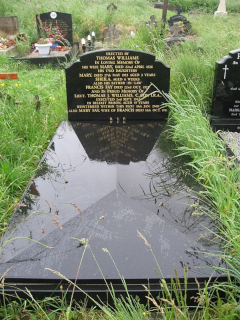
Williams is hanged in Crumlin Road Gaol in Belfast on the morning of September 2, 1942. The executioner is the official English hangman Thomas Pierrepoint, assisted by his nephew Albert Pierrepoint. Afterwards Williams’ body is interred in unhallowed ground in an unmarked grave within the grounds of the prison. His remains are only released in January 2000 after the closure of the prison in 1996 and a lengthy campaign by the National Graves Association, Belfast.
Williams’s funeral is held on January 19, 2000, and is attended by thousands, with burial at Milltown Cemetery. Joe Cahill, Williams’s cell mate, and John Oliver, sentenced to death with Williams but later reprieved, as well as Madge McConville, who had been arrested with Williams, Greta McGlone, Billy McKee, Eddie Keenan and perhaps least known, Nell Morgan, Williams’s girlfriend at the time of his death, are all present. Six senior Sinn Féin members including Gerry Adams are also present in St. Paul’s Church on the Lower Falls Road for the Mass.
Williams is remembered in a ballad Tom Williams. Various recordings have been made, most notably by the Flying Column and Éire Óg, who preamble their version with the story of the campaign to release his body. The now disbanded, Volunteer Tom Williams Republican Flute Band from Glasgow, Scotland is named in his memory as is the Tom Williams Camogie Club in Belfast.
(Pictured: Tom Williams’ headstone at Milltown Cemetery after being reinterred)
The operation sparks four days of violence in which 20 civilians, two IRA members and two British soldiers are killed. All of those arrested are Irish nationalists, the vast majority of them Catholic. Due to faulty intelligence, many have no links with the IRA. Ulster loyalistparamilitaries are also carrying out acts of violence, which are mainly directed against Catholics and Irish nationalists, but no loyalists are included in the sweep.
The introduction of internment, the way the arrests are carried out, and the abuse of those arrested, lead to mass protests and a sharp increase in violence. Amid the violence, about 7,000 people flee or are forced out of their homes. The interrogation techniques used on some of the internees are described by the European Commission of Human Rights in 1976 as torture, but the superior court, the European Court of Human Rights (ECHR), rules on appeal in 1978 that, although the techniques are “inhuman and degrading”, they do not, in this instance, constitute torture. It is later revealed that the British government had withheld information from the ECHR and that the policy had been authorized by British government ministers. In December 2014, in light of the new evidence, the Irish government asks the ECHR to revise its 1978 judgement. The ECHR declines the request in 2018.
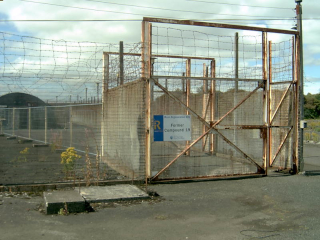
Following the suspension of the Northern Ireland Government and Parliament, internment is continued by the direct rule administration until December 5, 1975. During this time 1,981 people are interned, 1,874 are nationalist while 107 are loyalist. The first loyalist internees are detained in February 1973.
(Pictured: The entrance to Compound 19, one of the sections of Long Kesh internment camp)
In August 2005, it is announced that in response to the Provisional IRA declaration that its campaign is over, and in accordance with the Good Friday Agreement provisions, Operation Banner would end by August 1, 2007. This involves troops based in Northern Ireland being reduced to 5,000, and only for training purposes. Security is entirely transferred to the police. The Northern Ireland Resident battalions of the Royal Irish Regiment, which had grown out of the Ulster Defence Regiment, stand down on September 1, 2006. The operation officially ends at midnight on July 31, 2007, making it the longest continuous deployment in the British Army’s history, lasting over 38 years.
While the withdrawal of troops is welcomed by the nationalist parties Social Democratic and Labour Party and Sinn Féin, the unionist Democratic Unionist Party and Ulster Unionist Party oppose the decision, which they regard as premature. The main reasons behind their resistance are the continuing activity of republican dissident groups, the loss of security-related jobs for the protestant community and the perception of the British Army presence as an affirmation of the political union with Great Britain.
According to the Ministry of Defence, 1,441 serving British military personnel die in Operation Banner, 722 of whom are killed in paramilitary attacks and 719 of whom die as a result of other causes. The British military kills 307 people during the operation, about 51% of whom are civilians and 42% of whom are members of republican paramilitaries.
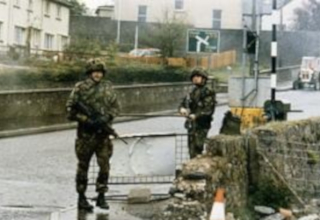
(Pictured: Two British soldiers on duty at a vehicle checkpoint near the A5 Omagh/Armagh road junction)
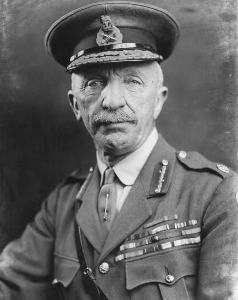
Wilson attends Marlborough public school between September 1877 and Easter 1880, before leaving for a crammer to prepare for the Army.
Wilson serves as Commandant of the Staff College, Camberley, and then as Director of Military Operations at the War Office, in which post he plays a vital role in drawing up plans to deploy an Expeditionary Force to France in the event of war. During these years he acquires a reputation as a political intriguer for his role in agitating for the introduction of conscription and in the Curragh incident of 1914, when he encourages senior officers to resign rather than move against the Ulster Volunteers.
As Sub Chief of Staff to the British Expeditionary Force (BEF), Wilson is John French‘s most important adviser during the 1914 campaign, but his poor relations with Douglas Haig and William Robertson see him sidelined from top decision-making in the middle years of the war. He plays an important role in Anglo-French military relations in 1915 and, after his only experience of field command as a corps commander in 1916, again as an ally of the controversial French General Robert Nivelle in early 1917. Later in 1917 he is informal military advisor to British Prime MinisterDavid Lloyd George, and then British Permanent Military Representative at the Supreme War Council at Versailles.
In 1918 Wilson serves as Chief of the Imperial General Staff, the professional head of the British Army. He continues to hold this position after the war, a time when the Army is being sharply reduced in size whilst attempting to contain industrial unrest in the UK and nationalist unrest in Mesopotamia, Iraq and Egypt. He also plays an important role in the Irish War of Independence.




 seamus dubhghaill